Some strains stop the conversation before anyone even reads the label. Forbidden Fruit is one of them.
The jar opens, someone leans in, and the questions start before price ever comes up.
I spent years behind a dispensary counter, and I watched that exact moment happen more times than I can count. People wanted to know what was inside the jar before they asked about anything else.
This guide covers what the forbidden fruit strain actually is, where its genetics trace back to, and what the high feels like once it settles in.
Just what you’d want to know before you buy, grow, or roll one up tonight.
|
⚠️ A Note Before You Read This article is for informational purposes only and isn’t a substitute for medical advice. Cannabis effects vary by person, and laws differ by location, so check local regulations before use. Intended for adults of legal age only. If you or someone you know needs support with substance use, help is available 24/7 through the SAMHSA National Helpline: 1-800-662-4357. |
Forbidden Fruit at a Glance
Here’s the forbidden fruit strain broken down into its core details before we get into the specifics.
| Category | Details |
| Type | Indica-dominant hybrid (70% indica / 30% sativa) |
| Genetics | Cherry Pie x Tangie |
| THC Level | 20% to 26%, some batches test higher |
| Effects | Euphoric onset, heavy body relaxation, gradual sedation |
| Flavor | Cherry, citrus, earthy pine finish |
| Best For | Evening relaxation, pain relief, stress, sleep |
What Is the Forbidden Fruit Strain?
Forbidden fruit strain is an indica-dominant hybrid, typically listed around 70% indica and 30% sativa. It comes from a cross between Cherry Pie and Tangie.
That ratio matters more than most people realize. A heavier indica lean means the body effects hit harder than what you’d get from a balanced hybrid.
The genetics are bred by In House Genetics, which is worth knowing if you’re comparing cuts across dispensaries or seed banks. Not every batch will be identical, but the lineage stays consistent.
Indica-Dominant, Not Pure Indica: Cherry Pie brings the sedating structure and dense bud formation people expect from that side of the family. Tangie changes the equation. It adds a brighter, more cerebral edge that keeps the high from feeling flat or one-note.
The result sits in between. You get body relaxation without the immediate heaviness some pure indicas bring on too fast.
Where Forbidden Fruit Comes From
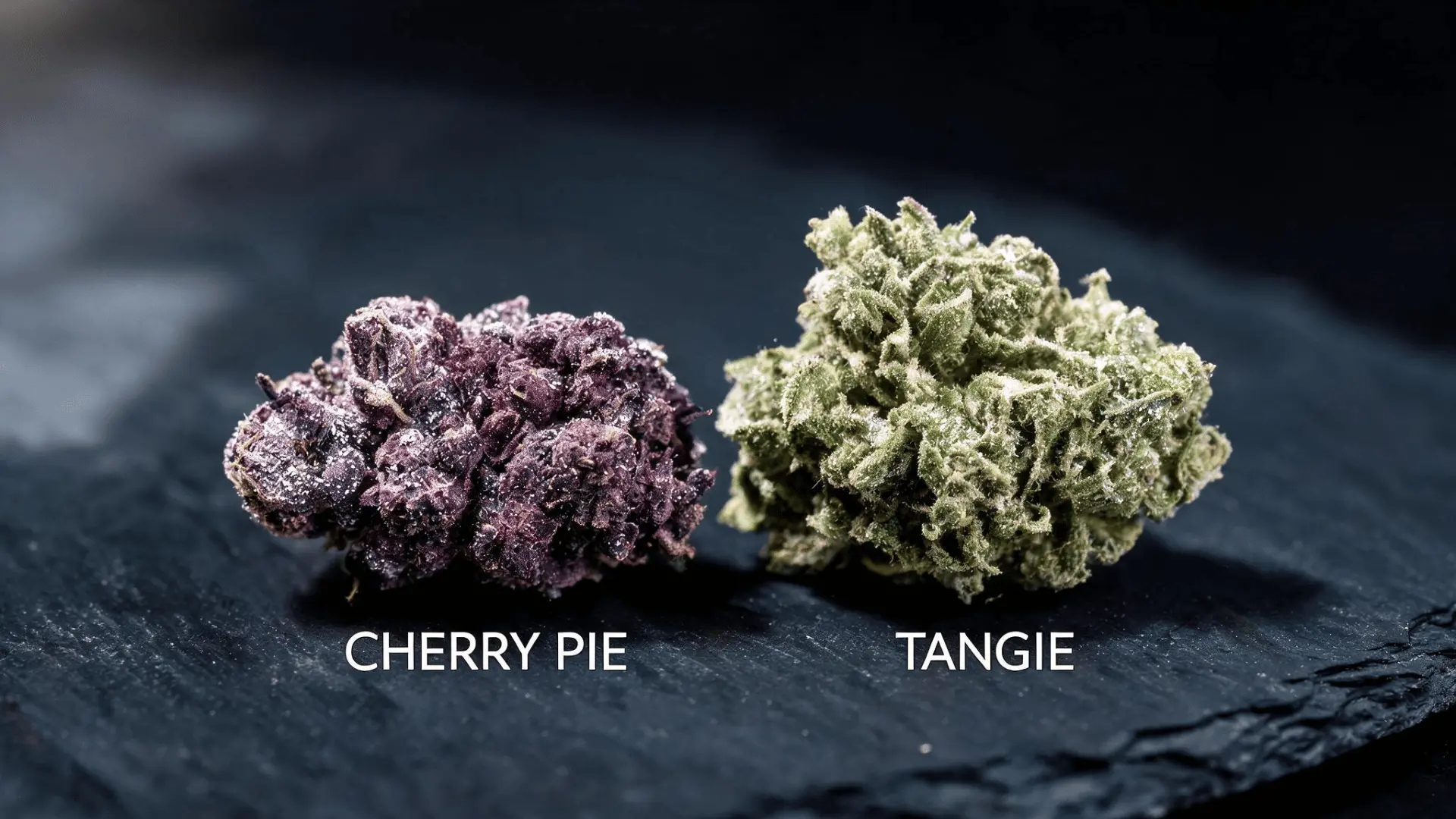
Knowing the family tree helps explain why this strain doesn’t behave like a typical indica or a typical sativa. It’s built from two very different plants.
1. Cherry Pie’s Contribution
Cherry Pie is the half doing most of the sedative work. It hands down dense, tightly packed bud structure and a deep body relaxation that settles in slowly.
The sweetness also comes from this side. Think baked dessert notes rather than sharp fruit.
I’d tell customers this is the parent responsible for the couch-lock effect people associate with Forbidden Fruit. If you want the heavier body high, thank Cherry Pie.
2. Tangie’s Contribution
Tangie is a citrus-forward sativa, and it shows almost immediately. The sharp orange smell that hits when you first open the jar comes straight from this parent.
It’s also responsible for the brief mental lift at the start of the high. That cerebral edge fades as the body effects take over.
Without Tangie, Forbidden Fruit would likely feel much heavier and less dynamic from the first few minutes.
3. Phenotype Variations
Not every Forbidden Fruit cut behaves the same way. Some phenotypes lean sweeter and more cherry-forward, while others push harder into citrus and pine.
Batch-to-batch variation is common, especially when comparing different growers or seed sources.
I always told customers to expect some inconsistency here. Two jars labeled Forbidden Fruit can smell and hit differently depending on which phenotype was grown.
What the High Actually Feels Like
The forbidden fruit strain moves through three distinct stages, starting with a fast mood lift and ending in a heavy, settled body high.
Here’s how the timeline breaks down.
| Stage | Onset | What You’ll Feel |
| First Wave | 5-10 minutes | Euphoric, clear-headed lift. Mood shifts before anything physical kicks in |
| Body Settling In | 20-30 minutes | Deep relaxation spreads through the body, muscles loosen, tension eases |
| Full Effect | 45+ minutes | Heavy, couch-locked sedation. Physical stillness without feeling fully knocked out |
I always told customers this isn’t a strain that hits all at once. It builds, and the body effects only show up once the initial lift fades.
The gradual curve is what separates this from strains that sedate immediately. You get a window of clarity before the weight sets in.
Flavor, Aroma, & Appearance of Forbidden Fruit
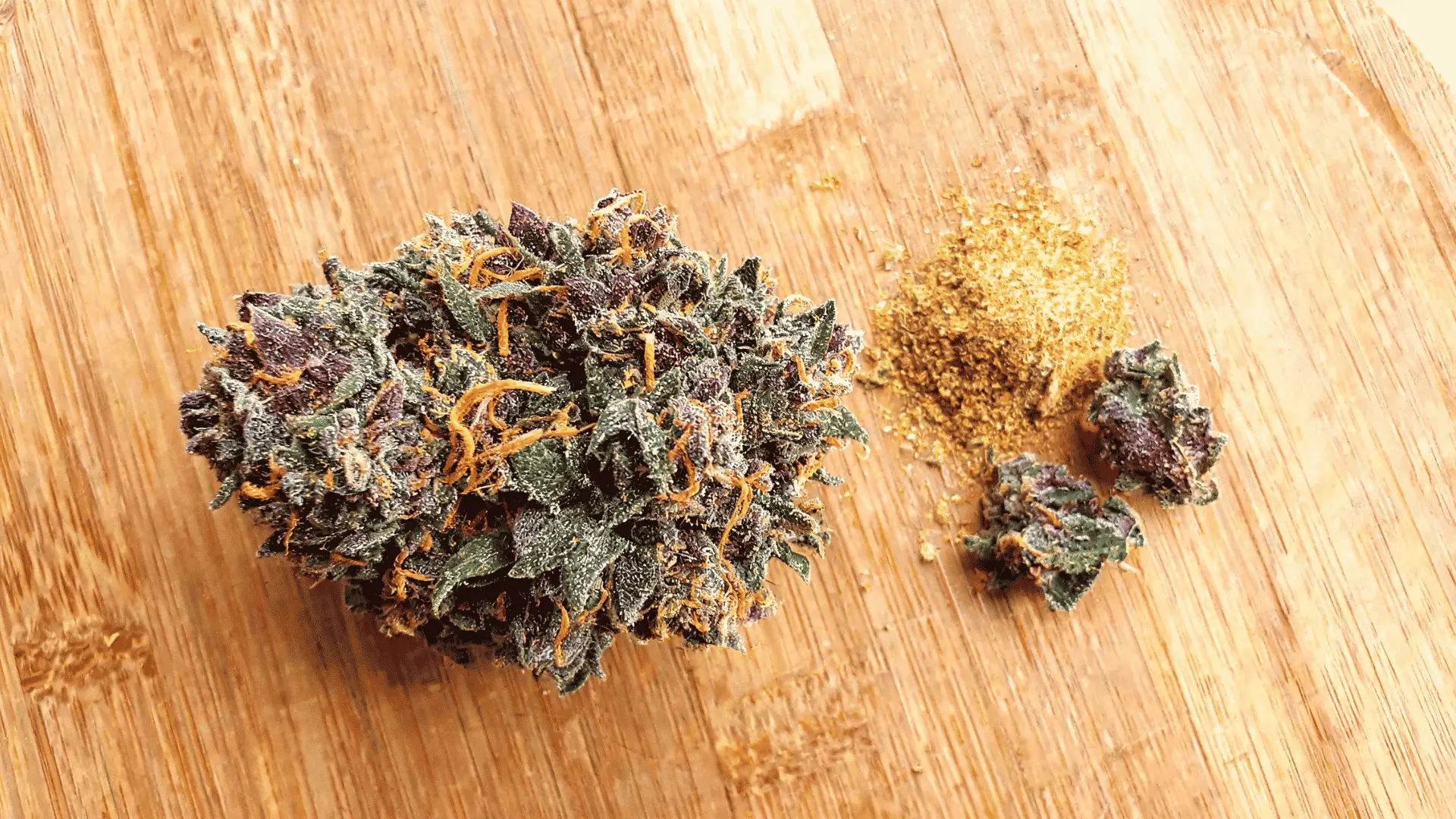
Forbidden Fruit isn’t just about taste. The look and smell tell you just as much before you ever take a hit. Here’s what to expect across all three.
1. Flavor
The taste leans sweet and fruity, with cherry sitting front and center. Citrus follows close behind, adding a sharper edge to the sweetness.
On the exhale, an earthy pine note shows up. It grounds the fruit flavor instead of letting it taste like straight candy.
I’d describe it as dessert-like without tipping into artificial. That balance is part of what makes it memorable at the counter.
2. Aroma
Opening the jar hits you with ripe cherry and berry immediately. Citrus follows a beat later, sharp enough to notice from across a room.
Give it time and the smell shifts. A kush-like earthiness settles underneath once the jar’s been open a few minutes.
That layered smell is usually a solid indicator of quality. Weaker cuts tend to lose that earthy depth entirely.
3. Appearance
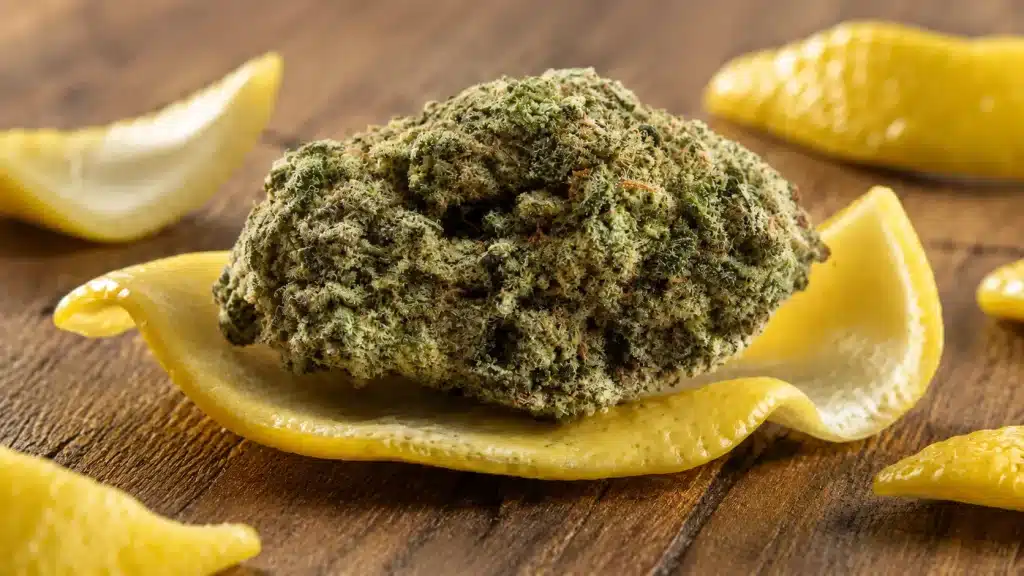
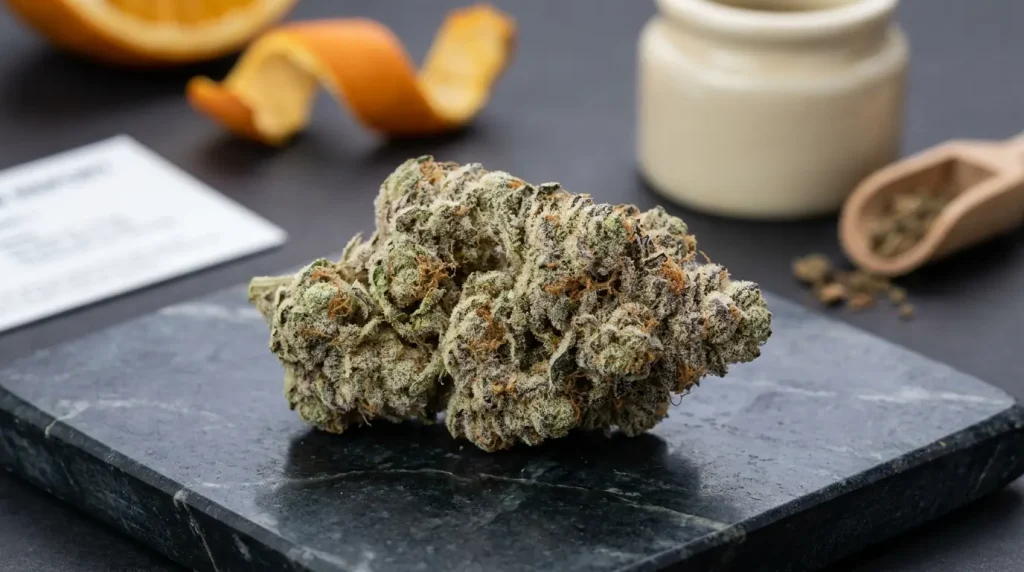
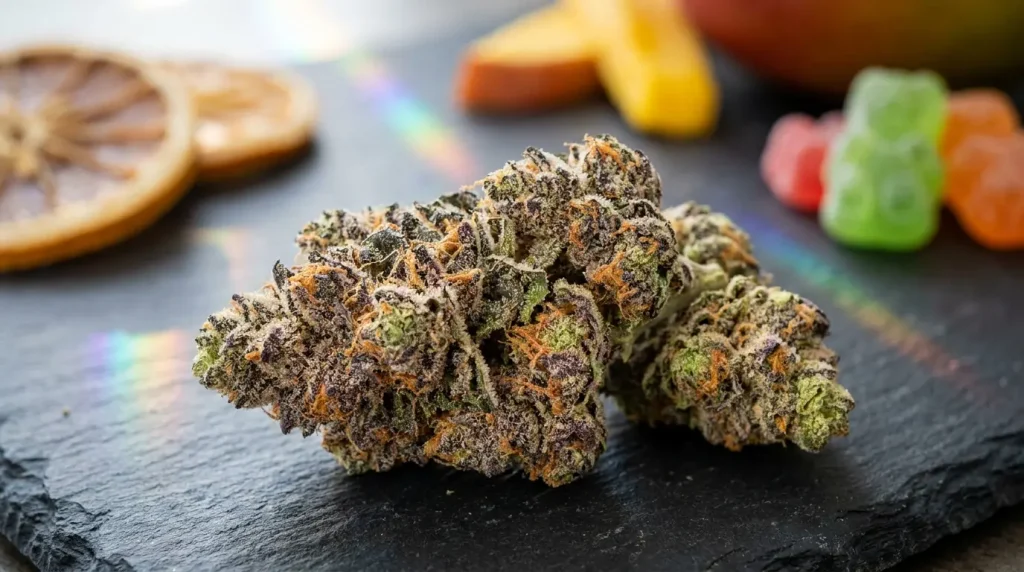
Buds run dense and tightly packed, typical of the Cherry Pie side of the genetics. Colors range from deep purple to forest green, often with a visible frost of trichomes.
Orange hairs, or pistils, thread through the bud structure and stand out against the darker purple tones.
The trichome coverage is usually heavy enough to give the bud a slightly silver, sugared look under light.
Terpene Profile
Three terpenes shape most of what Forbidden Fruit delivers, both in scent and in how the high actually feels. Each one plays a specific role rather than just adding smell.
1. Myrcene’s Role: Myrcene is the most dominant terpene here, and it’s largely responsible for the sedative curve. It doesn’t just smell earthy. It actively contributes to the heavier, slower body high that shows up after the initial euphoric lift fades.
2. Limonene’s Role: Limonene shows up fast, both in smell and in effect. It’s tied to mood elevation, which lines up with the quick euphoric onset this strain is known for.
This is also the terpene responsible for the citrus punch on first opening the jar. Without it, the early stage of the high would likely feel far more muted.
3. Caryophyllene’s Role: Caryophyllene is different from most terpenes because it interacts directly with the body’s receptors, similar to how cannabinoids do.
That’s part of why this strain gets mentioned so often for pain and tension relief. It also adds a peppery sharpness that balances the sweeter cherry notes, keeping the flavor from tasting flat.
What is Forbidden Fruit Best For and Medical Benefits
Forbidden Fruit shows up often in conversations about pain, stress, and sleep. Here’s where it tends to help most, based on what users and past customers commonly report.
- Chronic Pain and Tension – The heavy body relaxation eases physical tightness, making it a common pick for ongoing aches rather than acute, sharp pain.
- Stress and Racing Thoughts – The early euphoric lift helps quiet mental noise before the body relaxation fully sets in, giving users a window of calm before sedation takes over.
- Insomnia and Sleep Onset – The gradual, heavy sedation makes this a strong evening choice for users who struggle to wind down or stay asleep through the night.
- Appetite Support – Like many indica-dominant hybrids, Forbidden Fruit is commonly associated with increased appetite, useful for those managing low appetite from other conditions or treatments.
- Muscle Tension and Physical Fatigue – The body-heavy effects are often reported as easing tightness after physical strain, though this isn’t a substitute for medical treatment.
- Mild Anxiety (in the Right Dose) – In smaller amounts, the initial mood lift can ease mild anxious feelings, though higher doses may tip sensitive users toward racy rather than calm.
- End-of-Day Wind Down – Beyond specific conditions, this strain works well simply as a transition tool, helping users shift from an active day into rest without forcing sedation too quickly.
I always reminded customers that “best for” doesn’t mean guaranteed. Individual response varies, and this isn’t a replacement for guidance from a doctor.
Strains Similar to Forbidden Fruit
If you like what Forbidden Fruit offers, a few other strains land in the same territory. Fruity flavor, indica-heavy effects, and an evening-leaning high.
Here’s how they compare.
| Strain | Type | Flavor Profile | Effects |
| Purple Punch | Indica-dominant hybrid | Grape, blueberry, sweet candy | Heavy sedation, fast body relaxation, sleep support |
| Do-Si-Dos | Indica-dominant hybrid | Sweet, earthy, mint undertones | Deep relaxation, mood lift, mild euphoria |
| Ice Cream Cake | Indica-dominant hybrid | Sweet cream, vanilla, nutty | Calming, slow-onset sedation, stress relief |
| Grape Ape | Indica-dominant | Grape, berry, subtle spice | Slow, heavy body high, tension relief |
Each of these shares that same fruit-forward smell paired with a body-heavy comedown. None of them are stimulating daytime picks.
I’d point customers toward Purple Punch or Ice Cream Cake specifically if Forbidden Fruit was out of stock. The sedation curve feels close enough that most people didn’t notice a difference.
Forbidden Fruit Strain Growing Information
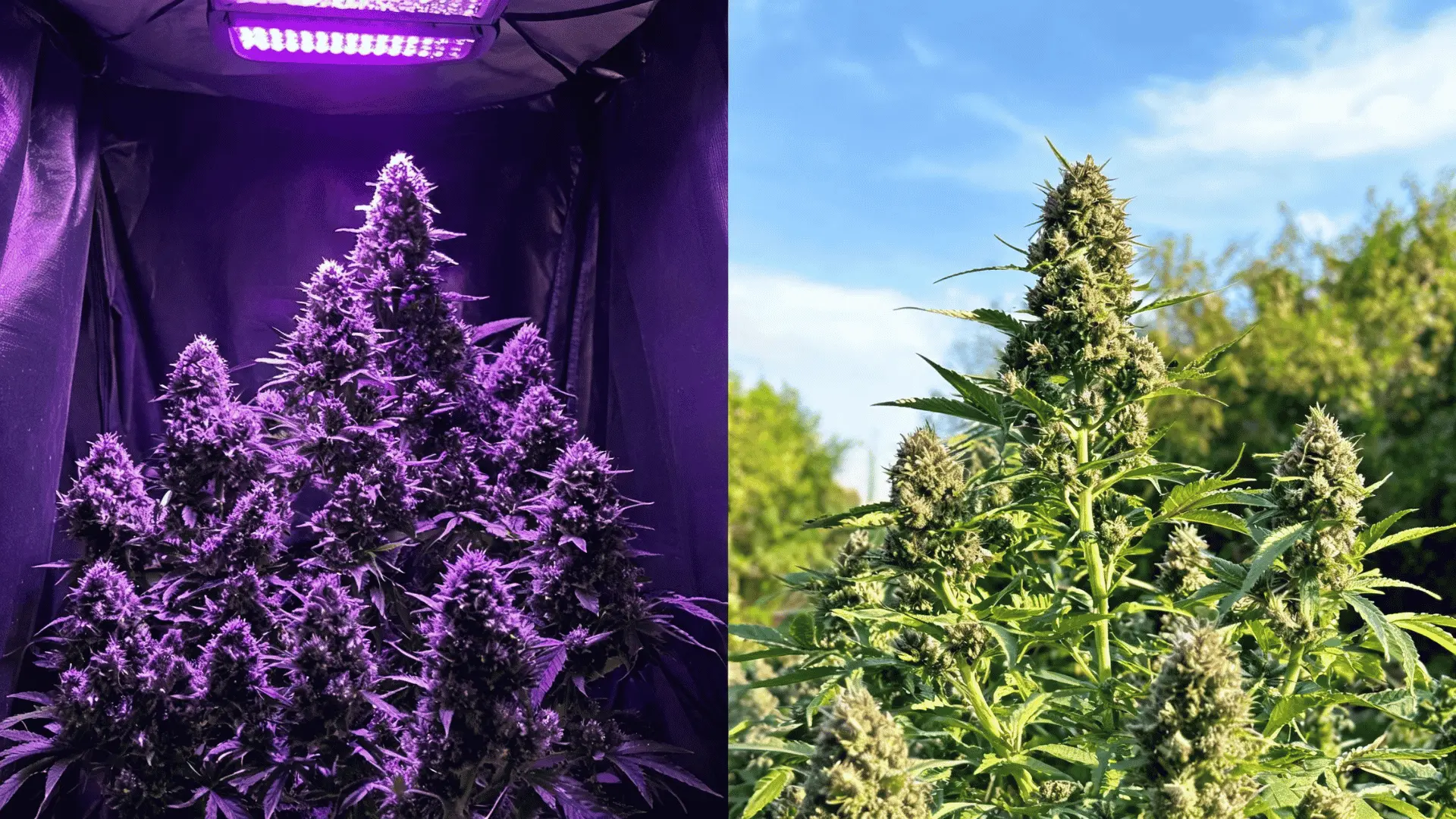
Forbidden Fruit isn’t the hardest strain to grow, but it does reward attention. Indoor and outdoor setups both work, though they produce noticeably different results.
Flowering runs on the shorter side for an indica-dominant hybrid, and yield potential is solid without demanding an advanced setup.
Here’s what to expect from both growing environments, along with the timeline.
Indoor vs Outdoor Growing
- Indoor Setup – Growing indoors gives full control over temperature, humidity, and light cycles, which matters for a strain that’s sensitive to mold given its dense bud structure. Most growers keep humidity low during flowering to avoid bud rot. Indoor plants also respond well to training methods like topping or low-stress training, which helps manage height and improves light exposure across the canopy.
- Outdoor Setup – Outdoors, Forbidden Fruit needs a warm, dry climate with consistent sunlight and low humidity, similar to what Cherry Pie and Tangie both prefer individually. Coastal or humid climates increase mold risk due to how tightly the buds pack together. Outdoor plants tend to grow larger overall and can produce bigger yields per plant, but harvest timing depends heavily on local weather holding steady through the final weeks.
- Space and Scale Considerations – Indoor grows suit smaller spaces and tighter control, while outdoor grows suit growers with more room and a stable, dry climate. Neither environment is objectively better here. It comes down to what you can control and how much risk you’re willing to take with weather.
I always heard the same thing from growers who supplied dispensaries I worked with. Indoor cuts tend to run more consistent, while outdoor batches vary more in potency and appearance from harvest to harvest.
Flowering Time & Yield
Flowering typically takes eight to ten weeks, which is average for an indica-dominant hybrid of this type.
Yield potential runs medium to high, depending on setup, training method, and growing environment.
Indoor growers can expect moderate yields with tighter control over quality. Outdoor growers often see higher yields per plant, assuming the climate cooperates through the full flowering window.
Neither number is fixed. Genetics, nutrients, and grower experience all shift the final output more than the strain type alone.
Finishing Up
Forbidden Fruit earns its name honestly. It smells like dessert, opens with a quick euphoric lift, and settles into one of the heavier body relaxations you’ll find in a fruity strain.
I always found it easiest to explain through its parents. Cherry Pie brings the sedation, Tangie brings the brightness, and together they avoid the flat, one-note feeling some hybrids fall into.
That combination is exactly why the forbidden fruit strain keeps showing up in conversations about pain, stress, and sleep.
If you’re trying it for the first time, respect the evening timing and the higher THC range. Start slow, check the batch label, and let the body effects arrive on their own schedule rather than rushing them.
Frequently Asked Questions
Does Forbidden Fruit Have Any Other Names?
No widely used alternate names exist. It’s generally sold and labeled simply as Forbidden Fruit across dispensaries and seed banks.
How Should You Store Forbidden Fruit To Keep It Fresh?
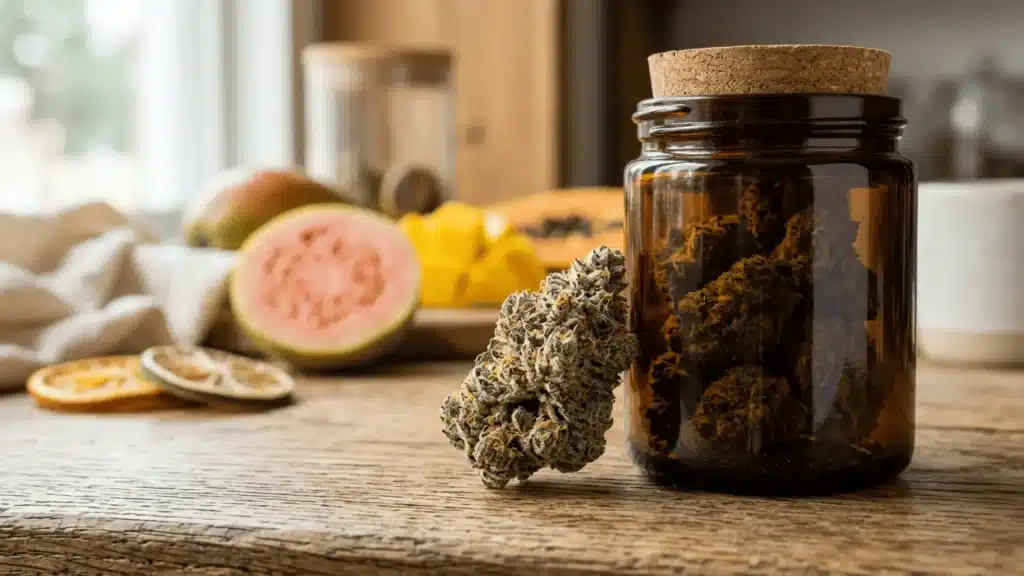
Keep it in an airtight glass jar, away from light and heat. This preserves the terpenes responsible for its citrus and cherry aroma longest.
Is Forbidden Fruit Available As Concentrates Or Vapes?
Yes. Beyond flower, it’s commonly found as vape cartridges, live resin, and other concentrate forms at most dispensaries carrying the strain.
Is Forbidden Fruit Good For Beginners?
Not ideal. The THC range runs high, and first-time users should start with a small amount to avoid overwhelming sedation.