Quick Glance: Caryophyllene Terpene
| Topic | Quick Answer |
|---|---|
| Main keyword | Caryophyllene terpene effects |
| Also called | Beta-caryophyllene, β-caryophyllene, BCP, trans-caryophyllene |
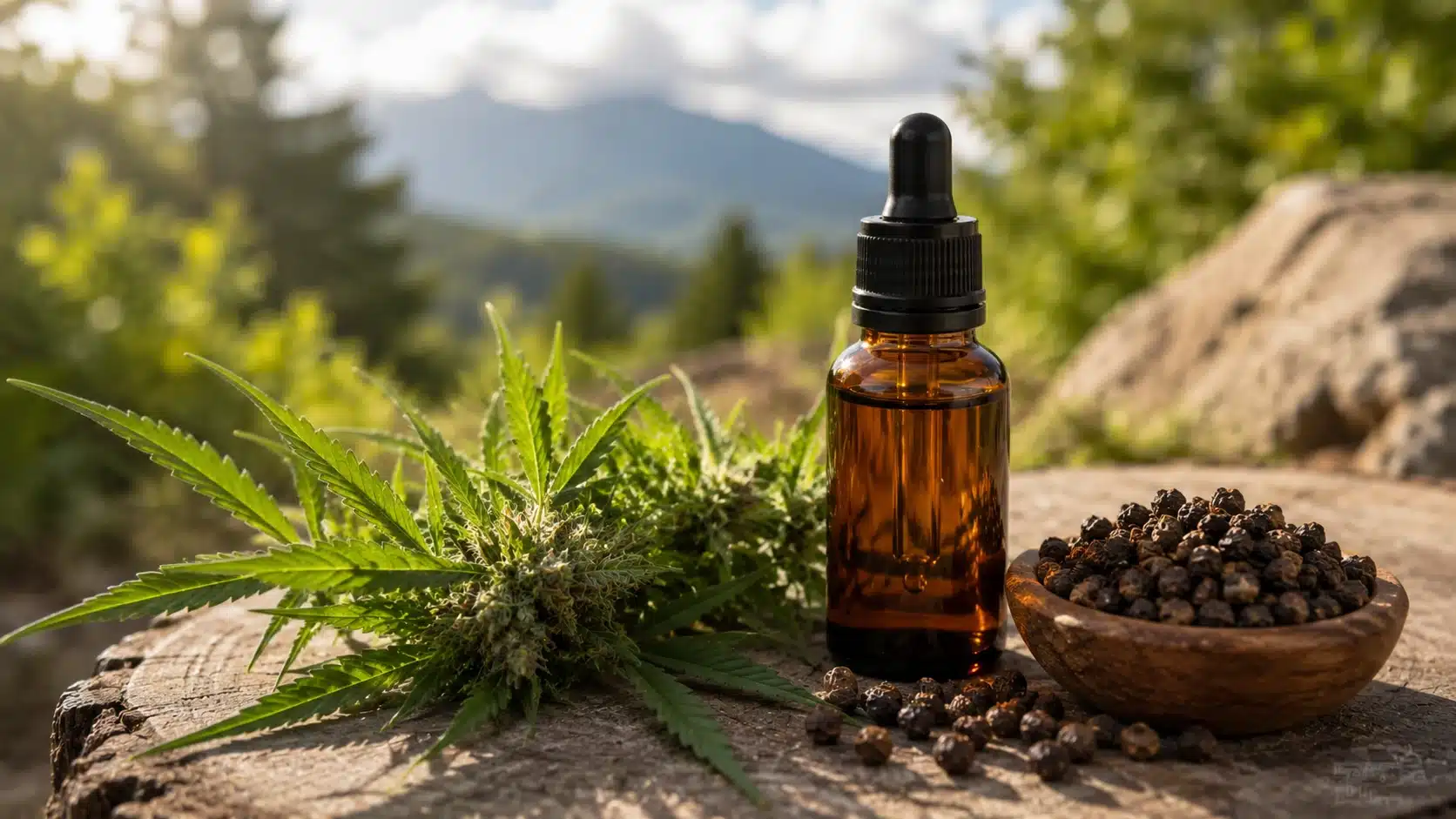
| Found in | Cannabis, black pepper, cloves, rosemary, hops, copaiba |
| Aroma | Peppery, spicy, woody, clove-like |
| Main body action | Activates CB2 receptors in the endocannabinoid system |
| Does it cause a high? | No, it does not produce a THC-like effect |
| Best-known effects | Anti-inflammatory support, pain support, calming effects |
| Evidence level | Strong preclinical research, limited large human trials |
If you have ever cracked open a fresh grind of black pepper and thought, “this smells oddly familiar for someone who has never smoked pepper before,” you were probably picking up on caryophyllene.
This spicy, woody terpene shows up in cannabis, cloves, rosemary, hops, and a handful of other plants you probably already have in your kitchen. What makes it stand out from the rest of the terpene crowd is something most terpenes simply cannot do: it can bind to CB2 receptors in the endocannabinoid system.
That one trait has made it one of the most researched terpenes in cannabis science. The research is promising, but it is important to say upfront that much of it comes from cell and animal studies, not large human clinical trials.
What Is Caryophyllene?
Caryophyllene is a naturally occurring sesquiterpene, a class of terpenes built from three isoprene units. You may see it listed as beta-caryophyllene, β-caryophyllene, BCP, or trans-caryophyllene, and these names largely refer to the same compound depending on context.
In chemistry databases, trans-β-caryophyllene and E-β-caryophyllene describe the same structural form of the molecule. It is found widely in the plant world.
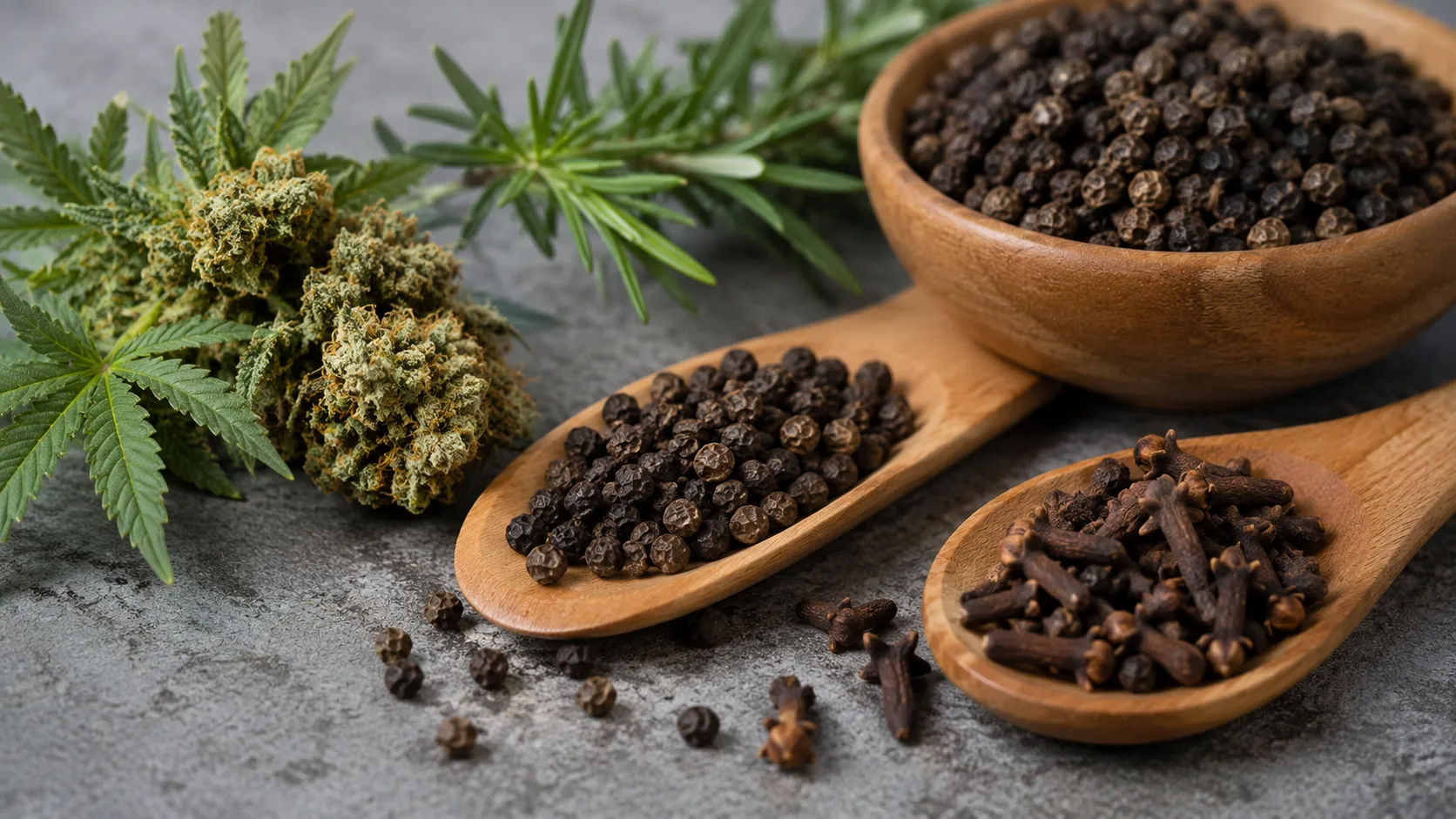
Cannabis, black pepper, cloves, copaiba oil, rosemary, and hops all contain measurable amounts. Because it appears so often in foods and spices, it has a long history of human consumption well before anyone called it a terpene.
PubChem lists caryophyllene as a naturally occurring compound found in a wide range of essential oils, with clove oil among the richest sources documented in its compound profile.
What Does Caryophyllene Smell and Taste Like?
If you want a quick sensory shortcut, grind a little black pepper. That sharp, warm, slightly earthy bite is largely caryophyllene at work.
In cannabis, it contributes a peppery, spicy, woody, and clove-like aroma with a slightly herbal undertone, and it is one of the more recognizable terpene signatures once you know what to look for.
Strains high in caryophyllene tend to feel bold and warm on the exhale rather than light or floral, which makes them easy to distinguish from citrus-forward or pine-heavy profiles.
This aroma profile is one reason experienced cannabis users often describe caryophyllene-dominant strains as feeling grounding or full-bodied.
The spice note is distinct and tends to cut through other terpene aromas in a blended profile, giving the overall scent a weight and depth that softer terpenes simply do not deliver.
| 📝 Tip: If you are at a dispensary and want to identify caryophyllene by nose, ask to smell strains described as spicy or earthy. The peppery warmth is usually easy to notice once you know what to look for. |
How Caryophyllene Works in the Body
Most terpenes work through smell, taste, and indirect pathways. Caryophyllene does something more direct, which is part of why researchers keep coming back to it.
Caryophyllene and CB2 Receptors
The endocannabinoid system has two main receptor types. CB1 receptors are concentrated in the brain and are closely linked to the intoxicating effect of THC. CB2 receptors are primarily found in immune tissues and are associated with inflammation and immune responses rather than psychoactive activity.
Caryophyllene is often described as a dietary cannabinoid because it can selectively activate CB2 receptors without triggering CB1.
Research published in Frontiers in Pharmacology describes beta-caryophyllene as a natural CB2 receptor-selective agonist, noting its potential relevance across several body systems studied in preclinical models.
That CB2 selectivity is part of why caryophyllene sits as the lead terpene in high-potency strains like Gary Payton weed strain, where users consistently report body-easing and grounding qualities that go beyond what THC alone would explain.
Why It Does Not Cause a High
Because caryophyllene does not bind meaningfully to CB1 receptors, it does not produce the intoxicating effect associated with THC.
It may influence how a cannabis strain feels overall, particularly through the entourage effect, where multiple compounds work together, but on its own, it is not a psychoactive compound.
If you want a deeper look at how terpenes interact with cannabinoids in that combined setting, the terpenes and CBD cover the mechanics in plain language.
You will not get high from black pepper, no matter how enthusiastically you season your food.
| ⚠️ Advisory: Caryophyllene itself does not cause a high, but cannabis products containing it also contain THC and other cannabinoids. Always check the total cannabinoid content before choosing a product. |
Caryophyllene Benefits: Proven vs Still Early
Research on caryophyllene covers several areas of health, but the evidence varies widely depending on the topic. Here is an honest breakdown of where the science currently stands:
| Possible Benefit | Evidence Strength | Accurate Framing |
|---|---|---|
| Inflammation support | Moderate preclinical | May support inflammatory balance |
| Pain support | Early to moderate preclinical | May support comfort pathways |
| Anxiety and stress | Early preclinical | May feel calming for some users |
| Gut support | Early preclinical | Being studied for gut inflammation |
| Neuroprotection | Early lab and preclinical | Promising but not proven in humans |
None of these benefits is established in large human trials yet. Treat this table as a research map, not a list of proven outcomes, and adjust expectations accordingly.
Caryophyllene Terpene Effects

Here is where things get interesting. Because caryophyllene interacts with CB2 receptors, it has been studied across several areas of health research.
The findings below are drawn from preclinical and early research. Human clinical data remains limited, so the language throughout reflects that honestly.
1. Anti-Inflammatory Support
This is the most studied area of caryophyllene research. A mechanistic review of the anti-inflammatory effects of beta-caryophyllene links it to anti-inflammatory, antioxidant, immunomodulatory, analgesic, and neuroprotective activity across experimental models.
The CB2 pathway appears central to many of these effects, as activating CB2 receptors can modulate immune cell behavior and reduce certain inflammatory signals.
These findings come from lab and animal studies, so describing it as a compound that may support inflammatory balance is the accurate framing for now.
2. Pain Support
Caryophyllene is frequently discussed in the context of inflammatory and nerve-related pain pathways. A recent study examined the combination of CBD and beta-caryophyllene in a mouse model of chronic inflammatory pain and found that the combination produced effects relevant to pain response.
Research published in PMC suggests that cannabidiol and beta-caryophyllene may together influence mechanisms of chronic inflammatory pain in animal models, suggesting the compounds may work more effectively together than alone. Calling this a treatment for human pain would be premature. Saying it may support comfort pathways is the honest read of current evidence.
3. Stress and Mood Support
Many cannabis users report that caryophyllene-rich strains feel calming or grounding. Preclinical research has examined anxiolytic-like effects in animal models, with results suggesting that CB2 activation may play a role in the stress response.
This is early-stage research and cannot be directly applied to humans, but the user-reported experience of calm with spicy, earthy strains aligns with what the preclinical data suggest.
| 📝 Note: Terpene effects in cannabis are shaped by the full cannabinoid and terpene profile of the product, not by any single compound alone. A high-caryophyllene strain with high THC will feel very different from a high-caryophyllene, low-THC product. |
4. Gut and Digestive Support
Beta-caryophyllene has been studied for its effects on gut inflammation. Research published in the American Journal of Pathology examined BCP in a mouse model of colitis and found anti-inflammatory activity in the gut tissue.
This does not mean caryophyllene treats IBS, IBD, or ulcers in people. It means researchers have found preclinical signals worth exploring further, and the gut-CB2 connection is a plausible reason why.
5. Brain and Nerve Protection Research
One of the more recent and compelling areas of caryophyllene research involves neuroinflammation and neuroprotection. A study available through PMC found that beta-caryophyllene exhibited multi-target protective effects in models of beta-amyloid-related neurotoxicity, which is relevant to neurodegenerative conditions.
This is early-stage lab research and should not be interpreted as clinical evidence, but it points to why BCP has attracted interest beyond simple anti-inflammatory applications.
Caryophyllene in Cannabis Strains
Knowing which strains are commonly associated with high caryophyllene content is useful, but there is an important caveat. Terpene profiles vary depending on the grow environment, harvest timing, curing process, and storage conditions.
A strain known for caryophyllene in one batch may test differently in another. Always check the Certificate of Analysis (COA) from the lab rather than relying on the strain name alone.
Strains frequently associated with notable caryophyllene levels include GSC (Girl Scout Cookies), Sour Diesel, Bubba Kush, Chemdawg, Candyland, and Cookies and Cream. Daytime-oriented strains like Green Crack also carry it as a notable secondary terpene alongside myrcene, which helps explain the grounded edge some users notice beneath the energy.
These tend to share that bold, spicy character on the nose and a grounding quality in the experience. If you want to see how caryophyllene sits alongside myrcene in a real strain terpene profile, the Biscotti strain is a solid example.
| ⚠️ Advisory: Do not choose a cannabis product based on strain name alone. Request the lab-tested terpene panel and look for beta-caryophyllene listed by percentage to know what you are actually getting. |
Caryophyllene vs Other Popular Terpenes
Understanding how caryophyllene compares to other major terpenes helps you make more informed product choices. Each terpene has a distinct aroma and a different association in user experience and early research:
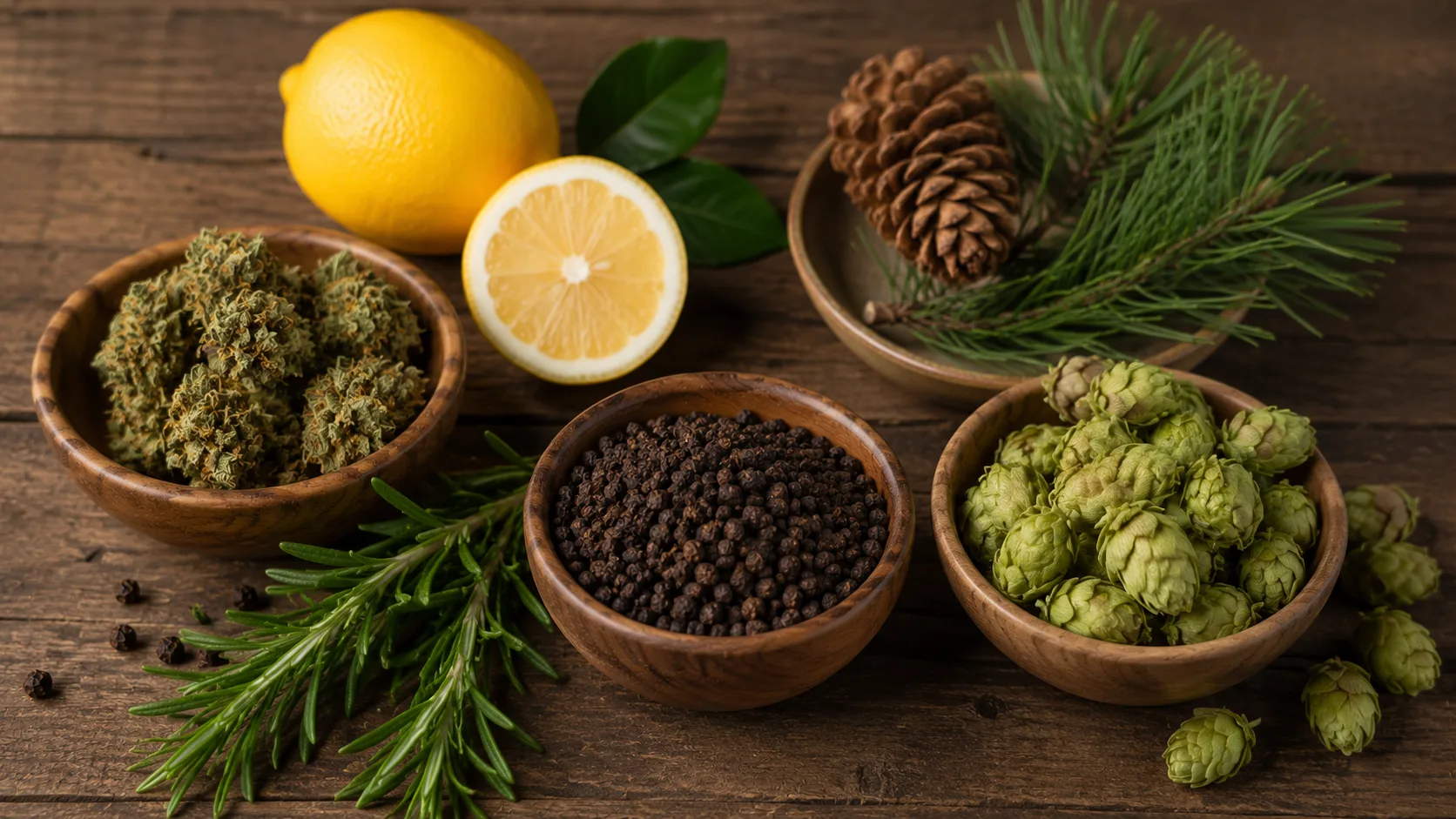
| Terpene | Aroma | Common User Association |
|---|---|---|
| Caryophyllene | Pepper, spice, wood | Body comfort, calm, inflammation support |
| Myrcene | Earthy, musky | Relaxation, heaviness, sedative quality |
| Limonene | Citrus, bright | Uplift, brighter mood, energy |
| Pinene | Pine, fresh | Alertness, clarity, focus |
| Humulene | Herbal, hoppy | Appetite and inflammation research |
Myrcene is one of the most dominant terpenes in cannabis overall and is often found alongside caryophyllene in earthy, grounding strains. A detailed look at myrcene terpene effects and what users consistently report about its influence on cannabis experience is worth reading if you are building a clearer picture of how terpenes work together rather than in isolation.
Earthy, caryophyllene-forward profiles tend to feel grounding and full-bodied, a quality you can trace across strains like the Zkittlez strain genetics, where the total terpene content regularly runs 2 to 4 percent and caryophyllene consistently appears in the dominant trio alongside myrcene and limonene.
Is Caryophyllene Safe?
For most people, caryophyllene is well tolerated. It is present in many everyday foods and spices, which means humans have been consuming it for a very long time without knowing its name.
It is used as a flavoring compound in the food industry, and its long history of dietary exposure is part of why researchers consider it a reasonable candidate for further human study. That said, a few considerations apply.
Concentrated essential oils high in caryophyllene, such as clove oil, can cause irritation to skin or mucous membranes if applied directly or ingested in large quantities. Stomach discomfort has been reported at high doses in some studies.
For people taking prescription medications, particularly those affecting inflammatory or immune pathways, a conversation with a clinician before using high-caryophyllene supplements or concentrated products is a reasonable step.
For cannabis-specific products, the usual safety considerations apply regardless of terpene content: start with a low dose, know your THC tolerance, and choose products from licensed sources with verified lab testing.
| ⚠️ Caution: Clove essential oil is among the most concentrated natural sources of caryophyllene and can cause irritation or toxicity if used undiluted or ingested in large amounts. Food-level exposure through spices and cannabis products is a different situation from concentrated supplement use. |
How to Choose Caryophyllene-Rich Cannabis Products
Choosing the right product comes down to reading the label rather than trusting the marketing. Here is what to look for when caryophyllene content matters to your decision:
- Request a lab-tested terpene panel and look specifically for beta-caryophyllene listed by percentage
- A higher percentage in the terpene panel generally means a stronger presence of that compound in the product
- Do not judge a product by THC percentage alone; a lower-THC product rich in caryophyllene and CBD may suit comfort-focused goals better
- If sensitivity to THC is a concern, look for CBD-rich or balanced cannabinoid products with verified caryophyllene content
- Start with a low dose when trying any new cannabis product, regardless of the terpene profile
- Store products properly because terpenes, including caryophyllene, degrade with heat, light, and air exposure
Choosing a product with intention takes a few extra minutes upfront but saves a lot of guesswork later. A verified terpene panel is always more reliable than a strain name or a label claim.
| 📝 Tip: When comparing two products with similar THC content, the one with a higher beta-caryophyllene percentage and a full terpene panel is generally the more informative choice for someone interested in the specific effects of this terpene. |
Frequently Asked Questions
Can you get caryophyllene from food alone without using cannabis?
Yes. Black pepper, cloves, rosemary, hops, and cinnamon all contain caryophyllene at food-safe levels. You absorb it every time you cook with these ingredients, though the amounts are far smaller than in cannabis concentrates or terpene-rich extracts.
Does caryophyllene show up on a drug test?
Caryophyllene itself is not a controlled substance and is not screened for in standard drug testing panels. Drug tests look for cannabinoids like THC metabolites, not terpenes. Using a caryophyllene supplement or essential oil will not trigger a positive result.
Is caryophyllene the same in all cannabis products?
No. Terpene content varies significantly by cultivar, growing conditions, harvest timing, and processing method. Two products labeled with the same strain name can have very different caryophyllene levels. Always check the lab-tested terpene panel specific to that batch.
Can caryophyllene interact with medications?
Preclinical research suggests caryophyllene affects inflammatory and immune pathways via CB2 receptors. People taking immunosuppressants, anti-inflammatory medications, or drugs affecting liver enzymes should speak with a clinician before using high-dose caryophyllene supplements or concentrated extracts.
What does a high caryophyllene percentage on a COA actually mean?
It means that terpene makes up a notable share of the product’s total terpene content. A beta-caryophyllene percentage above 0.5 percent on a cannabis COA is generally considered meaningful. Anything above one percent puts it firmly among the dominant terpenes in that product.
Is copaiba oil a good non-cannabis source of caryophyllene?
Copaiba oil is one of the richest non-cannabis sources of beta-caryophyllene and is used in some wellness products specifically for that reason. It is widely available and does not contain THC, making it a practical option for people interested in CB2 activity without cannabis.
Closing Thoughts
Caryophyllene earns its reputation as one of the more scientifically interesting terpenes not because of hype, but because it does something genuinely unusual: it interacts with the endocannabinoid system directly through CB2 receptors.
That makes it relevant to conversations about inflammation, pain, mood, gut health, and neuroprotection in ways most terpenes simply are not. The research is real, the preclinical signals are meaningful, and the human clinical data are still catching up.
The honest takeaway is that caryophyllene may support inflammatory balance, comfort, and calm for many people, but it should not be positioned as a treatment or cure for any condition.
If you are researching cannabis products for a specific reason, check the lab report, compare terpene profiles, and make choices based on verified content rather than strain names or marketing claims. Drop a comment below and let me know if you have any further questions.
Disclaimer: This article is educational and does not replace advice from a qualified medical professional.
Sources
- National Center for Biotechnology Information. “Caryophyllene, CID 5281515.” PubChem Compound Database. pubchem.ncbi.nlm.nih.gov
- Scandiffio, R. et al. “β-Caryophyllene, A Natural Dietary CB2 Receptor Selective Agonist.” Frontiers in Pharmacology, 2021. frontiersin.org
- Aly, E. et al. “Cannabidiol and Beta-Caryophyllene: A Study on Chronic Inflammatory Pain.” PMC, National Library of Medicine, 2025. pmc.ncbi.nlm.nih.gov
- Mancini, M. et al. “Multi-Target Protective Effects of β-Caryophyllene at the Neurological Level.” PMC, National Library of Medicine, 2025. pmc.ncbi.nlm.nih.gov
- “Biscotti Weed Strain: Effects, Flavor, and Growing Guide.” funwithdizzies.com
- “Myrcene Terpene Effects: What Users Say and Why.” funwithdizzies.com
- “Gary Payton Weed Guide: Effects, Flavor, Type.” funwithdizzies.com
- “Terpenes CBD: What They Are and Why They Matter.” funwithdizzies.com
- “Green Crack Strain Effects: Full Guide.” funwithdizzies.com
- “Zkittlez Strain: Genetics, Flavor and Effects Guide.” funwithdizzies.com