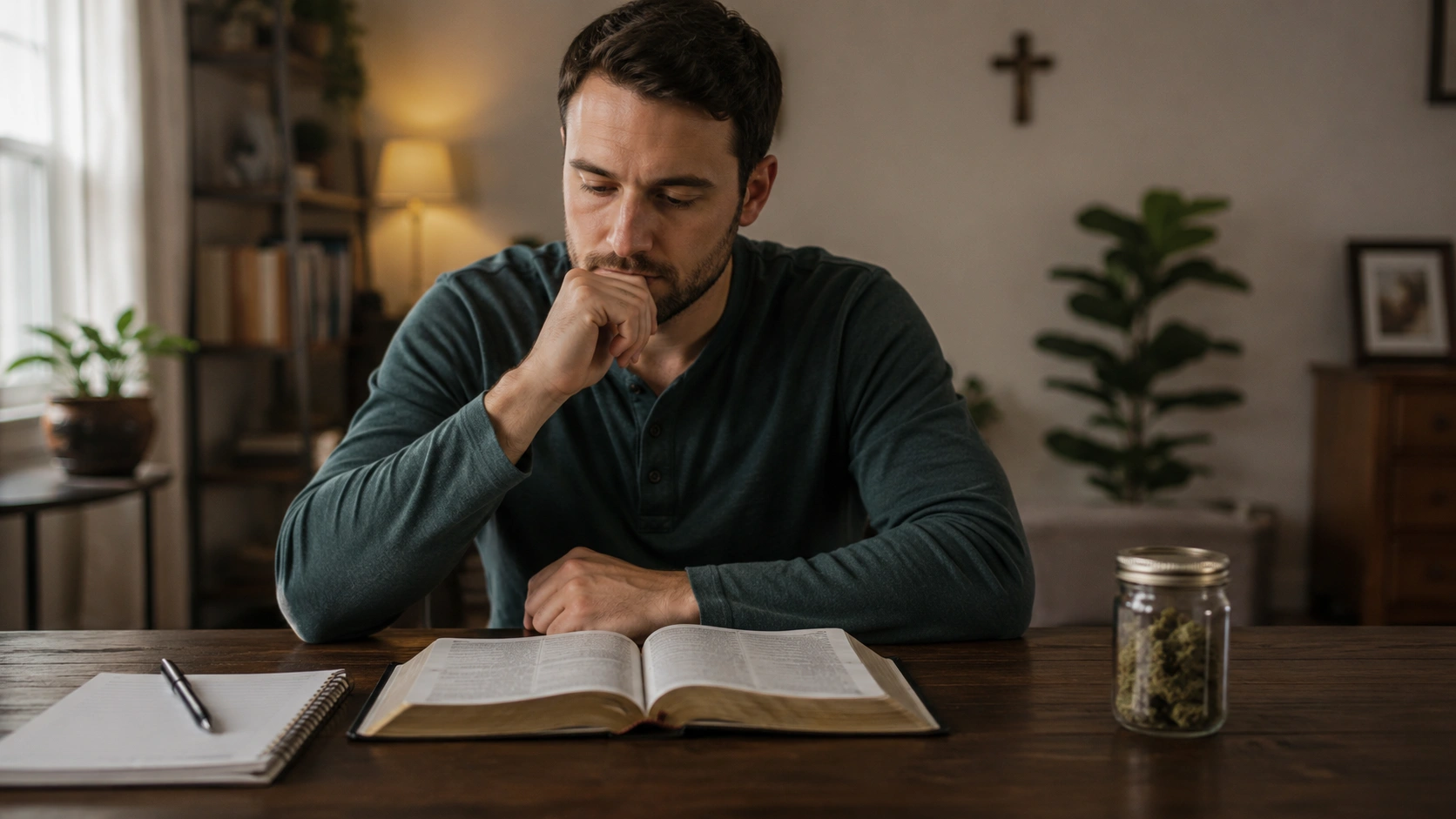
| ⚠️ Advisory: This article is for educational and informational purposes only. It does not constitute religious, legal, or medical advice. Cannabis laws vary widely by state and country. Always verify the legal status in your jurisdiction before using cannabis in any form. |
Is It a Sin to Smoke Weed: Here Is What the Bible and Christian Tradition Actually Say
Smoking weed is considered a sin by many Christian traditions when it involves deliberate intoxication, breaks the law, causes dependency, or harms the body.
The Bible does not name cannabis directly, but it applies several clear moral principles about sobriety, self-control, and honoring the body that most Christian teachers use to evaluate cannabis use.
That said, not every situation is the same. Purpose, legality, and pattern of use all matter. A person using a physician-prescribed cannabis product for chronic pain is asking a very different moral question than someone using it daily to avoid feeling anything.
The sections below walk through both sides clearly, without moralizing in either direction.
| Situation | Most Christian Teachers Say | Key Principle |
|---|---|---|
| Recreational use to get high | Generally viewed as sinful | Intoxication / Ephesians 5:18 |
| Medical use, legal, physician-guided | Usually evaluated case by case | Purpose and bodily care |
| Habitual use that controls behavior | Viewed as a dependency concern | 1 Corinthians 6:12 |
| Illegal use | Adds a separate moral concern | Romans 13:1 to 2 |
| CBD without intoxication | Not usually viewed as sinful | No impairment of judgment |
What Does the Bible Say About Weed?
The Bible does not mention marijuana by name, and no verse directly prohibits cannabis. What Scripture does provide is a set of principles that Christians have consistently applied to substance use of all kinds. Understanding those principles is more useful than searching for a verse that was never written.
Ephesians 5:18 tells believers not to get drunk on wine but to be filled with the Spirit instead. Most Christian teachers treat this as applying broadly to deliberate intoxication from any substance, not just alcohol.
The parallel being drawn is not the substance but the act of clouding the mind to escape sobriety.
| Bible Principle | Verse Reference | How It Applies to Cannabis |
|---|---|---|
| Sobriety and clear judgment | Ephesians 5:18 | Getting high weakens the clear thinking this verse calls for |
| Self-control as a spiritual fruit | Galatians 5:22 to 23 | Regular intoxication works against discipline and spiritual growth |
| The body as a place of honor | 1 Corinthians 6:19 to 20 | Health risks and long-term harm carry moral weight |
| Not being mastered by anything | 1 Corinthians 6:12 | Dependency on any substance raises a clear moral flag |
| Respect for governing authority | Romans 13:1 to 2 | Illegal use adds a separate moral problem beyond the substance itself |
| Staying alert and sober-minded | 1 Peter 5:8 | Intoxication dulls awareness and spiritual readiness |
Some researchers and theologians have proposed that “kaneh bosm,” a fragrant plant mentioned in Exodus 30:23 as an ingredient in holy anointing oil, may be an early reference to cannabis. The claim has circulated widely in some Christian cannabis communities.
However, mainstream biblical scholars and most denominational theologians do not accept this interpretation as established. The Hebrew etymology is contested, and the argument cannot be used as a reliable doctrinal foundation.
It is worth knowing this debate exists, but it should not be presented as settled.
Taken together, these passages do not create a product ban. They create a moral test. That test asks whether a substance weakens sobriety, damages the body, creates dependency, breaks the law, or overrides the self-control the Bible asks of believers.
Whether cannabis use passes or fails that test depends on how, why, and under what circumstances a person is using it.
When Does Smoking Weed Become a Sin?
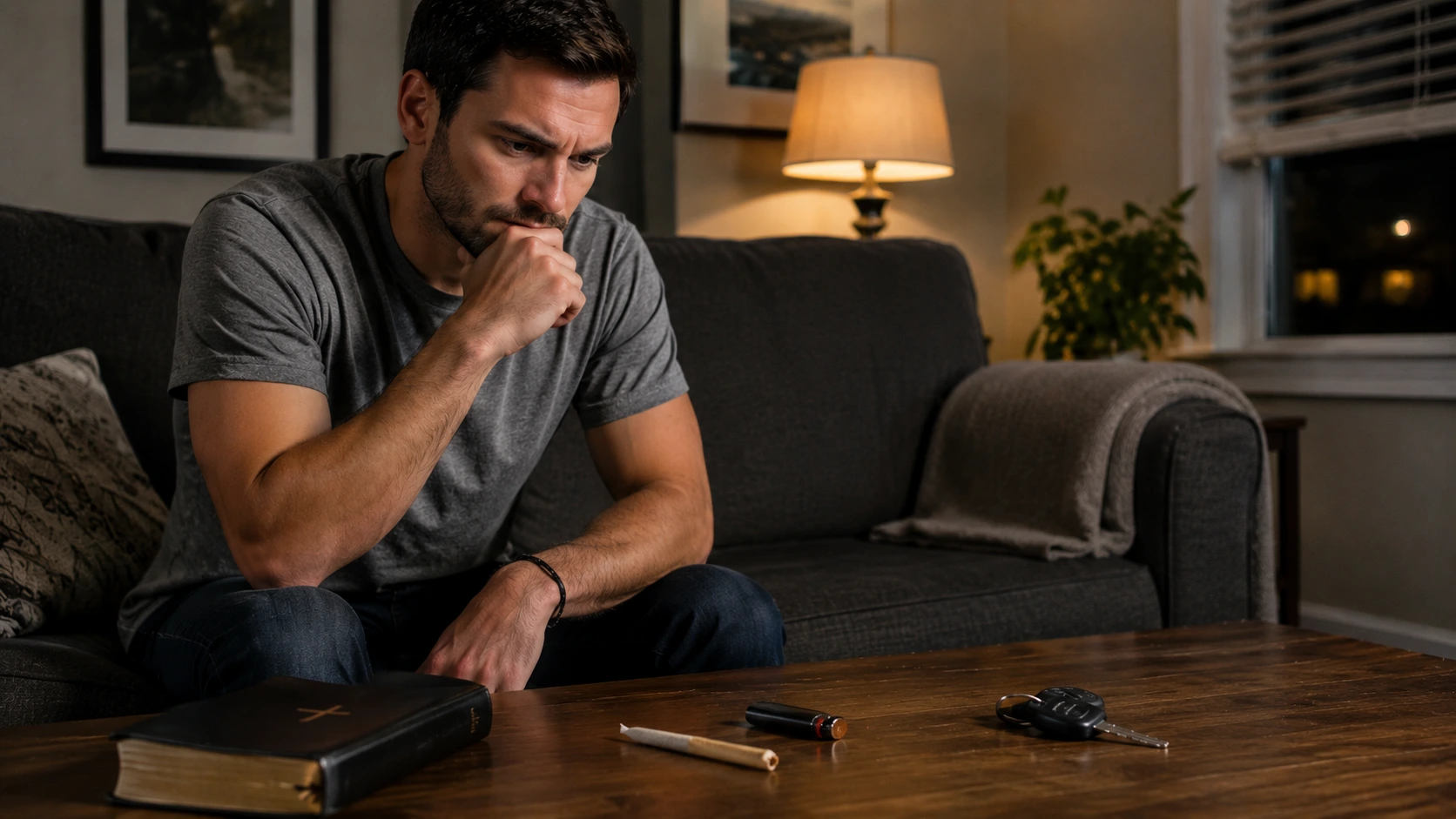
Christian ethics has always recognized that intent, context, and outcome shape moral judgment. Not every situation lands in the same place. These are the conditions where most Christian teachers would identify weed use as a genuine moral concern.
1. When the Goal Is Intoxication
Many Christian teachers draw a direct line between getting drunk and getting high, because both involve deliberately impairing judgment and altering mental state.
Ephesians 5:18 does not restrict itself to a named substance. It identifies the act of losing sobriety, and most Christian traditions read that as applying to cannabis intoxication just as much as alcohol.
If the primary reason for using is to feel high, that sits in the same moral category as deliberate drunkenness in most Protestant frameworks.
2. When It Takes Control Over You
A pattern that creates cravings, requires hiding, crowds out prayer or relationships, or makes clear-headed days feel unbearable has moved into territory most Christians would recognize as a dependency concern.
According to the National Institute on Drug Abuse, approximately 9 percent of people who use cannabis will develop cannabis use disorder, a number that rises to around 17 percent among those who begin using in adolescence.
This is not about one difficult evening. It is about what gradually masters a person’s choices over time, which is exactly what 1 Corinthians 6:12 warns against.
3. When It Breaks the Law
Romans 13 asks believers to respect governing authority. If cannabis is illegal in a person’s state or country, using it creates a separate moral issue from the substance itself.
This does not apply to someone living in a state where recreational or medical cannabis is fully legal. But for someone in a state or country where it remains prohibited, legality adds its own layer to the moral conversation.
Two people using cannabis for identical reasons are not in the same ethical situation if one is doing so legally and the other is not.
4. When It Harms Someone Else
The Centers for Disease Control and Prevention notes that cannabis impairs reaction time, coordination, and depth perception, which is why driving after cannabis use is treated as a serious safety issue by health and law enforcement agencies.
Beyond driving, using cannabis around children, pressuring others to use, or putting people at risk through impaired decisions all bring a third party into the moral equation.
Some people also combine cannabis with alcohol, and mixing both substances compounds impairment in ways that raise the stakes further. The Bible consistently links personal conduct to love of neighbor, and that connection matters here.
5. When Your Conscience Keeps Warning You
Romans 14 addresses what the New Testament calls “doubtful things,” areas where the Bible does not give a direct rule but where personal conviction carries real moral weight.
If using cannabis leaves you feeling guilt, distance from God, or a need to hide the behavior, Paul’s guidance is clear: do not override that warning. Conscience is not infallible, but it is not meaningless either. Persistent discomfort after use is worth sitting with honestly rather than explaining away.
Is Medical Marijuana a Sin?
Medical marijuana occupies a meaningfully different moral space than recreational use for most Christian traditions, because the purpose is relief rather than intoxication.
A person using cannabis for pain relief, nausea from chemotherapy, severe anxiety, or seizure disorders is not seeking a high. They are seeking a reduction in suffering, which is a different starting point.
That said, “medical” does not automatically remove every moral consideration. Honest questions still apply:
- Is the use legal and physician-guided, or is “medical” being used as a cover for recreational use?
- Is the person staying as clear-headed as the condition allows, or using more than needed for symptom control?
- Is dependency being monitored, and is the person honest with themselves and their doctor about how use is changing over time?
- Are there equally effective alternatives that carry fewer risks?
The National Institute on Drug Abuse confirms that cannabis contains THC, which has mind-altering properties and can affect mood, memory, and perception even when used for pain or nausea.
That is not a reason to refuse medical cannabis. It is a reason to remain honest about how it is being used, how much is being used, and whether the use is staying within the boundaries of genuine medical need.
Most Protestant traditions and the Catholic Catechism both distinguish medical use from recreational use. The Catholic Catechism (section 2291) describes non-medical drug use as a grave offense, while allowing therapeutic use on strictly medical grounds.
Many Protestant pastors take a similar position: medical use, approached with honesty and care, is a different moral question than recreational use to get high.
How Different Christian Traditions View Weed
Christian teaching is not a unified voice on this topic. Understanding where traditions agree and where they differ helps you evaluate the answers you will find in sermons, forums, and pastoral conversations.
- General Protestant View: Most Protestant traditions ground their evaluation in principles rather than a direct prohibition. Sobriety, self-control, bodily care, legal obedience, and personal conscience are the lenses most commonly applied. Recreational intoxication is typically viewed as problematic, while medical use and personal conviction are treated case by case. Pastors vary considerably on where they draw the line.
- Catholic Teaching: The Catholic Church takes the clearest position. Catechism section 2291 classifies non-medical drug use as a grave offense against moral law, except in cases of strictly therapeutic use. Recreational cannabis use falls into a serious moral category under this framework, regardless of legality.
- Eastern Orthodox View: The Orthodox tradition also generally opposes recreational intoxication, drawing on its emphasis on sobriety, fasting discipline, and the sanctity of the body. Medical use is evaluated with pastoral care rather than automatic condemnation.
- Personal Conscience and Pastoral Guidance: Romans 14 is central here. If cannabis use violates a sincere and informed conviction before God, that conviction carries real moral weight and should not be dismissed. Scripture, conscience, church community, and wise pastoral guidance work together rather than any one source operating alone.
These differences matter because not every Christian answer comes from the same framework.
A response from a Baptist pastor and a response from a Catholic priest may reach different conclusions from the same starting point: Scripture. Knowing which tradition you are reading from helps you evaluate what you are hearing.
A Self-Check for Christians Thinking Through This
These questions are not a checklist for passing or failing a moral test. They are an honest self-inventory designed to help you move from reacting to thinking clearly about your own situation.
| Area | Question to Ask Yourself |
|---|---|
| Purpose | Is this for health care, genuine rest, pleasure, or are you avoiding something? |
| Sobriety | Can you still think clearly and make responsible decisions while or after using? |
| Control | Could you stop for two weeks without anxiety, bargaining, or significant distress? |
| Law | Is this legal for recreational or medical use in your state and local area? |
| Health | Are you being honest about the effects on sleep, mental health, lungs, or any medications you take? |
| Love | Could this harm family members, children, or someone in recovery who looks to you? |
| Conscience | Are you hiding it? If you are, what does that signal to you? |
What the Christian Community Is Actually Saying

This question is not just a theological debate. Real Christians carry it into prayer, bring it to their pastors, and post it anonymously on forums because they genuinely do not know where they stand.
A widely discussed Reddit thread drew more than 280 replies after a user described being delivered from heavy cannabis dependency, then slowly returning to occasional use for music and relaxation. The conflict was not about addiction this time. It was about conscience, purpose, and whether enjoyment alone made it wrong.
Three concerns came up repeatedly across that thread and others.
First, many users noted that not being addicted does not settle the moral question, since intoxication, hidden use, and spiritual alertness are separate issues from dependency.
Second, people using cannabis for anxiety, chronic pain, or ADHD received noticeably more grace from other commenters than those using it recreationally, reflecting the same medical versus recreational distinction most formal traditions draw.
Third, the fear about salvation came up often. The most upvoted responses consistently separated conduct from salvation, quoting John 3:16 to make clear that faith in Christ is not contingent on resolving every grey-area habit perfectly.
What the community conversations actually show is that people are not searching for permission or condemnation. They want a framework honest enough to hold their real situation, their faith, and their conscience at the same time.
Frequently Asked Questions
Is it a sin to smoke weed if it is legal in my state?
Legality removes one moral concern (Romans 13), but it does not resolve the others. The questions of sobriety, dependency, bodily care, and conscience remain relevant regardless of whether cannabis is legal where you live.
Most Christian traditions evaluate legal recreational use on its own terms, usually focusing on whether it involves intentional intoxication, which many still view as a moral concern separate from legality.
Can Christians smoke weed without sinning?
Christians who use cannabis for documented medical purposes, in states where it is legal, under physician guidance, and without seeking intoxication as the goal, are asking a different moral question from someone using it recreationally to get high.
Whether it constitutes sin depends heavily on purpose, context, and the state of a person’s conscience. Most Protestant traditions treat this as a grey-area question requiring personal discernment rather than a hard prohibition.
What does the Bible say about marijuana specifically?
The Bible does not mention marijuana by name. Some have argued that “kaneh bosm” in Exodus 30:23 refers to cannabis, but mainstream biblical scholars and most theologians do not accept this interpretation as established.
What the Bible does address is sobriety (Ephesians 5:18), self-control (Galatians 5:22), bodily stewardship (1 Corinthians 6:19 to 20), and respect for authority (Romans 13). These principles form the basis for most Christian evaluations of cannabis use.
Can smoking weed affect prayer and Bible reading?
Yes, it can, and for many Christians, this is the most practical concern. Cannabis can produce fogginess, reduced motivation, and altered concentration.
If regular use is making prayer feel distant, Bible reading feel flat, or spiritual disciplines feel difficult to maintain, that effect is worth taking seriously.
The question is not only whether cannabis is permissible but whether it is moving you closer to or further from the clarity and attentiveness your faith depends on.
Is it wrong to be around friends who smoke weed?
Being around people who smoke is not automatically wrong, but context and your own history matter. If being present means participating against your conscience, finding your own resolve weakening, or being pulled back toward a pattern you have worked to leave behind, distance may be the wiser choice.
Friendship should not require joining something your conscience clearly resists, and that boundary can be held without judgment toward others.
What should I do if I feel guilty after smoking weed?
Pause before labeling it as either shame or conviction, because the distinction matters. Shame says you are bad. Conviction says something you did needs honest attention.
Pray specifically about what happened, name the pattern you are seeing, and pay attention to whether the feeling appears every time or only in certain contexts. If it appears consistently, do not dismiss it.
Talking with a mature and calm believer, one who will be honest without using fear, tends to be more useful than processing it alone.
Is CBD a sin for Christians?
CBD derived from hemp contains little to no THC and does not cause intoxication in typical doses. Because the primary Christian concern about cannabis involves deliberately impairing judgment, CBD products that do not produce a high sit in a different moral category for most Christian teachers. That said, product quality varies considerably.
If you are using CBD, check the certificate of analysis from a third-party lab to confirm THC levels, and verify CBD product legality in your state. If a product causes impairment, the moral questions above apply regardless of how it is labeled.
Should I tell my pastor I smoke weed?
You are not obligated to confess to everyone, but telling a trusted pastor can be genuinely useful if you feel stuck, convicted, or if use has become something you feel controlled by. Choose someone whose judgment you respect and who is known for pastoral wisdom rather than harsh reaction.
The goal of that conversation is honest guidance and support, not public shame. What you share with a pastor is pastoral in nature, not a tribunal.
Final Thoughts
This topic needs both truth and gentleness. The Bible does not name marijuana, but it does speak to the deeper issues: sobriety, self-control, the body, law, love, and conscience.
So when someone asks, “is it a sin to smoke weed,” the best answer is not careless permission or instant condemnation. The better answer is honest testing. Why are you using it? What does it do to your mind? Can you stop? Is it legal? Does it help healing, or does it help avoidance?
If cannabis is pulling you away from clarity, obedience, health, or peace with God, take that seriously. If your situation is medical, handle it with care, guidance, and honesty.
Share your situation in the comments: medical use, recreational use, anxiety, pressure from friends, or trying to quit. Keep it respectful so others can learn from it too.
Sources
The following sources were used to inform this article. For full source details, follow the links provided within the article body.
- National Institute on Drug Abuse. “Cannabis (Marijuana).” NIDA, U.S. Department of Health and Human Services. nida.nih.gov
- Centers for Disease Control and Prevention. “Cannabis and Driving.” CDC, 2024. cdc.gov
- Centers for Disease Control and Prevention. “Cannabis Health Effects.” CDC, 2024. cdc.gov
- The Vatican. “Catechism of the Catholic Church, Section 2291: Respect for the Dignity of Persons.” Vatican.va. vatican.va
- Bible Gateway. “Ephesians 5:18, Galatians 5:22-23, Romans 13:1-2, 1 Corinthians 6:12,19-20, 1 Peter 5:8.” NIV. biblegateway.com
- Fun With Dizzies. “What Happens When You Get a DUI for the First Time?” Fun With Dizzies, Law & Travel. funwithdizzies.com
- Fun With Dizzies. “What Is Cross Faded? The Science Behind the High.” Fun With Dizzies, Recovery & Harm Reduction. funwithdizzies.com
- Fun With Dizzies. “Best Edibles for Pain & Inflammation and How They Work.” Fun With Dizzies, Health & Interactions. funwithdizzies.com
- Fun With Dizzies. “Can You Travel With CBD Gummies Internationally Safely?” Fun With Dizzies, Law & Travel. funwithdizzies.com