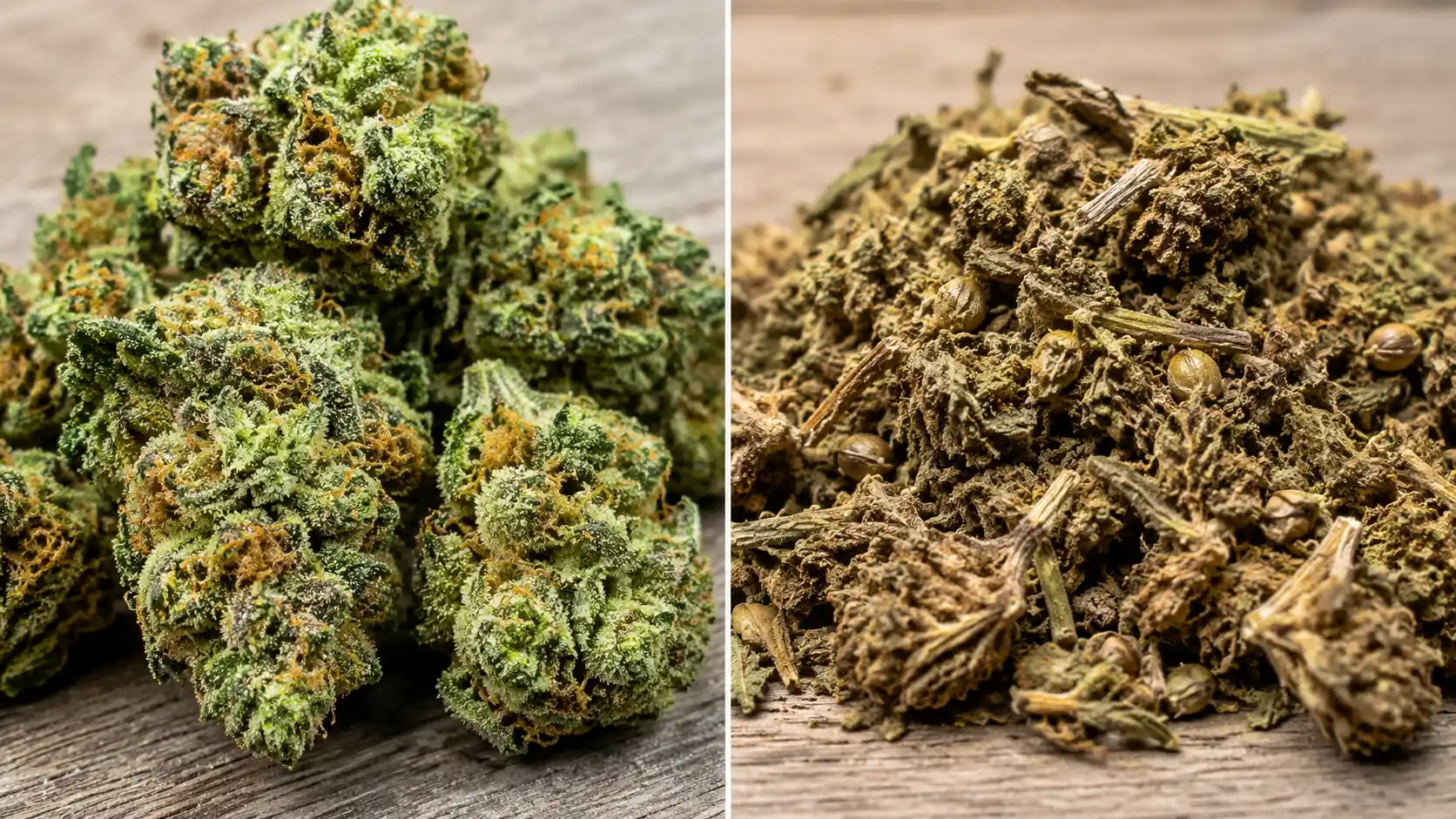
| Feature | Good Weed | Reggie Weed |
|---|---|---|
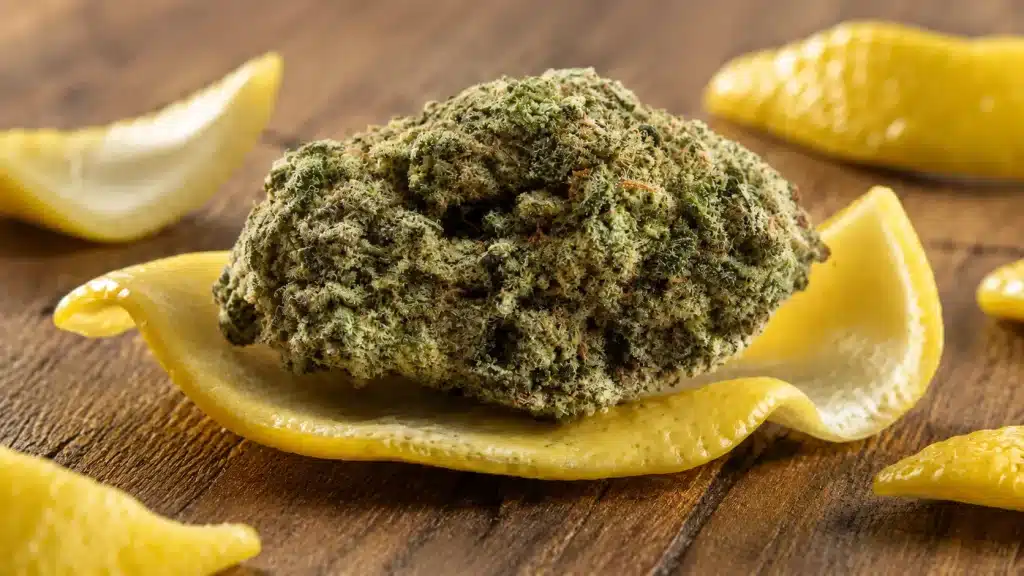
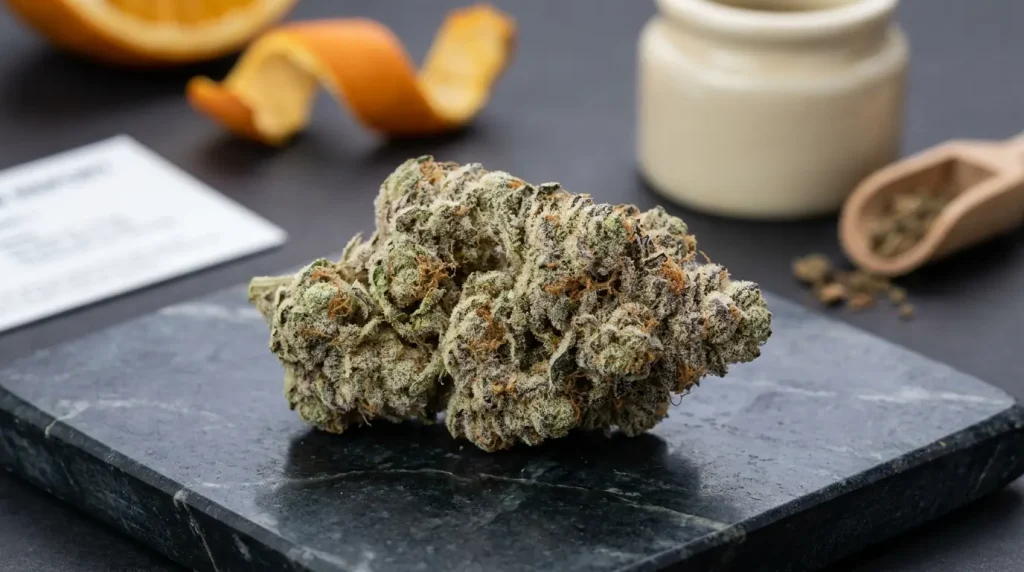
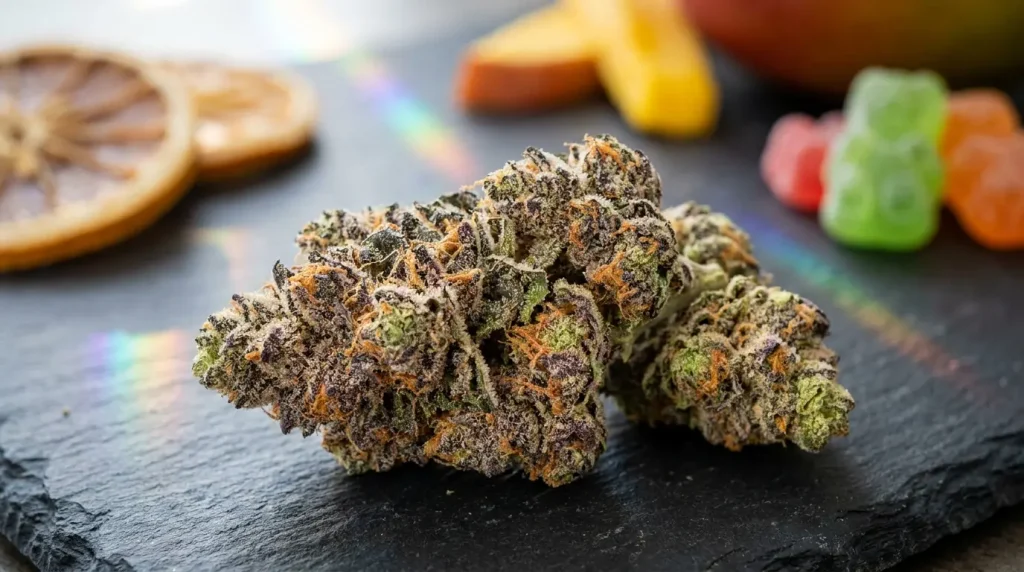
| Color | Vibrant green, purple hues, orange hairs | Brown, yellow, faded |
| Trichomes | Frosty, visible crystals | Few or none |
| Smell | Strong and distinct | Weak, grassy, hay-like |
| Texture | Sticky and springy | Dry, crumbly |
| Seeds | Rare or absent | Common |
| Trim | Clean and dense | Leafy and stem-heavy |
| Potency | Usually higher | Usually lower |
| Lab Tested | Often available | Rarely verified |
Not all cannabis is created equal, and if you have ever walked away from a purchase feeling like you paid too much for too little, you already know that.
The gap between good weed and reggie weed is real, and it shows up in every part of the experience from the first smell to the last draw. The tricky part is that looks alone will not always tell you which side of that line you are on.
Quality is built across cultivation, curing, storage, and testing, and missing any one of those steps shows. Below I have made a clear guide for you that breaks down exactly what separates high-quality cannabis from low-grade flower so you can buy with confidence.
What Does “Good Weed” Actually Mean?
You have probably heard terms like reggie, mids, loud, top-shelf, and exotic weed used to describe cannabis quality. The problem is that these labels are often used inconsistently, making it difficult to know what actually separates high-quality cannabis from lower-grade flower.
A bud may look impressive at first glance yet lack aroma, flavor, or freshness, while a less flashy flower can sometimes offer a much better experience. The truth is that cannabis quality depends on several factors working together.
Cultivation practices, harvest timing, curing, storage conditions, and lab testing all influence the final product. If one part of the process is handled poorly, the overall quality can suffer regardless of how the flower looks.
That is why appearance alone is not enough. Good weed is cannabis that has been properly grown, harvested, cured, stored, and tested. It typically delivers better aroma, richer flavor, stronger terpene preservation, and a more consistent experience.
Learning how these factors work together helps you judge cannabis with confidence instead of relying on marketing claims or THC numbers alone.
What Is Reggie Weed?
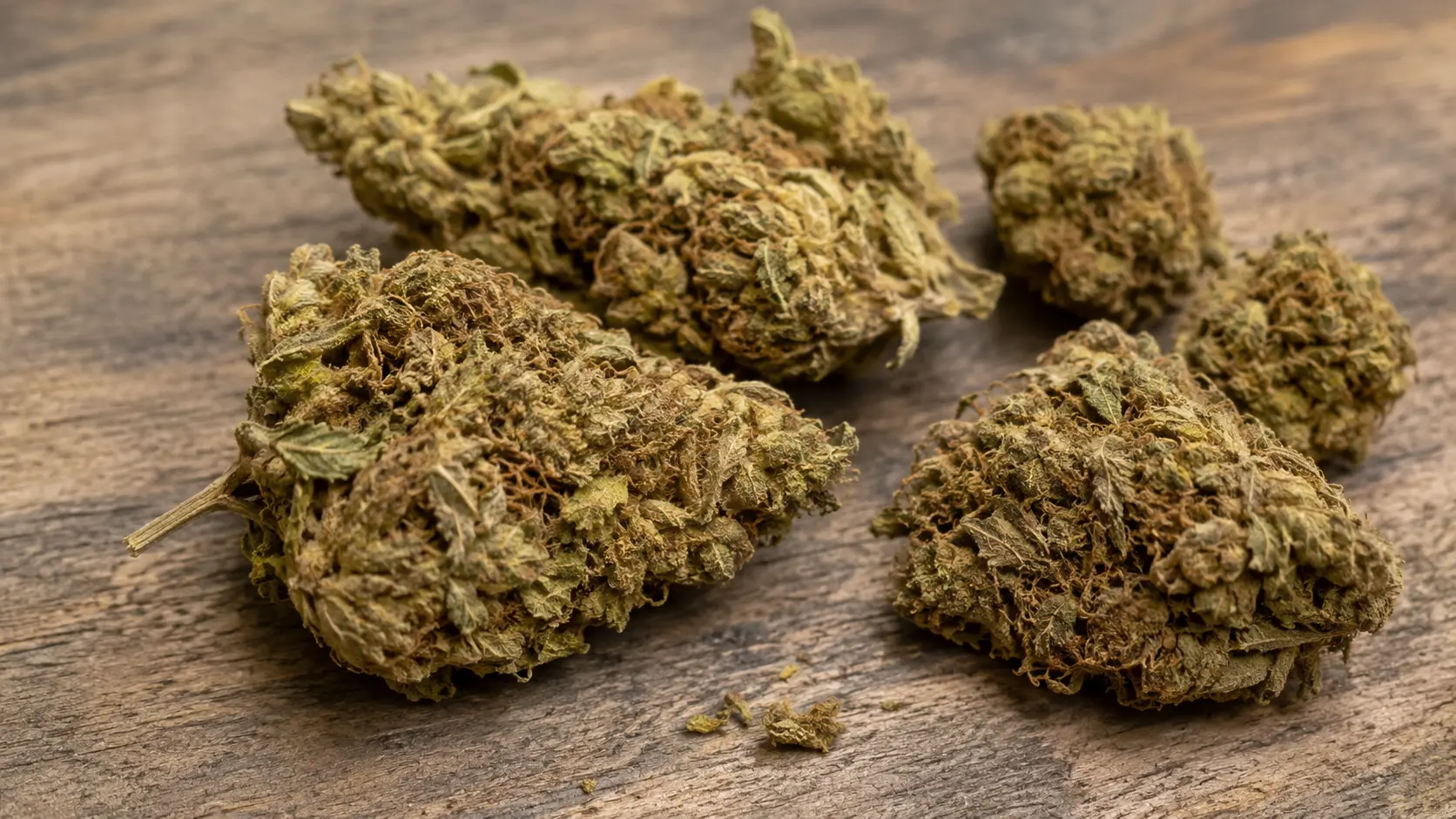
Reggie is shorthand for “regular weed,” a term used to describe cannabis that is low in quality, potency, and overall appeal. It is not just an average flower.
Reggie typically refers to buds that are dry, brown, or yellowing, poorly trimmed, seed-heavy, and lacking in aroma. The smoking experience tends to be harsh, the flavor flat, and the effects noticeably weaker compared to mid-grade or top-shelf options.
1. Where the Term “Reggie” Comes From
The term emerged from street-level cannabis culture in the United States, particularly in the South, where low-grade imported flower was common before legalization expanded access.
“Regular” became “reggie,” and the nickname stuck. It was never meant as a compliment, and decades later, it still is not one.
2. Why Reggie Became Associated With Low-Quality Cannabis
Before legal markets existed, most cannabis traveled long supply chains with little attention to curing, storage, or quality control. By the time it reached buyers, it had often been compressed, exposed to changes in heat and moisture, and left to degrade.
The result was a flower that smelled like cut grass, burned rough, and delivered a fraction of what well-grown cannabis could. That experience became the definition of Reggie.
3. Is Reggie Weed Always Bad?
Not necessarily. Older outdoor genetics, mass-produced flowers grown without close attention, and seeded cannabis can all fall into the reggie category without being completely without effect. THC content in Reggie commonly falls under 10%, according to Royal Queen Seeds,0 but cannabinoid content varies.
Someone with a low tolerance may still feel the effects, and experienced users sometimes use lower-grade flower in edibles or other preparations where aroma matters less. It is not worth celebrating, but it is not always worthless either.
| ⚠️ Advisory: Reggie weed sourced outside legal dispensaries carries no quality verification. It may contain pesticide residues, mold, or other contaminants that are not visible to the naked eye. Legal market flower with a Certificate of Analysis is always the safer option. |
Weed Grades Explained: Reggie vs Mids vs Loud vs Top Shelf
Cannabis has no official grading standard, but these informal categories are widely understood across legal and legacy markets. Knowing where each one falls helps set realistic expectations before you buy:
| Grade | Characteristics |
|---|---|
| Reggie | Lowest quality; dry, brown, seedy, weak aroma, under 10% THC is common |
| Mids | Average quality; more potent than Reggie, decent trim, some trichome coverage, mild aroma |
| Loud | Strong aroma and effects; well-cured, noticeably fragrant, higher potency |
| Top Shelf | Premium cannabis: dense trichomes, complex aroma, clean burn, lab-tested |
| Exotic | Rare genetics and premium cultivation; visually distinct, high terpene content, specialty pricing |
These grades are helpful, but they are not proof of quality. Always check the flower’s smell, texture, trim, freshness, and lab results before trusting any label.
| 📝 Note: These grade names are slang, not regulatory categories. Two dispensaries can use “top shelf” to mean very different things. Lab-verified data, including terpene percentages and cannabinoid profiles, is a more reliable guide than grade labels alone. |
Signs You Are Looking at Good Weed
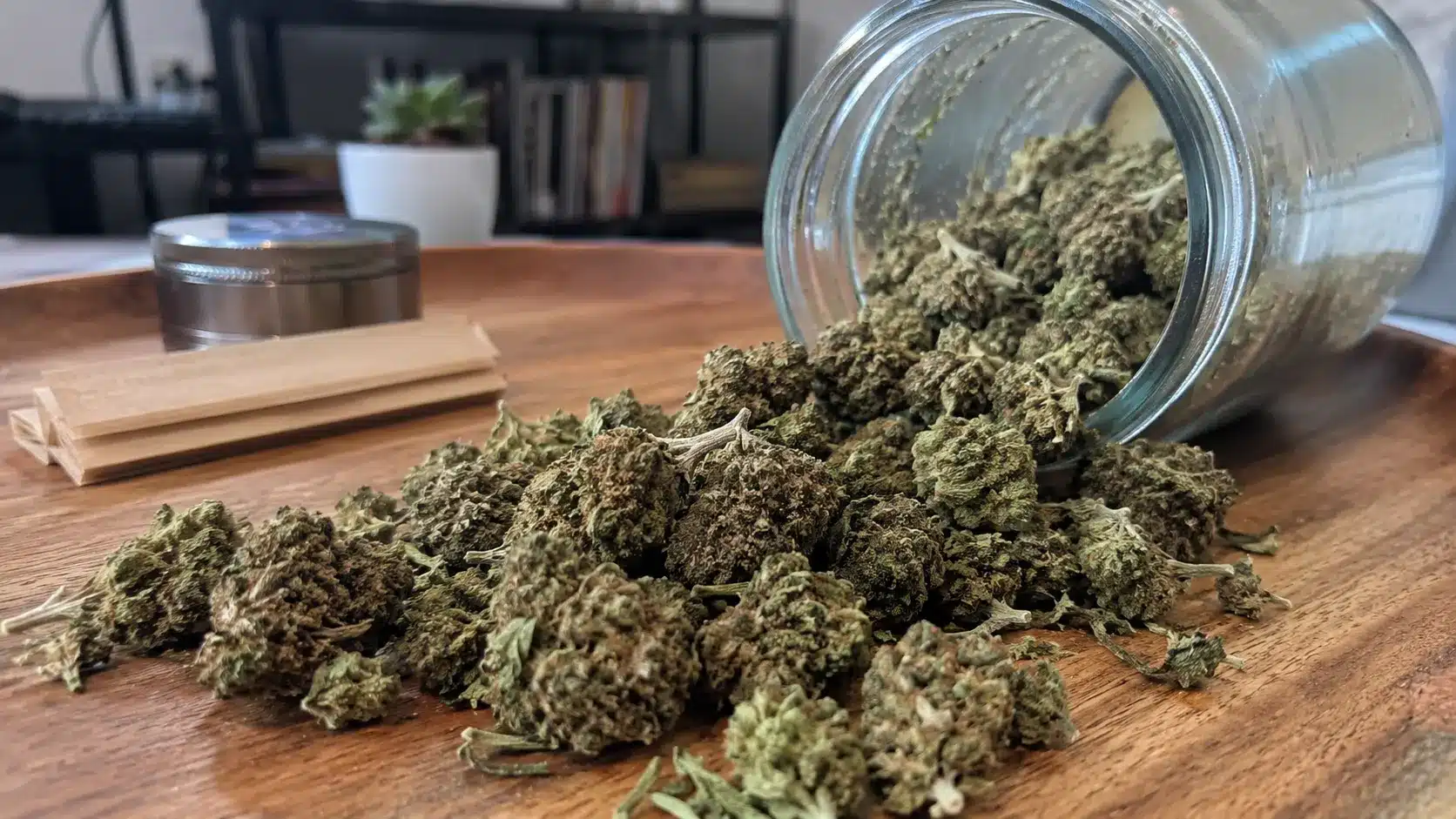
Good weed does not depend on a single sign. Look at the flower’s trichomes, color, smell, texture, trim, seeds, and density together before judging its real quality.
1. Dense Trichome Coverage
Trichomes are the tiny resin-producing glands covering the surface of cannabis flowers. They house the majority of the plant’s cannabinoids and terpenes, directly shaping both potency and aroma. Research published in Springer’s plant biology journal1 confirms that glandular trichomes are the primary site of cannabinoid biosynthesis. Under direct light, a quality flower looks frosty, as if dusted with fine crystals.
Clear trichomes signal early harvest; milky white indicates peak potency; amber means the plant is past peak, shifting toward more sedative effects. Reggie flower typically shows little to no visible trichome coverage.
2. Healthy Coloration
Quality cannabis typically shows vibrant shades of green, sometimes with purple or blue hues depending on genetics and temperature during the final weeks of growth. Orange and red pistils, the hair-like structures on buds, are a normal and healthy sign of a mature plant.
Red flags include browning, yellowing, or a grayish tint, all of which suggest poor curing, age, or improper storage. Note that some cultivars produce unusual coloration, including pinks and deep purples,2 due to anthocyanin expression, which is entirely natural and unrelated to potency.
3. Strong, Fresh Aroma
Terpenes are the compounds responsible for cannabis aroma, and they are equally central to the experience users report from different strains. A quality flower might carry notes of citrus, pine, diesel, tropical fruit, or rich earth, depending on its terpene profile.
A strong, distinct smell is a reliable indicator of terpene preservation. A weak smell, or worse, a hay or mildew odor, signals significant degradation. An ammonia smell warns of improper curing, while a musty or damp odor may suggest mold, a serious concern covered in detail below.
4. Sticky But Not Wet Texture
When you gently press a bud, it should feel springy and slightly sticky from resin, then slowly return toward its original shape. That stickiness is resin carrying cannabinoids and terpenes.
If the bud crumbles to powder or feels bone dry, the curing process likely went wrong somewhere. If it feels wet or compacts too easily, it was harvested too early or not dried properly, and mold becomes a real risk. Neither extreme produces a quality result worth your money.
5. Well-Trimmed Bud Structure
Properly processed cannabis has a clean, tight appearance with minimal large fan leaves and stems visible. Excess leaf material is not just a cosmetic issue. Fan leaves contain very low concentrations of cannabinoids and terpenes, so a leafy bag means you are paying for plant material that contributes almost nothing to the experience.
A well-trimmed flower is denser in active compounds per gram, burns more evenly, and generally reflects better post-harvest attention from the grower. Trim quality is an easy thing to check before buying.
6. No Seeds
High-quality cannabis is grown from female plants kept away from male plants, producing seedless flowers called sinsemilla. Seeds are a sign that a female plant was pollinated, diverting the plant’s energy away from resin and cannabinoid production toward seed development.
The result is lower potency and a notably harsher smoke. Finding seeds in packaged dispensary flower is rare and generally indicates a quality-control failure somewhere in the production process.
7. Appropriate Density
A quality bud should feel solid and heavy for its size, not light and airy. Density does vary between strains, so airy buds are not always a red flag. What is worth flagging is unnaturally rock-hard, almost plastic-feeling density, which can point to PGR use.
Plant growth regulators are chemicals sometimes used to force denser buds,3 but they carry documented health concerns and produce flowers with very little trichome coverage despite the bulk. Bud density alone is never a reliable indicator of quality.
| 📝 Tip: A legitimate dense bud will still be frosty with visible trichomes. PGR-affected buds look dense but feel smooth, brown-tinged, and suspiciously uniform. If a bud looks too perfect without any trichome sparkle, that is worth questioning. |
8. Fresh Harvest Date
Cannabis degrades over time as both THC and terpenes oxidize when exposed to light, heat, and oxygen. Dispensary packaging should always include a harvest or package date. Flower within six months of harvest is generally considered fresh.
Beyond a year, even well-stored cannabis will have lost meaningful terpene content and some potency. The harvest date is one of the most practical quality signals available to buyers and one of the most consistently ignored. Terpene degradation accelerates after the first six months, making freshness a real factor.
9. Verified Lab Testing
A Certificate of Analysis (COA) from a licensed third-party lab provides verified cannabinoid percentages, terpene content, and test results for pesticides, heavy metals, and microbial contamination, including mold.
A COA does not just confirm potency. It confirms that what you are buying is free from compounds you cannot smell, see, or taste. Reggie sourced outside legal markets comes with none of this quality verification.
10. Smooth Burn and Ash Quality
Quality, properly flushed, and well-cured cannabis tends to burn evenly and produce a smooth experience. The white ash claim that premium weed always produces pure white ash is a widespread myth worth dismissing.
Ash color is shaped by combustion temperature and moisture levels, not quality. What is genuinely worth noting is how evenly the flower burns. An uneven burn, constant relighting, or a harsh throat sensation typically indicates improper curing, residual moisture, or poor flush quality before harvest.
What Does Moldy Weed Look Like?
Moldy weed can look similar to frosty flower at first, but the signs are different. Use this table to quickly separate trichomes, powdery mildew, and bud rot:
| Issue | What It Looks Like | Key Difference | What To Do |
| Trichomes | Fine, glittery frost spread across the bud | Sparkles under light and looks evenly coated | Safe sign when the flower is fresh and tested |
| White Mold / Powdery Mildew | White or gray dusty patches on leaves or buds | Looks dull, powdery, and flat instead of crystal-like | Do not use the flower |
| Bud Rot | Gray, brown, or mushy areas inside the bud | Often smells musty or wet and may fall apart when pulled | Throw it away immediately |
| Moldy Weed Risk | Fuzzy, dusty, damp, or discolored spots | Can contain mold spores that irritate the lungs | Avoid smoking, vaping, or cooking with it |
When you are unsure, treat the flower as unsafe. Research published by the National Institutes of Health4 highlights the respiratory risks of inhaling mold spores from contaminated cannabis, particularly for people with asthma or compromised immune systems. Moldy weed is not worth the risk, especially if it smells damp, looks fuzzy, or breaks apart strangely.
| ⚠️ Warning: Do not attempt to cut away visible mold and use the rest of the bud. Mold spreads through spores that are not visible to the naked eye, and the surrounding flower may already be contaminated. When in doubt, discard it. |
What Does Bad Weed Look Like?
Low-quality cannabis often shows the same warning signs, whether it is reggie weed or just poorly handled flower. Brown or yellow coloring can indicate age, heat damage, or poor storage.
Buds that crumble into dust usually mean the flower has dried out and lost much of its resin. Visible stems and seeds suggest poor processing and lower overall quality.
A weak or missing smell often means the terpenes have faded, which can affect flavor and the overall experience. Poor trim is another red flag, especially when large leaves are still attached to the buds.
These leaves add harsh plant material without adding much value. When several of these signs appear together, the flower deserves a closer check before you buy. A simple look, smell, and texture test can help you avoid bad weed.
How to Tell If Weed Is Good When You Cannot Smell It
Sealed packaging can make cannabis harder to judge before buying. Since you may not smell the flower first, use the label, lab report, packaging window, and staff knowledge together:
- Read the COA: Ask for the Certificate of Analysis or scan the label. A total terpene level above 2% often points to better-preserved flower.
- Check the harvest date: Flowers older than 12 months may have a weaker smell, flavor, and texture, even if they still look decent.
- Look through the packaging: Clear windows can show color, trim, bud shape, and visible trichome coverage.
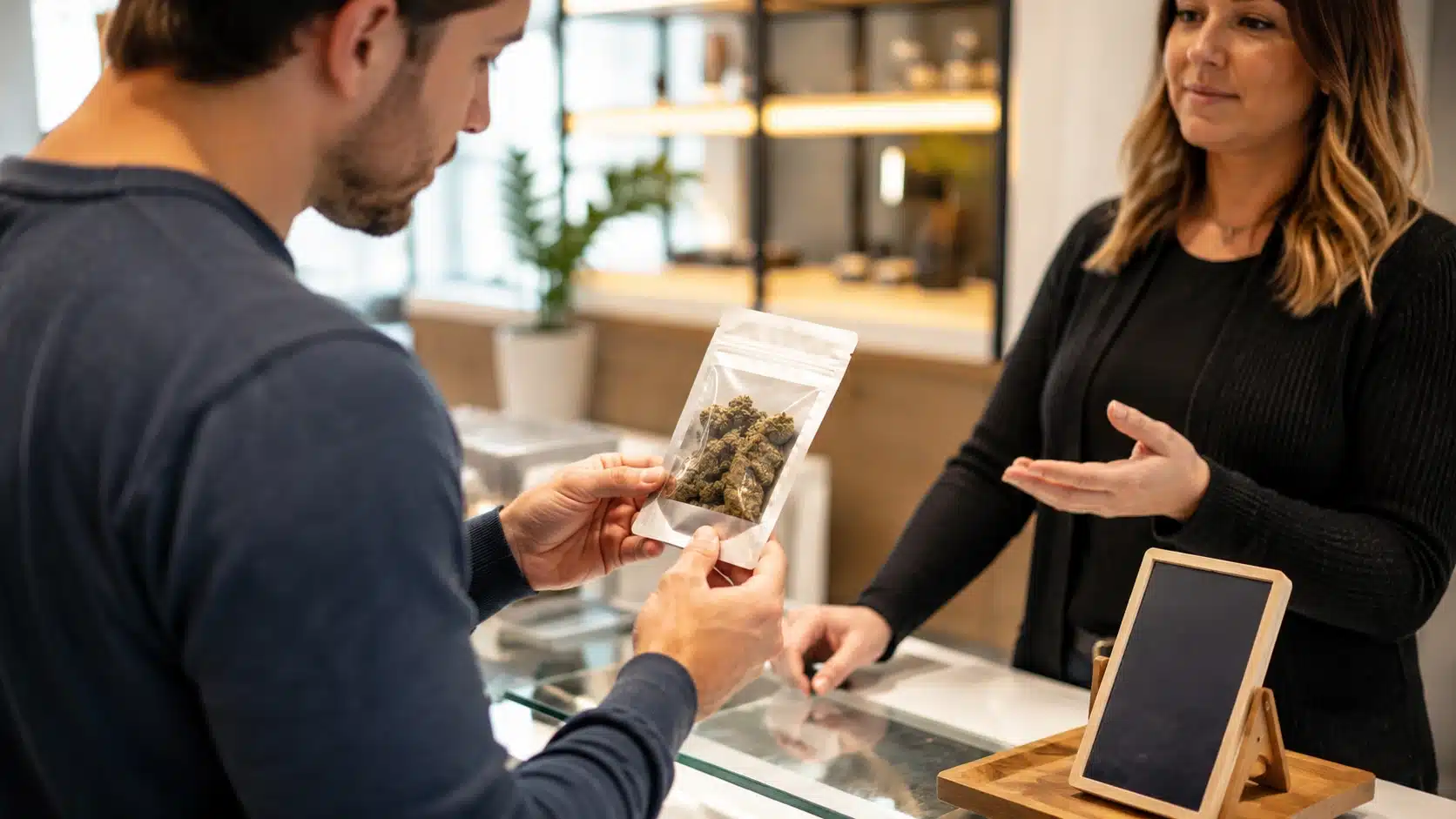
- Ask the budtender: Staff may know which batches are freshest or may offer a test jar for smell.
When smell is off-limits, do not rely on one clue. A fresh harvest date, clean COA, visible good weed traits, and helpful staff give you a safer read.
| 📝 Tip: On dispensary menus that list terpene profiles, look for strains with named dominant terpenes like myrcene, limonene, or caryophyllene with associated percentage values. Generic strain listings without terpene data often reflect products that were not tested comprehensively. |
Does High THC Mean Good Weed?
This is one of the most persistent myths in cannabis culture, and it deserves a direct answer: no. THC percentage is one factor among many, and not the most important.
How much THC content5 actually shapes the experience is more complicated than the number on a label suggests, and the National Institute on Drug Abuse6 acknowledges the complexity of cannabis’s many active compounds working together rather than THC acting in isolation.
Terpenes interact with cannabinoids in what researchers describe as the entourage effect, meaning the full spectrum of compounds in a plant shapes the experience more than any single compound.
A 28% THC flower with no terpene content remaining due to poor curing can deliver a flat, one-dimensional experience, while a 19% flower with a rich terpene profile and proper cure can feel far more nuanced and satisfying. Buyers who chase THC numbers alone often end up disappointed.
How to Store Good Weed So It Stays Fresh
Proper storage keeps good weed fresher for longer by protecting trichomes, terpenes, and cannabinoids. The main things to control are light, heat, air, and moisture:
- Use airtight glass jars: Glass helps protect flavor and limits air exposure better than plastic bags.
- Avoid plastic bags: Plastic can create static, pull trichomes from buds, and let air affect freshness.
- Add a humidity pack: A 62% RH pack helps prevent the flower from drying out without adding excessive moisture.
- Keep it cool and dark: Store cannabis in a drawer, cabinet, or sealed container away from sunlight and heat.
- Do not refrigerate it: Temperature fluctuations can cause condensation, which may increase the risk of mold.
- Open jars only when needed: Too much air exposure can weaken aroma, texture, and overall freshness.
Fresh flowers can lose quality fast when stored poorly. A sealed glass jar, steady humidity, and a cool dark spot help protect terpenes and keep buds usable longer.
Why Some Reggie Weed Can Still Get You High
Reggie weed is low quality, but that does not mean it has no effect. Older cannabis genetics and poorly grown flower can still contain measurable cannabinoids, including THC. The result depends heavily on the person using it.
Someone with a low tolerance may feel mild effects from Reggie, while a regular consumer may barely notice. The main issue is efficiency. Reggie often requires more flower to reach the same level of effect that better cannabis may provide in a smaller amount.
That can make it less cost-effective and more irritating to smoke over time. The effects may also feel flatter because Reggie usually has a weaker aroma, lower terpene content, poor curing, and more seeds or stems.
So, Reggie can still get you high, but better-quality flower usually gives cleaner, stronger, and more reliable results.
Common Myths About Good Weed
Cannabis quality gets surrounded by quick claims that sound convincing but do not always hold up. This table dispels common myths so you can better judge cannabis quality:
| Myth | What Is Actually True |
| Higher THC always means better weed | THC matters, but terpenes, curing, freshness, and cannabinoid balance also shape the final experience. |
| Purple weed is always stronger | Purple color comes from plant pigments called anthocyanins, not automatic potency. |
| White ash means premium weed | Ash color depends on burn conditions, not proof of flower quality. Smooth, even burn matters more. |
| Expensive weed is always better | Price can reflect branding, packaging, or dispensary costs, not just flower quality. |
| Reggie Weed is always worthless | Reggie is usually low-grade, but some users may still experience mild effects depending on tolerance. |
These myths can lead you toward poor choices if you trust them too quickly. A better method is to check smell, texture, trim, freshness, and lab results together.
The 30-Second Cannabis Quality Checklist
When evaluating any flower, run through these indicators quickly before buying or using:
- Frosty trichomes visible on the bud surface
- Strong, distinct aroma with no hay, mildew, or ammonia notes
- No seeds visible
- No powdery or fuzzy mold spots
- Springy texture, slightly sticky, not crumbly or wet
- Harvest or package date within the last 6 to 12 months
- COA available with pesticide, mold, and cannabinoid panels
- Clean trim with minimal fan leaves and stems
If a product checks most of these boxes, it is worth considering. If it fails several, that is a reliable signal to keep looking.
Frequently Asked Questions
What is the entourage effect, and why does it matter for cannabis quality?
The entourage effect describes how cannabinoids and terpenes work together to shape the overall experience. A flower with a rich, balanced terpene profile often delivers a more complete effect than one with high THC but little else. It is a key reason terpenes matter alongside potency.
What terpene percentage should I look for in quality cannabis?
A total terpene percentage above 1% is generally a positive sign, and anything above 2% often indicates well-preserved, properly cured flower. Terpene data is typically listed on a Certificate of Analysis and sometimes displayed on dispensary menus alongside cannabinoid percentages.
Does the price of weed reflect its actual quality?
Not reliably. Pricing in cannabis reflects branding, packaging, dispensary overhead, and market positioning as much as flower quality. A mid-priced product with a strong COA and verified terpene content can easily outperform a premium-labeled product with minimal lab transparency.
How do I tell good weed from bad weed at a dispensary?
Ask to smell a test jar, check the harvest date on the label, request the COA, and look through the packaging for trichome coverage and bud color. Combining those four checks gives a much more reliable picture than relying on the strain name or price alone.
Final Thoughts
If there is one thing worth taking away from all of this, it is that no single detail tells the whole story. Trichomes, aroma, texture, curing quality, freshness, and verified lab results each contribute to the overall picture.
Reggie weed typically fails on most of these measures at once, which is what makes it easy to identify once you know what you are looking for. Chasing THC percentages without considering anything else is roughly as useful as judging a meal by its calorie count alone.
The checklist in this guide is designed to make quality evaluation fast and practical, if you are standing in a dispensary or checking a delivery order.
The more of these indicators a product satisfies, the more confident you can feel about what you are getting. Good cannabis is worth understanding, and now you have the tools to tell the difference. Drop a comment below and share your questions.
Sources
- Livingston, S.J., et al. “Cannabis glandular trichomes alter morphology and metabolite content during flower maturation.” Planta, Springer, 2020. https://link.springer.com/article/10.1007/s00425-019-03213-3
- Gargano, M.L., et al. “Fungal Contamination of Cannabis: An Overview of the Existing Literature and a Discussion on the Risk of Mycotoxins.” PMC / National Institutes of Health, 2021. https://www.ncbi.nlm.nih.gov/pmc/articles/PMC8160576/
- National Institute on Drug Abuse. “Cannabis (Marijuana) Research Report.” nida.nih.gov. https://nida.nih.gov/research-topics/cannabis-marijuana
- Royal Queen Seeds Editorial. “What Is Reggie Weed and Should You Smoke It?” Royal Queen Seeds Blog, 2022. https://www.royalqueenseeds.com/us/blog-what-is-reggie-weed-and-should-you-smoke-it-n1511
- FunWithDizzies. “Pink Weed Strains: Effects, Flavors and Growing Guide.” https://funwithdizzies.com/pink-weed-strains-effects-flavors-growing-guide/
- FunWithDizzies. “What Is PGR Weed? Risks, Signs and Safer Choices.” https://funwithdizzies.com/what-is-pgr-weed-risks-signs-and-safer-choices/