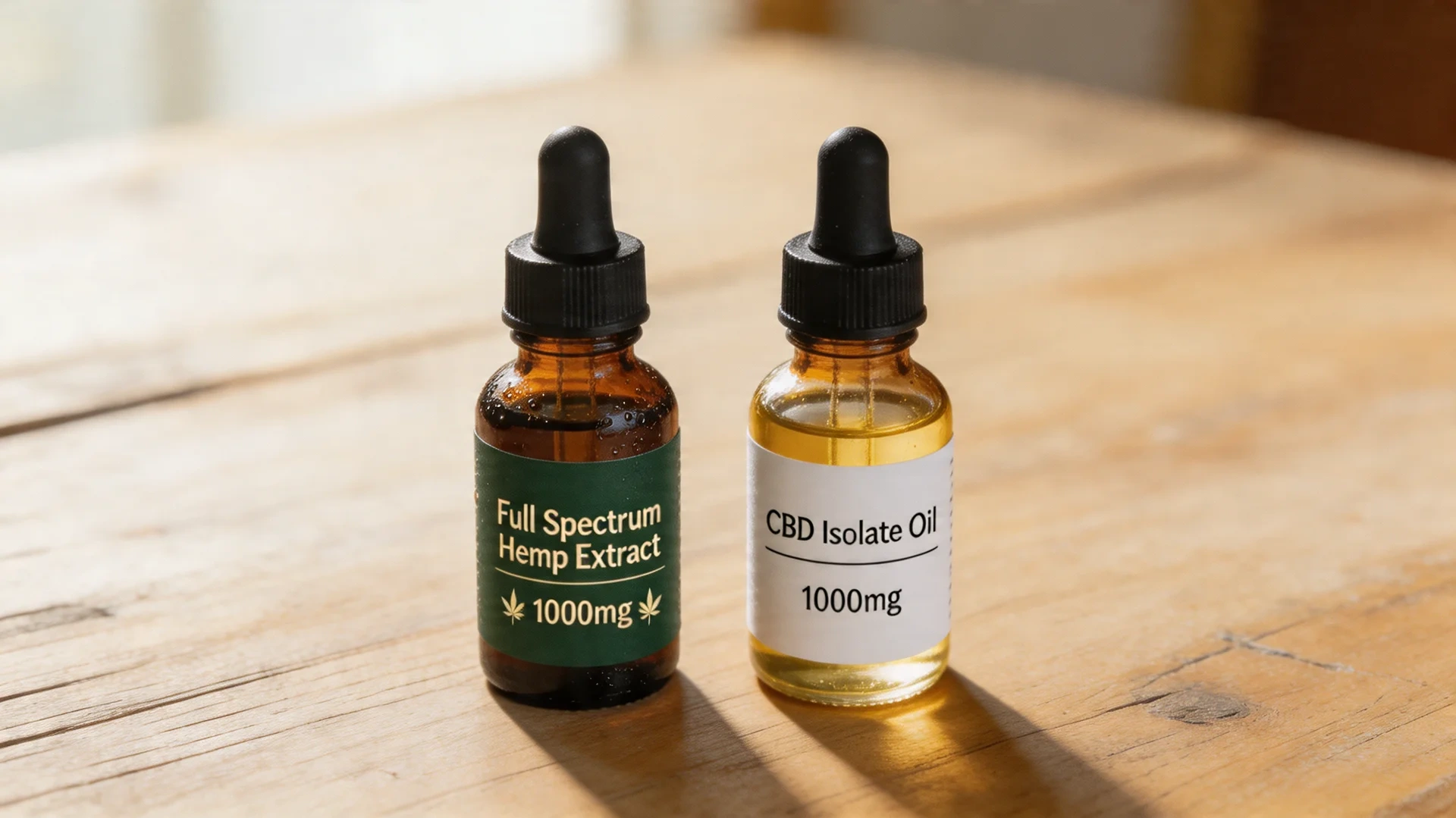
Hemp extract and CBD oil both come from the hemp plant, but they are not the same thing. Hemp extract is the broader category, CBD is one compound within it, and hemp seed oil is an entirely different product that contains no cannabinoids at all.
If you have ever stood in a health store holding two products that both say “hemp something” on the label and felt genuinely confused, that experience makes complete sense.
One says “hemp extract,” one says “CBD oil,” and a third says “hemp seed oil,” yet they are all priced differently and shelved next to each other. The confusion is not accidental: vague labeling benefits sellers more than buyers. This is a plain-language breakdown of what each product actually is, what is inside it, and which one fits what you are actually trying to do.
Hemp Extract vs CBD vs Hemp Seed Oil: Quick Reference
| Feature | Hemp Extract (Full/Broad Spectrum) | CBD Isolate Oil | Hemp Seed Oil |
| Source | Stalks, leaves, flowers | Stalks, leaves, flowers | Seeds only |
| Contains CBD? | Yes | Yes (CBD only) | No |
| Contains THC? | Trace (<0.3%) | No | No |
| Entourage Effect | Yes | No | No |
| Users Commonly Report | Calm, reduced tension, better sleep | Targeted CBD effects, precise dosing | Skin hydration, nutritional support |
| Psychoactive? | No | No | No |
| Found on Amazon? | Sometimes mislabeled | Sometimes mislabeled | Very commonly |
| 📝 Note: Products on Amazon labeled “hemp oil” are almost always hemp seed oil, not a therapeutic CBD product. Always check the label for CBD milligrams (mg) per serving. If there is no mg listed, there is no CBD. |
What Is Hemp Extract?
Hemp extract is oil pulled from the aerial parts of the hemp plant: the stalks, leaves, and flowers. Not the seeds. That distinction matters because those parts of the plant are where cannabinoids, terpenes, and flavonoids actually live.
The term “hemp extract” is a wide umbrella. It covers everything from full-spectrum products to isolates. According to a clinical breakdown by the Metagenics Institute on hemp phytocannabinoids, hemp extracts contain a wider variety of bioactives than CBD alone, including terpenes, minor cannabinoids like CBG, CBC, and CBN, and other plant compounds that work alongside CBD.
Hemp extract is the category. CBD is one ingredient inside it.
The Three Types of Hemp Extract
Full Spectrum: Contains CBD, minor cannabinoids, terpenes, flavonoids, and trace THC (under 0.3%). This is considered the most therapeutically complex option because all plant compounds work together.
Broad Spectrum: Same as full spectrum, but with the THC removed. A good middle ground for people who want the range of cannabinoids but need to stay completely THC-free.
CBD Isolate: Pure CBD, nothing else. No terpenes, no minor cannabinoids, no THC. It comes as a crystalline powder that is usually dissolved in a carrier oil like MCT oil.
| 📝 Tip: If you are buying hemp extract for wellness purposes, full-spectrum tends to deliver more consistent results for most users than isolate. More on why in the entourage effect section below. |
What Is CBD Oil?
CBD (cannabidiol) is a single specific molecule. It is one of over 150 cannabinoids found in the cannabis plant, and it interacts with the body’s endocannabinoid system, a cell-signaling network that helps regulate mood, sleep, pain response, and digestion. CBD has relatively low affinity for cannabinoid receptors directly, but published studies suggest it works by influencing how the endocannabinoid system processes its own signaling molecules, including anandamide.
CBD oil is CBD combined with a carrier oil, usually MCT oil, olive oil, or hemp seed oil. The CBD itself is extracted from the flowers, leaves, and stalks of hemp plants that contain under 0.3% THC, which makes it federally legal in the US under the 2018 Farm Bill.
Worth remembering: almost all CBD oil is hemp extract, but not all hemp extract is CBD oil. Hemp extract can include far more than just CBD. When a brand calls their product “CBD oil,” they are spotlighting the CBD specifically, but the product may still contain the full spectrum of hemp compounds depending on how it was processed.
| ⚠️ Advisory: CBD can interact with certain prescription medications, particularly those processed by the liver’s CYP450 enzyme system. If you are on blood thinners, antidepressants, or anti-seizure medications, speak with your doctor before starting CBD. |
Hemp Seed Oil: A Completely Different Product
This is where most of the market confusion originates. Hemp seed oil is pressed from hemp seeds, and hemp seeds contain no CBD and no THC. None. As Medical News Today notes in its comparison of hemp seed oil and CBD oil, hemp seed oil has a rich nutritional profile of fatty acids and bioactive compounds, but it lacks the cannabinoids associated with CBD’s reported therapeutic effects.
Project CBD states this plainly: oil pressed from hemp seed contains no CBD, no THC, and no plant cannabinoids. It is an excellent nutritional and cosmetic ingredient, but it is not a cannabinoid product.
Simple label guide:
- “Hemp extract” means the product likely contains CBD. Verify the mg count.
- “CBD oil” means CBD is the primary compound.
- “Hemp seed oil” or “Cannabis sativa seed oil” means no CBD, nutritional use only.
| 📝 Note: Hemp seed oil is genuinely useful. It is high in omega-3 and omega-6 fatty acids in an approximately 3:1 ratio, and research has found it may help with eczema, skin hydration, and cardiovascular support. It just will not do anything for anxiety or discomfort from chronic conditions. |
How CBD and Hemp Extract Interact with the Endocannabinoid System
The endocannabinoid system (ECS) is a network of receptors and signaling molecules found throughout the body, including the brain, immune cells, and peripheral nervous system. It plays a role in regulating mood, sleep, appetite, and pain response. The two main receptor types, CB1 and CB2, respond to the body’s own cannabinoids as well as plant-derived ones like CBD.
CBD does not bind directly to CB1 or CB2 receptors the way THC does. Instead, published research suggests CBD influences the ECS indirectly, including by slowing the breakdown of anandamide, an endogenous cannabinoid often associated with mood regulation and calm. Full-spectrum hemp extract engages this system more broadly: the range of cannabinoids and terpenes present means multiple receptors and pathways are activated at once, which is distinct from what a single isolated compound can achieve.
The Entourage Effect: Why Full Spectrum Works Differently Than Isolate
The entourage effect is the idea that cannabinoids do not work best in isolation. When CBD, minor cannabinoids, and terpenes are all present together, they appear to amplify each other’s effects rather than working independently.
Research from the Metagenics Institute supports this: CBD isolate shows a bell-shaped dose-response curve in studies, meaning that at a certain point, adding more CBD stops helping. Broad-spectrum hemp extract, with its full range of phytocannabinoids, smooths out that curve considerably. Isolate simply cannot replicate this, which may limit how much benefit a person gets from it.
For people managing chronic conditions, full-spectrum hemp extract tends to outperform isolate at comparable doses. Isolate still has its place, particularly for those facing drug testing or wanting precise dosing control.
| 📝 Tip: If you are new to cannabinoids, broad-spectrum hemp extract is a reasonable starting point: multiple cannabinoids present, zero THC exposure. |
Key Differences Between Hemp Extract and CBD
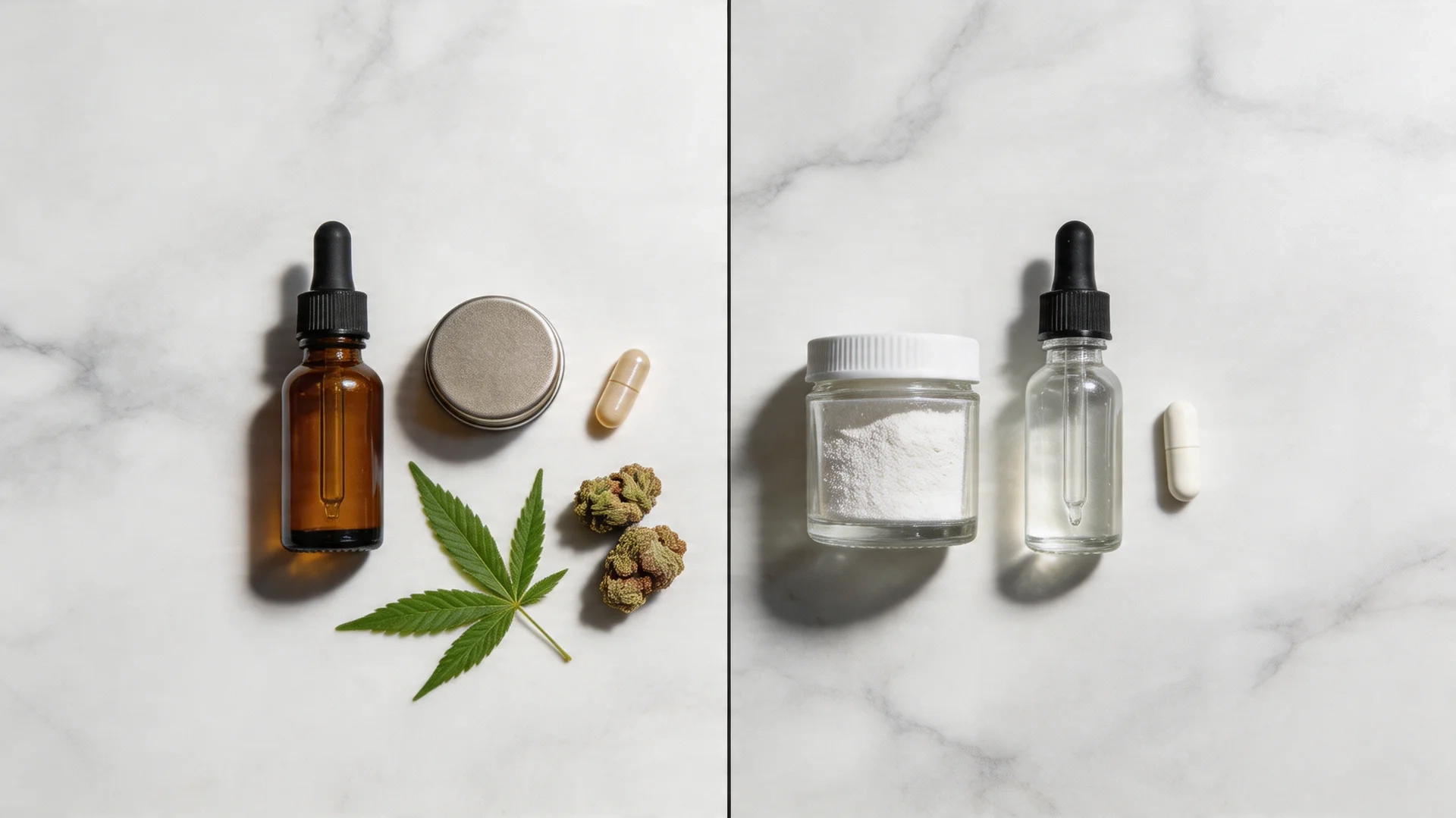
Both terms get used interchangeably on store shelves, but they describe genuinely different things. Here is exactly where those differences show up.
1. Composition and Compound Range
Hemp extract is a complex mixture: it contains CBD, minor cannabinoids like CBG and CBN, terpenes, flavonoids, and, depending on the type, trace THC. CBD oil spotlights a single compound: cannabidiol. It may or may not include additional plant compounds depending on processing. One is a full orchestra; the other is a solo instrument.
2. How They Interact with the Body
Full-spectrum hemp extract engages multiple receptors simultaneously through its range of cannabinoids and terpenes. CBD isolate oil works through a narrower pathway, targeting the endocannabinoid system with a single compound. The broader the compound profile, the more receptor interactions occur, which is why hemp extract often produces more noticeable results at comparable doses for some users.
3. The Entourage Effect
Full-spectrum hemp extract produces the entourage effect: cannabinoids and terpenes amplifying each other’s impact. CBD isolate cannot produce this effect because everything except CBD has been removed. For people managing chronic conditions, that missing complexity can make a measurable difference in how well the product actually performs.
4. Dosing Predictability
Hemp extract is harder to standardize because its potency depends on the full compound profile rather than just the amount of CBD. CBD isolate oil offers cleaner, more predictable dosing: you know exactly how much CBD you are getting with nothing else in the mix. For first-time users who want control over what they are taking, isolate offers a more straightforward starting point.
5. Best Use Cases
Users commonly report that full-spectrum hemp extract works well for managing tension, discomfort, and disrupted sleep, particularly when they want all cannabinoids working together. CBD isolate fits those who face drug testing, are sensitive to other cannabinoids, or prefer a single-compound approach. Neither is universally superior: the right choice depends on what you are trying to address and your personal health context.
Side Effects and Safety Considerations
All three products are considered safe for most adults, but they carry different risk profiles. Hemp seed oil is the safest: it is a food-grade oil with no cannabinoids and no known drug interactions at normal intake levels.
CBD and full-spectrum hemp extract require more attention. The most commonly reported side effects at standard doses include dry mouth, mild drowsiness, and reduced appetite. At very high doses, studies have noted potential increases in liver enzymes, which is why the FDA-approved CBD pharmaceutical Epidiolex is monitored with liver function tests during clinical use. At typical consumer doses (10 to 100 mg per day), published research found no significant side effects in healthy adults across six months of use, per data cited in a review published in Mayo Clinic Proceedings.
The most clinically significant concern is drug interaction. CBD inhibits CYP2D6 and CYP3A4 enzymes in the liver, which are responsible for metabolizing a wide range of medications. Blood thinners, certain antidepressants, anti-seizure drugs, and some statins all use these pathways. If you take any of these medications, a conversation with your doctor before starting CBD is not optional; it is straightforwardly necessary.
| ⚠️ Advisory: The FDA has only fully approved one CBD pharmaceutical, Epidiolex, for rare epilepsy forms. Everything else is sold as a supplement. Avoid any brand making disease-treatment claims, and consult your healthcare provider if you take prescription medications before starting any CBD or hemp extract product. |
Cost and Where to Buy: Hemp Extract, CBD Oil, and Hemp Seed Oil
Cost and availability split sharply across all three categories. Full-spectrum and isolate products ship only from licensed retailers, while hemp seed oil is available on Amazon, Walmart, and at mainstream retail stores. Here is a clear breakdown by product and price:
| Product | Type | CBD Content | Approx. Price | Price/mg CBD |
| CBDistillery Full Spectrum Oil | Full-Spectrum Extract | 1,000mg / 1oz | ~$40 | ~$0.04/mg |
| Lazarus Naturals High Potency Tincture | Full-Spectrum Extract | 1,500mg / 1oz | ~$45 | ~$0.03/mg |
| Charlotte’s Web Daily Care Oil | Broad-Spectrum Extract | 750mg / 1oz | ~$50 | ~$0.07/mg |
| Cornbread Hemp Whole Flower Oil | Full-Spectrum Extract | 750mg / 1oz | ~$40 | ~$0.05/mg |
| Lazarus Naturals CBD Isolate Tincture | CBD Isolate | 750mg / 1oz | ~$40 | ~$0.05/mg |
| CBDistillery THC-Free Pure CBD Oil | CBD Isolate | 1,000mg / 1oz | ~$65 | ~$0.07/mg |
| Manitoba Harvest Hemp Seed Oil | Hemp Seed Oil | None | ~$12 / 8.5oz | N/A |
| Sky Organics Hemp Seed Oil | Hemp Seed Oil | None | ~$15 / 16oz | N/A |
Hemp extract and CBD isolate are not reliably sold on Amazon. Always buy directly from brand sites. Prices above reflect standard 1oz bottles. All four CBD brands listed offer money-back guarantees and subscription discounts of 15 to 25%.
What the Research Actually Says
The research on CBD and hemp extract is still developing, but enough exists to draw real conclusions. A peer-reviewed review in Mayo Clinic Proceedings (VanDolah, Bauer, and Mauck, 2019) supports CBD’s role in reducing chronic pain, stiffness, and muscle spasms in patients with arthritis and multiple sclerosis, based on accumulated clinical evidence.
For anxiety, a report published in Neurotherapeutics (Blessing et al., 2015) found that CBD shows measurable promise across generalized anxiety disorder, panic disorder, social anxiety, OCD, and PTSD.
Sleep benefits appear partly direct and partly indirect: when tension and discomfort are reduced, sleep quality tends to follow. Research also found no significant reported side effects at a daily dose of 300 mg of CBD across six months of use in healthy adults.
Hemp seed oil specifically has been shown to improve eczema symptoms through its omega-6 to omega-3 fatty acid balance and its gamma-linolenic acid (GLA) content, based on controlled studies in dermatology literature.
How to Read the Label Without Getting Fooled
Label literacy is the most useful skill you can develop when buying hemp or CBD products. Most problems start at the shelf, not after you get home.
On a hemp extract or CBD product:
- Look for milligrams (mg) of CBD per serving. If it is not listed, skip the product.
- Identify the type: full spectrum, broad spectrum, or isolate.
- Check for a Certificate of Analysis (COA) from a third-party lab that matches the product’s batch number.
- Confirm the extraction method. CO2 extraction is cleaner than solvent-based methods.
Red flags:
- “Hemp oil” is listed as the active ingredient with no mg of CBD.
- Proprietary blends that hide individual cannabinoid amounts.
- No third-party lab report available.
- Claims that the product “cures” or “treats” any condition.
For a deeper look at which brands to trust and what specific red flags to watch for on packaging and lab reports, there is a detailed guide on how to choose a safe, tested CBD product that covers exactly this. Once you know what an honest label looks like, spotting a poor product takes seconds.
Hemp Extract vs CBD: Which One Is Right for You?
Your goal determines your choice here. If you are dealing with tension, chronic discomfort, poor sleep, or inflammation and you want all cannabinoids working together, full-spectrum hemp extract is the more complete option. It is also worth trying if CBD isolate has not delivered results for you before.
If you face workplace drug testing, prefer precise dosing, or want to start with a single compound, CBD isolate is the more practical fit. Hemp seed oil belongs in an entirely different conversation: it supports nutrition, skin hydration, and cooking, not therapeutic relief.
For a deeper look at how hemp oil and CBD each affect the body, this comparison of hemp oil vs CBD effects and uses is worth reading before you decide.
| 📝 Tip: Start around 10 to 25 mg of CBD per day and increase gradually over two to four weeks. There is no universal dose: body weight, metabolism, and your specific situation all play a role. |
Frequently Asked Questions
Does hemp extract contain CBD?
Yes, hemp extract typically contains CBD along with other cannabinoids, terpenes, and plant compounds, unless it is hemp seed oil, which contains none. Always check the label for a listed CBD milligram amount to confirm what you are actually buying. If no mg figure appears on the packaging, the product has not been formulated as a cannabinoid product.
Is hemp extract stronger than CBD oil?
Not necessarily stronger, but more complex. Full-spectrum hemp extract includes minor cannabinoids and terpenes that work alongside CBD, which users commonly report produces more noticeable results than isolate. Pure CBD oil (isolate) offers a cleaner, more predictable single-compound experience. Neither is universally better: the right choice depends on your goal and whether drug testing is a factor.
Is hemp oil the same as CBD oil?
No, and this is the most common source of confusion. “Hemp oil” sold on mainstream retail platforms is almost always hemp seed oil, pressed from seeds and containing no cannabinoids. CBD oil is extracted from the flowers, leaves, and stalks and contains CBD as an active ingredient. The two products come from the same plant but are entirely different in composition and use.
What are the side effects of hemp extract?
At standard consumer doses (10 to 100 mg per day), the most commonly reported side effects are dry mouth, mild drowsiness, and reduced appetite. CBD can interact with medications processed by the liver’s CYP450 enzyme system, including blood thinners and certain antidepressants. If you take prescription medications, speak with your doctor before starting any CBD or hemp extract product.
Can hemp extract get you high?
No. Hemp-derived products contain less than 0.3% THC by law, which is not enough to cause psychoactive effects. Neither hemp extract nor CBD oil will produce a high, regardless of whether the product is full-spectrum or isolate. The trace THC in full-spectrum products exists at levels that are physiologically inert in that regard.
What is the difference between hemp extract and hemp seed oil?
Hemp extract comes from the plant’s flowers, leaves, and stalks and contains cannabinoids including CBD. Hemp seed oil is derived solely from seeds and contains no cannabinoids. They come from the same plant but have completely different compositions: one is a cannabinoid product, the other is a nutritional and cosmetic oil.
Is CBD oil legal in the US?
Yes, hemp-derived CBD oil containing less than 0.3% THC is federally legal under the 2018 Farm Bill. Individual state laws can vary, so it is worth checking your state’s specific regulations, particularly around full-spectrum products that contain trace THC.
How long does it take for hemp extract to work?
It depends on the delivery method. Sublingual oils typically work within 15 to 45 minutes. Edibles and capsules take 60 to 90 minutes. Topicals work locally within 20 to 30 minutes. Consistent daily use over two to four weeks tends to produce the most noticeable cumulative results.