| ⚠️ Advisory: This article is for general health information only. Blood donation eligibility rules can vary by center, health status, medication, travel history, and donation type. Always answer screening questions honestly and consult your donation center for guidance specific to your situation. |
Can You Donate Blood If You Smoke Weed?
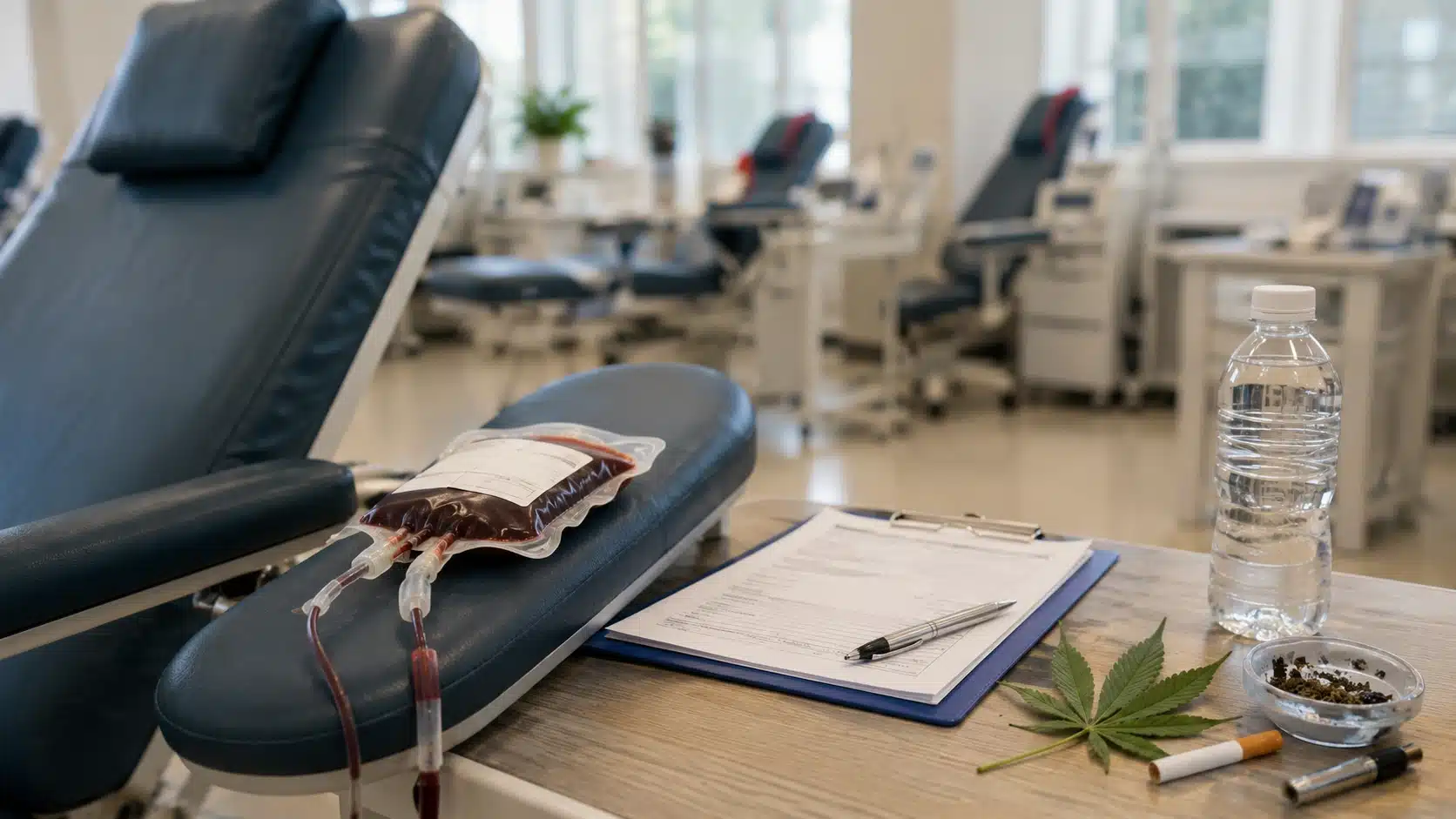
Yes, you can donate blood if you smoke weed, provided you are sober, healthy, and able to complete the donor screening at the time of your appointment. According to the American Red Cross, cannabis use alone does not disqualify a person from donating blood — the disqualifying factor is impairment, not past use.
Most donation centers do not set a fixed wait period after cannabis use. What they do require is that you arrive clear-headed, alert, and capable of answering screening questions accurately. If staff assess that your memory or comprehension is impaired when you present, you will be asked to return another day.
Quick Glance: Can You Donate Blood If You Smoke Weed?
| Product or Situation | Can You Donate? | What to Know |
| Smoked weed | Usually yes | You must be sober and pass screening. |
| Weed vape | Usually yes | Do not donate while impaired. |
| Edibles | Usually yes | Wait until all effects have fully passed — edibles last longer than smoked cannabis. |
| Dabs or concentrates | Usually yes, with caution | High-potency THC products may produce stronger or longer-lasting impairment. |
| Synthetic weed (K2, Spice) | Call first | Some synthetic cannabinoids have been linked to contamination and coagulation risks. |
| Cigarettes | Usually yes | Avoid smoking close to your appointment if you tend to feel dizzy or lightheaded afterward. |
| Nicotine vape | Usually yes | The main concern is how nicotine affects your pulse and blood pressure on the day. |
| Alcohol plus weed | Wait | Do not donate while impaired by any combination of substances. |
| Feeling sick or dizzy | No | Reschedule for another day when you feel well and stable. |
| Certain medications | Maybe | Check the donor center’s medication deferral list. Never stop a prescribed medication in order to donate. |
What the FDA and Red Cross Actually Say
A point that many people miss: blood donation eligibility in the United States is regulated by the Food and Drug Administration (FDA), not the Drug Enforcement Administration (DEA). The federal scheduling of cannabis under the Controlled Substances Act has no bearing on your eligibility to sit in a donation chair. The FDA does not require blood collection centers to test donated blood for the presence of THC (tetrahydrocannabinol), the principal psychoactive compound in cannabis.
The American Red Cross states clearly that cannabis use does not disqualify a donor — but that donors should not present if cannabis use is impairing their memory or comprehension at the time of donation. The Red Cross does not test donated blood for THC. Blood is screened for infectious disease markers including HIV, hepatitis B, hepatitis C, and syphilis. Cannabis metabolites are not part of that panel.
A key practical note: even if trace amounts of THC remain in a donor’s bloodstream, the Red Cross has confirmed that heavy cannabis use by the donor will not cause a transfusion recipient to test positive for THC. The amounts are not clinically significant for that purpose.
| Note: If you have a medical marijuana card, that alone does not affect your eligibility. The conditions you use cannabis to manage and any other medications you take may affect eligibility separately — it is worth confirming with your donation center. |
How Smoking, Vaping, Weed, and Nicotine Affect Blood Donation
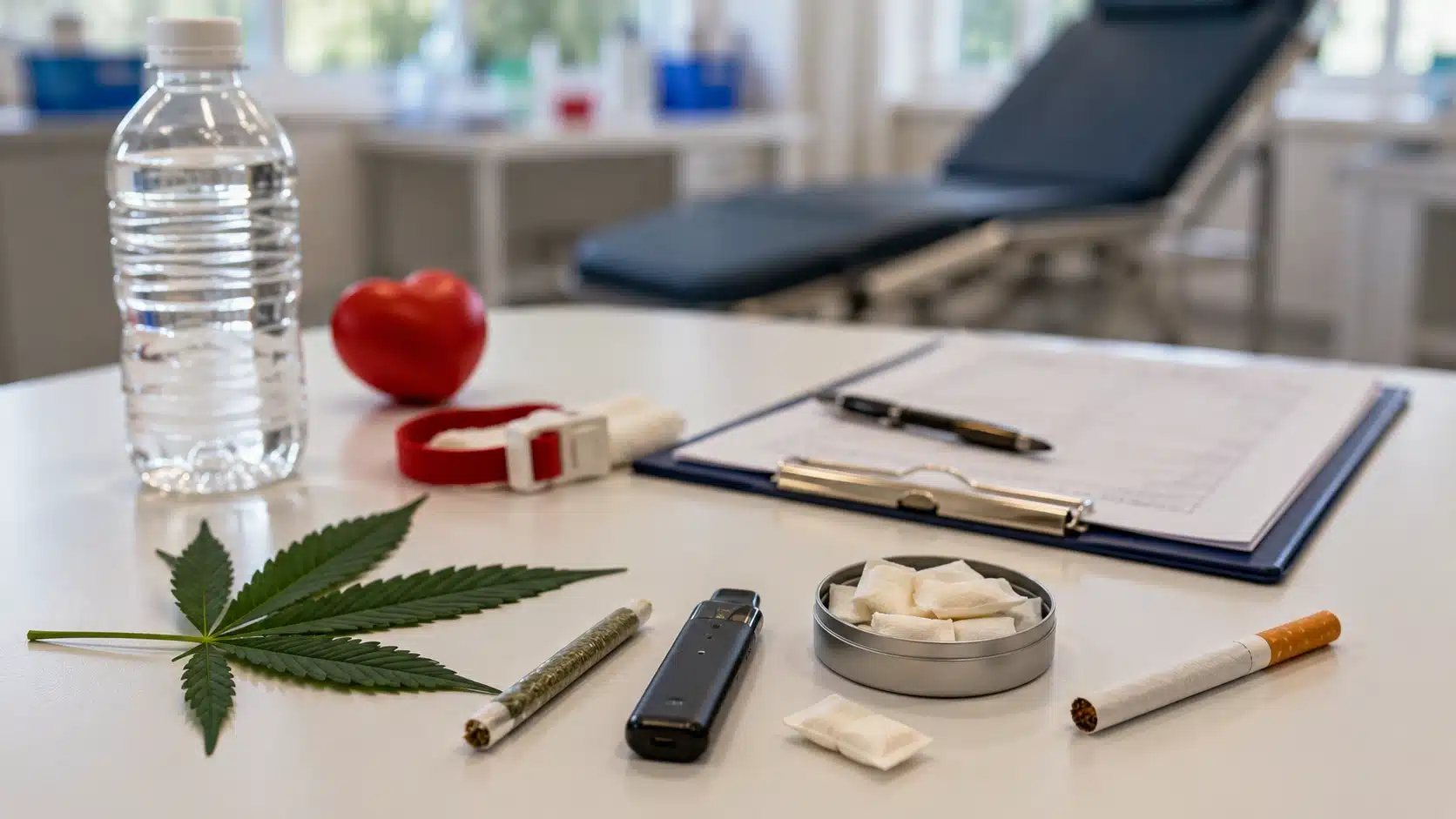
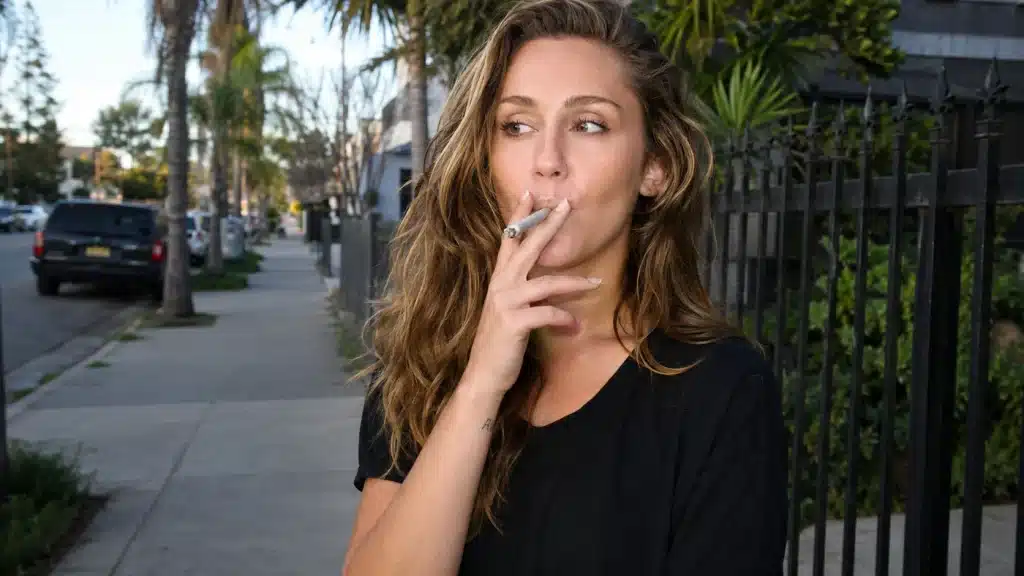
Smoking weed, smoking cigarettes, or vaping does not automatically prevent you from donating blood. What matters most is your condition when you arrive: sober, steady, hydrated, and able to answer screening questions clearly. Different products affect your body in different ways, and those effects are what staff are assessing during your appointment.
| Product | Can It Affect Donation? | What to Do |
| Smoked weed or marijuana vape | May affect focus, balance, anxiety, or alertness | Donate only when fully sober and steady |
| Edibles | Slower onset, longer duration than smoked cannabis — effects can last 4 hours or more | Wait until all effects are completely gone |
| Dabs and concentrates | Higher THC concentration may produce stronger dizziness, sedation, or anxiety | Wait until you feel clear and stable |
| Cigarettes | May cause dizziness, nausea, weakness, or elevated blood pressure | Avoid smoking close to donation if it affects how you feel |
| Nicotine vapes | May cause shakiness, rapid pulse, or upset stomach in some users | Wait until you feel normal and steady |
| Nicotine pouches, gum, or patches | May affect heart rate or cause nausea in sensitive users | Use caution if you feel faint or queasy on the day |
Nicotine use alone does not typically make you ineligible to donate. The documented concern is how your cardiovascular system responds before and after giving blood.
Because donation can cause some donors to feel lightheaded, vaping or smoking immediately before or after your appointment may make that response worse. After donating, sit down, drink fluids, and eat the provided snack before resuming nicotine use if you are feeling any effects. If you want to understand how your body clears nicotine and how that timing maps to a donation appointment, that process is covered in detail separately.
How Cannabis Affects Blood Pressure and Heart Rate During Donation
Blood donation centers take your blood pressure and pulse as part of the standard pre-donation mini-physical. If either reading falls outside the acceptable range on that day, you may be deferred regardless of other factors.
Cannabis temporarily affects the cardiovascular system. In the period shortly after use, THC commonly produces an increase in heart rate.
Some users experience a temporary rise in blood pressure, while others experience a drop – particularly when moving from sitting to standing, which can contribute to lightheadedness.
Bloodworks Northwest, a U.S. blood collection organization, notes that these transient cardiovascular effects are among the documented reasons it recommends waiting at least 24 hours between cannabis use and blood donation, even when a donor feels subjectively sober.
The cardiovascular effects of cannabis vary considerably by product type, THC concentration, frequency of use, and individual tolerance. Users of high-potency concentrates, or those who consumed cannabis and are not regular users, may experience more pronounced and longer-lasting cardiovascular changes than regular users of lower-potency flower.
This does not mean you will be deferred — but it is a physiological variable worth being aware of when timing your appointment.
| ⚠️ Advisory: Do not use a fixed-hour count as your only gauge of readiness. If you feel high, shaky, dizzy, anxious, or unclear — regardless of how long ago you used cannabis — reschedule for a day when you feel fully sober and stable. |
Can You Donate Plasma or Platelets If You Smoke Weed?
The same core rules that apply to whole blood donation apply to plasma and platelet donation: cannabis use alone does not disqualify you, but you must not be impaired at the time of your appointment. Donation centers do not test plasma or platelets for the presence of THC as part of their standard infectious disease screening panel.
Plasma donation centers such as CSL Plasma, BioLife, Grifols, and Octapharma follow eligibility frameworks consistent with FDA guidance.
Cannabis use is not a categorical disqualifier at these organizations, though specific policies can vary by location and individual health history. Calling ahead before your first appointment is always worth the few minutes it takes.
One area where plasma and platelet donation diverge from whole blood involves synthetic cannabinoids. The FDA has not issued universal guidelines covering synthetic marijuana products such as K2 or Spice for plasma donors. Some varieties of these products have been associated with anticoagulant contamination that could affect plasma safety. Local blood and plasma centers make individual decisions about this based on whether such contaminants have been detected in their collection areas. If you use synthetic cannabinoid products and want to donate plasma, contact the specific center before presenting.
For edible cannabis users considering plasma donation: because edibles are absorbed more slowly and produce longer-lasting active effects than smoked cannabis, with the active period commonly extending four hours or more after consumption, planning your appointment for a day when you have not recently used is the clearest path to an uninterrupted donation visit.
| Note: Whole blood donors must wait at least 56 days between donations. Platelet donors may be eligible every 7 days, up to 24 times per year. These intervals apply regardless of cannabis use, plan your sessions around the standard medical timeline, not around substance clearance. |
When Can You Donate Blood If You Use Cannabis or Nicotine?
You can donate when you are sober, healthy, well-fed, hydrated, and ready to answer the screening questions clearly and accurately.
There is no single established wait time because cannabis affects people differently depending on the product used, the dose, the method of consumption, and individual metabolism. The following breaks down the most relevant scenarios.
If You Smoked or Vaped Weed
When cannabis is smoked or vaped, THC enters the bloodstream rapidly and effects typically peak within 10 to 30 minutes. The active period generally clears within two to three hours for most users, though this varies.
You should be fully sober and steady before presenting — able to speak clearly, maintain focus, sit comfortably, and answer screening questions accurately.
If you still feel high, anxious, dizzy, or mentally slow, donate another day. Understanding how long smoked cannabis stays active in your system follows a similar calculation to other situations where full cognitive function is required.
If You Took an Edible
Edibles take longer to absorb — commonly 40 minutes to two hours before effects are felt — and the active period typically extends four hours or more after consumption.
A dose that felt manageable during the first hour may still produce significant impairment at hour three. If you ate a gummy, capsule, beverage, or food containing THC, wait until all effects have completely cleared before donating.
This is not conservative advice for its own sake: the onset delay of edibles is well-documented and has caught many users off guard at the wrong moment.
If You Used Dabs or Concentrates
Dabs, wax, shatter, live resin, and other high-concentration THC products deliver a higher dose of THC per use than most cannabis flower. Users who are not regular concentrate users may experience more pronounced and longer-lasting effects, including cardiovascular changes, sedation, or anxiety.
Donate only when you feel fully sober, steady, and clear-headed. If the product produced any dizziness, shaking, or disorientation, wait longer than you might with lower-potency cannabis.
If You Smoked Cigarettes
Cigarette use does not prevent you from donating blood, but timing has a documented effect on your cardiovascular readings. Nicotine can elevate blood pressure before and during your appointment.
If smoking tends to make you dizzy, nauseous, or raise your pulse noticeably, avoid it for at least a few hours before donation.
After giving blood, your body has reduced its circulating blood volume — smoking or vaping immediately post-donation may intensify lightheadedness during that recovery window. Sit down, drink fluids, and eat before resuming.
If You Used Nicotine Vapes or Other Nicotine Products
Nicotine vapes, pouches, gum, and patches do not block donation eligibility on their own. The relevant question is how your cardiovascular system responds to nicotine on any given day and how that interacts with the mild physiological stress of blood donation. If you feel stable, your readings fall within range, and you pass screening, nicotine product use will not prevent you from donating. If nicotine reliably raises your pulse or blood pressure, plan your appointment for a time when you have not recently used.
Quick self-check before your appointment:
|
When Should You Not Donate Blood?
You should not donate blood if you are currently high, impaired by any substance, sick, feverish, dehydrated, or uncertain about a recent medication change, illness, or travel situation. In each of these cases, the answer is not “never donate” — it is “not today.”
If You Are High or Impaired
Do not donate if you feel high from marijuana, edibles, dabs, vapes, or any THC product. Donation requires clear focus, steady balance, and accurate responses during the screening process. If your speech, coordination, mood, or cognition feels off, reschedule. The screening exists to protect both you and whoever receives the blood.
If You Used Synthetic Weed
Synthetic cannabinoids sold as K2, Spice, or under various street names are not the same as plant-derived cannabis. Their active compounds are unpredictable and have in some cases been associated with serious bleeding risks due to anticoagulant contamination. If you have used synthetic cannabinoid products, call the donation center before presenting. Do not assume the same rules that apply to plant cannabis apply here.
If You Are Taking Certain Medications
Some medications require a deferral period before you can donate blood. These include blood thinners, some antibiotic treatments, some acne medications, finasteride, dutasteride, PrEP, PEP, and others. The Red Cross medication deferral list specifies which medications apply and the associated waiting periods. Never discontinue a prescribed medication in order to donate blood. Bring a list of your current medications to your appointment and ask the center directly if you are unsure about any of them.
If You Feel Sick or Unwell
Wait if you have a fever, active infection, vomiting, significant dizziness, dehydration, or general faintness. Blood donation places a real physiological demand on the body. If you are already feeling unstable, that demand may make things considerably worse. Donate when you feel genuinely stable, rested, and ready — not on a day when you are “pushing through.”
If You Recently Drank Alcohol or Mixed It With Weed
Do not donate if alcohol alone or in combination with cannabis still affects you. The combination of alcohol and cannabis can intensify dizziness and nausea beyond what either substance produces alone. Wait until you are fully sober, well-rested, and hydrated before scheduling. A blood donation appointment should not feel like a recovery test.
| ⚠️ Advisory: Never stop a prescribed medication to donate blood unless your prescribing physician has explicitly told you to do so. Contact your donation center with any medication questions before your appointment. |
What Should You Do Before and After Donating Blood?
Good preparation makes the difference between a smooth donation and a difficult one. These are the evidence-supported basics.
Before donation: Eat a full meal containing iron-rich foods such as lean meat, leafy greens, or beans. Drink at least 16 oz of water in the two hours before your appointment. Get adequate sleep the night before. Bring your photo ID and a current list of any medications. Do not arrive high, hungover, dehydrated, or feeling unwell. If you use cannabis or nicotine, plan your last use around the appointment — not the other way around.
During the screening: Answer all donor history questions accurately and completely. The questionnaire, reviewed under FDA guidance on blood donor history questionnaires, is part of the safety process for both donor and recipient. Staff are not there to evaluate your lifestyle choices — they are determining whether the donation is medically safe that day.
After donation: Rest for at least 10 to 15 minutes before standing. Drink the provided fluids and eat the snack. Tell staff immediately if you feel faint, sweaty, weak, or nauseous. Avoid lifting heavy objects with the donation arm for several hours. If you use nicotine products, wait until you feel completely recovered before resuming — your body has reduced blood volume post-donation and nicotine’s cardiovascular effects may be more pronounced during that window.
| Practical recommendation: Treat donation day as a low-stimulant day. Prioritize food, water, and rest. Cannabis and nicotine use can wait until your body has had time to recover from the donation. |
What Should You Tell the Blood Donation Center?
Be honest and direct. Donation staff are assessing safety, not making moral judgments about substance use. If they ask whether you have used cannabis, answer clearly. If you are currently impaired, say so and reschedule. If you used a synthetic cannabinoid product, took a new medication, traveled internationally, or feel physically unwell, mention it.
If you have specific questions about your eligibility before arriving, call the center. Local centers may apply additional policies beyond the Red Cross baseline. The Red Cross alphabetical eligibility criteria page covers a broad range of specific situations. For the most accurate answer to your specific situation, a two-minute phone call beats an internet search.
Frequently Asked Questions
Can you donate blood if you smoke weed every day?
Daily cannabis use does not automatically disqualify you from donating blood. The eligibility criterion is whether you are impaired at the time of donation, not how frequently you use cannabis. Daily users who present sober, healthy, and able to complete screening are generally eligible. However, daily use of high-potency products may sustain elevated THC metabolite levels in the body for longer periods — this does not affect donation eligibility on its own, since centers do not test for THC, but it does mean the personal sobriety assessment becomes particularly important to apply honestly.
Can weed in my system harm the person receiving my blood?
No. Trace cannabis metabolites in a donor’s blood are not considered a clinically meaningful safety concern for transfusion recipients. The American Red Cross has confirmed that even heavy cannabis use by a donor will not cause the recipient to test positive for THC. Donation centers screen for infectious disease markers — HIV, hepatitis B, hepatitis C, syphilis, and others. Cannabis compounds are not part of that testing panel.
How long should I wait after smoking weed to donate blood?
There is no single universal wait time. The American Red Cross states that no specific time requirement has been established because cannabis affects individuals differently. The practical standard is that you must feel fully sober, cognitively clear, and physically stable. Bloodworks Northwest recommends a general interval of 24 hours as a conservative guideline. If you used edibles, concentrates, or high-potency products, waiting longer than you would with standard flower is the more conservative — and more defensible — approach.
Can I donate blood if I use medical marijuana?
Yes, medical cannabis use does not disqualify you from donating blood on its own. The same impairment standard applies. The more relevant question involves the condition for which you use cannabis and any other medications you take alongside it — some underlying health conditions or concurrent medications may affect eligibility independently. If you are uncertain, disclose your full medication list at screening and confirm with the center before your appointment.
Can I donate blood if I smoked weed a few hours ago?
Possibly, but only if you are genuinely fully sober and symptom-free. A few hours after smoking may be sufficient for some people under some conditions. For others — particularly after higher-potency products or larger doses — that window may not be long enough. The honest test is your own condition, not a clock. If you feel any residual impairment, mental fog, anxiety, dizziness, or slowness, do not donate that day.
Can you donate plasma if you smoke weed?
Yes. The same eligibility framework applies to plasma donation as to whole blood donation. Cannabis use alone does not disqualify you; impairment at the time of donation does. Plasma donation centers do not test for THC. If you use synthetic cannabinoid products (K2, Spice), contact the specific center before presenting, as policies on synthetic cannabinoids vary by location due to documented contamination risks with certain anticoagulants.
Does weed lower iron or hemoglobin for blood donation?
Cannabis use is not considered a direct cause of reduced iron or hemoglobin. However, your hemoglobin level is checked at every donation appointment, and if it falls below the required threshold — typically 12.5 g/dL for women and 13.0 g/dL for men — you will be deferred regardless of cannabis use. Diet, hydration, menstrual blood loss, and general health status are the primary variables affecting hemoglobin at the point of donation.
Can I donate blood if I smoke both weed and cigarettes?
Yes, many people who use both cannabis and tobacco donate blood without issue. The eligibility standard remains the same: you must not be high or impaired, you must be physically stable, and your blood pressure and pulse must fall within acceptable ranges at the time of your appointment. If you use both substances, avoid them close to your appointment window if either tends to raise your heart rate, lower your blood pressure when you stand, or produce dizziness.
Sources
- American Red Cross. “Can You Donate Blood If You Use Cannabis?” redcrossblood.org. Available at: https://www.redcrossblood.org/local-homepage/news/article/can-you-donate-blood-if-you-use-cannabis-.html
- American Red Cross. “Blood Donor Eligibility Criteria (Alphabetical).” redcrossblood.org. Available at: https://www.redcrossblood.org/donate-blood/how-to-donate/eligibility-requirements/eligibility-criteria-alphabetical.html
- American Red Cross. “Medication Deferral List.” rapidpass.redcrossblood.org (PDF). Available at: https://rapidpass.redcrossblood.org/iCASIMobileConfig/External/Files/SOPs/MedicationDeferralList.pdf
- U.S. Food and Drug Administration. “Implementation of Acceptable Full-Length and Abbreviated Donor History Questionnaires.” fda.gov. Available at: https://www.fda.gov/regulatory-information/search-fda-guidance-documents/implementation-acceptable-full-length-and-abbreviated-donor-history-questionnaires-and-accompanying
- Bloodworks Northwest. “Marijuana and Blood Donation: Facts for Donors.” bloodworksnw.org. Available at: https://bloodworksnw.org/marijuana