| Feature | Live Resin | Live Rosin |
| Extraction Method | Solvent-based | Solventless |
| Terpene Profile | Bold, pronounced punch | Clean, nuanced flavor |
| Availability | Widely available | Artisanal, limited batches |
| Price Point | More affordable | Higher price point |
| Starting Material | Fresh-frozen cannabis | Fresh-frozen cannabis |
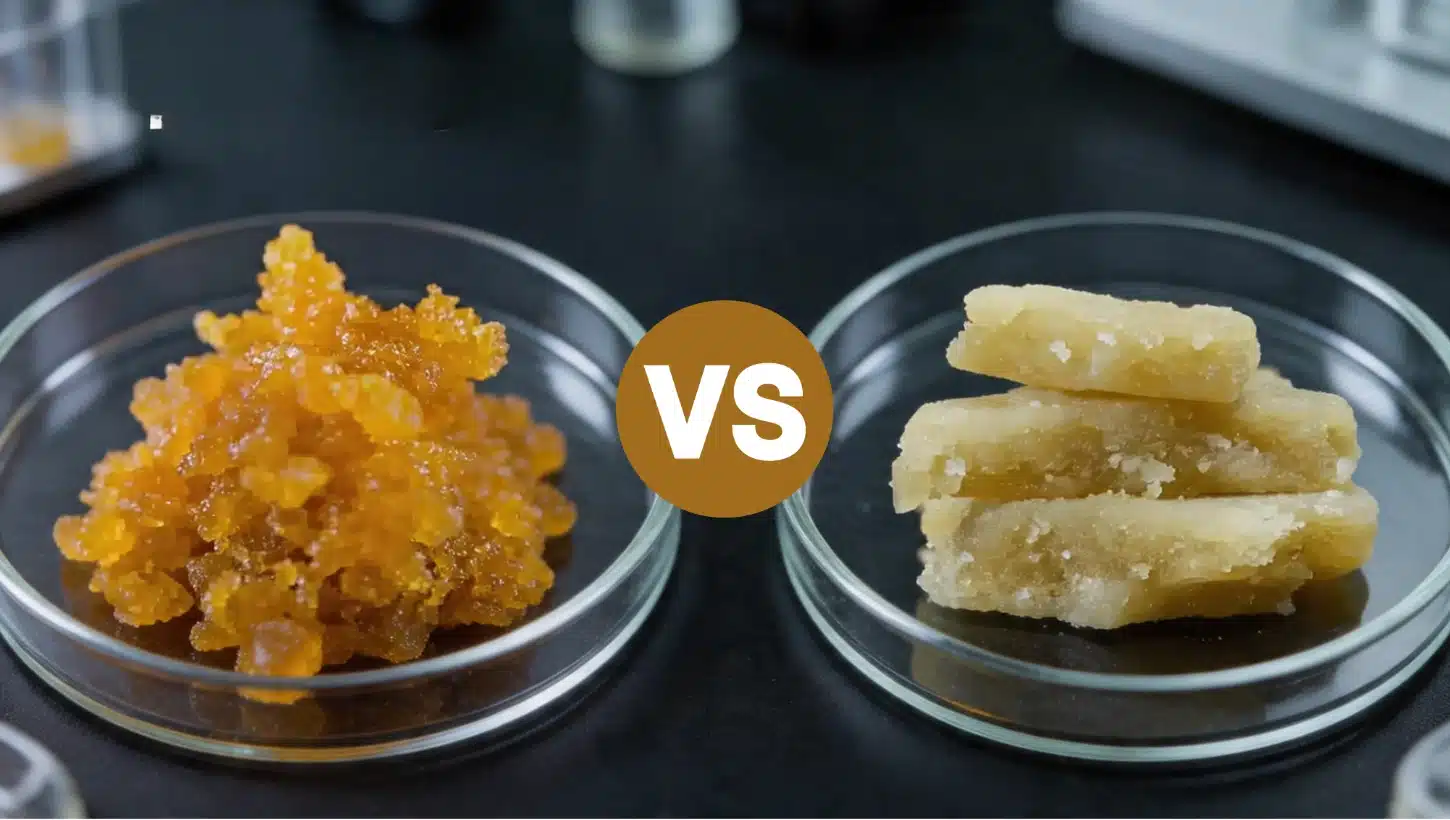
| Texture | Sauce, sugar, diamonds, viscous | Badder, batter, fresh press, waxy |
| Flavor Character | Bold, punchy, aromatic | Clean, nuanced, true-to-flower |
| Solvents Used | Yes (purged from final product) | No |
| THC Potency | Typically higher THC % | Slightly lower THC, fuller spectrum |
| Best For | Budget + potency | Purity + flavor nuance |
Live resin and live rosin are both premium cannabis concentrates made from flash-frozen plants, but the method used to extract them separates everything: the flavor character, the purity level, the texture, and the price you pay at the counter.
One uses solvents to pull out cannabinoids fast and efficiently. The other uses only heat and pressure, with no chemicals coming into contact with the plant at any point. That single difference cascades through the entire experience.
After spending time on dispensary floors and reviewing lab reports from multiple producers, I can tell you that the confusion between these two is completely understandable, because the names look nearly identical. Here is exactly what sets them apart.
What Is Live Resin?
Live resin is a solvent-based cannabis extract made from freshly harvested, flash-frozen plants. Freezing the plant immediately after harvest preserves its full terpene profile, which is why live resin delivers a signature bold aroma and layered flavor that dried-and-cured concentrates simply cannot match.
The extraction process uses hydrocarbons, typically butane or propane, in a closed-loop system to pull cannabinoids and terpenes from the frozen material. This method is efficient at scale, which is why live resin is widely produced and found across most dispensary menus in concentrate, cartridge, and sauce formats.
The first live resin was developed by hash legend William “Kind Bill” Fenger, who was specifically trying to create a concentrate that tasted as close as possible to fresh, uncured marijuana. Because solvents strip the plant aggressively, live resin often tests at notably high THC levels.
Research from the National Institute on Drug Abuse (NIDA) confirms that cannabis concentrates, including solvent-based extracts like live resin, tend to carry elevated THC levels compared to flower, which translates to more intense effects per dose.
For comparison, live resin vape carts and concentrates regularly test in the 65-85% THC range. Users report effects that come on fast and feel pronounced. If you want a longer breakdown of what concentrate potency actually means in practice, our guide on whether THC percentage really matters covers the nuances beyond the number on the label.
What Is Live Rosin?
Live rosin is a solventless cannabis concentrate made by pressing bubble hash (also called ice water hash) derived from fresh-frozen cannabis, using only heat and pressure. No chemical solvents come into contact with the plant at any stage of production.
The process starts by washing fresh-frozen cannabis in ice water, which agitates the trichomes loose from the plant material. Those trichomes are collected in fine-mesh bags, carefully dried, and then pressed between heated plates to release the resin.
The result is a thick, amber concentrate rich in both cannabinoids and terpenes, with nothing added and nothing chemically altered. Published research in PMC confirms that solventless extraction methods produce clean cannabis extracts free of chemical residues, which is why this approach has grown significantly among health-conscious consumers and medical cannabis patients.
Because every step is done by hand in small batches, live rosin is considered an artisanal product. The labor involved is real: lower yields per run, more skill required at each stage, and premium starting material needed throughout. That work is reflected in the price.
Live Resin vs. Live Rosin: Production Differences
Both concentrates start from the same place: cannabis plants flash-frozen immediately at harvest, before the plant begins to degrade. From that point, the two processes take completely different routes.
How Live Resin Is Made
Live resin production runs flash-frozen cannabis through a closed-loop hydrocarbon extraction system, using butane, propane, or CO2 to dissolve and pull out cannabinoids and terpenes.
Supercritical CO2 extraction, documented in PMC research, is one of the cleaner solvent approaches because it leaves no residual solvent when done correctly, making it particularly attractive for medical-grade production.
Once extracted, the raw concentrate undergoes post-processing: purging residual solvents under vacuum heat, then being manipulated into its final texture (sauce, sugar, diamonds-in-sauce, or vape oil).
The solvent-based method is efficient, scalable, and capable of producing high-volume output. That is why live resin is the more accessible and affordable of the two, available at virtually every dispensary in a range of formats, including THC diamonds, sauce, and pre-filled vape cartridges.
How Live Rosin Is Made
Live rosin production begins with the same flash-frozen cannabis, but uses ice water agitation instead of solvents to separate trichomes. The collected trichomes (bubble hash) are dried and then pressed between heated plates under controlled pressure.
No chemicals are involved at any point. Research published in Frontiers in Natural Products notes that temperature control during extraction is critical to maintaining cannabinoid and terpene profiles, which is why skilled rosin producers take significant care with their press settings.
Yields are lower per run, the process requires more steps and more skilled hands, and the starting material must be pristine. Any mold, pesticides, or contamination in the source plant will end up in the final product, which is why reputable rosin producers are strict about input quality.
Texture and Consistency: What You Are Actually Handling
One of the practical differences that often goes unmentioned between these two concentrates is texture and consistency, which affects how easy each one is to handle day to day. Here’s a clear breakdown of texture and consistency:
| Feature | Live Resin | Live Rosin |
| Consistency | Fluid and viscous | Thick and creamy |
| Common Textures | Runny sauce, diamonds-in-sauce, sugar | Badder, batter, fresh press |
| Handling | Easy with a dab tool but moves freely | Stable, easier to portion precisely |
| Room Temperature Stability | Less stable, shifts easily | More stable, holds shape better |
| Loading a Nail or Banger | Can be tricky due to movement | More straightforward due to firmer consistency |
For newer concentrate users, especially, the texture difference is not just cosmetic; it directly affects how confidently you can measure and load each hit, which makes a real difference in managing your experience from session to session.
Flavor and Potency
Both concentrates use fresh-frozen starting material, which means both preserve more terpenes than concentrates made from dried cannabis. That said, their flavor characters are distinct.
Flavor Profile
Live resin delivers a bold, punchy terpene experience. The solvent extraction pulls broadly across the plant’s chemical profile and can produce an intense, layered aroma that hits immediately. Some users find it almost aggressive in its flavor intensity, which can be exactly what they are looking for.
Live rosin tends toward a cleaner, more nuanced flavor. Because no solvents touch the plant, the terpene expression is closer to the original flower, without any chemical interaction potentially altering the aromatic compounds.
Users commonly describe live rosin as smoother on the inhale with a flavor that builds rather than punches. Some rosin producers label their products with strain-specific terpene percentages precisely because the flavor is accurate enough to be worth specifying.
Potency and the Entourage Effect
Live resin typically tests slightly higher in raw THC percentage. Users consistently report fast-onset, intense effects that lean toward a pronounced cerebral experience. For experienced concentrate users chasing maximum THC, live resin usually delivers the higher number on the lab report.
Live rosin may test somewhat lower in isolated THC, but users commonly report that the effects feel complete and well-rounded. This is closely tied to the entourage effect: the idea that cannabinoids and terpenes work together synergistically, and that preserving the full spectrum of the plant’s compounds produces a more balanced experience than high THC in isolation.
Because live rosin’s solventless process preserves minor cannabinoids and terpenes more completely, many experienced consumers describe its effects as more satisfying overall, even when the THC percentage on the label is lower.
Both live resin and live rosin are full-spectrum concentrates, which puts them at the opposite end of the spectrum from distillates, which strip out everything except isolated cannabinoids.
Hash Rosin vs. Live Rosin: The Distinction Worth Knowing
These two terms are related but not the same. Live rosin is pressed directly from fresh-frozen cannabis flower that has been processed into bubble hash using ice water extraction. Hash rosin follows the same pressing process but starts from live bubble hash specifically, rather than fresh buds going directly into the ice water wash.
In practice, both produce very pure, potent concentrates through entirely solventless methods. The starting material is the main variable, and most consumers will notice only subtle differences in yield and final texture between the two. What matters for both is the quality of the source plant and the care taken in the pressing process.
Effects and User Experience

Live Resin Experience
Users consistently report that live resin hits fast and with noticeable intensity. Its elevated THC paired with full terpene expression makes for an aromatic, potent session.
Most users describe the effect as heady and pronounced, which is why live resin is especially popular among recreational consumers who want a strong and flavorful experience without paying premium rosin prices.
The wide range of product formats, including carts, sauce, and sugar, means most people encounter live resin in a format that suits their preferred consumption method.
Live Rosin Experience
Live rosin users commonly describe a smoother, more complete experience. The absence of solvents at any stage of production means the final product contains no residual chemicals. The U.S. Food and Drug Administration has emphasized the importance of monitoring chemical residues in cannabis products, which is a core reason health-conscious consumers actively seek out solventless options.
Users who prefer live rosin often describe the effects as balanced and long-lasting, with flavor that carries from the first inhale through the end of the session. Medical users in particular tend to gravitate toward live rosin for both the cleaner production method and the full-spectrum cannabinoid profile.
If live rosin concentrates go into edibles, the clean extraction also makes for a more controlled ingredient, which is worth considering for anyone interested in THC gummies and edibles made from quality cannabis extracts.
Quality, Price, and Availability
Live resin is produced at scale through efficient solvent extraction, keeping costs lower and availability high. You can find live resin at virtually every dispensary, in concentrates, cartridges, sugars, and sauce formats. It averages around $30 per gram depending on the market.
Live rosin is produced in smaller, more labor-intensive batches. The process involves more steps, lower yields per run, and a higher skill ceiling. That is reflected at the register: live rosin typically runs around $40 per gram and is less consistently stocked.
Premium rosin producers often work directly with specific cultivators to source the exact input quality their process requires, which adds another layer of cost. The gap between the two price points has been narrowing as rosin technology improves, but live rosin remains the premium option in most markets.
From a quality perception standpoint, live resin is the accessible mainstream concentrate, strong, flavorful, and reliable. Live rosin is the boutique option: something experienced consumers often seek out specifically, and something producers take visible pride in crafting.
Which One Should You Choose?
| 📝 Quick Pick Guide: Budget-conscious or new to concentrates? Start with live resin. Prioritizing a clean, chemical-free product or a more nuanced flavor? Live rosin is worth the extra cost. Both are full-spectrum concentrates, and both will outperform flower for terpene richness and potency. |
Your choice comes down to four main factors:
Budget: Live resin gives you premium concentrate quality at a lower price point. If you regularly spend on concentrates, the savings over live rosin add up quickly.
Purity preference: If the absence of solvents at every production stage matters to you, live rosin is the only option that delivers that guarantee. Properly purged live resin is considered safe and lab-tested, but the chemical extraction process is a dealbreaker for some consumers, particularly those using cannabis for health-related purposes.
Flavor priority: For bold and immediate terpene impact, live resin delivers. For a cleaner, more accurate expression of the original strain’s aromatic profile, live rosin has the edge.
Experience level: Newer concentrate users may find live resin more consistent and easier to source. Experienced consumers and connoisseurs who have developed preferences around specific terpene profiles often gravitate toward live rosin for exactly that precision.
| ⚠️ Advisory: Both live resin and live rosin are highly concentrated cannabis products with significantly higher THC levels than flower. Start with a very small amount, especially if you are new to concentrates. Effects from concentrates can be more intense and longer-lasting than expected. If you ever feel overwhelmed after using concentrates, this information on cannabis and individual response may help guide what to do next. Always purchase from licensed, lab-tested sources. |
Final Thoughts
When it comes to live resin vs live rosin, neither is objectively better; they serve different priorities. If you want a potent, flavorful concentrate at an accessible price point that you can find at virtually any dispensary, live resin delivers exactly that.
If you are willing to pay more for a solventless product that stays closer to the original plant in both flavor and cannabinoid profile, live rosin is worth seeking out.
Start small; regardless of which you choose, both are significantly stronger than flower. Buy from licensed, lab-tested sources, check the COA, and let your budget, purity preference, and flavor priorities make the final call for you. If you find this comparison helpful and knowledgeable, then drop a comment below.
Disclaimer: This information is provided for educational purposes only and is not medical or legal advice. Cannabis laws and regulations vary by region. Always verify local legality before purchasing or using cannabis products. Individual effects vary. Purchase from licensed, lab-tested sources only.
Frequently Asked Questions
What is the main difference between live resin and live rosin?
The core difference is the extraction method. Live resin uses chemical solvents (typically butane or propane) to pull cannabinoids and terpenes from flash-frozen cannabis. Live rosin uses only heat and pressure applied to ice water hash made from flash-frozen cannabis, with no solvents involved at any stage. Both start from the same type of fresh-frozen plant material, but the extraction process shapes the purity, flavor character, and price of the final product.
Is live rosin stronger than live resin?
Live resin typically tests at a higher raw THC percentage. However, many users report that live rosin produces a more satisfying and complete experience due to its full-spectrum terpene and cannabinoid profile. The entourage effect, where all of the plant’s compounds work together, can make a slightly lower-THC product feel more balanced and effective than an isolate or solvent-stripped concentrate with a higher number on the label.
Why does live rosin cost more than live resin?
Live rosin is produced in small, labor-intensive batches using a multi-step process that yields less concentrate per run than solvent extraction. The ice water hash step alone requires time, skill, and precise temperature control before a single gram of rosin is pressed. Lower yields combined with higher labor costs and premium input requirements push the price up. Live rosin averages around $40 per gram compared to approximately $30 for live resin in most markets.
Does live resin contain chemical residues?
When produced correctly and purchased from a licensed dispensary, live resin should contain no detectable solvent residue. Licensed producers are required to purge residual solvents and submit products for lab testing before sale. That said, the production process does use chemicals, and concerns about trace residues are why some consumers prefer solventless options regardless of the safety certification.
What is the difference between live rosin and hash rosin?
Live rosin is pressed from fresh-frozen cannabis that is first processed into bubble hash through ice water extraction, then pressed. Hash rosin is made from live bubble hash as the input material. Both are solventless and go through the same pressing process. The starting material is the distinguishing variable, and both produce very clean, potent concentrates with subtle differences in texture and yield.
Which is better for medical cannabis users: live resin or live rosin?
Most medical users and health-conscious consumers favor live rosin because no solvents come into contact with the plant at any point in production. The cleaner extraction profile is a meaningful consideration when using cannabis regularly or for therapeutic purposes. Live rosin also preserves the full cannabinoid and terpene spectrum more completely, which many consumers associate with more consistent and predictable effects.
Can I use live resin or live rosin in edibles?
Yes. Both can be used as inputs for homemade or commercial edibles. Live rosin is particularly valued in edibles production because the solventless extraction results in a clean ingredient without residual chemical concerns. When using concentrates in edibles, potency is significantly higher than in flower, so dosing requires careful attention.
How should I store live resin or live rosin?
Both should be stored in airtight, non-stick containers in a cool, dark environment. Exposure to heat, light, and air degrades terpenes quickly. For short-term storage (a few weeks), a cool room-temperature cabinet works. For longer periods, the refrigerator is a better option, though condensation when opening cold containers can introduce moisture. Avoid repeatedly freezing finished concentrates, as the freeze-thaw cycle can alter texture and terpene integrity.
Sources
- National Institute on Drug Abuse (NIDA), “Marijuana Concentrates”: cannabis concentrate potency and elevated THC levels in solvent-based extracts. https://nida.nih.gov/sites/default/files/df-marijuana-concentrates.pdf
- PMC, Pellati et al. (2023), “Cannabis sativa L. and Nonpsychoactive Cannabinoids”: supercritical CO2 extraction and cannabinoid/terpene preservation. https://pmc.ncbi.nlm.nih.gov/articles/PMC10095677/
- PMC, Aizpurua-Olaizola et al. (2021), “Solventless Cannabis Extraction”: peer-reviewed support for solventless methods and clean extract profiles. https://pmc.ncbi.nlm.nih.gov/articles/PMC8290527/
- Frontiers in Natural Products, Romano and Hazekamp (2022), “Cannabis Oil: Chemical Evaluation of an Upcoming Cannabis-Based Medicine”: temperature control in maintaining cannabinoid and terpene profiles. https://www.frontiersin.org/journals/natural-products/articles/10.3389/fntpr.2022.1043147/full
- U.S. Food and Drug Administration (FDA), “FDA and Cannabis: Research and Drug Approval Process”: guidance on chemical residues in cannabis products and solventless production. https://www.fda.gov/news-events/public-health-focus/fda-and-cannabis-research-and-drug-approval-process
- FunWithDizzies, “THC Diamonds: The Purest Cannabis Concentrate Explained”: related overview of concentrate types and extraction formats. https://funwithdizzies.com/thc-diamonds-the-purest-cannabis-concentrate-explained/
- FunWithDizzies, “Does THC Percentage Matter: What You Should Know”: why potency numbers do not tell the full story of how a concentrate actually feels. https://funwithdizzies.com/does-thc-percentage-matter-what-you-should-know/
- FunWithDizzies, “Best THC Gummies for Pain That You Should Know About”: guidance on extract-based edibles and how concentrate quality affects formulation. https://funwithdizzies.com/best-thc-gummies-for-pain-that-you-should-know-about/