| ⚠️ Advisory: This article covers three distinct meanings of “liquid cocaine”: a cocktail, a regulated pharmaceutical, and an illicit substance. Each section is clearly labeled. If you are experiencing a substance-related emergency, call 911 immediately. |
| Meaning | What It Is | Legal Status |
| Bar cocktail | A potent alcoholic shooter made with Jägermeister, high-proof rum, and schnapps | Legal, contains no cocaine |
| Cocaine hydrochloride | A pharmaceutical-grade 4% cocaine solution used as a topical anesthetic | Legal in clinical settings only; Schedule II controlled substance |
| Dissolved illicit cocaine | Cocaine powder dissolved in a liquid for injection or smuggling | Illegal; serious health and legal risks |
| Cocaine Energy Drink | A heavily caffeinated energy drink that uses the name for marketing | Legal; contains no cocaine |
The phrase “liquid cocaine” covers a surprisingly wide range of contexts. Depending on where you heard it, it could be a bartender lining up a round of shots at a bachelorette party, a surgeon preparing for a nasal procedure, a pharmacology textbook, or a DEA report.
It is one of those terms that means something genuinely different depending on who is saying it and where you are. This article covers all three real meanings: the cocktail, the medical application, and the substance, without dramatizing any of them.
If you landed here looking for a drink recipe, you are in the right place. If you landed here looking for medical information, that is covered, too. And if you are here for the harm reduction angle, that is included as well. No judgment, just the actual information laid out clearly.
Cocaine Hydrochloride: The Medical Meaning
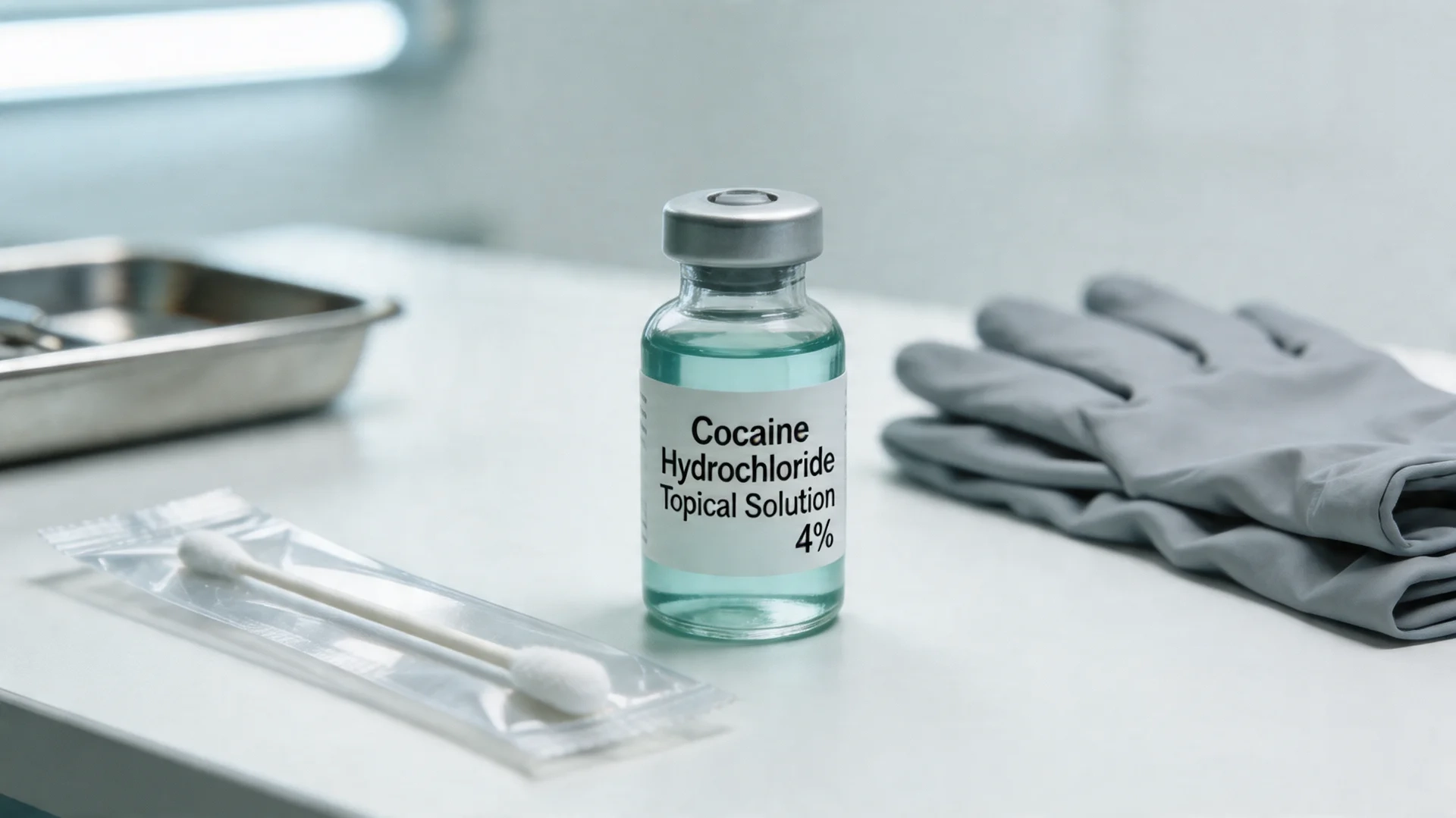
Cocaine hydrochloride, sometimes called “medical cocaine” or “liquid cocaine” in a clinical context, is a real, regulated pharmaceutical product. It is a 4% cocaine solution used as a topical anesthetic primarily in ear, nose, and throat (ENT) procedures.
According to NIH’s StatPearls clinical resource, cocaine hydrochloride topical solution is permitted for the anesthesia of mucous membranes in the oral, laryngeal, and nasal cavities. It is the only local anesthetic that simultaneously numbs tissue and constricts blood vessels, making it uniquely useful for nasal surgeries where minimizing bleeding while numbing the area is necessary.
The American Academy of Otolaryngology has noted in its position statements that no other single drug replicates cocaine’s combined anesthetic and vasoconstrictive properties in ENT applications. That is the genuine medical justification for its continued, tightly controlled clinical use.
How It Is Used Clinically
- Applied topically via cotton applicator, spray, or instillation; never injected in clinical use
- Standard concentration is 4% cocaine solution
- Used immediately before nasal procedures, biopsies, and diagnostic interventions
- Administered only by trained medical professionals in supervised clinical settings
- Dosage does not exceed 1 mg/kg of body weight
Mayo Clinic’s drug reference for cocaine hydrochloride nasal solution notes that the drug may remain detectable in blood and urine for at least one week after clinical administration, a relevant fact for anyone who receives it during a procedure and subsequently faces a drug screening.
| 📝 Note: Receiving cocaine hydrochloride during a legitimate ENT procedure will likely result in a positive cocaine test. If you have upcoming drug testing, inform your administering physician beforehand so the clinical use can be properly documented. |
Clinical Risks and Contraindications
Cocaine hydrochloride is a Schedule II controlled substance, meaning it has accepted medical use but significant potential for dependence. In clinical settings, risks are managed through controlled dosing, but they are real.
According to Healthline’s review of medical cocaine applications, documented risks in clinical use include elevated heart rate and blood pressure (from vasoconstrictive effects), cardiac arrhythmia risk (particularly in patients with pre-existing cardiovascular conditions), and rare but serious hypersensitivity reactions.
Patients with hyperthyroidism, cardiovascular disease, or those taking MAOIs are typically contraindicated from receiving cocaine hydrochloride. This drug is not prescribed for home use. It is administered under direct medical supervision, in a clinical setting, by a trained provider. That is the only legitimate context for cocaine hydrochloride use.
| ⚠️ Advisory: Cocaine hydrochloride in clinical doses is a potent cardiovascular agent. Patients should always disclose current medications and medical history before any ENT procedure; combinations with other agents can significantly increase risk. |
From Surgery to the Street: A Brief History Worth Knowing
Cocaine did not start as a street drug. Understanding how it moved from the operating room to everywhere else explains why its medical and illicit identities exist in the same compound, and why separating them still matters today.
| Year | Event | Significance |
| 1884 | Carl Koller performs the first clinical operation under local anesthesia using cocaine on the eye in Vienna, introduced to the compound by colleague Sigmund Freud | Opened the modern era of local anesthesia; cocaine became the first drug to numb tissue without general anesthesia |
| 1887 | Coca-Cola was patented, containing cocaine; manufacturers removed it by 1903, following growing concern about adverse effects | First major signal that cocaine’s public health risks were becoming impossible to ignore |
| 1914 | The Harrison Narcotics Tax Act restricts cocaine use and distribution in the United States | Marks the beginning of federal regulatory control over the substance |
| 1970 | The Controlled Substances Act classifies cocaine as Schedule II: high abuse potential, but accepted medical use is retained for ENT and surgical anesthesia | The legal framework is still in use today, the basis for why clinical cocaine remains lawful |
What started as a medical breakthrough in a Vienna operating room in 1884 took less than three decades to become a recognized public health concern. The same compound, the same properties, the same risks, just without any of the clinical controls. That context is exactly what the next section covers.
The Illicit Substance: What “Liquid Cocaine” Means on the Street
This is the harm reduction section. “Liquid cocaine” in an illicit context refers to cocaine powder that has been dissolved in a liquid medium, typically water, alcohol, or another solvent, either for injection, for consumption, or for drug trafficking purposes.
Dissolved Cocaine for Injection
Cocaine powder is water-soluble. Dissolving it in water for intravenous injection significantly increases the speed and intensity of onset compared to insufflation. It also dramatically increases the risk of overdose (dosing is imprecise when dissolved), blood-borne infection (from shared equipment), and cardiovascular emergency (IV cocaine reaches peak plasma concentration almost immediately).
This method carries a substantially elevated risk profile compared to other cocaine use methods and should be understood clearly in that context.
Trafficking Method
Law enforcement agencies, including US Customs and Border Protection, have documented cases of liquid cocaine being concealed in legitimate products, such as shampoo bottles, wine, juice, and processed foods, to bypass detection. Once smuggled, the cocaine is chemically extracted and reconverted to powder form.
The Liquid Cocaine Cocktail: What It Is
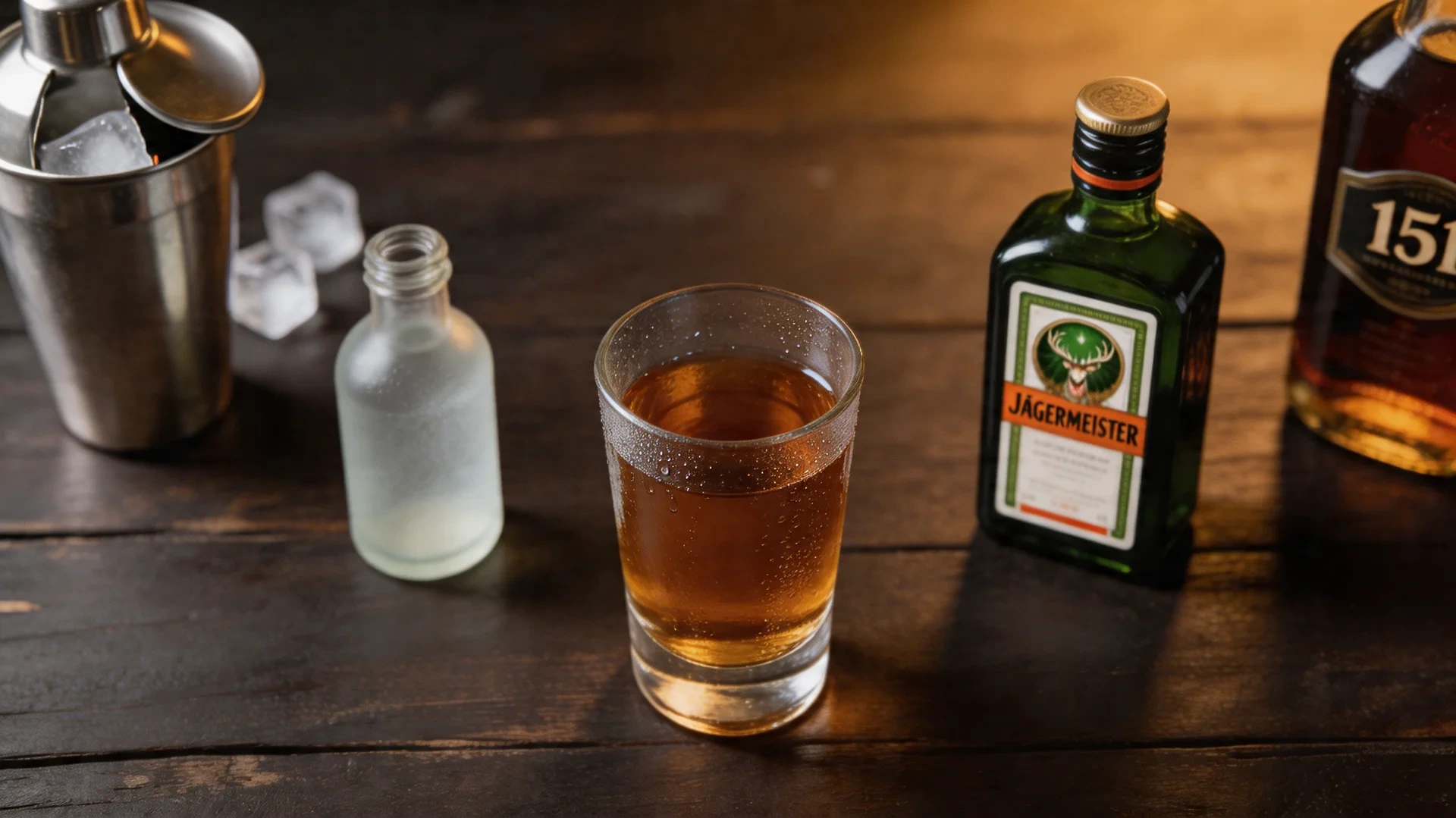
The Liquid Cocaine cocktail is a bar staple with a provocative name and absolutely no actual cocaine in it. It is a high-alcohol shooter known for its intense, layered flavor (herbal, minty, cinnamon) and its reputation for being significantly stronger than it tastes.
The name comes from the drink’s reportedly addictive quality: one is rarely enough. The most widely recognized version traces back to the early 1990s bar scene and has spawned so many variations that bartenders still argue over which one is “real.” They all are, depending on where you are drinking.
The Classic Recipe
The classic recipe, documented by Liquor.com, uses equal parts of three ingredients:
- Jägermeister (herbal liqueur, 35% ABV): provides the earthy, anise backbone
- 151-proof rum (Bacardi 151 or Don Q 151, 75.5% ABV): the reason this shot hits harder than it should
- Peppermint schnapps (Rumple Minze) or cinnamon schnapps (Goldschläger): sharp mint or warm spice, depending on preference
How to Make It
- Chill your shot glass in the freezer for at least 10 minutes before serving.
- Combine equal parts Jägermeister, 151-proof rum, and peppermint schnapps (or Goldschläger) in a cocktail shaker filled with ice.
- Shake hard for 10 to 15 seconds until the shaker is very cold.
- Strain into the chilled shot glass and serve immediately.
At 75.5% ABV, the 151-proof rum nearly doubles the alcohol content of most standard spirits. Combined with two liqueurs in a single pour, this shot runs considerably stronger than a standard bar shot, closer to 1.5 to 2 standard drinks depending on pour size.
| 📝 Note: Do not substitute standard 80-proof rum for the 151. The high-proof rum is structural to the drink, not just a delivery vehicle for alcohol. |
What Each Ingredient Actually Does
Every ingredient in the classic Liquid Cocaine shot has a specific job. Understanding what each one brings, and what happens when you swap it, explains why the recipe is so deliberately specific.
| Ingredient | ABV | Flavour Role | Can You Substitute? |
| Jägermeister | 35% | Herbal, anise, earthy backbone | Technically, yes, but it changes the drink significantly |
| 151-proof rum | 75.5% | Primary alcohol hit; heat and warmth | No, standard 80-proof rum produces a completely different drink |
| Peppermint schnapps (Rumple Minze) | ~50% | Sharp, cooling mint finish | Yes, swap for Goldschläger for cinnamon instead |
| Goldschläger (alternative) | 43.5% | Cinnamon spice layer | Interchangeable with peppermint schnapps based on preference |
The 151-proof rum is the one ingredient with no real substitute. Everything else can be swapped with minor consequences; pull the rum, and you no longer have a Liquid Cocaine, just a moderately strong herbal shot.
Variations and What to Expect
Three main variations exist beyond the classic. All are called Liquid Cocaine:
- The Fruity Version: peach schnapps, Amaretto, Southern Comfort, and pineapple juice; lower ABV, much sweeter, barely resembles the original in flavor or intensity
- The Four-Spirit Version (Liquid Cocaine III): adds Goldschläger to the classic three for an extra layer of cinnamon heat alongside the mint; served without shaking to preserve full ABV
- The Long Drink Version: the shot recipe extended into a full cocktail served over ice with juice; reduces intensity but still stronger than it appears
The classic version is herbal from the Jäger, minty from the schnapps, and warm from the rum, all arriving at the same time. Most people describe it as smoother than it should be at this ABV, which is exactly the risk.
| 📝 Note: Because it is served cold and tastes deceptively smooth, intoxication often lags behind consumption. Wait before ordering another. |
Alcohol and Stimulant Combinations: A Note on Risk
Whether you are ordering the cocktail at a bar or learning about the substance, it is worth knowing something about how stimulants and depressants interact in the body. Alcohol is a depressant. Cocaine is a stimulant.
When combined, the stimulant effects of cocaine mask some of alcohol’s sedative signals, which can lead to consuming more of both substances than the body would otherwise tolerate before signaling overload. This combination produces a distinct metabolite in the liver called cocaethylene, which is more toxic than either substance alone and extends cardiovascular stress.
If you or someone you are with has consumed more alcohol than intended and is trying to come down, understanding how substances clear the system and what strategies have actual evidence behind them is useful information. The broader framework of how drugs move between therapeutic and controlled categories also helps contextualize why cocaine’s medical and illicit statuses coexist, and why that distinction matters.
Final Thoughts
“Liquid cocaine” is one of those phrases that earns completely different reactions depending on context. A bartender, a surgeon, and a pharmacologist will all hear it differently, and all three of them will be right about what it means in their world.
The cocktail is a legitimate piece of bar culture with a dramatic name and genuinely potent ingredients. Know what you are ordering, drink it cold, and do not let the smooth flavor convince you to have three. The medical application is a legitimate clinical tool that has been in use for over a century, tightly regulated, and genuinely irreplaceable for certain ENT procedures. And the illicit substance angle exists in the real world; understanding it clearly is more useful than pretending it does not.
Disclaimer: This content is for informational and harm reduction purposes only. This blog does not promote or encourage the use of any controlled substance. Always follow local laws regarding alcohol consumption and controlled substances. If you or someone you know is struggling with substance use, please seek professional support.
Frequently Asked Questions
Does the Liquid Cocaine cocktail contain actual cocaine?
No. The cocktail called Liquid Cocaine contains Jägermeister, 151-proof rum, and schnapps. The name refers to the drink’s reportedly addictive quality and its intensity, not its ingredients. It is completely legal and contains no controlled substances.
What is cocaine hydrochloride used for in medicine?
Cocaine hydrochloride (4% topical solution) is used by ENT specialists as a local anesthetic and vasoconstrictor for nasal and throat procedures. It is the only anesthetic that simultaneously numbs tissue and constricts blood vessels, making it uniquely effective for nasal surgery. It is administered only in supervised clinical settings.
Is cocaine hydrochloride the same as street cocaine?
Chemically, cocaine hydrochloride and the cocaine in street powder are both forms of cocaine. Clinical cocaine hydrochloride is a pharmaceutical-grade, precisely dosed, regulated solution applied topically under strict medical supervision. Street cocaine has unknown purity, unknown concentration, and is consumed without medical oversight: an entirely different risk profile.
Can a doctor prescribe cocaine hydrochloride for home use?
No. Cocaine hydrochloride is administered only in clinical or surgical settings under direct medical supervision. It cannot be dispensed for personal use or taken home by patients.
Is the Liquid Cocaine shot strong?
Yes, significantly. The classic recipe calls for 151-proof rum (75.5% ABV), making this one of the highest-ABV standard shots in common bar culture. Despite its relatively smooth flavor, the drink has a higher total alcohol content than most standard shots. One is typically the responsible limit.
What does cocaine hydrochloride feel like when used medically?
In clinical application, it produces localized numbness and reduced sensation in the treated area, similar to other local anesthetics. Some patients report mild lightheadedness or an elevated heart rate due to systemic absorption. These effects are monitored by the administering medical team.
What is the difference between Liquid Cocaine I, II, and III?
The numbered versions refer to different formulations used in bartending references. Liquid Cocaine I and II are variants of the classic three-ingredient recipe with minor differences in ratios. Liquid Cocaine III, documented by The Bartending School, adds Goldschläger to the standard Bacardi 151, Jägermeister, and Rumple Minze combination and is served without ice at full strength.
Will a Liquid Cocaine shot cause a failed drug test?
The cocktail contains no cocaine and will not affect a drug test. However, if you have received cocaine hydrochloride as part of a legitimate ENT procedure, Mayo Clinic notes that it can remain detectable in urine for at least one week. Always inform your physician before any procedure if you have an upcoming drug screening.
Sources
- Liquor.com, “Liquid Cocaine Cocktail Recipe.” Classic three-ingredient shot recipe; ingredient ratios and serving notes.
- NIH StatPearls, “Cocaine Hydrochloride.” Peer-reviewed clinical resource; mechanism of action, medical indications, and adverse effect profile of cocaine hydrochloride topical solution.
- Mayo Clinic, “Cocaine Hydrochloride Nasal Route.” Clinical drug reference: side effects, contraindications, and post-procedure detection window.
- Healthline, “The Medical Uses of Cocaine.” Overview of cocaine hydrochloride clinical applications, ENT use cases, and cardiovascular risk considerations.
- FunWithDizzies, “How to Get Unhigh Quick: What Actually Works Fast.” Harm reduction reference: how substances clear the system and what strategies have evidence behind them.
- FunWithDizzies, “Hemp vs THC: Similarities, Differences, and Factors.” Regulatory framework reference: how substances move between therapeutic and controlled substance categories.