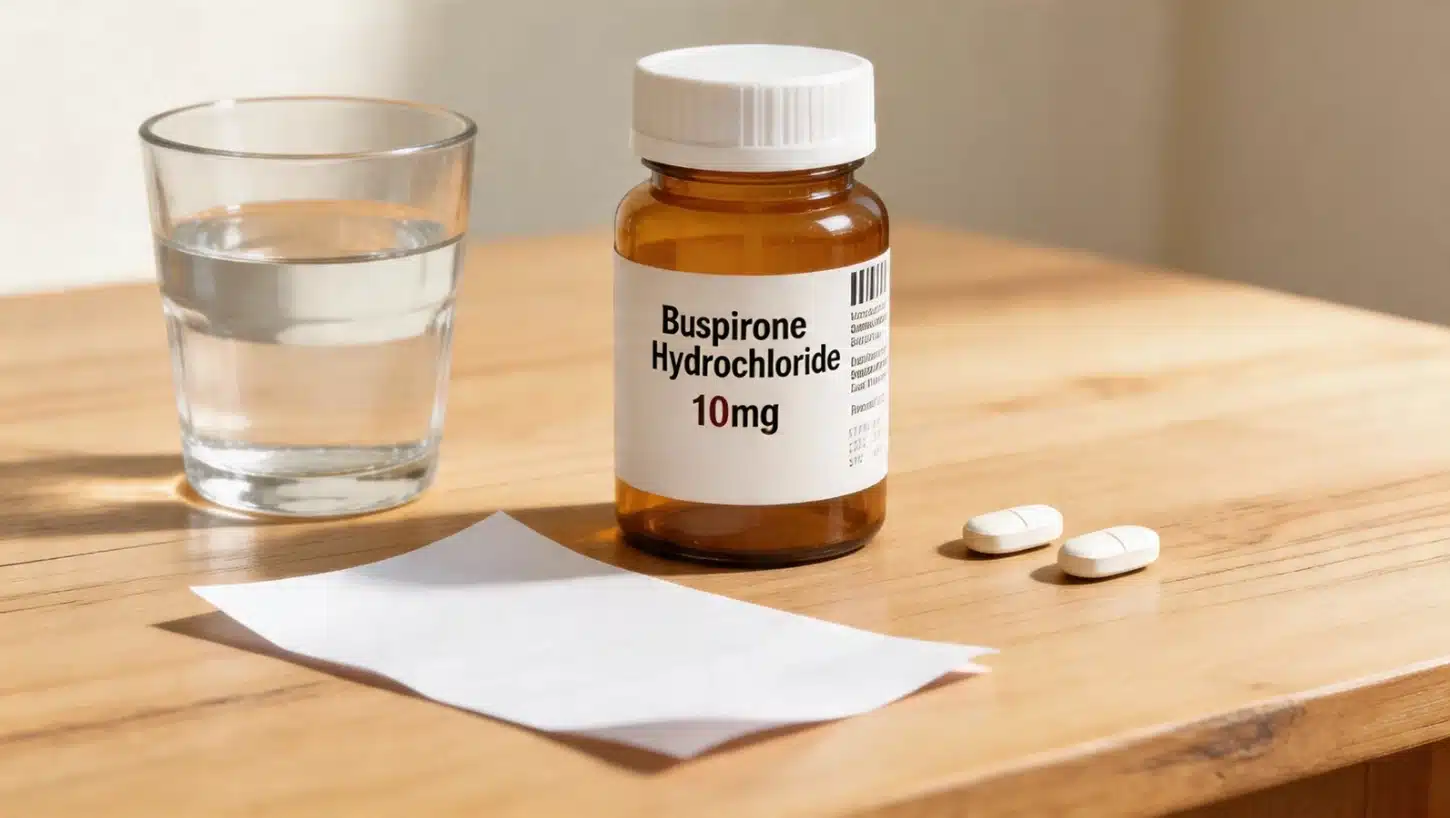
Buspirone is not a controlled substance. It carries no DEA schedule under the Controlled Substances Act, has no documented abuse potential, and does not cause physical dependence with regular use. For an anxiety medication in a category that includes some of the most tightly regulated prescriptions in existence, that distinction matters.
But “not a controlled substance” does not answer every question people have when they are first prescribed buspirone. What does it actually do? Why does it take so long to work? How does it compare to Xanax? This guide covers all of it, with clinical precision and without the usual hedging.
BuSpar (Buspirone) at a Glance
| Factor | Details |
| Generic name | Buspirone hydrochloride |
| Brand name | BuSpar (brand discontinued; generic widely available) |
| Drug class | Azapirone anxiolytic, not a benzodiazepine |
| Controlled substance? | No, not listed under the Controlled Substances Act |
| DEA schedule | Unscheduled |
| FDA-approved use | Generalized anxiety disorder (GAD); short-term anxiety relief |
| Off-label uses | Augmentation for depression; antidepressant-induced sexual dysfunction (limited evidence) |
| How it works | Partial serotonin 5-HT1A agonist; also weak dopamine D2 antagonist |
| Onset of effect | 1 to 2 weeks; full effect at 2 to 4 weeks |
| Typical dosage | 15 to 60 mg per day in divided doses |
| Dependence risk | Very low; no significant withdrawal syndrome documented |
| Available as a generic? | Yes |
What Is Buspirone and What Does It Actually Treat?
Buspirone is an anti-anxiety medication, technically classified as an anxiolytic, originally synthesized in 1968 and approved by the FDA for anxiety treatment. Its original development target was antipsychosis, but researchers found it was not useful for psychosis. What it did show was a distinct ability to reduce anxiety without producing sedation, dependence, or the other effects associated with benzodiazepines.
According to NIH’s StatPearls clinical resource on buspirone, the drug is FDA-approved for the management of generalized anxiety disorder and the short-term relief of anxiety symptoms. It ranked as the 40th most commonly prescribed medication in the United States in 2023, with more than 15 million prescriptions, indicating its widespread use as a second-line or augmentation option.
Off-label, it is added to existing SSRI prescriptions when that medication alone is not providing adequate relief. A 2025 study presented at the American Association of Psychiatric Pharmacists found that in real-world inpatient psychiatric settings, only 12.1% of buspirone prescriptions carried a documented FDA-approved indication, with the remainder used off-label for depression and anxiety symptoms associated with other conditions. This underscores how prescribers reach for buspirone in situations its label does not formally cover.
What buspirone is not approved for, and what it generally does not work well for, is acute anxiety or panic. If you are in the middle of a panic attack, buspirone will not help in that moment. Its value is in reducing baseline anxiety over time, the kind of chronic, persistent worry that characterizes GAD rather than sudden acute episodes.
| ⚠️ Advisory: Buspirone is not effective for panic disorder or social anxiety disorder in the same way it is for GAD. If your primary concern is panic attacks or specific social anxiety, discuss these distinctions with your prescriber. A different medication may be more appropriate. |
Is BuSpar a Controlled Substance?
Buspirone is not classified as a controlled substance under the Controlled Substances Act. It carries no DEA schedule, not Schedule II, not Schedule IV, where benzodiazepines sit, not any schedule.
Benzodiazepines are Schedule IV because they act on GABA receptors in ways that produce rapid sedation, tolerance, and physical dependence with regular use. Buspirone works on serotonin and dopamine receptors through a completely different mechanism, with no significant sedation, no GABA activity, and no meaningful abuse potential.
In clinical studies cited by the FDA prescribing information published on DailyMed, volunteers with histories of recreational drug or alcohol use were unable to distinguish buspirone from a placebo in double-blind trials, while showing a statistically significant preference for diazepam and methaqualone. That pharmacological profile is the direct basis for its unscheduled status.
It still requires a prescription. “Not a controlled substance” does not mean freely available. It means the federal government has determined buspirone does not meet the criteria for scheduling under the Controlled Substances Act.
| ⚠️ Advisory: Do not stop buspirone abruptly if you have been using it alongside a benzodiazepine. While buspirone itself has minimal withdrawal concerns, the benzodiazepine requires a carefully managed taper. Stopping a benzo suddenly can cause serious withdrawal symptoms. Always work with a prescriber on any transition. |
How Buspirone Works and How to Take It
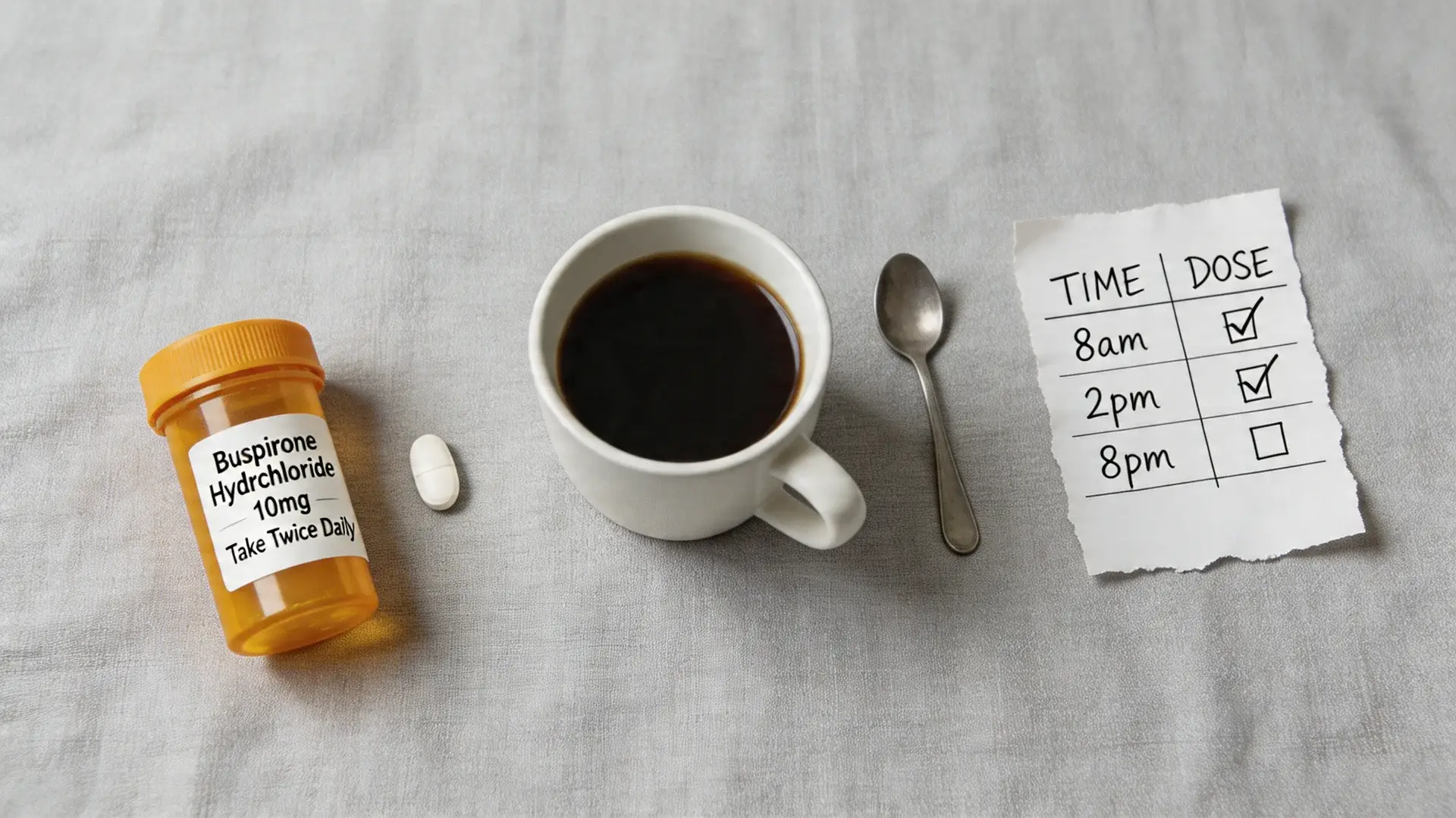
Buspirone behaves differently from most anxiety medications in ways that catch people off guard. Understanding the mechanism, the dosing logic, and the food interactions removes most of that confusion upfront.
The Mechanism
Buspirone is an azapirone, a distinct drug class with nothing else commonly prescribed alongside it. Understanding how it works explains why its timeline and experience differ so much from other anxiety medications.
- Acts as a partial agonist at serotonin 5-HT1A receptors, activating them less fully than serotonin itself does
- Has a secondary weak antagonist effect at dopamine D2 receptors
- Does not affect GABA receptors, unlike benzodiazepines, which enhance GABA to produce immediate sedation
- Works through a slower serotonergic pathway, meaning effects build over time rather than arriving immediately
Unlike benzos, buspirone does not produce fast relief, which is exactly why benzo-experienced users often find it underwhelming at first. MedlinePlus’s drug information on buspirone confirms that one to two weeks may pass before any noticeable change, with full effect at three to four weeks of consistent use. Skipping doses undermines the serotonergic adaptation the drug depends on. StatPearls recommends using the GAD-7 tool at baseline and follow-up visits to track whether the medication is achieving a measurable reduction in symptom severity.
It is also worth understanding how terpenes interact with serotonin and GABA receptors, since some people managing anxiety explore cannabis or CBD alongside or instead of prescription medication. Knowing how these systems overlap pharmacologically helps you have an informed conversation with your prescriber about the full picture of what you are taking.
Standard Dosing
Buspirone is taken two to three times daily because its half-life is approximately two to three hours, shorter than most once-daily psychiatric medications. Split dosing keeps blood levels consistent throughout the day.
- Starting dose: 7.5 mg twice daily, or 5 mg three times daily
- Titration: increased by 5 mg every two to three days as tolerated
- Typical maintenance: 15 to 30 mg per day in divided doses
- Maximum dose: 60 mg per day
Most prescribers start low and titrate upward based on response. According to the buspirone clinical reference on Drugs.com, the dose can be adjusted in 5 mg increments every two to three days until the optimal therapeutic level is reached. The most common reason buspirone feels ineffective is that the dose is simply too low.
Research presented at AAPP 2025 found that real-world average daily dosing was 25.5 mg, and investigators flagged that a significant portion of patients were receiving suboptimal doses. 15 mg per day and 30 mg per day are meaningfully different experiences for many people.
Food Interactions and Timing
What you eat and when you eat it affect how much buspirone actually reaches your bloodstream. Getting this consistently right matters more than most people realize when starting this medication.
- Take with food OR without food, but pick one and stay consistent. Varying it creates inconsistent absorption and unpredictable blood levels.
- Avoid grapefruit and grapefruit juice entirely. Grapefruit inhibits CYP3A4, the enzyme that metabolizes buspirone, significantly increasing drug levels in the bloodstream.
- Take at the same time each day. Consistent timing supports the steady-state blood levels on which the medication’s effect depends.
- Do not double-dose if you miss one. Skip the missed dose if the next one is close. Taking two at once increases side effect risk without therapeutic benefit.
Does Buspirone Show Up on Drug Tests?
Yes and no. Buspirone itself is not a controlled substance and is not typically included in standard drug panels. However, it can cause false positive results for benzodiazepines on some urine immunoassay tests.
Mayo Clinic’s clinical drug reference for buspirone notes that the medication can interfere with certain medical tests and that stopping use for at least 48 hours before testing may be necessary. If you are facing a drug screening, disclose your buspirone prescription to the testing facility and your prescriber in advance.
Confirmatory testing, typically gas chromatography-mass spectrometry (GC-MS), can distinguish buspirone from benzodiazepines and clear a false-positive result. Standard immunoassay results alone are not definitive, and a false-positive result from buspirone is a documented and resolvable issue, not a legal or disciplinary matter on its own.
Side Effects: What to Expect

Buspirone’s side effect profile is one of its genuine advantages over benzodiazepines, with less sedation, no significant cognitive impairment, and no dependence risk. That said, it is not entirely side-effect-free.
Common Side Effects
Most people starting buspirone experience mild, manageable side effects that tend to ease within the first two weeks. Knowing what to expect upfront prevents unnecessary early discontinuation. The most frequently reported side effects are dizziness (the most commonly reported, more pronounced on standing up quickly), nausea that tends to diminish as the body adjusts, headache, lightheadedness, mild drowsiness that is generally less than with benzodiazepines, and nervousness or restlessness, since some users report increased agitation early in treatment.
Most common side effects diminish within the first one to two weeks of consistent use. If they persist beyond that, it is worth discussing with your prescriber rather than stopping the medication.
Serious Side Effects to Know About
Serotonin syndrome is the most clinically significant risk. This occurs when buspirone is combined with other medications that also increase serotonin levels, including SSRIs, SNRIs, MAOIs, triptans, and certain antibiotics. Symptoms include agitation, rapid heart rate, muscle twitching, sweating, fever, and, in severe cases, seizures. This is a medical emergency.
Movement problems: rare, but buspirone can occasionally cause involuntary or unusual movements (extrapyramidal effects). If this occurs, contact your prescriber promptly.
| ⚠️ Advisory: Never combine buspirone with MAOIs. This combination can cause dangerous and potentially fatal serotonin syndrome. A 14-day washout period is required after stopping an MAOI before starting buspirone, and vice versa. Always disclose every medication you are taking, including supplements, before starting buspirone. |
BuSpar vs Xanax: The Real Comparison
Buspirone and Xanax treat overlapping symptoms but operate through entirely different mechanisms, carry different legal classifications, and serve different clinical purposes. This comparison comes up constantly, so here it is clearly:
| Factor | Buspirone (BuSpar) | Alprazolam (Xanax) |
| Drug class | Azapirone anxiolytic | Benzodiazepine |
| Controlled substance | No | Yes, Schedule IV |
| Onset | 1 to 4 weeks | 15 to 30 minutes |
| Dependence risk | Very low | Significant with regular use |
| Sedation | Minimal | Moderate to significant |
| Best for | Chronic GAD, long-term management | Acute anxiety, panic attacks |
| Withdrawal risk | Minimal | Significant, must taper |
| Abuse potential | Negligible | Documented |
Xanax works faster and more noticeably. For someone in acute anxiety or a panic attack, that fast onset is exactly what is needed. The trade-off is the dependence and withdrawal risk that comes with regular benzodiazepine use.
Buspirone does not produce that fast relief, cannot be used on an as-needed basis for acute episodes, and will not substitute for a benzo if someone’s body has developed dependence on one. What it offers is a long-term anxiety management option that does not carry the same regulatory, dependence, or withdrawal concerns.
| ⚠️ Advisory: If you are currently taking Xanax and your prescriber wants to transition you to buspirone, the process requires overlapping the medications and then slowly tapering the Xanax, not stopping it and starting buspirone simultaneously. Abrupt benzodiazepine discontinuation is dangerous. |
Is Buspirone Right for You?
The honest answer depends on what kind of anxiety you are dealing with, your history with other medications, and what your prescriber determines after a proper evaluation. That said, patterns are consistent enough to be useful.
Buspirone tends to be a better fit for people managing chronic, generalized anxiety that is persistent rather than episodic; people who have had negative experiences with benzodiazepines due to sedation, memory effects, or dependence; people with a history of substance use, for whom a non-scheduled, non-habit-forming medication is preferable; augmenting an SSRI that is not fully controlling anxiety or low mood symptoms; and people who need long-term anxiety management without the regulatory and refill constraints of controlled substances.
It tends to be less effective for acute anxiety or panic attacks since the slow onset makes it useless for rescue purposes, social anxiety disorder as a primary medication, and people who have been on benzodiazepines long-term and are hoping for equivalent symptom relief immediately.
Some people managing anxiety also explore complementary approaches. For those curious about which cannabis strains carry calming profiles and what the evidence says about each, the best weed strains for anxiety guide covers that question in practical detail. This is not an either/or with buspirone, but being informed about how different approaches might interact pharmacologically is worth the effort.
Who Should Not Take Buspirone
Before starting buspirone, certain medical conditions and medication combinations require a direct conversation with your prescriber. Some represent absolute contraindications; others simply require closer monitoring.
These include severe liver or kidney impairment, since reduced organ function increases drug accumulation significantly; MAOI use within 14 days (specific MAOIs include phenelzine, isocarboxazid, selegiline, and tranylcypromine), due to dangerous serotonin interaction risk requiring a full washout period; known hypersensitivity to buspirone or its inactive ingredients; pregnancy or breastfeeding, since insufficient safety data exists and alternatives should be discussed with your doctor; and current SSRI or SNRI use, since the combination requires active monitoring for serotonin syndrome symptoms, particularly in the first few weeks.
None of these situations automatically disqualifies buspirone as an option, but they all require your prescriber to make an informed assessment before you start. Disclosing your full medication list, including supplements, is the most important step you can take before beginning any new prescription.
Final Thoughts
Buspirone occupies an unusual position in anxiety pharmacology: effective for its specific use case, meaningfully different from the medications people often expect when anxiety treatment comes up, and frequently misunderstood because of those expectations.
If you have been prescribed it expecting something like Xanax, the first few weeks can feel like the medication is not working. It probably is, just on a timeline that does not match what benzodiazepines have conditioned many people to expect from anxiety medication.
The patience requirement is real. So is the benefit for many people once the full therapeutic effect is established. The fact that it is not a controlled substance reflects something meaningful: the evidence base for its misuse potential is genuinely low, and the regulatory framework reflects that, not some oversight.
For long-term anxiety management without the dependence concerns of benzos, that is a meaningful clinical advantage. Work with your prescriber, give it the time it needs, and do not compare it to faster-acting medications using immediate relief as the measure. That is not what it is for.
Disclaimer: This content is for informational purposes only and does not constitute medical advice. Always consult a licensed healthcare provider before starting, stopping, or changing any prescription medication.
Frequently Asked Questions
Is buspirone the same as Xanax?
No. Buspirone and Xanax are in completely different drug classes, work by different mechanisms, and have different risk profiles. Xanax is a Schedule IV controlled substance with documented dependence potential. Buspirone is not scheduled, has negligible abuse potential, and does not produce sedation or dependence with regular use.
Why don’t doctors prescribe buspirone more often?
It is genuinely less effective for acute anxiety than benzodiazepines, and it requires patience, taking two to four weeks before full effect. Many patients who are in significant distress need faster relief. Some prescribers also report that patients find it underwhelming compared to faster-acting options, particularly those who have previously taken benzos.
Can you take buspirone and an SSRI together?
Yes, and it is actually a common clinical combination. Buspirone is frequently added to an SSRI to augment its effects. That said, the combination requires monitoring for serotonin syndrome symptoms, particularly in the first few weeks.
Will buspirone make me feel sedated?
Generally not significantly. This is one of its key differences from benzodiazepines. Some users report mild drowsiness, particularly at the start of treatment, but buspirone does not typically impair cognitive function or produce the foggy feeling associated with benzos.
Can you stop buspirone suddenly?
Unlike benzodiazepines, abrupt discontinuation of buspirone is not associated with dangerous withdrawal syndrome. That said, gradual tapering is generally recommended rather than stopping suddenly, and your prescriber should guide any discontinuation.
How long does buspirone stay in your system?
Buspirone’s half-life is approximately two to three hours, and it is typically metabolized and cleared within 24 to 48 hours of the last dose. However, its metabolites may remain detectable for longer, which is relevant for drug test interactions.
Does buspirone work as well as benzodiazepines for generalized anxiety?
Clinical evidence suggests buspirone is as effective as benzodiazepines for GAD when given adequate time to work. The trade-off is onset: benzos work within minutes, while buspirone requires two to four weeks. For chronic, ongoing anxiety rather than acute episodes, users report comparable relief with significantly less risk.
Can buspirone cause a false positive on a drug test?
Yes. Buspirone can produce false positive results for benzodiazepines on standard urine immunoassay panels. If this happens, request GC-MS confirmatory testing, which can distinguish buspirone from actual benzodiazepines and resolve the result. Always disclose your prescription to the testing facility in advance.
What happens if I take buspirone with grapefruit juice?
Grapefruit and grapefruit juice inhibit CYP3A4, the liver enzyme responsible for metabolizing buspirone. This raises buspirone blood levels unpredictably, increasing both the intensity and duration of side effects. Grapefruit should be avoided entirely while taking this medication, not just reduced.
Does buspirone interact with cannabis or CBD?
There is limited direct clinical research on buspirone and cannabis interactions. Both act on serotonin-related pathways, and some terpenes found in cannabis interact with GABA and serotonin receptors. If you are using cannabis or CBD alongside buspirone, disclose this to your prescriber. Do not combine buspirone with other serotonergic substances without medical guidance.
Sources
- Wilson TK, Tripp J. “Buspirone.” StatPearls, National Library of Medicine. Peer-reviewed clinical reference covering mechanism, FDA indications, adverse events, and dosing. ncbi.nlm.nih.gov
- MedlinePlus. “Buspirone.” U.S. National Library of Medicine. Drug reference covering dosing schedule, interactions, and patient instructions. medlineplus.gov
- Drugs.com. “Buspirone: Uses, Dosage, Side Effects.” Comprehensive drug reference covering standard dosing, drug interactions, and contraindications. drugs.com
- DailyMed (FDA). “Buspirone Hydrochloride Tablet.” FDA prescribing information, including controlled substance status, clinical trial data, and CYP3A4 interaction data. dailymed.nlm.nih.gov
- FunWithDizzies. “Terpenes and CBD: What They Are and Why They Matter.” How terpenes interact with serotonin and other neurotransmitter systems relevant to anxiety management. funwithdizzies.com
- FunWithDizzies. “Best Weed Strains for Anxiety Relief.” Cannabis-based approaches to anxiety management: a complementary context for those exploring multiple approaches. funwithdizzies.com