| ⚠️ Warning: If you or someone you care about is struggling with alcohol use, free and confidential support is available 24/7 through the SAMHSA National Helpline at 1-800-662-4357. Call 911 immediately if someone shows signs of alcohol poisoning: confusion, vomiting while unconscious, seizures, slow or irregular breathing, pale or bluish skin, or an inability to be woken up. |
Somewhere between the last drink and the next morning, most people make a judgment call they are not actually qualified to make. How long it takes to sober up is one of those things people think they know the answer to, until they are actually in the moment.
In harm-reduction work, that gap between feeling okay and actually being okay is where real risk lives.
Most people rely on how they feel. That is a problem, because feeling sober and being sober are two entirely different things biologically. How long does it take to sober up from alcohol? The honest answer is: longer than most people assume, and longer than any shortcut can change.
This guide walks through what actually happens inside your body, how long the process takes under different drinking scenarios, how long alcohol stays in your system for detection purposes, and why every popular shortcut fails.
Quick Glance: BAC Elimination Timeline
| Starting BAC | Estimated Time to 0.00% |
| 0.02% | ~1.5 hours |
| 0.05% | ~3.5 hours |
| 0.08% (U.S. legal limit) | ~5.5 hours |
| 0.10% | ~7 hours |
| 0.15% | ~10 hours |
| 0.20% | ~13.5 hours |
Based on an average elimination rate of 0.015% BAC per hour. Individual results vary based on body weight, sex, age, and liver health.
What BAC Actually Means for Your Body
Blood alcohol concentration (BAC) is the percentage of alcohol present in your bloodstream at a given moment. The number sounds clinical, but what it represents is very physical.
At 0.02%, you may feel a slight warmth or relaxation. Most people do not notice impairment here, but your visual tracking and divided attention have already measurably declined. At 0.05%, coordination begins slipping, and your ability to respond quickly to changing conditions drops noticeably.
At 0.08%, the legal driving threshold in most U.S. states, reaction time, visual function, and judgment are all impaired beyond what most people are consciously aware of.
This is the gap that causes accidents. People with developed tolerance often feel functional at 0.08% or even higher. That subjective feeling is not an accurate measure of actual performance. The body’s impairment exists whether or not the brain registers it.
| 📝 Note: Legal limits define criminal liability, not a safe-to-function threshold. Measurable impairment begins well below 0.08% in most people. |
Understanding what qualifies as a standard drink helps here. The National Institute on Alcohol Abuse and Alcoholism defines a standard drink as containing 14 grams of pure alcohol, which is a 12-oz beer at 5% ABV, a 5-oz glass of wine at 12% ABV, or 1.5 oz of 80-proof spirits.
Many cocktails and craft beers exceed this. A pint of strong IPA can contain closer to two standard drinks, and a generous pour of wine at a restaurant often exceeds the standard measure. This means your mental count of “I had three drinks” can easily underestimate how much alcohol actually entered your system.
How Your Body Processes Alcohol
Understanding the biology makes the numbers feel less abstract and more actionable. Alcohol does not vanish when the buzz fades; it follows a very specific metabolic path at a pace your body controls, not you.
1. From Your Stomach to Your Bloodstream
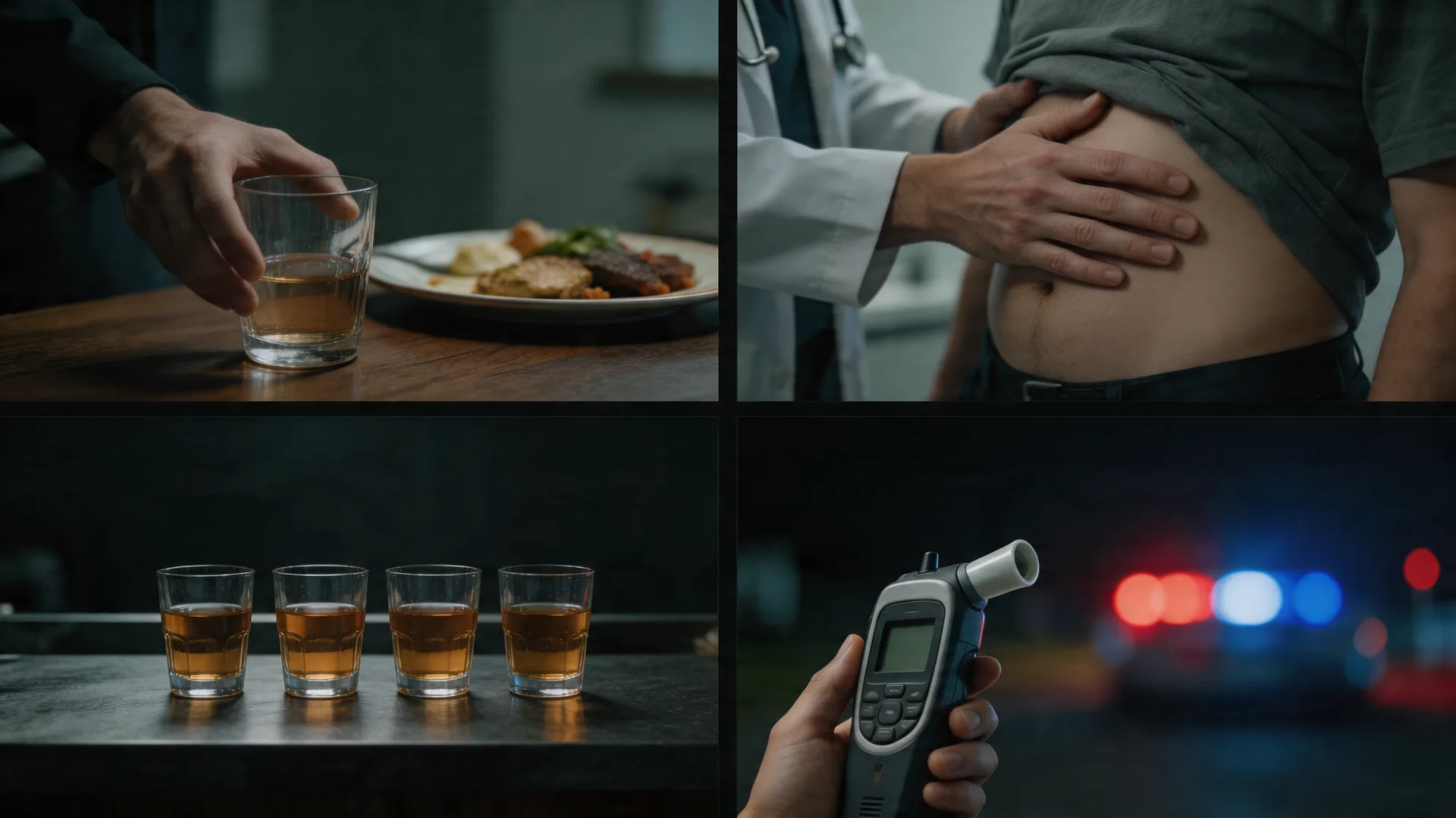
When you drink, about 20% of alcohol is absorbed directly through the stomach lining. The remaining 80% enters through the small intestine, where absorption is rapid. Food acts as a physical barrier, slowing that passage.
Eating before drinking does not change how much you consume, but it delays your BAC peak, which can noticeably reduce how impaired you feel at any given point.
2. The Liver Does Almost Everything
Your liver handles 90 to 95% of all alcohol metabolism. The key enzyme, alcohol dehydrogenase (ADH), converts ethanol into acetaldehyde, a toxic byproduct, which is then converted into acetate, which exits as carbon dioxide and water.
Bowling Green State University confirms the liver processes alcohol at 0.015 to 0.020% BAC per hour. No outside factor overrides this rate. More alcohol does not make ADH work faster.
3. Why Consumption Rate Matters
Drinking faster than your liver can process means excess alcohol stays in your bloodstream, pushing BAC higher. Four drinks in one hour produce a much higher peak than four drinks spread over four hours. Same total, different outcome. The liver cleared alcohol at the same steady rate both times. The difference is how much accumulated before clearance caught up.
4. What the Lungs and Kidneys Handle
About 5 to 10% of alcohol exits through the lungs, kidneys, and skin, which is why breathalyzers work, since alcohol concentration in exhaled breath directly reflects what is in your blood. But these are minor elimination routes. They cannot meaningfully compensate for what your liver has not yet cleared, and counting on them to speed sobriety is not a realistic strategy.
How Long Does Alcohol Stay in Your System?
BAC clearance tells you when alcohol is gone from your blood. But for practical situations, including driving decisions, workplace safety, and drug testing, a different question matters: how long does alcohol stay in your system for detection? The answer depends entirely on which method is used to test for it.
| Detection Method | Detection Window | Notes |
| Breathalyzer | Up to 12 to 24 hours | Reflects real-time BAC; disappears as BAC reaches zero |
| Blood test | Up to 6 to 12 hours | Most accurate for legal BAC measurement |
| Urine test (EtG) | Up to 12 to 48 hours (heavy drinking: up to 72 hours) | Detects alcohol metabolites, not live BAC |
| Saliva test | Up to 12 hours | Less common; accuracy similar to a breathalyzer |
| Hair follicle test | Up to 90 days | Detects patterns of chronic use, not single events |
The EtG urine test is important to understand on its own. It does not measure BAC; it detects a metabolite called ethyl glucuronide, which the liver produces as it breaks down alcohol. A heavy Saturday night can still show positive on an EtG test Monday morning, even though your BAC returned to zero hours earlier. This distinction matters in workplace monitoring, court-ordered sobriety programs, and any situation where testing follows a delay.
| ⚠️ Advisory: EtG urine tests can detect alcohol use for up to 72 hours after heavy drinking, even when you feel completely sober and your BAC has been zero for hours. If you are subject to monitoring, plan your drinking timeline around testing windows, not how you feel. |
How Long Does Being Drunk Last?
Feeling drunk and having alcohol in your system are not the same thing, and the gap between them is where most people get into trouble. The subjective experience of being drunk, meaning the euphoria, the loosened inhibitions, and the noticeable coordination problems, typically fades well before BAC reaches zero. Your brain stops signaling “I feel drunk” somewhere around the midpoint of metabolism. But your actual impairment in reaction time, judgment, and visual function continues until clearance is complete.
For most moderate drinking sessions, the obvious drunk feeling lasts roughly 3 to 6 hours. The residual impairment that does not feel like being drunk but still affects your driving ability can persist for several more hours after that. This is exactly why breathalyzers exist: because people consistently underestimate how much alcohol they still carry after they stop feeling its effects.
Realistic Timelines for Common Drinking Scenarios
Numbers land differently when attached to real situations. Here is how the math translates across common drinking patterns, based on average metabolic rates:
| Drinking Scenario | Estimated Peak BAC | Approximate Clearance Time |
| 2 standard drinks over 2 hours | 0.03 to 0.06% | 3 to 4 hours |
| 4 drinks over 3 hours | 0.07 to 0.12% | 6 to 8 hours |
| 6+ drinks in one night | 0.15 to 0.20%+ | 10 to 13+ hours |
| Heavy Saturday night drinking | 0.18 to 0.20%+ | Well into Sunday afternoon |
These figures shift based on your body weight, sex, and drinking pace; treat them as minimums, not targets. When your clearance window sits uncomfortably close to when you need to drive or function, always round up rather than down.
| 💡 Tip: Count from the time of your last drink, not when you started. Divide your estimated peak BAC by 0.015 to get the number of hours to zero. |
Factors That Shift Your Personal Timeline
The 0.015% hourly rate is a population average. Your actual clearance time depends on several biological variables, and some carry more weight than most people expect.
1. Sex and Body Composition
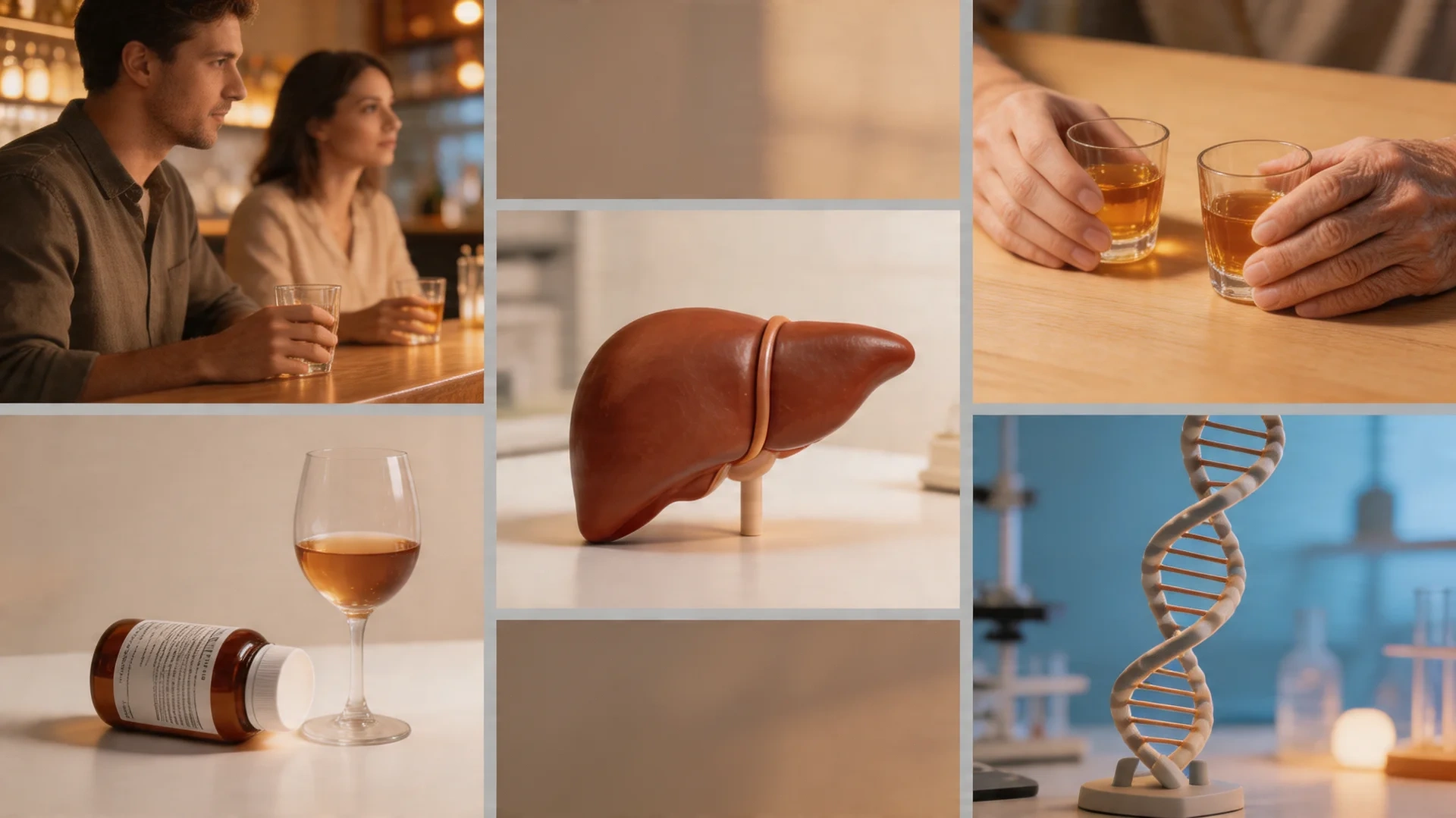
Women generally reach a higher peak BAC than men after the same amount of alcohol. A study in Gastroenterology found that alcohol elimination per kilogram of lean body mass was 33% higher in women. Since alcohol distributes through total body water, and women carry proportionally less, the same drink concentrates more heavily, raising peak BAC and extending the clearance window.
2. Age
Older adults metabolize alcohol more slowly due to declining liver enzyme activity and a gradual shift in body composition toward less lean mass. The same number of drinks that felt manageable at 30 hits harder at 55 and stays in your system longer. Age is one of the most underestimated factors people overlook when estimating their own timeline.
3. Liver Health
The liver is the primary engine of alcohol clearance. Conditions like fatty liver disease, hepatitis, or cirrhosis reduce how efficiently alcohol dehydrogenase functions. People with compromised liver health clear alcohol more slowly and face greater physical risk from smaller amounts. Liver damage does not announce itself obviously, which makes this factor easy to underestimate. Repeated heavy drinking also stresses the nervous system in ways that become visible during withdrawal, including shaking and tremors that are separate from BAC levels entirely.
4. Medications
Antidepressants, antihistamines, certain antibiotics, and sleep aids can interact with alcohol in two ways: some slow the actual breakdown of alcohol, while others amplify its sedating effects without changing BAC clearance speed. The result is that functional impairment can remain elevated even after your BAC has technically begun to drop toward a lower level.
5. Genetics
Variations in the ADH and ALDH gene families determine how efficiently your body converts ethanol into acetaldehyde and then into acetate. Certain variants cause acetaldehyde to accumulate more rapidly, leading to flushing and nausea in some populations. These genetic differences are fixed; they do not shift with drinking experience, habit, or adaptation over time.
| 📝 Note: Alcohol tolerance makes impairment feel less pronounced, but does not increase your elimination rate. A high-tolerance drinker at 0.10% BAC clears alcohol at the exact same pace as someone with low tolerance at the same level. They simply register the impairment less acutely. |
Things That Won’t Sober You Up
Every popular shortcut fails at the biological level. The table below breaks down what each one actually does, and what it does not:
| Shortcut | What It Does | What It Doesn’t Do |
| Coffee | Blocks adenosine receptors, reducing drowsiness and raising alertness | Lower BAC or improve actual reaction time |
| Cold Shower | Triggers a brief nervous system response, sharpening alertness momentarily | Change the liver metabolism speed in any way |
| Vomiting | May expel some unabsorbed alcohol if it happens within minutes of drinking | Reduce BAC once alcohol is already in the bloodstream |
| Water After Drinking | Reduces dehydration and softens next-day hangover symptoms | Speed alcohol clearance or lower current BAC |
| Eating After Drinking | Provides comfort and stabilizes blood sugar | Affect elimination. Food only slows absorption before drinking |
| Sleep | Allows the liver to keep processing alcohol at its normal pace | Accelerate metabolism beyond the standard 0.015% per hour |
| Exercise / Sweating | Raises alertness and releases endorphins that can improve how you feel | Accelerate liver processing. Sweat removes only trace amounts of alcohol |
| ⚠️ Advisory: No supplement, beverage, food, or physical act meaningfully reduces BAC faster than your liver’s fixed metabolic rate. |
How to Sober Up Fast: What Actually Helps While You Wait
There is no way to sober up quickly. The liver runs on its own clock, and nothing changes that rate. But there is a meaningful difference between speeding up BAC clearance (impossible) and supporting your body while it does the work (very possible). If you are asking how to sober up fast, the most honest answer is: you manage the wait more safely, not shorter.
These steps do not reduce your BAC, but they do reduce the physical cost of waiting and lower risk during the clearance window:
- Stop drinking now. Every additional drink extends the timeline from the point of your last drink, not the point you decide to stop. The earlier you stop, the earlier your liver starts closing the gap.
- Drink water steadily. Alcohol is a diuretic. Dehydration amplifies headache, fatigue, and the general fog that slows cognitive recovery. Water does not flush alcohol out, but it keeps you from compounding a BAC problem with a hydration problem.
- Eat something light if your stomach allows. A small meal of carbohydrates and protein helps stabilize blood sugar, which drops as your liver prioritizes alcohol metabolism over glucose production. This addresses one of the most uncomfortable physical symptoms of sobering up: shakiness and low energy.
- Rest in a safe place. Sleep is the only productive use of the clearance window. Your liver processes at 0.015% per hour whether you are awake or asleep. Rest accelerates your physical recovery from the non-BAC symptoms without changing the clock.
- Do not drive, operate machinery, or make important decisions. This is not about waiting until you feel okay. It is about waiting until enough time has passed for the math to work. Use the BAC table above to calculate your minimum wait time from your last drink.
If you want to understand what a consistent reduction in alcohol actually produces in your body over weeks and months, the physical timeline of cutting back lays it out clearly.
Driving and the Morning-After Problem
This is where the numbers carry real consequences. Most U.S. states set the legal driving limit at 0.08% BAC. Utah uses 0.05%. These thresholds define criminal liability; they are not points at which impairment begins. Studies consistently show that performance on complex tasks, including driving-related assessments, begins declining below 0.05%.
The morning-after scenario is where people most commonly underestimate residual alcohol. Someone who reached a BAC of 0.15% at midnight and slept for 7 hours has approximately 0.105% cleared, leaving an estimated BAC of 0.045% when they wake. That is below the legal limit in most states, but it is not zero, and residual effects on cognition and reaction time can persist even as BAC approaches zero.
| 💡 Tip: Use the quick glance table to calculate your minimum wait time. If you are uncertain how high your BAC peaked, estimate conservatively and round up rather than down. |
For anyone reassessing how much alcohol fits into their life, whether that means cutting back, stopping entirely, or exploring what a structured harm-reduction approach looks like, understanding what a reduced-alcohol lifestyle actually involves can help you make a grounded decision.
What Your Body Is Actually Doing While You Sober Up
Clearing alcohol is not passive. While your liver works through the backlog, several physical processes run simultaneously, and understanding them explains why sobering up feels the way it does, even when BAC is dropping steadily.
- Blood sugar drops: Alcohol suppresses glucose production in the liver. As it clears, blood sugar falls noticeably, producing shakiness, irritability, and low energy that most people misread as simple tiredness.
- Body temperature swings: Alcohol dilates blood vessels near the skin, creating a false sense of warmth. As BAC falls, that effect reverses, leaving you feeling cold, clammy, or sweaty as your body recalibrates.
- Nausea peaks after you stop drinking: Acetaldehyde, the toxic byproduct of alcohol metabolism, accumulates fastest in the hours after your last drink, which is why nausea often worsens after you have already stopped.
- Appetite returns unevenly: Hunger comes back as alcohol clears, but the stomach lining stays irritated. Heavy or greasy food often feels uncomfortable even when you feel ready to eat again.
- Mood dips before it levels out: Alcohol temporarily lifts dopamine and serotonin activity. As it clears, both drop below baseline before rebalancing, producing the flat, low, or anxious feeling common in the morning after.
When to Seek Emergency Care
Most sobering-up experiences are uncomfortable but not dangerous. The physical symptoms described above are your body correcting itself. However, certain signs during or after heavy drinking warrant immediate medical attention, not waiting it out at home.
⚠️ Call 911 immediately if you observe any of the following:
Do not leave an intoxicated person alone to “sleep it off.” Alcohol poisoning can develop and worsen after a person loses consciousness. If in doubt, call. |
If you are concerned about someone’s drinking pattern, including your own, SAMHSA’s National Helpline is free, confidential, available 24/7, and does not require insurance: 1-800-662-4357.
Final Thoughts
Alcohol does not leave your system when you stop feeling it, and that gap is exactly where most people get it wrong. How long it takes to sober up comes down to simple biology running on a fixed clock.
Your liver clears roughly 0.015% BAC per hour, not faster because you showered, drank coffee, or forced yourself to stay awake. In harm-reduction practice, the most useful tool is accurate information, not willpower and not workarounds.
The only real variable in your control is how much you consume in the first place. If you find yourself running this calculation often, that habit is worth sitting with honestly. Understanding the numbers is a solid place to start making decisions that actually hold up.
Frequently Asked Questions
How long does it take to sober up from alcohol after a heavy night?
After heavy drinking that brings your BAC to 0.15 to 0.20%, full clearance takes 10 to 13 hours from your last drink. Your liver processes alcohol at roughly 0.015% per hour regardless of how rested or alert you feel. Someone who finishes drinking at midnight and peaked at 0.18% may still have measurable BAC at noon the following day. Always count from the last drink, not when you started.
Can I sober up faster by sweating it out at the gym?
Exercise raises alertness but does not accelerate liver metabolism. Over 90% of alcohol is cleared through the liver, and physical activity does not change that rate. Sweating removes only trace amounts of alcohol. You may feel more awake, but your BAC remains essentially unchanged throughout.
Does drinking water between alcoholic beverages lower your BAC?
Water does not lower BAC or speed elimination. It reduces dehydration, which helps with next-day symptoms. Alternating with water slows your overall consumption pace, keeping peak BAC lower, but that is a pacing strategy, not a metabolic shortcut, and it only works if you drink less as a result.
Is it possible to still be impaired after sleeping eight hours?
Yes. If your peak BAC reached 0.15% or higher, eight hours of sleep will not clear it completely. You could wake up below the legal limit but above zero, with reaction time and judgment not fully restored. Functional impairment can persist even as BAC approaches but has not yet reached 0.00%.
Does eating a big meal before drinking change how long it takes to sober up?
Eating before drinking slows alcohol absorption and lowers how fast your BAC peaks. It does not change your elimination rate. A large meal may mean a lower peak BAC, but your liver still clears alcohol at the same fixed hourly pace regardless of what you ate beforehand.
How long does it take to sober up from weed compared to alcohol?
The timelines work differently. Alcohol impairment tracks closely with BAC, which clears at a predictable 0.015% per hour. Cannabis impairment from THC peaks faster, typically within 30 to 90 minutes of smoking, and the acute effects usually fade within 2 to 4 hours for most people. However, THC remains detectable in blood and urine long after impairment passes, which matters for drug testing. Unlike alcohol, there is no equivalent of a breathalyzer for real-time THC impairment measurement.
Why do some people seem to sober up faster than others?
Body weight, lean mass, sex, genetics, and liver health all modestly shift individual clearance rates. High tolerance makes impairment feel less pronounced without speeding elimination. Between healthy adults, actual metabolism rates do not vary dramatically; individual differences are real but not large enough to reliably count on.
How long does alcohol stay in your urine for a drug test?
Standard urine tests detect alcohol for up to 12 hours after your last drink. EtG (ethyl glucuronide) urine tests, which are more sensitive and used in legal and treatment monitoring settings, can detect alcohol metabolites for 12 to 48 hours, and up to 72 hours following heavy drinking. Feeling sober does not mean you will pass an EtG test. The two timelines are independent.
Sources
- National Institute on Alcohol Abuse and Alcoholism. “What Is a Standard Drink.” NIAAA. niaaa.nih.gov
- Bowling Green State University, RecWell. “Alcohol Metabolism.” BGSU. bgsu.edu
- Frezza, M., et al. (1990). “High Blood Alcohol Levels in Women.” New England Journal of Medicine, 322(2), 95-99. Gender differences in gastric alcohol metabolism.
- Mishra, M., et al. (1998). “Gender Differences in Alcohol Metabolism, Liver Volume, and Lean Body Mass.” Gastroenterology. gastrojournal.org
- Substance Abuse and Mental Health Services Administration. “SAMHSA National Helpline.” 1-800-662-4357. samhsa.gov