Quick Glance
| Question | Realistic Answer |
| What is EtG on a drug test? | A urine marker is formed once your body breaks down alcohol. |
| How long can alcohol be detected in urine EtG? | Usually 24 to 72 hours, longer with heavy drinking or a low cutoff. |
| Can EtG show up after you feel sober? | Yes, often well after blood alcohol reads zero. |
| Is the 80-hour window real? | It can happen, mainly with heavy or repeated drinking and a strict cutoff. |
| Will you pass after 60 hours? | Maybe, depending on drink count, cutoff, and your own body. |
| Can water or detox drinks guarantee a pass? | No, overdoing water usually just produces a diluted sample. |
I have run enough urine panels to know exactly which question gets typed into a search bar at 2 a.m. with shaking hands: how long can alcohol be detected in urine, EtG? If that is you right now, take a breath.
Here are the real numbers, not the panic-driven guesses filling half the forums on this topic.
Most people asking this are counting hours on their fingers, hoping strangers online will tell them what their own lab result will say. It will not, but the numbers below get you closer to the truth than a forum thread ever will.
What Is EtG on a Drug Test?
EtG stands for ethyl glucuronide, and it is not alcohol itself. It is what your liver leaves behind after processing alcohol, the receipt rather than the purchase.
When you drink beer, wine, liquor, or any ethanol-containing beverage, your liver converts a small portion of the ethanol into EtG, which then exits through urine.
The Clinical Neurobiology Lab at the Medical University of South Carolina describes this metabolite as one of the most reliable ways to confirm recent drinking, even once the effects of the alcohol itself have faded.
This is why EtG behaves so differently from a breathalyzer, which only measures what is happening right now.
EtG looks backward and asks whether alcohol passed through your system recently, which is why you can feel completely normal and still carry detectable EtG.
Feeling sober and testing negative are two separate events, since this marker is generally used to confirm abstinence rather than measure impairment at the moment of testing.
| 📝 Note: EtG is generally used to confirm abstinence, not to measure impairment at the moment of testing. |
How Long Does EtG Stay Detectable?
For most people, the real-world window sits between 24 and 72 hours. Where you land depends on how much you drank, how often, and which cutoff the lab applies:
| Drinking Pattern | Common EtG Window |
| Very light drinking | Around 24 hours, occasionally longer |
| A few standard drinks | Up to 48 hours for many people |
| Heavy drinking | 48 to 72 or more hours |
| Repeated heavy drinking | Sometimes closer to 80 hours |
| Very low cutoff testing | Window stretches regardless of drink count |
The 80 hour EtG test is not internet mythology, but it is not guaranteed for every drink or drinker either.
This is exactly where anecdotal answers fall apart: one person passes at 36 hours, another fails at 70, and both accounts can be true because their drink count, timing, and cutoff never matched in the first place.
If you want to see how this window compares with how quickly blood alcohol itself fades, this piece on sobering up and what BAC actually shows lays the timeline out side by side.
| 📝 Tip: Treat forum stories as a sign of shared stress, not a stand-in for your own lab result. |
Why Cutoff Levels Change the Answer
If one factor scrambles every EtG conversation, it is the cutoff, the concentration threshold a lab uses to decide positive or negative.
Common cutoffs run 100, 200, and 500 ng/mL. A lower cutoff catches smaller traces longer; a higher one ignores minor exposure.
1. 100 ng/mL Cutoff
This is the strict end of testing. A study on outpatients with alcohol use disorder found this cutoff most reliable at catching heavy drinking up to five days out, while also picking up lighter drinking within the previous two days.
That does not mean everyone tests positive for five days, only that this stricter threshold reaches further back once heavier drinking is involved.
2. 500 ng/mL Cutoff
This sits at the more forgiving end of testing, chosen deliberately to avoid flagging trace, non-drinking exposure.
The same research found this higher threshold mainly catches heavy drinking from the previous day, with detection dropping off quickly after that point.
Two people with identical drinking timelines can still get different results simply because their labs used a different cutoff.
3. Why You Might Not Know Your Cutoff
Probation offices, treatment programs, courts, and employers each set their own testing rules, and those specifics are not always shared upfront with the person being tested.
Without knowing the exact cutoff, drink count, and timing involved, answering will I pass becomes an educated guess rather than something you can calculate with real confidence going in.
| ⚠️ Advisory: Do not assume your program uses 500 ng/mL just because a stranger online mentioned theirs did. |
Why Heavy Drinking Extends the Window
Heavier sessions generate more EtG, extending how long it stays measurable. This is not only about how many drinks you had but how they were spaced: six drinks in one evening behaves differently than six spread across a full day, and a weekend of repeated drinking carries more risk than one short session.
Your own body matters too. Body size, urine concentration, kidney function, hydration, and time since your last drink all shift how quickly EtG clears.
EtG concentration does not translate neatly into an exact drink count, since timing and metabolism both affect the number on the report.
In short, EtG is better at flagging that recent exposure likely happened than at pinpointing exactly how many drinks were involved.
The 24, 48, 60, 72, and 80 Hour Reality Check
Here is what each stretch of time actually looks like once your last drink is behind you.
| Time Since Last Drink | What to Expect |
| After 24 Hours | A positive result is still very possible, even after moderate drinking. Heavy sessions or a low cutoff make this genuinely risky territory. The clock starts at your last drink, not when the night began. |
| After 48 Hours | Light drinking often falls below some cutoffs here, though nothing is guaranteed. Moderate or heavy drinking can still register, and this is where false confidence creeps in since feeling fine has no bearing on whether EtG has cleared. |
| After 60 Hours | Passing is realistic with lighter drinking and a more forgiving cutoff, but not a sure thing after heavy or multi-day drinking under strict testing. |
| After 72 Hours | Most people get more breathing room meaningfully here. Heavy or repeated drinking with a low cutoff can still create risk, so this mark lowers the odds of a positive without erasing them. |
| After 80 Hours | Treat this as a broad warning line, not a guarantee. Some clear well before it, others do not, especially after heavier use or stricter testing. |
None of these marks are a countdown timer you can rely on. If a legal or employment decision hinges on the result, treat every number in this table as a range, not a personal promise.
Can Incidental Alcohol Cause an EtG Positive?
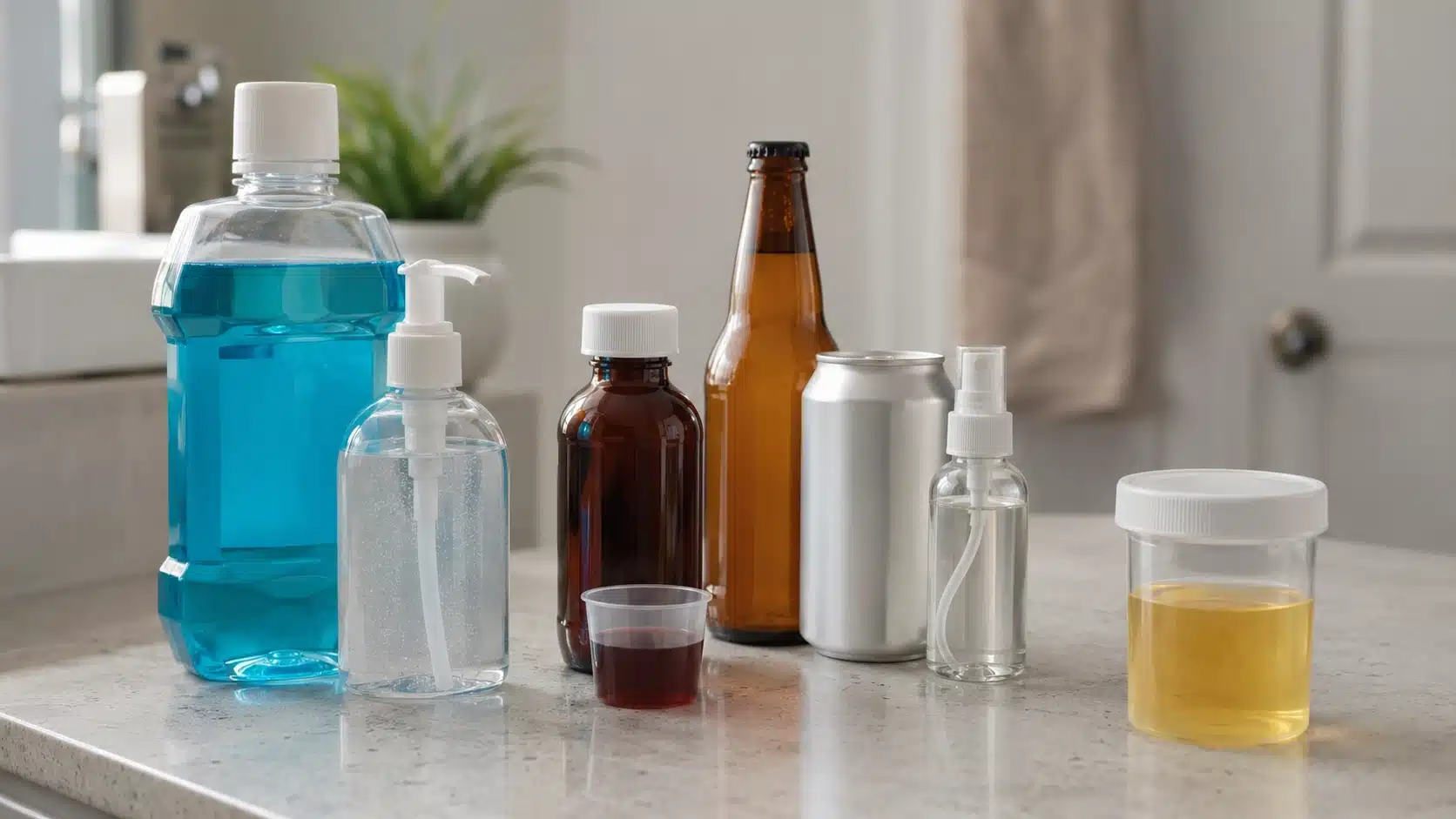
Yes, and this catches more people off guard than it should. EtG’s sensitivity is useful for catching real drinking, but it also means everyday products can trigger a positive:
- Alcohol-based mouthwash
- Hand sanitizer
- Some cough syrups
- Fermented foods and kombucha
- “Non-alcoholic” beer or wine
- Certain flavor extracts, cosmetics, or sprays
A federal advisory on alcohol biomarkers acknowledges that trace exposure from everyday products can yield a positive reading, which is exactly why an appropriately chosen cutoff matters for interpreting results correctly.
A laboratory study on sustained hand sanitizer use has confirmed that heavy repeated exposure can produce measurable urinary levels.
| 📝 Tip: Under a strict no-alcohol requirement, check labels and skip alcohol-containing products where you can. |
EtG Test vs Regular Urine Alcohol Test
A standard urine alcohol test looks for ethanol itself, which clears fairly quickly. EtG looks for a metabolite, so it lingers considerably longer.
| Test Type | What It Measures | Typical Use |
| Breath test | Current breath alcohol | DUI stops, real-time checks |
| Blood alcohol test | Alcohol in blood | Legal or medical timing |
| Basic urine alcohol | Ethanol | Short recent-use window |
| EtG urine test | Alcohol metabolite | Abstinence monitoring |
| EtS test | Alcohol metabolite | Often paired with EtG |
| PEth blood test | Alcohol marker in blood | Longer-pattern drinking history |
EtG earns its place in treatment programs, courtrooms, and workplace monitoring because it looks back further than breath or blood alcohol testing.
It is not flawless, though; it cannot confirm current impairment, cannot always pin down an exact drink count, and stays sensitive to cutoff choice and incidental exposure.
Can You Speed Up EtG Clearance?
No drink, supplement, sauna, vinegar shot, detox tea, or water binge guarantees a negative result. Time is the only real factor.
Normal hydration is fine; extreme water intake is not, since a diluted sample can get flagged on its own and lead to a retest.
The safer path:
- Stop drinking once a test is looming
- Stay normally hydrated, nothing extreme
- Eat and sleep as usual
- Skip alcohol-containing products
- Follow every program rule
- Talk to your attorney, clinician, or monitoring contact if the outcome carries real weight
| ⚠️ Advisory: Do not add anything to a sample, use synthetic urine, overdrink water, skip a scheduled test, or try detox products. Each one turns a small problem into a bigger one. |
If Your Test is Tied to DUI, Probation, or Monitoring
Read your paperwork closely for alcohol rules, missed-test policies, and what actually counts as a violation, since programs rarely explain this out loud.
Avoid guessing your way through it: if you drank recently and a test is approaching, reach out early to an attorney, probation officer, or treatment provider rather than waiting on the result.
A guide on navigating drug testing rules safely can help you sort out what counts as a violation before you are staring at a result.
Keep records of any products you used that contain alcohol, noting what they were, when you used them, and why, since a clear record beats a panicked explanation delivered later.
None of this guarantees a favorable outcome, but it puts you in a far stronger position than silence would.
If stopping alcohol brings on shaking, sweating, confusion, severe anxiety, seizures, or hallucinations, seek medical help immediately, since withdrawal can turn dangerous fast.
| ⚠️ Advisory: If stopping alcohol brings on shaking, sweating, confusion, severe anxiety, seizures, or hallucinations, get medical help right away. Alcohol withdrawal can turn dangerous quickly. |
What People Online Usually Get Wrong
Forums surface real worries, but they also repeat the same handful of errors so often that people start treating them as fact. Here are the ones that show up most.
- Counting from the First Drink Instead of the Last: Detection time is measured from your final drink.
- Ignoring Cutoff Levels: A 100 ng/mL test and a 500 ng/mL test are not comparable.
- Comparing Mismatched Drinking Amounts: Two beers and a heavy weekend are different events.
- Trusting a Single Anecdote: One pass-or-fail story says nothing about your own result.
- Confusing Sober with Negative: Feeling clear-headed has no bearing on whether EtG has cleared.
- Reaching for Risky Shortcuts: Dilution and detox products tend to create bigger problems than they solve.
Sidestepping these mistakes will not change your test result, but it will keep you from making a stressful situation worse.
Common EtG Myths
Forums repeat a handful of claims so often they start to sound like fact. Here is where each one actually stands.
| Myth | Reality |
| “EtG only lasts 24 hours.” | Sometimes, but heavy drinking regularly pushes past that mark. |
| “The 80 hour figure is made up.” | It is real, just not guaranteed for every drinker. |
| “Water clears EtG fast.” | Fluids support urine flow; they do not guarantee a negative. |
| “If BAC reads zero, EtG must be zero too.” | No, the two run on completely different timelines. |
| “A high EtG number reveals exact drink count.” | No, it suggests exposure, not a precise tally. |
| “Every program uses the same cutoff.” | No, cutoffs vary widely between labs. |
None of these myths hold up once you look at how the test actually works, so treat the table above as the version worth remembering.
Practical Safety Checklist Before an EtG Test
Use this checklist to prepare responsibly, avoid preventable mistakes, and understand the practical factors that may affect an EtG test.
- Count time from your last drink, not from when the evening started.
- Remember, the cutoff level matters as much as the timeline.
- Avoid alcohol-containing products under strict abstinence rules.
- Drink water at a normal pace, not in excess.
- Bring documentation for any relevant medication or medical product.
- Never miss a scheduled test or tamper with a sample.
- Ask in advance how disputed results get reviewed.
- Seek medical attention if withdrawal symptoms appear.
- Loop in a legal or clinical professional if the stakes are high.
Final Verdict
EtG testing tracks recent alcohol exposure, not how sober you feel right now.
That gap is why this question never has one tidy answer. For most people, the honest window sits between 24 and 72 hours.
Heavier drinking, repeated drinking, or a strict low cutoff can stretch that further.
The safest move was never a clever trick; it is time, clear records, steady hydration, and following the rules you were given.
If your test connects to probation, a DUI case, employment, or treatment, skip the forum math and get real guidance before one result becomes a much bigger problem. Drop a comment below and share your thoughts.
Frequently Asked Questions
Does Exercise or Sweating Help Clear EtG Faster?
No. EtG is processed by the liver and removed through urine, not through sweat. Exercise does not speed up how quickly your body eliminates it, and pushing yourself hard while dehydrated can work against you during testing.
Does Body Weight Affect how Long EtG Stays Detectable?
Body size plays a role because it affects how alcohol is distributed and processed, but it is only one factor among several. Hydration, kidney function, and the amount consumed usually matter more than weight alone.
Can Secondhand Exposure, Like Being in a Bar, Cause a Positive Result?
Breathing in alcohol vapor from other people drinking around you is extremely unlikely to produce a positive EtG result. The exposure that has been shown to matter involves direct, repeated contact with alcohol-based products, not simply being nearby.
Does Eating Before Drinking Change the EtG Detection Window?
Eating slows how quickly alcohol enters your bloodstream, which can lower peak blood alcohol levels. It does not meaningfully change how long EtG remains detectable once your body has finished processing the alcohol you drank.
Sources
- Medical University of South Carolina, “Urine Ethylglucuronide Testing,” Clinical Neurobiology Lab. medicine.musc.edu
- McDonell, M.G. et al., “Using Ethyl Glucuronide in Urine to Detect Light and Heavy Drinking in Alcohol Dependent Outpatients,” Drug and Alcohol Dependence, 2015. pmc.ncbi.nlm.nih.gov
- Substance Abuse and Mental Health Services Administration, “The Role of Biomarkers in the Treatment of Alcohol Use Disorders,” 2012 Revision. niaaa.nih.gov
- Reisfield, G.M. et al., “Ethyl Glucuronide, Ethyl Sulfate, and Ethanol in Urine after Sustained Exposure to an Ethanol-Based Hand Sanitizer,” Journal of Analytical Toxicology, 2011. pubmed.ncbi.nlm.nih.gov
- “How Long Does It Take to Sober Up? What BAC Shows?” funwithdizzies.com
- “How to Pass a Drug Test Safely and Know the Rules.” funwithdizzies.com