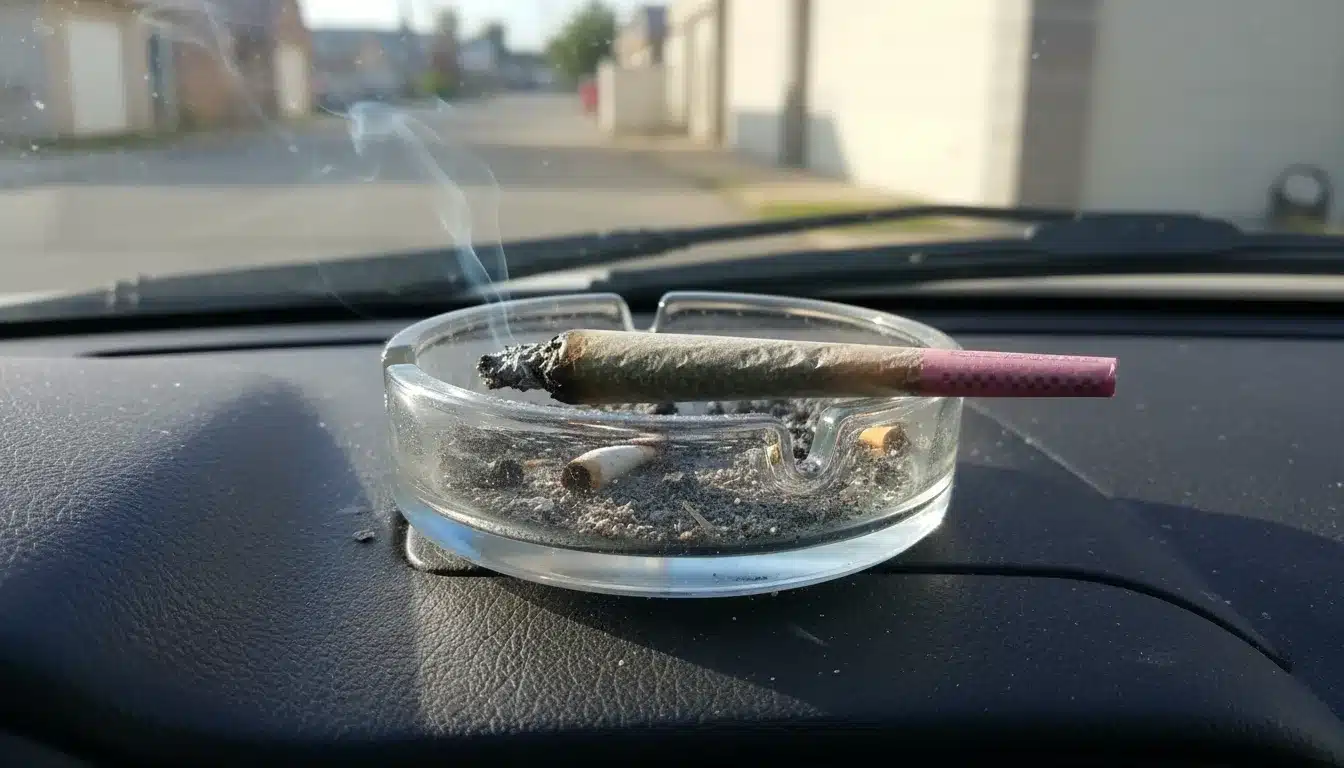
| ⚠️ Warning: Driving while impaired by cannabis is illegal in every U.S. state and dangerous regardless of your tolerance level. If you are unsure whether you are safe to drive, do not drive. In an emergency, call 911. For substance use support, contact SAMHSA at 1-800-662-4357. |
Quick Glance: How Long After Smoking Weed Can You Drive?
| Consumption Method | Minimum Wait Time | High-Dose Wait Time |
| Smoking (joint, pipe, bong) | 5–6 hours | 8+ hours |
| Vaping | 5–6 hours | 8+ hours |
| Edibles | 8–12 hours | 12+ hours |
| Concentrates/dabs | 8+ hours | Do not drive the same day |
| Cannabis + alcohol | Do not drive until fully slept | Do not drive until fully slept |
Still feel high? Don’t drive. Feeling sober and being safe to drive are not the same thing, and the research is very clear on that distinction.
Here’s something most people get wrong: the high wearing off and the impairment wearing off are two different things. You can feel completely sober 90 minutes after smoking and still be measurably worse at driving than you were before you lit up.
Research is clear on this, and it’s the reason every government body and traffic safety organization lands on wait times that feel longer than expected. There’s no breathalyzer for cannabis. There’s no legal THC limit that works the same way a blood alcohol content does.
What exists instead is a growing body of research on how long driving skills, including reaction time, lane tracking, distance judgment, and split-second decision making, remain impaired after different types of cannabis use. That’s what this guide is built on.
How Cannabis Actually Affects Driving
Cannabis impairs the specific skills driving requires. Not in a dramatic, can’t-function way at moderate doses, but in a subtle, measurable way that matters at 60mph.
A comprehensive meta-analysis of 155 experimental trials, cited in a 2026 peer-reviewed review published in PMC, found that driving impairment was consistently detected within the first hour after inhalation and, in most cases, persisted for up to 5 hours. The effects included:
- Slower reaction time: the gap between seeing a hazard and responding to it widens
- Weaker lane tracking: subtle weaving increases, even when users don’t feel it
- Impaired distance judgment: following distances become less reliable
- Divided attention deficits: managing multiple inputs simultaneously (mirrors, speed, signals, pedestrians) becomes harder
One on-road study found that cannabis impairment at 40 minutes post-inhalation was comparable in magnitude to a blood alcohol content of 0.05, the legal driving limit in many countries. By four hours, it had dropped to roughly 0.02 BAC equivalent. Still measurable. Still relevant.
The Colorado Department of Transportation reports that in 2024, cannabis-impaired drivers were involved in 45 fatal crashes in Colorado alone. That figure represents a declining trend from 82 in 2021, but it is still far from zero.
How Long Should You Actually Wait?
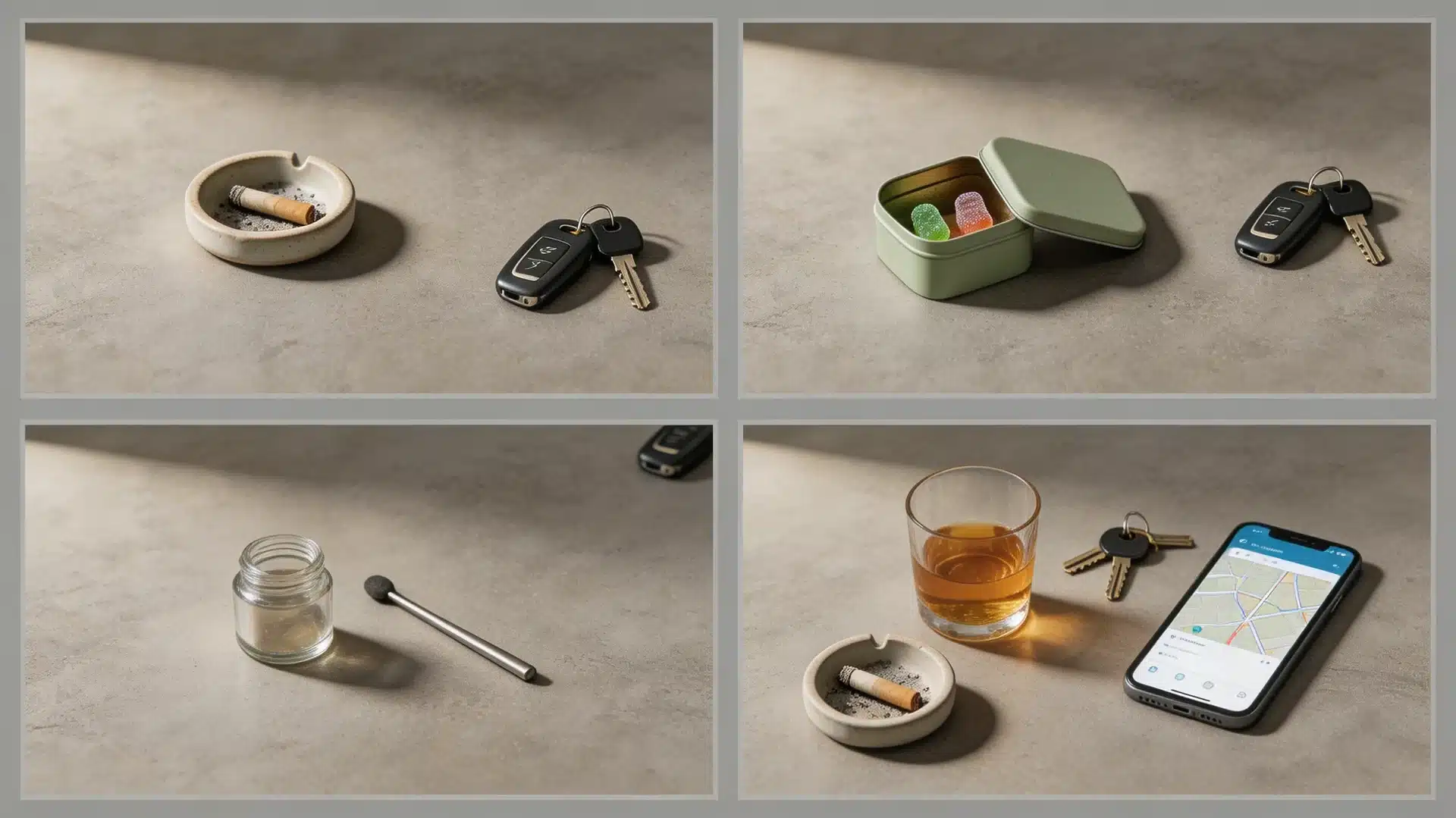
The honest answer isn’t a single number. It depends on what you consumed, how much, and your tolerance. Here’s what the research actually says, broken down by method.
1. Smoking or Vaping
| The recommendation: wait at least 5–6 hours. |
Smoking and vaping deliver THC to the bloodstream within 10–30 minutes, peaking at 30–60 minutes. The impairment window runs longer than most people expect, often well past the point where the high feels gone.
The Colorado Cannabis Office recommends six hours minimum for standard amounts under 35mg THC. The Cannabis Evidence clinician database recommends 6–8 hours after inhalation, a peer-reviewed resource used by healthcare providers. Vaping tends to hit faster than smoking, which is worth knowing: different weed pen formats vary more in onset speed than most people realise.
2. Edibles
| The recommendation: wait at least 8–12 hours. |
Edibles are where the most dangerous miscalculations happen. Onset runs 30 minutes to two hours, depending on metabolism and food intake, meaning peak impairment can arrive well after you think you’re in the clear.
The Cannabis Evidence database specifically recommends 8–12 hours after oral ingestion before driving. For high-dose edibles (50mg+), extend that further. If you took an edible in the evening, don’t drive until the next afternoon.
3. High-Potency Products (Concentrates, Hash)
| The recommendation: err toward 8+ hours minimum. |
Concentrates, dabs, and high-strength hash sit well above the 35mg THC threshold that standard guidance is built on. At higher doses, impairment duration extends meaningfully beyond what moderate-dose research captures. If you’re trying to reduce risk on days when driving matters, considering lower-THC strains is one way to shorten the required wait window.
The meta-analysis data underpinning the 5–6 hour recommendation were built on moderate doses. High-potency products operate outside that range. Treat them more like edibles in terms of wait time planning.
4. Weed and Alcohol Together
| The recommendation: don’t drive until you’ve genuinely slept it off. |
The impairment from combining cannabis and alcohol isn’t additive; it’s multiplicative. Even low amounts of alcohol alongside cannabis produce greater impairment than either substance alone at comparable doses.
If you’ve consumed both, no standard wait time applies. The only correct answer is to sleep before driving. Plan ahead or arrange an alternative. There is no shortcut through this one.
How Cops Know You’re Driving High
There is no breathalyzer for cannabis. THC doesn’t work the way alcohol does. Blood THC levels don’t correlate reliably with impairment, and THC can remain detectable in blood for days or weeks after use without indicating current impairment. What officers rely on instead is a combination of the following:
Observed driving behavior: Lane weaving, delayed responses to signals, unusual speed variation, and slow reactions to traffic events are all primary flags that trigger a stop.
Physical signs: Red eyes, slowed speech, slowed reactions during the stop, the smell of cannabis, and difficulty following instructions are all documented markers. Drug Recognition Experts (DREs), officers with specialist training, look for more specific physiological markers, including dilated pupils, elevated pulse, lack of eye convergence, and eyelid tremors.
Field sobriety tests: A 2023 UC San Diego randomized clinical trial published in JAMA Psychiatry found that trained officers using field sobriety tests could differentiate between THC-consuming and non-consuming drivers at several time points, but that overall accuracy was insufficient to stand alone as evidence of impairment. Officers can still arrest based on observed impairment even without a positive chemical test.
Blood or saliva tests: After a stop, blood testing is the primary chemical method. Saliva swabs are used as preliminary screening in some states. Blood tests can detect THC for days to weeks in frequent users. Neither is a clean measure of current impairment.
The upshot: being arrested for a cannabis DUI doesn’t require a failed breathalyzer or a blood test above a specific limit. Observed impairment alone is enough in most jurisdictions.
DUI Consequences: What You’re Actually Risking
A cannabis DUI is a criminal offense in every U.S. state, not a traffic infraction. The practical consequences for a first offense typically include fines starting at $500 and reaching over $2,000, possible jail time (especially for repeat offenses), license suspension for a minimum of six months, and mandatory DUI education courses. Repeat offenses escalate all of these significantly.
Beyond the immediate legal penalties, a DUI conviction affects employment background checks, professional licensing in some fields, auto insurance rates, and, in some states, gun ownership rights. For medical cannabis patients, a conviction can complicate ongoing access to a medical marijuana card.
What Affects Your Wait Time
Everyone clears THC at a different rate. Your dose, consumption method, tolerance, and whether you mixed alcohol all shift the timeline, sometimes significantly. These are the factors that matter most:
| Factor | Effect on wait time |
| Higher THC dose | Longer impairment window. Above 35mg, add time beyond standard guidance. |
| Edibles vs inhalation | Edibles run 8–12 hours minimum vs 5–6 for smoking/vaping |
| Infrequent use | Occasional users experience more impairment than regular users at equivalent doses |
| Alcohol combined | Multiply impaired. Wait significantly longer than either substance alone. |
| Concentrates or hash | Higher potency means longer window. Treat like high-dose edibles. |
| Personal metabolism | Age, body weight, and liver function all affect how quickly THC clears |
One thing that does NOT shorten your impairment window in any meaningful way: coffee, food, exercise, or cold showers. These may improve how alert you feel without touching the cognitive impairment that affects driving performance. The full breakdown of what does and doesn’t work is covered in this guide on how to get less high faster.
The Legal Reality: State by State
Driving impaired by cannabis is illegal everywhere in the United States, regardless of whether recreational cannabis is legal in your state. Legalization of cannabis is not the legalization of driving while impaired. It’s the same relationship as alcohol: legal to possess, illegal to drive under the influence of. How impairment is defined and enforced varies:
- Per se states (including Colorado, Nevada, Washington): A specific blood THC level, typically 5 nanograms per milliliter, constitutes legal impairment regardless of whether the driver shows signs of impairment.
- Zero tolerance states: Any detectable THC in blood constitutes impairment.
- Impairment-based states: Officers must demonstrate that driving ability was actually impaired, not just that THC was present.
The per se approach is widely criticized by researchers because blood THC levels don’t correlate reliably with actual impairment. Frequent users may test above the legal limit days after their last use without being impaired. From a practical standpoint, if you’re in a per se state, a blood test above threshold is a conviction regardless of how you feel.
The “I Feel Fine” Problem
This is the most dangerous part of the cannabis and driving conversation. Regular users in particular develop tolerance to the subjective feeling of being high, meaning they feel less high while still experiencing measurable impairment to the driving-specific skills that matter.
A study from the UC San Diego Center for Medicinal Cannabis Research found that users’ self-perception of impairment was frequently inaccurate. People felt ready to drive well before their actual driving performance had returned to baseline.
The practical implication: feeling sober is not a reliable indicator of being safe to drive. The only reliable indicator is time.
Coffee and food are the usual go-tos when someone wants to feel less high faster. They may sharpen how alert you feel, but research doesn’t support them meaningfully accelerating the return of driving-specific skills. You’ll feel better. You won’t necessarily drive better.
What to Do If You’re Pulled Over
Stay calm and pull over safely as soon as possible. Keep your hands visible. You are not required to volunteer information about cannabis use, but lying to law enforcement is a separate legal problem. Here’s what to know:
You have the right to decline a field sobriety test in most states, though refusal can be used against you at trial. You generally cannot refuse a chemical blood or saliva test after arrest without triggering automatic license suspension under implied consent laws in most states. If you are arrested, invoke your right to remain silent and request an attorney before answering further questions.
If you believe your cannabis use was lawful and your driving was not impaired, document the time you consumed, the amount, and the method as soon as possible after the stop. This information is relevant for your legal defense.
Final Thoughts
The wait times aren’t arbitrary. They’re built on actual measurements of driving performance at timed intervals after use, not on how high people feel. Feeling sober at 90 minutes is real. Being safe to drive at 90 minutes is a different question entirely, and the research mostly says no.
The safest rule remains the simplest one: if you’ve consumed, plan not to drive. If you have to drive, plan the timing before you consume, not after. Cannabis affects your ability to make good decisions about your ability to make decisions, which makes post-consumption planning reliably worse than pre-consumption planning.
| ⚠️ Advisory: This content is for informational and harm reduction purposes only. Driving while impaired by any substance is illegal and dangerous. Always follow local laws regarding cannabis use and driving. |
Frequently Asked Questions
Can you drive 2 hours after smoking weed?
No. Research shows that measurable impairment in most users persists well beyond two hours after inhalation. At two hours, you are likely still impaired, even if you feel close to sober. Wait times of 5–6 hours minimum are based on when driving-specific skills return to baseline, not when the subjective high fades.
How long after a joint should you drive?
At least five to six hours for a standard-potency joint. If it was particularly strong, or if you smoked multiple times, extend that window. The “feel sober” test is unreliable. Time is the only genuine marker.
Can you drive after smoking weed if you have a high tolerance?
Tolerance reduces how impaired you feel, but research shows it does not eliminate driving impairment at equivalent doses. Frequent users may experience less subjective impairment while still showing measurable deficits in reaction time and lane tracking. Don’t use tolerance as a justification to drive sooner.
How long after eating edibles can you drive?
Minimum 8–12 hours after a standard edible dose. The delayed, prolonged onset means peak impairment may not occur until hours after consumption, and the effects last significantly longer than with inhalation. If you took an edible in the evening, the safest rule is not to drive until the following afternoon.
Is there a legal THC limit like a BAC limit?
Not in most jurisdictions. Where per se limits exist (typically 5 ng/mL blood THC), they are widely criticized because blood THC levels don’t correlate reliably with actual impairment. Officers can arrest for observed impairment, regardless of chemical test results, in most states.
How high is too high to drive?
Any detectable impairment of driving-specific skills makes it unsafe to drive. Since there is no personal breathalyzer and your perception of your own impairment is unreliable, the practical answer is: if you have consumed cannabis and the recommended wait time has not passed, it is too high to drive.
Can you refuse a roadside drug test for cannabis?
In most states, you can decline a field sobriety test, though refusal can be noted by the officer and used as evidence. Post-arrest chemical tests (blood or saliva) fall under implied consent laws in most states: refusal triggers automatic license suspension and can be used against you in court. Consult a local attorney for jurisdiction-specific guidance.
What are the penalties for a cannabis DUI on a first offense?
A first-offense cannabis DUI typically includes fines from $500 to over $2,000, possible jail time, license suspension for at least six months, and mandatory DUI education courses. Penalties increase significantly for repeat offenses and vary by state. A conviction also creates a criminal record that affects employment, professional licenses, and insurance rates.
Sources
- PMC, “Recent Advances in the Science of Cannabis-Impaired Driving” (2026). Peer-reviewed narrative review; meta-analysis of 155 experimental trials on cannabis driving impairment duration. pmc.ncbi.nlm.nih.gov
- Colorado Department of Transportation, “Cannabis and Driving: Data and Research.” Government data on cannabis-impaired driving fatalities and prevalence, 2019–2024. codot.gov
- Cannabis Evidence, “Cannabis and Driving Impairment” (Clinician Brief). Peer-reviewed clinician resource; recommended wait times by consumption method. cannabisevidence.org
- UC San Diego / JAMA Psychiatry, “Can Field Sobriety Tests Identify Drivers Under the Influence of Cannabis?” (2023). Randomized clinical trial on the accuracy of field sobriety tests for cannabis impairment detection. today.ucsd.edu