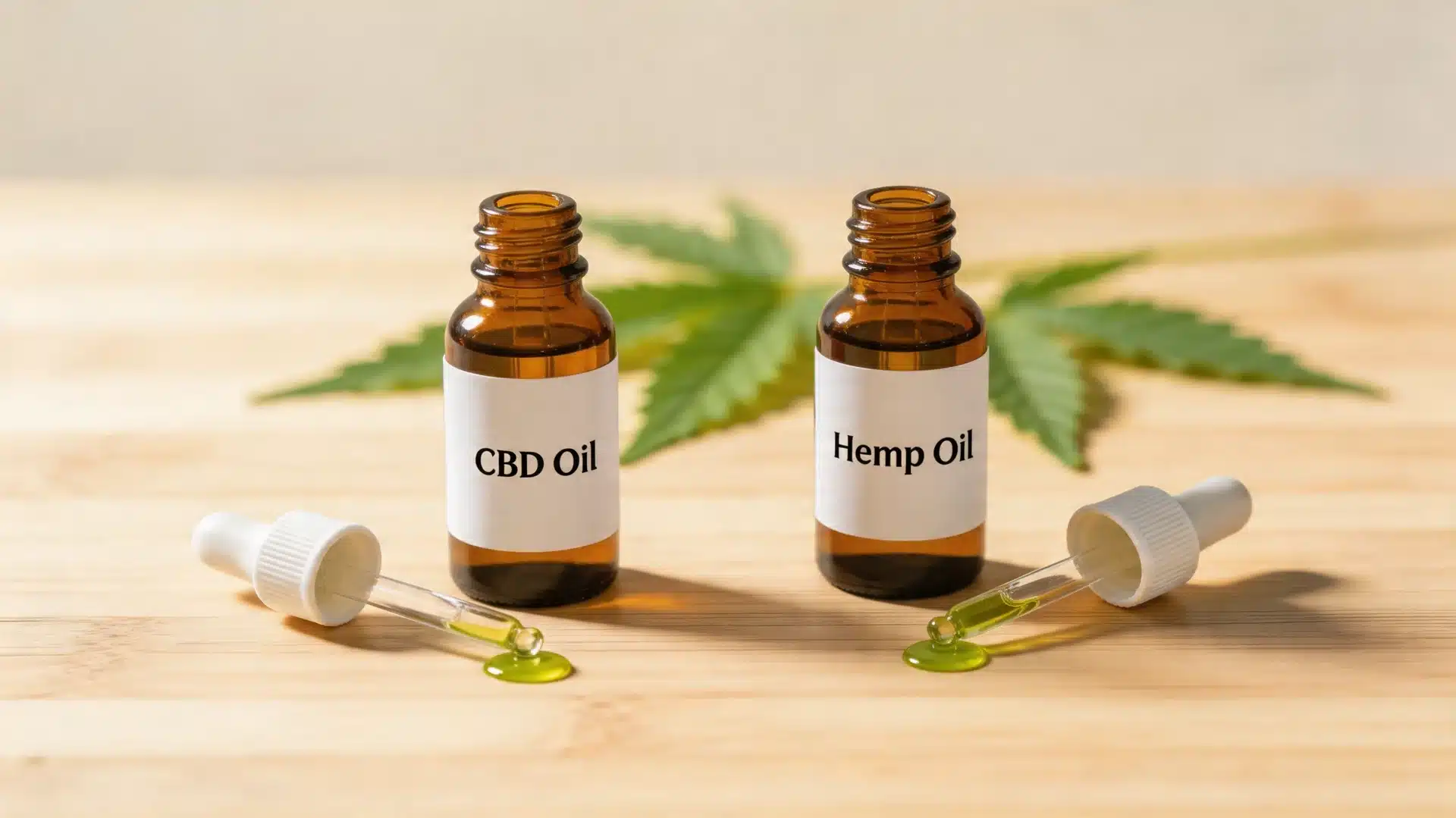
CBD oil and hemp seed oil are not interchangeable products, even though both come from the same plant. The critical distinction is source: CBD oil is extracted from the flowers, leaves, and stalks of Cannabis sativa and contains active cannabinoids; hemp seed oil is cold-pressed from the seeds only and contains no cannabinoids at all.
Understanding the difference between CBD oil vs hemp oil before purchasing can prevent both wasted money and unmet expectations. Below is a precise breakdown of how each oil is made, what it does in the body, and which one makes sense for a given goal.
Quick Glance: CBD Oil vs Hemp Oil
| Feature | CBD Oil | Hemp Seed Oil |
| Source | Flowers, leaves, stalks | Seeds only |
| CBD Content | High | None |
| THC | Trace amounts possible | None |
| Interacts With Endocannabinoid System | Yes | No |
| Primary Use | Targeted wellness support (pain, stress, sleep, inflammation) | Nutrition, skincare, cooking |
| Drug Test Risk | Low but possible | None |
| Typical Cost | $16 to $200 | $10 to $40 |
| Where to Buy | Specialty stores, online | Grocery stores, pharmacies |
What Is CBD Oil?
CBD oil is extracted from the flowers, leaves, and stalks of the hemp plant, the parts that are concentrated in cannabidiol (CBD), a phytocannabinoid with a documented interaction profile in human physiology.
Unlike a standard nutritional supplement that adds nutrients through digestion, CBD signals receptors directly through the endocannabinoid system (ECS), a regulatory network involved in mood, pain modulation, sleep architecture, and immune response.
CBD oil is available in three formulations. Full-spectrum CBD retains all cannabinoids, terpenes, and flavonoids present in the plant, including trace THC (under 0.3% by federal definition).
Broad-spectrum CBD removes THC while preserving other cannabinoids and terpenes. CBD isolate is pure cannabidiol with all other plant compounds removed. The choice between these three affects both how well the product performs and whether it carries any drug-test risk.
A note on the entourage effect: Full-spectrum and broad-spectrum formulations may outperform isolate products for some users. The leading hypothesis, supported by preclinical data, is that cannabinoids, terpenes, and flavonoids work synergistically, each amplifying the effects of the others in what researchers call the entourage effect.
This is why many clinical practitioners recommend full-spectrum products for targeted symptom management when drug testing is not a concern. For a detailed look at how product type and body weight affect optimal amounts, the CBD dosage guide covers the full framework.
| Note: If you are subject to workplace drug testing, choose a broad-spectrum or isolate product and confirm THC levels through the brand’s third-party lab report (Certificate of Analysis). Full-spectrum products carry the highest trace THC accumulation risk with daily high-dose use. |
What Is Hemp Oil?
Hemp oil, correctly labeled hemp seed oil, is produced by cold-pressing the seeds of the hemp plant. Hemp seeds do not produce cannabinoids; their chemical composition is fundamentally different from that of the flowers and leaves.
A 2020 nutritional analysis published in Nutrients confirmed that hemp seeds provide a well-balanced fatty acid ratio, vitamin E, and complete protein with all nine essential amino acids, but contain no cannabidiol or tetrahydrocannabinol (Farinon et al., 2020).
Because it contains no active cannabinoids, hemp seed oil does not interact with the endocannabinoid system.
Its benefits come from general nutrition: omega-3 and omega-6 fatty acids in an optimal 3:1 ratio, gamma-linolenic acid (GLA), antioxidants, and B vitamins, which support cardiovascular, skin, and metabolic health when included regularly in the diet. More on how hemp seed oil supports skin and hair health is covered in detail separately.
One additional point worth knowing: hemp seed oil is frequently used as the carrier oil base in CBD products. Because its fatty acid profile improves cannabinoid absorption, some manufacturers blend it directly with CBD extract.
If a product lists both “hemp seed oil” and “cannabidiol” in the ingredients, both components are intentionally present. Hemp seed oil alone, however, contributes no cannabinoid activity.
| Tip: Check the label carefully when shopping. If it reads “hemp seed oil” or lists hemp seeds as the source, the product contains no CBD. If it reads “hemp extract” or “CBD oil” and lists milligrams of cannabidiol, it contains active cannabinoids. “Hemp oil” used without further specification on a label is ambiguous and warrants a closer look at the ingredient list. |
Key Differences Between CBD Oil and Hemp Oil
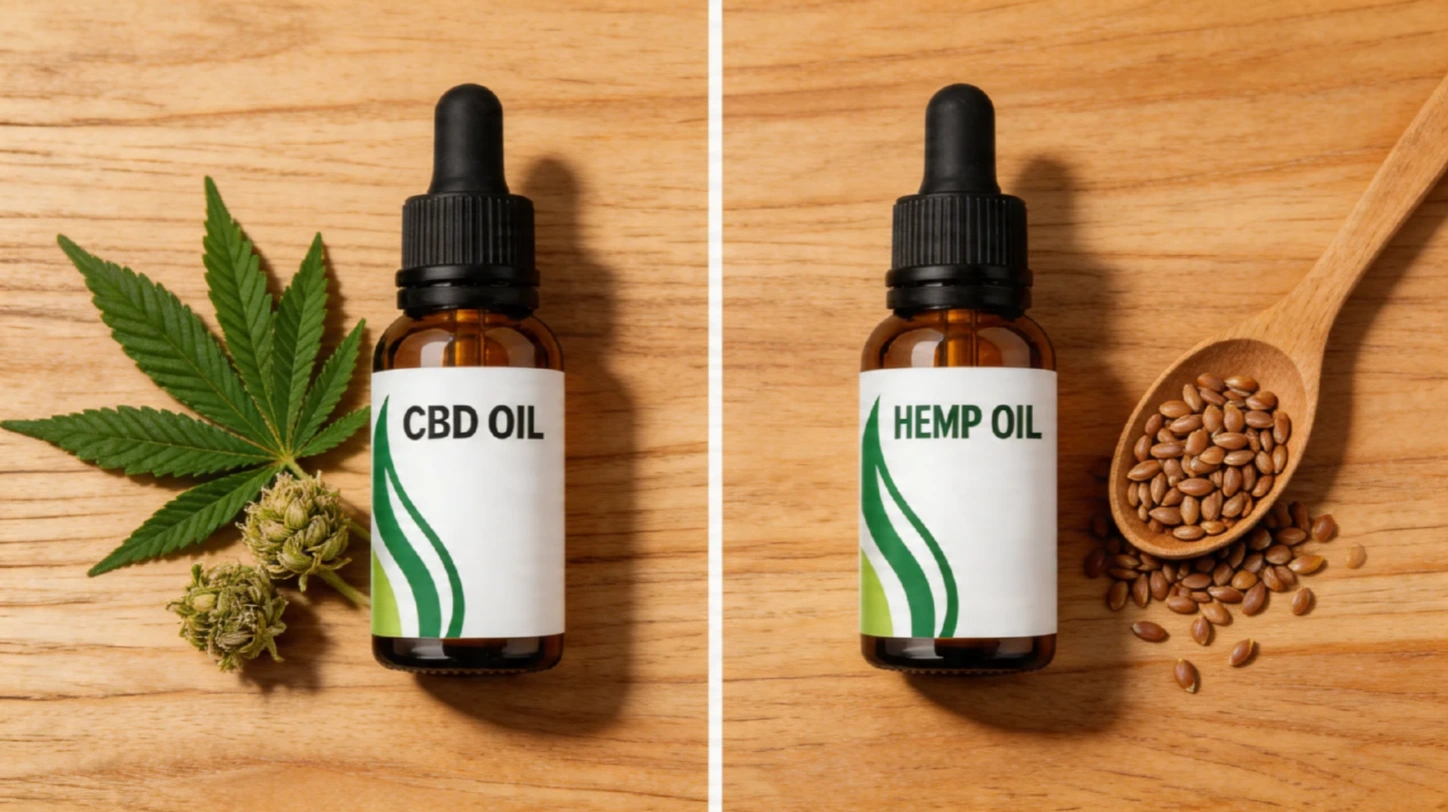
Both oils derive from Cannabis sativa, but from entirely different parts of the plant, and that structural difference determines everything downstream: biochemistry, mechanism of action, clinical application, legal standing, and price.
1. Source and Extraction
CBD oil requires CO2 or ethanol extraction from aerial plant parts, processes that demand specialized equipment, multiple purification steps, and third-party purity testing. The complexity directly drives cost.
Hemp seed oil is produced by cold-pressing seeds, a process comparable in complexity to producing olive oil. No cannabinoids are present in the seeds to be extracted, regardless of how refined the process is.
2. Cannabinoid Content
CBD oil contains cannabidiol as the primary active compound, and depending on formulation, may also carry minor cannabinoids including CBG (cannabigerol) and CBN (cannabinol), each with its own receptor interaction profiles.
Hemp seed oil contains no cannabinoids. This is a botanical fact, not a manufacturing variable. Hemp seeds simply do not synthesize cannabidiol or THC. No processing technique can produce CBD from a seed that never contained it.
3. How They Work in the Body
CBD oil engages CB1 and CB2 receptors within the endocannabinoid system, and also modulates serotonin (5-HT1A) and TRPV1 receptors, which play roles in anxiety regulation and pain perception, respectively. The result is a targeted, receptor-level intervention that users commonly describe as affecting mood, discomfort, and sleep quality.
Hemp seed oil does not interact with those receptors. Its fatty acids and vitamin content operate through standard nutritional pathways, supporting cell membrane integrity, reducing systemic inflammation associated with poor dietary fat ratios, and providing substrate for hormone synthesis. Same plant, completely different mechanisms.
4. Primary Uses
Users commonly turn to CBD oil for targeted concerns: chronic discomfort, anxiety, disrupted sleep, and inflammatory conditions. Consistent daily dosing over two to four weeks is typically required before users report the clearest results. For those managing daily physical discomfort specifically, managing pain with CBD oil requires both product selection and dosing strategy. There is also focused guidance on using CBD oil for sleep for those whose primary concern is sleep architecture.
Hemp seed oil suits everyday nutritional use: cooking at low temperatures, salad dressings, smoothies, and topical skincare. It is best understood as a premium dietary fat with dermatological applications, not a supplement with targeted physiological effects.
5. Legal Status and THC Content
Hemp seed oil contains no THC and is unrestricted in all U.S. states and most countries. It can be purchased at any grocery store without regulatory concern.
CBD oil, when derived from hemp containing less than 0.3% THC, is federally legal in the United States under the 2018 Farm Bill, but individual state regulations vary, and some jurisdictions impose additional restrictions. Before purchasing, a brief check of local law is advisable, particularly if travel is involved.
| ⚠️ Advisory: Trace THC in full-spectrum CBD oil can accumulate with heavy daily use and may produce a positive result on sensitive immunoassay drug tests. Always request a Certificate of Analysis (COA) from any CBD brand before purchasing and confirm that the THC concentration falls within the legal threshold. Broad-spectrum and isolate products carry significantly lower risk. |
Dosage Guide
Dosing these two oils follows entirely different logic. CBD oil requires careful titration and gradual adjustment; hemp seed oil is used freely as a dietary fat without strict measurement.
| Factor | CBD Oil | Hemp Seed Oil |
| Starting Amount | 5 to 10 mg per day | 1 to 2 teaspoons daily |
| Adjustment | Increase by 5 mg every 1 to 2 weeks | No adjustment needed |
| How to Take | Sublingual, capsules, or added to food | Drizzled on food, added to smoothies |
| Best Timing | Morning or 30 to 60 minutes before bed | Any time with meals |
| Precision Required | Yes, start low, increase slowly | No strict measurement needed |
| Heat Sensitivity | Degrades above 160°C (320°F) | Loses nutrients at sustained high heat |
For CBD oil taken sublingually, holding the dose under the tongue for 60 seconds before swallowing improves mucosal absorption meaningfully compared to swallowing directly. When added to food or drink, expect a slower and somewhat attenuated effect due to first-pass hepatic metabolism.
Body weight, individual ECS baseline, and the specific condition being addressed all influence the effective dose; a structured CBD dosage guide provides a weight-based framework to work from.
| ⚠️ Advisory: Starting at 50 mg CBD without prior titration increases the probability of dose-dependent side effects including drowsiness, nausea, and dry mouth. The standard clinical recommendation is to start at 5 to 10 mg, hold that dose for one to two weeks, and increase only if the target effect is not achieved. Most users find their effective dose in the 15 to 30 mg range. |
What Users Commonly Report
CBD oil and hemp seed oil each support the body through different mechanisms. The reported benefits reflect those differences directly.
What CBD Oil Users Commonly Report
Because CBD engages the endocannabinoid system, its commonly reported effects tend to be more specific and noticeable than those of nutritional supplementation alone.
- Pain and Discomfort: Users commonly report reduced discomfort from chronic conditions, nerve pain, and post-exercise soreness. Preclinical data suggest CBD interacts with TRPV1 receptors involved in pain signaling (Iffland and Grotenhermen, 2017).
- Sleep Quality: Users taking CBD 30 to 60 minutes before bed commonly describe faster sleep onset and fewer nighttime disruptions, particularly those whose sleep issues are secondary to anxiety or pain. See using CBD oil specifically for sleep for protocol details.
- Stress and Anxiety: CBD’s documented modulation of 5-HT1A serotonin receptors is the proposed mechanism behind commonly reported reductions in daily stress reactivity and situational anxiety.
- Inflammation: Published laboratory analyses suggest CBD carries anti-inflammatory properties at the cellular level. Users with arthritis and exercise-related inflammation commonly describe reduced swelling and stiffness with consistent use.
Results build with consistency. Most users report the clearest outcomes after two to four weeks of daily use at a stable dose.
What Hemp Seed Oil Users Commonly Report
Hemp seed oil’s benefits arrive through sustained nutritional inclusion rather than receptor signaling. Changes are gradual and cumulative.
- Cardiovascular Support: The 3:1 omega-6 to omega-3 ratio in hemp seed oil aligns with dietary recommendations for healthy cholesterol levels and blood pressure maintenance over time (Farinon et al., 2020).
- Skin Health: Hemp seed oil moisturizes without clogging pores; its GLA content is associated with reduced skin dryness and support for the skin barrier. Users commonly describe improvement in dry and irritation-prone skin after several weeks of daily topical use.
- Hair and Scalp: Topical application is commonly associated with reduced breakage and scalp dryness. The fatty acid profile strengthens hair strands by penetrating the cuticle layer.
- Nutritional Baseline: Hemp seeds provide complete protein with all nine essential amino acids, making hemp seed oil a practical addition to plant-based diets for those seeking diverse protein sources.
Side Effect Profile
Neither oil presents a significant risk when used within recommended ranges, but CBD oil warrants more clinical attention. At higher doses, the side effects most commonly documented are drowsiness, dry mouth, and gastrointestinal discomfort.
The more clinically significant concern is pharmacokinetic: CBD inhibits certain cytochrome P450 liver enzymes responsible for metabolizing a range of prescription medications. This interaction profile overlaps substantially with the grapefruit warning found on blood thinners, certain antiepileptics, and some immunosuppressants.
A full review of CBD’s known drug interactions is a necessary step before beginning use alongside any prescription medication.
Hemp seed oil’s side effect profile is limited to occasional mild gastrointestinal upset at high doses. No clinically significant drug interactions have been documented.
| Note: If you are taking any prescription medication that carries a grapefruit interaction warning, consult your prescribing physician before starting CBD oil. The enzyme inhibition mechanism is pharmacologically comparable. Hemp seed oil does not share this interaction risk. |
Cost and Availability
Price and availability differ significantly, and understanding why helps distinguish a well-made product from a mislabeled or underdosed one.
| Factor | CBD Oil | Hemp Seed Oil |
| Typical Price Range | $16 to $200, depending on potency | $10 to $40 per bottle |
| Reason for Price Difference | Advanced extraction, third-party testing, cannabinoid potency | Cold-pressing process; no active compounds to test for |
| Where to Buy | Specialty health stores, online retailers | Grocery stores, pharmacies, online |
| Third-Party Testing | Required for reputable products; always request the COA | Less standardized; look for cold-pressed, organic labeling |
| What to Look for on Labels | CBD milligrams per serving, COA availability | Cold-pressed, organic sourcing, no added preservatives |
A very low price on CBD oil is a reliability signal. Advanced extraction and third-party cannabinoid testing carry real costs; products priced well below market norms are frequently mislabeled, underdosed, or produced without adequate quality controls.
For hemp seed oil, the most meaningful quality indicators are cold-pressing (which preserves the fatty acid profile) and organic certification.
Safety Guidelines and What to Avoid
The following guidance applies across user profiles and experience levels. Consistent application of these principles prevents the majority of problems users encounter.
Follow these when using either oil:
- Start CBD oil at the lowest recommended dose and only increase after one to two weeks of stable daily use
- Purchase CBD oil only from brands that publish third-party Certificate of Analysis reports from ISO-accredited laboratories
- Store both oils in a cool, dark location; light and heat degrade fatty acids in hemp seed oil and cannabinoids in CBD oil
- Verify local CBD regulations before purchasing, particularly when traveling between states or internationally
- Use hemp seed oil at low cooking temperatures only; sustained heat above 165°C degrades its polyunsaturated fatty acid content
Avoid the following:
- Do not assume “hemp extract” on a label indicates the presence of CBD; the term is used inconsistently across the industry and often refers to hemp seed oil
- Do not substitute hemp seed oil for CBD oil when seeking targeted support for pain, anxiety, or sleep; the two products have no functional overlap for those applications
- Do not combine CBD oil with medications carrying a grapefruit warning without first consulting the prescribing physician
- Do not use CBD oil in high-temperature cooking; above 160°C (320°F), CBD degrades into compounds that are not beneficial
| ⚠️ Advisory: Pregnant or breastfeeding individuals should avoid CBD oil. Current evidence is insufficient to confirm safety during pregnancy or lactation, and regulatory bodies, including the FDA, have advised against use in these populations. Hemp seed oil used in standard culinary amounts is not subject to the same concern, though consulting a healthcare provider before adding any supplement during pregnancy remains advisable. |
Final Thoughts
The distinction between CBD oil and hemp seed oil is not subtle once it is understood, but the labeling practices used across the industry make it genuinely difficult to identify at the point of sale. That confusion is worth resolving before spending money on either product.
If the goal is targeted support for pain, disrupted sleep, or chronic stress, CBD oil is the appropriate option, provided the user selects a product with a published COA and begins at a conservative dose.
If the goal is improving nutritional quality, skin hydration, or heart-healthy fat intake, hemp seed oil is a practical, affordable, and widely available addition to a daily routine. The two oils are not interchangeable, but they are also not mutually exclusive. Many users include both consistently for different reasons.
Disclaimer: This content is for informational purposes only and does not constitute medical advice. Always consult a qualified healthcare provider before starting any new supplement, particularly if you have an existing health condition or take prescription medications. Results vary between individuals.
Frequently Asked Questions: CBD Oil vs Hemp Oil
Can you use CBD oil and hemp oil at the same time?
Yes, they serve entirely different physiological functions and do not interfere with each other. CBD oil interacts with the endocannabinoid system; hemp seed oil provides nutritional fatty acids and vitamins. Many users include hemp seed oil in meals daily while using CBD oil for targeted support. As noted above, hemp seed oil is also commonly used as the carrier oil in CBD formulations, meaning both are already present in some products. Start both at conservative amounts and observe how the body responds over the first few weeks.
Will hemp oil show up on a drug test?
Hemp seed oil contains no THC and will not trigger a positive result on any standard drug screening. Full-spectrum CBD oil carries a low but real risk: trace THC can accumulate with frequent high-dose use and may exceed the detection threshold on sensitive immunoassay tests. Broad-spectrum and isolate CBD products carry substantially lower risk. Users subject to regular workplace screening should choose a broad-spectrum or isolate formulation and verify THC content via the brand’s COA before use.
Which is better for anxiety, hemp oil or CBD oil?
For anxiety specifically, CBD oil is the clinically relevant option. Hemp seed oil has no direct interaction with the receptors involved in anxiety regulation and would not be expected to produce anxiolytic effects. CBD’s documented modulation of 5-HT1A serotonin receptors is the primary mechanism researchers associate with its reported calming effects. Hemp seed oil may support general wellbeing through better nutritional status over time, but it is not a functional substitute for CBD oil when anxiety is the primary concern.
Can I give my dog hemp oil or CBD oil?
Both are used in veterinary contexts, but the distinction between hemp seed oil vs CBD oil matters as much for dogs as it does for humans. Hemp seed oil is a safe nutritional supplement for dogs and is found in many commercial dog foods. CBD oil formulated specifically for pets is a separate category; human CBD products are not always appropriate due to differences in concentration and added ingredients such as xylitol, which is toxic to dogs. If considering CBD oil for a dog with pain, anxiety, or seizure activity, consult a veterinarian familiar with cannabinoid use in companion animals and select a product with a COA confirming THC content is below 0.3%.
Does heat destroy the benefits of CBD or hemp oil?
Yes, both oils are heat-sensitive, though for different reasons. CBD begins to degrade above 160°C (320°F), breaking down into compounds that lack its beneficial properties. Hemp seed oil’s polyunsaturated fatty acids, particularly its omega-3 content, oxidize under sustained heat and lose their nutritional value. The practical recommendation for both is to add them after cooking rather than during, or to use them in cold preparations such as salad dressings and smoothies. Neither should be used as a frying oil.
Is there a noticeable taste difference between the two?
Yes. Hemp seed oil has a mild, nutty flavor similar to sunflower or flaxseed oil, making it straightforward to incorporate into everyday meals without significantly altering taste. CBD oil carries an earthy, slightly bitter plant flavor that some users find pronounced, particularly in unflavored full-spectrum products where terpenes are retained. Flavored CBD oils (mint, citrus, and berry variants are common) are widely available for users who find the natural taste difficult to tolerate.
Sources
The clinical and nutritional claims in this article are drawn from the following peer-reviewed sources:
- Iffland K and Grotenhermen F. “An Update on Safety and Side Effects of Cannabidiol: A Review of Clinical Data and Relevant Animal Studies.” Cannabis and Cannabinoid Research, 2017. Available at PubMed (PMID 28861514).
- Farinon B, Molinari R, Costantini L, and Merendino N. “The Seed of Industrial Hemp (Cannabis sativa L.): Nutritional Quality and Potential Functionality for Human Health and Nutrition.” Nutrients, 2020. Available at MDPI Nutrients (doi: 10.3390/nu12071935).