| ⚠️Disclaimer: This article is for educational purposes only and is not medical advice. It does not diagnose, treat, or cure any condition. Cannabis and cannabis terpenes remain federally restricted in the United States, and laws vary by state. Talk with a licensed physician or pharmacist before using any cannabis product, terpene isolate, or essential oil, especially if you are pregnant, nursing, taking medication, or managing a health condition. |
Ocimene terpene is a monoterpene responsible for a sweet, citrus-herbal aroma in cannabis, basil, and mint, and it is under early laboratory study for antifungal, anti-inflammatory, and antiviral activity
Ocimene rarely dominates a cannabis strain’s terpene profile, but its chemical structure explains much of how it behaves in the plant and in laboratory research.
Terpenes like ocimene contribute to the smell, taste, and effects of plants, and ocimene helps plants attract pollinators while protecting themselves against insects.
Its identity is registered in the National Institutes of Health’s PubChem database under the compound name beta-ocimene (PubChem CID 5281553).
A 2013 study in Food and Chemical Toxicology examined an ocimene-rich essential oil and reported measurable anti-inflammatory, antioxidant, and antifungal activity in laboratory conditions, although it did not test ocimene in isolation.
Quick Answer: Ocimene terpene is a monoterpene with a sweet, citrus-woody scent, found in cannabis and plants like basil and mango, studied for antifungal, anti-inflammatory, and mood-related effects.
What is Ocimene Terpene?
Ocimene is an acyclic monoterpene, meaning its carbon chain doesn’t close into a ring. That open structure makes it chemically reactive and unstable once exposed to air and heat.
Ocimene shares its acyclic backbone with myrcene, another common cannabis terpene, though the two differ in double-bond placement, which changes scent and volatility.
It also exists as two isomers, alpha-ocimene and beta-ocimene, each with its own PubChem entry.
Ocimene volatilizes at a lower temperature than heavier terpenes like caryophyllene, so it’s among the first compounds lost during drying, curing, and combustion.
Fresh, uncured plant material typically shows a stronger ocimene signal than aged flower.
Alpha-Ocimene vs. Beta-Ocimene
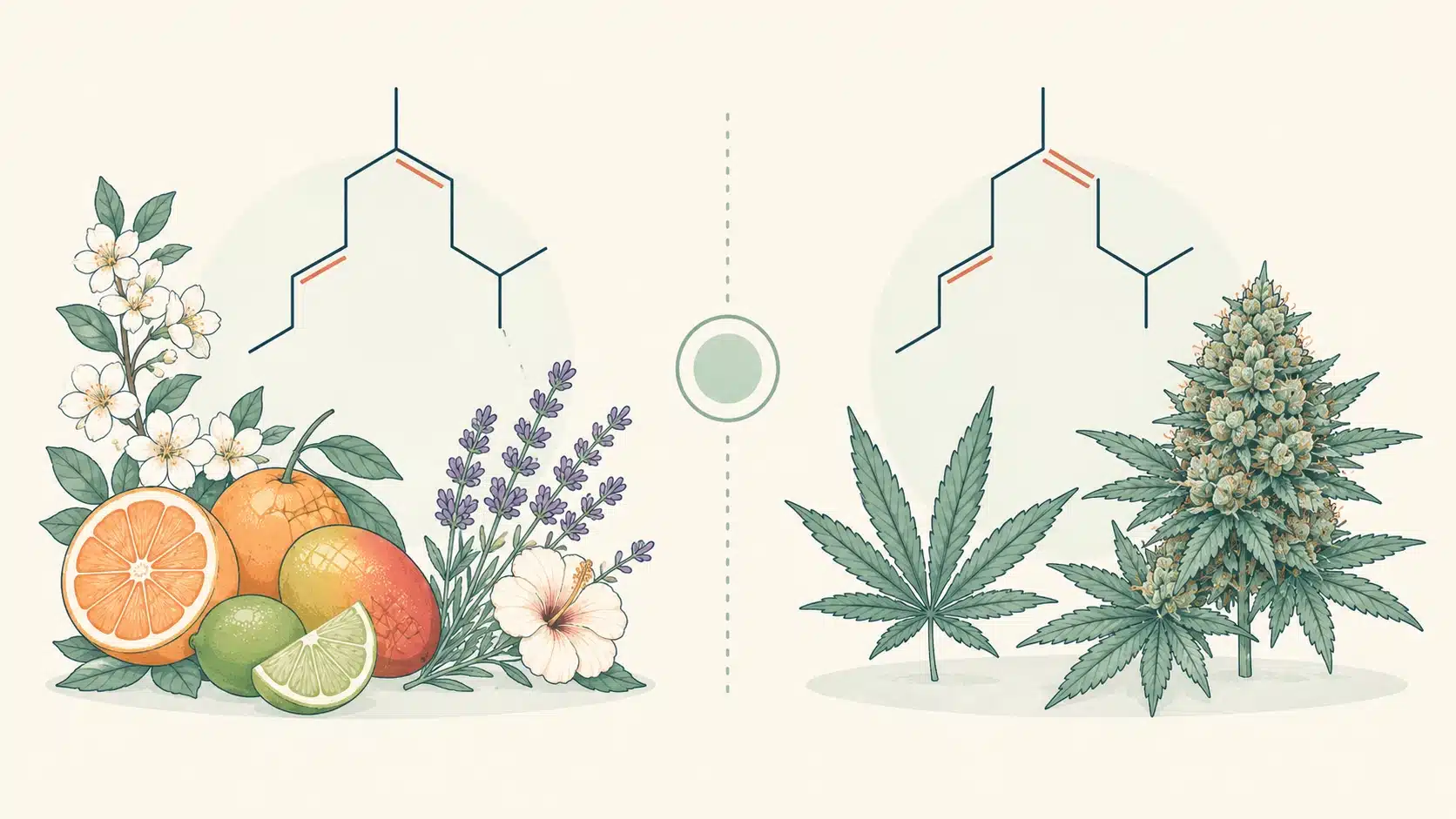
Alpha-ocimene and beta-ocimene are structural isomers. They differ mainly in the position of a double bond along the carbon chain.
- Alpha-ocimene: More commonly associated with certain fruits and floral plants
- Beta-ocimene: The more abundant form found in cannabis
- Main difference: Their molecular structures vary slightly, which can influence aroma and chemical behavior
What does Ocimene Smell and Taste Like?
Ocimene has a sweet, citrus-forward aroma with woody, floral, and herbal undertones. Its flavor can feel fruity and tropical, with lighter earthy notes.
I find it brighter than heavier terpenes such as myrcene, but softer than sharp limonene.
| Sensory Element | Ocimene Profile |
| Scent | Citrus, wood, flowers, herbs, and an occasional metallic edge |
| Flavor | Sweet fruit, tropical notes, pineapple, and mild earthiness |
| Compared With Myrcene | Lighter and less musky |
| Compared With Caryophyllene | Less peppery and spicy |
| Compared With Limonene | Softer and more herbal |
Ocimene’s aroma also changes with concentration. At low levels, it adds subtle sweetness. At higher levels, its citrus-herbal character can become more noticeable.
What Effects is Ocimene Associated With?

There is currently no clinical trial testing isolated ocimene’s psychological effects in humans.
Claims that ocimene feels “energizing” or “uplifting” come from broader terpene surveys and consumer reports rather than direct ocimene studies.
The closest available human evidence comes from a 2023 study in Cannabis and Cannabinoid Research, which followed 101 regular cannabis users over two weeks to examine whether terpene content was linked with subjective effects.
Important points from the current research:
- The study measured caryophyllene, limonene, myrcene, pinene, and terpinolene; ocimene was not included.
- The researchers described the findings as preliminary, meaning they do not prove that individual terpenes cause specific effects.
- Claims that ocimene produces energizing or uplifting effects remain unconfirmed in humans and are mainly based on strain reviews and consumer experiences.
1. Energizing Effects
Ocimene-rich strains are often described as stimulating rather than calming. Consumers may report feeling more awake, active, or motivated after use.
I treat these descriptions as anecdotal because the effect may also come from THC levels, other terpenes, dosage, and individual tolerance.
2. Clear-Headed Mental Effects
Some consumers describe ocimene-forward cultivars as producing a clear-headed experience without the mental heaviness associated with more sedating strains.
This may make the experience feel better suited to daytime use, although ocimene alone cannot predict how a particular strain will affect someone.
3. Lighter Physical Effects
Ocimene is less commonly associated with strong body sedation or couch-lock. Users often report a lighter physical sensation instead of deep relaxation or heaviness.
This pattern may help explain why ocimene frequently appears in sativa-leaning cultivars. However, strain labels and terpene content do not guarantee a specific effect.
4. How Other Compounds May Shape Ocimene’s Effects
Ocimene rarely appears alone or dominates a strain’s terpene profile. Its reported effects may depend on THC, other cannabinoids, and terpenes such as myrcene and pinene.
This interaction is called the entourage effect. Since most studies examine whole plants or essential-oil blends, isolated ocimene may produce different effects.
What are the Reported Benefits of Ocimene?

Ocimene terpene has been studied mainly in cell and animal models for antifungal, anti-inflammatory, and antiviral activity.
A 2013 study in Food and Chemical Toxicology examined an ocimene-rich essential oil and reported strong anti-inflammatory activity, as well as antioxidant and antifungal properties.
I treat this tier of evidence as promising but preliminary, since none of it involves isolated ocimene tested directly in humans.
Activity Against Fungi and Yeasts
Research suggests ocimene-containing oils may have antifungal potential.
Studies of essential oil blends containing ocimene and compounds such as pinene have shown activity against yeasts and molds, including fungi associated with dermatophytosis (ringworm).
However, these results come from laboratory testing of oil mixtures, so they do not confirm that isolated ocimene has the same effects in humans.
Influence on Inflammatory Responses
The same 2013 Food and Chemical Toxicology study reported that the ocimene-containing oil suppressed inflammatory markers in laboratory testing.
Ocimene is generally reported to work more effectively in these studies when combined with other terpenes like myrcene and pinene, rather than in isolation.
Where is Ocimene Found and Used?

Ocimene appears in many plants beyond cannabis, including herbs, fruits, flowers, and hops. Its sweet herbal scent helps explain why it also appears in fragrance, cleaning, and personal-care products.
What stood out to me is how one compound can support plant defense, shape aroma, and serve practical uses in manufactured products.
Where Ocimene Occurs Naturally
Ocimene occurs naturally across several plant groups. In cannabis, it usually appears as a secondary or tertiary terpene rather than the dominant one.
- Culinary herbs: Basil, mint, parsley, and tarragon
- Fruits: Mango and kumquat
- Flowers and citrus plants: Orchids, lavender, and bergamot
- Hops: A minor contributor to beer aroma
How Plants and Products Use Ocimene
Plants may release ocimene after insect damage, helping repel herbivores, attract beneficial insects, and warn nearby plants.
Manufacturers also use it in shampoos, soaps, antiperspirants, fabric softeners, cleaners, and pest repellents.
I see its value as twofold: it adds a sweet herbal scent and supports insect-deterring functions. Its role and concentration vary by formula.
Ocimene Terpene Compared to Other Common Cannabis Terpenes
The table below compares ocimene with other common terpenes based on aroma, reported effects, and natural sources.
| Terpene | Aroma Profile | Reported Effect | Common Source |
| Ocimene | Citrus, woody, herbal | Energizing | Basil, mango, cannabis |
| Myrcene | Earthy, musky | Sedating, relaxing | Mango, hops, cannabis |
| Limonene | Citrus, sharp | Mood-elevating | Citrus peels, cannabis |
| Caryophyllene | Peppery, spicy | Calming, anti-inflammatory | Black pepper, cloves |
Safety Considerations for Ocimene Terpene
If you experience difficulty breathing, chest pain, severe skin irritation, or an allergic reaction after using any terpene or essential oil product, seek emergency medical care immediately by calling 911.
Ocimene is generally considered safe at trace levels found in foods, plants, and cosmetics. Greater caution is needed with concentrated essential oils, terpene isolates, and aromatherapy products.
- Skin and Eyes: Concentrated ocimene may cause irritation. Patch-test diluted products before broader use.
- Inhalation: Avoid breathing undiluted oils or concentrated vapors, especially in enclosed spaces.
- Swallowing: Do not ingest concentrated ocimene unless a professional confirms the product is intended for consumption.
- Respiratory Sensitivity: People with asthma or sensitive lungs should be careful with inhaled forms.
- Medical Advice: Speak with a healthcare professional before using concentrated products, particularly if you have allergies, breathing problems, or take medication.
Natural trace exposure differs from using isolated ocimene in concentrated form.
If you have questions about cannabis use, substance use, or want confidential support, the SAMHSA National Helpline is available at 1-800-662-4357 (1-800-662-HELP), free and confidential, 24/7, 365 days a year.
Where Ocimene Terpene Research Goes from Here
Ocimene is a citrus-herbal monoterpene with real but early-stage research behind its antifungal, anti-inflammatory, and mood-related effects.
The strongest data still comes from essential oil studies rather than isolated ocimene trials in humans.
What I take from the current literature is that ocimene rarely acts alone; its effects seem to depend heavily on the surrounding terpene and cannabinoid profile it’s paired with.
If you’re evaluating a strain or product for its ocimene content, treat it as one variable among several rather than a standalone therapeutic claim.
| This content is intended for general educational use and reflects publicly available research as of the publication date. It is not a substitute for professional medical advice, diagnosis, or treatment. Always seek the guidance of a physician or other qualified health provider with any questions regarding a medical condition or before starting any new supplement, terpene, or cannabis product. |
Frequently Asked Questions
Is Ocimene Terpene Psychoactive?
No. Ocimene is not psychoactive on its own. It may only influence the overall experience when combined with cannabinoids such as THC.
What does Ocimene Terpene Smell Like?
Ocimene has a sweet, citrusy, and woody aroma with herbal notes that may resemble basil, mint, and mango.
Which Cannabis Strains are High in Ocimene?
Clementine, Dutch Treat, and Jack Herer are commonly cited as cannabis strains with noticeable ocimene levels.
Does Ocimene Terpene Cause Sedation?
No. Ocimene is more commonly associated with fresh, energizing effects than with sedation.
Is Ocimene Terpene Safe to Consume?
Ocimene is generally considered safe at levels naturally found in foods and plants. Concentrated forms may irritate the skin, eyes, or lungs.
Sources
- National Center for Complementary and Integrative Health (NCCIH): Cannabis and Cannabinoids: What You Need to Know
- PubMed: Russo, E.B. (2011). Taming THC: Cannabis Synergy and Phytocannabinoid-Terpenoid Entourage Effects
- PubMed: Antifungal, Antioxidant and Anti-Inflammatory Activities of Oenanthe crocata Essential Oil (2013)
- PubMed: Phytochemical Analysis and In Vitro Antiviral Activities of the Essential Oils of Seven Lebanon Species (2008)
- Sage Journals (Cannabis and Cannabinoid Research): An Ecological Examination of Indica Versus Sativa and Primary Terpenes on the Subjective Effects of Smoked Cannabis: A Preliminary Investigation