| ⚠️ Advisory: This article discusses substance use disorder, addiction, and drug-related deaths in a factual and clinical context. If you or someone you know is struggling with substance use, SAMHSA’s National Helpline is free, confidential, and available 24/7: 1-800-662-4357. Call 911 immediately if someone is unresponsive, has stopped breathing, or cannot be roused. |
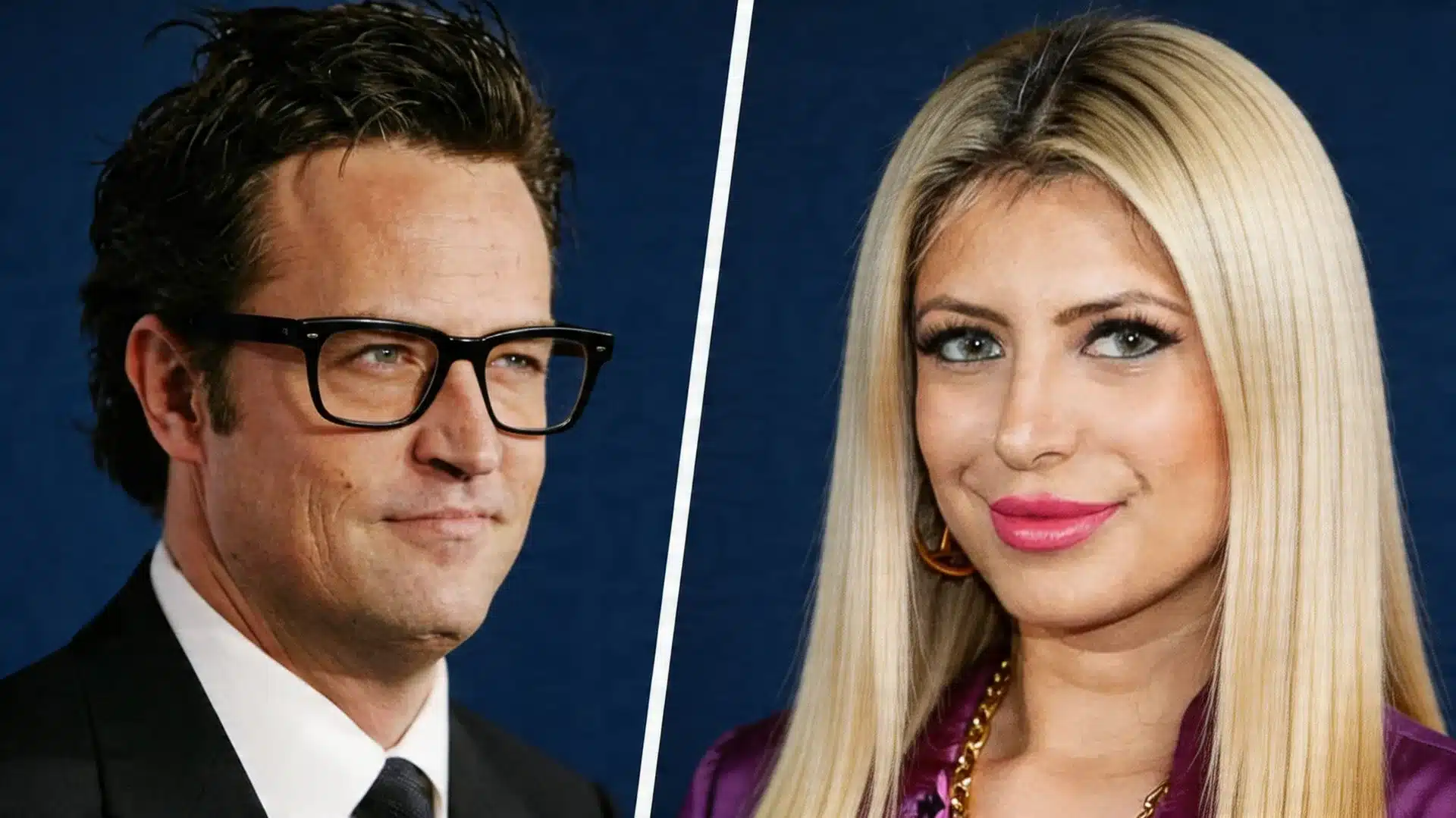
On April 8, 2026, Jasveen Sangha, 42, was sentenced to 15 years in federal prison for supplying the ketamine that killed Matthew Perry in October 2023. The sentence, handed down by U.S. District Judge Sherilyn Peace Garnett, matched exactly what prosecutors had requested. Sangha had been in federal custody since August 2024 and is the third of five defendants to be sentenced in connection with Perry’s death.
Her case is the most legally consequential to emerge from Perry’s death, and it raises questions that extend well beyond one actor and one dealer: how a drug designed for surgical anesthesia became a concierge addiction product, why a prior overdose death on her supply changed nothing, and what the anatomy of a high-end drug distribution network looks like when it finally gets pulled apart in court.
Case at a Glance
| Subject | Jasveen Sangha, 42, North Hollywood, CA |
| Substance | Ketamine (liquid vials; ketamine-infused lollipops) |
| Victims | Matthew Perry (d. October 28, 2023); Cody McLaury (d. August 2019) |
| Charges | Maintaining drug-involved premises; 3 counts of ketamine distribution; 1 count of distribution resulting in death |
| Maximum exposure | 65 years |
| Sentence imposed | 15 years federal prison + 3 years supervised release |
| Sentencing date | April 8, 2026 |
| Presiding judge | U.S. District Judge Sherilyn Peace Garnett |
| Co-defendants | Erik Fleming, Kenneth Iwamasa, Dr. Mark Chavez, Dr. Salvador Plasencia |
Who Is Jasveen Sangha?
Born in London on July 22, 1983, to a Punjabi-origin family whose grandparents built significant wealth in East London’s fashion retail sector, Sangha relocated to Calabasas, California, after her mother’s remarriage. She earned a bachelor’s degree in social sciences from UC Irvine in 2005, followed by an MBA from Hult International Business School in London in 2010.
She briefly appeared on legitimate business records through a Studio City nail salon. From 2019 onward, prosecutors say, there was no legitimate employment on her record. What existed instead was a high-volume drug distribution operation running out of her North Hollywood apartment. Among clients in the entertainment industry circles, she was known by the nickname the Ketamine Queen.
On social media, she ran a carefully constructed parallel identity: a curator of art, an event organizer, a global traveler between London and Los Angeles, documenting luxury travel, caviar, and gallery openings. In the months after Perry’s death, she posted trips to Japan and Mexico. Weeks before her August 2024 indictment, she posted a photo of a mushroom charm bracelet captioned “Pulling out old raver candy #ravetothegrave.”
The Legal Timeline
| Event | Detail |
| First arrest | March 2024, released on a $100,000 bond |
| Second arrest/indictment | August 2024, bail revoked, federal custody begins |
| Guilty plea entered | September 3, 2025 |
| Sentencing (original) | December 10, 2025 (postponed) |
| Sentencing (rescheduled) | February 25, 2026 (postponed again) |
| Final sentencing date | April 8, 2026 |
| Sentence imposed | 15 years federal prison + 3 years supervised release |
The Clinical Picture: What Ketamine Does, and Why Injection-Route Use Is a Different Risk Category
Ketamine is a Schedule III controlled substance in the United States, originally developed as a surgical anesthetic in the 1960s. It works primarily as an NMDA receptor antagonist, blocking glutamate signaling in ways that produce dissociation, sedation, and, at therapeutic doses, rapid-onset antidepressant effects that can begin within hours rather than the weeks required by SSRIs. That therapeutic profile drove a significant expansion of ketamine clinics and infusion therapy programs for treatment-resistant depression over the past decade.
Perry had been receiving supervised ketamine infusion therapy for depression and anxiety. His last clinical session was more than a week before his death. The ketamine found in his system at autopsy was not from that treatment; the drug has a half-life of three to four hours or less. What the medical examiner found was ketamine at levels consistent with general anesthesia, administered outside any clinical setting, by a personal assistant with no medical training.
That distinction matters clinically. In a supervised infusion setting, a trained clinician monitors oxygen saturation, cardiovascular response, and dissociative depth. Dose is controlled and titrated. The patient does not leave until the acute effects have resolved. What Perry’s case documents is the opposite: ketamine used entirely outside a clinical setting, with injection-route dosing administered multiple times daily at home, with no monitoring, sourced entirely from an illegal supply chain. According to prosecutors, Perry was being injected six to eight times per day in the days before his death, and spent approximately $55,000 per month on ketamine at the peak of his use.
Addiction researchers at Northeastern University noted publicly that Perry, given his documented history of substance use disorder spanning three decades, likely would not have been considered an appropriate candidate for unsupervised at-home ketamine dosing. His prior addiction history, which included alcohol dependence beginning at age 14, opioid dependence following a 1997 jet ski accident, and more than 15 residential treatment admissions, represented exactly the kind of clinical profile that calls for the most conservative ketamine protocols, not the least.
A 2025 review published in Molecules (Gibuła-Tarłowska et al.) summarized the risk picture: while ketamine’s therapeutic window is useful for treatment-resistant depression, prolonged or high-dose use produces tolerance, psychological dependence, and cognitive impairment, with genetics accounting for 40 to 60 percent of individual addiction vulnerability. Fatality from ketamine alone is uncommon; the mechanism in Perry’s case was most likely the combination of acute cardiovascular stress from anesthetic-level dosing and subsequent drowning while incapacitated, consistent with the medical examiner’s ruling of accidental death by ketamine with drowning as a contributing factor.
The Operation: What the Prosecution Record Shows
Federal prosecutors described Sangha’s North Hollywood apartment as a drug-selling emporium where ketamine, cocaine, counterfeit Xanax, and methamphetamine were manufactured, stored, packaged, and distributed. The March 2024 raid recovered nearly 80 vials of liquid ketamine, a money-counting machine, and surveillance detection equipment. All client communications ran through Signal and other encrypted platforms. Her network catered specifically to customers in the entertainment industry circles.
The supply chain connecting her operation to Perry moved through three intermediary figures:
- Dr. Salvador Plasencia: previously supplied Perry with ketamine, framed as medical use. After an adverse reaction Perry experienced to a large dose of Plasencia administered on October 12, 2023, his blood pressure spiked, and he could not speak or move. Perry’s assistant was directed to find an alternative source. Plasencia pleaded guilty in July 2025.
- Erik Fleming: operated as the middleman, coordinating transactions between Sangha and Perry’s household. In October 2023, Fleming delivered 25 vials on October 14 and an additional 25 vials, along with ketamine-infused lollipops, on October 24. He pleaded guilty to conspiracy to distribute ketamine resulting in death.
- Kenneth Iwamasa: Perry’s live-in personal assistant, who received vials from Fleming and injected the actor between six and eight times daily in the days leading to his death. He administered at least three injections on October 28, 2023, then left Perry alone. Perry was found face down in his heated pool that afternoon.
When news of Perry’s death broke, Sangha contacted Fleming via Signal with one instruction: delete everything. The case produced five federal convictions, each from a person who played a documented role in the supply chain.
The Death That Came First: Cody McLaury
In August 2019, Sangha sold four vials of ketamine to Cody McLaury, a Los Angeles resident with no connection to the entertainment industry. He died from an overdose within hours. His sister sent Sangha a direct message informing her. Prosecutors cited that text as evidence that Sangha knew her supply had killed someone and chose to continue operating regardless. “She didn’t care and kept selling,” the sentencing memorandum stated.
McLaury’s name rarely appears in coverage of this case. His death received none of the attention Perry’s did. The legal record treats both deaths as facts of equal moral weight, and the prosecution made clear in its sentencing argument that continuing to operate after McLaury’s death was central to the case for a significant sentence. Sangha’s own sentencing memorandum, prosecutors noted, made no mention of McLaury at all.
What Was Said in Court
Sangha told the court she takes full responsibility for her actions, called them “horrible decisions that ultimately proved tragic,” and thanked the judge for “stopping me in my tracks.” Her defense attorneys, Mark Geragos and Alexandra Kazarian, pointed to sustained sobriety in custody, active rehabilitation programming, and strong family support, and asked for a sentence of time served.
Prosecutors pushed back. Their sentencing memorandum described her as a dealer who “chose profits over people,” whose conduct showed “cold callousness and disregard for life,” and who had been given a clear opportunity to stop after McLaury’s death and did not take it.
Judge Garnett imposed the full 15-year sentence prosecutors had requested. Keith Morrison, Perry’s stepfather and a “Dateline” correspondent, said after the hearing that the sentence was “highly reasoned” and that “nobody won today.”
What This Case Reflects
The Sangha prosecution documents something the clinical literature on addiction has tracked for years without the legal infrastructure to act on it: the emergence of a concierge drug supply model in high-income urban environments, where encrypted communications, professional social camouflage, and entertainment industry clientele allow distribution networks to operate for years at volume without detection.
Perry’s case also sits at the intersection of two converging trends that addiction researchers have flagged as a regulatory gap: the rapid expansion of ketamine therapy as a treatment for depression, and the absence of consistent clinical protocols for screening patients with prior substance use disorder before initiating that treatment.
Perry began with legitimate, supervised infusions. His addiction developed from that starting point, a pattern that mirrors how opioid use disorder emerged in the 1990s from legitimate prescription pathways.
That parallel is not an argument against ketamine therapy, which produces meaningful benefit for 60 to 70 percent of patients with treatment-resistant depression. It is an argument for the kind of rigorous patient-history screening and monitored administration that Sangha’s supply chain was specifically designed to circumvent.
The McLaury case adds a dimension that should not disappear into the background noise of celebrity coverage. Two people died from the same supply. One had a name recognized globally; one did not. The sentence handed down on April 8, 2026, formally treats both deaths as part of the same record. Whether the public conversation continues to reflect that equivalence is a different question.
Frequently Asked Questions
What did Jasveen Sangha plead guilty to?
Sangha pleaded guilty to five federal charges: one count of maintaining a drug-involved premises, three counts of ketamine distribution, and one count of distribution of ketamine resulting in death. The combined maximum exposure was 65 years. She was sentenced to 15 years on April 8, 2026.
How did Jasveen Sangha supply ketamine to Matthew Perry?
Sangha worked with a middleman named Erik Fleming, who coordinated the delivery of vials to Perry’s personal assistant, Kenneth Iwamasa. In October 2023, Sangha and Fleming sold Perry 51 vials across two transactions. Iwamasa then injected Perry with the ketamine at home, multiple times per day, with no clinical oversight. Prosecutors confirmed the fatal dose came from Sangha’s supply.
Was the ketamine Perry used connected to his depression treatment?
No. Perry had been receiving supervised ketamine infusion therapy for depression and anxiety, but his last clinical session was more than a week before his death. Given ketamine’s half-life of three to four hours or less, the ketamine found in his system at autopsy could not have come from that treatment. The supply came entirely from the illegal network involving Sangha and Fleming.
Who else was charged in connection with Matthew Perry’s death?
Five people were charged in total. In addition to Sangha: Erik Fleming (middleman who delivered vials), Kenneth Iwamasa (Perry’s personal assistant who administered injections), Dr. Salvador Plasencia (Perry’s original ketamine supplier), and Dr. Mark Chavez. All five entered guilty pleas. Sangha received the longest sentence at 15 years.
Who was Cody McLaury, and why does he matter to this case?
Cody McLaury was a Los Angeles resident who died from a ketamine overdose in August 2019 after purchasing four vials from Sangha. His sister informed Sangha of his death directly via text message. Prosecutors used McLaury’s death to argue that Sangha was aware her supply had killed someone and chose to continue operating regardless. His death was central to the prosecution’s argument for a significant sentence, though it received far less public attention than Perry’s.
Is ketamine addictive, and can it cause an overdose?
Ketamine carries a significant risk of psychological dependence with repeated use. The brain adapts by altering glutamate receptor activity, producing tolerance that drives escalating doses. Studies of frequent users have found dose escalation of approximately 600 percent from initial to current use over time.
Fatality from ketamine alone is uncommon, but the risk of death increases sharply when it is administered at anesthetic-level doses outside a monitored clinical setting, or combined with other substances. Perry’s autopsy attributed his death to ketamine toxicity with drowning as a contributing factor, reflecting the incapacitation risks at high doses.
What sentence did the other defendants receive?
As of the Sangha sentencing on April 8, 2026, Fleming, Iwamasa, and Dr. Chavez had all been sentenced following their 2024 guilty pleas, with Dr. Plasencia sentenced after his July 2025 plea. Sangha received the longest sentence of the five, reflecting her role as the primary supply source and her continuation of sales after the McLaury overdose death in 2019.
Why did Matthew Perry begin using ketamine in the first place?
Perry had a documented, decades-long history of substance use disorder involving alcohol, opioids, and other substances. He sought ketamine infusion therapy as a treatment for depression and anxiety, a use that has shown clinical benefit in 60 to 70 percent of patients with treatment-resistant depression. His own memoir described the experience as a form of relief. The problem was not the therapeutic starting point but the escalation to unmonitored, injection-route use sourced from an illegal supply chain, a pattern that addiction researchers have since pointed to as a case study in the risks of ketamine therapy without adequate patient screening and supervised administration protocols.
Sources
U.S. Department of Justice, Central District of California. “Five Defendants Including Two Doctors Charged in Connection With Actor Matthew Perry’s Fatal Ketamine Overdose.” Federal indictment press release, 2024.
Gibuła-Tarłowska, E. et al. “Ketamine: From an Anesthetic to a Psychiatric Drug.” Molecules, 2025. NCBI PMC. Covers NMDA receptor mechanism, therapeutic applications, and addiction risk profile.
Leeman, R. and Bauer, A., quoted in “Matthew Perry Was Getting Ketamine Treatment for Depression.” Northeastern University News, August 2024. Addresses the clinical risk of ketamine in patients with prior substance use disorder history.
National Center for Biotechnology Information, StatPearls. “Ketamine Toxicity.” NCBI Bookshelf. Documents lethal dose thresholds, Schedule III classification, and clinical management of overdose.
NBC News. “The Depths of Matthew Perry’s Addiction: 6 to 8 Shots a Day and $55K Per Month.” August 2024. Source for injection frequency, monthly expenditure, and supply chain timeline confirmed by prosecutors.