Seroquel sits in an unusual position. It is not federally scheduled, yet reports describe street names, misuse in correctional settings, and an informal market where tablets may be traded for their sedating effects.
Online, Seroquel horror stories add another layer of concern. Some describe heavy sedation, difficult withdrawal, dose escalation, or feeling unable to sleep without the medication.
Others blur side effects, physical dependence, psychiatric relapse, and addiction into one frightening picture.
So, is Seroquel a controlled substance, and does its legal status mean it carries little risk? The evidence shows a more complicated answer.
Quetiapine can be used safely under medical supervision, but misuse, withdrawal symptoms, overdose, and compulsive use have been documented.
| Safety warning: Quetiapine overdose can cause severe sedation, low blood pressure, abnormal heart rhythms, coma, and death. Alcohol and other sedating medicines may increase impairment and risk of serious harm. Call 911 or reach the SAMSHA National Helpline at 1-800-662-4357 for free, confidential support any hour of the day. |
Is Seroquel a Controlled Substance?
No. Seroquel, the brand name for quetiapine, is a prescription atypical antipsychotic, but FDA labeling states that it is not a controlled substance.
Controlled drugs are placed into federal schedules based on legal criteria involving accepted medical use and the potential for abuse or dependence.
Seroquel’s absence from those schedules does not mean it can be used without medical supervision.
Prescription Status vs Controlled Status
Seroquel requires medical authorization, but that does not place it within the federal controlled-substance schedules. The distinction affects how the medication is prescribed, regulated, and monitored.
| Point | Prescription Drug | Controlled Substance |
| Meaning | Requires authorization from a licensed prescriber | Falls under Schedule I, II, III, IV, or V |
| Seroquel’s Status | Yes, Seroquel is prescription-only | No, Seroquel is not federally scheduled |
| Pharmacy Rules | Dispensed under standard prescription requirements | Subject to additional federal handling and record rules |
| Risk Meaning | Prescription status does not guarantee risk-free use | Scheduling reflects accepted use, abuse potential, and dependence risk |
| Safety Concern | Misuse, dose escalation, and withdrawal can still occur | Controls vary according to the assigned schedule |
The FDA identifies Seroquel as a prescription antipsychotic and states that it is not a controlled substance. Federal scheduling uses separate criteria involving medical use, abuse potential, and dependence liability.
Why Misuse Still Matters
Seroquel can still be misused even though it is not federally scheduled. The FDA states that quetiapine was not systematically studied in humans for abuse, tolerance, or physical dependence.
It advises clinicians to evaluate people with a history of drug misuse and watch for tolerance, unexplained dose increases, or drug-seeking behavior.
These patterns do not automatically prove addiction, but they warrant a prompt medication review rather than self-directed dose changes.
What Seroquel Actually Is
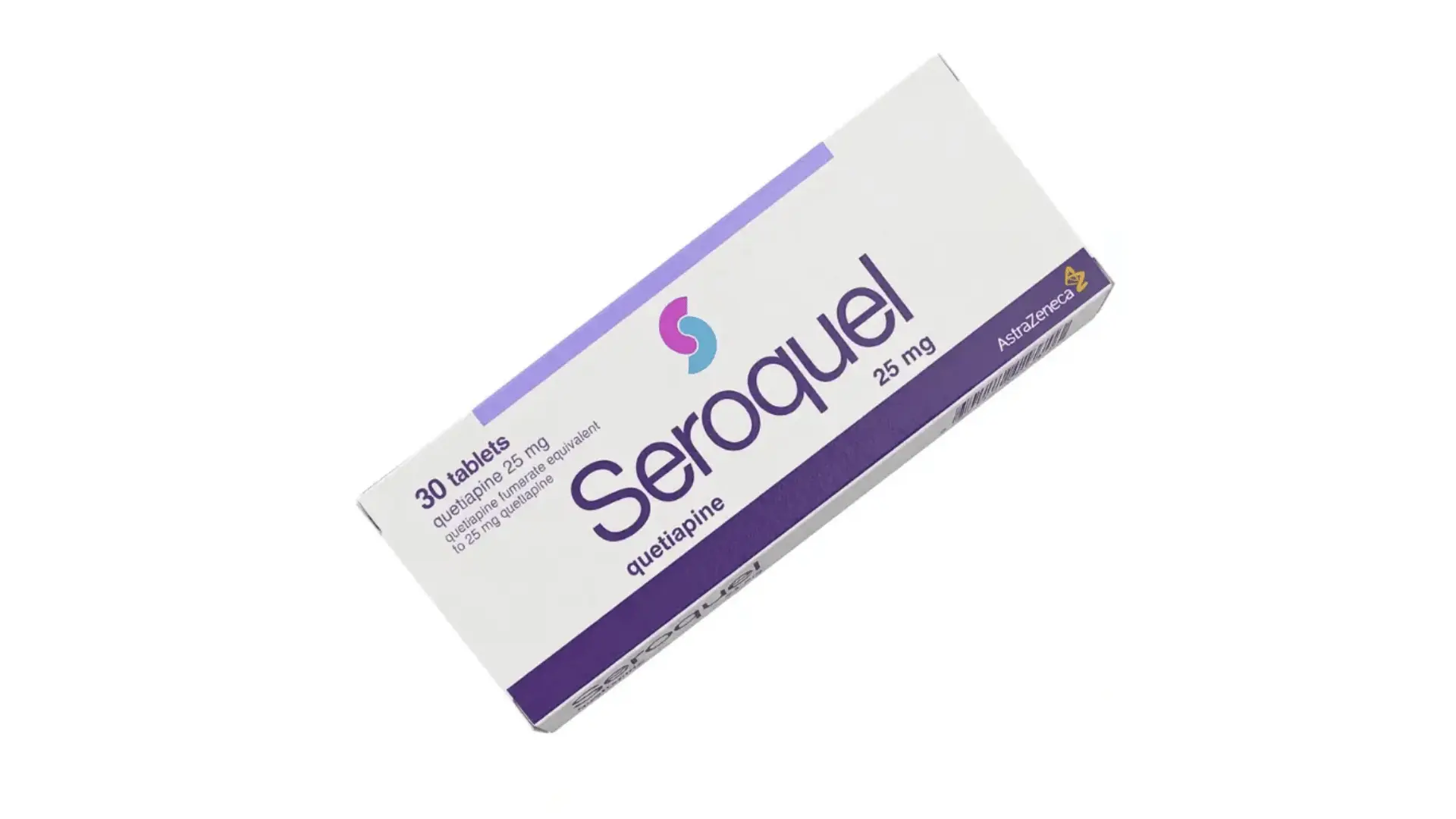
Quetiapine, sold as Seroquel and Seroquel XR, is an atypical, or second-generation, antipsychotic first approved in the United States in 1997.
- FDA-approved uses include schizophrenia and bipolar disorder, while Seroquel XR is also approved as an add-on treatment for major depressive disorder.
- Immediate-release tablets release the medicine sooner, whereas extended-release tablets are designed for slower delivery.
- Clinicians also prescribe quetiapine off-label for insomnia and anxiety, although those uses are not FDA-approved.
These off-label patterns matter because sedation, sleep-seeking, and unsupervised dose changes appear repeatedly in reports of problematic use. Understanding the drug’s intended actions helps explain why its sedating effects can become part of the misuse discussion.
How It Works in the Brain
Quetiapine acts mainly through serotonin 5-HT2A and dopamine D2 receptors, while histamine H1 and alpha-adrenergic activity contribute to sleepiness and low blood pressure.
At lower doses, sedating effects may be more noticeable; higher exposure produces greater serotonin and dopamine receptor occupancy.
In my work with plant-derived compounds, I use the same receptor-level lens: a molecule’s effects depend on which targets it reaches and at what exposure.
Can Seroquel Cause Addiction or Dependence?
Seroquel can be misused, and physical dependence may develop, but dependence does not automatically mean addiction.
The FDA notes that Seroquel was not systematically studied for abuse, tolerance, or physical dependence.
Therefore, asking if seroquel a controlled substance does not fully answer if someone has developed an unsafe medication pattern.
1. Misuse of Seroquel
Seroquel misuse means taking the medication differently from a clinician’s directions or using tablets prescribed to someone else.
This may include taking extra doses for sleep, using it mainly to reduce emotional distress, or combining it with other sedating substances without medical approval.
A single dosing mistake does not establish addiction, but repeated unsupervised use can increase health risks and deserves a medication review.
2. Tolerance Towards Seroquel
Tolerance occurs when the original dose no longer produces the same perceived effect, leading someone to believe they need more.
It does not prove that addiction is present, especially when medication changes are medically supervised. However, independently increasing the dose, frequently requesting early refills, or taking more Seroquel for sedation can indicate an unsafe pattern.
The FDA advises clinicians to monitor unexplained dose increases and signs of drug-seeking behavior.
3. Physical Dependence and Withdrawal
Physical dependence means the body has adapted to regular Seroquel use. Symptoms can appear when the medication is stopped suddenly or reduced too quickly, but this adaptation is not the same as addiction.
Current FDA labeling lists insomnia, nausea, vomiting, headache, diarrhea, dizziness, and irritability after abrupt discontinuation. It recommends gradual withdrawal rather than sudden cessation under appropriate medical supervision.
4. Substance Use Disorder
A substance use disorder involves medication use that becomes difficult to control and continues despite harmful consequences.
Warning patterns may include strong urges, repeated unsuccessful efforts to reduce use, neglecting responsibilities, hiding medication use, or continuing after falls, overdoses, or relationship problems.
These behaviors require professional assessment because no single symptom can confirm addiction, and prescribed use may produce side effects or withdrawal without compulsive misuse.
What the Research Shows

Research confirms that quetiapine misuse occurs, but no reliable study provides a population-wide addiction rate.
Evidence comes from FDA labeling, case reports, observational research, and historical emergency department records. Each source answers a different question.
The evidence therefore sits between two inaccurate claims: that Seroquel cannot be misused and that every prescribed user faces addiction.
- FDA Label and Its Limits: The FDA states that Seroquel is not controlled but was not systematically studied for abuse, tolerance, or dependence. Clinicians should monitor unexplained dose increases and drug-seeking behavior.
- Case Reports and Case Series: Published reports describe dose escalation, withdrawal, diversion, and psychological reliance. However, selected cases cannot show how frequently addiction develops among people taking quetiapine as prescribed. Here are a few studies
- Emergency and Safety Data: Historical records from 2005 to 2011 showed increased quetiapine-related emergency visits, especially with unsupervised use or other substances. These findings should not be presented as current totals.
What the Evidence Cannot Tell Us
Research cannot provide a clear addiction rate or prove quetiapine caused every reported symptom. Psychiatric conditions, insomnia, multiple medications, and substance use can influence outcomes.
Why People Misuse Seroquel

Some people begin with a valid prescription but gradually change the amount, timing, or purpose without medical guidance. Others obtain tablets from friends or informal sources.
Risk may increase when it is combined with alcohol or other sedating drugs.
Understanding the reason for misuse helps clinicians address the untreated problem supporting the behavior:
| Reason | Common Pattern | Main Concern |
| Sleep and sedation | Taking extra tablets or using Seroquel without a prescription because the person feels unable to sleep without its sedating effects | Repeated unsupervised use may lead to dose escalation, daytime impairment, falls, or difficulty reducing use |
| Anxiety and distress | Using the medication to quiet agitation, anxiety, emotional discomfort, or racing thoughts outside an approved treatment plan | Temporary relief may hide an untreated mental health condition and encourage psychological reliance |
| Other drug effects | Taking Seroquel to manage sleeplessness, agitation, or discomfort associated with another substance or its withdrawal | The underlying substance problem remains untreated, while medication interactions may increase physical and psychiatric risks |
| Combining substances | Using quetiapine alongside alcohol, opioids, benzodiazepines, or other sedatives to change or strengthen the overall effect | Combined sedation may worsen confusion, poor coordination, fainting, loss of consciousness, or overdose danger |
| Prescription drift | Starting with medically directed use, then changing the dose or taking it mainly for sleep or emotional escape | A legitimate prescription can develop into unsafe use when the reason, frequency, or amount changes without clinical review |
Clinical reports suggest that self-medication for sleep and anxiety is a major motive, but no single explanation applies to every person who misuses quetiapine.
Seroquel Horror Stories: Evidence vs Anecdote
People searching for Seroquel horror stories often find accounts involving severe drowsiness, weight changes, difficult withdrawal, hospitalization, overdose, or feeling unable to function without the medication.
Personal accounts can raise useful questions, but they should not replace FDA information, peer-reviewed evidence, or professional medical advice.
What Patient Accounts Can Reveal
Personal accounts can show how sedation, withdrawal symptoms, dose escalation, or medication reliance affects daily life. Repeated themes may also identify concerns that researchers and clinicians need to examine further.
However, these reports serve as safety signals rather than proof of frequency.
Here is an account by a user on Reddit:
I’ve been on seroquel for a couple of months, and the worst case finally happened, and I cannot take this med anymore. I have a 15 month old baby who doesn’t always sleep through the night. Last night he woke for a few hours in the middle of the night and I could barely take care of him. Couldn’t keep my eyes open and I was having f***ing hallucinations! I could barely speak, but I called my husband. He had to leave work to come home to help me, which is the 2nd time in 2 weeks that that has happened. My husband is a supervisor and he’s going to get written up for attendance because he has a sick wife and a baby to take care of. Have I mentioned that I love America 🙃
I called my NP and left a message letting her know that I can’t take this med anymore (she was the one who prescribed it while I’ve been waiting to see a psychiatrist). I have an telehealth visit with a psychiatrist next week. Idk if seroquel is bad to come off of, as I’ve never taken it before now. Any support or advice would be much appreciated. I just had to b***h about this, because UGH, I knew this would f***ing happen to me!
What Anonymous Stories Cannot Prove
An anonymous post cannot confirm that Seroquel caused every symptom, reveal how common the reaction is, or predict another person’s experience.
It may also be difficult to separate withdrawal from returning psychiatric symptoms. Here is another account of a person on Reddit:
I just wanted to share with you guys my experience on Seroquel (the generic version). I was prescribed 25mg and the first night I took it I also quit weed after 2 years of nightly use (0.5-1g/day) – this was recommended by my psychiatric nurse. The first night I was knocked out for 12 hours & woke up a bit foggy/groggy but otherwise fine. The next 2 nights I experienced incredibly broken sleep and VIVID nightmares about cheating & torture. Then the side effects set in the 2nd day and worsened the 3rd. Alternating dizzy/nausea spells to the point of nearly passing out at work & rapid heartbeat at rest. These symptoms actually progressed into my first massive panic attack. I also crashed from hypomania into a depressive bout with plenty of crying fits. I went to the ER and 10 hours later I was told that my heart (EKG) and vitals were fine. I quit it that night with permission from the ER doc & had vomiting, the shakes and full body aches, sleeping 1 hour that night (surely weed withdrawal was a factor). I decided to take off work for the week to recalibrate & pick up the pieces but I’m seriously in shock. Has anyone had an experience like this? I am very sensitive to meds & even birth control (Alesse & Nuvaring) made me feel suicidal and induced bouts of crying. I was wondering if there are any other med sensitive BPs out there that have found something which worked for them. I plan to take a break, let my moods normalize to my regular patterns. Maybe then I can try another med a bit later on & take off work to cope with potential symptoms, just in case. Thanks 💚
Other medications, alcohol, substance use, physical illness, and abrupt discontinuation can influence what happens. This account cannot prove Seroquel caused every symptom.
The person started quetiapine while stopping nightly cannabis, so withdrawal, sleep loss, bipolar symptoms, medication sensitivity, or several factors may have contributed. Personal stories can highlight concerns, but they cannot predict another person’s reaction or replace clinical evidence.
Readers should never copy another person’s dose changes or tapering plan without guidance from their prescribing clinician.
How to Check a Claim
Compare the account with current FDA labeling, peer-reviewed reviews, and information from a pharmacist or prescribing clinician. Check if it includes the dose, duration, diagnosis, other medications, and substance use.
I compare personal reports with study design and clinical context before drawing conclusions. A detailed story can identify a possible concern, but it cannot determine causation or show how frequently the same outcome occurs.
Finishing Up
Seroquel is not federally scheduled, but that does not make misuse, dependence, withdrawal, or overdose impossible.
The better question is not only if Seroquel is a controlled substance, but if the medication is being used safely and as prescribed.
Research shows documented cases of dose escalation, unsupervised use, withdrawal symptoms, and harmful combinations with other substances.
At the same time, case reports and online stories cannot establish how often addiction occurs or prove that quetiapine caused every reported symptom.
Do not stop Seroquel suddenly or copy tapering advice from online forums. Contact the prescribing clinician or a qualified mental health and substance use service for guidance based on the person’s full medical history.
Frequently Asked Questions
Is Seroquel Approved for Treating Insomnia?
No. Insomnia is not an FDA-approved indication for Seroquel. Prescribing it for sleep is off-label and should include regular safety and benefit reviews.
Can Seroquel Affect a Drug Test?
Quetiapine has caused false-positive tricyclic antidepressant results on some screening tests. Confirmatory laboratory testing can distinguish a screening error from actual drug exposure.
Are Seroquel and Seroquel XR Interchangeable?
No. Immediate-release and extended-release tablets release quetiapine differently and follow separate dosing instructions. Patients should not switch formulations without guidance from their prescriber.
Can Seroquel Affect Driving the Next Morning?
Possibly. Quetiapine may reduce alertness and motor control through sedation. Patients should understand their response before driving, working at heights, or operating machinery.
Sources
- QUETIAPINE tablet, DailyMED. dailymed.nlm.nih.gov
- Drug Scheduling, United States Drug Enforcement Administration. drug-scheduling
- The Management of Chronic Insomnia Disorder and Obstructive Sleep Apnea, US Department of Veterans Affairs. healthquality.va.gov
- Quetiapine, Misuse and Dependency. Dove Medical Press. dovepress.com
- Reddit, r/bipolar
- National Library of Medicine, “False positive urine drug screening for tricyclic antidepressants in patients taking quetiapine”. pubmed.ncbi.nlm.nih.gov