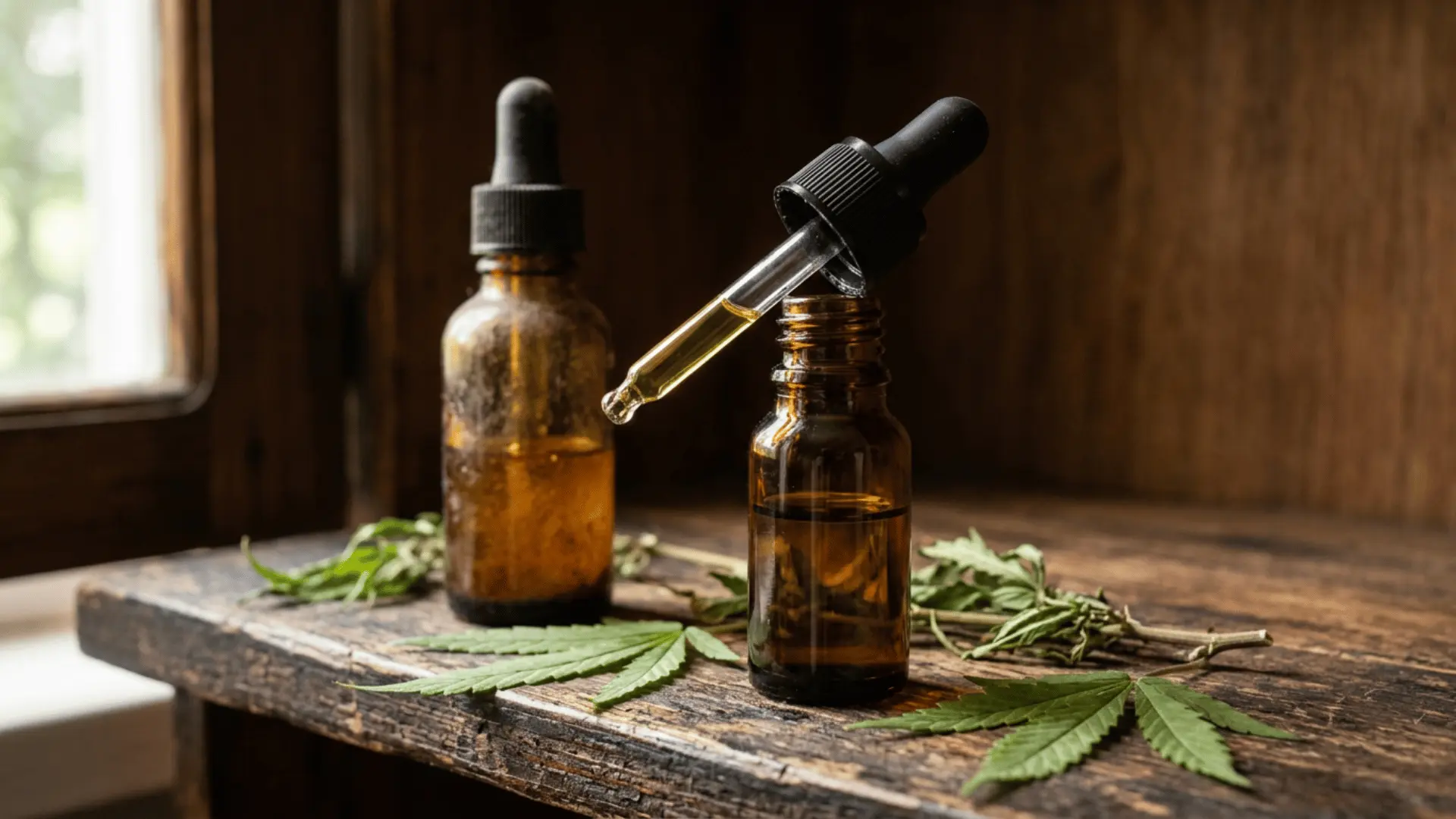
Finding a bottle of CBD oil can leave you unsure about its quality, especially when the liquid looks darker or the opening date is hard to remember.
Most CBD oil stays usable for about one to two years, but heat, light, air, added ingredients, and poor handling may shorten that period.
With my background in herbal science and wellness reporting, I approach CBD claims carefully. I compare trusted sources, check the evidence behind storage advice, and explain the findings in plain language so you can make a practical decision.
In this guide, I explain how long CBD oil lasts after opening, which changes may signal spoilage, and when it is safer to replace the bottle.
Since product formulas differ, the date and instructions printed by the manufacturer should take precedence over a general estimate.
How Long Does CBD Oil Last?
CBD oil generally lasts one to two years when it remains sealed, clean, and protected from heat and light.
Most bottles stay at their best for roughly 12 to 24 months, although the printed date should guide the final decision.
After opening, many products are best used within about six to twelve months, but formulas and manufacturer instructions differ. Healthline notes that quality, ingredients, extraction, packaging, and storage all affect shelf life.
Dark glass and an airtight cap help slow exposure to sunlight and oxygen. A bottle may expire earlier if it sits in a hot car, near a stove, or with the lid loose.
The opening date also matters. Writing it on the label makes it easier to judge age instead of relying on memory alone.
Stop using the product and contact a healthcare professional if CBD causes a serious reaction or unexplained symptoms.
Contact Poison Control or emergency services after accidental ingestion or a suspected poisoning.
CBD Oil Shelf Life
The condition of the bottle and its storage history matter as much as its age. These timeframes are general estimates, so the product label should remain the main guide.
| Bottle Condition | General Shelf Life | What to Check |
|---|---|---|
| Unopened bottle | About 1 to 2 years | Printed date, seal, and storage history |
| Opened and stored correctly | Often around 6 to 12 months | Opening date, smell, color, and texture |
| Refrigerated bottle | Follow the original printed date | Temporary cloudiness or thickening |
| Poorly stored bottle | May expire much sooner | Heat, sunlight, moisture, and loose cap |
| Past the printed date | Quality is uncertain | Replace when freshness cannot be confirmed |
Manufacturer instructions should take priority.
How to Tell if CBD Oil Has Gone Bad
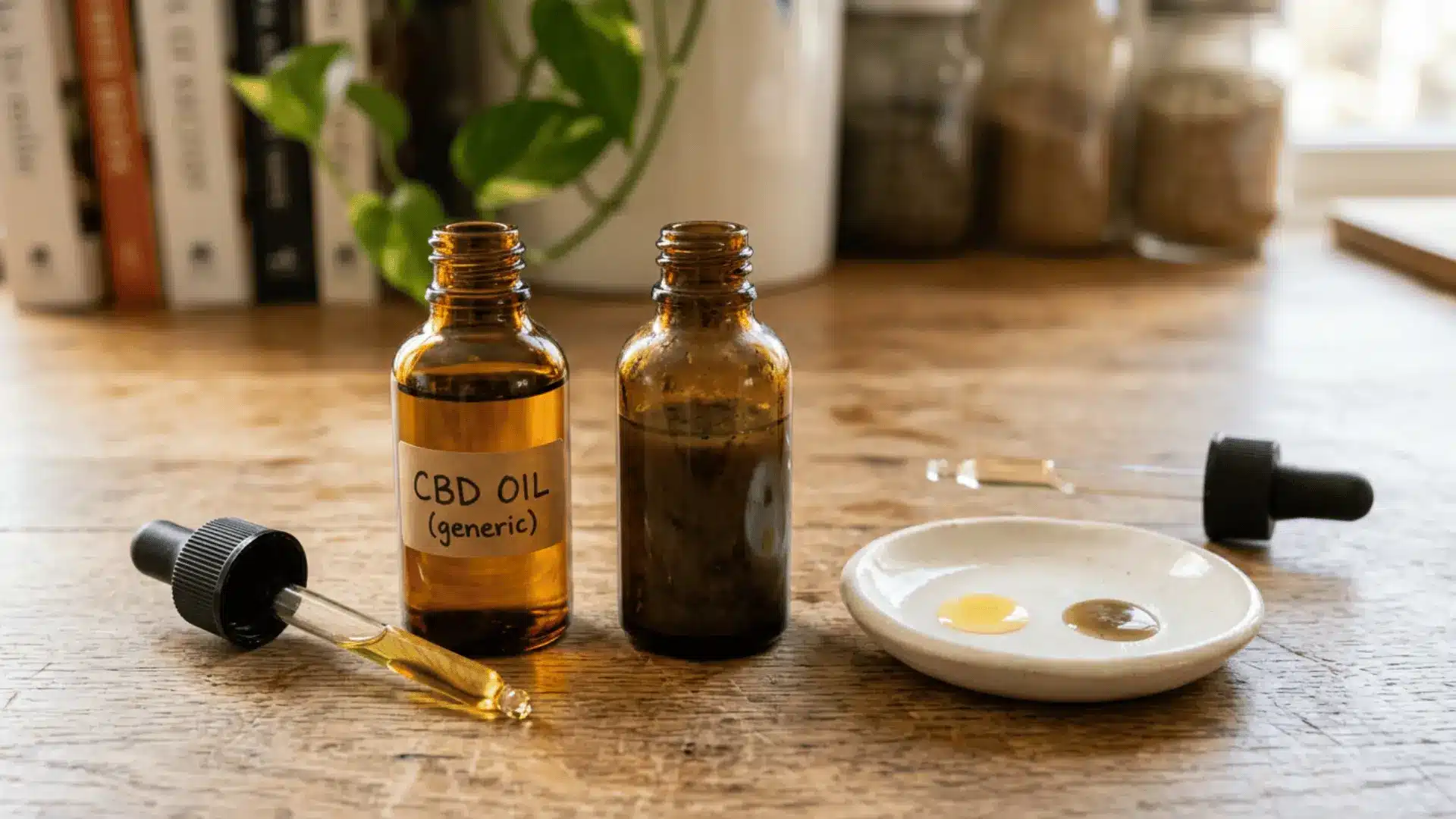
CBD oil often shows changes in smell, appearance, texture, or taste as its quality declines. Check several signs together instead of judging the bottle from one small change.
1. Check for a Rancid Smell
Fresh CBD oil usually has an earthy, grassy, or mildly nutty smell, depending on its carrier oil and added flavors. A sour, musty, or rancid odor can mean the carrier oil has oxidized.
Smell is useful because it may change before the bottle shows obvious visual damage. Open the bottle and check it before placing any oil in the mouth.
A naturally strong hemp scent is not spoilage by itself. The concern is a clear change from the smell the product had when it was new.
2. Look for Color Changes or Cloudiness
CBD oil can range from pale gold to deep amber, and full-spectrum products are often darker than isolate formulas.
A small color shift may occur as the bottle ages, but a major change, murky appearance, or unexplained particles deserve attention.
Cold oil may look cloudy without being spoiled. Let the closed bottle return to room temperature and check it again. If the cloudiness remains or visible growth appears, discard the product.
Comparing the liquid with an earlier photo can make gradual changes easier to judge.
3. Examine the Texture
Most CBD oils should flow smoothly through the dropper at room temperature. Cold storage can make the carrier oil thicker, so temporary stiffness after refrigeration is not automatically a warning sign.
Allow the bottle to warm naturally, then roll it gently between the hands. Do not use direct heat or hot water. Oil that remains unusually sticky, lumpy, heavily separated, or difficult to dispense may have degraded.
Sediment can be normal in some plant-rich formulas, so check the label before treating every deposit as spoilage.
4. Consider Taste and Potency
Taste should be the final check, not the first. Do not sample oil that already smells rancid, shows mould, or contains unexplained matter.
Fresh unflavoured CBD oil may taste earthy, grassy, or nutty. A sharp sour, stale, or rancid flavor suggests that the carrier oil is no longer fresh.
Loss of the expected effect may also reflect reduced potency, but it does not prove spoilage by itself. Dose, body response, storage, and product accuracy can all affect results, so avoid judging quality from effect alone.
Can You Use Expired CBD Oil?
Using expired CBD oil is not recommended, especially when its storage history or condition is uncertain. Older oil may lose potency as cannabinoids degrade, while the carrier oil can become rancid and unpleasant.
Passing the printed date does not automatically prove that CBD oil is contaminated, but its potency, freshness, and safety can no longer be confidently confirmed. Replace it when its age, condition, or storage history is uncertain.
However, oil that smells rancid, looks unusually murky, tastes off, or may be contaminated should be discarded, even if the printed date has not passed.
Visible mould, a damaged seal, moisture, or unexplained particles are stronger reasons to discard it immediately. Do not rely on a taste test when other warning signs are present.
Anyone using CBD for a health concern, taking prescription medicine, or experiencing symptoms should speak with a qualified healthcare professional rather than depend on an expired product.
What Shortens CBD Oil’s Shelf Life?
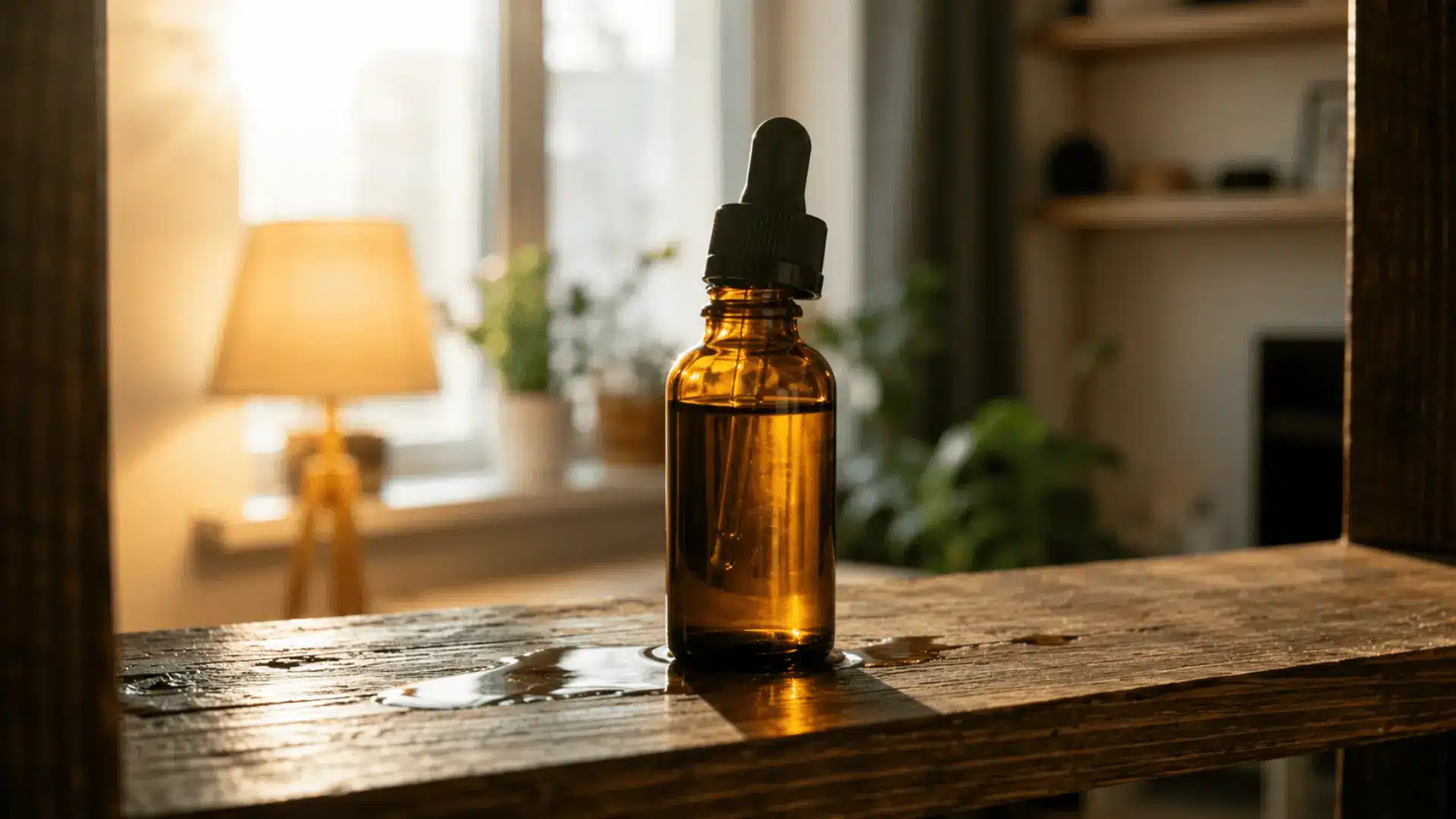
CBD oil can lose freshness faster when it is repeatedly exposed to conditions that encourage oxidation, contamination, or ingredient breakdown.
- Light: Direct sunlight may speed cannabinoid degradation and cause the oil to change in color or strength.
- Heat: Warm storage areas, parked cars, windowsills, and spaces near appliances can reduce product stability.
- Air Exposure: Oxygen enters whenever the bottle is opened. A loose cap allows more air inside and may speed oxidation.
- Moisture: Water entering the bottle can affect its quality and increase contamination concerns.
- Dirty Droppers: Contact with the mouth, fingers, food, or wet surfaces may introduce saliva, bacteria, or debris.
- Added Ingredients: Carrier oils, flavors, botanical extracts, and other cannabinoids may have different stability limits. The ingredient with the shortest usable period can affect the entire formula.
How to Store CBD Oil Properly
Store CBD oil in its original dark bottle because the packaging helps limit exposure to light. Place it upright in a cool, dry cupboard where the temperature remains stable.
Close the cap firmly after every use to reduce contact with air. Keep the dropper clean and avoid touching it with your mouth, fingers, sink, or countertop.
Do not leave the bottle inside a parked car, on a windowsill, in a humid bathroom, or near a stove. These locations expose the oil to heat, sunlight, moisture, or frequent temperature changes.
Refrigeration is usually unnecessary unless the manufacturer recommends it or the home stays unusually warm. Cold oil may become thick or cloudy, but it often returns to normal after reaching room temperature.
Keep the closed bottle out of children’s reach and separate from ordinary food, drinks, and medicines.
Does the Type of CBD Oil Affect Shelf Life?
How long CBD oil lasts can partly depend on its carrier oil, added flavors, and complete formula. There is no single proven shelf-life difference that applies to every isolate, broad-spectrum, or full-spectrum product.
| CBD Oil Type | Shelf-Life Consideration | What to Check |
|---|---|---|
| CBD isolate oil | A simpler formula may make changes easier to notice | Carrier oil, flavorings, and printed date |
| Broad-spectrum oil | Added cannabinoids and plant compounds may have different stability limits | Original color, smell, and batch instructions |
| Full-spectrum oil | It may naturally look darker and smell stronger | Changes from its original condition |
| Flavored CBD oil | Flavorings may affect the product’s total shelf life | Ingredient list and manufacturer guidance |
| CBD and CBG or CBN blends | Added cannabinoids do not create a universal shelf life | Batch date, testing information, and storage directions |
Ingredients and packaging are usually more useful shelf-life indicators than the CBD category alone.
How to Read CBD Oil Labels
Start with the expiration or best-before date, then check the batch number, ingredients, storage directions, and certificate of analysis. Together, these details show how old the oil is, what it contains, and how it should be stored.
Key details to review include:
- Expiration Date: Shows the expected shelf life under proper storage conditions.
- Batch Number: Helps match the bottle with its laboratory report.
- Ingredient List: Identifies the carrier oil, flavors, and added plant extracts.
- Storage Directions: Explain if the product needs a cool cupboard or refrigeration.
- Certificate of Analysis: Confirms the tested cannabinoid content when the batch was produced.
The printed date usually applies to an unopened bottle stored correctly. Avoid products with damaged seals, missing dates, unclear ingredients, or no traceable batch information.
Finishing Up
CBD oil is easier to manage when the bottle has a clear date, clean dropper, and steady storage place. Check the label, then use smell, appearance, texture, and storage history to judge the product.
A cool cupboard and closed dark bottle can protect quality, but they cannot rescue oil that is rancid, contaminated, or far past its date.
When doubt remains, replacing the bottle is safer than testing a product. Formulas vary, so follow the maker’s instructions instead of relying on a one- to two-year estimate.
CBD may interact with medicines and is not a substitute for professional care. Speak with a healthcare professional when safety, pregnancy, symptoms, or medication use is involved.
Have you noticed changes in a CBD oil bottle? Share your experience or storage tips in the comments below.
Frequently Asked Questions
Should CBD Oil be Refrigerated?
CBD oil usually does not require refrigeration. A cool, dry cupboard is suitable for regular use. Refrigeration may help with longer storage in a warm home, but the oil may become cloudy or thick until it returns to room temperature.
Can CBD Oil Expire Before its Printed Date?
Yes. Exposure to high heat, sunlight, air, moisture, or contaminants can reduce quality before the printed date. A damaged seal or poor storage history is also a reason to inspect the oil carefully.
Why is My CBD Oil Cloudy?
CBD oil may become temporarily cloudy or thick when stored at a low temperature. Let the closed bottle return to room temperature. Lasting cloudiness, unusual particles, or a rancid smell may indicate degradation.
Does Expired CBD Oil Lose Potency?
CBD compounds may degrade over time, making older oil less potent. Expiration can also affect the carrier oil, smell, flavor, and texture, so reduced effects are not the only concern.
Sources
The following sources were consulted in preparing this article and are referenced throughout the body of the text.
- Healthline. “Yes, CBD Oil Expires—Here’s How to Check Yours.” Medically reviewed by Dominique Fontaine, BSN, RN, HNB-BC, HWNC-BC. February 12, 2021.
- Jaidee, Wuttichai, et al. “Kinetics of CBD, Δ9-THC Degradation and Cannabinol Formation in Cannabis Resin at Various Temperature and pH Conditions.” Cannabis and Cannabinoid Research, 2021.
- Vlad, Robert-Alexandru, et al. “Formulation and Analytical Evaluation of Liquid Cannabidiol Preparations: Comparative Study of Oil-Based Solutions and Emulsions.” Pharmaceutics, vol. 17, no. 12, 2025, article 1533.
- National Library of Medicine. “A Review of Emerging Drug Delivery Strategies to Protect Cannabidiol From Chemical Degradation.” 2026.