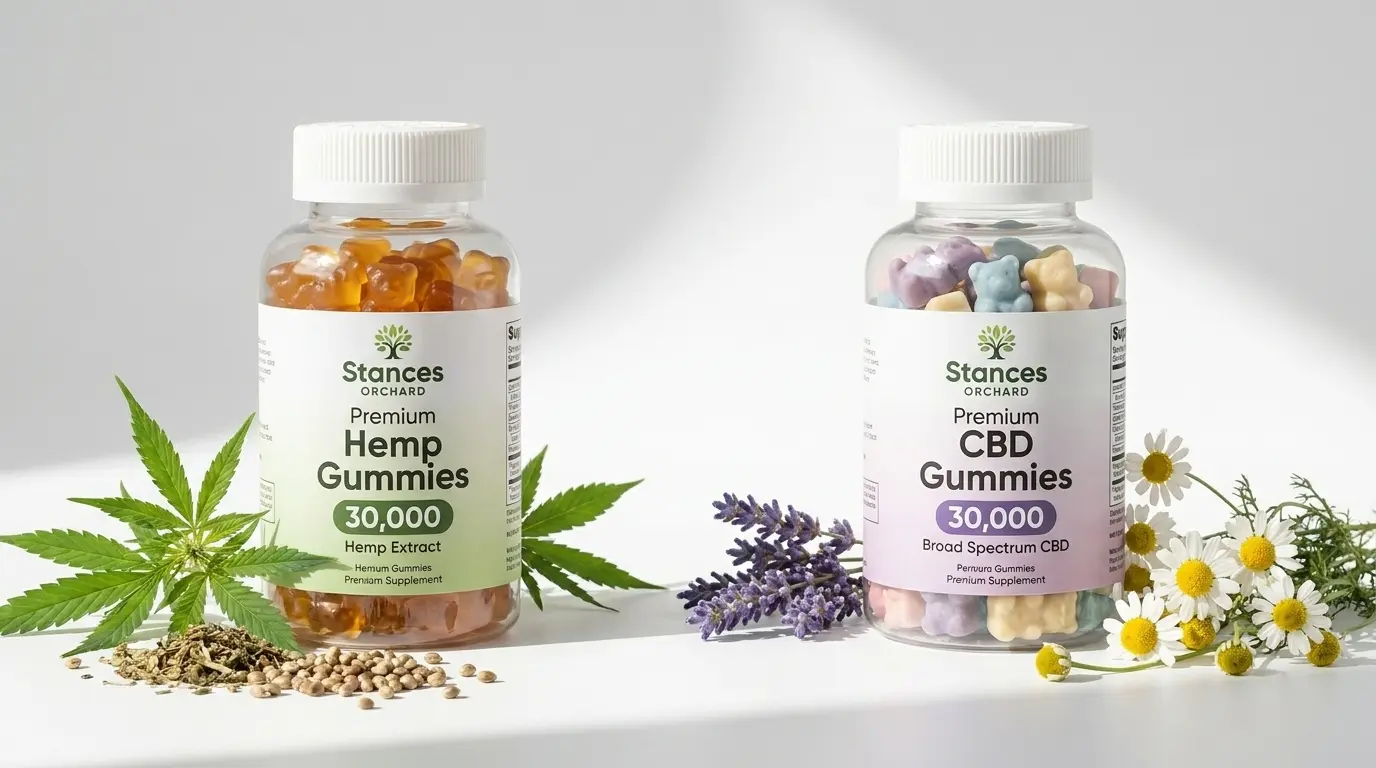
| Quick Verdict: Hemp gummies and CBD gummies are not the same product. Hemp gummies are a plant-based nutritional supplement made from hemp seed oil, while CBD gummies contain cannabidiol (CBD) that interacts with the endocannabinoid system for sleep, stress, and pain relief. Hemp equals nutrition; CBD equals targeted wellness. |
Ever stood in the supplement aisle trying to figure out the difference between hemp gummies vs CBD gummies? They sit side by side on every shelf, carry nearly identical packaging, and sound like they do the same thing.
One is a simple nutritional supplement, and the other is a wellness product built to produce a measurable physiological response. The confusion is real, the labels rarely help, and most buyers walk out with the wrong bottle without realising it.
Below, I’ll break down what each product really contains, how they work in the body, which CBD spectrum type suits your goals, the price and dosage ranges to expect, and how to spot the red flags that separate a legitimate product from a marketing trap.
Both Products at a Glance
Before going deep, here is where each product sits. Use this to orient yourself before deciding whether the full profiles are worth the read.
| Feature | Hemp Gummies | CBD Gummies |
| Main ingredient | Hemp seed oil | CBD extract |
| Source | Hemp seeds | Hemp leaves, flowers, and stalks |
| CBD | No | Yes |
| THC | No | Trace amounts (up to 0.3%) in full-spectrum; none in isolate |
| Psychoactive effect | None | None |
| Main benefit | Nutritional support | Stress, sleep, pain relief (users report) |
| Onset time | Gradual (like a vitamin) | 30 to 90 minutes |
| Price range | $10 to $25 | $25 to $70 |
| Regulation | Loose | More strictly regulated |
| COA needed | Optional | Strongly recommended |
| ⚠️ Advisory: Not every “hemp gummy” on the market is a true hemp seed oil product, and not every “CBD gummy” actually contains cannabidiol. Many brands blur these terms to work around retailer restrictions or charge more for less. Always check the ingredients list and Certificate of Analysis (COA) before buying. The FDA’s guidance on CBD product regulation outlines what labeling standards apply. |
What Are Hemp Gummies?
Hemp gummies are chewable supplements made primarily from hemp seed oil, cold-pressed directly from the seeds of the hemp plant. The result is a nutritional product packed with omega-3 and omega-6 fatty acids, vitamin E, plant-based protein, and essential minerals, making them a convenient way to add plant-based nutrients to a daily routine.
Effects arrive gradually, building up over days of consistent use, similar to how a multivitamin or fish oil capsule works in the body. There is no immediate feeling and no onset time. The benefits accumulate quietly in the background, supporting daily nutrition, skin health, and cardiovascular function over time.
For users who need steady daily support, whether filling dietary gaps, boosting skin hydration, or replacing a fish oil supplement, hemp gummies deliver consistent value as a clean, plant-based addition to a daily wellness routine. According to research published in Euphytica by Callaway (2004), hemp seed oil is a nutritionally complete source of essential fatty acids in an optimal ratio for human health.
What Are CBD Gummies?
CBD gummies are chewable edibles infused with cannabidiol, a natural compound extracted from the leaves, flowers, and stalks of the hemp plant. Each gummy delivers a measurable dose that interacts with the body’s endocannabinoid system, the network involved in regulating mood, sleep, stress response, and pain signals.
THC content stays under 0.3% by federal law, keeping them non-psychoactive while still producing a meaningful response in many users. Effects are commonly reported to begin within 30 to 90 minutes and last 4 to 6 hours per dose, making them a practical option for people who want predictable, targeted support. According to a pharmacokinetics review published in Frontiers in Pharmacology by Millar et al. (2018), oral bioavailability of cannabidiol ranges from 10 to 20% after first-pass metabolism.
Users commonly report that stress reduces, sleep improves, and mild pain becomes more manageable within a single dose. This is a wellness product designed specifically for situations where the body and mind need active support, not a substitute for medical treatment.
CBD Spectrum Types: Full-Spectrum, Broad-Spectrum, and Isolate
Not all CBD gummies are formulated the same way. The spectrum type determines which compounds are present alongside CBD, and this distinction matters for both efficacy and drug testing risk.
Full-spectrum CBD gummies contain all the naturally occurring compounds from the hemp plant: cannabidiol, minor cannabinoids (CBG, CBN), terpenes, flavonoids, and trace THC (under 0.3%). Research suggests that these compounds may work synergistically in what is commonly called the entourage effect, potentially amplifying the overall response compared to CBD used in isolation.
Broad-spectrum gummies carry the same compound range as full-spectrum, with one difference: THC has been removed to below detectable levels. This is the preferred format for users who want potential entourage effect benefits but need to avoid any THC exposure.
CBD isolate gummies contain only pure cannabidiol, with all other hemp compounds filtered out. They are the cleanest option for users on prescription medications or those subject to regular drug testing. The trade-off is that isolate products may require higher doses to produce the same effect as full-spectrum formulations.
Hemp gummies, by contrast, contain none of these spectrum distinctions. They are simply hemp seed oil in gummy form, with no cannabinoids at any level.
Key Differences
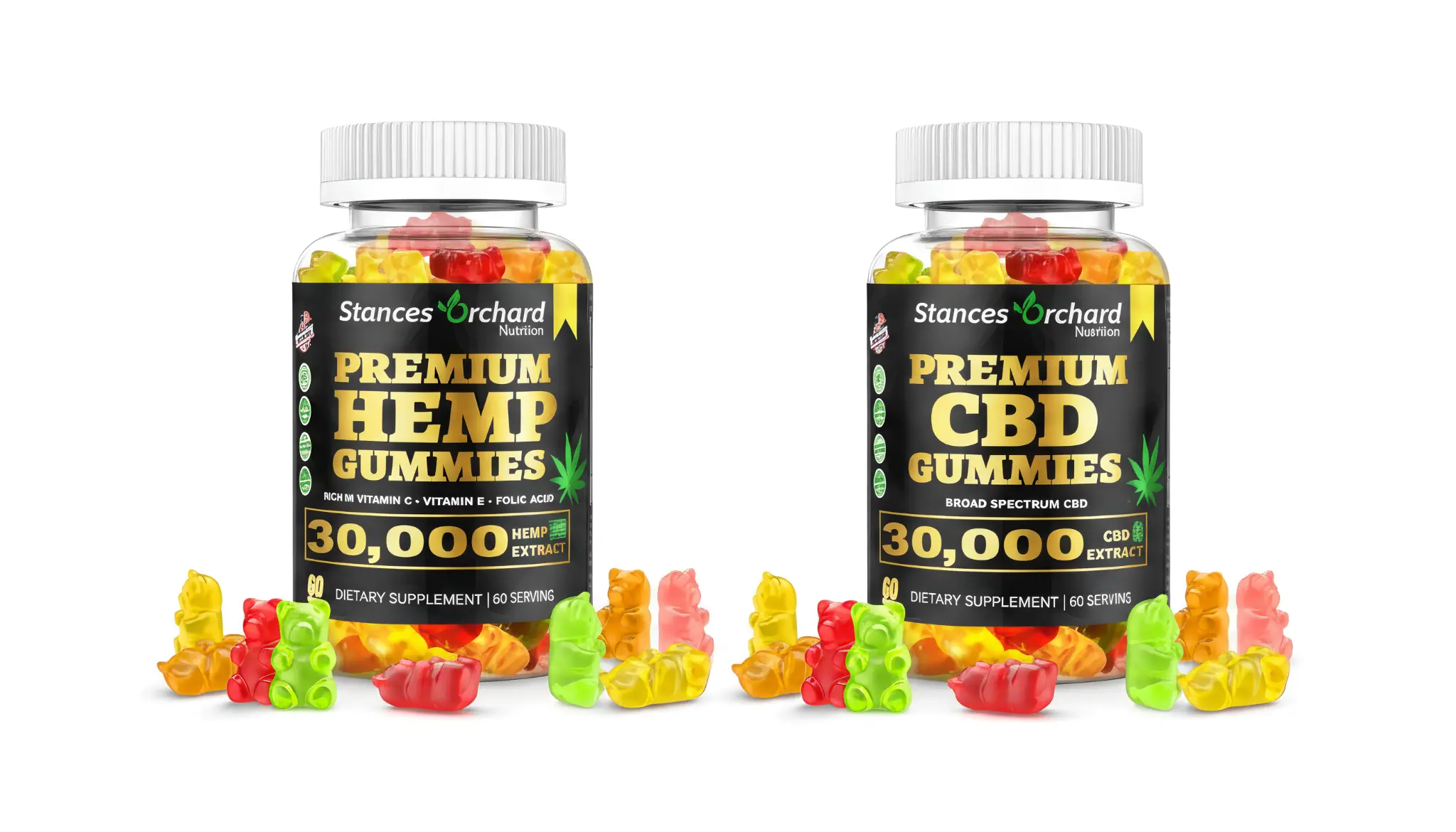
Both products share the hemp plant as their origin, but everything built on that foundation pulls in different directions. Here is where those differences show up in practice.
1. Source and Extraction Method
Hemp gummies are cold-pressed from hemp seeds using a simple mechanical process, the same method used to make flaxseed or olive oil, which keeps them affordable and easy to produce at scale.
CBD gummies require advanced extraction methods like CO2 or ethanol extraction, followed by filtration and third-party lab testing. The production difference alone reflects what each product carries inside.
2. Active Compounds
Hemp gummies contain no cannabinoids at all, just omega-3 and omega-6 fatty acids, vitamin E, plant-based protein, and minerals that support everyday nutrition.
CBD gummies are built around cannabidiol as the primary active ingredient, associated by users and researchers with mood regulation, pain relief, and sleep support. Same plant family, very different chemical makeup.
3. Tolerance and Sensitivity
Hemp gummies are the more forgiving option with no risk of overdoing it, no psychoactive component, and no known sensitivity concerns for kids, seniors, or sensitive adults.
CBD gummies can produce drowsiness, dry mouth, or mild digestive discomfort at higher doses, especially for newer users who underestimate how cannabidiol accumulates in the body over repeated use. Pacing matters more here.
4. Flavor Profile
Hemp gummies lead with a mild, slightly nutty flavor masked by fruity sweeteners, with a subtle earthy finish that adds just enough plant character to feel natural.
CBD gummies typically pull in the opposite direction: cleaner and more polished, fruit-forward with layered ingredients like melatonin, ashwagandha, or berry extracts. One tastes like a vitamin; the other tastes like a carefully formulated wellness product.
5. Price Range
Hemp gummies are the more affordable option, typically between $10 and $25 per bottle, because hemp seed oil is inexpensive to produce and does not require lab testing.
CBD gummies sit at $25 to $70 per bottle, with the price reflecting extraction complexity, third-party testing, and cannabinoid potency, even before the product reaches the shelf.
6. Primary Effects
Hemp gummies lead with long-term nutritional support; benefits accumulate slowly, skin may improve gradually, and cardiovascular markers may shift with consistent daily use.
CBD gummies work in the opposite rhythm: users commonly report that stress releases and sleep becomes more accessible within a single dose. They are not built for nutrition; they are built for targeted wellness support.
What Real Buyers Are Saying

The difference between hemp gummies and CBD gummies becomes most obvious in real customer reviews. On an Amazon Q&A thread for a popular “hemp gummy” product, shoppers kept asking one simple question: “Does this product contain THC?”
One verified buyer, MDamian, answered plainly that the product is just an amino fatty acid nutritional supplement with no THC or CBD, describing it as a product trying to trick buyers into thinking it is CBD, and advising shoppers to get their real CBD from a different and trustworthy source. 128 shoppers marked that answer helpful, which indicates how widespread the confusion is.
Another buyer, Frederick, confirmed that the product is only an omega-3 supplement made from hemp seed oil and does not contain CBD or THC, since both are prohibited on Amazon. A third buyer, John, backed that up by citing the platform policy directly.
The takeaway from these reviews is consistent: the label alone will not tell you what you are buying. The ingredients list and Certificate of Analysis are the only reliable signals.
Bioavailability: How Each One Absorbs
Bioavailability refers to how much of a substance the body actually absorbs and uses.
Hemp gummies contain nutrients that are digested like regular food. The body absorbs around 50 to 70% of the omegas and vitamins, depending on what else has been eaten that day.
CBD gummies are different. Because cannabidiol is fat-soluble and has to pass through the digestive system first, only about 10 to 20% of it actually reaches the bloodstream (Millar et al., 2018, Frontiers in Pharmacology). That is why taking CBD gummies with food, especially healthy fats like avocado or nuts, improves absorption; effects take 30 to 90 minutes to kick in; and results tend to build with consistent daily use.
If faster onset is the priority, CBD oil placed under the tongue absorbs roughly twice as well. Gummies remain popular because they are easier to dose and more convenient to take consistently.
Dosage and Safety
Both products are considered safe for most healthy adults, but knowing the exact amounts and interactions makes the difference between a useful routine and an uncomfortable one.
| Category | Hemp Gummies | CBD Gummies |
| Beginner Dose | 1 gummy per day | 5 to 15 mg per day |
| Regular Dose | 1 to 2 gummies per day | 15 to 30 mg per day |
| Maximum Daily Dose | 2 to 3 gummies per day | 50 mg per day |
| When to Take | With breakfast | 60 to 90 minutes before desired effect |
| Possible Reactions | Seed allergy, digestive sensitivity | Dry mouth, appetite shifts |
| Drug Interactions to Watch | None significant | Blood thinners, antidepressants, statins, seizure medications, antifungals |
| Medical Consultation | Only if taking other omega supplements | Recommended if on any prescription |
| Safe for Pregnancy | Consult doctor first | Not recommended |
| Safe for Kids | Yes, age-appropriate doses | No, unless prescribed |
| ⚠️ Advisory on drug interactions: CBD inhibits the CYP450 enzyme system in the liver, the same pathway that processes many common prescription medications. Anyone on blood thinners, antidepressants, statins, seizure medications, or antifungals should consult a physician before starting a CBD regimen. This interaction risk does not apply to hemp seed oil products. (Iffland and Grotenhermen, 2017, Cannabis and Cannabinoid Research) |
| 📝 Note on finding the right CBD dose: With CBD gummies, give each dose at least two weeks of consistent use before adjusting, since cannabidiol accumulates in the body over time. Increasing the dose too quickly often masks the real benefit rather than improving it. |
What Users Commonly Report: Benefits by Product Type

Both products carry documented value, but the concerns they address sit in clearly different territories. Matching the product to the actual need is what separates a useful purchase from a frustrating one.
Hemp Gummies: Daily Nutritional Support
Hemp gummies work best when the concern centres on general wellness, dietary gaps, skin health, or long-term support that does not require active therapeutic relief. Research on hempseed nutrition (Callaway, 2004; Rodriguez-Leyva and Pierce, 2010) supports the following uses:
- General nutritional support for balanced diets
- Skin hydration and hair health from GLA and vitamin E
- Heart and brain wellness through omega-3 and omega-6 fatty acids
- Plant-based alternative for vegetarians avoiding fish oil
- Gentle daily routine support for most healthy adults
For anyone looking to fill small nutritional gaps without expecting anything therapeutic, hemp gummies offer steady support without the cost of something more potent.
CBD Gummies: Targeted Wellness Relief
CBD gummies are designed for measurable wellness outcomes. When the concern is physical tension, disrupted sleep, or mild pain, this is the more direct option. Based on published clinical reviews and what users consistently report:
- Chronic stress and everyday anxiety reduction (Babson et al., 2017; Boyaji et al., 2020)
- Insomnia and disrupted sleep patterns
- Mild to moderate pain and post-workout inflammation
- Mood regulation and emotional balance
- Appetite stabilisation and nausea relief
For wellness concerns that need measurable relief, cannabidiol delivers outcomes that hemp seed oil cannot replicate. That is not a quality difference; it is a category difference.
Which Gummy Should You Choose?
The right choice comes down to one question: what outcome do you actually need? If the priority is daily nutrition, skin support, or replacing a basic supplement routine without expecting therapeutic effects, hemp gummies are the clear pick. Their affordable price and steady nutritional profile make them reliable for morning routines and everyday health maintenance.
If the priority is stress relief, sleep support, or managing mild pain, CBD gummies address those outcomes more directly. Their cannabinoid-rich formulation and longer effect duration are designed for situations where the body and mind both need active support. Neither product is universally better. Match the gummy to the outcome, and either one delivers exactly what it is designed to provide.
Final Verdict
Both hemp gummies and CBD gummies are useful products with clearly defined roles. Hemp gummies are a plant-based nutritional supplement with a well-established omega fatty acid profile and no cannabinoid activity. CBD gummies are a cannabinoid-delivery format with documented interactions with the endocannabinoid system and a growing body of clinical literature supporting their use for sleep, stress, and mild pain.
The choice is not about which one is better. It is about which one matches the actual need. Users who want steady, cost-effective nutritional support will find hemp gummies deliver that consistently. Users who need measurable relief from stress, sleep disruption, or physical tension will find CBD gummies are the more appropriate tool for that job.
It only becomes the wrong choice when someone picks the product that does not match their goal.
Frequently Asked Questions
Which is better for first-time users?
Hemp gummies are the more accessible starting point. They are non-psychoactive, require no dosing precision, and carry no sensitivity concerns. CBD works well for first-timers too, but only at a low starting dose of 5 to 10 mg. Beginning with a CBD isolate product is advisable for new users, as it eliminates any trace THC exposure while still delivering cannabidiol.
Can hemp gummies and CBD gummies be used together?
Yes, and some users find the combination creates a layered effect. Spacing them out during the day works best: hemp in the morning for nutritional support and CBD in the evening for sleep or stress relief.
Which one is better for sleep?
CBD gummies are the documented choice for sleep support. Research published in Current Psychiatry Reports (Babson et al., 2017) reviewed the evidence for cannabinoids and sleep and found consistent support for CBD’s role in regulating sleep architecture. Hemp gummies do not replicate that benefit.
Are both products legal everywhere?
Hemp gummies are legal in all 50 states since they contain no cannabinoids. CBD gummies are federally legal under the 2018 Farm Bill as long as they contain less than 0.3% THC, but state laws vary. Always check local regulations before purchasing.
Can you fail a drug test from either product?
Hemp gummies will not cause a failed drug test since they contain no THC. CBD gummies rarely cause failed tests at normal doses, but it is possible with full-spectrum products used daily. If subject to workplace drug testing, CBD isolate or broad-spectrum products are the lower-risk options. Full-spectrum products carry the highest risk due to cumulative THC trace exposure.
What is the difference between full-spectrum, broad-spectrum, and CBD isolate gummies?
Full-spectrum gummies contain CBD, minor cannabinoids (CBG, CBN), terpenes, and trace THC (under 0.3%). They are associated with the entourage effect, where multiple hemp compounds may work more effectively together. Broad-spectrum gummies carry the same profile but with THC removed. CBD isolate gummies contain only pure cannabidiol. For anyone on medications or subject to drug testing, isolate or broad-spectrum products are the recommended starting point.
Sources
- Amazon Customer Q&A. “Does This Product Contain THC?” Wellution Hemp Gummies thread. Amazon.com. Asked February 9, 2019. https://www.amazon.com/ask/questions/Tx2O00E4LOHQ0O6/
- U.S. Congress. “H.R. 2, Agriculture Improvement Act of 2018 (Farm Bill).” Public Law No. 115-334. Signed December 20, 2018. https://www.congress.gov/bill/115th-congress/house-bill/2
- U.S. Food and Drug Administration. “FDA Regulation of Cannabis and Cannabis-Derived Products, Including Cannabidiol (CBD).” FDA.gov, updated 2024. https://www.fda.gov/news-events/public-health-focus/fda-regulation-cannabis-and-cannabis-derived-products-including-cannabidiol-cbd
- Millar, Sophie A., et al. “Systematic Review on the Pharmacokinetics of Cannabidiol in Humans.” Frontiers in Pharmacology, Vol. 9, Article 1365. November 26, 2018. Supports the 10 to 20% bioavailability and onset timing claims. https://www.frontiersin.org/articles/10.3389/fphar.2018.01365/full
- Callaway, J.C. “Hempseed as a Nutritional Resource: An Overview.” Euphytica, Vol. 140, pp. 65-72. 2004. Supports nutritional claims for hemp seed oil. https://link.springer.com/article/10.1007/s10681-004-4811-6
- Rodriguez-Leyva, Delfin, and Grant N. Pierce. “The Cardiac and Hemostatic Effects of Dietary Hempseed.” Nutrition and Metabolism, Vol. 7, Article 32. April 21, 2010. Supports heart and cardiovascular benefit claims for hemp gummies. https://nutritionandmetabolism.biomedcentral.com/articles/10.1186/1743-7075-7-32
- Boyaji, Shehnaz, et al. “The Role of Cannabidiol (CBD) in Chronic Pain Management: An Assessment of Current Evidence.” Current Pain and Headache Reports, Vol. 24, Article 4. February 2020. Supports pain relief and inflammation claims. https://link.springer.com/article/10.1007/s11916-020-0835-4
- Babson, Kimberly A., James Sottile, and Danielle Morabito. “Cannabis, Cannabinoids, and Sleep: A Review of the Literature.” Current Psychiatry Reports, Vol. 19, Article 23. March 27, 2017. Supports CBD-for-sleep claims. https://link.springer.com/article/10.1007/s11920-017-0775-9
- Iffland, Kerstin, and Franjo Grotenhermen. “An Update on Safety and Side Effects of Cannabidiol: A Review of Clinical Data and Relevant Animal Studies.” Cannabis and Cannabinoid Research, Vol. 2, Issue 1, pp. 139-154. June 2017. Supports drug interaction warnings and side effect claims. https://www.liebertpub.com/doi/10.1089/can.2016.0034