|
⚠️ A Quick Safety Note Before You Read On: This post is for general information only; it isn’t medical, legal, or employment advice, and it shouldn’t replace guidance from a doctor, employer, or drug-testing program. |
If you use CBD oil, you’ve probably wondered if it can make you fail a drug test. So let me tell you, pure CBD won’t cause a positive result, but that doesn’t mean you’re completely safe, especially if you have a test coming up soon.
Many CBD oils contain small amounts of THC, and that’s the exact compound drug tests are built to detect.
Depending on the product, how often you use it, and the type of test involved, that trace THC can still trigger a positive result, sometimes even when the product is fully legal and the label looks clean.
In this post, I’ll break down why this happens, how likely it actually is based on real research, what different drug tests detect, and how CBD plays out in workplace and DOT testing specifically, and simple, practical ways to lower your risk if you have a test coming up.
The Real Reason CBD Oil Can Fail a Test
Here’s the direct breakdown, starting with what actually causes a positive result. The CBD molecule itself is harmless on any standard drug panel. What matters is everything else that might be riding along in the bottle.
CBD Alone Won’t Trigger a Positive
Standard drug panels detect THC metabolites, not CBD itself. Toxicologists confirm the same point again and again: CBD on its own cannot trigger a false positive.
If you’re using a pure CBD isolate, with nothing else mixed in, that CBD portion will not make you fail a urine or hair test, no matter the amount.
Trace THC is the Real Trigger
Legal hemp products can contain up to 0.3% THC by dry weight under the Farm Bill. That’s a legal limit, not a purity guarantee.
Even that small amount is exactly what a drug test is built to catch, especially with daily use, since trace THC can build up in your system faster than most people expect.
Quick tip: If you take CBD daily, treat the 0.3% limit as a real number, not a technicality. Small amounts add up.
Why CBD Products Contain THC at All
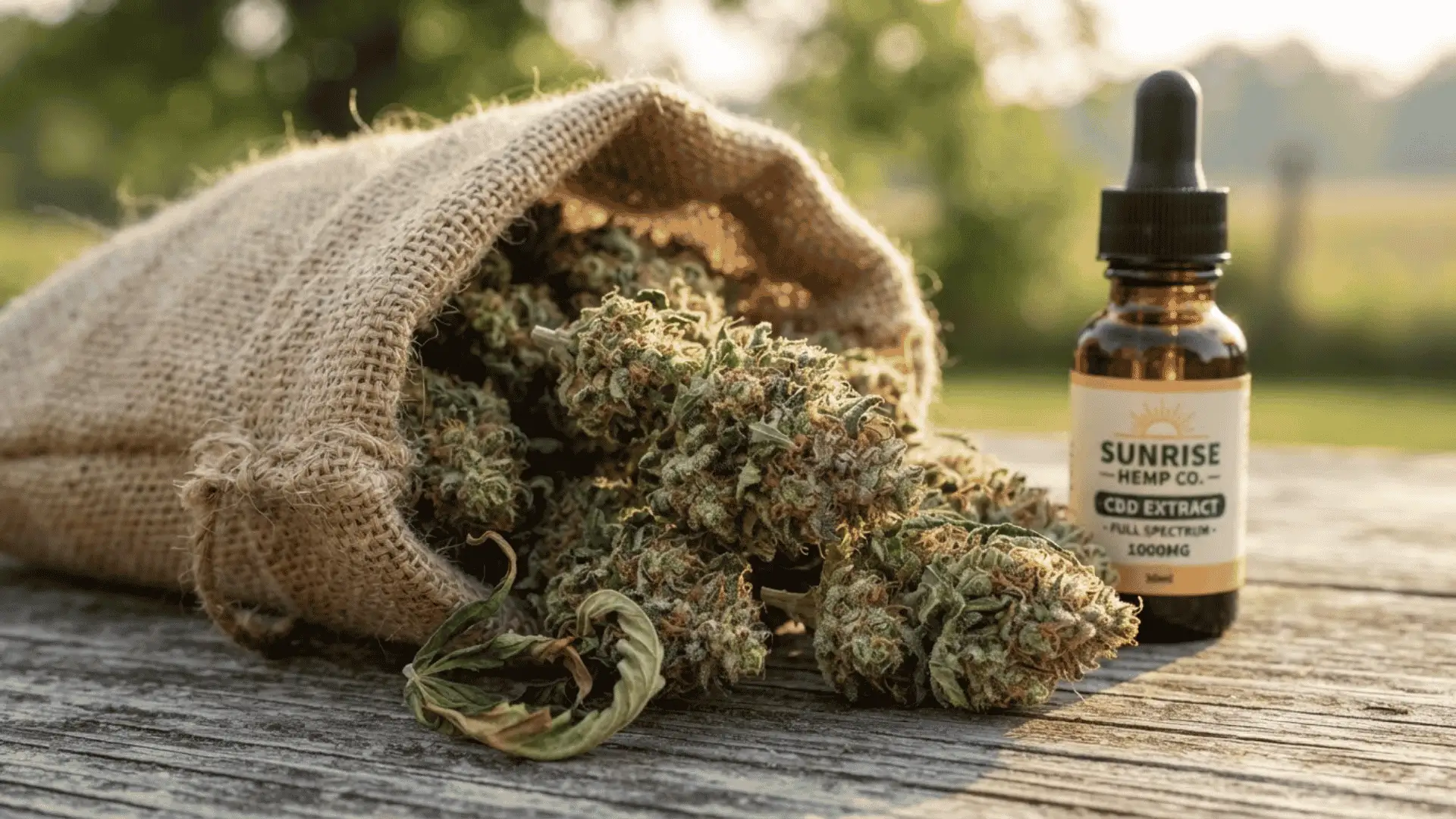
It comes down to three things: how the product is made, how loosely THC is regulated, and how consistently brands actually test what they sell.
Each one adds a bit more risk on its own. Together, they explain why THC shows up in products that claim to be THC-free.
Full-Spectrum vs. Broad-Spectrum vs. Isolate
Knowing the difference between full-spectrum, broad-spectrum, and isolate is very important for this matter.
Full-spectrum keeps every compound from the hemp plant, including THC, terpenes, and other cannabinoids, since the idea is to preserve the whole plant profile.
Broad-spectrum strips out most of that THC during processing, though not always all of it.
Isolate is purified CBD alone, with everything else removed, but even that can carry parts-per-million traces in some products depending on how it was made.
Mislabeling Makes the Risk Worse
Independent lab testing has repeatedly found CBD products with far more THC than their labels claim, sometimes well above the legal 0.3% limit, and the FDA has issued formal warnings over this exact problem more than once.
Without consistent industry-wide oversight, you’re often trusting a brand’s word alone, with no guarantee that word is accurate. Avoid choosing such CBD brands.
Quick tip: Never assume “THC-free” on a label is the final word. Check the actual lab report before you trust it.
What the Research Actually Shows
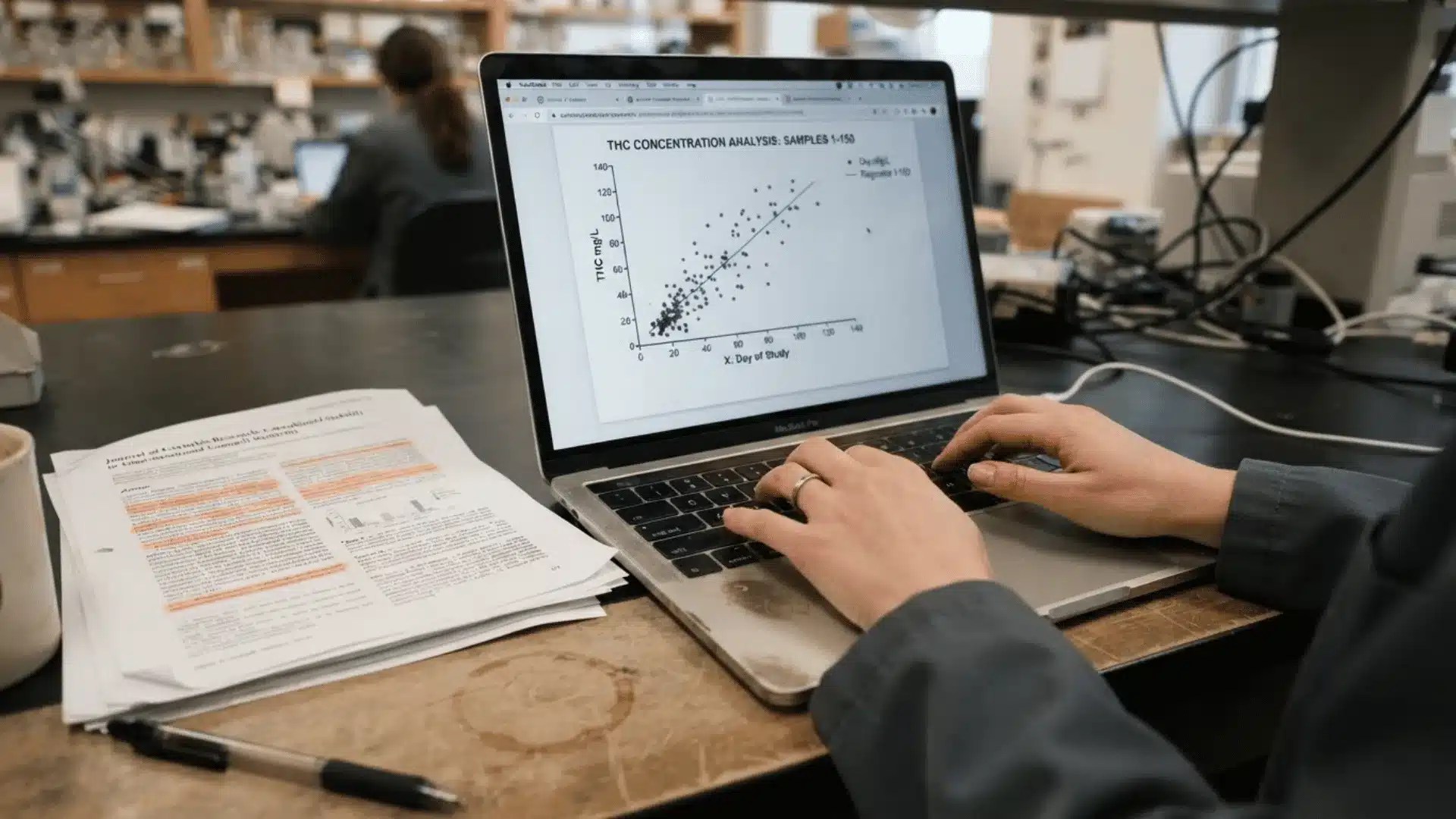
Three studies get cited again and again on this topic, and together they tell a consistent story about the risk:
| Study | Setup | Result |
|---|---|---|
| Johns Hopkins | 6 adults, single vaping session | 2 of 6 tested positive |
| JAMA Psychiatry | 15 people, daily full-spectrum CBD for 4 weeks | 7 of 15 tested positive |
| Realm of Caring | Commercial full-spectrum CBD users | Flagged the standard 20 ng/mL cutoff as too strict for regular users |
The pattern across all three is the same. Even legal, properly dosed products carry a real chance of a positive result, and that chance goes up with regular use.
How Drug Tests Actually Detect THC
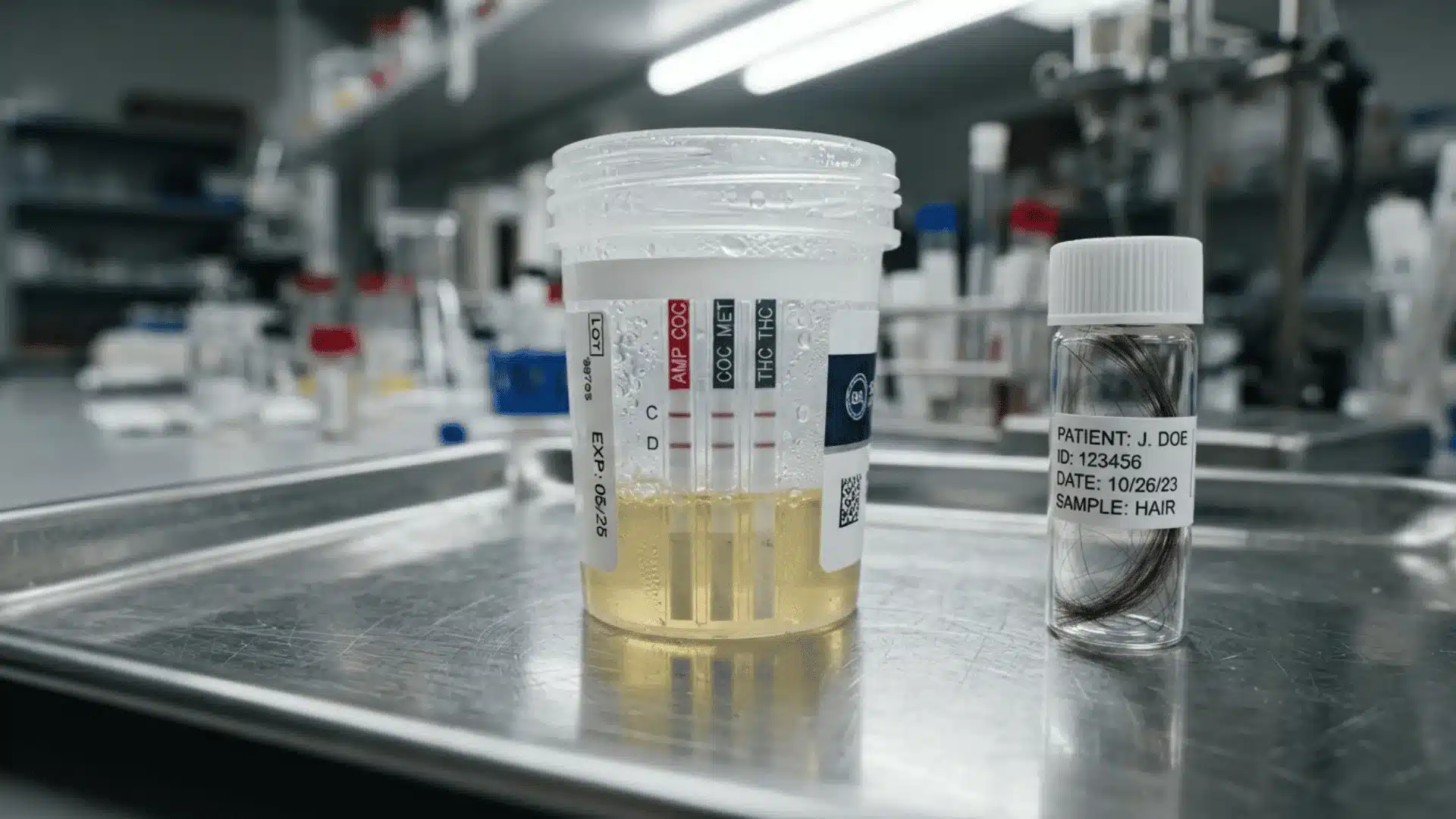
A drug panel detects THC metabolites present in your system at the time of testing. It has no way of knowing if those metabolites came from marijuana or from a fully legal CBD oil you bought at a store.
To the test itself, THC is THC, regardless of the source, your intent, or the legality of the product it actually came from.
Urine, Hair, and Saliva Tests Compared
The wider the window, the more likely trace THC from regular CBD use shows up on the result.
| Test Type | Detection Window | Common Use |
|---|---|---|
| Urine | 3 to 30 days | Most workplace and DOT testing |
| Hair | Up to 90 days | Pre-employment and long-term screening |
| Saliva | 1 to 10 days | Recent-use or roadside testing |
Detection Windows Depend on the Person
Your dosage, frequency of use, body fat percentage, and metabolism all affect how long THC metabolites linger in your system after use.
THC is stored in fat tissue, so people with higher body fat can sometimes show longer detection windows than others using the same product.
Two people using the same dose can get noticeably different results, simply because their bodies absorb and clear THC at different speeds.
Workplace and DOT Testing: Why the Stakes are Higher
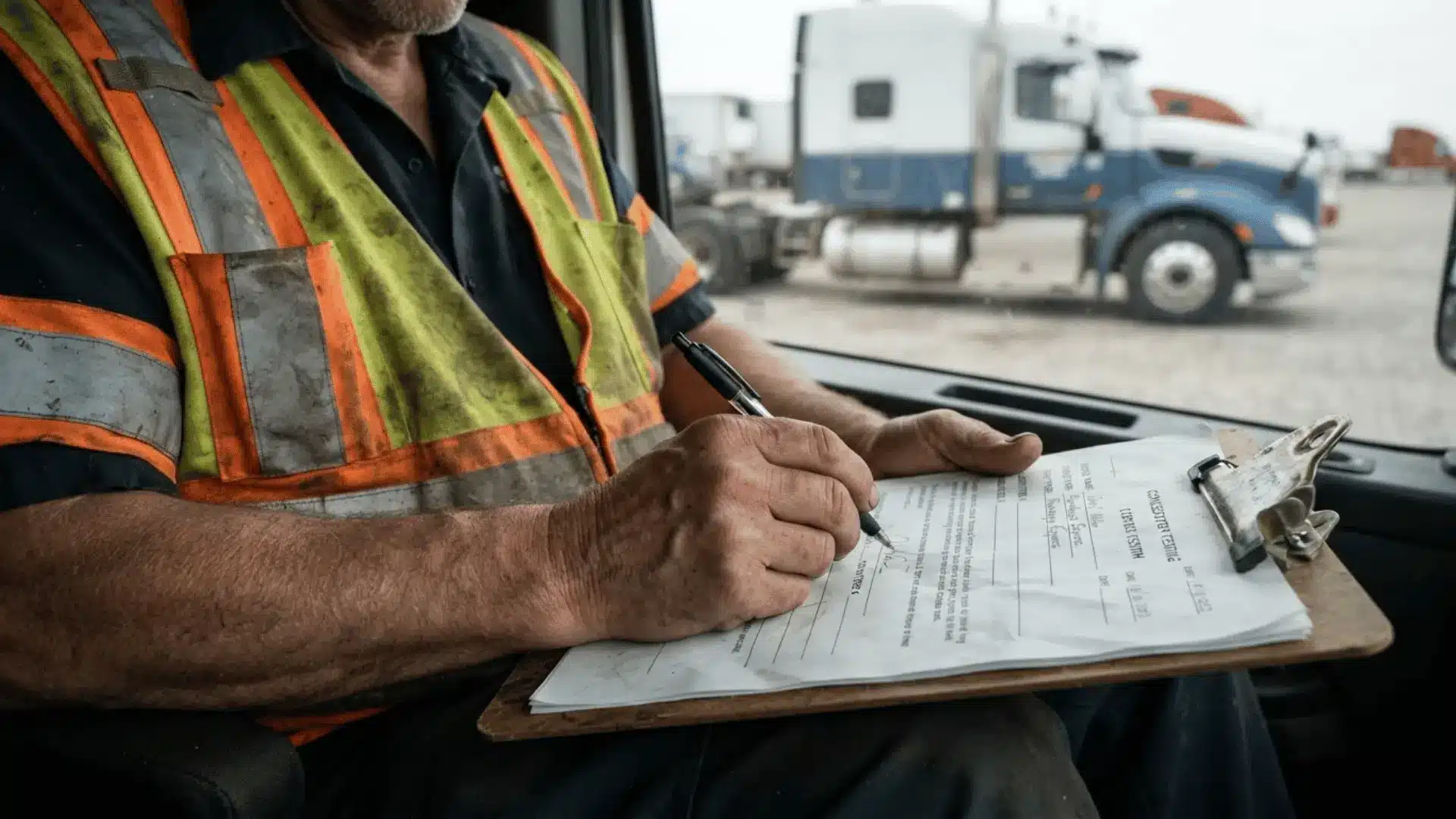
Federal transportation testing screens directly for THC and makes no exception for legal hemp products, no matter how they’re marketed or how compliant they claim to be with federal law.
It also doesn’t help that CBD products aren’t FDA-approved or prescribed for general use, so there’s no valid prescription on file to point to during a review.
Once THC is confirmed, the consequences can be serious:
- Lost employment, especially under zero-tolerance drug policies
- A suspended license for safety-sensitive roles like commercial driving
- A lasting mark on your record that’s difficult to challenge afterward
Quick tip: If your role involves DOT or safety-sensitive testing, treat every CBD product as a risk until you’ve verified it yourself, regardless of what the brand claims.
How to Lower Your Risk: Quick Tips
None of this means giving up CBD. It means making a few deliberate choices:
-
Choose broad-spectrum or isolate over full-spectrum to cut your THC exposure significantly, though not to zero
-
Always check the Certificate of Analysis (COA) for the exact batch you’re buying, not just the brand’s general claims
-
Watch your dosage and frequency, since THC is fat-soluble and builds up with regular, higher-dose use
-
Pause use ahead of a known test date, giving your body extra time to clear any accumulated THC
Final Thoughts
So here’s where I land on this. CBD oil can make you fail a drug test, but the CBD itself is rarely the reason. The real risk comes from trace THC, sloppy labeling, and how much you use over time.
Stick to isolate or broad-spectrum products, always check the lab report, and never assume a legal label means a completely clean result.
Testing can come up with little warning, so plan instead of finding out the hard way. I’d rather you make an informed choice than get caught off guard at work or on the road.
Got a CBD product you’re on the fence about? Drop the brand in the comments, and I’ll help you figure out how much risk it actually carries.
Frequently Asked Questions
Can CBD Gummies or Topicals Cause a Positive Test?
Yes, if they’re full-spectrum. Gummies and topicals can carry the same trace THC as CBD oil, so the product type matters more than how you take it.
Is Delta-8 THC Riskier than Regular CBD?
Yes. Delta-8 is psychoactive and often less regulated than standard CBD, so it carries a higher chance of triggering a positive THC test.
Can Secondhand CBD Vaping Cause a Positive Result?
It’s unlikely with pure CBD vapor, but secondhand exposure to full-spectrum vapor containing THC could theoretically add trace amounts, though real-world risk stays low.
How Long Before a Test Should I Stop Using CBD?
There’s no fixed number, but stopping at least one to two weeks ahead gives your body more time to clear any accumulated THC.
Sources
-
Johns Hopkins Medicine, “Some CBD Products May Yield Cannabis-Positive Urine Drug Tests.” hopkinsmedicine.org
-
Very Well Health, “Using CBD? Here’s How It Could Affect Your Drug Test.” verywellhealth.com
-
Realm Of Caring, “Likelihood of testing positive for THC with CBD products.” realmofcaring.org
-
NuLeaf Naturals, “Will CBD Oil Show Up On a Drug Test?” nuleafnaturals.com