| ⚠️ Warning: If you or someone you know is struggling with cannabis use or Addiction, please reach out before trying to manage it alone. SAMHSA National Helpline: 1-800-662-4357 (free, confidential, 24/7). Call 911 immediately if someone is experiencing a medical emergency related to substance use. |
CBD products can seem simple at first, until the labels start using words like full-spectrum, isolate, hemp-derived, and THC-free. If you’ve been wondering, can you get addicted to CBD? That concern is fair.
You may be using it for sleep, stress, pain, or daily calm, and repeated use naturally raises questions. You’ll learn how CBD works, how it differs from THC, what addiction signs actually look like, and why some CBD gummies deserve a closer look.
I’ll also cover side effects, withdrawal concerns, drug testing, safer product choices, and the small details that can change how CBD affects you. This way, the answer feels clear without skipping the parts that matter.
CBD vs. THC: The Addiction Comparison Table
| Factor | CBD | THC |
|---|---|---|
| Produces a “high” | No | Yes |
| Activates dopamine reward system | No | Yes |
| Physically addictive | No | Possible |
| Causes withdrawal symptoms | No | Mild possible |
| WHO abuse potential rating | None | Moderate |
| Psychological dependence | Rare | More common |
What Is CBD?
CBD, short for cannabidiol, is a natural compound found in the cannabis plant. It belongs to a group of plant compounds called cannabinoids, which interact with the body’s endocannabinoid system, a system involved in mood, sleep, stress response, and pain regulation.
Unlike THC, the psychoactive compound in marijuana, CBD does not create a strong intoxicating high. Most legal CBD products are made from hemp, a cannabis variety that contains very low THC levels.
Today, CBD is commonly sold as gummies, oils, capsules, drinks, creams, and vapes. Many people use it to support relaxation, sleep, soreness, or general wellness, although research on several claimed benefits is still growing.
If hemp and CBD products still feel easy to mix up, this piece on the difference between hemp and CBD gummies explains why the two are not always the same thing.
How CBD Works in the Body and Brain
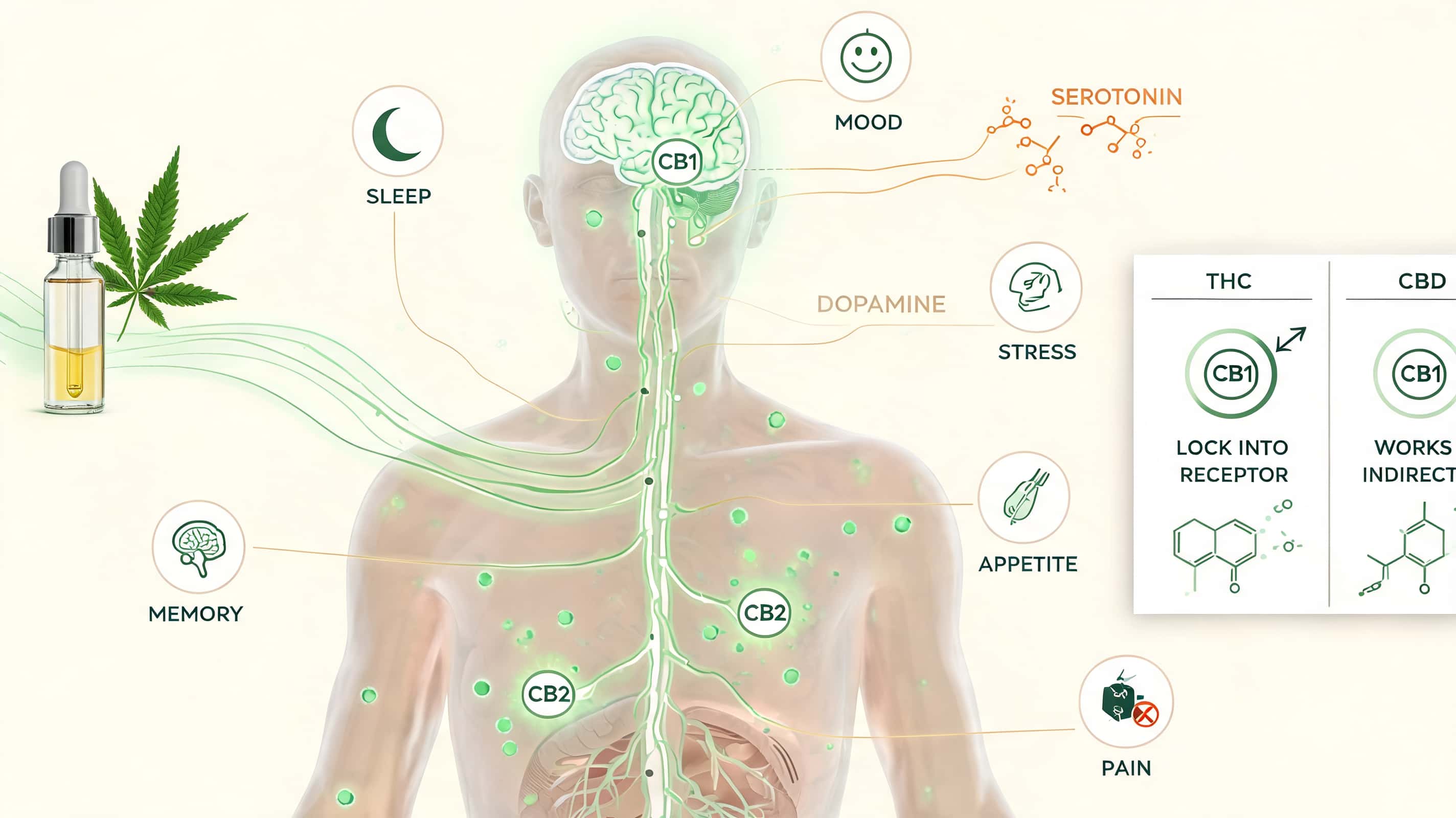
CBD does not work like a switch that instantly changes the brain. It works gently with systems that help the body stay balanced. CBD interacts with the endocannabinoid system, which helps manage sleep, mood, stress, appetite, memory, and pain response.
This system includes CB1 and CB2 receptors found in the brain, nerves, immune system, and body tissues. Unlike THC, CBD does not strongly bind to CB1 receptors, so it usually does not cause an intoxicating high. CBD works indirectly by helping the body use its own natural cannabinoids better.
It may also affect serotonin receptors , which are linked with mood and calmness . Since CBD does not strongly activate the brain’s reward pathway, pure CBD is not viewed as highly addictive. Product type, dose, and THC content can still change its effects.
Can You Get Addicted to CBD? Here’s What Science Says
The short answer: No, CBD is not physically addictive.
CBD (cannabidiol) is a non-intoxicating compound derived from the hemp plant. It interacts with the body’s endocannabinoid system, but here’s the key distinction: it does not bind directly to CB1 receptors in the brain the way THC does.
It doesn’t trigger dopamine release in the brain’s reward circuitry, which is precisely why it doesn’t create cravings or reinforce repeated use.
The World Health Organization’s CBD Critical Review Report found that pure CBD does not show effects linked with abuse or dependence in humans, and that there is no evidence of public health-related problems associated with the use of pure CBD. That’s not a tentative maybe; it’s a global health body saying the addiction risk simply isn’t there.
Research published in Frontiers in Psychiatry further confirmed this, with multiple animal and human studies demonstrating that CBD lacks rewarding properties, meaning the brain doesn’t register it as something to seek out.
| Caution: One noteworthy exception comes from NCBI’s StatPearls clinical resource, which advises that physicians should exercise caution when recommending CBD to patients with a history of substance use disorder. Not because CBD itself is addictive, but because individuals with prior addiction are more vulnerable to behavioral patterns around any substance. If that’s you, talk to your doctor first. |
Are CBD Gummies Addictive? Same Compound, Different Wrapper
CBD gummies can feel more suspicious because they look and taste like candy. Still, the format does not change the compound. A gummy is simply a sweeter way to take CBD.
Pure CBD Gummies Are Not Considered Addictive
CBD gummies contain cannabidiol, the same compound found in CBD oils and capsules. The chewy texture and sweet flavor do not make CBD affect the brain like an addictive substance.
Pure CBD does not create a high, does not strongly trigger the brain’s reward pathway, and is not known to cause physical withdrawal when stopped. Most gummies also come in measured doses, often around 10–25mg per piece, which makes intake easier to track.
Full-Spectrum Gummies Need Extra Caution
Not all CBD gummies are the same. Full-spectrum CBD gummies may contain trace THC, while broad-spectrum and isolate gummies are usually better options for people avoiding THC.
The bigger concern is poor labeling, since some products may contain more THC than expected. THC gummies are different because THC can be habit-forming and may cause tolerance or withdrawal with regular use.
THC Gummies vs. CBD Gummies: Not the Same Thing
This distinction matters more than people realize. THC gummies can be habit-forming because THC binds directly to CB1 receptors and can trigger dopamine release, the same reward pathway involved in substances like nicotine and alcohol.
Regular THC use may lead to tolerance, mild withdrawal effects like sleep disruption and irritability, and the CDC explains that Cannabis Use Disorder can happen when cannabis use continues even after it causes problems in daily life.
| 💡 Tip: When shopping for CBD gummies, always check the label for the CBD type (isolate, broad-spectrum, or full-spectrum) and look for a scannable QR code that links to a third-party lab report. If a brand won’t show you test results, don’t buy from them. |
When properly labeled and sourced, CBD gummies are not considered addictive. The real risk usually comes from hidden THC, weak testing, or brands that are not clear about what is inside.
Addiction, Dependence, and Habit: What’s the Difference?
These words often get mixed together, which can make CBD feel more confusing than it needs to be. Here’s a simple way to separate them.
| Term | What it means | What it may look like |
|---|---|---|
| Habit | A repeated behavior that becomes part of a routine. | “I usually take a CBD gummy at night.” |
| Dependence | The body adapts to a substance and may react when it stops. | “My body feels different when I stop taking it.” |
| Addiction | Continued use even when it causes harm or feels hard to control. | “I cannot stop even though it is affecting my life.” |
CBD is not strongly linked with addiction or classic dependence. Still, a CBD habit can become unhelpful if it becomes the only way to handle stress, sleep issues, pain, or anxiety.
| ⚠️ Advisory: If CBD has quietly become your only tool for managing stress, sleep problems, pain, or anxiety, it may be worth adding other forms of support alongside it, such as sleep hygiene changes, therapy, medical care, movement, or stress management practices. A helpful habit and a real solution are not always the same thing. |
CBD Withdrawal: What to Expect When You Stop Using It

Stopping CBD may feel different for each person. While strong withdrawal is unlikely, your sleep, stress, or comfort levels may change for a few days
- Sleep and Energy Changes: You may have trouble sleeping or feel more tired if CBD was helping you relax.
- Mood and Anxiety Shifts: You may feel more stressed, restless, irritated, or anxious for a short time.
- Pain or Discomfort Return: Any pain, tension, or discomfort that CBD helped manage may return.
- Appetite Changes: Your hunger levels may feel slightly different after stopping CBD.
- Routine Discomfort: You may miss the daily habit of taking CBD more than the CBD itself.
- Mild Physical Effects: Some people may notice headaches, tiredness, or feeling less balanced for a few days.
Because these symptoms can be hard to tell apart, it also helps to know how long CBD gummies actually stay in your body before drawing conclusions about how you feel after stopping.
| Note: Abruptly stopping CBD is considered medically safe. Unlike benzodiazepines or opioids, there is no recommended taper protocol for CBD. That said, if you’re using CBD to manage a diagnosed condition like epilepsy or severe anxiety under a doctor’s care, discuss any changes to your routine with them first. |
In most cases, stopping pure CBD should not cause true withdrawal. But if symptoms return or the product contains THC, it is worth slowing down, checking the label, and speaking with a healthcare professional.
Can CBD or CBD Gummies Make You High?
Pure CBD gummies should not make you high because CBD is non-intoxicating. It does not create the altered feeling linked with THC. If you feel high after taking a CBD gummy, the product may contain THC, delta-8, or another intoxicating cannabinoid.
The label may also be inaccurate, the dose may be too high, or CBD may be interacting with alcohol or medication. Some people feel relaxed after CBD, but relaxation is not the same as being high.
A true high usually involves altered perception, euphoria, slower reaction time, poor coordination, or a floaty mental state. If that happens, stop using the product and check its lab report.
CBD Side Effects You Should Know
CBD may not be considered addictive, but it can still affect the body. Side effects are more likely with higher doses, weaker products, or medication use.
- Common side effects: sleepiness, dry mouth, diarrhea, nausea, appetite changes, fatigue, dizziness, and mood changes.
- Medication concerns: CBD may interact with blood thinners, seizure medicines, sleep aids, anxiety medicines, antidepressants, alcohol, and sedatives.
- Liver processing: CBD is processed through the liver, so it may affect how some medicines stay in your body.
- Extra caution: The FDA’s CBD consumer update notes concerns around liver injury, drug interactions, drowsiness, and use in sensitive groups.
| 📝 Note: If a medication label warns against grapefruit, ask a doctor before using CBD. CBD can affect some liver enzymes similarly. |
Side effects are manageable with the right dose and medical guidance; knowing them upfront keeps the experience safer.
Can CBD Help With Addiction?
CBD is being studied for its possible role in substance-related conditions, but it is not a proven addiction treatment. A systematic review on cannabidiol as an intervention for addictive behaviors found early evidence that CBD may have potential in research around opioid, cocaine, psychostimulant, cannabis, and tobacco-related addiction. Still, the authors made it clear that more human studies are needed.
That means CBD should not replace medical care, therapy, detox support, or prescribed treatment. If someone is dealing with cannabis, alcohol, opioid, or stimulant addiction, CBD gummies are not a recovery plan.
They are only a product. Real recovery usually needs proper support, structure, professional guidance, and people who can help when things get hard.
| 📝 Note: If you are in recovery, talk with a clinician before using full-spectrum CBD. Even small THC exposure may not be worth the risk for some people. |
Who Should Be More Careful With CBD?

CBD may be fine for many adults, but some people need extra caution. This is less about addiction and more about safety, timing, and product quality.
- People with a history of substance use disorder: CBD itself is not considered addictive, but patterns of reliance can shift to new products.
- Pregnant or breastfeeding individuals: Avoid CBD unless a healthcare professional clearly recommends it.
- People under 25: Extra care makes sense because the brain is still developing.
- Anyone taking medication: CBD can affect liver enzymes and may change how some medicines work.
- People buying unverified products: Mislabeled CBD products can contain more THC than expected.
The safest move is simple: talk to a doctor, choose tested products, and avoid CBD brands that hide lab reports or make bold health claims.
How to Choose Safer CBD Gummies
CBD gummies can be easy to use, but the label should do more than look pretty. A safer product is clear, tested, and honest.
- Check third-party lab testing to confirm what is actually inside.
- Look for the CBD amount per gummy so the dose is easy to track.
- Check the THC amount if you want to avoid intoxicating effects.
- Find a batch-specific COA that matches the product you bought.
- Avoid big disease-cure claims like “cures anxiety” or “works instantly.”
- Choose a simple ingredient list with no confusing extras.
- Look for brand transparency, including clear contact details and lab reports.
- Pick child-resistant packaging since gummies can look like candy.
| 📝 Note: A COA dated over a year ago is a red flag. Reputable brands update their lab results with every new production batch. If you cannot find a current COA on the brand’s website or via a QR code on the packaging, that alone is reason enough to keep shopping. |
A good CBD gummy should feel boring in the best way: clear label, clear dose, clear testing, and no mystery. Keep it away from children and pets.
Frequently Asked Questions
Does CBD expire?
Yes, CBD products can expire. Gummies may dry out, oils may taste bitter, and potency can drop over time. Check the expiration date, keep the container sealed, and store it away from heat, light, and moisture.
Does body weight affect how CBD feels?
Possibly. People with higher body weight may need a different amount than someone smaller, but weight is only one factor. Metabolism, product strength, food intake, sensitivity, and reason for use can also affect how CBD feels overall, day to day.
What time of day is best to take CBD?
CBD can be taken at different times, but timing depends on your goal. Some people prefer evenings for relaxation, while others use it earlier. Start when you can notice effects safely, not before driving, work, or important tasks.
Should you take CBD with food?
Food can change how CBD feels. Taking CBD with a meal, especially one with healthy fats, may help your body absorb more of it. Taking it on an empty stomach may feel lighter or wear off faster for some people.
Can CBD give you energy?
CBD itself is not usually marketed as an energy booster. Some people feel calm or slightly sleepy, while others feel more balanced because discomfort feels lower. Product type, dose, and added ingredients can change the experience quite a bit.
Can someone be allergic to CBD gummies?
Some people may be sensitive to ingredients in CBD products. Gummies can include gelatin, dyes, flavorings, sweeteners, or carrier oils. If you notice itching, swelling, rash, breathing trouble, or stomach upset, stop using it and seek medical advice.
Final Verdict
CBD is less about fear and more about knowing what is really in the product. If you came here asking, “can you get addicted to CBD,” the answer depends on purity, THC content, and how you use it.
Pure CBD is not considered addictive, but mislabeled gummies, hidden THC, high doses, and mixing it with medication can change the picture. Look beyond the front label and check lab reports, dose, and product type.
That small habit can save you stress later. It keeps choices safer and clearer. Use the tips above before buying, and share your thoughts in the comments below or read other CBD-related articles on the site.
Sources
- World Health Organization. “Cannabidiol Critical Review Report.” A review of CBD’s pharmacology, safety, and dependence-related findings. https://cdn.who.int/media/docs/default-source/controlled-substances/whocbdreportmay2018-2.pdf
- CDC. “Cannabis Use Disorder.” Explains risks, warning signs, and how cannabis use can become problematic. https://www.cdc.gov/cannabis/health-effects/cannabis-use-disorder.html
- Prud’homme M, Cata R, Bhatt D. “Cannabidiol as an Intervention for Addictive Behaviors: A Systematic Review of the Evidence.” PMC/NIH, 2015. https://pmc.ncbi.nlm.nih.gov/articles/PMC4444130/
- FDA. CBD consumer update, including concerns about liver injury, drowsiness, and drug interactions. https://www.fda.gov/consumers/consumer-updates/what-you-need-know-and-what-were-working-find-out-about-products-containing-cannabis-or-cannabis
- Fun with Dizzies. “Hemp Gummies vs CBD Gummies.” Compares hemp gummies and CBD gummies, including how they differ in effects and ingredients. https://funwithdizzies.com/hemp-vs-cbd-gummies-differences-effects-benefits/
- Fun with Dizzies. “CBD Gummies: How Long They Stay in Your System.” Explains how long CBD gummies may remain detectable in the body. https://funwithdizzies.com/cbd-gummies-how-long-they-stay-in-your-system/
- Fun with Dizzies. “CBD Dosage Chart: Guide for Pain, Anxiety and Sleep.” Breaks down suggested CBD amounts by body weight and condition. https://funwithdizzies.com/cbd-dosage-chart-guide-for-pain-anxiety-sleep/