| Question | Quick Answer |
| Does CBD oil get you high? | No. CBD itself does not cause a THC-like high. |
| What does CBD oil feel like? | Calm, mellow, less tense, or more physically comfortable. |
| Is the feeling strong? | Usually subtle, not dramatic. |
| How long does CBD take to kick in? | 30 minutes to 2 hours for oils, depending on use and body factors. |
| What does CBD feel like the first time? | Some notice calm; others feel little at first. |
| Can full-spectrum CBD feel different? | Yes, because it may contain small amounts of THC. |
| Common side effects | Sleepiness, fatigue, upset stomach, dry mouth, diarrhea. |
| Best first-time advice | Start low, wait at least an hour, and track how you feel. |
If CBD oil does not get you high, what exactly are you supposed to feel? That is the question most first-time users bring to the search bar, and honestly, it deserves a cleaner answer than most articles give.
Here is the honest version: CBD oil usually does not feel like something new arriving. It feels more like something uncomfortable to leave. Less tension in the shoulders. Quieter mental noise. The shift, when it happens, tends to be noticed in hindsight rather than in the moment.
By the end of this guide, you will have a realistic picture of what CBD oil actually feels like, how long it takes to work, what first-time use is genuinely like, and why results vary so much from person to person.
This article is for general informational purposes only and does not constitute medical advice. CBD affects individuals differently based on body chemistry, dose, product type, and health status. Consult a healthcare professional before starting any new supplement, especially if you take prescription medications.
How CBD Works in the Body: The Endocannabinoid System
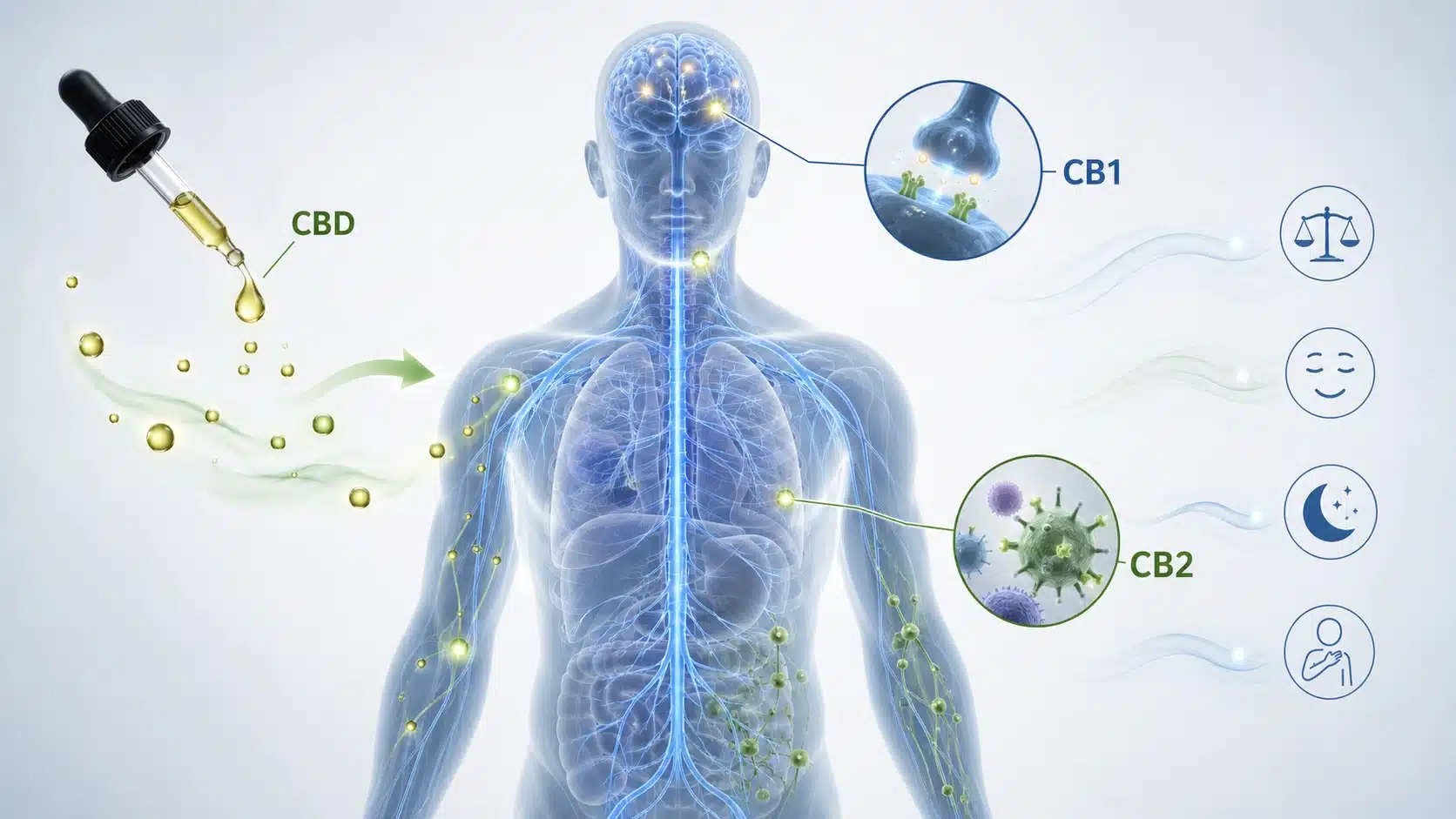
The body has a built-in regulatory network called the endocannabinoid system, or ECS. It is made up of receptors, signaling molecules, and enzymes that help regulate mood, pain perception, sleep, immune response, and internal balance. It includes two primary receptor types: CB1 receptors, found mostly in the brain and central nervous system, and CB2 receptors, concentrated in immune tissues.
CBD does not bind directly to CB1 or CB2 receptors the way THC does. Instead, it works indirectly by modulating the behavior of those receptors and by slowing the breakdown of the body’s own endocannabinoids, including anandamide, sometimes called the bliss molecule.
This indirect mechanism is also why CBD sits in a different category from THC and other psychoactive cannabinoids in terms of how it affects perception. CBD also interacts with 5-HT1A serotonin receptors, which are associated with mood and stress response.
Research published in PMC confirms CBD is non-intoxicating and that its effects on the ECS occur through these indirect mechanisms rather than direct receptor binding.
The practical meaning of all this is that CBD does not force a new feeling. It supports the systems your body already uses to stay balanced, which is why effects often register as a correction rather than an addition.
| Note: This is also why CBD benefits can take time to build. If your ECS is working well, changes may be subtle. If it is under stress from pain, anxiety, or poor sleep, the shifts may feel more noticeable. |
What Does CBD Oil Feel Like, and Does It Get You High?
CBD oil usually feels gentle, subtle, and non-intoxicating. Most people describe it as a quiet sense of calm, less body tension, or a mind that feels less cluttered. It does not feel like a marijuana high, and it does not create the same clear “before and after” shift linked with THC.
CBD does not feel like a marijuana high because it does not work like THC. THC is the compound associated with intoxication, altered time perception, heightened appetite, impaired coordination, and that unmistakable shift in perception. CBD usually feels much quieter.
Harvard Health notes that CBD may make some people feel mellow, sleepy, more comfortable, or less in pain, but it does not cause the intoxicating effects associated with THC.
The type of CBD also matters. CBD isolate usually feels the most neutral because it contains only CBD. Broad-spectrum CBD keeps other hemp compounds but removes THC.
Full-spectrum CBD may contain trace THC, terpenes, and minor cannabinoids like CBC , so some users report that it feels slightly warmer, heavier, or more rounded than isolate products.
| Tip: CBD often works quietly. Pay attention to what feels reduced, not just what feels added. Less tension, less mental noise, or easier rest can still mean it is working.
Caution: If you avoid THC for work, testing, medical reasons, or personal comfort, check the product’s certificate of analysis before buying full-spectrum CBD. |
How Long Does CBD Take to Kick In?
CBD kick-in time depends mostly on how you take it. Oil held under the tongue may work faster than gummies, but timing still varies. Food, dose, body weight, metabolism, and how much oil actually gets absorbed sublingually versus swallowed all affect when you notice it.
| CBD Form | Typical Onset | What to Expect |
| CBD oil or tincture | 30 minutes to 2 hours | Gradual calm or body ease |
| CBD gummy or capsule | 45 minutes to 2 hours | Slower onset, longer-lasting feel |
| CBD vape | Minutes | Faster but shorter duration |
| CBD topical | 15 to 45 minutes | Local comfort, not a whole-body feel |
Food slows absorption. An empty stomach speeds things up, but can cause nausea at higher doses. Potency, product quality, and batch-to-batch consistency also play a role that is easy to overlook.
Two products with the same label dose can deliver different amounts of active CBD depending on the manufacturer.
| Tip: Do not keep taking more every 10 minutes, waiting for something to happen. CBD can take time, especially in swallowed forms. Set a realistic window of at least an hour before reassessing. |
What Does CBD Feel Like When It Starts Working?
This is where expectations and reality most often diverge. People anticipate a noticeable shift, a moment where something obviously changes. For most users, CBD does not work that way.
What you may notice instead is a gradual quieting. Thoughts that were moving fast slow down a little. Muscles that felt tight feel less gripped.
The general sense of urgency in the body softens, and you cannot pinpoint the exact moment it happened. This pattern is consistent enough across user accounts that it is worth adjusting expectations before your first dose rather than after.
1. Mental Signs
On the mental side, the most commonly reported experiences are fewer racing thoughts, a lighter relationship with whatever stress was present, and a clearer, less distracted mental space.
It does not feel like sedation. It feels more like the mental static turning down a few notches.
2. Body Signs
Physically, users commonly describe loosening in areas where they carry chronic tension, typically the neck, shoulders, and lower back.
There is less of a “push” in the body and more of a settling. This tends to be gradual rather than sudden, and it is more noticeable when baseline tension was already elevated before taking CBD.
Some people who use it primarily for muscle discomfort also apply it topically; CBD massage works on more localized areas in a way oral oil alone cannot.
3. Sleep and Relaxation Signs
At higher doses or later in the evening, CBD may cause drowsiness or a strong urge to rest. Some users use this intentionally as part of a wind-down routine.
Others encounter it unexpectedly during daytime use at doses that turn out to be higher than their body needs.
If sleepiness is reliably present during the day, adjusting the timing or dose is usually the simplest fix.
| ⚠️ Note: CBD effects can be easier to identify when you write down how you feel before taking it and again about two hours later. The difference is often clearer on paper than it is in the moment. |
How Much CBD Should You Take to Feel a Difference?
There is no universal CBD dose. Body weight, metabolism, tolerance, and reason for use all matter. More is not always better; CBD may work best within a certain range, and higher doses can add side effects without better results.
The ranges in the table below are a starting framework, though a weight-based CBD dosage chart is more granular if your starting point depends on body weight or a specific condition.
| Experience Level | Starting Dose | Adjustment Approach |
| First-time user | 5 to 10 mg per session | Hold for 3 to 5 days before increasing |
| Some prior experience | 10 to 20 mg per session | Adjust by 5 mg after one week if needed |
| Regular user | Based on personal tolerance | Reassess if effects plateau or weaken |
Most CBD oil labels list the dose per dropper. Gummies and capsules typically come in 10 to 30 mg increments, making dose tracking easier than with oils. What matters on an oil label is milligrams per milliliter, not just dropper size.
| Tip: Consistent daily use at the same dose for at least one week gives you far more useful information than occasional higher doses. CBD’s effects on the ECS are cumulative for many people, meaning benefits build with regular use. |
Why CBD Feels Different for Different People
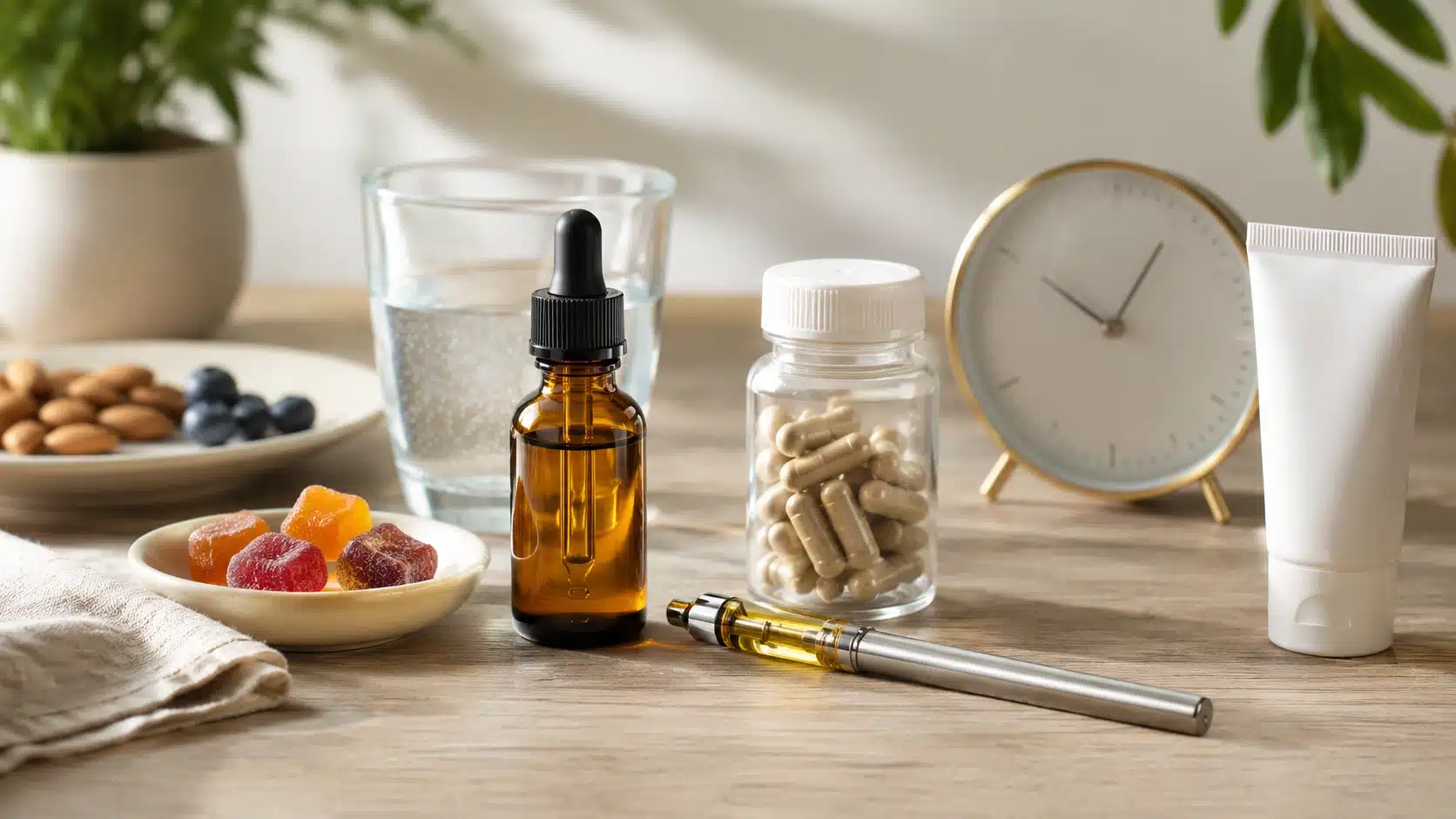
Two people can take the same CBD dose and feel very different things. Body weight, metabolism, food intake, stress level, pain level, product type, and individual endocannabinoid system differences all play a role. That is why CBD can feel calming for one person and nearly imperceptible for another.
Dose and potency: Higher doses tend to feel more sedating. Lower doses may feel barely noticeable or produce a light sense of calm. There is no universal correct dose, which is exactly why starting low and adjusting gradually is the most practical approach.
Full-spectrum vs broad-spectrum vs isolate: Full-spectrum products contain the full range of hemp compounds, including trace amounts of THC. Broad-spectrum removes THC while keeping other cannabinoids. Isolate is CBD alone. These differences can meaningfully change the character of the experience, particularly for users sensitive to THC.
It is also worth noting that hemp seed oil and CBD oil are not the same thing; hemp seed oil contains no cannabinoids and will not produce any of the effects described here.
Your starting point: CBD tends to feel more obvious when you are managing something specific: tense muscles, a stressful day, or difficulty winding down. Someone who is already calm and physically comfortable may notice very little. The baseline matters.
The FDA has raised ongoing concerns about CBD product quality, labeling accuracy, and regulatory oversight, which directly affect the consistency of what ends up in different products.
Two products labeled with the same dose can deliver different amounts of active CBD depending on the manufacturer’s practices.
What Users Commonly Report About How CBD Oil Feels?
Most people describe the onset as gradual rather than sudden. Physical ease tends to arrive first. The mental shift follows, and most users only name it in hindsight, noticing that something that felt tense no longer does.
Across clinical survey and trial data published on PubMed Central, 65% of young adult CBD users cited stress and anxiety relief as their primary reason for use.
Separate open-label trials reported partial or complete reductions in self-reported pain, improved physical functioning, and better sleep quality with consistent daily use. These are participant-reported outcomes from controlled settings, not anecdotal claims.
Users who notice little in the first session typically share three things: the dose was too low, the product quality was unverified, or effects were evaluated against a THC-style expectation rather than a pre-dose baseline.
When those variables are adjusted, most accounts describe a consistent, quiet shift rather than a noticeable event. Product quality is not a minor variable; mislabeled CBD products are common enough that what you feel on your first try may say more about the brand than about CBD itself.
What Are the Side Effects of CBD Oil?
CBD is generally well-tolerated, but it can still cause side effects, especially at higher doses. Most issues are mild and may improve when you lower the dose, change timing, or take CBD with food.
- Drowsiness: CBD may make you feel sleepy or mentally slower, especially at higher doses. Try using it at night or reducing the amount if daytime tiredness becomes a problem.
- Upset stomach: Some people get nausea, cramps, or loose stools. Taking CBD with food or splitting the dose into smaller amounts may help ease stomach discomfort.
- Fatigue: CBD can sometimes leave you feeling low-energy during the day. If that happens, adjust your dose later in the day or reduce the amount you take at once.
- Dry mouth: A thirsty or sticky mouth can happen with CBD. Keep water nearby and hydrate before and during use, especially if you already tend to get dry mouth.
- Appetite changes: CBD may change hunger levels for some people. Track changes and adjust your dose if needed.
- Drug interaction risk: CBD can interact with some medications through liver enzyme pathways. Ask a clinician first if you take prescriptions, especially sedatives, seizure medicines, blood thinners, or liver-related medications.
Some users feel slightly off during the first few days. That does not always mean CBD is the wrong fit. Still, if symptoms feel strong, last too long, or worry you, stop using it and check with a healthcare professional.
| ⚠️ Caution: Ask a doctor before using CBD if you take prescription medications, are pregnant or breastfeeding, have liver disease, or have bipolar disorder. CBD genuinely interacts with certain drugs through shared liver enzyme pathways, and that is not a formality. |
Can CBD Help With Anxiety, Pain, or Sleep?
Many people start CBD for stress, discomfort, or sleep support. The honest picture is that evidence varies depending on what you are asking it to do.
| Reasons People Use CBD | What Users Often Report | What to Keep in Mind |
| Stress or anxiety | Calmer mood, less reactive | Not a replacement for mental health care |
| Pain or physical discomfort | More comfort, less tension | Research is still developing |
| Sleep | Easier wind-down, less night waking | Dose and timing dependent |
| Focus | Less mental distraction | Not a stimulant; the effect is indirect |
Outside of prescription CBD for certain seizure disorders, where clinical evidence is strong, most other uses are supported by user reports and early or mixed-stage research. That does not invalidate those experiences. It does mean claims of guaranteed relief deserve skepticism.
| ⚠️ Note: CBD may help some people feel more comfortable or less stressed at the right dose. It is not a cure-all, and it should not replace professional care for diagnosed conditions. |
How to Choose CBD Oil for a Better First Experience
Not all CBD products deliver what they claim. Labeling and quality control issues in this category are real, and buying poorly sourced CBD is one of the most common reasons people have no experience worth measuring.
A practical checklist before purchasing:
|
Frequently Asked Questions
How does CBD oil make you feel the first time?
CBD oil may feel very subtle the first time. Some people notice calm, physical ease, or mild drowsiness. Others feel almost nothing. Effects depend on dose, product type, food intake, body chemistry, and the expectations you bring to it. If you notice very little on the first try, that does not necessarily mean it is not working; it often means the dose needs adjustment or the product quality needs verification.
Does CBD oil get you high?
No. CBD does not produce the intoxicating effects associated with THC. If a product feels mildly intoxicating, it may contain THC or another active cannabinoid. Full-spectrum CBD has trace THC, so sensitive users may notice a slightly different experience than with isolate products.
How long does CBD oil take to kick in under the tongue?
Many users begin noticing effects within 30 minutes to 2 hours. If much of the oil is swallowed rather than absorbed sublingually, it acts more like a capsule and can take longer. Food, dose, metabolism, and product quality all affect when something becomes noticeable.
Why do I feel sleepy after CBD oil?
Sleepiness after CBD is usually dose-related. A higher dose, a product containing trace THC, existing fatigue, or combining CBD with alcohol can all contribute. Try a lower dose, shift use to the evening, and avoid combining CBD with alcohol or sedating medications.
Does CBD oil feel different from CBD gummies?
Yes. Oil held under the tongue may produce effects somewhat sooner, while gummies require digestion and typically take longer to register. Gummies often produce longer-lasting effects. The difference depends on dose, ingredients, what you have eaten, and individual metabolism.
Can CBD oil make anxiety worse?
Most users report calm rather than increased anxiety, but high doses, THC-containing products, or personal sensitivity to cannabis compounds can occasionally produce the opposite effect. If anxiety increases after taking CBD, stop use and speak with a healthcare professional.
What is the difference between full-spectrum and broad-spectrum CBD oil effects?
Full-spectrum CBD contains all naturally occurring hemp compounds, including trace THC, and some users report a slightly warmer or more rounded feeling compared to isolate. Broad-spectrum removes THC while keeping other minor cannabinoids and terpenes.
Isolate is CBD alone with no additional compounds. The practical difference in how each feels depends on your sensitivity to THC and the specific product’s terpene profile.
How do I know if CBD oil is actually working?
The clearest way to tell is to track your baseline before taking it. Write down how tense, anxious, or uncomfortable you feel before your first dose, then check again about two hours later.
CBD tends to reduce something rather than add something, so the shift is often easier to see on paper than it is in real time. Consistent daily use for at least a week gives more useful information than a single test dose.
Final Thoughts
CBD is quiet, gradual, and subtle. Most people describe it as less stress, less body tension, more ease, or a calmer path toward rest. Some feel very little at first, especially with the wrong dose, product type, or timing.
That is why asking what CBD oil feels like does not have one fixed answer. CBD can feel different based on your body, your reason for using it, and the product you choose. It does not act like THC, so waiting for a strong high will lead to the wrong conclusion.
A fair trial usually means starting low, using a verified product, and giving your body time to respond. If you take medications or have a health condition, talk to your doctor before starting.
Sources
- Harvard Health Publishing. “CBD Products Are Everywhere. But Do They Work?” Harvard Health. Available at: health.harvard.edu
- Mayo Clinic Staff. “CBD: Safe and Effective?” Mayo Clinic. Available at: mayoclinic.org
- National Institutes of Health / PMC. “Eight Weeks of Daily Cannabidiol Supplementation Improves Sleep Quality and Immune Cell Cytotoxicity.” PMC, 2023. Available at: ncbi.nlm.nih.gov
- FDA. “FDA Regulation of Cannabis and Cannabis-Derived Products, Including Cannabidiol (CBD).” U.S. Food and Drug Administration. Available at: fda.gov
- PubMed Central. “Reasons for Cannabidiol Use: A Cross-Sectional Study of CBD Users.” PMC, 2021. Available at: pmc.ncbi.nlm.nih.gov