
I’ve been getting this question a lot lately: Does weed affect muscle growth? If you’re hitting the gym regularly and enjoying cannabis, you’re probably wondering if your habit is killing your gains.
Here’s the honest truth: Some studies suggest cannabis might hurt your progress by lowering testosterone and reducing motivation, while others show it could help with recovery and sleep.
I’m not here to judge your choices, but I want to share the facts so you can make informed decisions.
I’ll break down exactly how weed impacts muscle building, cover both the good and bad effects, and share what gym-goers are actually experiencing.
DISCLAIMER: The information provided is for educational purposes only and is not a substitute for professional medical advice, diagnosis, or treatment. Always consult a qualified healthcare provider before starting, stopping, or changing any medication.
Does Weed Affect Muscle Growth?
Let me cut straight to it. Weed won’t completely destroy your muscle growth, but it’s not helping either. The real impact depends on how much and how often you’re using it.
If you’re smoking once or twice a week, you’re probably fine. Your body can handle occasional cannabis without major hormonal disruptions or performance issues.
However, daily use is a different story entirely. Heavy cannabis consumption can lower your testosterone levels, spike cortisol, and absolutely kill your motivation to train hard.
It’s also worth understanding the mechanism. Cannabis interacts with the body’s endocannabinoid system (ECS), a network that helps regulate pain, appetite, inflammation, mood, and hormone function.
THC, the main psychoactive compound in cannabis, binds to ECS receptors and triggers the effects that most lifters care about: appetite, recovery, sleep, and motivation.
CBD, the non-psychoactive compound, interacts with the ECS differently and is increasingly used by athletes specifically for recovery without the high.
Cannabis isn’t a muscle-building supplement, but occasional use won’t ruin your progress if you stay consistent with training and nutrition.
The Negative Effects of Weed on Muscle Building
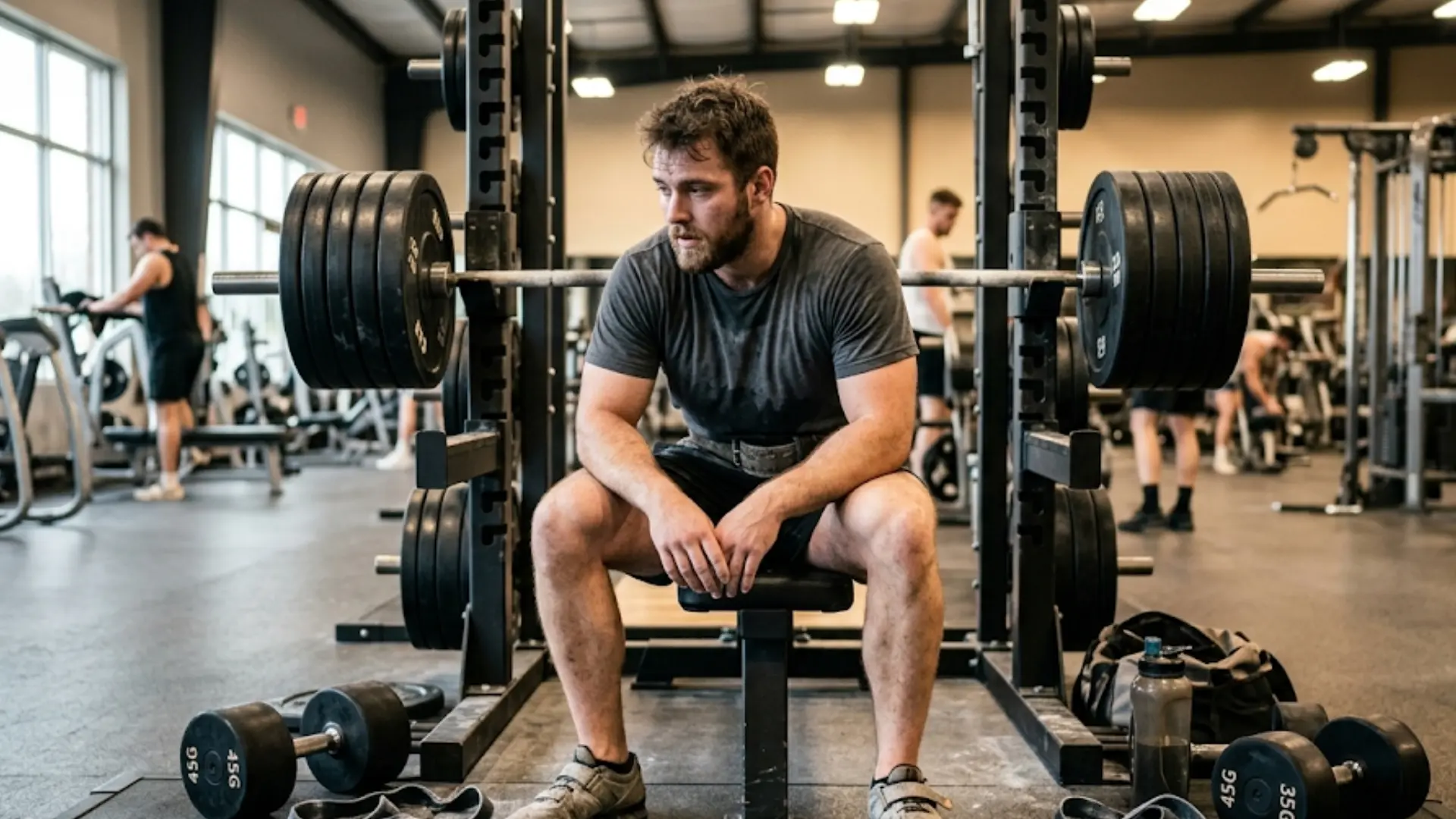
Weed can slow muscle gains in subtle ways that many lifters ignore, especially when use becomes frequent and starts affecting training quality and recovery habits.
- Lower motivation and training intensity: Weed can reduce drive and focus, making workouts feel optional, shorter, or less intense, limiting muscle growth.
- Hormonal effects (testosterone and cortisol): THC may temporarily lower testosterone and raise cortisol, impairing hormonal conditions crucial for muscle repair and protein synthesis. Research shows this effect is most pronounced in people new to cannabis. Regular users appear to develop tolerance and show less hormonal disruption over time. Still, the long-term hormonal effects of heavy daily use remain unclear.
- Reduced coordination and workout quality: Being high can affect balance, reaction time, and strength output, leading to weaker lifts and less effective training sessions.
- Smoking and lung capacity: Smoking weed can impact breathing and endurance, making hard sets and high-volume workouts more tiring and less productive.
- Potential impairment of protein synthesis: Some research suggests THC may slightly impair protein synthesis, the process by which your body repairs and builds muscle fibers after training. This is one of the more direct (though still debated) pathways through which cannabis could slow muscle development.
- Risk of overtraining through reduced pain perception: Cannabis can lower pain perception, which sounds useful, but it can also mask warning signs of injury or overtraining. Pushing through genuine pain because you’re high can lead to setbacks that cost more time than any recovery benefit gained.
These effects don’t stop gains overnight, but over time, frequent weed use can quietly reduce training quality and slow muscle progress without obvious warning signs.
The Potential Benefits for Muscle Growth
While weed is often criticized in fitness circles, some lifters believe it can support muscle growth indirectly by improving recovery, comfort, and daily habits outside training.
- Pain Relief and Recovery Support: Weed may reduce muscle soreness and discomfort after hard workouts, helping some people return to training sooner without feeling constantly stiff or drained.
- Reduced Inflammation: Cannabinoids, particularly CBD, have demonstrated anti-inflammatory properties in research. By binding to CB1 and CB2 receptors in the endocannabinoid system, they help reduce the number of inflammatory proteins released after exercise. However, it’s worth noting that some inflammation is actually necessary for muscle growth. Suppressing it too aggressively or too close to training may interfere with the immune response that drives hypertrophy.
- Appetite Stimulation (The Munchies Effect): THC can increase appetite, making it easier for hard gainers to eat enough calories and protein needed to stay in a muscle-building surplus.
- Better Sleep for Muscle Repair: Improved sleep quality for some users can support muscle repair, since the body releases key recovery hormones, including growth hormone, during deep sleep. That said, cannabis can also suppress REM sleep with regular use, which may undercut long-term sleep quality even if it helps with the initial onset.
These benefits are indirect and vary from person to person, but when combined with proper training and nutrition, they may help some lifters recover more effectively between workouts.
Smoking vs. Edibles: Which Is Better for Gains?
Both smoking and edibles deliver THC, but they affect muscle growth differently through endurance, recovery, hormones, and workout consistency.
| Factor | Smoking Weed | Edibles | CBD (No THC) |
|---|---|---|---|
| Impact on Workouts | Lowers lung capacity and stamina, making heavy sets and cardio harder. | No lung impact, but mental fog can reduce workout intensity if used too close to training. | No psychoactive effect; increasingly used pre- or post-workout for inflammation and recovery. |
| Hormonal Effects | May raise cortisol and slightly lower testosterone with frequent use. | THC still affects hormones, especially at higher doses. | No known hormonal disruption at normal doses. |
| Recovery & Sleep | Can disrupt REM sleep with regular use and slow muscle repair. | Longer effects may help or delay sleep, depending on dose and timing. | May support recovery and reduce soreness without disrupting sleep architecture. |
| Appetite & Calories | Increases appetite, but coughing or nausea may limit eating. | Increases appetite, helpful for bulking phases. | Minimal appetite effect; not useful for hard gainers needing a caloric surplus. |
| Long-Term Impact | Regular use may reduce endurance and consistency in training. | High-dose use may lower motivation and daily energy over time. | Generally considered the safest option for athletes; no WADA ban as of current guidelines. |
Neither smoking nor edibles guarantees better gains. If you want any cannabis-related benefit with the least downside for muscle building, CBD-only products are the most evidence-supported option for athletes right now.
Real Experiences: What Gym-Goers Say

In the“Impact of THC on gains” Reddit thread on r/gainit, users shared very mixed experiences about cannabis and muscle growth.
Some lifters said daily smoking hurt their sleep, motivation, and training consistency, which they believed slowed progress.
Others said occasional use didn’t stop gains and helped them eat more or relax after workouts. Some noted that smoking before training lowered intensity, while a few reported success with frequent use without negative effects.
A pattern that came up repeatedly: the lifters who reported the least impact on their gains were those who used cannabis post-workout and on rest days, never pre-workout, and never in a way that disrupted their sleep schedule or morning routine. The ones who reported the most negative impact were using it daily, often before training, and struggling with consistency in both diet and training.
Personally, I think this discussion shows that weed affects people differently, and its impact on gains depends on how you use it, your consistency, and your priorities.
Timing Matters: When To Use (or Avoid) Cannabis
Timing matters because cannabis can affect strength, focus, and recovery differently depending on when you use it around your workouts and daily routine.
- Before workouts: Generally a bad idea. It can reduce motivation, coordination, and strength output, leading to weaker sessions and slower progress.
- Immediately post-workout: Also worth being cautious here. The inflammatory response triggered by training is part of the signals that signal muscle repair and growth. Using cannabis, especially high-CBD products, immediately after training may blunt this response if used in high doses. A window of 1–2 hours post-training before using cannabis is a reasonable approach for those who want recovery benefits without interfering with the hypertrophy signal.
- Evening/rest days: This is where cannabis use tends to have the least negative impact on muscle building. Post-workout soreness management, appetite support for bulking, and sleep improvement are most relevant here.
- Frequency: Occasional use shows fewer downsides, while daily or heavy use may quietly interfere with hormones, sleep quality, and workout consistency.
- Dosage: Higher doses increase fatigue and mental fog, while lower doses may have milder effects that are easier to manage around training.
Who Should Be Extra Careful?
Weed does not affect everyone the same way, but certain groups should be more cautious, as even small drawbacks can slow progress or significantly affect performance.
- Beginners: New lifters rely on consistency, focus, and proper form to build muscle, and weed can interfere with motivation and slow skill development early on.
- Competitive athletes: Serious competitors should be careful, as reduced reaction time, recovery issues, or failed drug tests can affect performance, rankings, and career opportunities. Note: THC is still banned by WADA in competition, though CBD was removed from the prohibited list in 2018.
- People with low testosterone or poor recovery: Those already struggling with hormones, sleep, or recovery may experience worsened muscle repair and slower gains with frequent weed use.
- People prone to anxiety: High-THC cannabis can trigger or worsen anxiety in some individuals. Anxiety raises cortisol, the stress hormone that directly opposes muscle growth and recovery. If cannabis makes you anxious rather than relaxed, its net effect on your gains is likely negative, regardless of any indirect recovery benefits.
Final Thoughts
Does weed affect muscle growth? Its impact on muscle development largely depends on how you use it.
If you’re smoking heavily before workouts or using it constantly throughout the day, you’ll probably notice your gains suffer.
The decreased testosterone, lower motivation, and poor sleep quality will catch up with you. But if you’re using it occasionally for recovery, pain management, or appetite support, the impact on your muscles is likely minimal.
The most gym-friendly approach, the research and community experience points to avoid cannabis before training entirely, wait at least an hour or two post-workout before using it, keep frequency moderate, and consider CBD-only products if your primary goal is recovery support without the hormonal or motivational downsides of THC.
The key is moderation and smart timing. Listen to your body and pay attention to how it affects your performance in the gym. Everyone’s different, so what works for your gym buddy might not work for you.
Ready to optimize your fitness progress? Drop a comment below sharing your experience with cannabis and working out, I’d love to hear what’s worked (or hasn’t worked) for you!