Over the years working in cannabis education, I’ve met many people dealing with what’s often called a weed hangover. Many don’t expect it. They wake up feeling drained, with headaches, brain fog, and trouble focusing on simple tasks.
I’ve seen students struggle to get through workdays and lose motivation the morning after heavy THC use.
In many cases, the problem isn’t cannabis alone. It’s a misunderstanding of how THC affects the brain and body the next day.
My background in adult learning taught me that clear information prevents many of these problems. When you understand what causes these next-day cannabis effects, you can make better choices and avoid the worst aftereffects.
What is a Weed Hangover?
A weed hangover refers to the uncomfortable feeling some people experience the day after using marijuana. It can feel similar to an alcohol hangover but is usually milder.
The main reason these next-day cannabis symptoms happen is that THC, the active compound in marijuana, stays in the body longer than many other substances.
THC is stored in fat cells and slowly released over time. Using large amounts of cannabis, especially strong products like edibles or concentrates, increases the chances of feeling sluggish or mentally cloudy the next day.
Not everyone experiences these aftereffects. It often depends on the amount used and how a person’s body processes THC. In most cases, symptoms are temporary and fade within a day.
Weed Hangover vs Alcohol Hangover: Key Differences
Many people assume a weed hangover works the same way as an alcohol hangover. They don’t. Understanding the difference helps you recognize what you’re actually dealing with:
- Dehydration: Alcohol is a diuretic, which causes your body to lose fluid, which drives the classic headache and nausea of an alcohol hangover. Cannabis does not cause full-body dehydration in the same way. Dry mouth from cannabis is caused by reduced saliva secretion, not systemic fluid loss.
- Severity: Weed hangovers are generally milder. Vomiting, severe nausea, and pounding headaches are much more common with alcohol than with cannabis.
- Duration: A weed hangover typically resolves within 8–24 hours. Alcohol hangovers can persist longer depending on the amount consumed.
- Cause: An alcohol hangover is largely driven by metabolic byproducts (acetaldehyde). A weed hangover is driven by residual THC activity, disrupted sleep stages, and in some cases, the lingering tail-end of the high itself.
If you used both cannabis and alcohol the same night, it can be difficult to separate which substance is responsible for how you feel the next morning.
Symptoms that May Appear the Next Day
The aftereffects of cannabis can be mild but frustrating. They vary depending on the person and the amount used. Common signs include:
- Fatigue: Feeling unusually tired or sluggish the day after using marijuana. This makes it hard to complete daily tasks.
- Brain fog: Difficulty concentrating or thinking clearly. You might feel mentally slow or have trouble remembering things.
- Dry mouth: A common side effect that continues into the next day, leading to thirst and discomfort.
- Headaches: Caused by disrupted sleep or the reduction in saliva that comes with cannabis use. These are generally mild to moderate and respond well to hydration.
- Mild nausea: Some people feel slightly queasy or have an upset stomach, especially after eating edibles.
- Eye irritation: Red, dry, or irritated eyes that last into the next day.
- Lingering high feeling: In some cases, particularly after high-dose edibles, THC levels in the blood can remain elevated enough the next morning that a person may still feel mildly impaired rather than experiencing a traditional hangover.
- Mood changes or irritability: Some users, particularly regular consumers, may notice mild mood shifts the morning after, which can overlap with early cannabis withdrawal symptoms rather than a traditional hangover.
While these symptoms are common and may vary in intensity, it’s important to understand what actually causes them in the first place.
What Causes These After Effects?
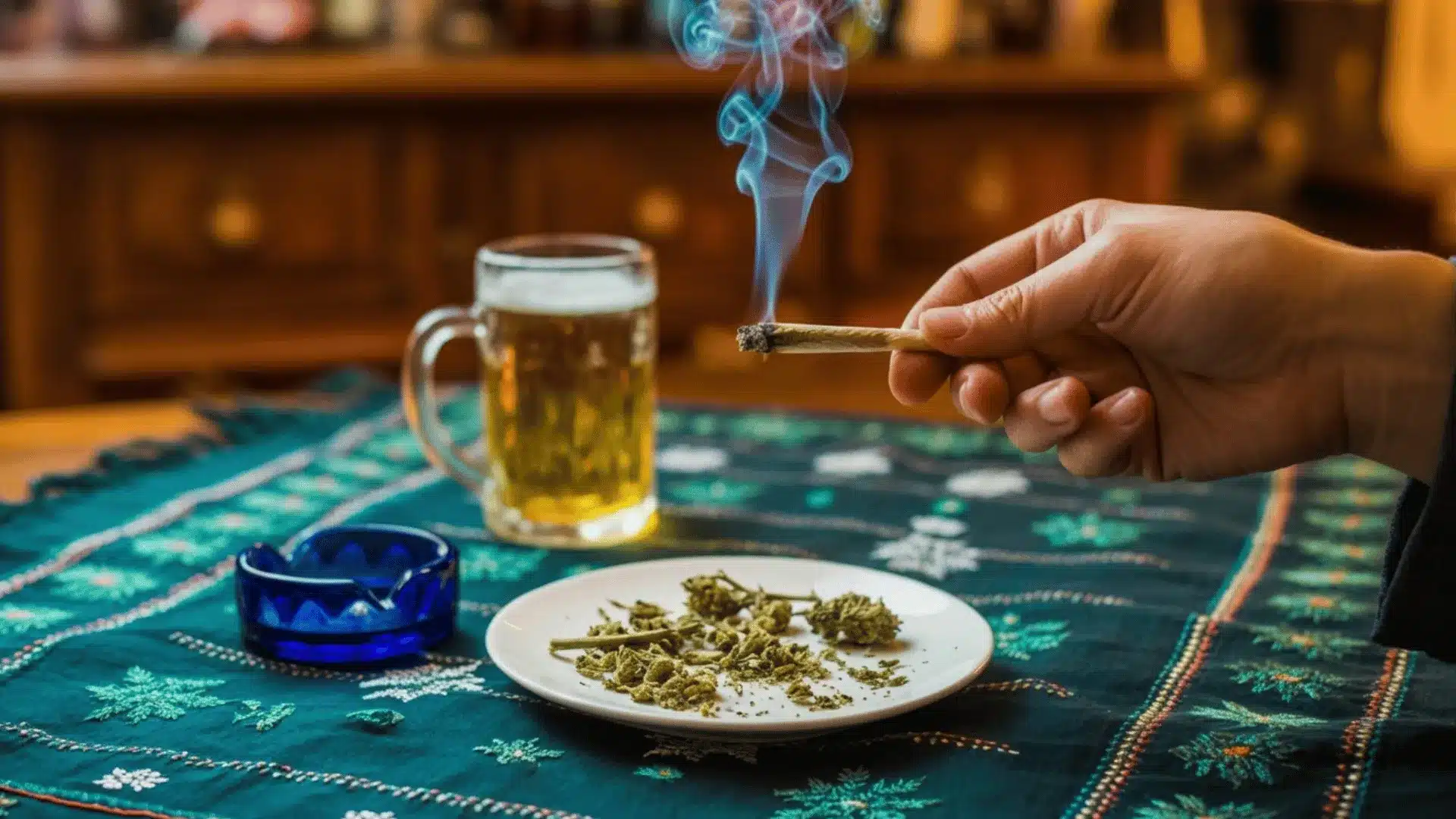
Aftereffects can be caused by several factors that affect how your body processes THC. Understanding these causes can help you avoid feeling rough the next day:
- THC Buildup: THC is fat-soluble and stored in your fat cells, staying in your system much longer than alcohol does.
- Poor Sleep Quality: Cannabis suppresses REM sleep – the deep, restorative sleep stage most important for memory consolidation and cognitive recovery. Even if you slept a full eight hours, reduced REM sleep can leave you feeling groggy, unfocused, and slow the next day. This is one of the most consistent causes of next-day symptoms in regular users.
- Overconsumption: Taking too much, especially with edibles, overwhelms your system and causes stronger brain fog and headaches.
- Dehydration: Cannabis reduces saliva production, which can contribute to dry mouth and exacerbate feelings of thirst. While cannabis does not cause the same systemic dehydration as alcohol, not drinking enough water before and during cannabis use still worsens headaches and fatigue the next day.
- High-Potency Products: Concentrates and dabs contain much stronger THC concentrations, making next-day effects more intense.
- Edibles specifically: Edibles are metabolized through the digestive system, which converts THC into 11-hydroxy-THC (a more potent compound with a longer half-life than inhaled THC). This slower, more intense metabolic process makes edibles significantly more likely to cause next-day symptoms than smoking or vaping.
These combined factors can make it worse, particularly if large amounts are consumed. Mixing cannabis with alcohol or other substances amplifies these negative effects even more.
How Long Do Cannabis After Effects Last?
A weed hangover usually doesn’t last too long, but the duration can vary from person to person. For most people, hangovers last anywhere from a few hours to a full day.
If dealing with brain fog, headaches, or fatigue, don’t worry, these symptoms usually clear up within a day.
| Timeline | What to Expect | Symptoms Present |
|---|---|---|
| First 1-4 Hours | Waking up with lingering effects; symptoms are strongest right after waking | Brain fog, grogginess, fatigue, dry mouth, mild headache |
| 4-8 Hours | Symptoms start to improve with hydration and food; mental clarity slowly returns | Reduced brain fog, lingering tiredness, and decreased headache |
| 8-12 Hours | Most symptoms significantly fade, feeling more like yourself | Mild fatigue, slight difficulty concentrating |
| 12-24 Hours | Nearly complete recovery for most people; symptoms are mostly gone | Minimal to no symptoms remaining |
| 24+ Hours | Should be symptom-free for most. If symptoms persist beyond 24–48 hours, they may indicate cannabis withdrawal (in regular users) rather than a hangover, or a separate issue worth discussing with a healthcare provider. | None (consult healthcare provider if symptoms persist) |
Most symptoms should be completely gone within 24 hours. If your symptoms last longer than a day or two, it might be helpful to check whether there’s scientific evidence to support them.
Is There Scientific Evidence of a Weed Hangover?
A 1985 clinical trial examined whether marijuana produced next-day effects in thirteen male smokers. Participants used either active marijuana (2.9% THC) or placebo cigarettes.
Immediately after smoking, they showed changes in heart rate, subjective effects, and performance on a behavioral task.
Approximately 9 hours later, researchers found significant residual effects on subjective measures and time-production tasks, effects distinct from the immediate high.
The study concluded that marijuana can produce hangover-like effects the day after use, though more research is needed. Look up what the National Library of Medicine has to say on cannabis use and its after-effects
How to Feel Better After a Weed Hangover

If you’re feeling the effects of a hangover, recovery involves simple steps like hydration, proper nutrition, and rest.
- Hydrate first: Drink water as soon as you wake up. Staying hydrated throughout the day is the most consistently recommended step across all sources for addressing dry mouth, headaches, and fatigue.
- Eat a healthy breakfast: Choose nutritious foods like fruits, vegetables, and whole grains. Avoid heavy, greasy foods that might worsen nausea. Something light, like toast, eggs, or fruit, works better than a large meal if your stomach feels unsettled.
- Get rest: Take a nap or get extra sleep to clear brain fog and support your body’s recovery.
- Light exercise or fresh air: Gentle walking or stretching can boost circulation, increase oxygen flow, and help clear mental fog. Even a 15–20 minute walk outside can make a noticeable difference in grogginess.
- Take a shower: Many people report that a shower, particularly a contrast between warm and cool water, helps reduce grogginess and improve alertness during a weed hangover.
- Pain relievers, if needed: Over-the-counter options like ibuprofen can help with headaches. Follow recommended dosages.
- Use CBD cautiously: Some people find CBD helps reduce symptoms, though evidence is mostly anecdotal. If you’re trying to clear THC’s effects, adding more cannabinoids may not help everyone.
Following these steps can help relieve discomfort, and most symptoms go away within 24 hours. It’s also important to understand who might be more likely to experience it.
Who is More Likely to Experience It?
| Group | Why It Happens | What Helps |
|---|---|---|
| New or Infrequent Users | The body isn’t used to THC, so the effects may last longer. | Start with very small doses and use earlier in the day. |
| THC-Sensitive People | Some bodies react strongly, causing brain fog and fatigue. | Choose low-THC or higher-CBD products and keep doses small. |
| Late-Night Edible Users | Edibles last 6–8 hours and can affect sleep. | Take edibles 4–5 hours before bed and avoid high doses. |
| Dehydrated People | Cannabis can worsen dry mouth and contribute to headaches and tiredness. | Drink water before, during, and after use. |
| Heavy Users | THC may build up in the body over time. | Take tolerance breaks and reduce frequency. |
| People who mix alcohol and cannabis | Combining the two dramatically increases the likelihood and severity of hangovers. Alcohol may also cause people to underestimate how much cannabis they’ve consumed. | Avoid combining substances. If you do use both, drink water throughout and limit cannabis dose significantly. |
Prevention Tips for Weed Hangovers
- Use Low-THC Products: Choose cannabis with lower THC content or balanced THC/CBD ratios to reduce buildup and next-day effects.
- Limit Your Use: Start small, especially with edibles, and wait 1–2 hours before taking more to prevent overconsumption.
- Time it earlier: Consuming cannabis earlier in the evening, rather than right before bed, gives your body more time to metabolize THC before you wake up. This is especially important with edibles, which can still be active 6–8 hours after consumption.
- Take Tolerance Breaks: Take regular breaks from cannabis use, even a few days off weekly, to prevent THC buildup and reset your body’s response.
- Avoid Mixing Substances: Don’t combine cannabis with alcohol or other drugs, as mixing makes hangover symptoms much worse.
- Stay Hydrated: Drink water before, during, and after using cannabis.
- Choose Quality Products: Use tested products from licensed dispensaries to ensure consistent potency and avoid contaminants.
Is It a Weed Hangover or Something Else?
Not everything that feels like a weed hangover actually is one. It’s worth knowing the difference between three overlapping conditions:
- Weed hangover: Mild next-day symptoms (fatigue, fog, dry mouth) following overconsumption. Typically resolves within 24 hours.
- Lingering high: Particularly after high-dose edibles, THC blood levels may still be elevated enough that you’re mildly impaired rather than hungover. The sensation can feel similar, but the cause is different; you may simply still be high.
- Cannabis withdrawal: Regular, daily users may experience withdrawal symptoms when they haven’t used – including irritability, insomnia, low mood, and difficulty focusing. These can easily be mistaken for a hangover but reflect the body’s dependence on cannabis rather than the aftereffects of a single session. If you notice these symptoms consistently on days you don’t use cannabis, that’s worth paying attention to.
- Greening out aftermath: If you consumed far too much, especially for the first time, you may experience more intense symptoms, including anxiety, nausea, and disorientation. This is distinct from a typical hangover and is caused by acute THC overconsumption rather than residual effects.
When Should You Seek Help?
Most hangovers are temporary and go away on their own within 24 hours. However, if symptoms are severe or persist for more than a day, it may be time to consult a healthcare professional.
Extreme confusion that lasts for many hours is a serious warning sign. Persistent nausea or vomiting that won’t stop also requires professional attention.
If you find that you consistently feel rough every morning after using cannabis, or that you need to use cannabis to feel normal, this pattern may indicate cannabis dependence rather than a simple hangover.
Chronic hangovers that follow every session, or symptoms that feel more like withdrawal than aftereffects, are worth discussing with a doctor or addiction counselor without judgment.
Wrap Up
After years of teaching cannabis fundamentals, I’ve learned that weed hangovers affect more people than statistics show.
My experience working with beginners confirms that fatigue, brain fog, and headaches are common yet preventable issues.
The most important things to remember: weed hangovers are real and backed by research, even if the science is still developing.
They’re caused primarily by REM sleep disruption, residual THC activity, and overconsumption, not by dehydration in the way alcohol causes it.
Edibles carry the highest risk. And if symptoms are happening regularly after every session, that pattern deserves more attention than a simple glass of water and a nap.
What strategies have helped you manage aftereffects, and what challenges do you still face? Drop your thoughts in the comments below so we can learn together.