|
Disclaimer: This article is for education only and is not medical advice. CBD products are not FDA-reviewed for safety or quality. Consult a healthcare professional before use, especially if you take medications or have a health condition. |
A headache can follow a CBD oil dose, but the evidence does not confirm CBD as a dependable cause.
A 2026 meta-analysis of randomized trials in healthy adults found only a trend toward more headaches, and that result was not statistically significant.
Reviewing those trials, I treat one distinction as non-negotiable: a headache appearing after CBD is not proof that CBD produced it.
The product itself matters as much as the compound: nonprescription CBD oil is not the same as Epidiolex, the only CBD product approved by the FDA.
Retail CBD oil undergoes no FDA review of its dose, ingredients, or quality, so its effects can differ from the studied prescription drug.
Quick Answer: A headache can occur after taking CBD oil, but controlled research has not established headache as a common CBD side effect. Product contents, dose, drug interactions, and separate headache conditions can each contribute.
What the Evidence Shows About CBD Oil and Headaches
Headache has been examined directly in CBD research, yet current controlled evidence does not confirm it as a common reaction.
Across the main sources, headache either showed a nonsignificant trend or did not surface among the frequently reported effects.
From a pharmacology standpoint, the firmer signals sit elsewhere, in gastrointestinal and sedation-related effects. A headache after a dose remains possible. The data simply do not mark it as a typical CBD reaction.
Below, I set out what each main source found, then which CBD side effects rest on firmer ground.
| Evidence Source | Population or Product | Headache Finding | Main Limitation |
| 2026 meta-analysis of CBD trials | 269 healthy adults, oral CBD | Nonsignificant trend toward more headaches | Evidence concerns prescription CBD for specific seizure disorders, usually alongside other medications |
| FDA Epidiolex prescribing label | Prescription cannabidiol; epilepsy patients | Not listed among common adverse reactions | Evidence concerns prescription CBD for specific seizure disorders, usually alongside other medications |
| 2020 adverse-effects meta-analysis | 803 participants across conditions | Not a significant adverse outcome | Several safety findings were driven by childhood epilepsy trials; retail CBD was not evaluated |
Why the CBD Oil Product Deserves the First Look
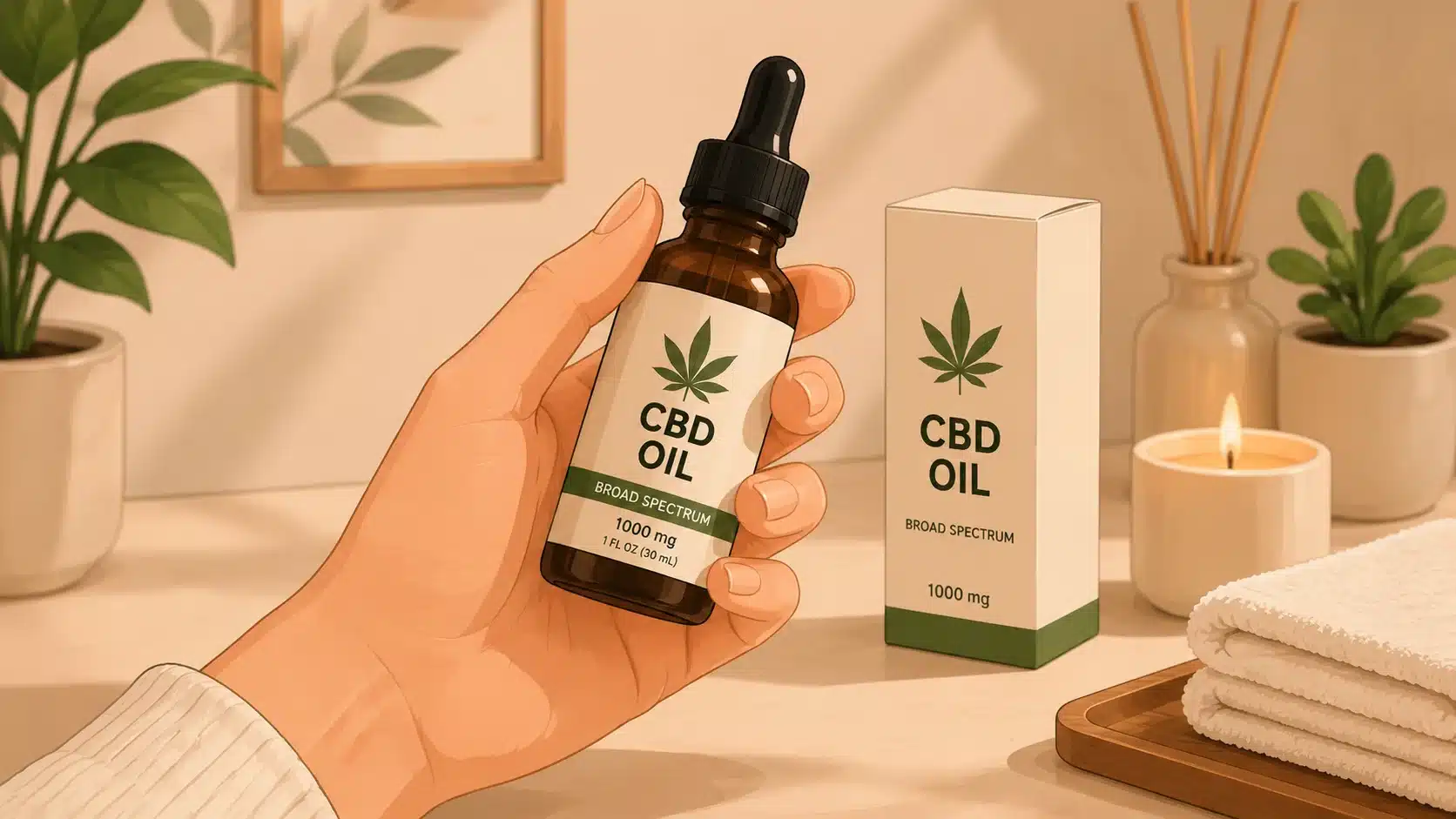
A headache after using CBD oil cannot automatically be attributed to CBD, because retail products vary widely in strength, cannabinoid content, and added ingredients.
According to the FDA’s consumer update on cannabis and CBD products, tests found that many CBD products did not contain the claimed levels of CBD.
-
CBD Strength: The amount of CBD may be higher or lower than the label states.
-
Unexpected THC: Some products contain detectable THC, including products labeled THC-free.
-
Added Ingredients: Carrier oils, flavorings, and other substances introduce additional variables.
Note: When the actual contents or dose are uncertain, linking a headache to CBD becomes much more difficult.
These product differences do not prove that CBD, THC, or another ingredient caused the headache. However, they make the symptom harder to assess accurately.
Checking the ingredient list, serving size, THC information, and batch-specific laboratory report can help clarify what was consumed.
How CBD Oil Dose and Timing May Affect Headaches
Dose and timing can influence how CBD affects the body, but they do not confirm that CBD caused a headache.
A larger amount, food timing, and individual factors can change how CBD is absorbed and how someone feels after taking it.
-
Higher CBD Doses: In Epidiolex trials, the 20 mg/kg daily dose showed more adverse reactions than the lower dose. These findings apply to prescription cannabidiol and do not set a recommended retail CBD oil dose.
-
Food Timing: A high-fat meal increased CBD exposure in Epidiolex data. This does not prove that food causes headaches but may help identify patterns.
-
Tracking Symptoms: A simple record can make it easier to review what happened before and after a headache. Track:
1. Product dose and amount taken
2. Time of use and meal timing
3. Headache onset, duration, and other symptoms
4. Medicines, sleep, caffeine, and other daily factors
5. Product batch or lot number
This information cannot confirm the cause of a headache, but it can help a pharmacist or clinician review possible patterns. Do not take another dose intentionally to reproduce the symptom.
How to Review CBD Oil and Medication Interactions
CBD can change how the body processes certain medications, which may raise or lower their levels in the bloodstream.
According to the FDA, CBD can affect other drugs and cause serious effects.
The National Center for Complementary and Integrative Health (NCCIH) confirms it may interact with many medicines, including some sold without a prescription.
Below, the concerns fall into three groups: changed drug levels, sedatives, and liver-risk medicines.
| Interaction Concern | Why It Matters | Appropriate Next Step |
| Medicines whose levels CBD may change | Higher or lower drug levels can bring new or stronger effects | Ask a pharmacist to review interactions before combining |
| Alcohol and sedating medicines | Combined use can add to drowsiness and slowed alertness | Avoid driving; discuss the combination with a clinician |
| Medicines linked to liver risk | Some combinations raise the chance of liver-enzyme changes | Seek medical review and any advised monitoring |
| Multiple prescription and OTC products | More products mean more possible interactions to sort out | Bring a full product list to a pharmacist or clinician |
Note: The FDA’s CBD safety review highlights liver injury and drug interactions as key concerns, not headaches. This differs from common consumer assumptions about CBD risks.
What to do if CBD Oil Seems to Cause a Headache
If a new headache shows up soon after taking nonprescription CBD oil, pausing further use is a reasonable, cautious step.
That pause gives you room to review the product, the timing, your other medicines, and the symptoms before deciding anything.
This applies to retail CBD oil, not to prescribed Epidiolex.
If you take Epidiolex for seizures, do not stop it abruptly on your own. A prescriber should guide any change, since sudden discontinuation carries its own risks.
1. Pause Nonprescription CBD Oil and Check the Label
Pausing a retail CBD oil is your choice to make; adjusting prescribed Epidiolex is not, and needs a prescriber. Keep the bottle and packaging rather than tossing them.
Before anything, record the CBD amount per serving, serving size, THC wording, ingredient list, lot number, and expiration date. Do not discard the product until that information is saved, and do not try a smaller test dose.
2. Record CBD Oil Dose and Headache Details
Capture the essentials rather than every detail. Note when the headache started and how long it lasted, its severity, and any symptoms alongside it.
Record the product and dose, whether you had eaten, and what other medicines you took.
Also note whether the headache recurred on a later, unplanned use. That short summary is enough to hand to a professional.
3. When to Ask a Clinician About CBD Oil
Ask a pharmacist or clinician if headaches recur, persist, worsen, disrupt your normal activity, or come with other symptoms.
Some situations always warrant professional guidance: pregnancy, liver disease, seizure treatment, several medications at once, or any use in a child.
Bring the product and your medication list to that conversation. A professional can assess your situation; this article cannot name a cause or a remedy.
When to Treat a Headache After CBD Oil as Urgent
A headache after using CBD oil is not always linked to the product itself. Some symptoms need urgent attention regardless of when CBD was taken.
Certain headache patterns can signal serious conditions such as bleeding, infection, injury, or neurological problems.
Seek emergency care immediately by calling 911 or going to the nearest emergency room for:
-
Sudden Severe Headache: A headache that appears suddenly, becomes intense quickly, or feels like the worst headache experienced.
-
Neurological Symptoms: Headache with weakness, slurred speech, vision changes, confusion, loss of balance, fainting, or seizure.
-
Persistent or Changing Headaches: Pain that worsens, lasts several days, returns repeatedly, follows a head injury, or occurs with fever and a stiff neck.
The timing of a headache relative to CBD use does not rule out a serious underlying cause.
My Takeaway on Whether CBD Oil Can Cause Headaches
The answer to whether CBD oil can cause headaches is not a simple yes or no. Headaches may occur after using CBD oil, but controlled evidence has not established them as a common CBD adverse effect.
The best way to assess a possible reaction is to review four areas: the evidence, the product contents, the dose and timing, and any medication interactions.
I found that these factors matter because retail CBD oil and prescription Epidiolex are not interchangeable products. A symptom appearing after use does not always identify the cause.
Keeping track of what happened before the headache can provide useful context. If concerns continue, retain the product label, record the timing and dose, and take the product, along with a medication list, to a pharmacist or clinician.
Have you experienced a headache after using CBD oil? Share your experience and what you noticed.
|
This content is educational and not medical advice. Seek urgent care for a sudden or severe headache, and consult a physician or pharmacist about ongoing symptoms or CBD interactions. |
Frequently Asked Questions
Is Headache a Common Side Effect of CBD Oil?
Headaches may occur after CBD oil use, but controlled evidence has not established them as a common CBD adverse effect.
Why does CBD Oil Give Me a Headache?
A headache may relate to product differences, dose, timing, ingredients, or other factors, but the exact cause is not always clear.
Can Full-Spectrum CBD Oil Cause Headaches?
Full-spectrum CBD contains THC and other compounds, creating more variables, but these ingredients do not prove they caused headaches.
How Long Should a Headache After CBD Oil Last?
No reliable CBD-specific headache duration has been established. Persistent or worsening pain needs medical review to identify possible causes.
Should I Stop Taking CBD Oil If I Get a Headache?
For nonprescription CBD oil, consider pausing use and seeking advice. Do not stop prescribed Epidiolex without guidance from your doctor.