Feeling hungrier after taking CBD oil can be confusing, especially when CBD is grouped with cannabis and its “munchies.”
The key difference is that CBD does not usually stimulate appetite the way THC does.
Most research points toward a mild appetite-reducing effect or no change. Still, some people report eating more after using it.
That may happen because CBD eases issues that had been getting in the way of food, such as nausea, pain, stress, or poor sleep, rather than because it switches on hunger.
Your dose, product type, history, and reason for taking CBD can shape the result. So, does CBD oil increase appetite? The answer is possible for some people, but not consistently or predictably.
| ⚠️Medical disclaimer: This article is for general educational purposes only and is not a substitute for professional medical advice, diagnosis, or treatment. Always talk to a licensed healthcare provider before starting, stopping, or combining CBD with any medication or existing health condition. |
Hunger vs. Appetite: Why the Distinction Matters
Hunger and appetite may sound like the same thing, but they are not. Hunger is your body’s physical need for food, often signaled by an empty stomach or low energy.
Appetite is your desire to eat, which can change with stress, pain, emotions, smells, or daily habits.
I think this distinction is important because it helps explain why CBD and THC, the main cannabinoids found in cannabis, affect eating differently.
THC is the compound known for causing the familiar “munchies” by increasing the desire to eat. CBD does not appear to work the same way.
Instead, if it affects eating at all, it is more likely to influence appetite than trigger true physical hunger, which helps explain why people’s experiences can differ.
How CBD Interacts with Appetite
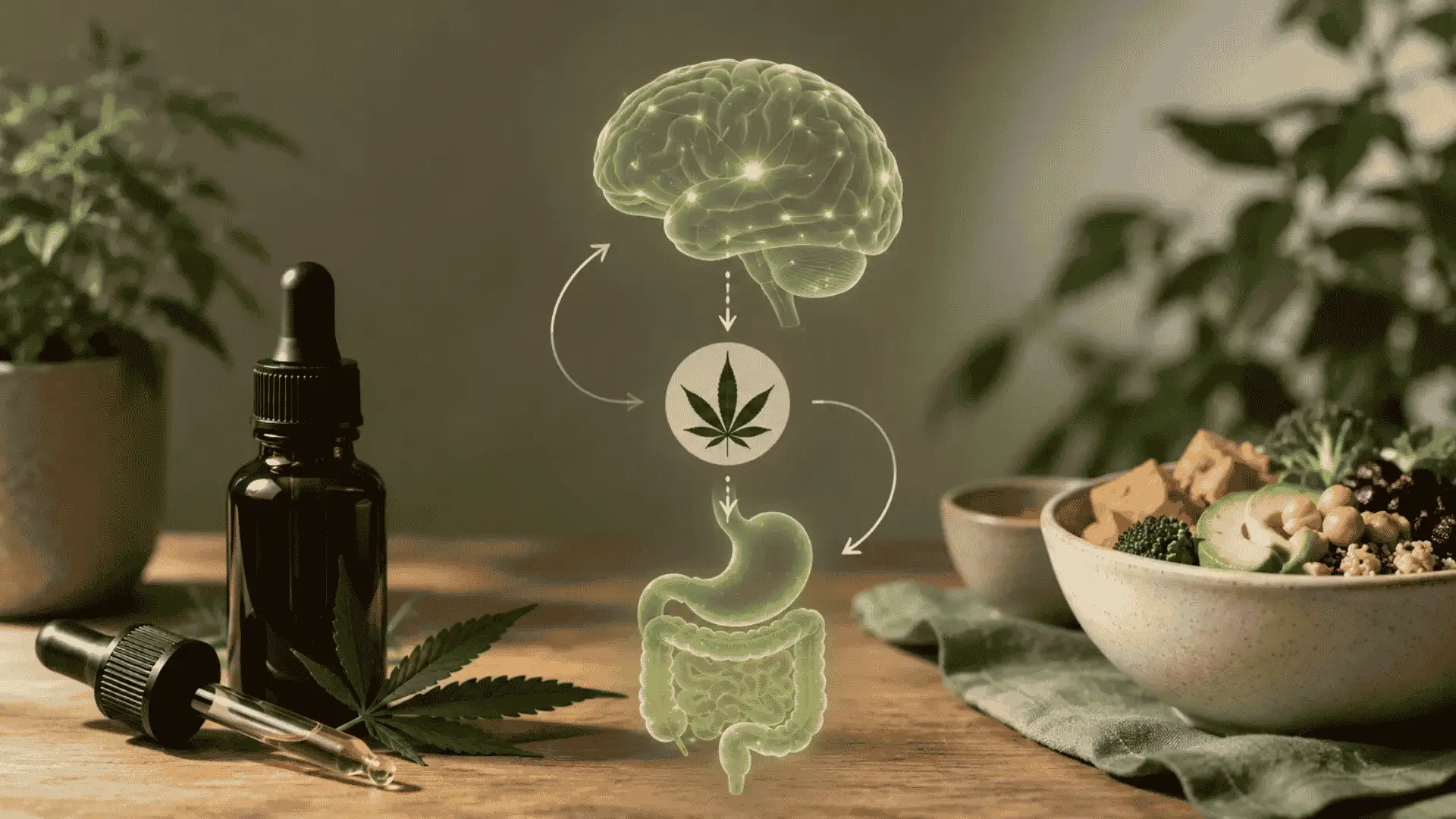
Your body uses the endocannabinoid system to help regulate appetite, mood, sleep, and other everyday functions.
One part of this system is the CB1 receptor, found mainly in the brain and nervous system. THC attaches strongly to CB1 receptors, which helps explain why it can increase appetite.
CBD has a much weaker, indirect relationship with these receptors, so it does not usually trigger hunger in the same way. Appetite is also guided by hormones.
Ghrelin encourages hunger, while leptin helps signal fullness. Researchers have not established that normal CBD use directly controls either hormone.
The plain takeaway is that CBD may influence appetite, but it is not a reliable hunger switch.
| Note: The hormone science here is genuinely unsettled. Don’t treat any single study as the final word on how CBD affects hunger hormones. |
CBD vs. THC: Why They Affect Appetite Differently
CBD and THC both come from cannabis, but they do not act the same way in the body. THC, or tetrahydrocannabinol, strongly activates CB1 receptors linked to hunger and food reward.
CBD has much lower affinity for these receptors, so its effect on appetite is usually weaker and less predictable.
| Comparison | THC | CBD |
|---|---|---|
| Binds strongly to CB1 receptors | Yes | No, it has low affinity |
| Known for causing the munchies | Yes | No |
| Typical appetite effect | Usually increases appetite | May mildly reduce appetite, though results vary |
| Psychoactive | Yes | No |
In simple terms, THC directly promotes hunger, while CBD’s appetite effects are weaker and vary between users.
Fun fact: Your body naturally produces endocannabinoids that help regulate appetite, mood, sleep, and many other everyday functions.
What the Research Says
Research does not show CBD as a reliable appetite stimulant, but the picture is mixed rather than one-directional.
A 2022 review of 11 randomized controlled trialsfound that most studies reported reduced appetite or body weight, while several found no clear change and one reported an increase.
A2019 animal study also found that CBD reduced interest in sweet rewards, though animal findings may not apply directly to people. Survey results are more mixed.
About 30 percent of parents in one epilepsy study reported increased appetite in children using CBD-rich extracts.
Anothersurvey of 2,409 CBD users found that 6.35 percent reported hunger, but some products may have contained THC.
Why Some People Still Feel Hungrier on CBD
CBD may seem to increase appetite when it reduces a problem that was making food less appealing.
Nausea, chronic pain, stress, and anxiety can all lower the desire to eat. If CBD helps someone feel calmer or more comfortable, their normal appetite may return.
That does not mean CBD directly switches on hunger signals in the brain. Instead, the effect may be indirect: the barrier to eating becomes weaker, so meals feel easier again.
This difference becomes clearer in everyday situations:
-
Treatment-Related Nausea: Someone may feel more able to eat once nausea settles.
-
Anxiety-Related Appetite Loss: Reduced tension may make meals feel manageable again.
-
Poor Sleep or Ongoing Stress: Better rest may help bring back a more regular eating routine.
In these cases, CBD may remove an obstacle to eating rather than create hunger on its own.
| ❗Advisory: If nausea, pain, or appetite loss is persistent, severe, or tied to a medical treatment (like chemotherapy), don’t rely on over-the-counter CBD as a substitute for medically supervised care. Talk to your treating physician first. |
Can CBD Change How Your Body Uses Energy?
CBD may affect a few processes connected to energy balance, but most findings come from laboratory or animal research.
- Fat cells:One laboratory study found that CBD encouraged white fat cells to develop traits associated with energy-burning brown fat. Researchers have not confirmed the same result in people.
- Cellular energy: CBD can influence mitochondria, which help cells produce energy. However, the effect changes with the dose and type of cell being studied.
- Blood sugar: A small clinical trial involving people with type 2 diabetes found no clear improvement in insulin sensitivity from CBD alone.
- Body weight: A systematic review of controlled trials linked CBD more often with reduced or unchanged appetite and weight than weight gain.
The NCCIH notes that research into many cannabinoid uses remains limited. For now, CBD should not be treated as a proven metabolism booster or weight-loss aid.
What Influences How CBD Affects Your Appetite?
CBD does not affect everyone in the same way. The result can change based on the amount taken, the type of product, how quickly it enters the body, and the reason someone had a low appetite in the first place.
Several factors can influence how CBD affects your appetite.
| Factor | How It May Affect Appetite |
|---|---|
| Dose | Lower and higher amounts may produce different effects. CBD does not follow a simple pattern where taking more always causes a stronger appetite response. |
| Product type | CBD isolate contains only CBD, while broad-spectrum products include other cannabinoids without measurable THC. Full-spectrum products may contain small amounts of THC, which can influence hunger. |
| Method of use | Oils and tinctures may act sooner than gummies or capsules. Edible products take longer because they must pass through the digestive system, so appetite changes may also appear later. |
| Individual factors | Body weight, hormones, metabolism, health history, and sensitivity to cannabinoids can all change how someone responds to CBD. |
| Other medications | CBD can interact with certain medicines or affect how the body processes them. These medicines may also increase or reduce appetite on their own. |
| Reason for low appetite | Someone whose appetite is reduced by pain, anxiety, nausea, illness, or poor sleep may respond differently from someone without an underlying problem. |
Because these factors often overlap, one person’s experience with CBD may not predict how another person’s appetite will respond.
Recent research: A 2026 clinical trial found a single CBD dose increased calorie intake at one meal, showing appetite effects may depend on dose and timing rather than follow a consistent pattern.
Using CBD for Appetite or Weight Goals
CBD is not a reliable tool for increasing appetite or losing weight.
Research suggests its effects vary, with some people noticing reduced hunger, others feeling no change, and a smaller number reporting increased appetite.
Choose a clearly labeled, third-party-tested product and use a consistent, measured amount.
Track appetite, meal patterns, sleep, nausea, stress, and side effects rather than changing the dose after one day.
Full-spectrum products may contain THC, which can increase hunger and cause impairment.
| ⚠️Warning: The FDA has stated that CBD can cause side effects, including potential liver injury, and can interact with other medications you may be taking. Speak with a doctor before use if you have ongoing appetite loss, unexplained weight changes, diabetes, are on other medications, are pregnant or breastfeeding, or have a history of an eating disorder. |
Safety Notes and When to Talk to a Doctor
CBD is often treated like a simple wellness product, but I would still use it carefully.
-
Check your medications: CBD can interact with some prescription drugs (including blood thinners and some seizure medications) and change how your body processes them.
-
Look for tested products: Choose brands that provide an independent certificate of analysis showing CBD, THC, and contaminant levels.
-
Watch ongoing changes: Speak with a doctor if appetite loss lasts, weight changes without trying, or eating becomes difficult.
-
Do not self-treat eating disorders: CBD is not a substitute for proper medical or mental health support.
A quick medical check can help rule out a more serious cause.
If You Need Help Right Now
Changes in appetite can sometimes signal a more serious health concern. When symptoms are severe, persistent, or accompanied by other warning signs, the following resources can provide immediate assistance.
| Situation | Action |
|---|---|
| Severe reaction or medical emergency | Call 911 or your local emergency number, or visit the nearest emergency room. |
| Possible poisoning or product reaction | Call US Poison Control: 1-800-222-1222, available 24/7. |
| Eating disorder support | Call the National Alliance Helpline: 1-866-662-1235. |
| Substance use or mental health crisis | Call SAMHSA: 1-800-662-4357, or call or text 988. |
| Outside the US | Contact local emergency services, poison control, or a national crisis line. |
| Ongoing appetite changes | Seek medical advice to rule out an underlying health condition. |
A quick medical check can help rule out a more serious underlying cause for appetite changes, rather than guessing based on general articles like this one.
Final Thoughts
There is no single answer to how CBD affects appetite because people respond differently.
Looking at the evidence as a whole, it is better to think of CBD as a product that may influence eating habits indirectly, rather than one designed to make you hungry or suppress your appetite.
I always recommend paying attention to how your own body responds, choosing products that have been independently tested, and discussing persistent appetite or weight changes with a healthcare professional.
Small changes are easier to understand when you track them over time rather than expecting immediate results.
If this article answered your question or you have personal experience with CBD and appetite, share your thoughts in the comments below.
Your experience may help someone else make a more informed decision.
Frequently Asked Questions
Should You Take CBD Before or After Meals?
There is no universal recommendation. Some people take CBD with food to improve absorption, while others follow product directions or healthcare advice.
Can Dehydration be Mistaken for Increased Appetite?
Yes. Mild dehydration can sometimes feel like hunger. Drinking water before eating may help you tell if you are actually hungry.
Does Age Affect How CBD Influences Appetite?
Possibly. Age-related changes in metabolism, medications, and overall health may influence how someone responds to CBD, but more human research is needed.
Sources
-
National Center for Complementary and Integrative Health, “Cannabis (Marijuana) and Cannabinoids: What You Need To Know.” nccih.nih.gov
-
U.S. Food and Drug Administration, “What the FDA is Doing to Protect Consumers from Cannabidiol (CBD) in Foods.” fda.gov
-
Ferrer et al., “Effects of Cannabidiol on Appetite and Body Weight: A Systematic Review,” Clinical Drug Investigation, 2022. link.springer.com
-
Corroon J, Phillips JA, “A Cross-Sectional Study of Cannabidiol Users,” Cannabis and Cannabinoid Research, 2018. pmc.ncbi.nlm.nih.gov
-
Hussain SA, et al., “Perceived efficacy of cannabidiol-enriched cannabis extracts for treatment of pediatric epilepsy,” Epilepsy & Behavior, 2015. pubmed.ncbi.nlm.nih.gov
-
Parray HA, Yun JW, “Cannabidiol promotes browning in 3T3-L1 adipocytes,” Molecular and Cellular Biochemistry, 2016. link.springer.com
-
Jadoon KA, et al., “Efficacy and Safety of Cannabidiol and Tetrahydrocannabivarin on Glycemic and Lipid Parameters in Patients With Type 2 Diabetes,” Diabetes Care, 2016. diabetesjournals.org
-
National Alliance for Eating Disorders, Helpline. allianceforeatingdisorders.com
-
SAMHSA, National Helpline. samhsa.gov
-
America’s Poison Centers, Poison Help Line. poisonhelp.hrsa.gov