
| ⚠️ Warning: Alcohol withdrawal can turn dangerous fast. Confusion, seizures, a racing heart, or hallucinations after cutting back on heavy drinking are medical emergencies. Call 911 or reach the SAMHSA National Helpline at 1-800-662-4357 for free, confidential support any hour of the day. |
| Term | Simple meaning | Why it matters |
| ETOH | Ethanol, also called ethyl alcohol | The type of alcohol found in drinks |
| ETOH positive | Alcohol was detected | May show up in a breath, blood, or urine test |
| ETOH intoxication | Current impairment from drinking | Tied to injury risk and emergency visits |
| ETOH abuse | A harmful drinking pattern | Can point toward alcohol use disorder |
If you have ever seen “ETOH” on a hospital form or an intake note and felt a jolt of confusion, you are not alone. The short answer to what is ETOH is simple: it stands for ethanol, the alcohol found in beer, wine, and liquor.
But the term carries more weight in charts, treatment centers, and recovery conversations than four letters suggest.
This piece covers the medical meaning, what abuse looks like, why it develops, what it does to the body, and where real help starts.
What is ETOH and Why is it Called ETOH?
ETOH is the chemical and medical shorthand for ethanol, the intoxicating substance in beer, wine, and liquor. The name comes from chemistry:
“Et” points to the ethyl group, and “OH” points to the hydroxyl group that makes it an alcohol. Ethanol’s molecular identity is documented in the National Library of Medicine’s PubChem database, where it is listed with the formula C2H5OH.
- ETOH means ethanol or ethyl alcohol, nothing more exotic.
- Ethanol is the drinkable form of alcohol found in beer, wine, and spirits.
- The medical term etoh exists so clinicians avoid vague chart wording, since the amount and pattern shape the actual danger level.
Medical shorthand can sound cold on paper, but it exists for precision, not judgment. Next: how the term shows up in patient charts.
What does ETOH Mean in Medical and Clinical Use?

In healthcare settings, ETOH works as shorthand for ethanol exposure, current intoxication, or withdrawal risk. A chart note that uses this term documents something specific, not passes judgment.
The ETOH medical term appears most often in three forms, and reading it correctly requires some context: the test result and the surrounding symptoms determine what the phrase actually means.
- ETOH Positive: Alcohol was detected through a blood, breath, or urine test, often during an emergency visit or hospital intake. It does not mean someone has alcohol use disorder, only that alcohol was present at that moment.
- ETOH Intoxication: This refers to current impairment from ethanol, meaning the brain and body are actively affected. Signs can include slurred speech, poor coordination, or confusion. This reflects the present moment, not how often someone drinks overall.
- ETOH Withdrawal: This can happen when someone drinking heavily suddenly stops or cuts back. Severity can range from mild discomfort to a genuine medical emergency, which is covered in more detail further down.
Withdrawal carries the most risk of these three terms. A supervised taper, covered further in a piece on the risks of stopping alcohol cold turkey, is often the safer route. than stopping outright.
| ⚠️ Advisory: Withdrawal is not a hangover. If drinking has been heavy or regular, cutting back on your own can carry real medical risk. The specific warning signs are covered in the effects section below. |
What is ETOH Abuse?
Before getting into what is ETOH abuse, it helps to revisit the basic idea: ETOH abuse describes a pattern of ethanol use that causes real problems in health, safety, work, or relationships, and does not always mean daily drinking.
It can look like repeated binge episodes or drinking that keeps interfering with responsibilities despite medical warnings.
The National Institute on Alcohol Abuse and Alcoholism defines alcohol use disorder as an impaired ability to stop or control drinking despite the harm it causes.
One rough night of drinking too much is risky, but abuse usually points to a repeated pattern rather than a single slip.
A closer look at what a functioning alcoholic actually looks like covers the quieter signs people tend to miss. This is not a character flaw, but a health condition that responds to real support.
What Symptoms Can Point to ETOH Abuse or Addiction?
Symptoms tend to cluster into physical, behavioral, and emotional groups. One sign alone rarely proves much, but a pattern of several is worth attention.
- Loss of control: Drinking more, or longer, than planned.
- Cravings: Urges to drink strong enough to interrupt sleep or mood.
- Tolerance: Needing more alcohol over time for the same effect.
- Withdrawal signs: Shaking or anxiety hours after the last drink.
- Neglected responsibilities: Missed work or family duties tied to drinking.
- Risky use: Drinking before driving or mixing alcohol with sedatives.
- Relationship strain: Arguments, secrecy, or broken trust tied to drinking.
Anyone drinking heavily on a regular basis should check with a clinician before stopping suddenly, since withdrawal itself carries real risk. Symptoms only show the surface. Next is what actually drives the pattern.
What Causes ETOH Abuse to Develop?
ETOH abuse rarely comes from a single reason. It usually builds through a chain: repeated drinking shifts how the brain handles stress and reward, tolerance creeps upward, and withdrawal discomfort makes stopping feel harder than continuing.
None of these points to weakness. It points to a coping habit that has outgrown its original purpose.
| Driver | What Happens |
| Stress and Coping Patterns | Alcohol becomes a fast way to quiet stress or grief, especially once it turns into the main tool for relief. |
| Tolerance and Brain Adaptation | The body adapts to repeated use, so the same drink stops working the same way, and intake creeps upward. |
| Social Access and Drinking Norms | Frequent social drinking and easy access blur the line between typical use and a harmful pattern. |
| Mental Health and Family Risk | Depression, anxiety, trauma, and family history raise the odds of alcohol problems without guaranteeing them. |
These drivers rarely act alone. Most people who develop ETOH abuse are dealing with some mix of stress, tolerance, environment, and mental health, not one single cause.
Understanding that the mix matters more than assigning blame helps explain why the physical effects become so serious over time.
What are the Effects of ETOH?

Ethanol affects the brain and body in stages. Some effects show up within hours, while others build across months or years. The CDC notes that excessive drinking carries both immediate and long-term health consequences.
1. Acute Effects of ETOH
Acute effects show up during drinking or soon after alcohol enters the bloodstream. They can affect judgment, movement, memory, and safety, even if someone does not drink every day.
- Slowed Reaction Time: Alcohol can slow the brain and body, raising the risk of falls, crashes, and poor decisions.
- Poor Coordination: Balance, walking, speech, and hand control may become harder to manage.
- Nausea or Vomiting: High alcohol levels can upset the stomach and become risky if someone is very drowsy.
- Blackouts: A person may stay awake and active but later forget what happened.
- Alcohol Poisoning: Very high alcohol levels can slow breathing, lower body temperature, and cause loss of consciousness.
Most acute effects fade within a day or two, but the safety risk can be serious while judgment, breathing, and awareness are reduced.
2. Chronic Effects of ETOH
Chronic effects build over months or years of repeated heavy drinking. They can affect major organs, heart health, nerves, mood, and daily functioning.
- Liver Disease: Repeated heavy use can cause fat buildup, inflammation, scarring, and lasting liver damage.
- High Blood Pressure: Heavy drinking can raise blood pressure and strain the heart and blood vessels.
- Heart Problems: Long-term use may affect heart rhythm, heart function, and existing heart conditions.
- Nerve Damage: Tingling, burning, numbness, or weakness may develop, often in the hands and feet.
- Higher Cancer Risk: Long-term alcohol use is linked with a higher risk of several cancer types.
These risks grow when heavy drinking continues without support or medical guidance. Chronic effects can be easy to miss until they affect sleep, energy, lab results, or daily life.
3. Withdrawal Effects After Heavy Use
Withdrawal effects can appear when heavy or regular drinking suddenly stops or drops. This is different from a hangover because the body has adapted to alcohol and reacts when alcohol levels fall.
- Shaking and Sweating: Tremors, sweating, clammy skin, and restlessness can be early warning signs.
- Nausea: Stomach upset, vomiting, appetite changes, and dehydration can happen early.
- Seizures: Alcohol withdrawal seizures are a medical emergency and need urgent care.
- Delirium Tremens: Severe withdrawal can cause confusion, agitation, fever, or hallucinations. MedlinePlus describes delirium tremens as the most dangerous stage.
Withdrawal can become unsafe quickly, especially after heavy drinking or past severe withdrawal. Night sweats can be an early warning sign, and a guide on alcohol shakes and when they signal a bigger problem covers this further.
These effects explain why ETOH is treated seriously in medicine, which raises a fair question: Is every kind of alcohol the same risk?
Comparing Ethyl Alcohol to Methyl and Isopropyl Alcohol
The word alcohol covers more than one chemical. Ethanol is the type found in drinks, while methanol and isopropyl alcohol are not meant for drinking and can be poisonous in small amounts.
| Type | Common name | Found in | Safe to drink? |
| Ethyl alcohol | Ethanol, ETOH | Beer, wine, liquor | Drinkable, still carries risk |
| Methyl alcohol | Methanol | Industrial products, contaminated batches | No, toxic |
| Isopropyl alcohol | Rubbing alcohol | Disinfectants, some cosmetics | No, toxic |
According to MedlinePlus, methanol is used in industrial and automotive applications and is never intended for human consumption.
This is why the etoh medical term matters in a chart: it tells a clinician they are dealing with ethanol specifically, not a far more dangerous alcohol.
If someone drank rubbing alcohol, methanol, hand sanitizer, or an unknown liquid, that calls for emergency care right away.
How is ETOH Measured?
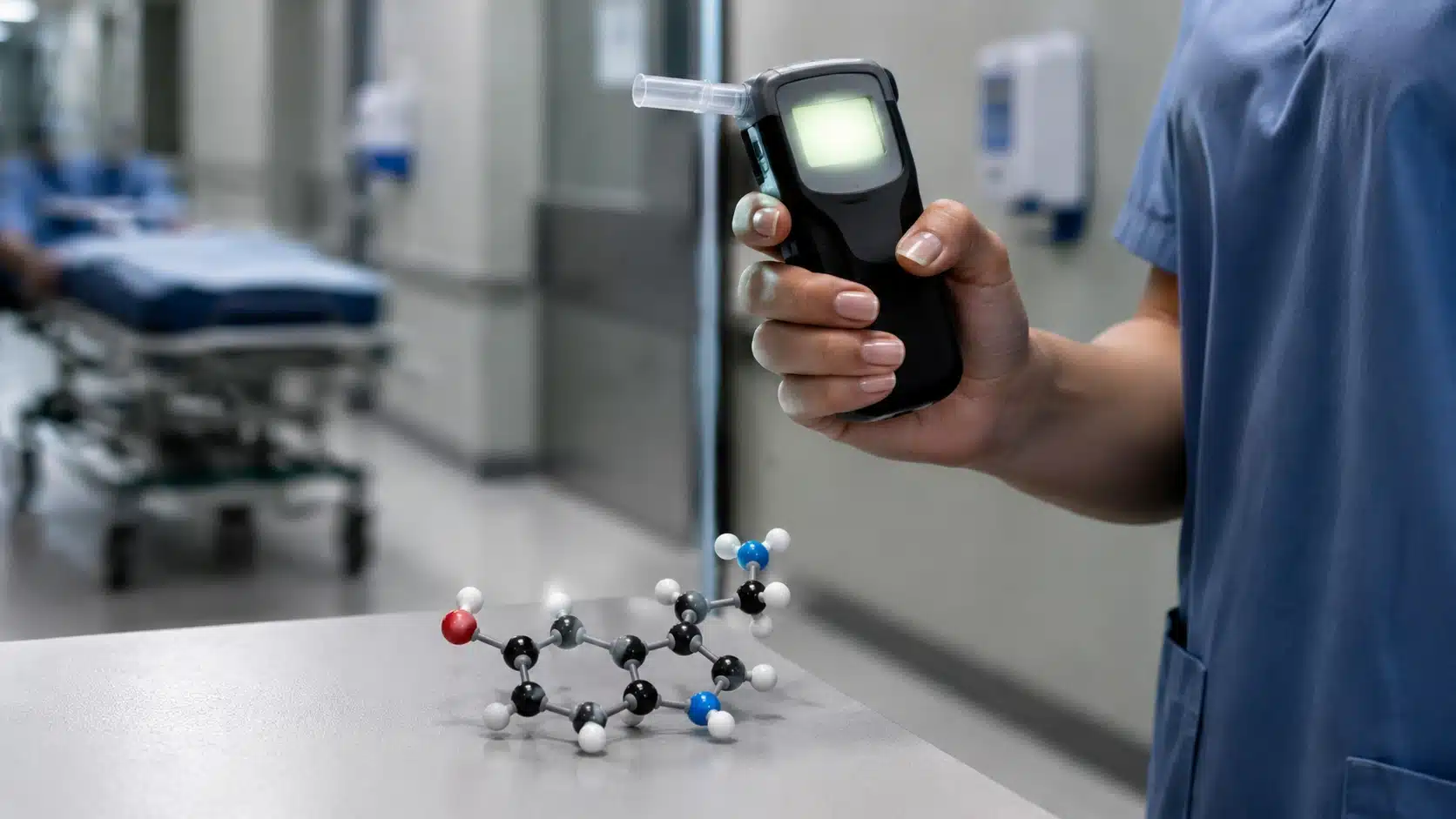
ETOH is measured by blood alcohol concentration (BAC). A blood, breath, or urine test estimates how much ethanol is in the body at that moment, which is exactly what shows up as an “ETOH positive” result on a chart.
BAC is reported as a percentage. Most states in the U.S. set the legal driving limit at 0.08 percent, based on data from the Centers for Disease Control and Prevention.
A breathalyzer estimates BAC from a breath sample, while a blood or urine test provides a more direct lab reading, which is why hospitals and clinics often prefer it for medical documentation.
This is also where the nursing and clinical use of ETOH becomes clearer. A nurse charting “ETOH positive” isn’t guessing.
They’re recording an actual measured value, whether from a breathalyzer at intake or a lab draw, and that number helps guide decisions about intoxication risk, withdrawal monitoring, and whether someone needs closer observation.
What Treatment Options Can Help With ETOH Addiction?
Treatment is not one single path. The right level of care depends on withdrawal risk, drinking pattern, and overall health.
The NIAAA notes that evidence-based treatment can combine behavioral therapy, medication, and mutual support groups depending on the person.
- Medical check first: A clinician can assess withdrawal risk before a plan is set.
- Detox support if needed: Heavy drinkers often need supervised withdrawal care, and enough thiamine matters, a point covered in a guide to thiamine during alcohol withdrawal.
- Therapy and counseling: Behavioral treatment helps address triggers and relapse patterns.
- Medication options: Some people benefit from FDA-approved medications that reduce cravings.
- Support groups and routines: Peer support and daily structure help recovery hold over time.
- Follow-up care: Recovery needs ongoing check-ins, and knowing the timeline of benefits after quitting alcohol helps set expectations.
Treatment is about matching real support to real risk, which looks different depending on how far the pattern has gone, something an overview of the stages of addiction breaks down further.
Whichever path fits, understanding what ETOH abuse is in the first place is what makes the next step possible.
When Should Someone Seek Help for ETOH Addiction?

Help is worth seeking well before a crisis point. If drinking feels hard to control, keeps causing repeated harm, or continues despite warnings from a doctor, that is reason enough to reach out. Withdrawal symptoms after heavy regular drinking always deserve medical advice rather than a solo attempt to push through.
- Confusion, slowed breathing, or passing out are emergency signs, not something to sleep off.
- Seizures or suspected alcohol poisoning need a call to 911.
- U.S. readers can use SAMHSA’s FindTreatment.gov to search confidentially for nearby treatment options.
Asking for support early is a safety step, not a failure. A guide on supporting a friend through alcohol use without making it worse covers how to approach that conversation.
Once the decision to get help is made, the question becomes what kind of treatment fits.
Final Thoughts
ETOH is a small term, but it carries real weight. Once you understand what is ETOH and that it refers to ethanol, the topic feels less intimidating. The related medical terms often describe specific moments, risks, or patterns, not a life sentence.
You now have a clearer sense of the medical shorthand, warning signs, common causes, and where real treatment can begin.
If you or someone you love has come across an ETOH-related term, understanding the meaning is often the first step toward feeling less stuck. Drop a comment with the ETOH term or phrase you found, and it can be broken down further in plain language.
Frequently Asked Questions
Can ETOH Show up in a Medical Record if I only Drank Once?
Yes. ETOH can appear in a record whenever alcohol was detected during that visit, even from a single occasion. One note does not prove a pattern by itself. The meaning depends on the test result, symptoms, and context around that visit.
Is Etoh the Same Thing as Alcohol Use Disorder?
No. ETOH simply means ethanol, while alcohol use disorder is a diagnosed condition involving trouble controlling drinking despite harm. ETOH might appear in notes about intoxication or withdrawal without that person meeting criteria for a disorder.
Can Someone Have ETOH Withdrawal without Drinking Every Day?
Yes, it can happen after regular heavy drinking that is not strictly daily. Risk depends on amount, frequency, and health history. Anyone with shaking, confusion, or seizures after cutting back should seek medical care rather than waiting it out.
Why do Nurses and Doctors Write ETOH Instead of Alcohol?
They use ETOH because it is precise shorthand for ethanol specifically, separating it from more toxic alcohols like methanol or isopropyl. It also keeps a chart exact while saving space.
Is ETOH Abuse Always Treated with Detox?
No. Detox is mainly needed when withdrawal risk makes stopping alone unsafe. Many people do well with outpatient therapy, medication, or support groups instead. A clinician can help figure out which level of care fits.
Sources
- National Institute on Alcohol Abuse and Alcoholism, “Understanding Alcohol Use Disorder.” niaaa.nih.gov
- National Institute on Alcohol Abuse and Alcoholism, “Recommend Evidence-Based Treatment: Know the Options.” niaaa.nih.gov
- Centers for Disease Control and Prevention, “Facts About Excessive Drinking.” cdc.gov
- MedlinePlus, “Alcohol Withdrawal.” medlineplus.gov
- MedlinePlus, “Methanol Poisoning.” medlineplus.gov
- National Library of Medicine, PubChem, “Ethanol.” pubchem.ncbi.nlm.nih.gov
- SAMHSA, “FindTreatment.gov.” findtreatment.gov