| ⚠️ Warning: If you or someone you know is struggling with alcohol or drug use, free confidential help is available 24/7. Call SAMHSA’s National Helpline at 1-800-662-4357. Call 911 immediately if someone is unconscious, not breathing, having a seizure, or showing signs of overdose. |
| Is she sober now? | Yes, by her own public description as of 2025 and 2026 interviews |
| When did she quit marijuana? | 2017, she focused on her music and cleared her mind |
| When did she quit drinking alcohol? | 2020, after her vocal cord surgery in November 2019 |
| Did she relapse? | Yes, during the COVID-19 pandemic in 2020, she spoke about it openly |
| Main reasons for sobriety | Vocal health, family history of addiction, mental clarity, decision-making |
| Therapy tools used | EMDR, journaling, songwriting, gardening |
| Career connection | Linked to Grammy wins, the Something Beautiful album, and touring limits |
| Her own words | “Sobriety is like my God. I need it, I live for it. It’s changed my entire life.” (Apple Music, 2025) |
When people search for Miley Cyrus sober, they are not looking for gossip. They want a clear answer. Is she sober now? How long has it been? Did she relapse? What changed for her, and why does it seem like her whole career shifted?
These are fair questions, and this answers them directly, using her own words from interviews and what the research says about the patterns her story reflects.
Miley Cyrus grew up in public, made loud choices in public, and then began talking about sobriety in a very direct way. That combination makes her story feel personal, even to people who came to it through a headline rather than as lifelong fans.
Her decision to stay sober is not a brand move. It is tied to her vocal health, her family history, a real relapse in 2020, and a therapy process she has described openly.
Is Miley Cyrus Sober Now?
Yes. In a May 2025 interview with Zane Lowe on Apple Music 1, Miley Cyrus said sobriety had changed her entire life and described it as something she needs and lives for, a detail Vanity Fair covered in detail.0 That is not a casual quote.
She used the word “God” in relation to sobriety, which is strong language from someone who has spent years being precise about what recovery means to her. Her October 2025 CBS News interview added more context.
She said she likes showing up “100 percent, 100 percent of the time,” and that before getting sober, she spent energy preparing herself to perform well rather than simply being ready. Sobriety cut that preparation time down to nothing.
She is just always ready. In a June 2024 interview, she described herself as “mostly sober” and mentioned occasionally being around her mother, who smokes heavily.
That nuance matters, and it matches something she has said before: she is not a moderation person. For her, the choice has been full sobriety or risk losing control over decisions she cares about.
| 📝 Note: Public sobriety timelines for celebrities can be difficult to pin to a single date because they speak across many interviews over many years, and different outlets frame the information differently. The most useful approach is to read the pattern across her statements, not to rely on one quote in isolation. |
Miley Cyrus Sobriety Timeline
Miley’s path to sobriety did not happen in a single moment. It was built across several years, shaped by medical reality, personal setbacks, and deliberate choices made one at a time:
| Year | Key Event |
|---|---|
| 2017 | Quits marijuana; tells Jimmy Fallon she needed a clear head for her upcoming album |
| Early 2019 | Diagnosed with Reinke’s edema, worsened by years of smoking and late post-show nights |
| Nov 2019 | Undergoes vocal cord surgery; calls it “a gift” that pushed her toward full sobriety |
| Spring 2020 | Relapse during COVID-19; returns to sobriety within two weeks, framing it with curiosity rather than shame |
| Fall 2020 | Confirms sobriety in a Zane Lowe interview; says alcohol is incompatible with the decisions she wants to make |
| 2021 | Releases Plastic Hearts; describes the era as close to who she is now, with more lessons still ahead |
| Feb 2024 | Wins two Grammys, including Record of the Year for “Flowers”; sobriety is linked to the creative clarity behind it |
| May 2025 | Says “sobriety is like my God” in an Apple Music interview; releases Something Beautiful |
| Oct 2025 | Tells CBS News sobriety lets her show up fully; ties touring limits to protecting her voice and recovery |
What this timeline shows is not a clean, straight line. There was a surgery that changed the stakes, a relapse that became part of the story, and an ongoing pattern of consistency that matters more than perfection at any point.
Why Did Miley Cyrus Get Sober?

Miley’s sobriety did not come from a single event. It was built from several directions: a medical wake-up call, a family pattern she had to face, and a clear personal decision.
1. Her Vocal Cord Surgery Changed the Stakes
Years of post-show late nights turned talking into smoking, leading to a diagnosis of Reinke’s edema, a condition in which fluid swells the vocal folds. In November 2019, she had vocal cord surgery and called it “a gift.”
She told Zane Lowe that performing with it is “like running a marathon with ankle weights on.” After surgery, continued drinking and smoking were a direct risk to her voice.
2. Family History Made Her Look at the Pattern
After recognizing her own patterns, Miley looked closely at her family history of addiction and found it had appeared across multiple generations. According to Avenues Recovery, that process shifted her thinking from “I am making a choice” to “I am in a pattern.”
Warning signs had been stacking up for years, and family history made them impossible to ignore. It removes the illusion that substance problems only happen to people who lack willpower.
3. Alcohol Affected the Decisions She Made
Miley has been direct: “I don’t have a problem with drinking. I have a problem with the decisions I make once I go past that level.” The National Institute on Alcohol Abuse and Alcoholism1 confirms that heavy drinking affects impulse control, memory, and attention over time.
Those are not abstract risks. They show up in daily choices. For Miley, that impairment was incompatible with the control over her own narrative she was actively building.
Miley Cyrus Relapse: What Happened in 2020
Miley has been open about relapsing during the COVID-19 pandemic in 2020. She did not frame it as a failure, and how she talked about it reflects real recovery thinking.
- She returned to sobriety within two weeks: She described it publicly as: “I’m back on sobriety, two weeks sober, and I feel like I really accepted that time.” No shame spiral, no silence.
- She used the phrase “don’t get furious, get curious”: Instead of punishing herself, she asked what happened and what she could learn from it. That approach is consistent with what harm reduction advocates and therapists recommend.
- Shame deepens relapse. Curiosity interrupts it: Relapse is common in recovery, and the framing Miley used publicly, accountability without self-punishment, is clinically the more useful response.
- She said she “needed to fall one more time”: In her 2025 Apple Music interview, she said she would not have reached where she is now without those additional lessons. The Plastic Hearts era that followed in 2021 was close to who she is today, but still carried more ahead.
- A relapse is a data point, not a verdict: The recovery process uses it to build something more durable. That framing is worth holding onto for anyone currently in that position.
Miley’s 2020 relapse did not end her recovery. It added to it. Treating a setback as information rather than proof of failure is one of the most practical things her story puts in front of anyone working through their own.
Therapy, EMDR, and Generational Trauma
One of the less-covered parts of Miley’s sobriety story is the therapeutic work she has done alongside it. According to Avenues Recovery, she went to therapy and used EMDR, which stands for Eye Movement Desensitization and Reprocessing.
EMDR is an evidence-based approach that helps people process traumatic memories by using guided eye movements or other bilateral stimulation while bringing the memory to mind. It was originally developed for trauma, but is now used for anxiety, grief, and patterns tied to substance use.
She also addressed what she has described as generational trauma, working to understand not just her own experience but the emotional inheritance that came before her. That kind of work is slow and uncomfortable.
It is also, according to the research, some of the most protective work a person in recovery can do. Treating the underlying emotional causes rather than only the substance use significantly improves long-term outcomes.
Songwriting has also functioned as a form of processing for her. She has said that during her addiction years, substances were part of her creative process.
In sobriety, songwriting became the process itself. “Flowers,”2 which won Record of the Year at the 2024 Grammys, came directly from that space. She has described it as “some sort of key into the lock of all healing.”
How Sobriety Changed Miley Cyrus’s Career
The connection between Miley’s sobriety and her professional output is not subtle. Her 2024 Grammy wins for “Flowers” came during a period when she was speaking openly about being clear, present, and in control of her work.
Her May 2025 album Something Beautiful, co-produced with Shawn Everett and featuring collaborations with Brittany Howard and Naomi Campbell, is described by critics as her most introspective work to date. It explores healing, growth, and the search for beauty in imperfection across progressive pop and neo-psychedelia.
That kind of creative shift is not accidental. When a person removes the fog of substance use, creative work tends to become more direct and more personal, because there is no chemical buffer between them and the emotion they are trying to express.
Miley has said sobriety gave her clarity, and clarity has a way of showing up on a finished recording. Her path mirrors what other artists have described after getting sober.
The broader picture of celebrities navigating addiction and recovery3 shows that creative output often becomes more consistent and more personal after substances are removed, even when the earlier, messier work is the version fans first fell in love with.
Why Miley Cyrus Does Not Tour Like Before
Miley has said she wants to tour, but only when it can be done sustainably. Four specific factors make large-scale touring incompatible with how she lives and works right now:
| Factor | What It Means in Practice |
|---|---|
| Sobriety protocols | Late nights, erratic schedules, and substance-heavy environments break the routine her recovery depends on. |
| Reinke’s edema | She sings live every night, never lip-syncs. Performing with compromised vocal folds requires careful management, not a packed tour calendar. |
| Vocal polyp | She has refused surgery on it because removal could permanently alter her voice. That means working around it every performance, not pushing through it. |
| Financial viability | A tour must hit a scale that makes it financially worthwhile. If health and sobriety conditions cannot be met at that scale, it does not happen. |
A tour that compromises her health, voice, or sobriety is not a real win for anyone, including her fans. The version of Miley she is actively building right now is more durable than anything a large, rushed tour would produce.
Miley Cyrus, California Sober, and the Question of Marijuana
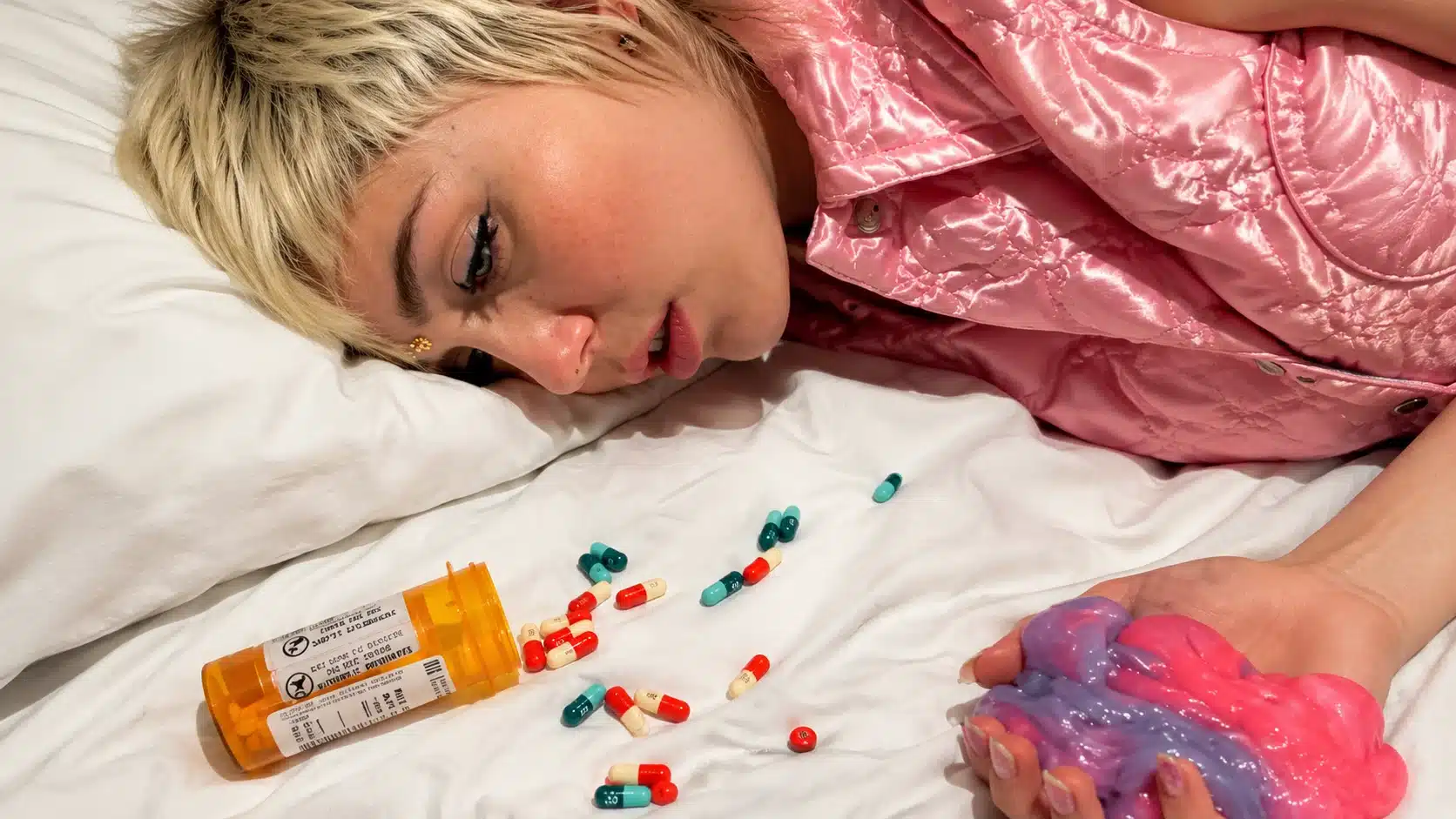
Searches around Miley Cyrus’s sobriety often raise the marijuana question. The honest answer requires separating her timeline carefully, because what she said in 2024 and what she says now differ.
What the Marijuana Timeline Actually Shows
Miley stopped smoking marijuana in 2017 and has been largely abstinent since. In a June 2024 interview, she described herself as “mostly sober” and mentioned occasionally taking a puff around her mother, who smokes heavily.
She noted that even a small amount now affects her significantly, consistent with years of abstinence. Her 2025 Apple Music statement, “sobriety is my God,” suggests her current framing has moved well past mostly.
California Sober vs. Full Sobriety: Why the Distinction Matters
The California sober framework allows limited cannabis or alcohol use while avoiding harder substances. Miley has never described her approach in those terms, and her current language leans toward full sobriety as the organizing principle.
Demi Lovato rejected California sober entirely after her 2018 overdose. Her full story is in the Demi Lovato overdose and recovery4 article. For anyone in early recovery, a professional’s guidance matters more than a celebrity’s framing.
What Child Stardom Does to Substance Use Risk
Miley started her public career as a child, and that context matters here. Growing up under sustained commercial pressure shapes development in ways most people never need to account for:
- Self-regulation develops more slowly under public pressure: Growing up surrounded by adults with financial stakes in your performance interferes with the normal development of identity, emotional coping, and impulse control.
- Child stars often feel like adults before they know how to be one: By the time Miley reached adulthood, she had already lived through several public versions of herself and been judged for all of them.
- Sobriety became part of how she stopped living in reaction: She has said she is the most passionate version of herself when she is clear. That clarity took time and some genuinely hard years to reach.
- The risk pattern is not unique to celebrities: Research consistently shows that early substance exposure, high-stress environments, and identity instability all raise the risk of problematic use. The difference for public figures is that all of it plays out in front of an audience.
- Most people get to grow up badly in private: Miley did some of it under a spotlight, which raised the stakes on every decision she made during those years significantly.
Her path shows what sustained recovery can look like when those pressures are met with support rather than silence. The stories of female singers who died from overdose5 show what happens when they are not, and why the difference matters.
Gardening, Routine, and Staying Grounded
One of the steadier details in Miley’s sober life is gardening. She has described it as something that keeps her grounded, away from fame and separate from external success. That distinction matters.
Many public figures turn every hobby into content or income. Gardening does not work that way. It is slow, physical, and entirely about patience rather than performance, which is why it fits recovery.
A 2025 review published in BMC Public Health6 found that gardening-based activities can have small to medium positive effects on mental health in people living with chronic conditions. That does not mean it keeps a person sober on its own.
It means hands-on engagement with a living thing can reduce anxiety and build stability that stimulating environments cannot reliably provide. For someone in long-term recovery, that kind of anchor is worth more than it looks.
| 📝 Note: A grounding habit in recovery does not need to be dramatic or visible. It can be gardening, walking, cooking, journaling, or sitting outside without a phone. What matters is that it is consistent, that it belongs to you rather than to your public image, and that it costs you nothing to return to on a hard day. |
What Miley’s Sobriety Story Actually Says About Recovery
Miley’s sober life offers more than just inspiration posters. It shows that sobriety can be practical. It is tied to her vocal health, her creative output, her touring choices, and the quality of the daily decisions.
It is not about perfection or a single transformational moment. It involved a relapse, therapy, vocal surgery, some years of building and rebuilding, and a lot of gardening. It also shows that sobriety is personal.
What works for Miley, including her specific reasons, timeline, tools, and grounding practices, will not map directly onto another person’s recovery. The resources she has access to, including professional therapy, time, financial stability, and a team around her, are not available to everyone.
What does translate is the underlying principle: that clarity and control are worth protecting, that relapse is part of many recovery stories rather than the end of one, and that boring, consistent habits can hold a person steady when louder ones cannot.
| ⚠️ Advisory: Miley’s story is a public example of recovery, not clinical guidance. If alcohol or drug use is affecting your health, relationships, work, safety, or emotional wellbeing, speak with a licensed addiction counselor or healthcare provider. SAMHSA’s helpline at 1-800-662-4357 is free, confidential, and available around the clock. |
When to Seek Emergency Care
| ⚠️ Seek Emergency Help Immediately If:
Someone is unconscious or cannot be woken up |
Frequently Asked Questions
Does Miley Cyrus still smoke marijuana?
She stopped smoking marijuana in 2017. In a June 2024 interview, she described herself as mostly sober and mentioned occasionally being around her mother, who smokes heavily. Her most recent public framing from 2025 uses full sobriety language. She has noted that even a small amount of cannabis now affects her significantly, consistent with years of abstinence.
Why does Miley Cyrus avoid touring?
She has connected her touring limits to three factors: protecting her sobriety; managing Reinke’s edema and a vocal polyp that make live performance physically intense; and the financial reality that a tour must reach a certain scale to be viable. She does not lip-sync and sings live at full power, which puts real strain on vocal cords that are already compromised. The healthiest decision, and the one she has chosen, is to tour only when all three factors can be managed sustainably.
What is Miley Cyrus’s Reinke’s edema?
Reinke’s edema is a condition in which fluid builds up in the outer layer of the vocal folds, typically worsened by smoking, acid reflux, or chronic vocal trauma. Miley has described having both Reinke’s edema and a large polyp on her vocal cord, which she says creates her signature sound but makes performing extremely taxing. She has said she will not surgically remove the polyp because doing so could permanently change her voice.
The Bottom Line
The full picture of Miley Cyrus sober is not a simple before-and-after. It is a working recovery built from a vocal surgery that changed the stakes, a family history she had to face, a relapse she refused to be ashamed of, and years of therapy, songwriting, and gardening that replaced what substances once used to do for her.
Her sobriety is practical, not performative. It shows up in her recordings, the limits she places on touring, and the directness with which she talks about what keeping it requires.
What translates to anyone reading this is not the specifics of her situation, but one core principle: clarity is worth protecting, setbacks are not the end, and consistent habits outlast louder ones. If any part of Miley’s sobriety story connects to your own experience, then drop a comment below.
Sources
- Vanity Fair. “Miley Cyrus Says Sobriety Is Like My God.” May 2025. vanityfair.com. Primary source for Miley’s 2025 sobriety statement and Apple Music interview context.
- National Institute on Alcohol Abuse and Alcoholism. “Neuroscience: Brain, Addiction, and Recovery.” niaaa.nih.gov. Source for how alcohol affects brain regions tied to impulse control, decision-making, and memory.
- YouTube. “Miley Cyrus, Flowers (Official Video).” 2023. youtube. Official video for “Flowers,” Record of the Year at the 2024 Grammy Awards.
- FunWithDizzies. “Celebrities with Drug Addictions: The Untold Stories.” funwithdizzies.com. Source for the broader pattern of celebrity addiction and creative recovery.
- FunWithDizzies. “Demi Lovato: Drugs, Her Overdose, and Recovery Path.” funwithdizzies.com. Source for Demi Lovato’s rejection of California sober and full sobriety comparison.
- FunWithDizzies. “Female Singers Who Died of an Overdose and Their Legacy.” funwithdizzies.com. Source for the consequences of unaddressed pressure in female artists with substance use histories.
- BMC Public Health. “Effect of Gardening Activities on Domains of Health: A Systematic Review and Meta-Analysis.” March 2025. bmcpublichealth.biomedcentral.com. Source for evidence on gardening and mental health outcomes in people with chronic conditions.