| Type | Sativa-dominant Hybrid (70% Sativa / 30% Indica) |
| CBD Range | 13–20% (select phenotypes above 20%) |
| THC Range | 0.5–6% (most phenotypes at or below 1%) |
| CBD:THC Ratio | Up to 20:1 |
| Dominant Terpenes | Myrcene, Alpha-Pinene, Caryophyllene, Limonene |
| Best For | Daytime anxiety, chronic pain, focus, no intoxication |
| Breeder | Resin Seeds (phenotype of Cannatonic) |
| Flowering Time | 7–9 weeks |
I keep a short list of strains I recommend to customers who come in saying they had a bad experience with cannabis before — people who want relief but are terrified of getting high.
ACDC is always on that list. It is one of the few strains where I can say with confidence: this is not going to catch you off guard. No euphoric spike, no racing heart, no couch lock. Just a clean, functional calm that lets people get through their day without the mental noise that follows them around.
Time and time again, people who use ACDC weed report it as the strain that brought them back to cannabis safely — especially those managing anxiety who had been burned by high-THC options. If you are exploring the broader category of low-THC strains for calm and focus, ACDC is the benchmark the rest of them get compared to.
What Is the ACDC Strain?
The ACDC strain is a sativa-dominant hybrid selected as a phenotype of Cannatonic by Resin Seeds, featuring a CBD-to-THC ratio that can reach 20:1. Most users experience little to no intoxication, even at standard doses.
Harborside Health Center in Oakland was among the first dispensaries to bring it to clinical populations, and its early recognition at the 2012 Emerald Cup helped establish it as a benchmark CBD cultivar.
Here is something most strain guides skip: ACDC is an acronym. Northern California physician Dr. William Courtney coined the term in 2011, which stands for “Alternative Cannabinoid Dietary Cannabis.” He acquired the original seeds from Barcelona and worked with Cannatonic and Ruderalis genetics to create what he intended as an unheated dietary supplement.
That origin explains why ACDC was bred for therapeutic utility from the start, not drifted into CBD-dominance by accident.
Is ACDC a Strain of Indica or Sativa?
ACDC is a sativa-dominant hybrid, consisting of approximately 70% sativa and 30% indica. The sativa dominance produces a clear-headed, functional effect, making it a strong option for users who need relief without the couch-lock, heaviness, or foggy comedown often associated with other strains.
The indica percentage contributes a mild physical calm without sedation, which is why ACDC holds up well for daytime use. Users report staying active and focused without compromising the CBD benefits they came for.
For those deciding between CBD cultivars for daily use, ACDC’s sativa lean gives it an edge over balanced or indica-dominant options. Its combination of mental clarity and physical relaxation makes it a versatile strain, suitable for those seeking therapeutic relief without compromising productivity.
Genetics and Lineage of ACDC Strain
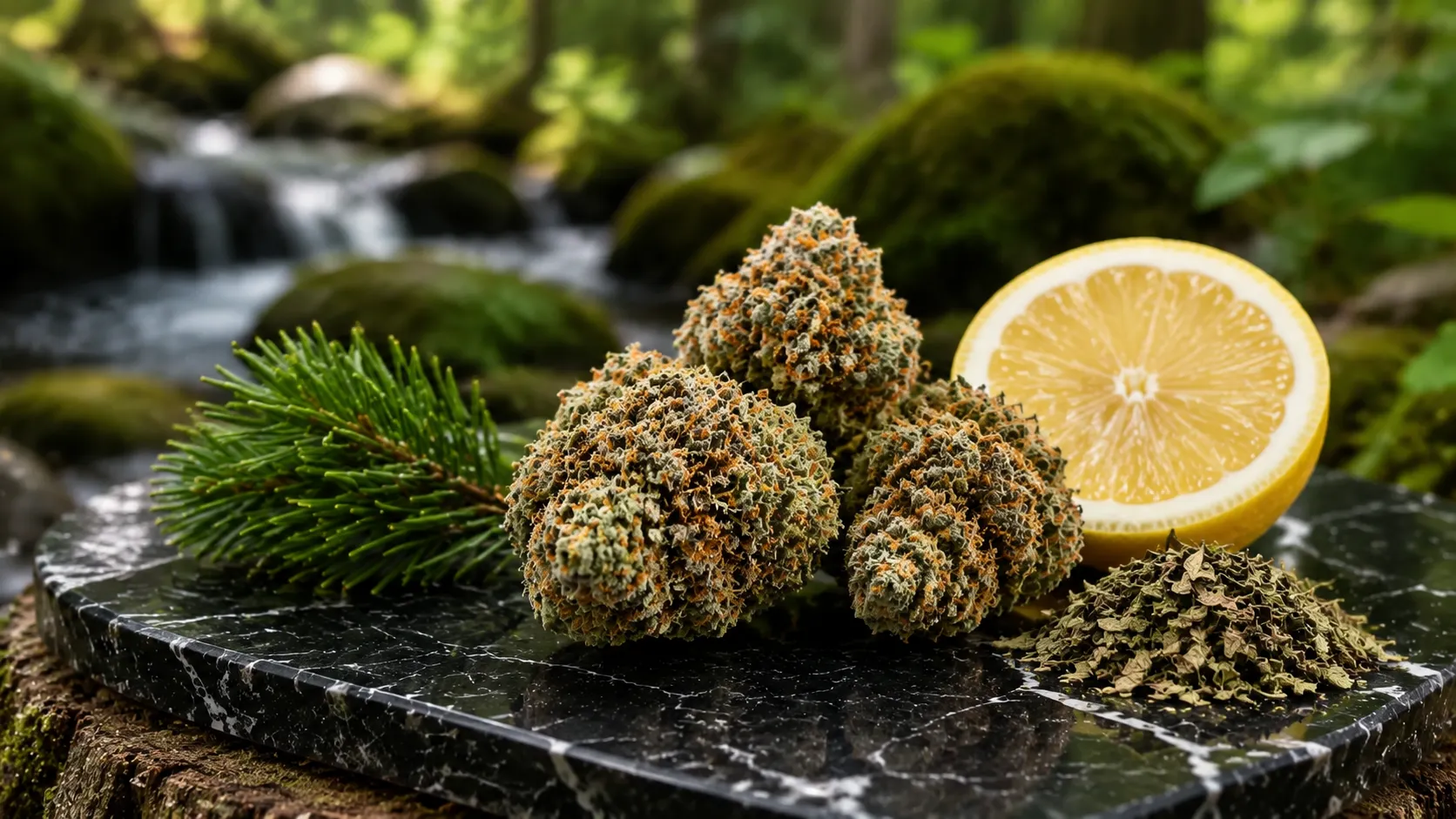
The ACDC cannabis strain is a sativa-dominant phenotype of Cannatonic, bred by Resin Seeds specifically for high CBD and low THC expression. With a CBD-to-THC ratio reaching 20:1, it was designed for medicinal use from the start, offering therapeutic benefits without psychoactive effects.
Flavors of ACDC
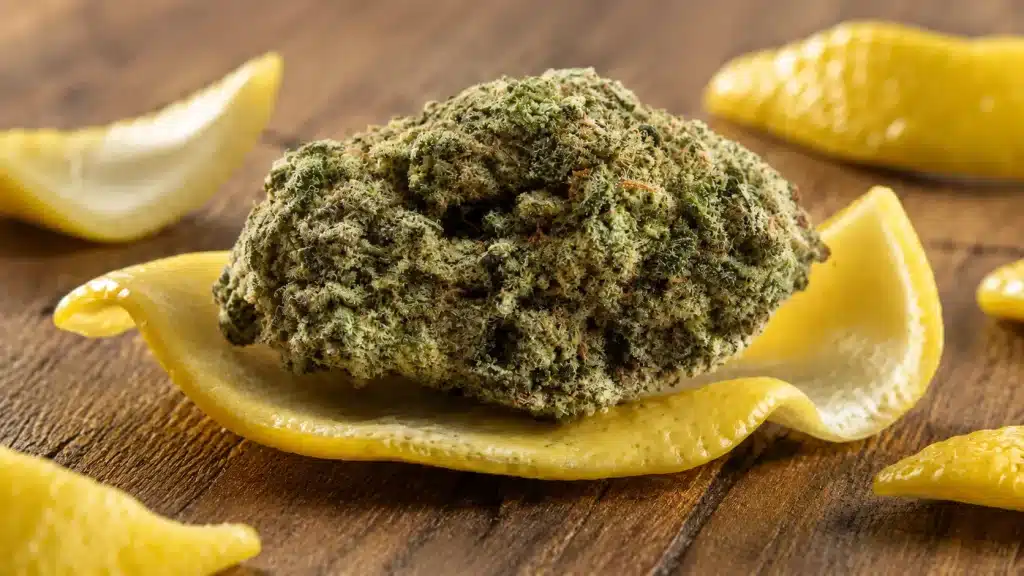
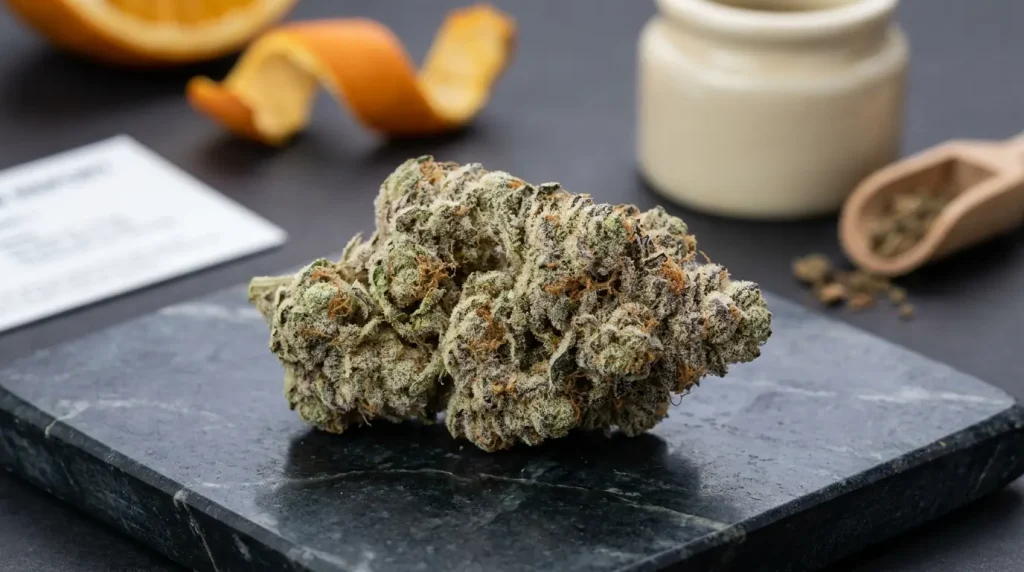
ACDC has an earthy, woody flavor with a pine presence and subtle lemon brightness. As you inhale, the full-bodied taste introduces a grounding earthiness, followed by the crispness of pine and citrus. On the exhale, some phenotypes introduce a mild spice that complements the earthy base, with a slight citrus sweetness from limonene. This makes it one of the more approachable strain profiles for first-time CBD users who are not accustomed to pungent cannabis aromas.
Aroma of ACDC
The aroma of ACDC is mellow and clean, which is practical for anyone who needs discretion in shared spaces. The scent carries a pine note with a faint lemon undertone over an earthy base. Unlike more pungent strains, ACDC does not dominate a room, making it a reasonable option for shared homes or spaces where strong cannabis aromas would be unwanted.
ACDC as a Parent Strain
ACDC has proven to be a notable parent strain in breeding, passing on its low-THC, high-CBD genetics to offspring like Ringo’s Gift and G.O.A.T. These hybrids retain the beneficial therapeutic effects of ACDC, with Ringo’s Gift boasting an impressive 24:1 CBD:THC ratio. ACDC’s influence continues to shape the future of CBD-dominant strains, making it a go-to for breeders and consumers looking for effective therapeutic options without the psychoactive effects of THC.
Terpene Breakdown
Terpenes are the compounds responsible for a strain’s aroma, flavor, and a portion of its effects through what researchers call the entourage effect. The relationship between terpene profiles and the cannabis experience runs deeper than most strain descriptions acknowledge. Here is how ACDC’s chemistry works:
| Terpene | Scent / Flavor | Effect Association |
| Myrcene | Earthy, musky, herbal | Calming; may enhance cannabinoid uptake across the blood-brain barrier |
| Alpha-Pinene | Fresh pine, clean, sharp | Associated with alertness and memory retention; potential bronchodilator |
| Caryophyllene | Spicy, peppery, woody | CB2 receptor agonist; the only terpene that directly interacts with the endocannabinoid system; linked to anti-inflammatory and anxiolytic properties |
| Limonene | Citrus, bright, slightly sweet | Associated with mood elevation and stress reduction; uplifting onset and anti-anxiety properties |
Pinene and Caryophyllene together explain ACDC’s clarity profile. Pinene is associated with acetylcholinesterase inhibition, supporting alertness and cognitive retention. Caryophyllene’s CB2 agonist activity contributes to physical calm independently of THC. Limonene accounts for the occasional mood lift at onset. Together, they produce focus rather than fog.
ACDC Strain Effects: Clear-Headed Calm with Steady Relief
ACDC is a functional strain, not a passive one. Users consistently report that it quiets mental noise without disconnecting them from their surroundings. That is different from sedation, and different from the blunted awareness that accompanies high-THC cultivars. If you are comparing options for staying sharp during the day, it sits in a different category from most strains covered in a cannabis-for-focus guide.
- Onset (5–15 minutes): A gentle mood lift. Sociability increases slightly. Focus sharpens. Users describe it as the mental equivalent of a long exhale — everything still present, just less loud. No rush, no euphoric spike, no moment of feeling distinctly altered.
- Mid-session (15–60 minutes): Physical calm settles in. Muscle tension reduces. This is where users managing chronic pain or inflammation report the most noticeable shift. You stay fully functional and clear-headed throughout.
- Comedown: Gradual and clean. No grogginess, no crash. Most sessions resolve in 1.5 to 2 hours with no residual impairment.
Common side effects include dry mouth, dry eyes, and occasional headache at higher doses. At rare phenotypes expressing 4–6% THC, mild dizziness or very light euphoria is possible. Always verify THC levels on your COA before first use.
| 📝 Note: ACDC does not produce a recreational high for most users. It is built for function, not escape. Users who have had bad experiences with anxiety from high-THC strains consistently report ACDC as the strain that brought them back to cannabis safely. |
Dosing Guide
Because ACDC produces minimal intoxication, the over-caution that applies to high-THC strains is less relevant here. That said, CBD is dose-dependent, and starting thoughtfully still makes sense when batch-to-batch potency can vary. ACDC is available as flower, vape cartridges, and edibles or tinctures, and onset time differs significantly by format.
| Format / Experience Level | Suggested Start | Wait Time | Notes |
| First-time CBD user (flower or vape) | 1 small hit | 15–20 min | Assess before adding more |
| Intermediate user (flower or vape) | 2–3 hits | 10–15 min | Full effect develops within one window |
| ACDC vape cartridge | 1–2 short draws | 10–15 min | Potency varies by extract type; verify CBD:THC ratio on the cart’s COA |
| Experienced/medical user | Standard session | 10 min | Verify the CBD:THC ratio on the COA first |
| Edible or tincture | Low CBD mg dose | 45–90 min | Do not re-dose early; onset is significantly delayed |
| 💡 Tip: The onset delay with edibles is the single most common reason people consume too much ACDC. Set a timer and wait for the full window to appear. Understanding how edibles work for pain and inflammation makes it considerably easier to calibrate your dose. |
What Users Commonly Report ACDC Helping With
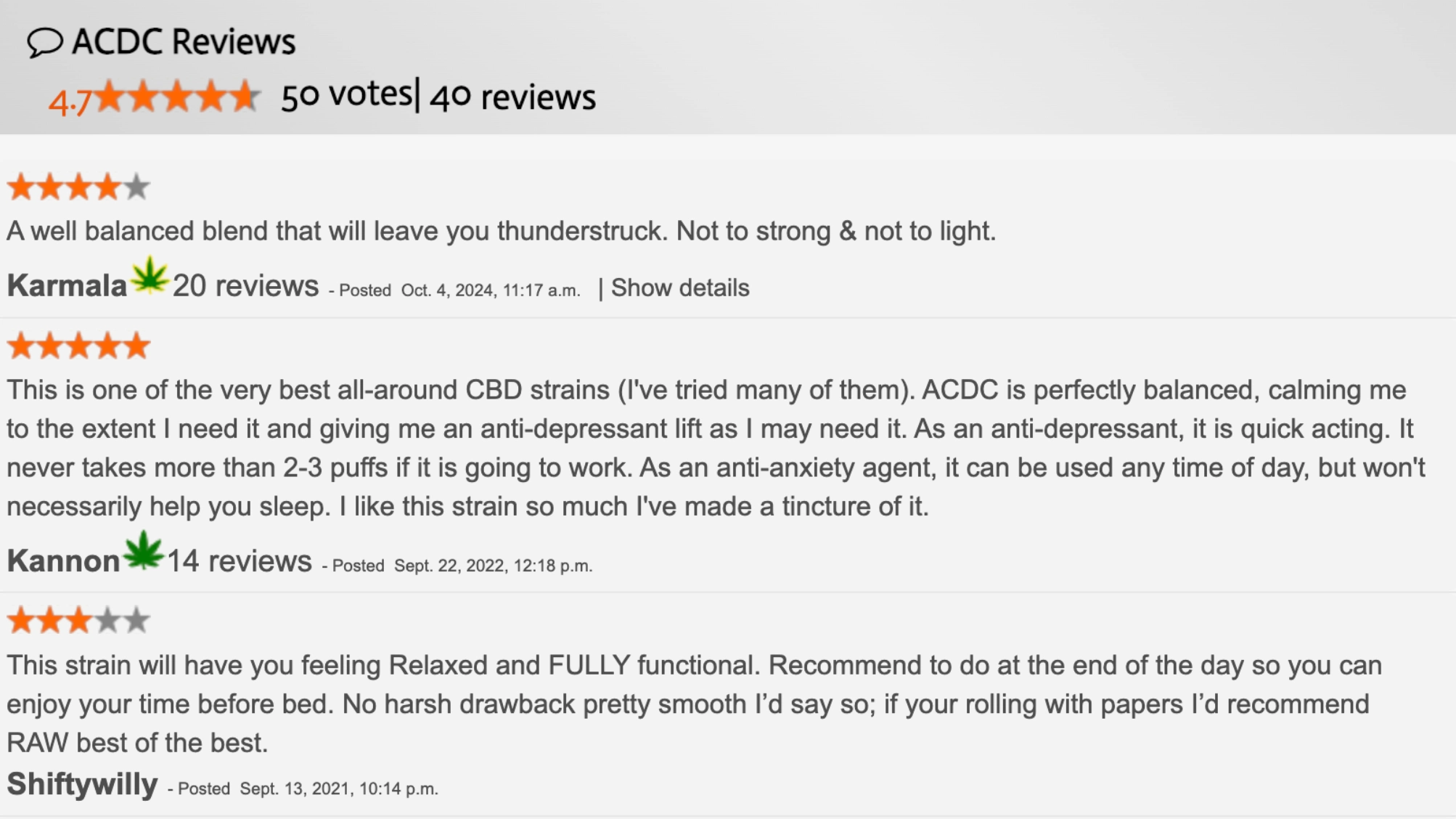
This AllBud review database reflects what I consistently observe on the floor: ACDC users most frequently report benefits for anxiety, chronic pain, and PTSD. Many find it effective for calming racing thoughts without impairment, which tracks with what we know about CBD and caryophyllene’s CB2 activity. One AllBud user noted it as “a well balanced blend that will leave you thunderstruck. Not too strong and not too light.”
Users dealing with muscle tension, arthritis, and nerve pain also report significant shifts while remaining fully functional. People managing focus challenges and PTSD describe ACDC as helping them stay on task and reducing hyperarousal. For a wider look at weed strains specifically reported to help with anxiety, ACDC consistently appears near the top of those comparisons.
Users have also mentioned benefits for epilepsy and multiple sclerosis symptoms, especially in the areas of muscle spasms and nerve pain. Reports of benefits for migraines and chemotherapy side effects also appear in the review record. These are anecdotal. Always consult a physician before using alongside other treatments.
ACDC vs. Cannatonic: Side-by-Side Comparison
This table compares the key features of ACDC, Cannatonic, Ringo’s Gift, and Charlotte’s Web, highlighting differences in CBD, THC, effects, and ideal uses for each strain:
| Feature | ACDC | Cannatonic | Ringo’s Gift | Charlotte’s Web |
| CBD Range | 13–20%+ | 6–17% | 10–24% | 15–20% |
| THC Range | 0.5–6% | 5–12% | Under 1% | Under 0.3% |
| Type | Sativa-dominant hybrid | Balanced hybrid | Hybrid | Hemp-derived |
| Effect Character | Focused, uplifting, calm | Mild euphoria, relaxing | Calm, very low intoxication risk | Calm, wellness-focused |
| Intoxication Risk | Minimal (phenotype-dependent) | Moderate at higher THC phenotypes | Very low | None |
| Best For | Daytime anxiety, pain, and focus | Day or evening balanced use | Severe anxiety, seizure support | Zero-THC wellness use |
The key differentiator for ACDC over Charlotte’s Web is the whole-flower format and the sativa-leaning terpene profile. Charlotte’s Web comes primarily as an oil or supplement with confirmed sub-0.3% THC, making it the better option if zero THC is non-negotiable. ACDC carries a small phenotype-dependent THC risk that Charlotte’s Web does not.
ACDC Strain: Growing Tips for Consistent and Productive Harvests
Growing ACDC can be straightforward with the right approach, but understanding its variability is key. Here is a quick guide on how to optimize growth and achieve consistent results when cultivating this ACDC cannabis strain:
- Clones vs. Seeds: Growing from clones is the more reliable path, while seeds may show phenotype instability that affects CBD and THC ratios significantly from plant to plant.
- Environment: ACDC thrives between 68–80°F (20–27°C), with humidity levels of 40–50% during vegetative growth.
- Structure and Yield: ACDC grows to about 5 feet tall, with 1–1.5 oz per square foot indoors under optimized conditions.
- Training Techniques: Low-stress training or topping enhances light penetration and improves indoor grow structure and yield.
By carefully selecting clones from a verified mother plant and maintaining a stable environment, you can ensure consistent CBD levels and achieve a healthy, productive ACDC harvest.
| 💡 Tip: Always lab-test your ACDC harvest before medicinal use. Given phenotype variability, the only reliable CBD:THC number is the one from a batch-specific COA on your actual crop. |
Where to Find ACDC Strain Near You
ACDC weed is widely available in legal cannabis markets across California, Colorado, Washington, Oregon, and Illinois. The most reliable way to find the ACDC strain near you is through licensed dispensary menus on platforms like Leafly or Weedmaps, filtered by strain name. Both platforms show real-time dispensary inventory, so you can confirm it is in stock before making a trip.
Availability can shift seasonally, and not every dispensary carries ACDC year-round. In states where hemp-derived ACDC flower is legal, it can also be purchased online. Be cautious: the ACDC label in the hemp market is not regulated, and cannabinoid content can vary significantly between vendors.
Always purchase from sources providing batch-specific third-party COAs to ensure accuracy. For cultivation, Resin Seeds is the primary reference for authentic genetics, and using clones from a verified high-CBD mother plant gives more consistent results than starting from seeds.
| ⚠️ Advisory: If you are subject to drug screening for THC, ACDC is not a safe choice. Even at sub-1% THC, regular use may produce detectable levels depending on frequency, dose, and individual metabolism. Consult a physician or compliance officer before use. |
Should You Buy This Strain?
If you are coming to cannabis specifically because anxiety has been a problem and you cannot afford to feel altered, ACDC is the right call. It is the strain I point people toward when they have had a bad experience before and want to try again safely. The 20:1 CBD:THC ratio means intoxication is genuinely not the concern it is with almost any other flower you will find at a dispensary.
It is not the right choice if you are looking for euphoria, a strong body high, or something to help with sleep. For daytime anxiety, pain management while staying functional, or simply quieting mental chatter without sedation, ACDC delivers consistently when you buy from a source with a verified COA. Skip it if zero THC is a hard requirement — in that case, Charlotte’s Web as a supplement is the safer bet.
Frequently Asked Questions
What is the ACDC strain good for?
Users most commonly report ACDC helping with anxiety, chronic pain, PTSD, and focus challenges. Its high CBD content (13–20%) and near-zero THC mean users can address these concerns without impairment. Caryophyllene’s CB2 receptor activity contributes additional physical calm independent of THC. Always consult a physician before using ACDC alongside prescribed treatments.
Is ACDC a sativa or indica?
ACDC is a sativa-dominant hybrid, consisting of approximately 70% sativa and 30% indica. The sativa dominance produces a clear-headed, focused effect, while the indica component contributes mild physical relaxation without sedation. This makes it well-suited for daytime use.
How does ACDC compare to other CBD strains?
ACDC’s CBD-to-THC ratio can reach 20:1, which is higher than its parent Cannatonic (typically 1:1 to 3:1) and comparable to Ringo’s Gift. Unlike Charlotte’s Web, which comes primarily as an oil supplement, ACDC is widely available as whole flower, giving it a fuller terpene profile and more flexible consumption options including vape cartridges and edibles.
Can ACDC be used for sleep problems?
ACDC is not a sedative strain and is not designed to treat sleep disorders. Its sativa-dominant profile keeps users alert and functional rather than drowsy. Users dealing with anxiety-driven insomnia sometimes report that evening use helps quiet racing thoughts enough to fall asleep, but for primary sleep issues, indica-dominant or CBN-rich strains tend to be more effective.
Is ACDC suitable for new cannabis users?
Yes. ACDC is one of the more beginner-friendly strains available because its THC content is low enough that intoxication is rarely a concern. New users can experience the therapeutic benefits of CBD without the anxiety, paranoia, or overwhelming effects that high-THC strains sometimes trigger. Starting with one small hit and waiting 15–20 minutes before re-dosing is the recommended approach for first-time use.
How can I ensure consistent ACDC results?
The most important factor is sourcing. Always buy from a dispensary or vendor that provides a batch-specific Certificate of Analysis (COA) showing the actual CBD and THC content of that harvest. For home growers, always propagate from clones taken from a verified high-CBD mother plant rather than seeds, since seed-derived phenotypes can express variable cannabinoid ratios. Phenotype variation is the single biggest reason ACDC delivers inconsistent results from one batch to the next.
Sources
- Leafly Editorial Team. “ACDC Strain Information.” Leafly. 834 verified user reviews. leafly.com/strains/acdc
- AllBud Editorial Team. “ACDC Marijuana Strain.” AllBud. Strain profile and community review database. allbud.com
- Weedmaps. “ACDC Strain.” Weedmaps. Dispensary and strain finder. weedmaps.com
- Fun With Dizzies. “Best Low THC Strains for Calm, Focus, and Balance.” funwithdizzies.com
- Fun With Dizzies. “Terpenes and CBD: What They Are and Why They Matter.” funwithdizzies.com
- Fun With Dizzies. “Best Edibles for Pain and Inflammation.” funwithdizzies.com