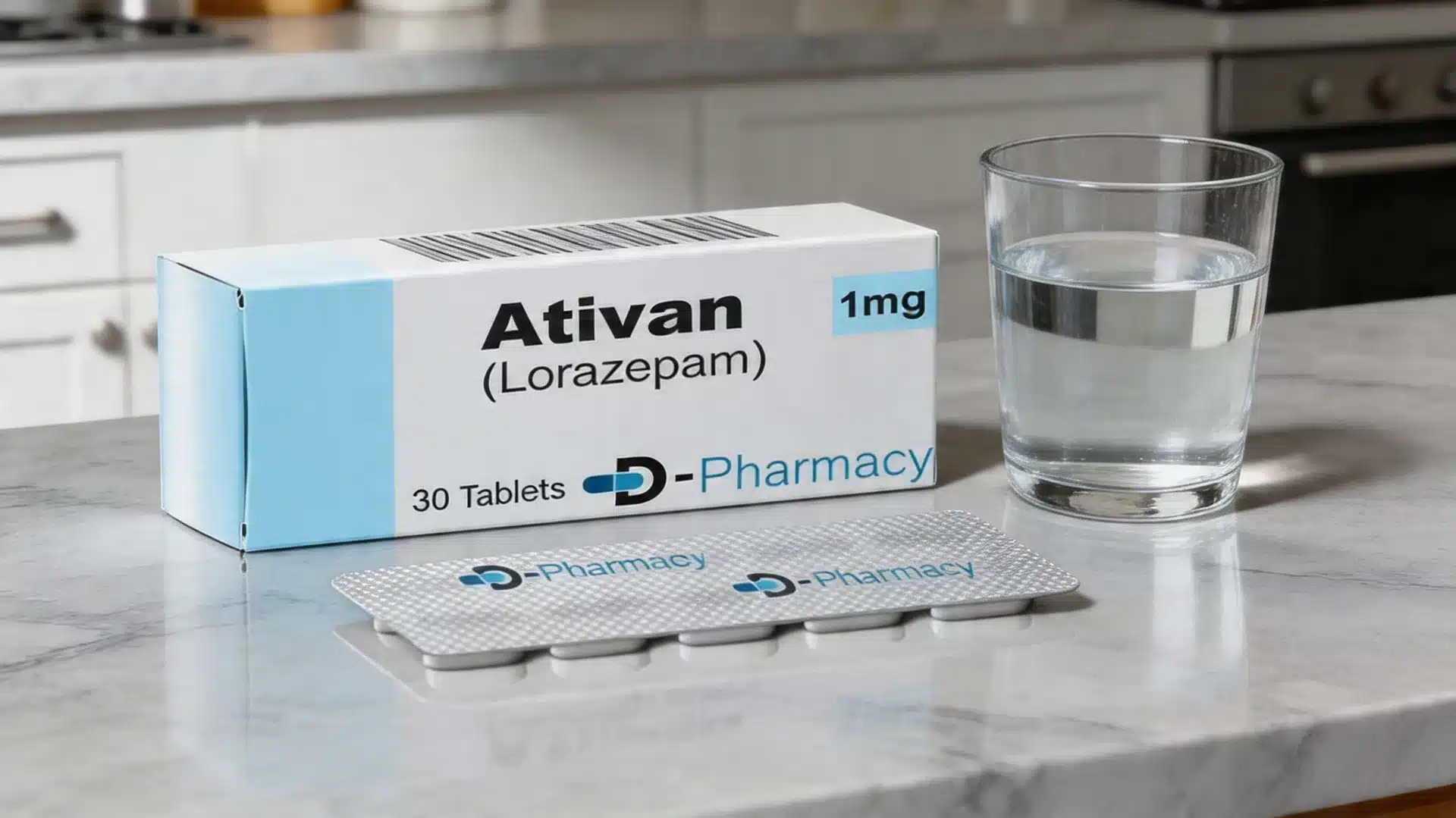
Lorazepam (Ativan) at a Glance
| Factor | Details |
| Generic name | Lorazepam |
| Brand name | Ativan |
| Drug class | Benzodiazepine: Schedule IV controlled substance |
| Half-life | 10 to 20 hours; average 12 hours in healthy adults |
| Active metabolite | Lorazepam glucuronide, half-life approximately 18 hours |
| Full clearance | Approximately 60 hours (about 2.5 days), five half-lives |
| Duration of effects | 6 to 8 hours oral; 12 to 24 hours IV or IM |
| Urine detection | Up to 6 days; metabolites up to 9 days |
| Blood detection | Up to 3 days |
| Hair detection | Up to 30 to 90 days |
| Saliva detection | Up to 8 hours |
| Primary metabolism | Liver, via direct glucuronidation |
| Excretion | Primarily urine |
| FDA-approved uses | Anxiety disorders, insomnia related to anxiety, pre-surgical sedation, and status epilepticus |
| ⚠️ Advisory: Lorazepam is a Schedule IV controlled substance with documented potential for physical dependence. The FDA recommends short-term use of two to four weeks. If you have been prescribed lorazepam and are considering stopping, do not discontinue without medical guidance. Benzodiazepine withdrawal carries a genuine risk of seizures in physically dependent patients who stop abruptly. |
How Long Does Ativan Last? The Direct Answer
Oral Ativan (lorazepam) produces anxiolytic effects for 6 to 8 hours, but the drug remains pharmacologically active in your bloodstream for up to 60 hours after a single dose.
The lorazepam half-life of 10 to 20 hours means the gap between when effects wear off and when the drug has fully cleared is clinically significant: interaction risks, impaired cognition, and drug test detection all continue well past the point where the medication stops feeling effective.
How long does lorazepam stay in your system depends on the test type, the dose, frequency of use, and individual physiology. Those specifics are covered in full below.
What Is Lorazepam and What Is It Used For?
Lorazepam, sold under the brand name Ativan, is a benzodiazepine that enhances the activity of GABA, the brain’s primary inhibitory neurotransmitter. By binding to GABA-A receptors, it slows central nervous system activity, producing sedation, reduced anxiety, muscle relaxation, and anticonvulsant effects.
One of its key clinical advantages is its metabolic pathway. Unlike most other benzodiazepines, lorazepam bypasses cytochrome P450 liver enzymes entirely, undergoing direct glucuronidation instead. This makes it considerably safer for patients with hepatic impairment compared to alternatives like diazepam. According to the StatPearls clinical reference on lorazepam, it is preferred in inpatient settings for its rapid, predictable onset, particularly when administered intravenously.
| 📝 Note: Lorazepam is classified as a DEA Schedule IV controlled substance. It requires a new written prescription for refills in most states and carries documented potential for physical dependence with regular or prolonged use. The FDA recommends short-term use of two to four weeks, with frequent reassessment if extended use is being considered. |
Lorazepam Uses: FDA-Approved and Off-Label
Lorazepam is used across several clinical contexts, each of which relies on a different aspect of its pharmacological profile.
| Use | Context | Notes |
| Generalized anxiety disorder | FDA-approved; short-term only | Not appropriate for long-term management due to tolerance and dependence risk |
| Anxiety-related insomnia | FDA-approved; short-term | Works for sleep onset but not sustainable beyond a few weeks |
| Status epilepticus | FDA-approved; IV administration | Preferred for rapid, reliable anticonvulsant onset in emergency settings |
| Pre-surgical sedation | FDA-approved | Produces sedation, anxiolysis, and anterograde amnesia before procedures |
| Alcohol withdrawal syndrome | Off-label; clinically common | The glucuronidation pathway makes it preferable in patients with liver impairment |
| Acute agitation | Off-label; inpatient use | Used for rapid tranquilization in psychiatric and emergency settings |
| Chemotherapy nausea | Off-label; adjunct use | Adjunct or breakthrough agent for anticipatory nausea |
| Delirium management | Off-label; clinical discretion | Evidence is mixed; used situationally in ICU settings |
For people weighing whether lorazepam is the right long-term approach, a clinical breakdown of safe and effective alternatives to Xanax for anxiety relief covers how buspirone, SSRIs, and other non-benzodiazepine options compare in terms of dependence risk, mechanism, and long-term suitability.
| ⚠️ Advisory: Lorazepam is not appropriate for long-term anxiety management, panic disorder prophylaxis, or depression. Its anticonvulsant effects develop tolerance with chronic use. Regular reassessment with a prescriber is essential for anyone using it beyond the initial short-term period. |
The Lorazepam Half-Life: What It Actually Means
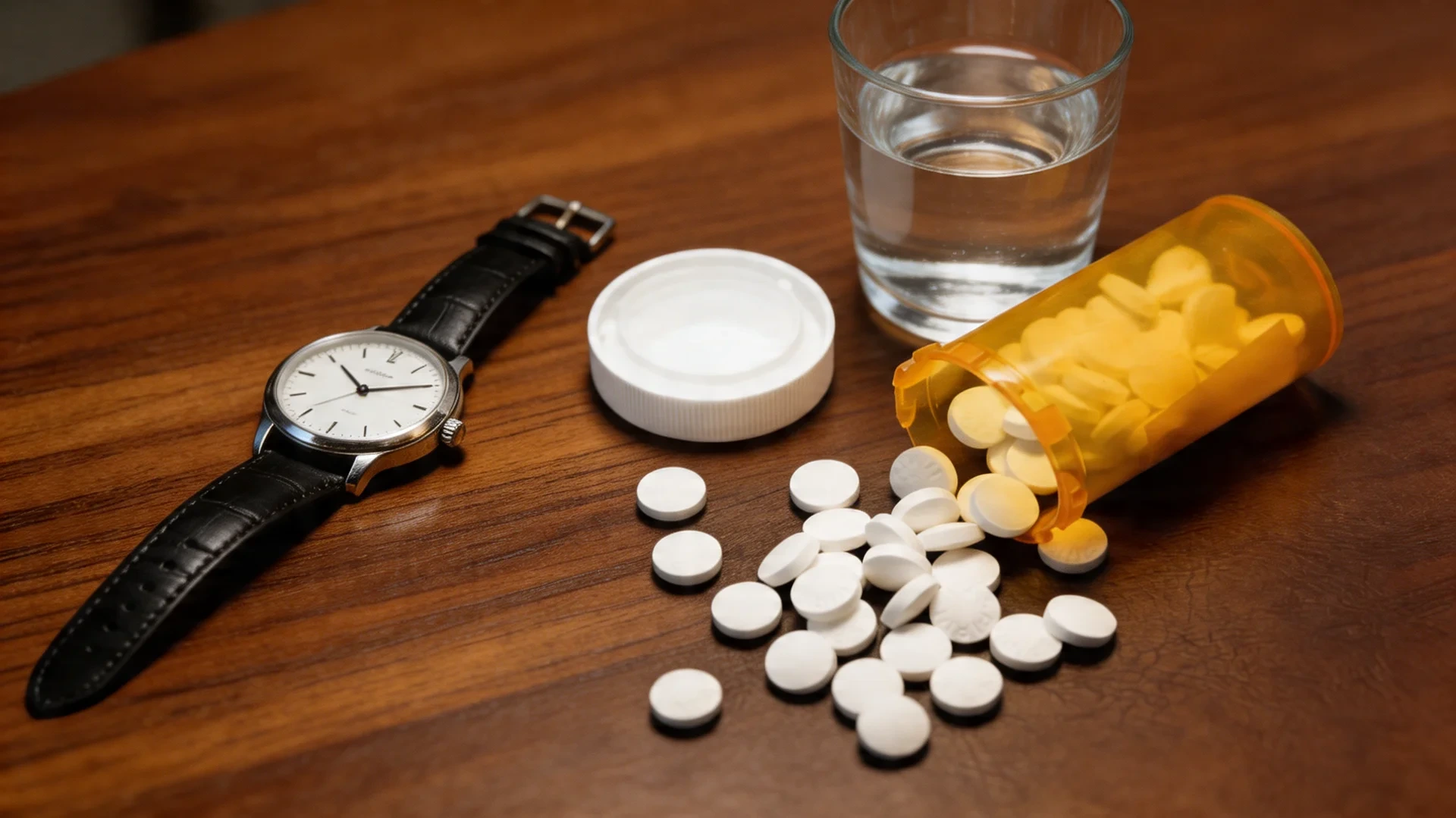
The lorazepam half-life is the most clinically significant number to understand. It determines dosing intervals, interaction windows, testing timelines, and withdrawal dynamics.
1. Understanding the Half-Life Calculation
The lorazepam half-life is the time required for its concentration in the bloodstream to be reduced by exactly half. This number underpins every detection and clearance timeline that follows. The half-life range is 10 to 20 hours, with an average of approximately 12 hours in healthy adults. Full clearance takes approximately five half-lives, around 60 hours (2.5 days) for the parent drug.
The active metabolite, lorazepam glucuronide, is pharmacologically inactive but carries a half-life of approximately 18 hours, which is why urine detection windows extend well beyond what the parent drug’s half-life alone would predict. The half-life remains relatively consistent regardless of dose; higher doses increase the total drug load requiring elimination, extending overall clearance time without changing the half-life itself.
According to American Addiction Centers’ clinical overview of lorazepam detection, metabolites may remain detectable in urine for up to 9 days in chronic users, significantly beyond what the raw half-life number alone suggests.
| 📝 Note: Half-life and duration of effects are different measurements. You may feel lorazepam’s anxiolytic effects for 6 to 8 hours, while the drug remains pharmacologically present in your bloodstream considerably longer. This gap has real implications for drug interactions, driving, and testing. |
2. Half-Life vs Duration of Effects
The gap between when effects wear off and when the drug has cleared is one of the most practically important aspects of the lorazepam half-life. Most interaction risks and testing surprises occur in this window.
Oral onset is 30 to 60 minutes, with peak effects approximately 2 hours after ingestion. The duration of felt effects from oral dosing is 6 to 8 hours, while IV or IM sedation lasts 12 to 24 hours in clinical settings.
The drug itself remains pharmacologically present for up to 60 hours after the effects have worn off. Poor lipid solubility keeps lorazepam in the vascular compartment, producing more prolonged peak effects than diazepam despite diazepam’s longer overall half-life.
The practical result: feeling fine after a dose does not mean the drug has cleared the body. Activities requiring full cognitive alertness should be managed accordingly.
| ⚠️ Advisory: Driving, operating machinery, or making significant decisions should be avoided for the full half-life clearance period, not just when the drug stops feeling effective. |
3. Lorazepam Half-Life vs Other Benzodiazepines
Placing the Ativan half-life in context with other benzodiazepines explains both its clinical value and its specific risks around withdrawal and interaction timing. Triazolam (Halcion) has a half-life of 1.5 to 5.5 hours, making it very short-acting.
Alprazolam (Xanax) ranges from 6 to 27 hours, placing it in the short to intermediate category. Lorazepam (Ativan) sits at 10 to 20 hours, firmly intermediate. Clonazepam (Klonopin) runs 18 to 50 hours, and diazepam (Valium), including its active metabolites, can reach 20 to 200 hours, making it the longest-acting option in common clinical use.
A shorter half-life means a faster onset of withdrawal symptoms if stopped abruptly, which is a clinically important consideration when planning discontinuation of any intermediate-acting benzodiazepine.
How Long Does Ativan Stay in Your System?
Detection windows vary significantly by test type, individual clearance rate, and frequency of use. Standard immunoassay panels detect benzodiazepine metabolites, and GC-MS confirmatory testing is required to distinguish specific benzodiazepines and confirm a positive immunoassay result.
| Test Type | Detection Window | Notes |
| Urine | Up to 6 days; metabolites up to 9 days | Most common: metabolite extends the window beyond half-life |
| Blood | Up to 3 days | More invasive; used primarily in acute clinical settings |
| Hair | Up to 30 to 90 days | Most extensive window; least common in routine screening |
| Saliva | Up to 8 hours | Short window; rarely used for lorazepam specifically |
| 📝 Note: If you are prescribed lorazepam and facing a drug screening, disclose your prescription to the testing facility in advance. A confirmed positive on a benzodiazepine panel is not automatically a problem with a valid prescription; GC-MS confirmation can distinguish prescribed use in most clinical and legal contexts. |
How Long Does Ativan Last by Dose?
A frequent source of confusion is whether the dose changes how long Ativan lasts. The half-life itself does not shift with dose, but higher doses increase the total drug load requiring elimination, which extends clearance time. Here is what the data shows across common prescribed doses.
| Dose | Felt Effects | Approximate Full Clearance | Notes |
| 0.5 mg | 4 to 6 hours for most adults | Approximately 50 to 60 hours | Starting dose in elderly patients: mild anxiolytic effect without significant sedation in most cases |
| 1 mg | 6 to 8 hours | Approximately 60 hours | Standard dose for acute anxiety; equivalent pharmacologically to approximately 10 mg diazepam |
| 2 mg | 6 to 8 hours; sedation may extend longer | 60 to 80 hours, depending on individual clearance | Used for insomnia-related anxiety and procedural sedation; next-morning sedation is common |
| 4 mg (IV/IM) | 12 to 24 hours of sedation | Up to 4 to 5 days for full metabolite clearance | Status epilepticus dosing is administered only in clinical settings |
The clearance figures above apply to single doses in healthy adults with no renal or hepatic impairment. Regular daily dosing produces accumulation: baseline blood levels rise over time, which lengthens both residual effects and detection windows beyond the single-dose estimates above.
| 📝 Note: How long does 0.5 mg of Ativan last in practice? Most patients report noticeable anxiolytic effects for 4 to 6 hours at this dose, though residual sedation, particularly the morning after an evening dose, may extend the functional impact. The drug is still detectable in urine for several days regardless of dose size. |
Factors That Affect the Ativan Half-Life
Several individual and clinical variables affect how long lorazepam remains in the body. Understanding these factors explains why detection windows and clearance times vary so significantly between patients.
1. Age
Older adults metabolize lorazepam more slowly. One FDA-cited study found total body clearance decreases by approximately 20% in adults aged 60 to 84 compared to younger adults.
Prescribers typically start elderly patients at lower doses, as sedation and coordination effects are more pronounced and the effective half-life is longer in this population. Falls risk is a significant concern at standard adult doses in patients over 65.
2. Liver Function
Lorazepam’s bypass of cytochrome P450 enzymes means hepatic impairment affects it less dramatically than most benzodiazepines.
However, severe liver dysfunction can still slow the glucuronidation step, increasing the effective half-life and overall drug exposure. Prescribers adjust dosing carefully in patients with serious hepatic disease, particularly in settings like alcohol withdrawal, where liver impairment is common.
3. Kidney Function
Because lorazepam glucuronide is primarily excreted through the kidneys, renal impairment can extend the metabolite’s presence in the body even when the parent drug clears at a normal rate. This is most relevant for drug testing: the metabolite may remain detectable in urine considerably longer in patients with reduced renal clearance, pushing detection windows beyond standard estimates.
4. Dosage and Frequency of Use
Higher doses mean more drug needs to be eliminated, extending overall clearance time even when the half-life remains constant. Chronic daily use leads to accumulation.
Although lorazepam accumulates less than diazepam due to its lower lipid solubility, residual levels build with repeated dosing. Regular users will have significantly longer detection windows than occasional users who take a single dose.
5. Concurrent Substances
Other medications and substances alter lorazepam’s clearance. Proton pump inhibitors do not significantly affect lorazepam pharmacokinetics, unlike their interaction with some other benzodiazepines. Substances that affect glucuronidation enzymes or renal clearance can alter elimination rates.
Alcohol adds a pharmacodynamic interaction, dramatically increasing CNS depression even as lorazepam blood levels decline. This reinforces why the entire half-life window matters for safety, not just the period of felt effects.
| ⚠️ Advisory: Combining lorazepam with opioids, alcohol, or other CNS depressants significantly increases the risk of respiratory depression and overdose. This risk persists throughout the entire half-life clearance period. The FDA’s black-box warning on this combination reflects documented fatalities. |
Dependence, Withdrawal, and Stopping Safely
Physical dependence on lorazepam can develop within four to six weeks of regular use at therapeutic doses. Withdrawal is a medically significant process that requires careful management, particularly given the risks of abrupt discontinuation of a shorter half-life benzodiazepine.
Documented withdrawal symptoms include rebound anxiety (often more intense than the original presenting symptoms), insomnia, tremor, particularly noticeable in the hands, sweating, nausea, muscle cramps, irritability, cognitive difficulties, and in severe cases, seizures, particularly with abrupt discontinuation after prolonged or high-dose use.
Because lorazepam has a shorter half-life than diazepam, abrupt stopping produces a faster onset of withdrawal compared to longer-acting benzodiazepines. Clinical guidelines recommend a gradual taper, often by transitioning first to an equivalent diazepam dose, stabilizing, and then reducing gradually.
The longer diazepam half-life means dose reductions are experienced more gently. This taper principle applies to other medications with shorter half-lives as well: our overview of Effexor withdrawal and the guide to venlafaxine discontinuation both illustrate how the speed at which a drug clears the body directly determines withdrawal severity and pacing.
Some people managing anxiety also use complementary approaches alongside or instead of prescription medications. Understanding which cannabis strains carry calming terpene profiles and how they interact with the nervous system provides useful context if you are thinking about how different approaches to anxiety management compare pharmacologically or practically.
| ⚠️ Advisory: Never stop taking lorazepam abruptly after prolonged use without medical guidance. Unlike opioid withdrawal, which is extremely unpleasant but rarely life-threatening, benzodiazepine withdrawal carries a genuine risk of seizures in physically dependent patients who stop suddenly. Any planned discontinuation should be managed with a prescriber. |
Side Effects and Drug Interactions
Lorazepam’s side effects are most pronounced at peak blood levels, which can persist well into the following day due to its half-life. Most are dose-dependent and diminish with titration. The FDA’s official Ativan prescribing information documents the full profile across all routes of administration.
Sedation and drowsiness are the most expected effects, often most significant the morning after evening dosing, and worsen when combined with other sedating substances. Dizziness and lightheadedness occur particularly on standing quickly, with considerably higher risk in elderly patients, where it can contribute to falls. Cognitive impairment, including reduced concentration and memory difficulties, persists throughout the half-life window rather than only during peak felt effects.
Anterograde amnesia (inability to form new memories during peak effect) is clinically useful pre-surgically but problematic in everyday use. Ataxia and coordination difficulties are particularly significant in older adults, at higher doses, or when combined with alcohol or other CNS depressants. Respiratory depression is most significant at higher doses or in combination with opioids or other CNS depressants and can be fatal in combination.
Lorazepam carries a black-box FDA warning for co-administration with opioids, with risk persisting throughout the entire half-life clearance period.
Other significant interactions include alcohol, other benzodiazepines, barbiturates, antipsychotics, sedating antidepressants, and antihistamines. As the clinical half-life reference from Paramount Wellness Centers confirms, interaction risks extend well beyond the perceived duration of a dose. Any persistent or worsening side effects warrant a conversation with the prescriber.
Final Thoughts
The 10 to 20-hour Ativan half-life means the drug stays in your system longer than its felt effects suggest, and that gap is where most interaction risks and unexpected drug test positives occur.
How long Ativan lasts for anxiety (6 to 8 hours) differs substantially from how long it remains pharmacologically active (up to 60 hours), and how long lorazepam stays in your system after effects wear off depends on which test is used, how often the drug is taken, and individual factors like age, kidney function, and liver health.
Those conversations belong with your prescriber, where general pharmacokinetic data can be applied to your specific situation.
Have questions about detection timelines or your specific situation? Drop them in the comments below.
Disclaimer: This content is for informational purposes only and does not constitute medical advice. Always consult a licensed healthcare provider before starting, stopping, or changing any prescription medication.
Frequently Asked Questions
What is the half-life of lorazepam?
The lorazepam half-life ranges from 10 to 20 hours, averaging approximately 12 hours in healthy adults. Its active metabolite, lorazepam glucuronide, has a half-life of approximately 18 hours, extending urine detection windows beyond what the parent drug’s half-life alone would predict for most users.
How long does Ativan stay in your system?
Full clearance of the parent drug takes approximately 60 hours (2.5 days), or five half-lives. Metabolites remain detectable in urine for 6 to 9 days, in blood for 3 days, and in hair for 30 to 90 days, depending on individual clearance rate and frequency of use.
How long does lorazepam last for anxiety?
Oral lorazepam’s anxiolytic effects typically last 6 to 8 hours. This is shorter than the half-life because effects fade before complete elimination. The drug remains pharmacologically present in the bloodstream for up to 2.5 days after anxiolytic effects have worn off completely.
How long does 0.5 mg of Ativan last?
At a 0.5 mg dose, most adults report felt effects lasting approximately 4 to 6 hours, which is slightly shorter than the standard 6 to 8-hour window seen at 1 mg. Clearance time from the body remains approximately 50 to 60 hours regardless of the smaller dose, because the half-life stays constant while the total drug load is simply smaller. This dose is commonly prescribed as a starting point for elderly patients or those with sensitivity to sedation.
Is Ativan 0.5 mg strong?
Relative to other benzodiazepines, lorazepam is high-potency: 1 mg is equivalent to approximately 10 mg of diazepam. At 0.5 mg, most people experience mild anxiolytic and sedative effects without significant impairment, though individual responses vary considerably based on tolerance, age, and individual metabolism.
What is the half-life of 1 mg of lorazepam?
The half-life does not change meaningfully with dose; it remains approximately 10 to 20 hours regardless of whether the dose is 0.5 mg or 2 mg. A higher dose increases the total amount of drug requiring elimination, extending overall clearance time while the half-life remains pharmacokinetically consistent.
Does lorazepam accumulate with regular use?
Less than highly lipid-soluble benzodiazepines like diazepam, but accumulation does occur with daily dosing. Regular users will have higher baseline blood levels and longer detection windows than occasional users taking a single therapeutic dose under otherwise identical individual conditions.
How long does IV Ativan last compared to oral?
Intravenous lorazepam produces sedation lasting 12 to 24 hours in clinical settings, significantly longer than the 6 to 8-hour oral window. The onset is faster (typically 1 to 5 minutes compared to 30 to 60 minutes for oral dosing), and the more direct delivery means the pharmacodynamic effect is stronger per milligram. IV administration is reserved for hospital settings, primarily for status epilepticus and procedural sedation.
Sources
The following sources were used in compiling the clinical information in this article.
- Ghiasi N, Bhansali RK, Marwaha R. “Lorazepam.” StatPearls, National Institutes of Health, 2023. Clinical reference covering mechanism of action, pharmacokinetics, FDA-approved and off-label uses, and dosing. ncbi.nlm.nih.gov
- American Addiction Centers. “How Long Does Ativan Stay in Your System?” Clinical overview of lorazepam detection windows across urine, blood, and hair testing. americanaddictioncenters.org
- U.S. Food and Drug Administration. “Ativan (Lorazepam) Prescribing Information.” Official prescribing label covering pharmacokinetic data, half-life, dosing, and drug interactions, 2007. accessdata.fda.gov
- Paramount Wellness Centers. “Half-Life of Ativan: How Long Does It Stay in Your System?” Clinically referenced breakdown of half-life, clearance calculation, and detection timeframes. paramountwellnesscenters.org
- FunWithDizzies. “Safe and Effective Alternatives to Xanax for Anxiety Relief.” Comparison of buspirone, SSRIs, and other non-benzodiazepine options covering dependence risk, mechanism, and long-term suitability. funwithdizzies.com
- FunWithDizzies. “Best Weed Strains for Anxiety Relief.” Cannabis-based approaches to anxiety management: a complementary context for non-benzodiazepine anxiety options. funwithdizzies.com