You’ve seen them on the shelf, vivid, colourful, and priced higher than others. Pink and purple weed are among the most photographed and discussed cannabis varieties in dispensaries, but most of the conversation gets it wrong.
I spent years observing people pay a premium for colour without understanding what they were buying.
The truth is more interesting than the hype, there’s real science behind how these hues form, a biochemical trade-off most budtenders never mention, and a buyer risk hiding behind the beautiful purple and pink colored buds you’ve been eyeing.
By the end of this, you’ll know exactly what you’re looking at, and whether it’s genuinely worth what’s on the price tag.
Pink Cannabis: Colour Composition and Key Strains
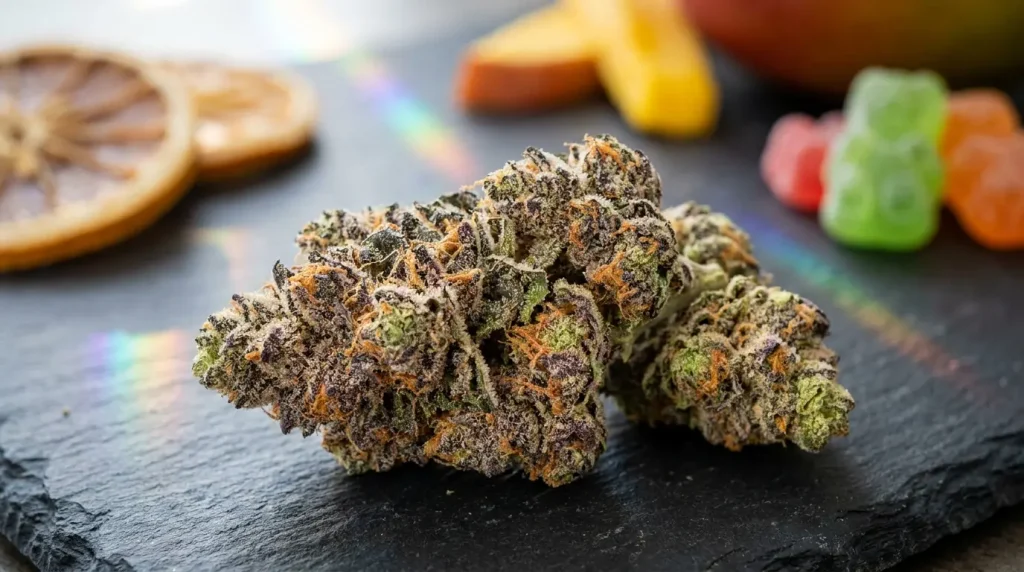
Pink cannabis needs both anthocyanins and carotenoids present simultaneously; that combination is what separates it from purple, and it’s rarer to achieve consistently across a crop.
Something most people don’t realise: the pink you see on a bud is usually in the pistils, those small, hair-like structures that emerge from the flower.
True pink bud colouration, in which the flower itself holds the hue, is far less common and is almost entirely down to genetics. No growing technique gets you there without the right lineage.
Soil pH shapes the direction in which anthocyanins express. More acidic conditions push pigmentation toward warmer, redder, pinker tones. A slightly higher pH, and you’re sliding toward blue-purple territory instead.
Key strains: Pink Kush (OG Kush lineage), Predator Pink, Pink Runtz (Gelato x Zkittlez), Napali Pink.
Purple Cannabis: Colour Composition and Key Strains
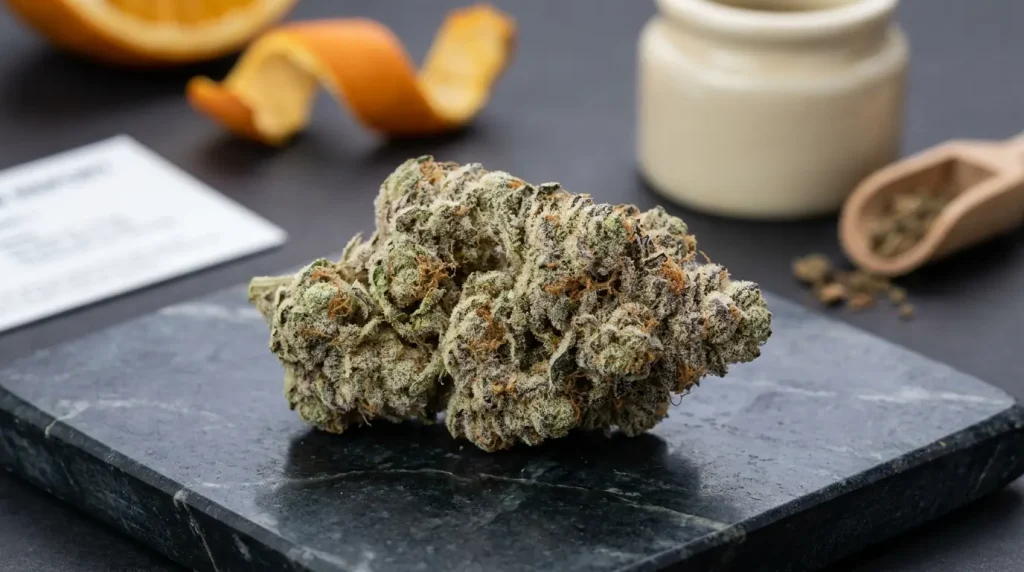
Purple drops the carotenoid component entirely, leaving anthocyanins to work alone, without the warm pigments that create pink. The result is cooler, deeper, and in well-grown plants, remarkably saturated.
Unlike pink, where colour tends to concentrate in the pistils, purple often moves into the bud itself, giving the flower a richness that’s immediately visible. Neutral to slightly alkaline soil conditions tend to produce the deepest violet tones.
Temperature is the other major lever; cool nights during late flowering signal the plant to ramp up anthocyanin expression. But both factors only work if the genetic foundation is already there.
Key strains: Granddaddy Purple (Big Bud x Purple Urkle), Purple Kush (Hindu Kush x Purple Afghani), Purple Haze, Purple Urkle.
Pink vs Purple Weed: Key Differences

Colour tells you what pigments are at work inside the plant; it doesn’t tell you how it smokes, how it tastes, or how it hits. That’s what this section is for.
1. Aroma and Taste
Pink strains: They tend to sit in sweet, floral, and fruity territory. Myrcene lays down an earthy, fruity base, limonene adds a bright citrus lift, and linalool pulls the overall profile toward soft lavender and vanilla notes.
Purple strains: They are considerably earthier and more complex; myrcene dominates here, too, but paired with caryophyllene’s peppery depth, the resulting profile lands closer to grape, dark berry, and damp woodland rather than anything sweet or dessert-like.
2. Effects
Pink strains: Tend to deliver a more varied experience, limonene and linalool working together often produce a relaxed yet mood-lifted state, making them less likely to floor you and more likely to leave you functional and at ease. Pink Kush explains this profile, prominent yet balanced, maintaining presence.
Purple strains: The consistently high myrcene content across most purple genetics pushes toward body-heavy relaxation, which is why the “purple puts you to sleep” reputation has some genuine terpene logic behind it
3. Colour Origin and Rarity
Pink: Requires anthocyanins and carotenoids to be expressed simultaneously, making consistent pink colouration genuinely harder to achieve and maintain across a full crop without precise genetic selection and acidic soil conditions.
Purple: Runs on anthocyanins alone, and with cool nighttime temperatures during late flowering as the primary trigger, it occurs more reliably in any strain that already carries the right genetic foundation.
4. Cannabinoids and Potency
Pink: THC typically falls between 15–25% depending on the specific strain, with Napali Pink standing out for its notable CBG presence at around 1%, and CBD remaining generally low across the category.
Purple: THC typically lands between 17–22%, CBD profiles stay low to minimal across most commercially available cuts, and potency is driven entirely by cannabinoid genetics rather than anything related to pigmentation.
Science on What Makes Cannabis Pink or Purple?
Cannabis colour comes from two pigment families, anthocyanins (blues, purples, reds) and carotenoids (yellows, oranges). Pink needs both. Purple runs on anthocyanins alone.
Genetics decides whether colour is possible. The environment decides how much shows up. Cool temperatures, light exposure, and soil pH are triggers, not creators.
The part most people never hear is that colour and potency may actually work against each other. A 2024 peer-reviewed study in Plant Direct confirmed that anthocyanin synthesis in cannabis runs through the phenylpropanoid pathway, drawing from the same metabolic resources that THC production needs.
More pigment could lead to lower cannabinoid output. The research is still developing; however, the biochemistry is sound.
Is Pink and Purple Weed Price Premium Worth It?
Coloured strains almost always cost more at the dispensary, and having worked that floor, I can tell you the markup is very real. But looking good and being good are two very different things.
As we discussed earlier, the resources that create pink or purple colours compete with those that produce THC. Colour isn’t a reliable indicator of potency, so paying more for it isn’t scientifically supported.
Some growers also force colour artificially through cold stress, pH changes, or nutrient adjustments. The bud looks like a natural flower, but its growth was compromised during a critical period, which can affect cannabinoid levels. The only way to know is to check the numbers.
|
How to Read a COA for Coloured Cannabis: THC: Below 15%, you’re overpaying, 15–18% is acceptable, 18%+ is worth the price |
Growing Pink and Purple Cannabis: Tips You Need to Know
Getting colour to show up consistently is part science, part timing, and getting it wrong can cost you both the hue and the harvest.
- Temperature: Drop nighttime temps to 10–15°C during the last two weeks of flowering to trigger anthocyanin expression in genetically suited strains
- Light: Expose plants to short-wavelength blue and UV light during flowering to boost anthocyanin content without stressing the plant
- Soil pH: Keep pH slightly acidic (6.0–6.5) for pink expression, neutral to slightly alkaline (7.0–7.5) for deeper purple tones
- Pink tip: Start with verified genetics, true pink bud colouration cannot be forced through the environment alone without the right lineage
- Purple tip: Introduce temperature drops gradually; sudden cold shocks stress the plant and can compromise your final cannabinoid profile
- Yield: Prioritising colour through stress can reduce overall yield, keep environmental changes gradual to protect both output and potency
Chasing colour at the cost of your cannabinoid profile is never worth it. Get the genetics right first, and let the environment do the rest.
Note: Cannabis cultivation laws vary by state in the USA. Always check your local regulations before attempting to grow at home.
That’s a Wrap
Pink and purple weeds are genuinely intriguing. The science is real, the visual appeal is earned, and the terpene differences do matter.
But after breaking down the pigment chemistry, the cannabinoid trade-offs, the artificially induced colour risk, and what a COA actually tells you, the conclusion remains the same one I reached after years behind the dispensary counter.
Colour is a bonus. It is not a quality guarantee, a potency signal, or a reason to spend more. The genetics, the terpene profile, and the lab numbers are what determine whether a strain is worth your money.
Let the numbers lead. Let the colour be a nice surprise. If this changed how you think about coloured cannabis, drop a comment below.