| Type | THCa-coated cannabis flower / Sativa-dominant hybrid strain (Snowcap) |
| THC Range | 20-25% (Snowcap strain); 50%+ (Snow Caps coated product) |
| Dominant Terpenes | Caryophyllene, Humulene, Myrcene, Limonene, Terpinolene |
| Best For | Evening relaxation, stress relief, experienced to advanced users |
| Breeder / Lineage | Snowcap strain: Snow White x Haze (alt. origin: Humboldt Snow x Unknown Haze) |
| 📝 Note: This content is for informational purposes only and is not medical advice. Consult a qualified healthcare professional before using cannabis. Laws vary by location. |
What Is Snow Caps Weed?
Snow Caps weed and the Snowcap strain are two distinct things, and the confusion between them is common enough that it’s worth addressing upfront before anything else.
Snow Caps weed refers to cannabis flower coated in a layer of pure THCa isolate crystals. The fine white powder gives the buds a frosty, snow-covered appearance and dramatically increases potency, often pushing THCa levels above 50%. Brands like Fern Valley Farms produce THCa Snow Caps using cannabis-derived terpene infusions alongside their isolate coating, while lab data from CannaBuddy’s Candyland Snow Cap batch has shown 53.7% total THCa content. Always check the COA before purchasing.
The Snowcap strain (without the plural) is a real sativa-dominant hybrid made by crossing Snow White and Haze. According to Weedmaps, it has tested above 23% THCa with caryophyllene, humulene, and myrcene as the most dominant terpenes, and a disputed second origin story places its genetics in Humboldt Snow crossed with Unknown Haze. This guide covers both.
How Are Snow Caps Made
The process is straightforward but requires careful execution at each stage to produce a consistent, high-potency result.
- High-quality flower is selected: Dense, resin-rich buds are chosen because they hold the coating more effectively and provide a stronger base. The quality of the underlying flower directly affects the terpene character of the final product.
- THCa isolate is prepared: Pure THCa isolate, a fine white crystalline powder refined to 99%+ purity, is used as the coating agent. This is the compound responsible for the dramatic potency increase.
- Buds are dusted in THCa crystals: The flower is gently rolled or dusted in the powder, creating the frosty white appearance that gives Snow Caps their name.
- Optional kief layer: Some producers add a light kief layer on top for additional flavor complexity and a thicker visual coating.
- Final product is extremely potent: Once finished, THCa levels commonly reach 50% to 80%, depending on the thickness of the coating and the batch.
| 📝 COA Tip: Potency varies significantly between brands. Some premium batches test above 53% total THCa, while lighter-coated versions test closer to 30%. Request the Certificate of Analysis before purchasing so you know exactly what you are getting. |
Snow Caps Weed vs. the Snowcap Strain
In simple terms, the Snowcap strain is a traditional cannabis cultivar with documented genetics and a consistent terpene profile. Snow Caps weed is an enhanced product category; any strain can serve as the base flower, and the coating is what defines the product. Understanding this prevents confusion when reading dispensary menus or online listings.
Snow Caps vs. Moonrocks vs. Snowballs
These three high-potency infused flower products look similar but are made differently and behave differently in use. Knowing the differences helps you choose based on your tolerance, preferred experience, and smoking method.
| Feature | Snow Caps | Moonrocks | Snowballs |
|---|---|---|---|
| Made by | Dusting buds in THCa isolate powder | Dipping buds in cannabis oil, then rolling in kief | Heavy coating in THCa isolate (thicker than Snow Caps) |
| Potency | ~50-70% THCa | ~40-50% THC | ~70-80%+ THCa |
| Look | Light, frosty, white-coated | Dark, rocky, sticky | Very powdery with thick white coating |
| Texture | Dry, crystalline | Dense, sticky, messy | Soft, powdery |
| Terpene Preservation | High: no oil used, so the base flower’s terpene profile stays intact | Lower: the oil layer can mute or alter original terpene flavors | Moderate: thick isolate coating can mask some terpene notes |
| Best for | Intermediate to advanced users wanting potency with clean flavor | Users wanting slow-burning, heavy, full-flavor highs | Very experienced users only |
| How to smoke | Bong or pipe; can mix into joints; do not grind | Pipe or bong only; too sticky; never grind | Small amounts in a bong; mix with flower; burns fast and strong |
Flavor, Aroma, and Appearance

Flavor
Snow Caps weed delivers a rich taste that starts with earthy and gassy notes, followed by a hint of citrus or light sweetness. Some batches carry a mild minty or herbal finish, which reflects the Haze lineage of the base Snowcap strain. The flavor can feel intense given the THCa coating, but users commonly describe it as smooth in small amounts. A long-lasting aftertaste is typical.
Aroma
Opening a jar produces a bold, earthy, and gassy smell with background notes of citrus and sweetness. The scent is powerful and spreads quickly. The base Snowcap strain is described by Weedmaps as carrying a menthol and lemon character, with caryophyllene adding a faint spice underneath. The THCa coating does not significantly alter the aroma, which is one of its advantages over Moonrock-style products.
Appearance
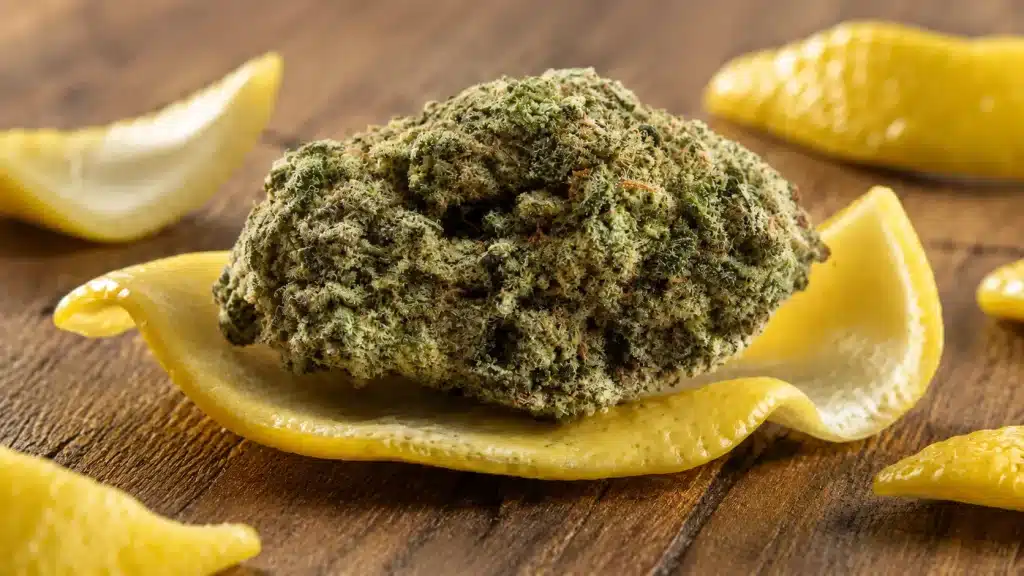
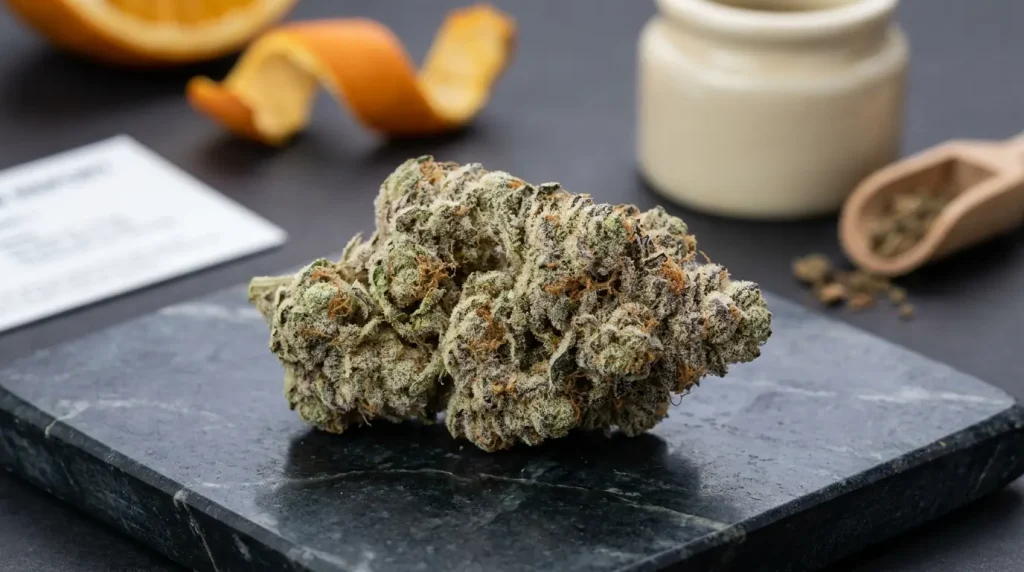
Snow Caps weed is immediately recognizable. The buds are covered in a thick white layer of THCa crystals, producing a frosty shine unlike standard flower. Underneath the coating, the buds are typically dense and sticky, often showing green or purple tones depending on the base strain. The visual contrast between the white exterior and the colored flower is one of the most distinctive traits of the product category.
Terpene Profile
The terpene character in Snow Caps comes primarily from the base flower. Because no cannabis oil is used in the coating process, the isolate layer does not dilute or alter the original terpene profile the way oil-based Moonrocks can.
| Terpene | Flavor Note | Reported Effect |
|---|---|---|
| Caryophyllene | Spicy, peppery | Anti-inflammatory, body ease; the only terpene that binds directly to CB2 receptors |
| Humulene | Earthy, woody, faintly hoppy | Anti-inflammatory; associated with mild appetite suppression |
| Myrcene | Earthy, herbal | Relaxing, calming; supports deeper body effects |
| Limonene | Citrus, lemon | Mood-lifting, stress-reducing |
| Terpinolene | Floral, fresh, faintly piney | Mood elevation, associated with uplifting sativa-leaning effects |
| Pinene | Fresh pine | Mental clarity, alertness |
| Ocimene | Sweet, herbal | Light, energizing |
Weedmaps lab data for the base Snowcap strain identifies caryophyllene and humulene as two of the dominant terpenes, with myrcene rounding out the primary profile. Terpinolene is also associated with the broader Haze lineage and contributes to the strain’s characteristic mental brightness.
Effects of Snow Caps Weed
Snow Caps weed is fast-acting and long-lasting. Users commonly report effects moving through two phases.
- Fast onset: Effects typically arrive within 10 to 15 minutes. The initial sensation is often described as an immediate and powerful uplift, sometimes accompanied by brief dizziness in users with lower tolerance, particularly if too large a first pull is taken.
- Cerebral phase (early): Users commonly report feeling happy, mentally clear, and more social or talkative in the early stage. Creativity and focus are frequently described as elevated.
- Body relaxation phase (later): As the high continues, the body tends to feel heavier and calmer. Muscle tension eases, and the overall experience settles into a deeply relaxed state.
- Day vs. night use: Many users prefer Snow Caps in the evening because the relaxing body effects make winding down significantly easier than during daytime hours.
| ⚠️ Advisory: First-time users of high-potency Snow Caps commonly report an initial head rush or brief dizziness in the first 10 to 15 minutes after use, particularly with larger first pulls. Start with a single small puff and wait at least 15 to 20 minutes before considering more. |
Side Effects
Because of the high THCa concentration, side effects are more likely and more pronounced than with regular flower, especially for users who are new to high-potency products or who consume too quickly.
- Dry mouth and dry eyes: The most common side effects across all high-THC products. Staying hydrated before and during use helps significantly.
- Dizziness or lightheadedness: Particularly common in the first 15 minutes after a larger pull. Sitting down and breathing slowly usually resolves this quickly.
- Anxiety or paranoia: More likely at higher doses or in users sensitive to THC. Using in a calm, familiar setting with people you trust reduces this risk.
- Overconsumption: The potency makes it easy to take more than intended before the first dose has fully kicked in. Always pace the session.
What Users Commonly Report: Potential Therapeutic Uses

Beyond recreational use, users commonly describe Snow Caps weed and the base Snowcap strain in the context of several specific needs. These are user-reported experiences and not medical claims.
- Stress and daily anxiety: The uplifting early phase users describe may help quiet racing thoughts and ease general stress when used in controlled amounts.
- Low mood: Mood-lifting terpenes like limonene, alongside the cerebral onset, are commonly associated with a more positive mental state in user reports.
- Sleep support: In higher doses, the deep body relaxation users describe tends to make it easier to fall asleep. Many users describe it as better suited to evening than daytime sessions for this reason.
- Muscle tension and mild pain: The calming body high users report may ease muscle tension and general discomfort, especially in batches where the base strain leans more indica-forward.
- Fatigue (base Snowcap strain): The natural Snowcap strain without heavy THCa coating may provide an energy and focus boost during the day because of its sativa-dominant genetics.
- Appetite: Like most cannabis products, Snow Caps weed may stimulate appetite, which users sometimes find useful for managing low hunger.
| ⚠️ Advisory: These are user-reported experiences, not medical claims. Snow Caps weed is not a treatment or cure for any condition. Always consult a qualified healthcare professional before using cannabis for medical purposes. |
Potency and Tolerance Guide
Matching consumption to your experience level is especially important with Snow Caps given how quickly the potency compounds with larger amounts.
| Experience Level | Typical THCa Range | Suggested Intake | Common Effects | Guidance |
|---|---|---|---|---|
| Beginner | 40-50%+ | 1-2 small puffs | Very strong high, possible dizziness, fast onset | One puff, then wait 15 to 20 minutes before deciding whether to use more |
| Intermediate | 50-70% | 2-4 small puffs | Strong head high with noticeable body relaxation | Pace the session and avoid stacking doses before the previous one has peaked |
| Advanced | 70%+ | 4+ puffs (controlled) | Intense euphoria, deep body calm, long-lasting effects | Best used in a relaxed, familiar setting; still start slowly with each new batch |
Best Ways to Smoke Snow Caps Weed
The THCa crystal coating requires a slightly different approach than standard flower. Grinding destroys the coating, and high flame intensity can burn off cannabinoids before they are inhaled.
- Bong (recommended): Water filtration cools the smoke and reduces harshness, which matters at this potency level. Take small, slow pulls rather than large rips.
- Glass pipe or bowl: Break a small piece off by hand and place it directly in the bowl. Hold the lighter slightly above the surface rather than directly on the flower to preserve the coating layer.
- Mixing into a joint: Break 0.2 to 0.3g of Snow Caps by hand and combine with regular flower. This softens the intensity and extends the session, making it a reasonable approach for users trying Snow Caps for the first time.
- Vaporizer: Use a temperature of around 420°F (215°C) to ensure full decarboxylation of THCa into THC. Lower temperatures may not fully activate the isolate coating.
Growing the Snowcap Strain

This section covers the original Snowcap strain, not Snow Caps weed. Cannabis cultivation laws vary by location; confirm growing is legal in your area before starting.
Snowcap is considered moderately difficult to grow, making it better suited to growers with some basic experience. Attention to light, airflow, and humidity is required for good results. With proper care, the plant responds well and produces resin-heavy buds.
Indoor vs. outdoor: Both work, but indoor growing gives more consistent results because conditions can be controlled. Indoor yield runs around 350 to 450g/m2. Outdoor yield reaches approximately 12 to 16 oz per plant, with harvest in late October. Warm, sunny climates with low humidity favor outdoor grows.
Flowering time and yield: Flowering time is 9 to 10 weeks, typical for a sativa-dominant hybrid. Buds are dense and heavily covered in trichomes. Regular pruning and consistent airflow improve both yield and plant health. The strain is noted as likely clone-only in origin, meaning seed availability can be limited.
How It Compares
If you’re deciding between Snow Caps and other high-potency or sativa-leaning options, here’s a quick reference.
| Product / Strain | THC / THCa Range | Type | Effect Profile | Best For |
|---|---|---|---|---|
| Snow Caps Weed | 50-80% THCa | THCa-coated flower | Euphoric uplift into deep body calm | Experienced users, evening relaxation |
| Snowcap Strain | 20-25% THCa | Sativa-dominant hybrid | Cerebral, creative, uplifting | Daytime use, focus, social sessions |
| Moonrocks | ~40-50% THC | Oil-and-kief coated flower | Heavy, full-body, slow-burning | Deep relaxation, nighttime use |
| Green Crack | 15-25% THC | Sativa-dominant hybrid | Sharp, energetic, focused | Daytime, productivity, focus |
Pros and Cons
| Pros | Cons |
|---|---|
| Extremely potent and long-lasting effects | Can be overwhelming for beginners |
| Unique frosty appearance | Higher risk of anxiety or dizziness at larger doses |
| Terpene profile of the base flower is preserved | More expensive than standard flower |
| Highly popular among experienced users | Easy to overconsume due to high THCa levels |
Legality
Whether Snow Caps weed is legal depends on how the product is made and where you are located.
Hemp-derived THCa Snow Caps can fall under the 2018 Farm Bill in the United States and are federally legal if the Delta-9 THC content stays below 0.3% by dry weight. This is how some online brands are able to ship them. However, THCa converts to THC when heated, so the effective potency once smoked is significantly higher than the label suggests for Delta-9 content alone.
Marijuana-derived Snow Caps are regulated under state cannabis laws and are only legal in states where marijuana is permitted for medical or recreational use. They are not federally legal.
State rules around THCa products have tightened in several markets since 2023. Always check your specific state’s current regulations before purchasing, and buy only from brands that provide third-party COAs confirming cannabinoid content and Delta-9 compliance.
Price and Where to Buy
Snow Caps weed is a premium product, and pricing reflects both the THCa isolate used and the additional production step involved in coating the flower.
Typical price range: $15 to $25 per gram; $50 to $80 per eighth (3.5g), depending on the brand and location.
Snow Caps are available in licensed dispensaries where cannabis is legal, often listed in premium or infused flower sections. Online hemp-derived versions are available from brands that provide full COA documentation. Always verify that any product you buy includes a current, third-party lab report.
How to Store Snow Caps Weed
The THCa coating is delicate and loses potency faster than standard flower if stored improperly.
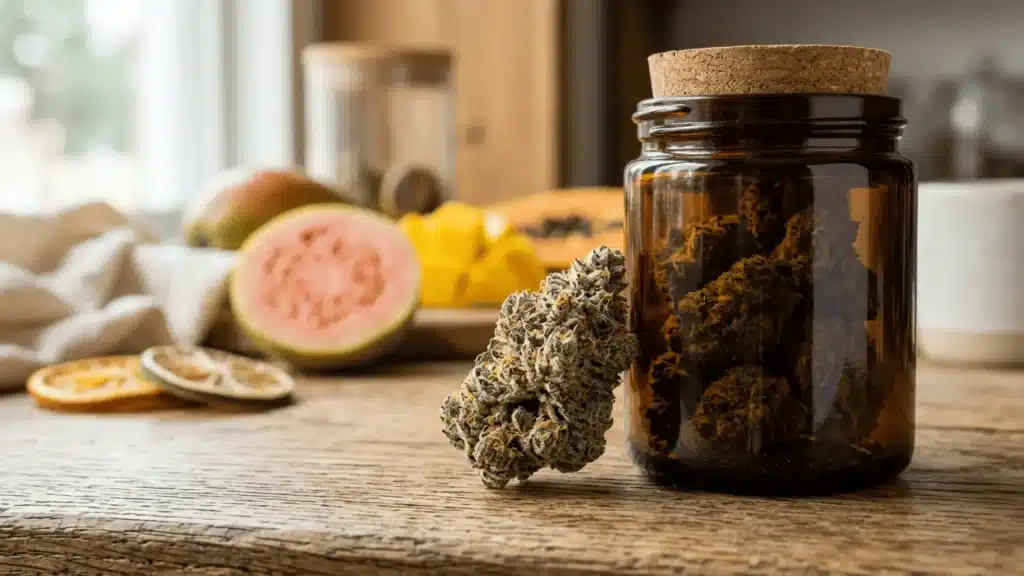
- Airtight glass jar: Glass is the correct container. Plastic bags generate static that pulls the crystal coating off the buds.
- Cool temperature: Store below 70°F (21°C). Heat breaks down terpenes and degrades the isolate coating over time.
- Dark location: UV light degrades THCa. A drawer, cabinet, or dark shelf is preferable to a windowsill or countertop.
- Shelf life: Best consumed within 3 months for full flavor and potency. Properly stored, Snow Caps can remain usable for up to 6 months.
Should You Buy Snow Caps Weed?
Snow Caps weed makes sense for experienced cannabis users who want the highest available potency from flower without shifting entirely to concentrates. The clean terpene preservation and frosty visual appeal are genuine advantages over Moonrocks. The price is real, and the potency demands respect regardless of your tolerance level.
If you’re newer to cannabis or prefer a manageable, predictable experience, the base Snowcap strain at 20 to 25% THCa is the smarter starting point. You get the same terpene character and genetic profile at a fraction of the intensity, which makes it much easier to dial in a comfortable dose before considering the coated version.
Frequently Asked Questions
Is snow caps weed indica or sativa?
The base Snowcap strain is sativa-dominant. Users typically report it starts with cerebral uplift and focus before shifting into physical calm. Snow Caps weed as a product category can use any strain as the base, so the answer depends on what flower was used underneath the isolate coating. Always check the product label for the base strain information.
How strong is snow caps weed compared to regular flower?
Significantly stronger. Standard flower averages 18 to 25% THC. Snow Caps weed typically starts at 50% THCa and can exceed 70% on heavily coated batches. That difference is substantial enough that even experienced users commonly report a more intense experience than expected from their first session with Snow Caps.
What does snow caps weed taste like?
Users commonly describe earthy and gassy notes up front, followed by citrus or light sweetness and, on some batches, a mild minty or herbal finish. The base Snowcap strain is noted for a menthol-and-lemon character backed by the spice of caryophyllene. The THCa coating itself is flavorless, so the base flower’s terpene profile comes through clearly.
Can I grind snow caps weed?
No. Grinding destroys the THCa crystal coating and wastes a significant portion of what makes the product different from regular flower. Break it apart by hand and place it directly into a bowl or pipe, or mix small hand-broken pieces into a joint with regular flower.
Is snow caps weed good for sleep?
Many users report that Snow Caps weed at higher doses produces a deep body relaxation that makes falling asleep easier. The effect profile moves from cerebral uplift early to heavy body calm later, which is why most users describe it as better suited to evening than daytime sessions.
What temperature should I vape snow caps weed at?
Around 420°F (215°C) is the recommended starting point. Lower temperatures may not fully decarboxylate the THCa into THC, which means the full potency of the isolate coating will not be activated. Avoid very high temperatures, which can burn off terpenes before they are inhaled.
Does THCa snow caps weed show up on a drug test?
Yes. When heated, THCa converts to THC, and standard drug tests screen for THC metabolites. Hemp-derived Snow Caps that comply with the Farm Bill at point of sale will still convert to THC when smoked or vaped, meaning use will almost certainly result in a positive drug test result for cannabis.
What is the difference between snow caps and moonrocks?
The main difference is the coating method. Snow Caps use dry THCa isolate powder, which preserves the base flower’s terpene profile and produces a dry, crystalline texture. Moonrocks are dipped in cannabis oil before being rolled in kief, which creates a darker, stickier product with a heavier texture. Snow Caps are generally cleaner-tasting but not quite as physically dense as Moonrocks.
Sources
- Weedmaps, “Snowcap strain profile, terpene data, and effects.” Lab data confirms caryophyllene, humulene, and myrcene as dominant terpenes; 23%+ THCa recorded.
- Leafly, “Snowcap strain: sativa-dominant hybrid, Snow White x Haze.” Effects described as cerebral, creativity-supporting, and uplifting.
- Fern Valley Farms, “THCa Snow Caps product page.” Details on cannabis-derived terpene infusion process and isolate coating method.