Drug test results can feel confusing when you see unfamiliar abbreviations on the report. One label that often raises questions is what is BZO on a drug test, especially if you’re reviewing a workplace or medical screening result.
From my experience working around lab reports and testing standards, I’ve seen how easily these abbreviations can cause unnecessary worry when the meaning isn’t clear.
In this guide, I’ll help you understand how BZO testing appears in drug screening reports and what it signals during laboratory analysis.
You’ll also learn how testing methods detect substances, how labs interpret results, and what factors influence detection timelines. By the end, you’ll have a clearer view of how drug testing panels work and how to read BZO results with confidence.
Disclaimer : This information is for educational purposes only and does not replace professional medical advice, diagnosis, or treatment. Always consult a healthcare provider for medical concerns.
Quick Answer: What BZO Means on a Drug Test
- BZO is the abbreviation for benzodiazepines on drug screening reports
- A positive BZO result means benzodiazepine metabolites were found above the cutoff level (typically 200 to 300 ng/mL in urine)
- A positive result from a valid prescription does not automatically mean you failed the test; a Medical Review Officer reviews the context
- Confirmation testing (GC-MS or LC-MS/MS) is required before any positive is considered final
- Detection windows range from less than 24 hours to 30 days depending on which benzodiazepine was taken
What is BZO on a Drug Test?
BZO stands for benzodiazepines, a group of medications that calm the nervous system and reduce brain activity. These drugs work by increasing the effect of a neurotransmitter called gamma-aminobutyric acid (GABA).
GABA slows down nerve signals in the brain, which helps create feelings of relaxation, sedation, and reduced anxiety.
Doctors commonly prescribe benzodiazepines to treat conditions such as anxiety disorders, panic attacks, insomnia, muscle spasms, and seizures.
Because these medications can affect alertness, coordination, and reaction time, laboratories include benzodiazepines in many workplace, medical, and legal drug screening panels.
Benzodiazepines are classified as Schedule IV controlled substances by the DEA, meaning they carry a recognized potential for dependence and misuse, which is a primary reason they are included in workplace, medical, and legal drug screening panels.
Benzo-related overdose deaths increased sevenfold between 1999 and 2015 in the United States, rising from approximately 1,135 to 8,791 deaths. This trend is one reason BZO screening has become more common in workplace and clinical settings in recent years.
Why BZO is Tested in Drug Screens
Drug tests check for benzodiazepines because these medications can affect thinking, movement, and reaction time. These effects may reduce a person’s ability to safely perform tasks that require focus and coordination.
BZO screening is commonly used to:
- Detect misuse: Identify individuals taking benzodiazepines without a prescription or using higher doses than prescribed
- Monitor compliance: Ensure patients follow prescribed medication plans in treatment programs
- Protect workplace safety: Reduce accident risks in safety-sensitive jobs
- Meet legal requirements: Verify sobriety in cases such as probation monitoring or DUI investigations
For these reasons, benzodiazepine screening is frequently included in workplace and legal drug testing programs.
How Does a BZO Drug Test Work?

BZO drug tests detect benzodiazepines or their metabolites through biological samples. Different testing methods offer various detection windows and accuracy levels.
Each test type serves specific purposes depending on timing needs, budget, and legal requirements.
What the Lab Actually Screens For: The Oxazepam Metabolite
This is something most general guides skip over. Standard BZO urine tests do not primarily screen for the parent drug you took. Less than 1% of most benzodiazepines are excreted in urine in their original form.
The rest are converted by the liver into metabolites, and most immunoassay screens are calibrated to detect oxazepam , a common metabolite shared by several benzodiazepines including diazepam, chlordiazepoxide, and temazepam.
This matters for two reasons.
First , a drug you took may not appear on a BZO screen if it does not metabolize into oxazepam or a structurally similar compound.
Second , the detection window for a given benzodiazepine in urine depends partly on how long oxazepam remains at detectable concentrations, not just on the parent drug’s half-life.
In a lab setting, confirming which specific benzodiazepine was actually taken requires chromatographic testing (GC-MS or LC-MS/MS), not the initial immunoassay screen.
1. Urine Testing (Most Common Method)
Urine testing is the most widely used method because it balances cost, accuracy, and convenience.
The process typically involves:
- Collecting a urine sample in a sterile container
- Running an initial immunoassay screening test
- Reviewing results based on cutoff levels
- Confirming positive results with laboratory analysis, such as GC-MS
Initial results usually take 24–48 hours , while confirmation testing may take a few additional days.
One point worth knowing: diluted urine samples can push drug concentrations below the cutoff threshold, producing a negative result even when benzodiazepines are present. Labs check urine creatinine and specific gravity to flag overly diluted samples. A sample flagged as diluted may be treated as invalid and require a retest.
2. Blood Testing
Blood tests are mainly used in medical or legal situations that require precise measurement of substances in the body.
Common uses include:
- Emergency room cases involving suspected overdose
- DUI investigations
- Workplace accident investigations
- Legal cases requiring detailed drug concentration analysis
Because blood testing is invasive and costly, it is less common in routine workplace screening.
3. Saliva Testing
Saliva testing is becoming more common in workplaces because collection is quick and non-invasive.
Benefits include:
- Simple mouth-swab collection
- Direct observation to prevent tampering
- Rapid results compared with laboratory tests
This method is most effective for detecting recent drug use .
4. Hair Follicle Testing
Hair testing can identify drug exposure over a much longer period than other tests.
The process works by detecting drug traces stored in hair as it grows. A small hair sample can reveal drug use patterns over several months.
Hair tests are most often used in:
- Pre-employment screening
- Legal investigations
- Long-term drug monitoring
However, they cannot detect very recent drug use.
5. Fingernail Testing
A lesser-known method that most articles overlook: fingernail testing can detect benzodiazepine use going back 3 to 6 months.
Drug metabolites become trapped in keratin fibers as the nail grows and remain there until the nail is clipped or grows out.
This method is most commonly used in court-ordered testing, child custody disputes, and legal investigations requiring historical drug use data over a longer window than hair can provide.
How Long Does BZO Stay in Your System?
Benzodiazepines stay detectable anywhere from 1 day to 30 days. This depends on the specific drug, frequency of use, and personal metabolism.
The detection window varies significantly based on whether the benzodiazepine is short-acting or long-acting. Here’s how long different benzodiazepines stay detectable in urine tests:
| Benzodiazepine | Drug Type | Detection Time |
|---|---|---|
| Valium (Diazepam) | Long-acting | 10–30 days |
| Xanax (Alprazolam) | Intermediate | 3–5 days |
| Ativan (Lorazepam) | Intermediate | 5 days |
| Klonopin (Clonazepam) | Intermediate | 5–7 days |
| Ambien | Short-acting | 1 day |
| Halcion (Triazolam) | Short-acting | 7–15 hours |
Valium stays in the system the longest, while Halcion clears the fastest. This happens because each drug is processed differently by the body. The longer a benzodiazepine is designed to work, the longer it remains detectable in urine tests.
Factors That Affect BZO Detection Time
Several biological and lifestyle factors can influence how long benzodiazepines remain detectable.
These include:
- Metabolism rate: Faster metabolism clears drugs more quickly
- Frequency of use: Long-term users retain metabolites longer
- Body fat percentage: Benzodiazepines are fat-soluble and may accumulate in fatty tissue
- Age and health: Liver function and overall health affect drug processing
- Dosage: Higher doses may remain detectable for longer periods
Because these factors vary from person to person, detection timelines can differ significantly.
Drugs That Show Up as BZO on a Drug Test
Several medications fall under the benzodiazepine category and may trigger a positive BZO result.
Common examples include:
- Alprazolam (Xanax)
- Diazepam (Valium)
- Lorazepam (Ativan)
- Clonazepam (Klonopin)
- Temazepam
- Oxazepam
- Midazolam
- Chlordiazepoxide
Even when taken legally with a prescription, these medications may appear in drug test results.
What Can Cause a False Positive BZO Drug Test?
Certain medications may sometimes trigger false positive results during benzodiazepine screening tests.
| Medication | Common Use |
|---|---|
| Sertraline (Zoloft) | Antidepressant used to treat depression and anxiety |
| Oxaprozin | Non-steroidal anti-inflammatory drug (NSAID) for pain and arthritis |
| Naproxen | A pain reliever commonly used for inflammation and joint pain |
| Efavirenz | Antiviral medication used in HIV treatment |
| Tolmetin | An anti-inflammatory drug used to treat arthritis symptoms |
False positives are one of the main reasons confirmation testing exists. An immunoassay screen is designed for speed and cost efficiency, not specificity.
It can cross-react with structurally similar compounds and generate a positive signal even in the absence of a true benzodiazepine.
GC-MS or LC-MS/MS confirmation testing resolves this by identifying the exact molecular compound present in the sample. In a properly run testing program, no initial positive should ever be reported as a final result without confirmation.
It is also worth knowing that false negatives exist. Some benzodiazepines, particularly newer designer compounds or those that do not share structural similarity with oxazepam, may not trigger a standard BZO immunoassay even when present.
If a specific benzodiazepine is suspected and the initial screen is negative, a targeted confirmatory test should be requested.
Scientific Evidence on Benzodiazepine (BZO) Detection
Scientific research has helped improve the accuracy and reliability of benzodiazepine (BZO) detection in drug testing.
Modern drug tests typically begin with immunoassay screening , which quickly identifies possible benzodiazepine presence in urine or blood samples. However, this initial screening can sometimes produce false positives, which is why confirmation testing is important.
A widely cited study titled “Detection of Benzodiazepines in Urine Using Immunoassay and GC–MS Confirmation,” published in the Journal of Analytical Toxicology , explains that confirmation methods such as Gas Chromatography–Mass Spectrometry (GC-MS) are considered the gold standard for identifying specific benzodiazepines in the body.
Another research review, “Advances in Benzodiazepine Detection in Clinical and Forensic Toxicology,” published in Clinical Chemistry , highlights that newer laboratory techniques enable scientists to detect very low concentrations of benzodiazepines and distinguish among different medications.
These scientific methods help ensure that drug testing results are accurate, reliable, and able to identify the exact substance present in the body.
What Does a Positive BZO Test Result Mean?
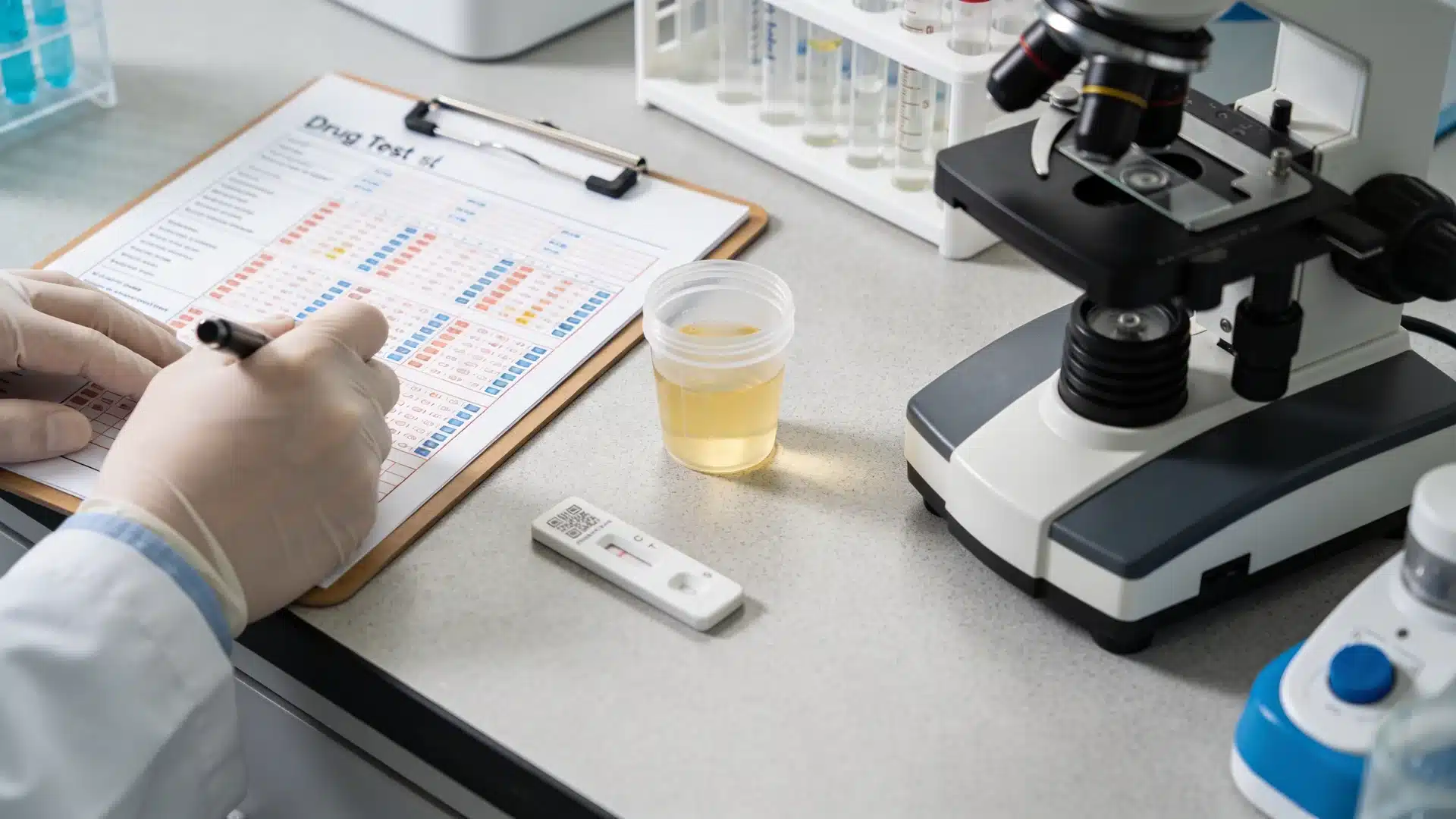
A positive BZO test result means benzodiazepines or their metabolites were detected in your sample above the threshold concentration level. It confirms the presence of these drugs in your system from recent use.
A positive result doesn’t automatically mean you failed the test if you have a valid prescription. It simply shows the drug is present. When your test comes back positive, here’s what it means:
- Benzodiazepines are present in your system from recent use
- You took the medication within the detection window (hours to weeks, depending on the drug)
- The concentration exceeded the cutoff level (typically 200-300 ng/mL for urine)
Understanding these factors helps determine whether the result is accurate or needs further investigation.
Steps to Take After a Positive BZO Result
1. Request Confirmation Testing
A positive immunoassay screen is not a final result. Ask for GC-MS confirmation, which identifies the exact substance present and rules out false positives from cross-reactive medications.
In most professional and legal testing programs, confirmation testing is standard procedure rather than something you need to request, but if it has not been mentioned, ask.
2. Provide Prescription Documentation
If you have a valid prescription, gather documentation: the medication bottle, pharmacy records, or a letter from your prescribing physician. Provide this to the Medical Review Officer before or during their review, not after a decision has been made.
3. Understand What a Medical Review Officer (MRO) Does
In federally regulated workplace drug testing, a Medical Review Officer is a licensed physician responsible for reviewing all confirmed positive results before they are reported to an employer.
The MRO contacts the tested individual to ask about any legitimate prescription or medical explanation for the positive result. If a valid prescription is documented, the MRO can report the result as negative to the employer.
This step is often where confusion happens. Many people who test positive on a BZO screen assume they have failed the test before the MRO review has even occurred.
The screen result and the final reported result are not the same thing. The MRO review is the stage where context is applied.
4. Review the Testing Policy
Many workplaces allow retesting or a formal review process if results are disputed. Understand the specific policy in place before responding. Knowing your rights in the testing program helps you respond appropriately and prevents decisions from being made based on an unchallenged preliminary result.
5. Communicate Clearly and Document Everything
If the test is related to employment or legal matters, communicate directly and honestly with the appropriate authority. Keep copies of all documentation: prescription records, pharmacy receipts, MRO correspondence, and any written communications about the result. This documentation trail is your primary protection if the result is disputed.
The Bottom Line
By now, you should have a clearer understanding of how BZO appears in drug test reports and what those results actually indicate.
I walked you through how laboratories detect benzodiazepines, how long they may remain detectable, and why confirmation testing is sometimes necessary for accurate interpretation.
The most common mistake I saw in practice was people treating an initial immunoassay positive as a final outcome. The immunoassay is a screening tool, built for speed, not for specificity. By the time a result has gone through GC-MS confirmation and MRO review, the picture is much clearer. If you are taking a prescribed benzodiazepine and have an upcoming drug test, disclose your prescription to the testing administrator beforehand. That single step resolves the vast majority of positive-result situations before they become problems.