If you’ve landed on this page mid-panic, take one slow breath before you read any further. You are not in danger.
No one has ever died from a cannabis overdose, and what you’re feeling right now will absolutely pass.
In harm-reduction work, we call this “greening out,” and it is more common than most people admit, especially now that many products test at 30%+ THC. The fear almost always exceeds the actual risk. Knowing that early is half the job.
Whether you smoked too much, ate an edible that took an hour to kick in, or hit a concentrate that knocked you sideways, I’ll cover every scenario.
You’ll know exactly what to do right now, what to expect over the coming hours, and how to recover smarter next time.
5 Easy Steps on How to Get Unhigh Quick
Feeling overwhelmed after too much cannabis is more common than most people admit. These five steps work quickly to bring you back to baseline; do them in order:
- Step 1: Find a safe, quiet spot. Sit or lie down somewhere familiar, dim the lights, and step away from crowds. Overstimulation makes anxiety significantly worse.
- Step 2: Control your breathing. Try box breathing: inhale for 4 seconds, hold for 4, exhale for 4, hold for 4, repeat 5 times to activate your parasympathetic nervous system.
- Step 3: Drink water slowly. Small sips of cold water over five minutes. Skip coffee, alcohol, and energy drinks; all three raise heart rate and worsen anxiety.
- Step 4: Eat a light snack. Crackers, plain bread, fruit, or rice are the best options here. Avoid high-fat foods such as nuts, cheese, or avocado: clinical pharmacist guidance from GoodRx notes that high-fat foods can increase THC absorption and worsen the high. Low-fat carbs stabilize blood sugar, which directly reduces dizziness and the panicked racing feeling, without amplifying the effects already in your system.
- Step 5: Ground yourself. Name 5 things you see, 4 you feel, 3 you hear, 2 you smell, 1 you taste, then say aloud: “I am safe. This is temporary. It will pass.”
Steps two and five work together to interrupt the anxiety-THC feedback loop faster than anything else here. Most people feel noticeably calmer within twenty to thirty minutes.
What Actually Helps When You’re Too High

Beyond the immediate checklist, here are methods ranked by available evidence, from most effective to worth trying.
1. Time: The Only Guaranteed Method
Nothing removes THC from your system instantly. According to the National Institute on Drug Abuse (NIDA), THC metabolizes on its own timeline: smoking and vaping typically produce a high lasting 2–4 hours, while edibles can last 6–12 hours or more. Knowing this upfront stops the spiral of “why isn’t anything working?”
2. CBD: The Most Science-Backed Remedy
CBD may partially occupy the same cannabinoid receptors as THC, reducing psychoactive intensity. Sublingual CBD oil absorbs fastest; 25–50mg is a common starting dose.
Research published by the National Library of Medicine supports early evidence for CBD moderating THC effects, though more human trials are needed. Our guide on which CBD brands to avoid covers what products and brands to avoid.
3. Black Pepper: The Folk Remedy with a Scientific Angle
Sniff or lightly chew 2–3 whole black peppercorns. Black pepper contains beta-caryophyllene (BCP), a terpene that binds to CB2 receptors and may counteract anxiety.
Early terpene research backs the mechanism, though direct human trials on weed-induced anxiety are limited. Low risk, worth trying.
4. Lemon and Citrus: Anecdotal but Plausible
Adding lemon to your water or simply smelling citrus rinds has been cited as a calming remedy across cannabis communities for decades, and there is a loosely plausible mechanism: the terpene limonene, found in citrus peel, has reported anti-anxiety effects in early research.
Evidence in humans is limited, but the intervention carries zero risk and many users find it helpful. Squeeze half a lemon into cold water and sip slowly.
5. Pine Nuts and Pinene: Worth Knowing About
A small handful of raw pine nuts is an anecdotal remedy that has some terpene-based rationale. Pine nuts contain pinene, a terpene studied for its potential role in memory retention and cognitive clarity.
Some users report that it reduces the “fog” that comes with a heavy high. Evidence is preclinical at best, but like black pepper and lemon, the risk is negligible.
6. Anti-Inflammatories: Limited Evidence, Worth Noting
A 2013 animal study from Louisiana State University found that certain anti-inflammatory drugs appeared to counteract cannabis-induced cognitive effects.
Weedmaps cites this in its harm-reduction guidance. The evidence is preliminary and animal-based, so it does not warrant a confident recommendation, but it is a legitimate entry in the available literature. Do not combine with alcohol.
7. Shower, rest, and fresh air
Splashing cold water on your face triggers the dive reflex and measurably lowers your heart rate within seconds. A gentle walk outside (not a run) provides a grounding change of scenery and increases circulation.
Sleep is the most effective method after CBD: THC metabolizes while you’re unconscious, and you wake at significantly reduced intensity.
How to Sober Up from Weed
Recovery time depends largely on how you consumed cannabis in the first place. Each method hits differently, peaks at a different rate, and clears your system on its own timeline. Here’s the full plan for the hours ahead:
| Method | Onset | Peak | Duration | Best recovery tip |
| Smoking/joint | 5–10 min | 20–45 min | 2–4 hrs | Hydrate, rest, breathe |
| Vaping | 2–5 min | 15–30 min | 1.5–3 hrs | Faster onset = faster resolution |
| Edibles | 30–90 min | 2–4 hrs | 6–12 hrs | Sleep is your best tool |
| Concentrates/dabs | Immediate | 15–30 min | 2–4 hrs | CBD + rest immediately |
| Delta-8 / HHC | 10–60 min | Varies | 4–8 hrs | Same approach as Delta-9 |
Edibles consistently catch people off guard because the delay masks how much was consumed. Knowing your method upfront helps you set realistic expectations for how long recovery actually takes.
How to Come Down from a High (Especially a Bad One)

|
When to call 911 immediately: Chest pain or pressure, difficulty breathing, uncontrollable vomiting, seizure, loss of consciousness, or signs of psychosis. SAMHSA’s free helpline is available 24/7 at 1-800-662-4357. For non-life-threatening concerns, Poison Control is available at 1-800-222-1222. |
You’re on the couch, your heart is pounding, every minute feels like ten. Today’s high-potency products, some testing at 30%+ THC, make this experience more common than ever, even for regular users.
Knowing the difference between a rough experience and a real emergency is the most important thing to understand before anything else:
- Today’s products are significantly stronger. Many current cannabis products test at 30%+ THC, making overwhelming highs more common, even for regular, experienced users.
- A bad high is uncomfortable, not dangerous. Racing heartbeat, paranoid thoughts, dizziness, nausea, time distortion, and feeling detached are all within the normal range of a difficult experience.
- Know when to call 911. Seek immediate help for chest pain, difficulty breathing, uncontrollable vomiting, loss of consciousness, seizure, or signs of psychosis. SAMHSA’s free helpline, 1-800-662-4357, is also available 24/7.
- THC and anxiety create a feedback loop. High doses trigger the same brain region as a panic attack, focusing on how high you feel worsens anxiety, which intensifies the perception of being high. If you’re looking for how to get sober fast, breaking this loop early is the most effective place to start.
- Breaking the loop requires active redirection. Passive waiting prolongs the cycle. The 5-4-3-2-1 grounding technique is specifically designed to interrupt this pattern.
- Delta-8 and HHC are not milder alternatives. At sufficient doses, both produce identical panic and bad-high symptoms to Delta-9 THC; dose them with equal care and apply every technique here.
Understanding where the line sits between discomfort and genuine emergency removes a significant layer of panic on its own. Most experiences resolve with time, rest, and the right grounding techniques.
Why Do I Feel High When I’m Not?
If it has been days since you last used cannabis and you still feel strange, foggy, or disconnected from reality, there is a very specific reason, and it is not permanent.
Reason 1: Lingering THC in Fat Cells
THC is fat-soluble, meaning it is stored in fat cells and released gradually rather than cleared all at once. This is especially noticeable after edibles and concentrates.
According to clinical pharmacist guidance from GoodRx, heavy users may feel residual effects for 24–48 hours after use. Hydration, light exercise, and consistent sleep are the most reliable recovery tools available during this window.
Reason 2: Depersonalization/Derealization (DPDR) from Cannabis
Feeling detached from your body or like reality isn’t quite real is called depersonalization/derealization, and it’s more common after cannabis than most people realize. The brain can treat a frightening high as a traumatic event and enter a protective dissociative state that mimics the original experience, even after THC has fully cleared.
The American Psychiatric Association distinguishes this from drug intoxication entirely. DPDR from cannabis does not indicate brain damage; it is temporary, and returning to a normal routine is the most effective path through it.
Reason 3: Anxiety Mimicking a High
Cannabis highs and anxiety activate overlapping brain systems, which is why the two are so difficult to separate once the cycle starts. Racing heart, altered perception, and unprovoked fear are symptoms of both, and each one feeds the other.
The more you focus on feeling high, the stronger the anxiety becomes, and the stronger the anxiety, the more convincing the high feels. The 5-4-3-2-1 grounding technique from Step 5 above is the most direct way to interrupt this loop.
This is the pattern I encounter most often in people who describe feeling high days after their last session: it is not residual THC driving the experience, it is the anxiety loop maintaining it.
The intervention that works is behavioral, not chemical. Grounding techniques, a consistent daily routine, and deliberate reduction of “Am I still high?” monitoring are more effective than any supplement or remedy at this stage.
Reason 4: Other causes (if you haven’t used cannabis recently)
Dehydration, sleep deprivation (24+ hours without sleep produces effects similar to mild intoxication), blood sugar fluctuation, certain antihistamines and antidepressants, and hyperventilation from anxiety can all produce “high”-like sensations.
If this happens frequently without cannabis use, speak to a doctor; it can indicate vestibular issues, blood pressure irregularities, or an anxiety disorder.
How to Recover from Edibles (When the High Hits Too Hard)
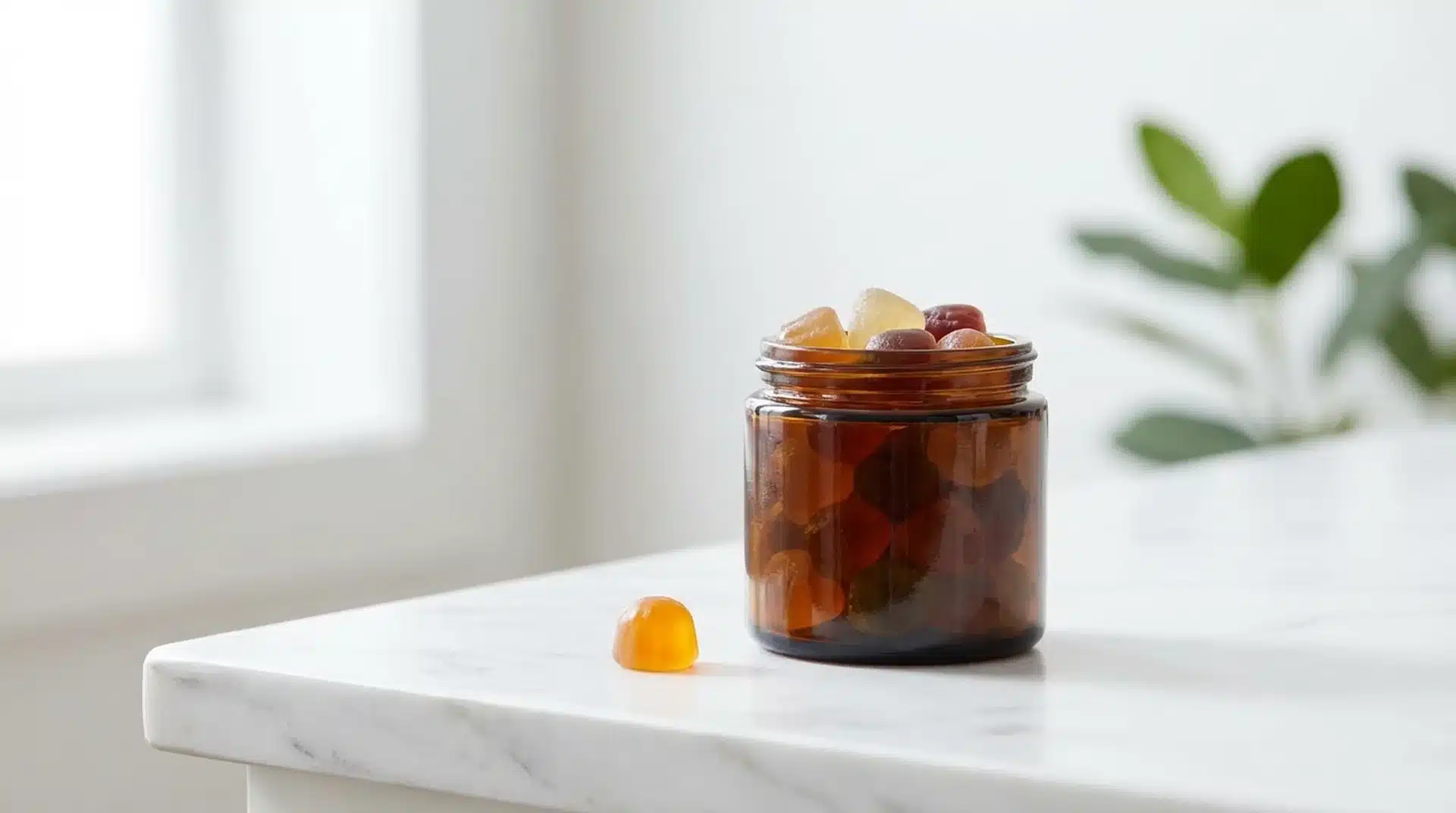
Taking an edible and feeling nothing is where most people go wrong. The delayed onset is predictable once you understand the biology, and recovery becomes far more manageable with the right approach.
You took a gummy, felt nothing, took another half. Then both hit at once. This is the most common edibles mistake, and it’s rooted in how differently they work in the body.
In my harm-reduction sessions, edibles stacking was the single most frequent scenario people came to me with.
The pattern was almost identical every time: they waited 45 minutes, decided it wasn’t working, dosed again, and then both doses arrived within the same 30-minute window.
The rule I gave everyone was simple: one dose, two full hours, no exceptions.
1. Why Edibles Hit Harder Than Smoking
Edibles follow a different metabolic path than inhaled cannabis, which explains both the delay and the intensity. Understanding this prevents the most common mistake people make:
- Liver conversion changes everything. Your liver converts Delta-9 THC into 11-hydroxy-THC, a compound two to three times more potent that crosses the blood-brain barrier more readily.
- Onset takes 30–90 minutes. The delay is the trap; most people assume nothing is happening and redose too early, which leads to overwhelming highs.
- Both doses hit simultaneously. By the time the first dose peaks, the second is already processing, stacking the effects at the worst possible moment.
The biology here is well-documented in peer-reviewed pharmacology research on oral cannabinoid metabolism. Knowing this in advance is the single most useful thing you can carry into any edibles experience. If you want to know which edibles to take for pain relief, then we have a guide on Edibles for Pain after Surgery.
2. How to Recover from Edibles: Step by Step
Once the high peaks, your goal shifts from prevention to management. These steps work with your body’s natural processing rather than against it:
- Step 1: Stop all consumption. No additional edibles, no smoking, no other cannabis products, adding more extends and deepens the experience significantly.
- Step 2: Hydrate. Water, coconut water, chamomile or peppermint tea, or electrolyte drinks. Avoid caffeine, as it raises heart rate and worsens anxiety noticeably.
- Step 3: Eat if your stomach allows. Choose low-fat complex carbs: plain bread, crackers, rice, or fruit. Avoid high-fat foods, which can increase THC absorption and extend the experience rather than shorten it.
- Step 4: Take CBD if available. Sublingual oil absorbs fastest; CBD gummies take longer but still help counteract THC’s more intense effects.
- Step 5: Sleep. The high will still be present when you wake, but at a fraction of the intensity. Sleep is the most reliable recovery tool available.
- Step 6: Move lightly. A slow walk in fresh air supports recovery; avoid anything strenuous that raises your heart rate.
Recovery from edibles takes longer than recovery from smoking, sometimes several hours. Patience and rest do more than any active intervention at this stage.
Dosing too heavily before bed, particularly with edibles, often results in an edibles hangover that feels noticeably different from the grogginess a smoked session leaves behind.
3. What Not to Do While Recovering
Certain choices consistently extend or worsen an edible’s experience. Avoiding these keeps recovery on the shorter end of the timeline:
- Avoid alcohol. Cross-fading amplifies both substances dramatically; the combination is far more disorienting than either alone.
- Skip the coffee. Caffeine raises heart rate and compounds anxiety, two things already working against you during a difficult experience.
- Do not drive. Edibles impair reaction time and judgment for many hours, far longer than most people expect.
- Step away from your phone. Searching symptoms online surfaces alarming results that fuel panic and extend the psychological discomfort considerably.
These aren’t overcautious suggestions; each one has a direct physiological or psychological basis. Removing these variables meaningfully shortens the uncomfortable window.
Edibles are forgiving once you know how they work and what recovery looks like. The worst experiences almost always trace back to redosing too early; one dose, enough time, and patience cover most situations.
The Weed Hangover: Why You Still Feel Off the Next Day
Woken up foggy after a heavy session? That’s a weed hangover, and it’s real. Here’s how to recover from a weed hangover:
- Drink a full glass of water before coffee upon waking
- Eat a nutritious breakfast, protein and complex carbs stabilize blood sugar and mood
- Take a 20-minute walk, which clears the head faster than almost anything else
- Delay caffeine by 1–2 hours to avoid spiking anxiety
- Avoid cannabis for the rest of the day to let your system reset
High-potency products and edibles leave residual THC metabolites overnight, and THC disrupts sleep architecture, so even eight hours of sleep leaves you under-rested.
Some users find that going too deep into sedative territory affects how they feel the following morning; that next-day grogginess from weed has more to do with dose timing than the strain itself.
How to Get High Without Weed: Natural Alternatives

Many people look for this because they want the relaxation, euphoria, or altered perspective cannabis provides, without the substance. These methods produce genuine neurochemical effects.
1. The Runner’s High: Endocannabinoids, Not Just Endorphins
Sustained aerobic exercise triggers the release of the body’s own cannabis-like compounds. Research published in the Proceedings of the National Academy of Sciences confirms that endocannabinoids, not just endorphins, are responsible for the runner’s high. Requires 20–40 minutes of sustained moderate effort to kick in.
2. Breathwork: The Closest Thing to an Instant Natural High
The Wim Hof breathing method alters blood CO2/O2 levels, producing lightheadedness, warmth, and genuine euphoria. Thirty deep breaths, exhale and hold as long as comfortable, deep inhale and hold 15 seconds, repeat three to four rounds. Never practice in water, while driving, or anywhere you could fall.
3. Deep Meditation and Flow States
Experienced meditators reach altered states through sustained practice. “Flow states”, being completely absorbed in music, art, writing, or climbing, produce dopamine surges that mimic mild euphoria. Twenty to thirty minutes of uninterrupted deep focus is the minimum threshold.
4. Social Euphoria and Laughter
Deep social connection releases oxytocin, dopamine, and endorphins, the same trio as many recreational drugs. Genuine laughter lowers cortisol measurably. The highest natural high available: a night with people who make you laugh. These are not exact replacements for cannabis; they work differently.
How to Avoid Getting Too High Next Time
Most bad highs are preventable with a consistent dosing approach. The golden rule across every method and product is simple: start low, go slow, and build from there.
- Smoking/vaping: Take 1–2 small puffs and wait 15–20 minutes before assessing how you feel; effects arrive faster than most people expect.
- Edibles: Start with 2.5–5mg THC and wait at least two full hours before considering more; patience here prevents most bad experiences.
- Concentrates: Treat them as 3–5x more potent than flower by volume; what looks like a small amount is rarely a small dose.
- After a tolerance break: Your threshold has fully reset, as though it’s your first time, regardless of prior experience.
- CBD: THC ratio matters: A 1:1 product is dramatically less anxiety-inducing than pure THC, a useful starting point for anyone prone to anxiety.
- Set and setting count: Unfamiliar places, people you don’t trust, or pre-existing anxiety all significantly raise the risk of a difficult experience.
Tracking your doses and products in a journal or app quickly removes the guesswork.
When to Seek Help
Call 911 immediately if you experience chest pain or pressure, difficulty breathing, uncontrollable vomiting, seizure, loss of consciousness, or a complete break from reality.
For mental health and substance-use support, SAMHSA’s National Helpline at 1-800-662-4357 is free, confidential, and available 24/7 in both English and Spanish.
For non-life-threatening exposure concerns, Poison Control is available at 1-800-222-1222.
You can also reach the Crisis Text Line by texting HOME to 741741.
If DPDR symptoms persist beyond two to four weeks, speaking with a mental health professional is worth prioritizing; cognitive behavioral therapy is particularly effective for cannabis-induced DPDR, and the condition is treatable.
If cannabis regularly produces more anxiety than relief, that pattern is worth discussing with a doctor. NIDA’s cannabis resource page offers referral options and additional guidance.
Frequently Asked Questions
Can you get genuinely high without weed?
Yes, sustained aerobic exercise releases the body’s endocannabinoids; the Wim Hof breathwork method alters blood chemistry to produce euphoria; and deep flow states generate dopamine surges. These produce different but genuine altered states.
What helps sober you up fast from weed?
Time is the only method that actually sobers you up; nothing removes THC from your system instantly. However, controlled breathing, CBD oil (sublingual), drinking water, eating a light snack, and resting in a calm environment can significantly reduce how intense the experience feels while you wait.
What should you eat to get rid of a headache?
Light snacks work best: crackers, bread, fruit, or nuts. These stabilize blood sugar, which often drops during a cannabis high and worsens dizziness and panic. Avoid heavy, greasy food (harder to digest) and avoid caffeine entirely.
How long does it take to get unhigh?
Smoking or vaping typically produces a high lasting 2–4 hours. Edibles can last 6–12 hours (sometimes longer) because the liver converts THC into the more potent 11-hydroxy-THC. Concentrates are shorter in duration but more intense at onset.
Is there any way to get unhigh instantly?
No instant method exists. Sublingual CBD oil and controlled breathing work fastest, sometimes providing noticeable relief within 15–30 minutes, but time remains the only guaranteed solution.
Why do I feel high when I haven’t used weed recently?
The most common cause is lingering THC (especially from edibles, which stay in the system longer due to fat-cell storage). Another common cause is cannabis-induced depersonalization/derealization (DPDR). Anxiety can also produce symptoms that closely mimic a high.
What should you eat or drink to help come down from a high?
Choose low-fat, light options: plain crackers, bread, fruit, or rice. These stabilize blood sugar without increasing THC absorption. Avoid high-fat foods such as nuts, cheese, or avocado. Drink cold water, chamomile tea, or electrolyte drinks. Avoid caffeine and alcohol.
The Bottom Line
Here’s the only thing you need to remember if you’re still panicking: breathe, hydrate, eat something small, and give it time. You are going to be okay.
Harm reduction is most useful when it is practical, not alarming. The tools in this guide work because they are grounded in how the body and the anxiety loop actually function, not because they make promises about instant sobriety.
Use them, trust the process, and treat every experience as data for the next one.
Whether you smoked too much, ate one edible too many, or you’re still feeling strange days later and wondering why, every answer you need is in this guide.
Bookmark it, share it with friends who use cannabis, and come back to our tolerance break and dosing guides when you’re ready to approach this with even more confidence next time.