If you’re considering stopping Abilify, you’re probably wondering what to expect in terms of abilify withdrawal symptoms.
Abilify (aripiprazole) is an antipsychotic medication often prescribed for schizophrenia, bipolar disorder, and major depressive disorder.
However, when you stop taking it after extended use, withdrawal symptoms can occur. These symptoms vary widely, ranging from physical issues like dizziness and nausea to psychological effects like anxiety and insomnia.
Symptoms can range from physical discomfort like nausea and dizziness to psychological effects like anxiety, insomnia, and, in rare cases, a temporary return of psychotic symptoms.
The clinical term for this is aripiprazole discontinuation syndrome, and it is well-documented in the medical literature despite being underrecognized in clinical practice.
This article covers the most common withdrawal symptoms, a day-by-day timeline, what the research says, how to distinguish withdrawal from relapse, and how to approach discontinuation safely with your prescribing doctor.
Important Safety Note: Aripiprazole carries an FDA black box warning, the most serious category of warning the FDA issues. Risks include increased mortality in older adults with dementia-related psychosis, and increased risk of suicidal thoughts in children, adolescents, and young adults. Never stop taking Abilify without first consulting the doctor who prescribed it.
Quick Overview: Common Abilify Withdrawal Symptoms
- Nausea and vomiting
- Dizziness and lightheadedness
- Insomnia and sleep disruption
- Anxiety and panic attacks
- Irritability and agitation
- Headaches (ranging from mild to migraine-level)
- Muscle twitching, tremors, or involuntary movements
- Sweating and flu-like symptoms
- Cognitive difficulties (memory problems, poor concentration)
- Mood swings and emotional instability
- In rare cases: rebound psychosis or movement disorders
Not everyone experiences all of these symptoms. Severity depends on dose, duration of use, and how quickly the medication is stopped. Full details in each section below.
What Is Abilify?
Abilify (aripiprazole) is an atypical antipsychotic medication prescribed to treat schizophrenia, bipolar disorder, and major depressive disorder.
The medication works by restoring balance to neurotransmitters in the brain, particularly dopamine and serotonin.
These chemical messengers regulate mood, thought processes, and behavior. Doctors sometimes prescribe Abilify off-label for conditions like anxiety and irritability in autism spectrum disorders.
The medication’s mechanism differs from older antipsychotics, acting as a partial dopamine agonist rather than blocking dopamine entirely. This unique action helps manage symptoms while potentially causing fewer side effects.
However, when someone stops taking Abilify after extended use, their brain must readjust to functioning without the medication’s influence on these critical neurotransmitter systems, which can lead to withdrawal symptoms.
Why Abilify’s Half-Life Makes Withdrawal Unpredictable
One of the most clinically important and most overlooked facts about aripiprazole discontinuation is the drug’s unusually long half-life.
Aripiprazole has a half-life of approximately 75 hours. Its active metabolite, dehydro-aripiprazole, has an even longer half-life of roughly 94 hours. This means the drug takes significantly longer to leave the body than most psychiatric medications.
You might expect this to reduce the risk of withdrawal symptoms. In theory, a slower exit from the body should produce a gentler transition.
In practice, however, withdrawal symptoms still occur, sometimes days after the last dose when blood levels appear to have dropped substantially. The exact mechanism is not fully understood.
Current evidence points to disruptions in both the serotonergic and dopaminergic receptor systems as the brain attempts to re-regulate itself after the medication’s influence is removed.
What this long half-life does change is timing. Unlike shorter-acting medications where withdrawal might begin within hours, Abilify withdrawal often has a delayed onset. Symptoms may not appear for several days after the last dose, which can cause patients, and sometimes clinicians, to miss the connection between stopping the medication and the emerging symptoms.
Abilify Withdrawal Symptoms

Withdrawal from Abilify, aripiprazole discontinuation syndrome, can produce a range of symptoms affecting multiple body systems.
The severity and combination of symptoms vary widely among individuals, depending on dosage, treatment duration, and personal physiology.
1. Physical Symptoms
Physical symptoms often appear first when discontinuing Abilify. Nausea, vomiting, and dizziness commonly disrupt daily activities. Headaches range from mild to severe and may be accompanied by sweating and diarrhea.
Muscle aches and tremors can develop, making movement uncomfortable as the body adjusts to neurochemical changes.
Flu-like symptoms, including fatigue, chills, and general malaise, are also reported by some patients and are easily misattributed to illness rather than discontinuation.
2. Psychological Symptoms
Mental health symptoms can be particularly challenging during withdrawal. Insomnia develops frequently, with difficulty falling or staying asleep. Anxiety levels may increase significantly, sometimes escalating to panic attacks.
Irritability and agitation affect relationships and daily functioning, while unpredictable mood swings make emotional regulation difficult.
3. Neurological Symptoms
Neurological effects include muscle spasms and involuntary movements. Some individuals experience symptoms that resemble tardive dyskinesia, characterized by repetitive, uncontrolled movements.
These symptoms can be distressing because they’re visible and interfere with normal activities. Severity often correlates with dosage and treatment duration.
An important distinction: withdrawal-related dyskinesia, sometimes called withdrawal dyskinesia, is a separate phenomenon from tardive dyskinesia that develops during treatment.
Withdrawal dyskinesia typically appears or worsens after stopping the drug and may improve over time, while tardive dyskinesia from long-term use can be persistent.
If you experience any new involuntary movements after stopping Abilify, report them immediately, as this distinction matters for treatment decisions.
4. Psychotic Symptom Relapse
Stopping Abilify can trigger psychotic symptom relapse in rare cases, especially in individuals originally treated for schizophrenia or bipolar disorder.
Hallucinations, delusions, or disorganized thinking may resurface as the brain struggles to maintain stability without medication, requiring immediate medical intervention.
Understanding these potential symptoms helps individuals recognize what to expect during discontinuation.
Early identification of severe symptoms allows for timely medical intervention and appropriate adjustments to the tapering schedule.
5. Cognitive Symptoms
A symptom category most articles skip: cognitive impairment is a documented feature of Abilify discontinuation. Patients may experience memory problems, difficulty concentrating, mental fog, and general confusion. These symptoms are often alarming because they can resemble the early signs of a psychiatric episode.
In a clinical context, I pay particular attention to cognitive changes during a taper, because they can signal that the reduction is happening too quickly for that individual’s neurochemistry. If a patient reports significant brain fog or memory disruption, that is often a practical signal to slow the taper rather than continue on the original schedule.
Abilify Withdrawal Timeline
Understanding when symptoms may appear helps individuals prepare for the discontinuation process. Due to aripiprazole’s long half-life, onset is often delayed compared to shorter-acting psychiatric medications.
| Timeframe | What to Expect |
|---|---|
| Days 1 to 3 | Often no symptoms yet due to the long half-life. Some may notice mild restlessness, early sleep disruption, or slight anxiety as levels begin to drop. |
| Days 4 to 7 | Symptoms typically begin to emerge or intensify: anxiety, persistent insomnia, heightened irritability, nausea, and dizziness. This is often when patients first recognize that withdrawal is occurring. |
| Week 2 | Peak intensity for most people. Physical and psychological symptoms are at their most disruptive. Cognitive symptoms (fog, memory issues) may become prominent. |
| Weeks 3 to 4 | Gradual improvement for most. Acute physical symptoms begin resolving; psychological symptoms may persist. |
| 1 to 3 months | Most symptoms resolve for short-term users. Those on high doses or long-term treatment may experience lingering mood instability or sleep issues. |
| Delayed onset (weeks after stopping) | Movement disorders such as withdrawal dyskinesia can appear or worsen weeks after the last dose, even after other symptoms have resolved. |
| With gradual tapering | Extended timeline but significantly reduced symptom severity, which is the standard recommended approach. |
The withdrawal timeline is unpredictable and highly individualized. Medical monitoring throughout this period ensures symptoms are managed appropriately and complications are addressed promptly.
Scientific Research on Abilify Withdrawal
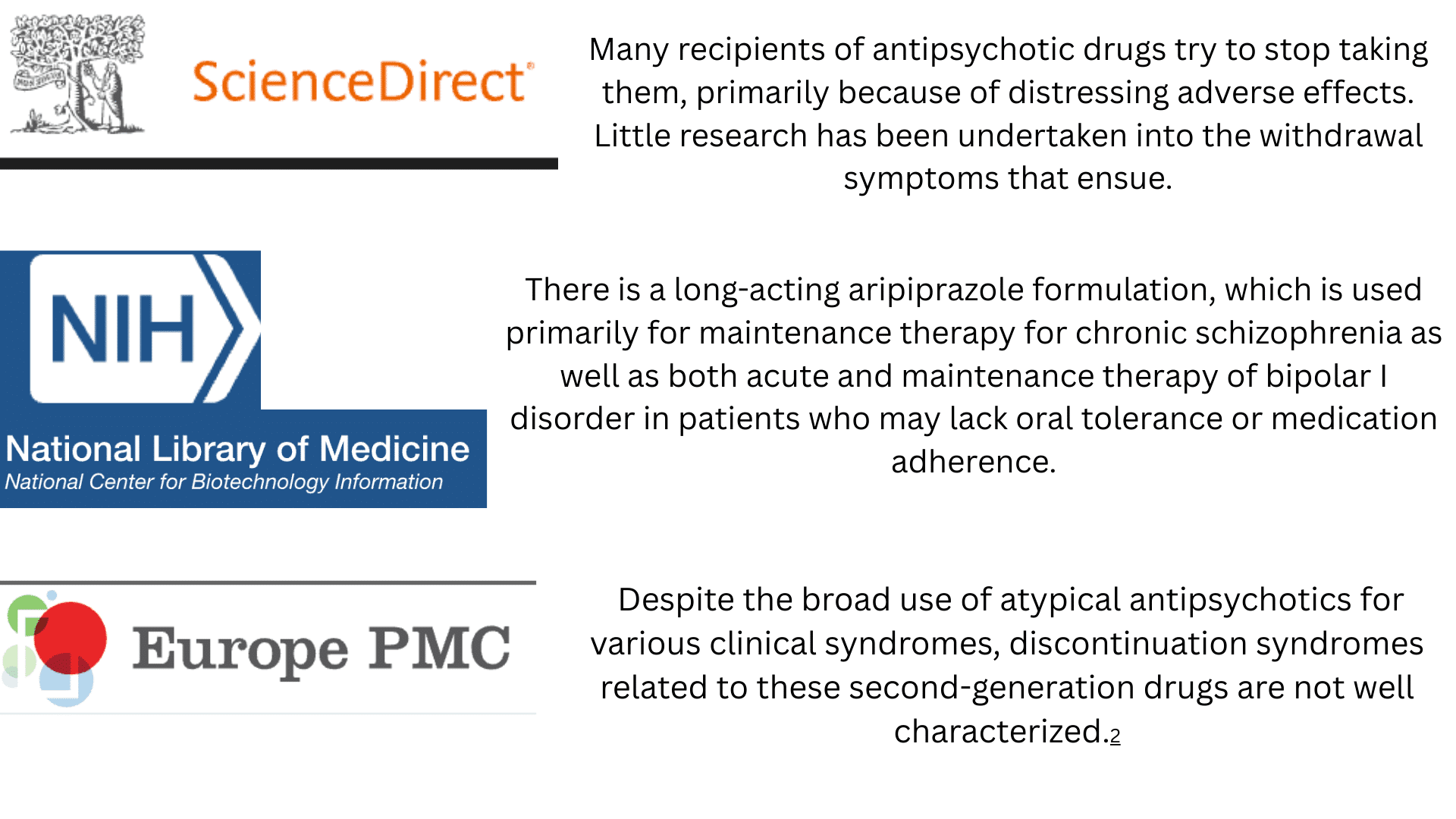
Research into antipsychotic withdrawal has grown significantly in recent years. Multiple studies and reviews now document the prevalence and severity of symptoms when people discontinue Abilify and similar medications.
1. Large-Scale Survey Findings
This study from ScienceDirect on Addictive Behaviors Reports examines the antipsychotic discontinuation, revealing important findings about withdrawal prevalence and severity:
- The study included 585 individuals who stopped antipsychotic medications, including Abilify
- Approximately 72% experienced withdrawal effects during discontinuation
- 52% of those affected reported severe symptoms
- Results challenge assumptions that these medications don’t cause significant withdrawal
This research highlights how common and potentially serious antipsychotic withdrawal can be, validating patient experiences previously dismissed by medical professionals.
2. Neurochemical Mechanisms
This study from Europe PMC on Aripiprazole withdrawal, examining the biological basis of antipsychotic withdrawal reveal complex brain chemistry changes:
- Understanding of discontinuation mechanisms remains limited at the basic science level
- Evidence suggests withdrawal involves disruptions in serotonin and dopamine pathways
- Long-term medication use creates neurochemical dependencies in the brain
- Withdrawal symptoms manifest when the drug is removed from adapted systems
More research is needed to fully understand these complex neurochemical processes and develop better discontinuation protocols for patients.
3. NIH Medical Overview
The NIH StatPearls article on Aripiprazole provides authoritative medical guidance on safe medication management:
- Offers a trusted summary of how Abilify works and its approved uses
- Emphasizes that stopping antipsychotic treatment requires careful clinical supervision
- Confirms discontinuation should never be attempted without medical guidance
- Notes: abrupt cessation can lead to serious complications and relapse
This authoritative reference underscores the critical importance of professional oversight throughout the discontinuation process to ensure patient safety.
The scientific evidence clearly demonstrates that Abilify withdrawal is real and often severe. These findings validate patient experiences and emphasize the critical importance of medical guidance during discontinuation.
Real Patient Experiences Through Case Reports
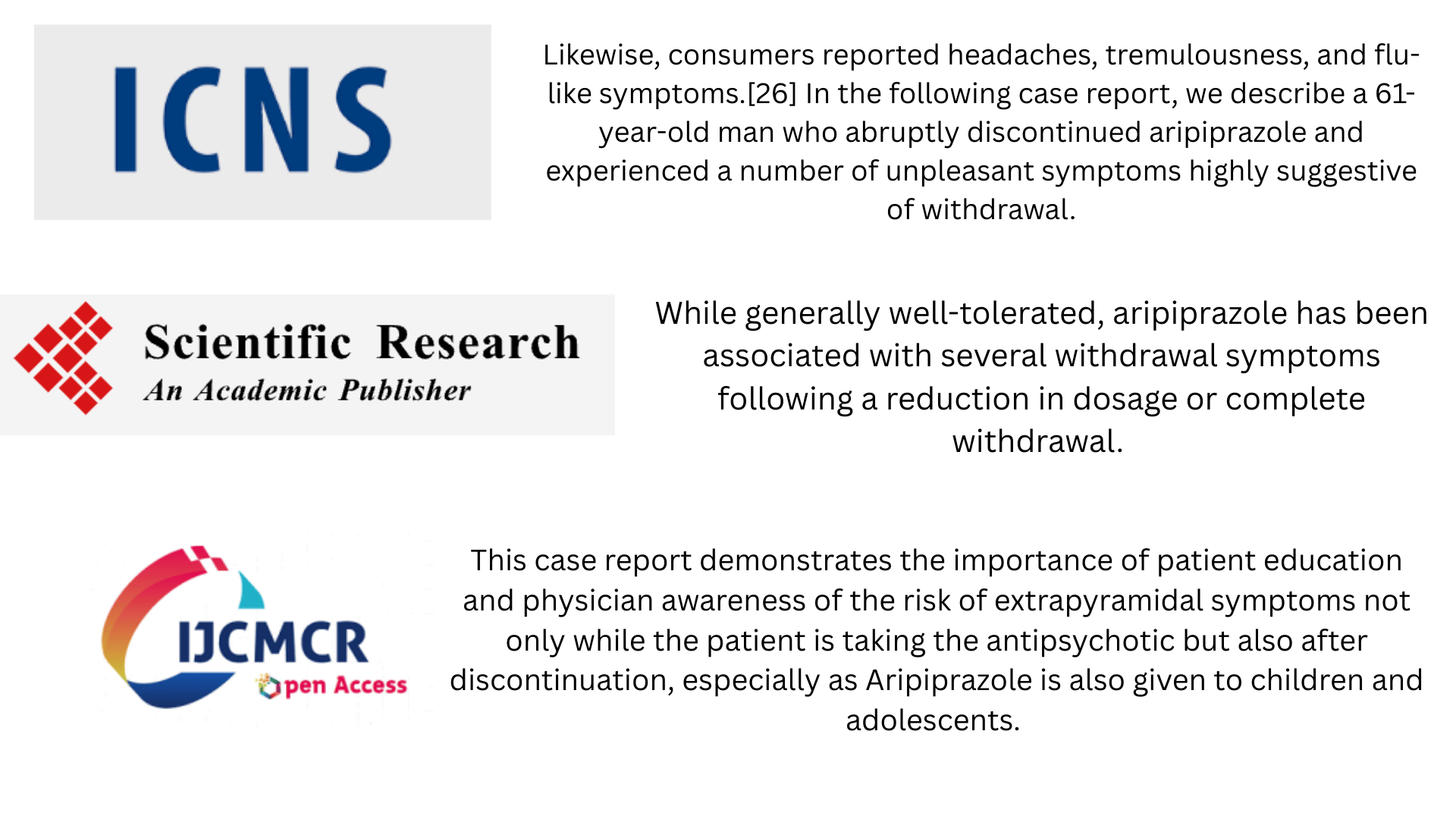
Case reports provide valuable insight into how Abilify withdrawal affects real individuals. These documented experiences reveal the diverse range of symptoms people may face during discontinuation.
1. Restless Legs Syndrome Case
A report on Restless Leg Syndrome described a patient who developed restless leg syndrome after abruptly stopping Abilify. The uncomfortable sensations in his legs disrupted sleep and daily activities.
Interestingly, symptoms improved when aripiprazole was restarted, suggesting a direct connection between the medication and the withdrawal phenomenon. This case illustrates how specific and unexpected withdrawal symptoms can be.
2. Multi-Symptom Withdrawal Report
A Case Report on Aripiprazole Withdrawal, documented in a letter to the editor, showed multiple withdrawal symptoms within two days of stopping aripiprazole. He experienced nausea, lightheadedness, insomnia, muscle twitching, and significant anxiety.
The rapid onset and combination of physical and psychological symptoms demonstrate how withdrawal can affect multiple body systems simultaneously, requiring comprehensive management strategies.
3. Movement Disorder Documentation
A clinical report on withdrawal dyskinesia discussed movement problems appearing after antipsychotic discontinuation, including Abilify, particularly at higher doses. These involuntary movements can persist for extended periods, sometimes becoming permanent.
This case highlights the importance of gradual tapering and close monitoring, as movement disorders represent some of the more serious potential complications of withdrawal.
These documented cases underscore the unpredictable nature of Abilify withdrawal. Each person’s experience differs, making medical supervision essential for identifying and addressing complications early.
How to Tell the Difference: Withdrawal Symptoms vs. Relapse
Patients and caregivers often struggle to determine whether emerging symptoms are a sign of withdrawal or a sign that the underlying condition is returning. Here is a working framework:
| Feature | Withdrawal Symptom | Relapse of Underlying Condition |
|---|---|---|
| Onset timing | Days 3 to 14 after stopping | Typically weeks or months after stopping |
| Trajectory | Peaks and gradually improves over 2 to 4 weeks | Persists or worsens over time |
| Symptoms present | Nausea, dizziness, muscle twitching — physical symptoms alongside psychological ones | Predominantly psychiatric: hallucinations, delusions, mania, severe depression |
| Prior episode history | May have no prior untreated episode | Consistent with patient’s known episode pattern |
| Response to time | Gradual natural resolution | Does not resolve without treatment adjustment |
When in doubt, this determination should always be made with your prescribing clinician, not independently. The distinction has direct treatment implications.
What to Track and Tell Your Doctor During a Taper
One practical gap in most discontinuation guides: patients are not told what to actually document. Here is a short checklist of what is genuinely useful for your clinical team:
- Symptom diary with timestamps: note when each symptom starts, peaks, and resolves relative to your last dose and dose reductions
- Sleep log: hours of sleep, quality, and wake frequency; sleep disruption is an early and sensitive withdrawal marker
- Mood rating (1 to 10 scale daily): brief, trackable, and helps distinguish gradual relapse from acute withdrawal fluctuations
- Any involuntary movements: describe location, frequency, and when they first appeared
- All other medications and supplements: some interact with aripiprazole’s metabolism (CYP3A4 and CYP2D6 pathways)
- Physical symptoms that feel flu-like: these are frequently overlooked as unrelated, but often are not
Bringing this information to appointments allows your doctor to make faster, better-informed adjustments to your taper schedule.
Safe Discontinuation Strategies
Stopping Abilify requires careful medical planning. Abrupt cessation can trigger severe withdrawal symptoms and potential relapse of underlying conditions. Key steps for safe discontinuation include:
- Taper gradually under medical supervision, never stop suddenly
- Reduce dosage by 10-25% every few weeks as prescribed
- Report any symptom changes to your doctor immediately
- Use support medications for specific symptoms if needed
- Maintain regular appointments throughout the tapering process
- Practice stress management and behavioral therapies during transition
A structured tapering plan reduces withdrawal severity and allows neurochemical adjustment. Doctors can modify the schedule based on individual symptom responses.
When to Seek Medical Help
While some withdrawal symptoms are manageable at home, certain warning signs require immediate medical attention to prevent serious complications. Severe agitation or confusion that persists needs professional evaluation. Hallucinations, delusions, or other psychotic symptoms indicate urgent care is necessary.
Suicidal thoughts or intense depression require emergency intervention. Uncontrolled movements or muscle spasms that affect daily function should be reported immediately.
Persistent vomiting causing dehydration can become dangerous quickly. Multiple nights without any sleep demand a medical assessment.
Worsening symptoms despite proper tapering suggest the plan needs adjustment. Contact emergency services immediately if symptoms become overwhelming.
Early intervention prevents complications and allows doctors to make necessary adjustments to the tapering plan, ensuring safer discontinuation.
Final Thoughts
Abilify withdrawal symptoms are real, well-documented, and affect a significant proportion of people who discontinue the medication, including those who taper gradually and carefully.
The clinical term is aripiprazole discontinuation syndrome, and recognizing it as a distinct pharmacological phenomenon rather than just “relapse” is the first step toward managing it appropriately.
The most common mistake I see in the discontinuation process is treating it as a one-time prescription adjustment rather than an ongoing, monitored process. Symptoms do not always appear on schedule. Some people feel fine for the first two weeks and then hit a wall in week three. Others experience early, intense symptoms that settle quickly. The long half-life of aripiprazole makes the timeline genuinely hard to predict.
If you are considering stopping Abilify, the two non-negotiables are:
- consult your prescribing doctor before changing anything, and
- treat symptom tracking as a clinical responsibility, not an afterthought
With the right support structure, most people can discontinue successfully and with tolerable discomfort. The goal is not to avoid the process. It is to move through it with the right information.
For immediate support, SAMHSA’s National Helpline (1-800-662-4357) offers free, confidential referrals to mental health and medication support services, 24 hours a day.