If I smoke once a week, how long till I’m clean? If a drug test is coming up, your brain can turn into a calculator that failed math class. “Was it enough to show up? Was it too close? Is seven days enough? What about blood?” Those are normal questions, and they deserve a clear answer.
Here is the honest version: once-a-week cannabis use often clears faster than daily use, but “clean” depends on the test.
A urine test may stay positive longer than a blood or saliva test because it looks for THC-COOH, a waste product your body makes after breaking down THC. A blood test is usually more tied to recent use.
From a lab point of view, the goal is not to scare you or hand you shaky detox tricks. The goal is to explain how THC testing works, what weekly use usually means, and why timelines can change from one person to another.
How Blood Tests Work for THC (And Why They Are Different)
Blood tests and urine tests ask different questions. A urine test is used to find traces of past exposure. A blood test measures what is actively in circulation, which is why it tends to reflect recent use more than long-term patterns.
When you smoke, THC moves into the bloodstream fast, often within minutes. The body then begins breaking it down into metabolites. Active THC levels in blood fall fairly quickly as the compound is processed and redistributed into fatty tissue.
The Mayo Clinic Laboratories THC confirmation test catalog notes that THC-COOH has a long half-life and can accumulate in fatty tissue, making urine the longer-lasting concern for most people, but in blood, active THC clears much faster for occasional users.
Blood testing is most often ordered in legal situations, workplace accidents, impairment investigations, or medical settings. Standard pre-employment urine panels are not the same thing.
A positive blood result does not automatically confirm that someone was impaired during the test, because the relationship between blood THC concentration and actual functional impairment is not linear and is still debated in scientific literature.
Lab note: A blood result does not always prove current impairment by itself. Timing, state law, test limits, and clinical signs all matter.
This section matters because many readers mix up blood and urine tests. Blood is usually shorter. Urine often lasts longer. Next, it helps to look at timing by user type.
How Long THC Stays in Blood: Based on Use Pattern
Blood detection is not a fixed window. A person who smokes once after several months of abstinence will likely clear faster than someone who smokes every Saturday with no long breaks. Weekly use sits somewhere in the middle, and the window shifts based on product strength, dose, and how consistently the pattern has continued.
| Type of Cannabis Use | Likely Blood Detection Pattern | What It Means |
|---|---|---|
| One-time or rare use | Often detectable for several hours, sometimes into the next day | Usually tied to recent use, especially after smoking |
| Once-a-week use | Often shorter than urine, but may last longer with stronger products or repeated weekly use | A blood test may clear sooner than urine, but timing still varies |
| Several times per week | May remain detectable longer because THC builds up in body fat | The line between weekly and frequent use blurs with higher-potency products |
| Daily or heavy use | Can last significantly longer than expected in some people | Stored THC may slowly release back into the bloodstream over days |
If the weekly session involves concentrates, high-potency extracts, or larger-than-typical amounts in a single sitting, treat the blood window as closer to the upper end of any estimate.
THC potency affects how much metabolite load the body carries, and that directly affects how long both blood and urine stay positive.
If I Smoke Once a Week How Long Till I’m Clean?
If you smoke once a week, THC may show on a urine test for about 3 to 10 days after your last use. Some light weekly users may clear sooner, while others may need more time depending on dose, product strength, body composition, and the test cutoff.
“Clean” does not mean the same thing for every test. Blood and saliva often reflect more recent use, while urine can stay positive longer because it looks for THC-COOH, the metabolite left after your body breaks down THC.
So the real answer depends on the test type, not just the number of days since you smoked.
Factors Influencing THC Clearance Times

No two bodies process THC in the exact same way. I like to think of it like a lab report with several variables, not a magic timer. The points below explain why one weekly smoker may test negative within a few days, while another may need more time.
Mechanism note: The speed of that entire chain depends on how much THC entered the system, how efficiently the liver processes it, how much fatty tissue is available to store metabolites, and how fast those metabolites are released. No single factor controls the result.
1. Frequency and Recent Pattern
A once-a-week smoker who has been consistent for six months has a different metabolite baseline than someone who tried it once after a long break. Repeated weekly exposure builds a small reservoir of stored THC-COOH that does not clear as fast as a single-use event.
A recent change from once a week to several times in one week also shifts the window closer to a moderate-use pattern.
2. Dose and Product Strength
A few light puffs from lower-THC flower are a different metabolic load than a session with concentrates, high-potency vapes, or multiple heavy rounds. More THC means more THC-COOH is produced.
More metabolites mean more time needed to fall below the test’s cutoff. This is one of the most commonly underestimated factors in test timing.
3. Body Composition and Metabolism
THC-COOH is fat-soluble, which means people with higher body fat may store more of it and release it more slowly. Individuals with faster metabolisms, higher baseline hydration, and more active daily movement may process and eliminate metabolites at a faster rate. These effects are real but modest.
No single lifestyle factor reliably guarantees faster clearance, and common detox approaches vary widely in what the evidence actually supports.
4. Test Cutoff Level
Federal DOT-regulated urine testing uses a 50 ng/mL initial screening cutoff and a 15 ng/mL confirmation cutoff. Non-DOT testing may use different policies, so the exact reporting limit depends on the program.
Under 49 CFR Part 40, federal workplace and DOT-regulated testing must follow set rules for cutoff levels, confirmation testing, and medical review officer reporting.
5. Time Since Last Use
Each day without new THC exposure allows the body to reduce its metabolite load. For lighter users, clearance tends to drop more steadily once use stops. The drop is not perfectly linear, and several factors cause daily fluctuation in metabolite concentration.
The most consistent finding across lab-based research is that abstinence is the most reliable variable. One additional session resets the timeline, not by a small margin.
| Tip: Track the last use date, test type, and product type. Those three details are more useful than vague guesses like “I barely smoked.” |
These factors are why a clean timeline should be written as a range rather than a guarantee. The next section explains what lab results actually mean.
Comparison with Other Testing Methods
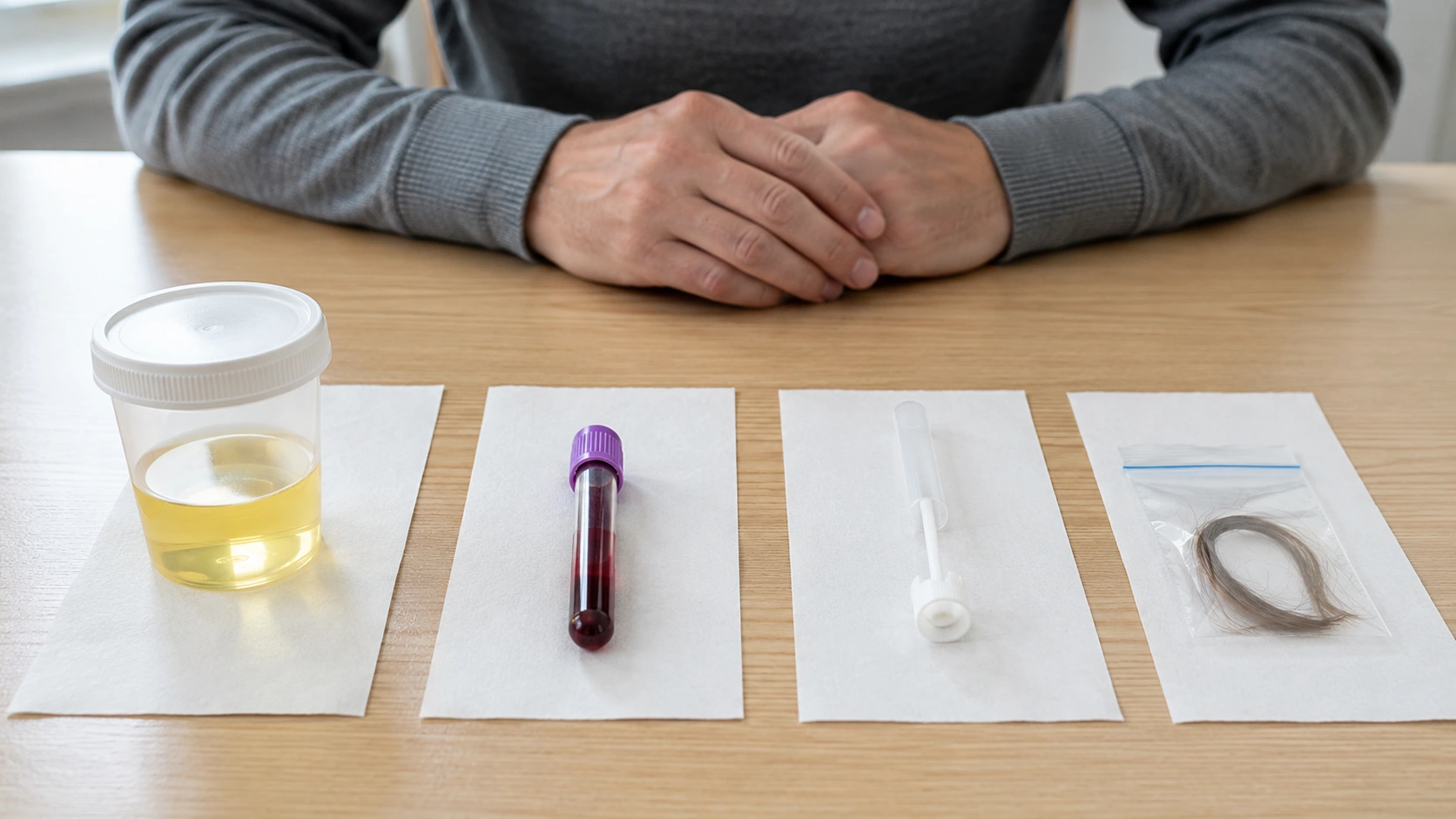
Different drug tests look for different signs of cannabis use, so the same person can have different results depending on the sample type. Urine is usually the main concern for workplace testing, while blood and saliva are more tied to recent use. This table gives a simple side-by-side view.
| Test Type | What It Looks For | Typical Window for Weekly Use | Key Takeaway |
| Urine | THC-COOH (metabolite) | About 3 to 10 days, sometimes more | Most common for workplace testing |
| Blood | Active THC | Hours to 1 to 2 days | Tied closely to recent use |
| Saliva | Recent THC exposure | 24 to 72 hours | Often used in roadside or on-site checks |
| Hair | Long-term pattern | Up to 90 days | Less practical for very light, infrequent use |
Note: These are ranges, not guarantees. Dose, product strength, body composition, and the test’s cutoff level all shift where an individual falls within any of these windows
What a THC Drug Test Result Actually Means
A positive urine result means one thing precisely: the THC-COOH concentration in that sample was above the reporting cutoff at confirmation.
It does not mean the person was high at the time of testing. It does not measure current impairment. Urine tests look at metabolite accumulation over time, not the active compound that produces effects.
The lab process in straightforward terms:
The initial screen uses an immunoassay, which is a broad-based detection method sensitive to THC metabolites. If the reading is below 50 ng/mL, the sample is reported negative and goes no further. If it reads at or above 50 ng/mL, the sample moves to a second analytical method, typically GC-MS or LC-MS/MS, which is highly specific. The confirmation cutoff is 15 ng/mL.
Only results confirmed above 15 ng/mL are reported as positive. Quest Diagnostics’ overview of marijuana testing explains this two-stage process well, noting that immunoassay screening is followed by mass spectrometry confirmation to give a definitive result.
What the lab sees vs. what the reader feels: The lab is measuring molecular concentration, not recent behavior. A person who smoked eight days ago and has been clean since may still show a measurable level if their metabolite clearance is slower than average. Someone else with a faster metabolism doing the same thing may test negative at day five. The test result reflects chemistry, not intent.
Note: A diluted sample, identified by low creatinine and specific gravity readings, may be flagged as invalid and require a retest. Drinking large amounts of water before a test does not guarantee passing. It more often results in a dilute flag and another collection.
A result is a concentration reading, not a character judgment. The next section explains how the form of cannabis consumed affects that concentration in the first place.
How Smoking Compares to Edibles, Vapes, and CBD Products
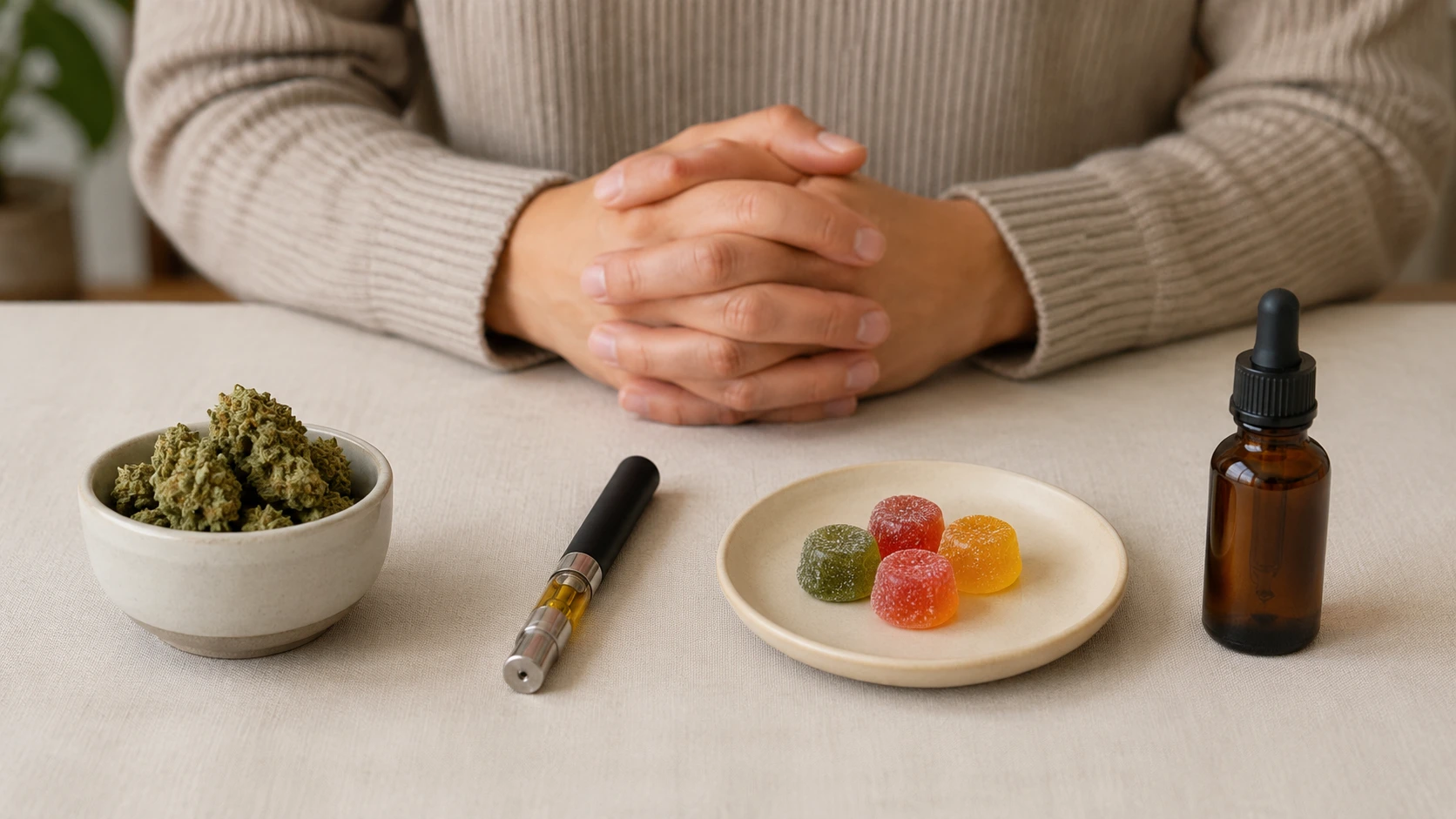
Smoking once a week is not the same as every form of cannabis use. The product and route can change how much THC enters your body and how long metabolites may remain detectable.
| Product Type | Why It Matters for Testing |
| Smoked flower | Fast absorption, THC enters the blood quickly, and processing starts fast |
| Vape products | Potency varies widely; some cartridges deliver significantly more THC per use than expected |
| Edibles | Slower onset may lead to consuming more than planned, and liver processing creates a slightly different metabolite profile |
| Full-spectrum CBD | May contain detectable THC levels despite being marketed as hemp products; mislabeling is documented |
Smoked cannabis creates a fast THC spike in blood, while edibles peak later and may produce more THC-COOH if a person takes extra due to delayed effects.
High-strength vapes can deliver a large THC dose quickly, which shifts detection windows toward the higher end of any estimate. CBD and drug testing interact differently depending on the product type, and full-spectrum products carry real risk for anyone facing a panel.
CBD itself does not trigger a positive THC result. The risk comes from full-spectrum or mislabeled products that contain measurable THC. Certificates of analysis from the producing lab are the most direct way to verify actual THC content. Packaging claims are not always accurate.
How Long Does Fentanyl Stay in Your System Compared With THC?
Fentanyl and THC are different substances and are not detected by the same test unless both are included in the ordered panel. A standard cannabis urine test does not screen for fentanyl.
Fentanyl is a synthetic opioid typically detectable in urine for about 1 to 3 days, in blood for several hours to a day, and in hair for longer periods depending on use pattern and the specific test.
Fentanyl urine detection timelines depend heavily on dose and individual metabolism, much like THC, but the substances clear through entirely different pathways.
The CDC’s fentanyl facts page notes that fentanyl cannot be identified by sight, taste, or smell, which is why fentanyl test strips and naloxone are important harm reduction tools for anyone using cannabis from an unverified source.
Caution: If there is any uncertainty about what was in a product that was consumed, fentanyl exposure is a safety concern that comes before any testing concern. Naloxone access and poison control contact information should be the first priority, not test timing.
A standard workplace drug panel typically does not automatically include fentanyl. If fentanyl testing is specifically required, the requesting party must order a panel that includes opioid testing.
The CDC and SAMHSA both publish current guidance on substance testing panels and harm reduction for fentanyl-related risks.
Can You Be Clean in 7, 10, or 14 Days?
One of the most common questions people ask is whether a week, ten days, or two weeks is enough time to test negative after smoking cannabis. The honest answer is that there is no universal timeline. Detection depends on usage patterns, metabolite levels, and the type of test being used.
| Time Since Last Use | What It May Mean for Weekly Users |
| 3 days | Some very light users may test negative, but many weekly users may still test positive. |
| 7 days | Many weekly users are closer to clearing, but dose and cutoff still matter. |
| 10 days | Often a more realistic window for weekly use, though not guaranteed. |
| 14 days | More likely to be negative for many weekly users, unless use was heavier or long-term. |
These timelines provide general expectations, not guarantees. Some weekly users clear more quickly, while others remain above the reporting cutoff longer. Detection windows are ranges, not deadlines. Understanding that range makes it easier to plan realistically and avoid relying on guesswork.
Anyone who needs a cleaner read on timing should also understand what the drug testing process actually involves before drawing conclusions from a home kit result.
What to Do If a THC Test Is Coming Up
If a drug test is approaching and cannabis use has been recent, there are a few straightforward, practical steps that reflect how detection actually works. This is not about beating a test. It is about understanding what is realistic.
- Confirm the test type: Urine, blood, saliva, and hair have different windows. Knowing which test is being used tells you which timeline actually applies.
- Track the last use date: Write down the date, product type, and approximate dose. This helps contextualize the timing rather than relying on guesswork.
- Stop all new THC exposure: Each additional session extends the metabolite window. Time without new use is the single most reliable factor for clearance.
- Avoid extreme water loading: Drinking excessive water before a test can produce a dilute or invalid result, requiring a retest. Staying hydrated at a normal level is fine.
- Use home tests as rough indicators only: They use the same 50 ng/mL cutoff as the initial screen, but a faint line or a marginal negative on a home test is not equivalent to a confirmed lab negative.
- Ask for support if stopping feels difficult: If avoiding cannabis ahead of a test is harder than expected, the SAMHSA National Helpline offers free, confidential support and referrals at 1-800-662-4357, available every day of the year.
Lab note: Anxiety about a test often leads to last-minute purchases of detox products. From a lab standpoint, most of them do not change the metabolite concentration that confirmation testing measures. Time without use remains the most consistent variable.
Frequently Asked Questions
Can CBD make a THC test come back positive?
CBD itself is not what triggers a positive THC result. The risk comes from full-spectrum or mislabeled CBD products that contain measurable THC. Repeated use may raise THC metabolites enough to cross the reporting threshold, especially if the product has more THC than the label states. Full-spectrum and broad-spectrum CBD differ in how much THC they contain, and that distinction matters when a test is coming up. Always check the certificate of analysis before using any CBD product near a test date.
Can secondhand cannabis smoke cause a positive test?
Secondhand cannabis smoke is unlikely to cause a positive test under normal exposure conditions. The risk rises in small, unventilated spaces with prolonged heavy smoke. Under standard workplace screening cutoffs of 50 ng/mL, passive exposure alone does not typically produce a confirmed positive. If testing matters, avoiding heavily smoked-in rooms is the safer choice.
Do home THC tests match what a lab reports?
Home tests are useful for a rough check but are screening tools, not confirmatory ones. They use the same 50 ng/mL initial cutoff as the lab screen, but labs then run a second confirmation test at 15 ng/mL before reporting any positive. A faint positive on a home test may be below the confirmation threshold at the lab. A faint negative on a home test may not hold at lab confirmation either. Treat home results as directional, not definitive.
Can exercise help clear THC faster?
Exercise may influence how the body processes stored THC metabolites, but it cannot guarantee a negative test. THC-COOH is fat-soluble, and metabolite levels can fluctuate as fat cells release stored compounds during physical activity. Normal daily movement is fine and may support clearance over time. Intense last-minute workouts in the days before a test should not be treated as a reliable strategy, as they can temporarily raise circulating metabolite levels before reducing them.
Should I disclose medical cannabis use before a drug test?
If a medical review officer contacts you after a positive result, give accurate information about prescriptions, medical cannabis status, and any legal products used. Do not volunteer this information at the collection site unless directly asked, as collection staff do not make eligibility decisions. Policies around medical cannabis vary by employer and state, and medical use documentation does not automatically protect every role or federal program.
Does microdosing THC affect how long it stays in the system?
Even very small, infrequent THC doses can produce detectable metabolite levels in urine, particularly for people with slower metabolisms or higher body fat. Microdosing THC involves lower doses per session, which generally means less metabolite buildup, but “less” is not the same as “none.” Anyone microdosing weekly should not assume they are automatically below the detection threshold, especially if sessions have been consistent over several months.
Wrapping Up
Weekly cannabis use places most people in a detection window that sits between single-use and frequent-use ranges. Urine testing typically captures THC-COOH for 3 to 10 days for someone who smokes once a week, with variation based on dose, product strength, body composition, and the specific cutoff level being applied. Blood clears faster, usually within a day or two, but is less likely to be the test involved in standard workplace screening.
What matters most in answering “if I smoke once a week how long till I’m clean” is knowing which test is being used and what its cutoff is. There is no universal clock. The lab reads concentration, not behavior. Time without new use is the most reliable factor, and most detox shortcuts do not change what a confirmation test measures at 15 ng/mL.
Drop a comment below with your test type and how long since your last session. Real situations give better context than general timelines, and it helps other readers compare notes without guessing in the dark.
Resources & References
- Mayo Clinic Laboratories explains THC metabolism, the role of THC-COOH, and how to interpret marijuana urine test results in clinical and workplace contexts.
- The U.S. Department of Transportation (DOT) provides the federal regulated urine drug testing cutoff concentrations and procedures under 49 CFR Part 40, which apply to safety-sensitive transportation roles.
- Quest Diagnostics publishes detailed information about marijuana metabolite urine screening, confirmation testing methods, and detection window guidance based on clinical laboratory data.
- Testing.com provides a patient-accessible overview of marijuana test types, detection windows, and result interpretation across urine, blood, saliva, and hair formats.
- The Centers for Disease Control and Prevention (CDC) maintains current public health guidance on fentanyl risks, including the fact that it cannot be identified by appearance, taste, or smell.
- SAMHSA offers free, confidential assistance for mental health and substance use concerns through the National Helpline at 1-800-662-4357, available 24 hours a day, 365 days a year.