If you are searching for the best terpenes for anxiety, you are probably not looking for a fancy chemistry lecture. You want to know which terpene profile may help you feel calmer, less tense, or less mentally “switched on” when stress starts acting like it owns the room.
Here is the honest starting point: terpenes are not anxiety medication, and they do not work the same way for every person. They are plant compounds that may shape scent, mood, body feel, and the way cannabis or hemp products feel when paired with THC, CBD, and your own biology.
As someone who studies cannabinoids and terpenes as working systems, I like to treat terpene profiles like lab notes. They do not tell the whole story, but they give better clues than strain names alone. A name that sounds like candy does not tell you much. A lab-tested terpene profile does.
Quick Reference: Best Terpenes for Anxiety at a Glance
| Terpene | Scent | Users Commonly Report | Best Timing | Example Strains |
| Linalool | Floral, lavender | Calm, less racing thoughts, easier wind-down | Evening | Do-Si-Dos, Lavender Kush, Amnesia Haze |
| Beta-Caryophyllene | Peppery, spicy | Body tension relief, grounded feeling | Afternoon or evening | GSC, Bubba Kush, Original Glue |
| Limonene | Citrus, bright | Mood lift, less mental heaviness | Daytime (low THC) | Super Lemon Haze, Durban Poison, Wedding Cake |
| Myrcene | Earthy, musky | Body relaxation, easier sleep onset | Evening or night | Granddaddy Purple, Blue Dream, Bubba Kush |
| Alpha-Pinene | Pine, forest | Calm without heavy sedation, clearer head | Daytime | Jack Herer, Romulan, Blue Dream |
| Nerolidol | Woody, floral | Soft evening calm, pairs well with linalool | Night | Skywalker OG, Chemdawg |
| Humulene | Earthy, herbal | Grounding when combined with caryophyllene | Varies | White Widow, Headband, Sour Diesel |
What Are Terpenes?
Terpenes are natural aromatic compounds found in cannabis, hemp, citrus fruits, lavender, pine, pepper, hops, and many other plants. They help create scent and may also play a role in how a plant-based product feels in the body.
In cannabis, terpenes appear on the same sticky resin glands that hold cannabinoids like THC and CBD. That is why two cannabis products with similar THC levels can feel very different. One may feel calm and heavy. Another may feel bright and alert. The terpene profile can be part of that difference.
Terpenes are not unique to cannabis. Linalool is found in lavender. Limonene appears in citrus peels. Beta-caryophyllene is common in black pepper and cloves. Myrcene shows up in hops and mango. Cannabis simply brings many of these compounds into one profile.
The main point is simple: terpenes are not just “smell molecules.” They are being studied for possible effects on mood, stress response, sleep, pain, and nervous system activity. The evidence is still growing, so the safest wording is “may support,” not “will treat.”
Why Do Terpenes Matter for Anxiety?

Terpenes matter for anxiety because they may shape how calming, uplifting, sedating, or stimulating a cannabis or hemp product feels. They can work through scent, inhalation, digestion, and possible interaction with receptor systems in the body.
Anxiety is not one feeling. For one person, it feels like racing thoughts. For another, it feels like tight shoulders, shallow breathing, or a nervous stomach. That is why the best terpenes for anxiety are not always the same for every person.
Some terpenes, such as linalool, are studied for calming pathways linked with GABA activity. GABA is one of the body’s main calming signals.
Beta-caryophyllene is notable because it can interact with CB2 receptors in the endocannabinoid system. Limonene is often discussed for mood support and citrus-like brightness.
Still, cannabis can be tricky. A calming terpene profile may feel very different if the product is high in THC.
For some people, THC helps them relax. For others, too much THC can increase worry, racing thoughts, or panic. That is why terpene choice should never be separated from THC strength, CBD content, dose, and personal tolerance.
The Entourage Effect and Anxiety Relief
The entourage effect refers to the way cannabinoids and terpenes work together, producing combined effects that may differ from what any single compound does in isolation.
A 2021 study published in Scientific Reports demonstrated that selected cannabis terpenes show cannabimimetic activity at both cannabinoid and non-cannabinoid receptors, and that CBD combined with terpene blends produced significantly greater behavioral effects than either substance alone (LaVigne et al., 2021).
In practical terms, a product high in myrcene and linalool alongside balanced THC and CBD may feel different from a product with the same cannabinoid numbers but a different terpene profile.
This is why lab-tested terpene data adds meaningful information that cannabinoid percentages alone cannot provide. Users seeking anxiety support are generally better served by reading the full COA for terpene breakdown, not just THC and CBD totals.
The entourage effect also explains why isolated terpenes in essential oil form may behave differently from those same terpenes within a full-spectrum cannabis product. The presence of other cannabinoids and terpenes changes the interaction. Neither is necessarily better, but they are not equivalent.
Best Terpenes for Anxiety Relief
The best terpenes for anxiety are usually those linked with calm, mood support, body ease, or gentler cannabis effects. The strongest names to know are linalool, beta-caryophyllene, limonene, myrcene, and alpha-pinene. Nerolidol and humulene are useful supporting terpenes, but the evidence is lighter.
1. Linalool
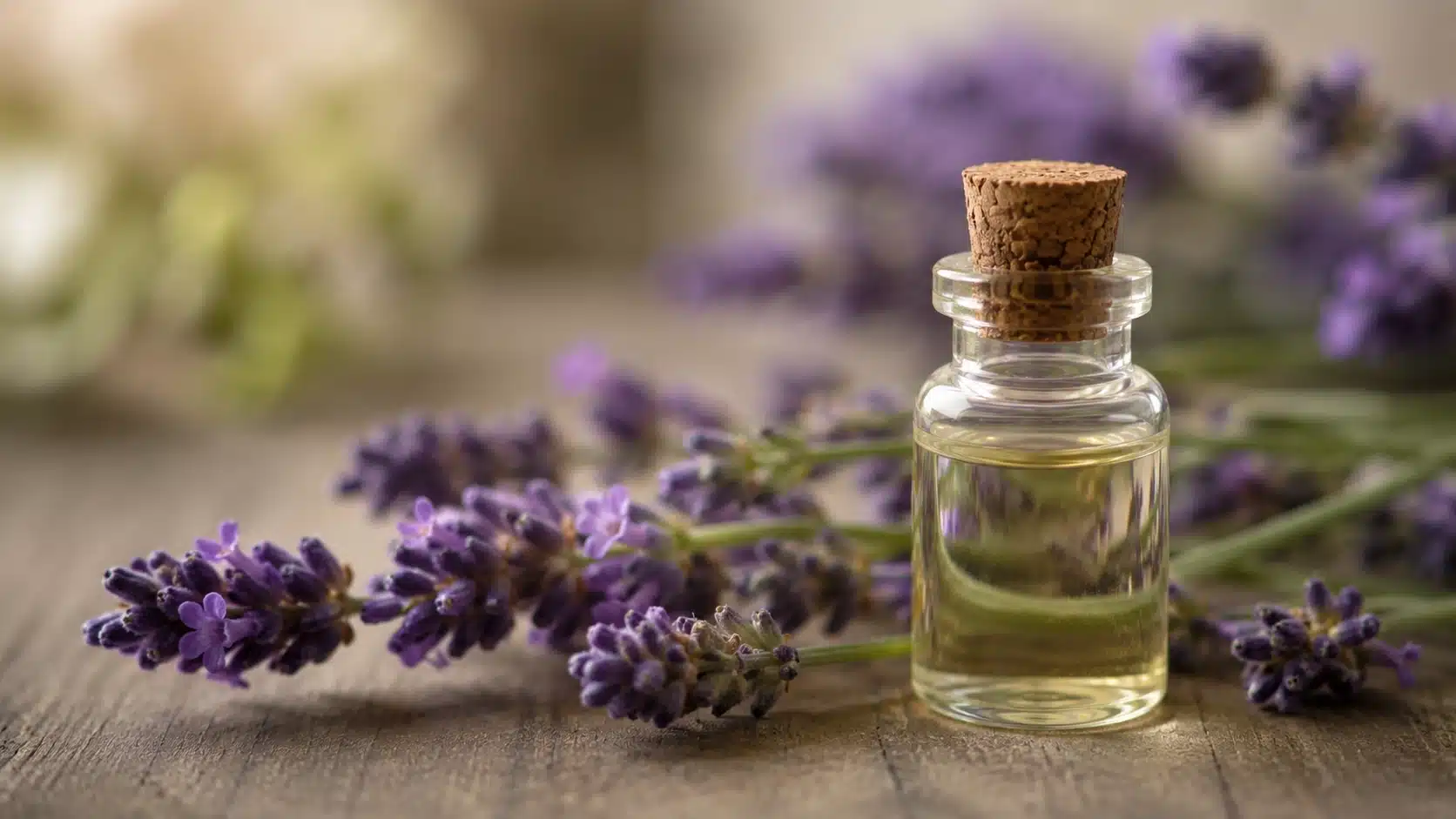
Linalool is a floral terpene found in lavender, cannabis, basil, and some citrus plants. Research on linalool and GABA receptor modulation explains its connection to relaxation and reduced nervous system activity.
A 2024 animal study examining common cannabis terpenes found anxiolytic effects for linalool under certain exposure conditions, though sex and dose differences were noted in the model.
Users Commonly Report: Linalool tends to come up in cannabis communities when users describe products that ease racing thoughts, tension, or difficulty winding down.
It is most consistently described for evening or low-demand settings because heavier linalool profiles, especially when paired with THC, can read as sleepy for some users during the day.
Example strains: Do-Si-Dos, Lavender Kush, Amnesia Haze. These often test with linalool as a dominant or secondary terpene alongside myrcene or caryophyllene.
For anxiety-focused browsing, pairing with strains that balance CBD and THC tends to produce more consistent outcomes than linalool alongside very
2. Beta-Caryophyllene
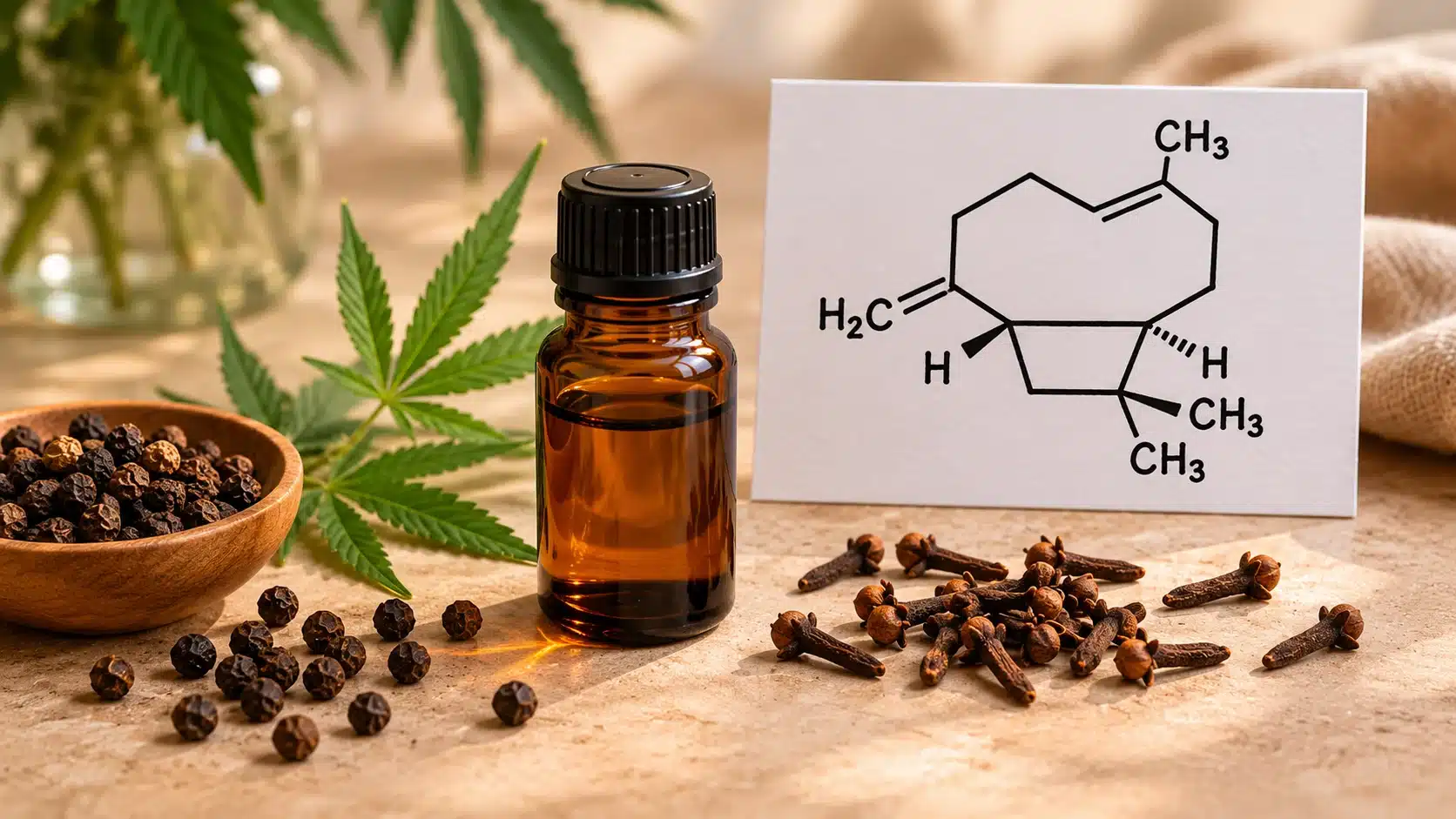
Beta-caryophyllene is a peppery sesquiterpene found in black pepper, cloves, cannabis, hops, and oregano.
Research describes beta-caryophyllene as a dietary cannabinoid because it directly activates CB2 receptors, a mechanism no other common terpene shares. That receptor interaction is why it shows up in both terpene and cannabinoid discussions.
Users Commonly Report: Beta-caryophyllene tends to come up when users describe anxiety that shows up physically, as body tension, stress discomfort, or restlessness that feels more somatic than mental.
It does not produce intoxication on its own, and its CB2 activity has drawn attention from researchers studying inflammation-linked stress responses.
Example strains: GSC (Girl Scout Cookies), Bubba Kush, and Original Glue frequently test with beta-caryophyllene as a dominant terpene. Strains like Green Crack also contain caryophyllene as a secondary terpene, which adds a grounding element to a more activating profile.
3. Limonene
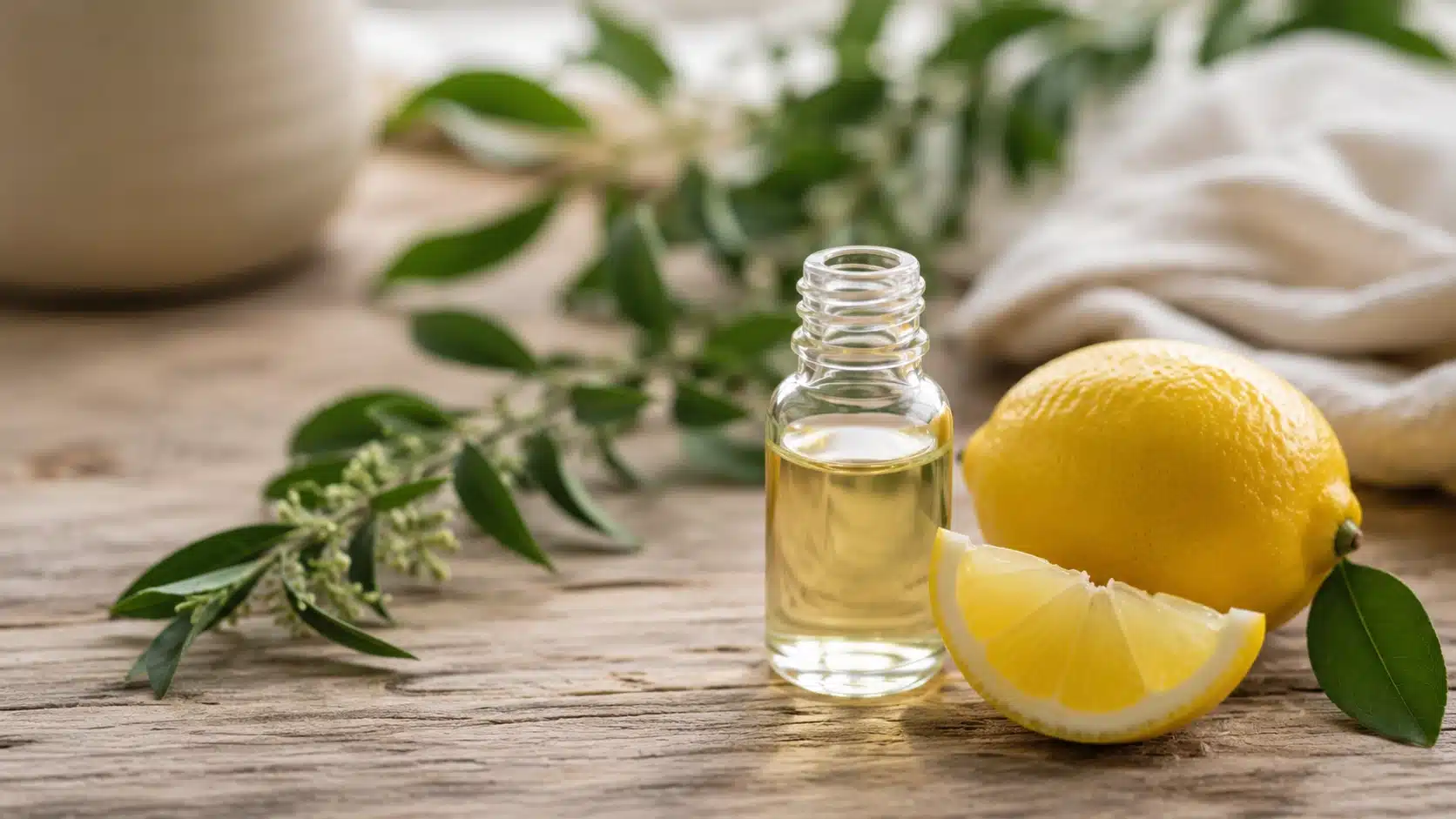
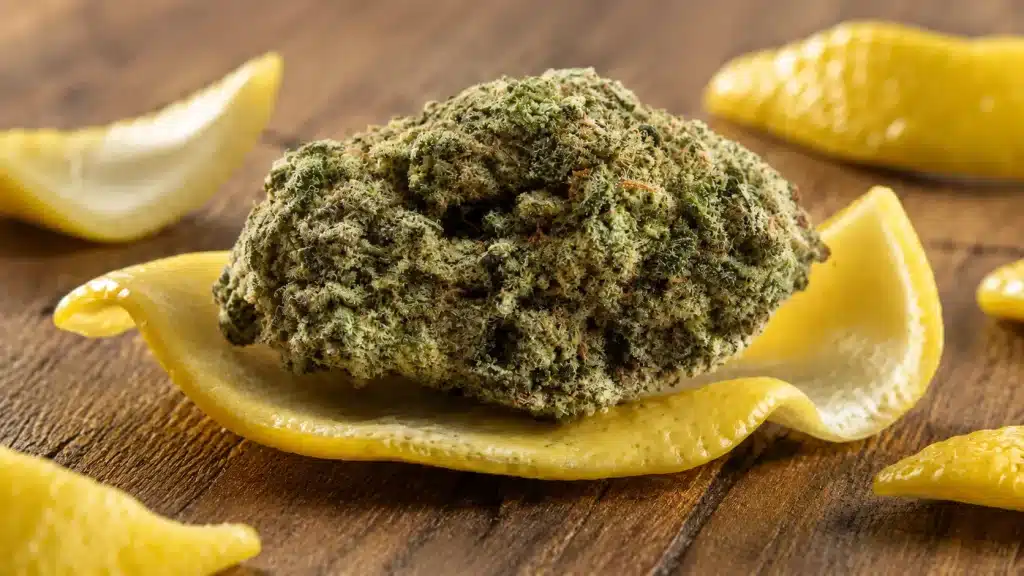
Limonene is a citrus terpene found in lemon peel, orange peel, cannabis, and many fragrant plants.
Research on limonene and anxiety-related mechanisms suggests possible involvement in serotonin and dopamine pathways, which may explain the mood-brightening quality users often describe. The evidence is primarily preclinical and should be read with that caveat.
Users Commonly Report: Limonene feedback in cannabis communities is more mixed than linalool or myrcene.
Some users describe citrus-heavy profiles as clean, daytime-friendly, and mood-supportive, particularly when anxiety presents as low mood or stress fatigue. Others note that limonene paired with high THC can feel too sharp or activating, especially for panic-prone users.
Example strains: Super Lemon Haze, Wedding Cake, and Durban Poison are commonly associated with limonene dominance. For daytime anxiety support, lower-THC limonene-forward products are a more reliable starting point than high-THC options in the same terpene range.
4. Myrcene
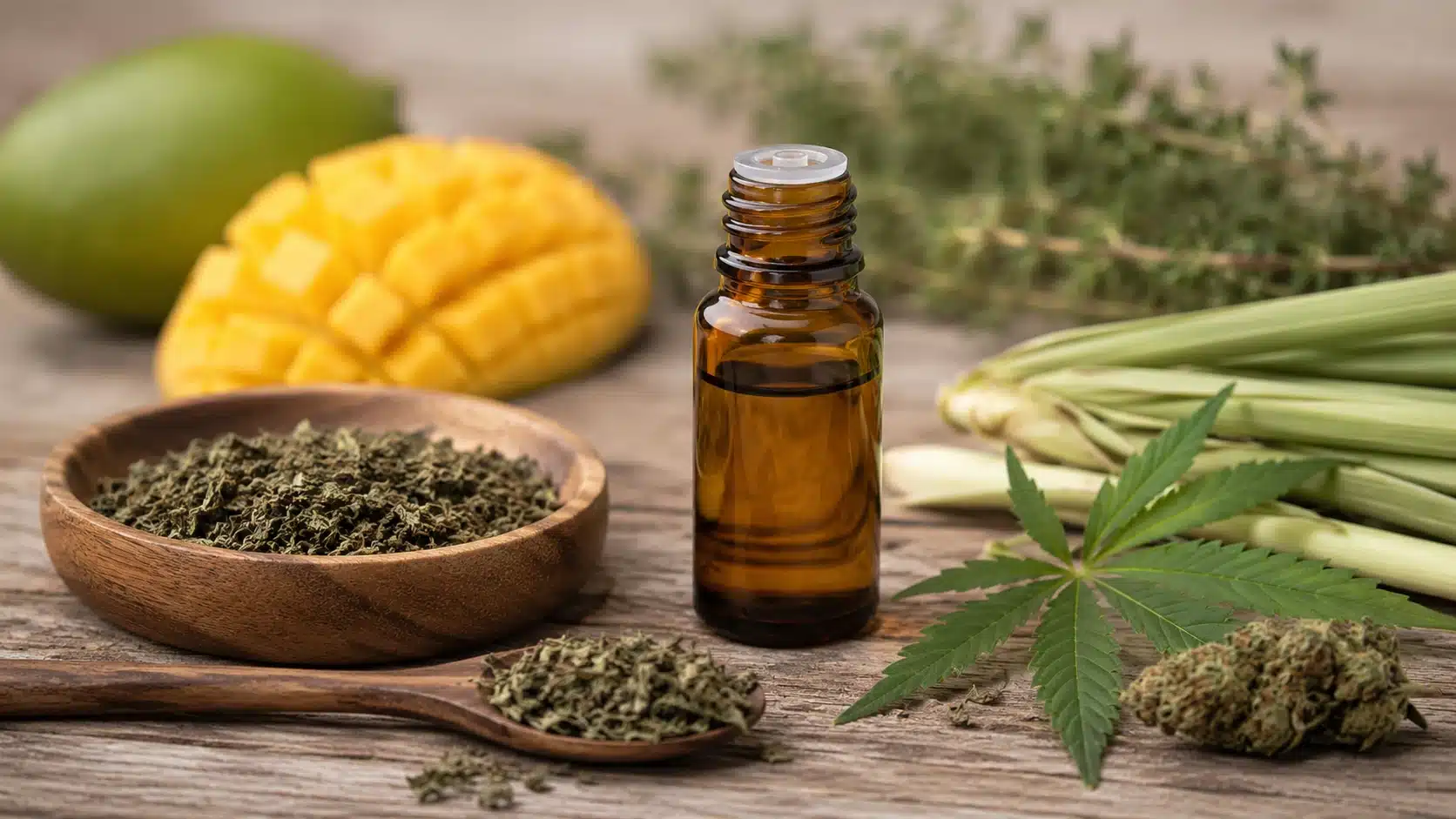
Myrcene is the most abundant terpene in most cannabis cultivars, with an earthy, musky scent. It also appears in hops, mango, lemongrass, and thyme.
A review on cannabinoids, terpenes, and the entourage effect lists myrcene among the key cannabis terpenes in combined cannabinoid-terpene research. A 2024 animal study also recorded anxiolytic effects for myrcene, with dose and sex differences in the model.
Users Commonly Report: Myrcene comes up frequently in discussions about evening cannabis use, sleep support, and physical relaxation.
Users who describe anxiety as body tension or nighttime restlessness tend to report positive experiences with myrcene-heavy profiles. Heavier myrcene concentrations can feel foggy or sedating, which makes them less suited to situations requiring focus.
Example strains: Granddaddy Purple, Blue Dream, and Bubba Kush are commonly myrcene-dominant. For strains where myrcene pairs well with low THC for a calmer outcome, low-THC strain options with myrcene and caryophyllene offer a softer entry point for anxiety-prone users.
5. Alpha-Pinene
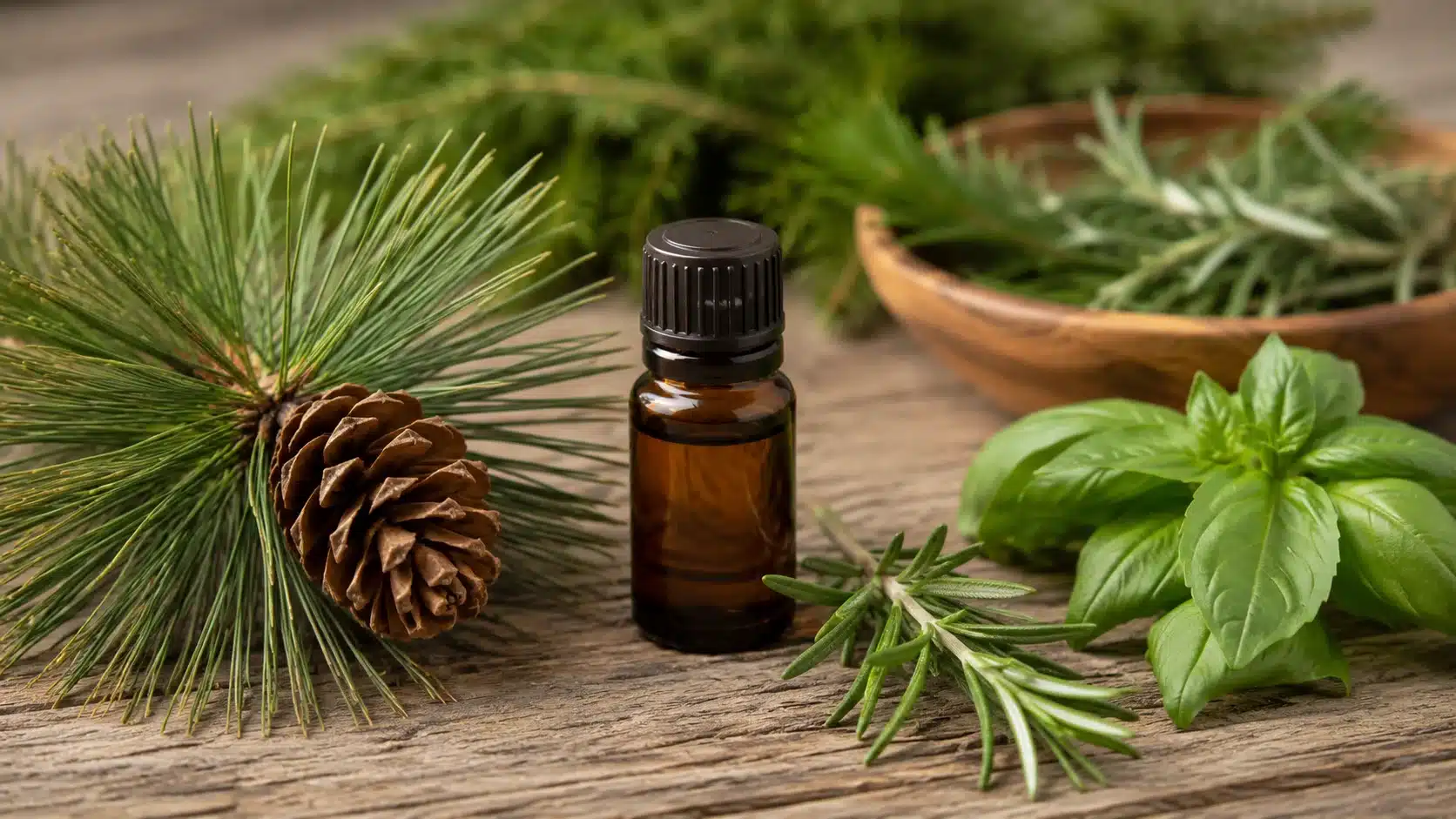
Alpha-pinene is a pine-scented terpene found in pine needles, rosemary, basil, and cannabis. A Frontiers in Psychiatry review discusses pinene and linalool together as terpene-based compounds of interest for neurological wellness.
A 2022 study in Scientific Reports examined alpha-pinene in a zebrafish model and found anxiolytic effects at specific enantiomer doses, though the model’s translational relevance to humans remains under study.
Users Commonly Report: Alpha-pinene is frequently described as producing calm without the heaviness associated with myrcene or linalool-dominant products. Users seeking daytime anxiety support without sedation tend to gravitate toward pinene-forward profiles.
Some anxiety-prone users find high-pinene products feel too sharp, particularly at elevated THC levels. For those who want mental steadiness during the day, strains that combine pinene with lower THC are worth prioritizing.
Example strains: Jack Herer, Romulan, and Blue Dream are often cited with notable alpha-pinene content alongside other calming terpenes.
6. Nerolidol
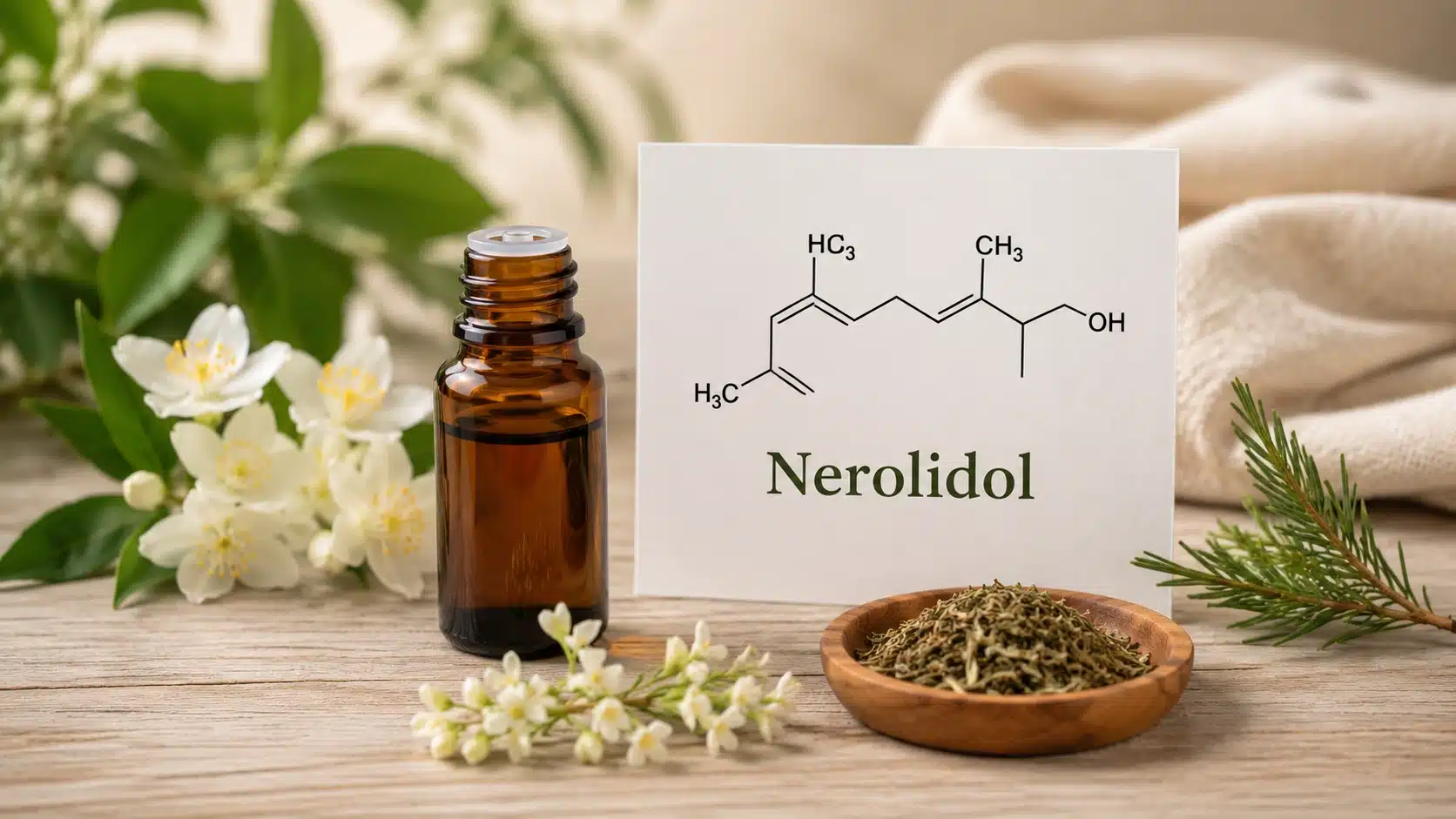
Nerolidol is a soft, woody, floral sesquiterpene found in cannabis, jasmine, tea tree, and some essential oils. Its anxiety-specific evidence is lighter than the five terpenes above, and it should be treated as a supporting signal rather than a primary factor when reading a terpene profile.
Users Commonly Report: Nerolidol tends to come up in discussions about softer, evening-friendly profiles, particularly when it appears alongside linalool or myrcene. It is most useful as a secondary clue when choosing between two products that are otherwise similar in their primary terpene makeup.
Example strains: Skywalker OG and Chemdawg have been noted with nerolidol in the supporting terpene range. Neither strain should be selected for nerolidol alone; the full profile matters more.
7. Humulene
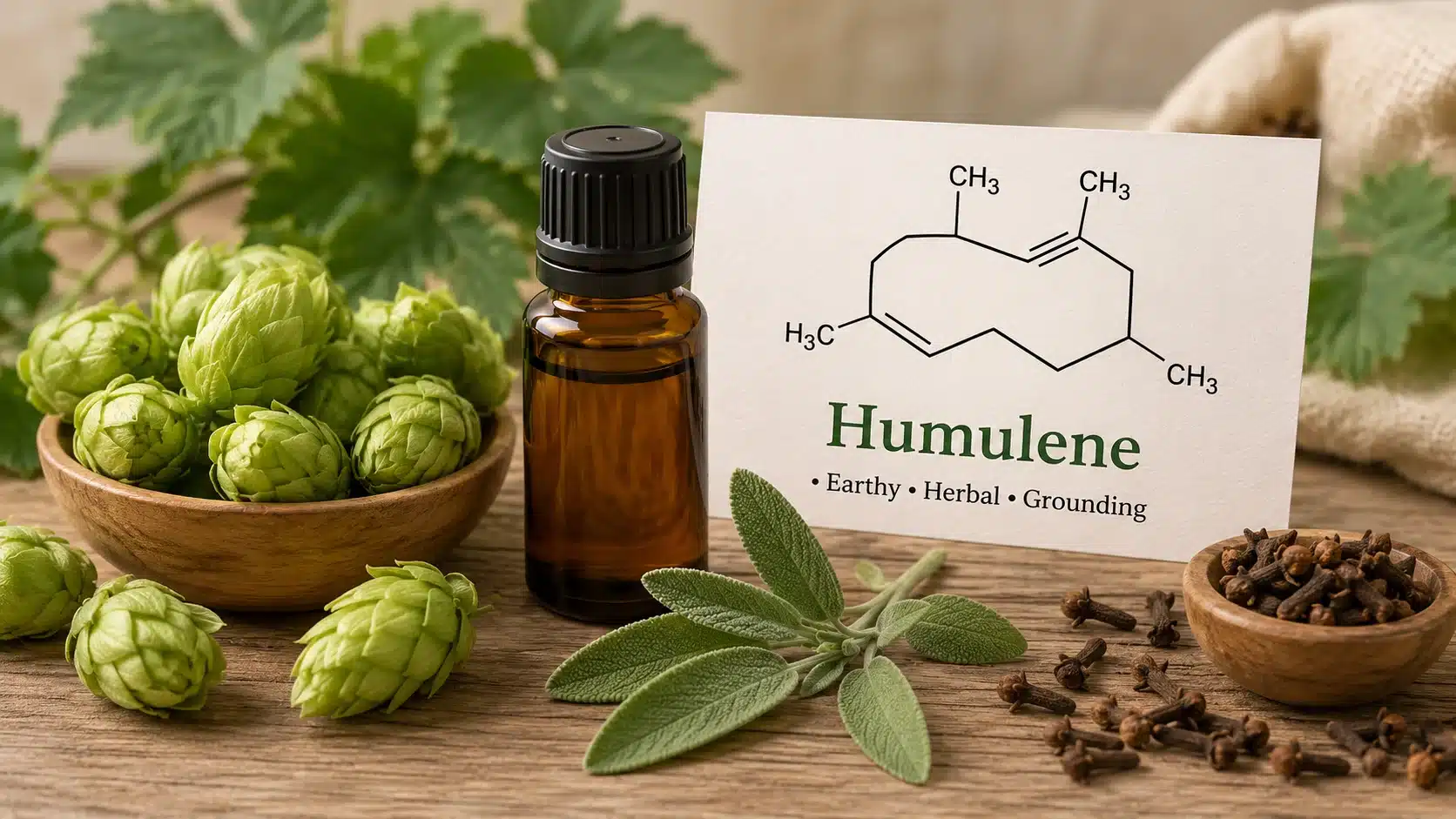
Humulene is an earthy, herbal sesquiterpene found in hops, sage, cloves, and cannabis. It frequently appears alongside beta-caryophyllene in grounded cannabis profiles. Direct anxiety-specific evidence for humulene is limited compared to the other terpenes in this list.
Users Commonly Report: Humulene tends to support calmer profiles when combined with better-studied terpenes like beta-caryophyllene or linalool.
Its value is most apparent in the context of the full terpene profile rather than as a standalone factor. Users describing a sense of physical grounding in certain strains may be responding in part to humulene alongside more active terpenes.
Example strains: White Widow, Headband, and Sour Diesel often test with humulene in the secondary or tertiary range alongside caryophyllene and myrcene.
Which Terpene Fits Your Anxiety Pattern Best?
The best terpene for anxiety depends on how anxiety shows up for you. A person with racing thoughts may need a different profile than someone who feels body tension or sleep trouble.
| If Anxiety Feels Like | Terpenes to Look For | Best Timing |
| Racing thoughts | Linalool, beta-caryophyllene | Evening or low-demand time |
| Body tension | Beta-caryophyllene, myrcene | Afternoon or evening |
| Low mood with stress | Limonene, alpha-pinene | Daytime |
| Sleep trouble | Myrcene, linalool, nerolidol | Night |
| THC-related jitters | Linalool, beta-caryophyllene, CBD-rich profiles | Start low |
This is where strain names can mislead people. “Indica” and “sativa” labels can be rough clues, but they do not always predict effects. A lab-tested terpene profile plus THC and CBD levels gives you a clearer view.
Same terpene, different outcome. A limonene-rich product with low THC and some CBD may feel bright and steady. A high-THC limonene-heavy product may feel too intense for someone who is panic-prone.
What Users Commonly Report in Cannabis Communities

User reports can help spot patterns, but they should not be treated as clinical evidence. Community discussions are useful because they show how real people describe cannabis products after using them, but they cannot prove that a terpene treats anxiety.
Across cannabis communities, Reddit discussions about terpenes and anxiety often mention linalool and myrcene for winding down, sleep support, and feeling less mentally busy. Beta-caryophyllene is commonly discussed by users who describe anxiety as body tension or stress discomfort.
Leafly’s terpene and anxiety coverage also points to myrcene, limonene, linalool, and caryophyllene as commonly discussed calming terpenes.
Limonene gets more mixed feedback. Some users describe citrus-heavy profiles as clean, bright, and mood-supportive. Others say strong limonene profiles feel too sharp when THC is high. Terpinolene-heavy products are often flagged by anxiety-prone users as risky, sharp, or too stimulating, which is why some guides treat terpinolene as a use-with-caution terpene.
The most repeated user lesson is simple: high THC can override a calming terpene profile. If the THC level is too strong for your nervous system, even the best terpenes for anxiety may not save the experience.
How to Shop for Anxiety-Relieving Terpenes
Shopping by strain name alone is a bit like judging a meal by the plate color. It may tell you something, but not enough. The terpene profile, THC level, CBD content, and lab report tell you much more.
- Read the terpene profile: Look for the dominant terpene and the next two or three supporting terpenes. A balanced profile often tells a better story than one loud terpene.
- Check THC strength: High THC can make anxiety worse in some people, even when the terpene list looks calming.
- Match Product Type to Your Goal: Flower, vape, edible, tincture, and topical formats can differ in timing, strength, and comfort.
- Look for CBD balance: CBD-rich or balanced THC products may feel easier for anxiety-prone users than very high-THC products.
- Check the certificate of analysis: A recent lab report should show cannabinoid levels and, ideally, terpene content by batch.
- Start low: Small amounts help you judge the response before you overshoot. Your nervous system is not a guessing game.
- Track your response: Note terpene profile, THC level, CBD level, dose, and how you felt. Patterns become clearer over time.
A better product clue might look like this: moderate THC, some CBD, and a terpene profile led by linalool and beta-caryophyllene. That does not guarantee calm, but it is a smarter starting point than a strain name alone.
What Terpenes Are Bad for Anxiety?
People with anxiety may want to use caution with stimulating terpene profiles, especially terpinolene-heavy, ocimene-heavy, or high-limonene products paired with high THC. These terpenes are not “bad,” but they may not suit every nervous system.
| Terpene or Profile | Why Some People Use Caution |
| Terpinolene | Can feel bright or stimulating in some cannabis profiles |
| Ocimene | Often appears in sharper profiles that may not feel grounding |
| High-limonene, high-THC products | May feel uplifting for some but too activating for others |
| Very high total terpenes | Strong aroma does not always mean better anxiety relief |
Limonene terpene effects are a good example of context. Limonene may feel mood-supportive in a lower-THC product. In a strong THC product, it may feel too fast or edgy for some users.
The better question is not “Is this terpene bad?” It is “Does this terpene profile match my body, my timing, my THC tolerance, and my goal?”
Terpenes Side Effects and Safety Notes

Terpenes can be helpful to understand, but they still need care. Natural plant compounds can cause unwanted effects, especially when they are concentrated, inhaled, swallowed, or mixed with THC. The goal is not to fear terpenes, but to use better judgment.
- Common Side Effects: Terpenes’ side effects can include headache, dizziness, sleepiness, airway irritation, skin sensitivity, or allergic reactions. Some people may also feel stronger unwanted cannabis effects when terpenes are paired with high THC.
- Concentrated Products: A terpene inside a plant is not the same as a strong isolated terpene blend. Concentrated terpene products, essential oils, and aroma oils can irritate the lungs, skin, mouth, or stomach if used incorrectly.
- Route Matters: Do not inhale products that are not made for inhalation. Do not swallow essential oils unless a qualified professional has confirmed that the exact product and use route are safe.
- Health Conditions: People with asthma, panic disorder, pregnancy, medication use, or a history of strong cannabis reactions should speak with a qualified clinician before using concentrated terpene products.
- Product Quality: Terpenes side effects are more likely when the dose, route, or product quality is unclear. A lab-tested cannabis flower is very different from a random bottle of concentrated aroma oil.
Safety comes down to product type, dose, route, and personal sensitivity. Terpenes may support a calmer profile for some people, but they are still active compounds. Treat them with the same care you would give any product that affects how your body feels.
Cannabis as an Anxiety Treatment: What to Know Before You Rely on It
Cannabis may help some people feel calmer, but it can also worsen anxiety, especially in high-THC products or sensitive users. Terpenes can guide product choice, but they should not replace real care when anxiety affects daily life.
If anxiety is changing your sleep, work, driving, relationships, appetite, or ability to leave the house, that is a red flag. A terpene profile may be useful, but it is not a full treatment plan.
The most balanced view is this: terpenes may help you choose products more wisely, especially if you already use cannabis or hemp. They are one piece of the puzzle. THC level, CBD content, dose, timing, sleep, stress load, and mental health history all matter.
Frequently Asked Questions
What terpenes are good for anxiety?
Linalool, beta-caryophyllene, myrcene, limonene, and alpha-pinene have the strongest preclinical support and the most consistent community discussion for anxiety-related cannabis use. Linalool and myrcene are most often mentioned for evening calming, while limonene and pinene come up more in daytime and mood-support contexts. Beta-caryophyllene appears across both because of its CB2 receptor activity and physical grounding effects.
Can terpenes work without THC?
Yes. Terpenes appear in essential oils, herbs, hemp products, and isolated terpene blends that contain no THC. Their effects can still vary by person, route, and concentration. THC is not required for scent-based or plant-based terpene exposure, and some terpenes like beta-caryophyllene are studied for effects entirely independent of THC.
Is linalool better than limonene for anxiety?
Linalool is generally the calmer, more consistent option for anxiety-focused use, especially for racing thoughts or evening wind-down. Limonene may suit anxiety that presents as low mood or social stress, but it can feel activating when paired with high THC. If citrus profiles have felt too sharp in the past, linalool is the safer starting point. Neither is universally better, because personal response and THC level both shape the outcome.
Can terpenes make anxiety worse?
Yes, some terpene-heavy products may feel too stimulating for anxiety-prone users, particularly when paired with high THC. Terpinolene-heavy, ocimene-heavy, guaiol-forward, or high-limonene profiles at elevated THC levels can feel uncomfortable. Personal tolerance and dose matter more than any single terpene name. High THC is often the bigger variable.
Should someone choose indica or sativa for anxiety?
Indica and sativa labels are rough categories that do not reliably predict terpene profiles or effects. Modern cannabis breeding has blurred the distinctions significantly. For anxiety, the terpene profile, THC level, CBD content, dose, and personal history with cannabis give more reliable guidance than the strain category. Reading a COA is a better tool than the label.
Are terpene products safe to inhale or ingest?
Not all terpene products are safe to inhale or ingest. Concentrated terpenes and essential oils can irritate airways, cause digestive discomfort, or trigger reactions at high concentrations. Only products specifically formulated for the intended route should be used that way, and swallowing essential oils should not happen without specific clinical guidance. Lab-tested cannabis products made for consumption carry different risks than unlabeled isolated terpene blends.
Final Thoughts
The best terpenes for anxiety are usually linalool, beta-caryophyllene, limonene, myrcene, and alpha-pinene. Nerolidol and humulene are useful supporting names, but the evidence is not equal across every terpene.
The real goal is not to memorize names. It is to read a terpene profile like a clue sheet. Look at THC level, CBD content, dominant terpenes, product type, dose, and your past response. If a product makes you feel worse, that matters more than what any chart says.
When you compare products, keep terpenes’ side effects in mind, especially with high-THC or concentrated products. Comment with the terpene profile you are considering, plus the THC and CBD percentages, and I’ll help you read what it may suggest.
Resources & References
- Russo, E.B. (2011). “Taming THC: potential cannabis synergy and phytocannabinoid-terpenoid entourage effects.” British Journal of Pharmacology. Foundational paper on the entourage effect and how cannabinoids and terpenes interact. PMC link
- Guimarães-Santos, A. et al. (2012). “Linalool-Rich Essential Oil from Basil… GABA-mediated Mechanisms.” Molecules / PubMed Central. Explains the GABA receptor modulation pathway most cited for linalool’s calming effects. PMC link
- Gertsch, J. et al. (2008). “Beta-caryophyllene is a dietary cannabinoid.” Proceedings of the National Academy of Sciences. Original paper establishing beta-caryophyllene’s CB2 receptor activity. PubMed link
- LaVigne, J.E. et al. (2021). “Cannabis sativa terpenes are cannabimimetic and selectively enhance cannabinoid activity.” Scientific Reports. Key entourage effect study combining terpenes and cannabinoids. PMC link
- Johnson, A. et al. (2022). “Effects of super-class cannabis terpenes beta-caryophyllene and alpha-pinene on zebrafish behavioural biomarkers.” Scientific Reports. Animal model study on anxiety-like behavior and these two terpenes. PMC link
- Limonene anxiety mechanisms review. Europe PMC. Europe PMC link
- Russo, R. et al. (2021). “Phytochemotherapy of stress-related disorders: focus on cannabinoids and terpenes.” Frontiers in Psychiatry. Covers pinene and linalool in the context of brain health research. Frontiers link
- Cannabinoids, terpenes, and the entourage effect review. PubMed Central. PMC link