
| ⚠️ Warning: If you or someone you know is struggling with prescription drug dependency or substance misuse, free and confidential support is available 24/7 through SAMHSA’s National Helpline at 1-800-662-4357. Call 911 immediately if someone is unresponsive, not breathing, or showing signs of cardiac arrest. |
Quick Reference: Michael Jackson’s Death
| Topic | Details |
| Date of Death | June 25, 2009 |
| Official Cause of Death | Acute propofol intoxication, with lorazepam and midazolam as contributing sedatives |
| Mechanism of Death | Cardiac arrest caused by respiratory depression from propofol |
| Ruling | Homicide (death at the hands of another), specifically criminal negligence |
| Key Figure | Dr. Conrad Murray, convicted of involuntary manslaughter in 2011 |
| Location | Holmby Hills, Los Angeles, California |
| Age at Death | 50 years old |
Why did Michael Jackson die? The official answer, confirmed by the Los Angeles County coroner, is acute propofol intoxication combined with benzodiazepine sedatives administered by his personal physician at his Holmby Hills home.
The coroner ruled his death a homicide: not a natural event, not a random accident, but the direct result of medically negligent care. What made his death so difficult to process was how preventable it was.
Jackson was not in a hospital. He was in a rented mansion, dependent on an anesthetic that has no business being used as a sleep aid, overseen by a doctor who left him unmonitored and without emergency equipment.
That combination is what killed him. His story is a hard look at what happens when desperation for sleep, chronic prescription dependency, and medical negligence collide.
How Did Michael Jackson Die?
Michael Jackson died of cardiac arrest on the morning of June 25, 2009. The cardiac arrest was triggered by acute propofol intoxication.
According to the Los Angeles County coroner’s report released in August 2009, Dr. Conrad Murray had administered propofol intravenously as a sleep aid, along with two benzodiazepines, lorazepam and midazolam, in the hours before Jackson’s death.
Propofol and benzodiazepines are both central nervous system (CNS) depressants.
Understanding the short-term effects of depressants on the body makes clear why combining them without continuous medical monitoring is so dangerous: each drug slows brain signaling and respiratory function on its own, and together they compound that suppression rapidly and without warning.
When used correctly in a surgical setting, propofol requires continuous monitoring, oxygen support, and immediate access to resuscitation equipment.
Outside that controlled environment, the drug can stop a patient’s breathing before any visible warning signs appear. That is exactly what happened. Murray stepped away. Jackson stopped breathing.
By the time emergency services arrived, he was unresponsive and had been without oxygen for an unknown length of time. He was pronounced dead at Ronald Reagan UCLA Medical Center at 2:26 PM.
The benzodiazepines in his system compounded the danger significantly. Both lorazepam and midazolam slow respiratory function and deepen sedation when combined with other depressants.
If someone in your life is showing signs of a benzodiazepine reaction, understanding those warning signs is critical. Our guide to benzodiazepine overdose symptoms walks through exactly what to watch for and when to call 911.
When Did Michael Jackson Die?
Michael Jackson died on June 25, 2009. He was 50 years old. The sequence of events that morning was reconstructed through testimony at the Conrad Murray trial in 2011.
Murray had reportedly been administering sedatives to Jackson throughout the night as part of an ongoing effort to help him sleep ahead of his planned “This Is It” comeback tour in London. At some point after Murray left the room, Jackson went into respiratory distress. Murray called 911 at 12:21 PM.
Paramedics arrived to find Jackson unresponsive. He was transported to UCLA Medical Center, where resuscitation efforts continued for over an hour before he was pronounced dead at 2:26 PM.
The news broke publicly that afternoon and within hours, Google’s traffic volume spiked to levels the company described as initially appearing like a cyberattack. The global response was immediate and unprecedented.
Michael Jackson’s Battle with Insomnia and Prescription Drug Dependency

Jackson’s dependency on prescription sedatives did not appear overnight.
It developed over years, shaped by a combination of chronic pain from past injuries, the physical and psychological demands of maintaining a performance career at his level, and a documented inability to achieve natural sleep.
Court testimony and medical records introduced at Murray’s trial described a pattern in which Jackson escalated his requests for more powerful sedatives over time, eventually fixating on propofol as the only thing that made him feel truly rested.
He reportedly called propofol his “milk,” a nickname that reflected how normalized the drug had become in his daily life. That normalization is one of the clearest danger signs of prescription dependency.
When a surgical anesthetic starts to feel like a routine sleep aid, the risk of fatal misuse is no longer theoretical. The table below traces the escalation that emerged from trial evidence and reporting.
| Phase | What Was Happening |
| Early career | Prescription painkiller use following injuries; first documented treatment for dependency in the 1990s |
| Mid period | Escalating requests for sedatives to manage chronic insomnia; multiple doctors reportedly involved in prescribing |
| Final months | Murray administering IV propofol nightly at home; benzodiazepines layered on top; no emergency equipment on site |
| Day of death | Multiple sedatives administered overnight; Murray absent when respiratory arrest occurred |
Jackson was physically and emotionally exhausted in the weeks before his death. Reports from those close to him described dramatic weight loss, visible stress, and an inability to complete full rehearsals for the upcoming “This Is It” tour.
The pressure of 50 planned shows, mounting financial obligations, and years of chronic sleep deprivation created a situation where the demand for sedation only intensified.
Accidental overdoses have taken many beloved artists, and Jackson’s case shares a pattern that reappears across celebrity drug deaths: dependency that escalates under public pressure, managed by physicians who compromise clinical boundaries to keep a client functional.
What Was Propofol and Why Was It Dangerous Outside a Hospital?
Propofol (brand name Diprivan) is an intravenous sedative-hypnotic used to induce and maintain general anesthesia during surgical procedures. Since its introduction in 1986 it has become one of the most widely used anesthetic agents in US hospitals, administered to an estimated 50 million patients annually.
It works fast: sedation typically occurs within 40 seconds of injection, and it clears the body quickly, which is why patients wake up with minimal grogginess after surgery.
Those properties make it excellent in an operating room. They make it lethal in a bedroom. The reason is straightforward: propofol has no built-in safety margin when used outside a monitored environment.
It does not produce the restorative sleep stages the body needs. It suppresses consciousness and breathing simultaneously, which means a patient who is “sleeping” on propofol is actually sedated in a way that requires continuous monitoring of oxygen levels and heart rate.
The moment monitoring stops, the window for fatal respiratory depression opens without warning. No alarm goes off. No visible change in the patient signals the problem. The breathing simply stops.
Medical guidelines have never endorsed propofol as a sleep aid. Its use outside surgical or intensive care settings without proper monitoring equipment and trained staff is considered a serious departure from accepted medical practice, a point that became central to the prosecution’s case against Conrad Murray. Like the hidden risks involved in stopping powerful depressants abruptly, the dangers of propofol outside a clinical setting are real and often not visible until it is too late.
Dr. Conrad Murray’s Role and the Criminal Trial
Dr. Conrad Murray was a cardiologist hired by concert promoter AEG Live to serve as Michael Jackson’s personal physician in the lead-up to the “This Is It” tour. Murray’s agreement to administer propofol in a home setting, without the monitoring equipment or backup personnel that standard anesthesia practice requires, became the core of his criminal liability.
Murray was arrested in February 2010 and charged with involuntary manslaughter. His trial began in September 2011 and lasted six weeks. Prosecution witnesses including the coroner’s deputy and expert pharmacologists testified that Murray’s administration of propofol outside a clinical setting, his failure to monitor Jackson’s vital signs, and his decision to leave the room without a trained attendant all fell below the minimum standard of care a physician owes a patient. The defense argued that Jackson self-administered an additional dose of propofol while Murray was briefly absent.
The jury rejected the defense argument and convicted Murray on November 7, 2011. He was sentenced to four years in Los Angeles County jail and had his medical license revoked. He served approximately two years before his release in October 2013. The coroner’s ruling remained unchanged: homicide by criminal negligence.
Conspiracy Theories Surrounding Michael Jackson’s Death
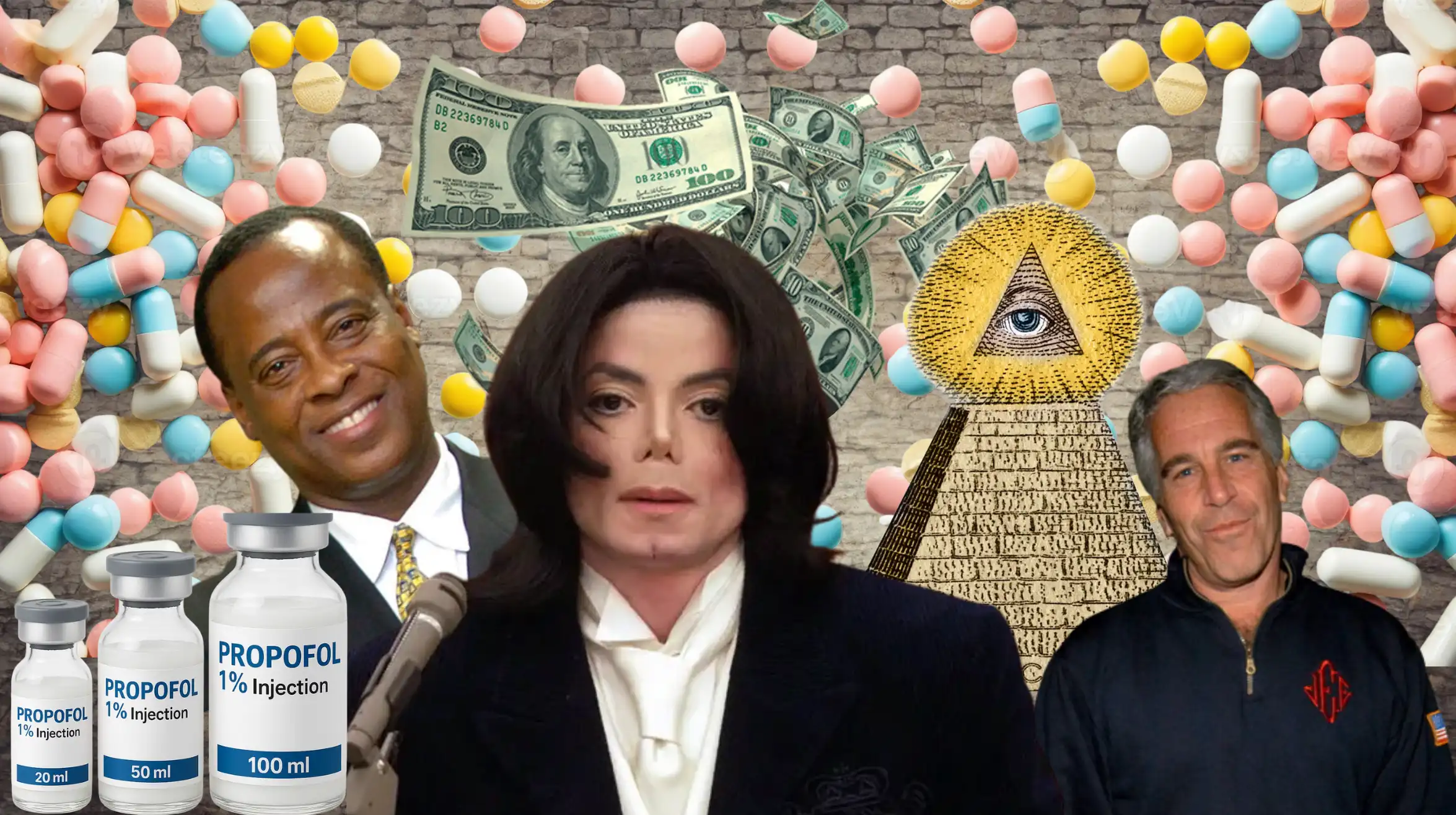
Because Jackson was one of the most famous people in the world, and because the circumstances surrounding his final hours raised genuine questions about who knew what and when, a range of conspiracy theories emerged after his death. It is worth understanding what each theory claims and what the actual evidence shows.
Was Michael Jackson Murdered?
Some theories have argued that Jackson was deliberately killed by powerful interests who stood to benefit financially from his death or who wanted to silence him. The theory typically cites his debts, the value of his music catalog, and the timing of the upcoming “This Is It” tour. No evidence has emerged to support deliberate murder. The coroner’s investigation, the Los Angeles Police Department, and the criminal trial all reached the same conclusion: criminal negligence by Murray, not a coordinated killing. The financial beneficiaries of Jackson’s estate faced their own years of legal disputes, which does not suggest a smooth conspiracy.
Was Dr. Murray a Scapegoat?
A persistent theory holds that Murray was made the fall guy for a larger institutional failure: that AEG Live, the tour promoter that employed him, bore equal or greater responsibility for creating the conditions that led to Jackson’s death. This claim has more legal grounding than most theories. Jackson’s mother, Katherine Jackson, filed a wrongful death lawsuit against AEG Live, arguing the company was negligent in hiring and supervising Murray. In 2013, a jury ruled in AEG’s favor, finding that while Murray was negligent, AEG Live did not have sufficient control over his medical decisions to be held liable. Murray’s conviction stands on its own basis: his personal clinical decisions violated the standard of care.
Industry and “Elite” Involvement Theories
Theories suggesting that music industry executives or shadowy elite figures arranged Jackson’s death typically point to his debts, his ongoing disputes with Sony Music over the ownership of his masters, and statements he made in the years before his death describing feeling targeted by powerful people. These theories remain entirely speculative. No evidence has connected any third party to the events of June 25, 2009, beyond the conduct documented in Murray’s criminal case.
Illuminati Theories
Illuminati theories, which propose that a secret society orchestrated Jackson’s death to silence his cultural influence or the messages in his music, circulate widely online but have no factual foundation. No credible investigation, journalistic or legal, has produced evidence connecting any such organization to Jackson’s death. These theories are notable as a cultural response to grief but should not be mistaken for documented claims.
What the Evidence Actually Shows
The most thoroughly documented explanation for why Michael Jackson died remains the one confirmed by the coroner, the toxicologist, and the criminal court: acute propofol intoxication, administered by a physician who failed to meet the minimum standard of care.
The combination of the wrong drug, used in the wrong setting, without appropriate monitoring, is sufficient to explain his death without additional actors. Conspiracy theories that extend beyond this framework have not produced supporting evidence, despite years of public interest and investigation.
Further Mysteries Surrounding Michael Jackson’s Death
Several unanswered questions from the events surrounding Jackson’s death continue to generate discussion. The following table outlines the most commonly cited areas of unresolved uncertainty.
| Topic | Details |
| Jackson’s Final Days | Multiple accounts describe visible physical deterioration, weight loss, and distress during “This Is It” rehearsals in the weeks before his death |
| Murray’s Delay in Calling 911 | Prosecutors argued Murray waited an unreasonable amount of time before calling emergency services; the exact timeline between finding Jackson unresponsive and placing the 911 call became a key point at trial |
| Financial Pressures | Jackson was reportedly carrying debts in excess of $400 million at the time of his death, raising questions about whether financial stress contributed to his declining health |
| Missing or Incomplete Medical Records | The absence of complete records of Jackson’s medical history and the full scope of drugs he was receiving from multiple physicians added complexity to the investigation |
| AEG Live’s Knowledge | Internal emails introduced in the wrongful death lawsuit suggested AEG executives were aware of concerns about Jackson’s health in the weeks before his death but allowed rehearsals to continue |
|
⚠️ When to Seek Emergency Care: If someone in your presence is unresponsive after taking sedatives or prescription medications, call 911 immediately. Do not wait to see if they “sleep it off.” Signs that require an immediate 911 call include: stopped or very slow breathing, blue or grey lips, unresponsiveness to voice or touch, and a pulse that is very faint or absent. When propofol or benzodiazepines are involved, the window between sedation and fatal respiratory arrest can close in minutes. |
A Revolutionary Musical Career
Few artists have reshaped an entire industry the way he did. From his earliest performances to a record-breaking solo run, each chapter of his career built something entirely new.
| Era | Work | Significance |
| Early Years | Jackson 5 | Introduced him to global audiences as a lead vocalist before age 10 |
| Solo Breakthrough | Thriller, Bad | Thriller remains the best-selling album in history; Bad produced five consecutive US number-one singles |
| Creative Peak | Dangerous | Blended rock, R&B, and soul into a signature sound that crossed every commercial boundary |
| Lasting Mark | Full catalogue | Continues to set the standard for pop performance and production decades after its release |
Taken together, these milestones tell the story of an artist who never stood still, whose creative ambition pushed the boundaries of popular music at every turn.
Global Influence on Music and Movement
His reach went far beyond record sales. He redefined what performance itself could look and feel like.
- Choreography: His dance style, including the moonwalk, created a visual language that performers worldwide still study and draw from today.
- Music Videos: He elevated the format from a simple promotional tool to a cinematic art form, weaving narrative, costume, and movement in ways that had no real precedent.
- Cross-Industry Reach: His influence stretched across music, fashion, and film, permanently changing how artists think about the relationship between sound and image.
- Ongoing Inspiration: Dancers and entertainers continue to draw on his movement vocabulary decades later, keeping his creative approach alive in contemporary performance.
No single artist before or since has left such a deep mark on both how music sounds and how it moves.
Humanitarian Work and Enduring Cultural Presence
He used his platform for causes far beyond entertainment.
His commitment to children’s welfare, research into serious illness, and global hunger relief was reflected in funded concerts and long-term initiatives aimed at real social change rather than short-term visibility.
He understood that fame carried responsibility, and he consistently honored it.
Today’s artists across music, fashion, and performance consistently cite him as a foundational influence. Tributes and direct references to his work appear regularly in modern entertainment.
New generations continue discovering his catalog, connecting with it just as deeply as those who experienced it firsthand. His creative and cultural footprint did not fade with time. It only grew.
Frequently Asked Questions
Why did Michael Jackson die?
Michael Jackson died because his personal physician, Dr. Conrad Murray, administered propofol, a surgical anesthetic, as a sleep aid in a home setting without proper monitoring equipment, trained staff, or emergency support. When Jackson’s breathing stopped, Murray was not present to respond, and the delay before emergency services arrived meant Jackson could not be resuscitated. The official ruling was homicide by criminal negligence.
How did Michael Jackson die?
Jackson died of cardiac arrest caused by acute propofol intoxication. Propofol depressed his respiratory system to the point that his heart stopped. Two benzodiazepines, lorazepam and midazolam, were also found in his system and contributed to the level of central nervous system depression. This combination, administered without continuous monitoring, was the direct medical cause of his death.
When did Michael Jackson die?
Michael Jackson died on June 25, 2009. He was pronounced dead at Ronald Reagan UCLA Medical Center at 2:26 PM local time. Emergency services were called to his rented Holmby Hills mansion in Los Angeles earlier that day after he was found unresponsive by Dr. Murray.
What was Michael Jackson’s official cause of death?
The Los Angeles County coroner ruled the official cause of death as acute propofol intoxication, with lorazepam and midazolam listed as contributing factors. The manner of death was ruled homicide, specifically the result of criminal negligence in the administration of the drugs. This ruling was confirmed through criminal proceedings and has not changed.
What were Michael Jackson’s last words?
According to Dr. Murray’s own account provided to investigators, Jackson’s last recorded words were “I’m getting ready,” a reference to his preparations for the upcoming “This Is It” tour. Murray stated Jackson spoke these words before receiving his final dose of sedatives on the morning of June 25, 2009.
Why couldn’t Michael Jackson sleep?
Michael Jackson suffered from severe, chronic insomnia that court testimony described as lasting for years. Multiple physicians who worked with him over his career noted the condition. The combination of physical pain from past injuries, the psychological pressures of sustained global fame, and the demands of tour preparation are all cited as contributing factors. His insomnia became so severe that he came to believe only propofol gave him genuine rest, even though medical evidence shows propofol does not produce the restorative sleep stages the body actually requires.
Did Michael Jackson get married?
Yes, Jackson married twice. His first marriage was to Lisa Marie Presley in 1994; they divorced in 1996. His second marriage was to Debbie Rowe in 1997, with whom he had two children, Michael Joseph Jackson Jr. (Prince) and Paris-Michael Katherine Jackson. That marriage ended in divorce in 1999. Jackson later had a third child, Prince Michael II (Blanket), born via surrogate in 2002.
How did Michael Jackson’s death impact the music industry?
Jackson’s death created a measurable and lasting shift in how the music industry approaches artist welfare, physician access, and tour preparation demands. His case directly contributed to renewed scrutiny of the practice of entertainers retaining personal physicians and the ethical standards that govern those relationships. Beyond institutional impact, his catalog saw an immediate commercial resurgence: Number Ones re-entered charts worldwide, and his estate became one of the highest-earning in history, generating over $2 billion in revenue in the decade following his death.
Sources
The following sources were used in the preparation of this article. For additional context on prescription drug risks, readers are encouraged to consult SAMHSA at samhsa.gov or call 1-800-662-4357.
- Los Angeles County Department of Medical Examiner-Coroner. “Autopsy Report: Michael Joseph Jackson.” Case No. 2009-04415. Released August 28, 2009. Official coroner determination of cause and manner of death.
- Bowen, T.A. et al. “Death by Propofol.” Forensic Science International, Vol. 279, October 2017, pp. 1-7. PMID 28414657. Epidemiological analysis of fatal propofol misuse cases, including the role of the Jackson case in raising awareness of the drug’s abuse potential.