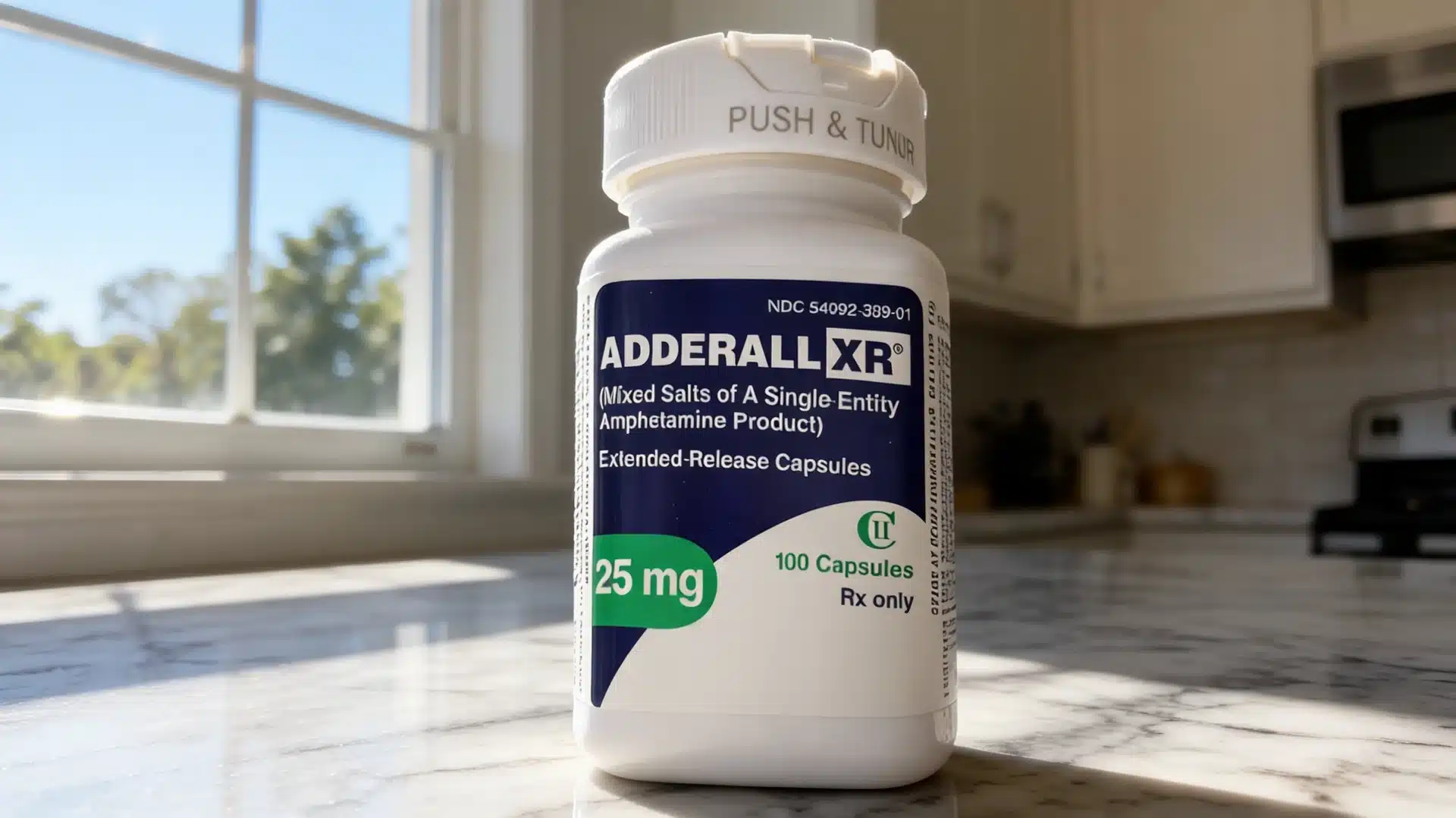
| ⚠️ Warning: If you are experiencing thoughts of self-harm during Adderall withdrawal, call or text 988 (Suicide and Crisis Lifeline) immediately. For substance use treatment referrals, contact SAMHSA’s National Helpline at 1-800-662-4357 — free, confidential, available 24 hours a day. If you are in immediate danger, call 911. |
Quick Glance
| Topic | Key Info |
|---|---|
| What it is | Brain and body adjusting to life without Adderall |
| Who it affects | Long-term users, high-dose users, and even prescribed patients |
| When it starts | Within hours to a few days after the last dose |
| How long does it last | 1 to 2 weeks acutely; months if PAWS develops |
| Most common symptoms | Fatigue, depression, brain fog, cravings, disrupted sleep |
| Is it dangerous? | Rarely life-threatening, but severe depression can occur |
| Best approach | Gradual taper under medical supervision |
| Crisis support | Call or text 988 |
If you’ve been on Adderall for a while and recently stopped, or you’re about to, what you’re feeling is real. The exhaustion that glues you to the mattress. The depression that arrives without an invitation. The brain fog that makes reading a two-line text feel like decoding a legal contract. You’re not exaggerating.
I’ve had plenty of conversations with people who dismissed their own symptoms because “it’s just a prescription med.” That thinking tends to make recovery harder, not easier. Adderall withdrawal is documented, well-studied, and genuinely disruptive for many people, regardless of whether they were prescribed it or not.
This guide covers what Adderall withdrawal symptoms actually look like, how long withdrawal lasts at each stage, what makes it worse, and how to get through it with realistic expectations from day one. No fluff, no vague reassurances.
What Is Adderall Withdrawal?
Adderall is a stimulant medication prescribed mainly for ADHD and narcolepsy. It raises dopamine and norepinephrine levels in the brain, two chemicals that drive focus, motivation, mood, and energy. With consistent use, your brain adjusts to having that chemical support and gradually reduces its own natural production of those neurotransmitters. It’s essentially outsourcing the job.
When you stop taking Adderall, dopamine levels drop sharply. The brain, now running below its usual baseline, produces a cluster of physical and psychological symptoms as it works to rebalance itself. That process is withdrawal.
One thing that surprises many people: withdrawal can happen even if you took Adderall exactly as your doctor prescribed. Dependence is not the same as addiction. Your brain adapted to the medication over time, and that’s a biological response, not a moral failure.
WebMD’s overview of Adderall withdrawal also covers this distinction clearly, including who is most likely to experience symptoms and why stopping abruptly tends to make things worse.
| 📝 Note: Unlike alcohol or benzodiazepine withdrawal, Adderall withdrawal rarely causes life-threatening physical symptoms. That said, the psychological side, especially severe depression, can be serious and should not be managed alone. |
Adderall Crash vs. Adderall Withdrawal
Most articles treat these as the same thing. They’re not, and mixing them up leads to bad decisions about when to stop. Here’s exactly how the two differ:
| Feature | Adderall Crash | Adderall Withdrawal |
| When it happens | The same day a dose wears off | After stopping consistent use entirely |
| What triggers it | A single dose clears the system | Brain losing long-term chemical support |
| Duration | A few hours | 1-2 weeks; months with PAWS |
| Main symptoms | Energy dip, mood drop, irritability | Depression, fatigue, brain fog, cravings |
| Who experiences it | Almost all Adderall users | Regular, long-term, or high-dose users |
| Medical concern | Minimal | Can be significant, especially psychologically |
| Resolves on its own | Yes, quickly | Yes, but takes time and support |
Knowing which one you’re dealing with changes how you respond. The crash is predictable and short. Withdrawal is a longer process that benefits from preparation, medical guidance, and realistic expectations from the start.
| 📝 Tip: If you’ve only been on Adderall for a short time at a low dose, withdrawal symptoms may be mild or barely noticeable. The longer the use and the higher the dose, the more significant the withdrawal experience tends to be. |
What Does Adderall Withdrawal Feel Like?
People who have been through it describe it less like being sick and more like everything losing its color. The energy you relied on is gone. So is the motivation. Tasks that were manageable feel enormous. Food you normally enjoy tastes flat. The clearest way I’ve heard people describe the first week of Adderall withdrawal: like your brain forgot how to want things.
That’s not poetic language. It’s actually a reasonably accurate description of what happens when dopamine drops sharply below baseline.
The brain’s reward system, used to regular artificial stimulation, stops registering everyday pleasure efficiently. This is why the psychological side of withdrawal catches so many people off guard, especially those who expected the physical fatigue to be the hard part.
For most people, the first 72 hours are the heaviest. Sleep, when it comes, doesn’t feel restorative. Appetite either surges or disappears completely. The emotional flatness can feel indistinguishable from depression, because neurologically, that’s close to what it is. It eases.
But it takes longer than most people expect, and having a name for what you’re experiencing makes it considerably easier to move through.
Adderall Withdrawal Symptoms

Adderall withdrawal shows up in two ways: physically and psychologically. Most people experience both, but the intensity and duration of each depend heavily on how long and how much you were using.
Physical Symptoms
The physical side of Adderall withdrawal is uncomfortable, not dangerous. Your body is adjusting to running without chemical stimulation, and these are the most common signs of that process:
- Extreme fatigue: Not regular tiredness. Think sleeping 10 to 12 hours and still waking up exhausted. The brain was chemically energized for months; when that stops, it often swings hard in the opposite direction.
- Hypersomnia: Extended sleep that still doesn’t feel restorative. Common in the first week, then gradually normalizes.
- Increased appetite: Adderall suppresses hunger. When it’s gone, your appetite returns fast and with some attitude.
- Headaches and body aches: Common in the first week. Staying hydrated helps more than most people expect. Adderall withdrawal headaches in particular respond well to consistent water intake and electrolytes.
- Slowed movement and speech: Everything feels like it’s running at half speed. Totally normal, genuinely annoying.
- Sleep disruption: Either too much sleep or not enough. Sometimes both, at different points in the same week.
Physical symptoms are real, but they’re manageable. Most of them ease within the first one to two weeks. Rest, hydration, and consistent meal times help your body stabilize faster than pushing through on willpower alone.
Psychological and Emotional Symptoms
This is where withdrawal becomes harder. Research consistently shows that psychological symptoms are more significant than physical ones during stimulant withdrawal, and they tend to last longer:
- Depression: Dopamine is the brain’s primary feel-good signal. Without Adderall, users commonly report feeling persistently low, unmotivated, and emotionally flat. This is the symptom that catches most people off guard.
- Anhedonia: The clinical term for being unable to enjoy things you normally like. Food tastes bland. Hobbies feel pointless. Without adequate dopamine, the brain’s reward system stops properly registering pleasure.
- Anxiety and irritability: The nervous system is recalibrating. Small triggers feel bigger than they should.
- Brain fog and poor concentration: Stopping Adderall can leave you struggling to finish a sentence. For people with ADHD, this is especially disorienting because it’s hard to separate withdrawal from returning ADHD symptoms.
- Cravings: Stress is the biggest trigger. When the brain’s feel-good chemicals are depleted, the body remembers what made them spike.
- Mood swings: Emotional regulation gets shaky. One moment feels manageable. The next doesn’t.
Psychological symptoms are the main reason medical support matters during withdrawal. If depression is severe, persistent, or includes thoughts of self-harm, that crosses from discomfort into a medical situation that needs professional attention, not just rest and time.
| ⚠️ Warning: If you experience thoughts of self-harm during withdrawal, contact the 988 Suicide and Crisis Lifeline immediately by calling or texting 988. Severe psychological symptoms during stimulant withdrawal are a medical event. Treat them that way. |
What Makes Adderall Withdrawal Worse?
Not everyone goes through the same experience. These specific factors determine how intense withdrawal gets and help you set realistic expectations before you stop or start tapering.
| Factor | What It Means | Why It Matters |
| Duration of use | Months to years of consistent Adderall use | Deeper neurochemical adaptation means the brain has significantly more ground to recover. |
| Dose | Daily intake of 40-60mg vs. 10mg | Higher doses cause stronger dependence. The drop in dopamine when stopping is proportionally larger. |
| Stopping cold turkey | Abrupt cessation with no taper plan | Gives the brain no runway to adjust. Symptoms hit faster, harder, and all at once. |
| Pre-existing mental health conditions | Depression or anxiety before Adderall use | Conditions masked by the medication resurface quickly and often more intensely when it stops. |
| Polysubstance use | Combining Adderall with alcohol, cannabis, or other substances | Changes the withdrawal picture considerably and can make symptoms harder to predict or manage. |
| Life stress during withdrawal | High personal, work, or financial stress | Amplifies every symptom across the board. Timing your taper during a calmer period helps significantly. |
To understand why stopping stimulants feels so hard at a neurological level, this breakdown of how stimulants affect the brain’s dopamine system goes into the mechanism in accessible detail, particularly why the reward system becomes so dependent on artificial stimulation over time.
None of these factors is a permanent obstacle. They’re variables that affect the intensity and duration of what you experience. Knowing them upfront helps you plan smarter, taper safely, and avoid being blindsided by a harder-than-expected withdrawal.
The Adderall Withdrawal Timeline

Timelines vary by person, and the factors covered above all influence how things unfold. That said, most people move through four recognizable stages regardless of their history with the drug. How long Adderall withdrawal lasts depends heavily on dose and duration, but the shape of the arc is consistent.
Stage 1: The Initial Crash (Days 0 to 3)
This begins within a few hours of the last dose for regular users and can last for the first 2 to 3 days. You feel a sudden drop in energy, sharp irritability, and heavy fatigue. Sleep often follows quickly. Appetite surges.
This is the body’s first signal that the stimulation it expected isn’t coming. For Adderall XR users, the onset may be slightly delayed compared to immediate-release, since extended-release formulations release the drug more gradually. The overall symptom profile is the same; the timing shifts.
Stage 2: Acute Withdrawal (Days 3 to 10)
This is the hardest window. Symptoms peak here. Depression is often most intense during these days. Brain fog makes work difficult or impossible for many people. Sleep is unpredictable: some people sleep 14 hours; others lie awake with anxious, circular thoughts. Cravings are strongest in this phase.
According to data reviewed by Recovery Centers of America, the intensity of this phase is directly linked to dosage, duration of use, and individual metabolism. There’s no shortcut through it. The brain needs time.
Stage 3: Subacute Phase (Days 10 to 14)
Symptoms start to ease. Energy returns in small amounts. Sleep becomes more regular. Depression is usually less acute but may still be present. Cravings can still surface, especially when triggered by stress or familiar environments. Mood starts stabilizing, though inconsistently.
Stage 4: Post-Acute Withdrawal Syndrome (Weeks to Months)
PAWS is less discussed but affects a significant number of long-term users. Even after the acute phase clears, intermittent symptoms can return, including low mood, poor motivation, cognitive sluggishness, and cravings, for weeks to months after stopping completely.
This is often when people relapse, not because they lack willpower, but because they assumed it was over and then got hit by a wave with no support structure in place.
| 📝 Note: PAWS is not a sign that something went wrong or that recovery has stalled. It’s the brain continuing to recalibrate. Having a therapist or peer support group during this phase makes a measurable difference in long-term outcomes. |
Clinical research published by the NIH on amphetamine withdrawal treatment confirms that while no single medication is approved specifically for this type of withdrawal, behavioral support and structured care significantly improve recovery outcomes across all stages.
Can You Stop Adderall Cold Turkey?
Technically, yes. Whether you should depends heavily on your history with the drug.
For short-term, low-dose users, stopping cold turkey may not cause much of a problem. For anyone who has been on Adderall daily for months or years at moderate to high doses, stopping abruptly tends to make every symptom more intense and more sudden, and relapse risk during the acute phase is high.
The better approach is a gradual dose taper, reducing incrementally over several weeks under your doctor’s supervision. This gives the brain time to start restoring its own dopamine production before the drug is fully removed. Vyvanse, another commonly prescribed stimulant, follows the same general principle: Vyvanse withdrawal carries a very similar profile to Adderall withdrawal, and the same taper logic applies.
If you have ADHD, there’s another layer here. When Adderall stops, ADHD symptoms return. This is a separate issue from withdrawal, but it happens at the same time, and the symptoms overlap significantly. Your doctor can help you separate the two and, if needed, discuss non-stimulant alternatives. Strattera (atomoxetine), Intuniv (guanfacine), and Wellbutrin (bupropion) are commonly used options for patients who cannot continue stimulant treatment.
| ⚠️ Advisory: Never stop a prescription medication without talking to your prescribing doctor first, especially after years of use or high-dose treatment. They can design a taper that fits your specific dose and duration. |
Adderall Withdrawal and ADHD: What’s Different
For people with ADHD, stopping Adderall creates a particularly confusing overlap. Withdrawal symptoms, fatigue, brain fog, poor concentration, and low motivation, mirror ADHD symptoms directly. In the first two weeks, it’s genuinely hard to tell which you’re experiencing. Most of the time, it’s both simultaneously.
The key distinction that helps clinically is trajectory. Withdrawal symptoms tend to peak early and gradually ease over two weeks. ADHD symptoms are consistent and stable across time once withdrawal clears. If the cognitive difficulties are getting measurably better week over week, it’s likely withdrawal driving the bulk of it. If they return to a baseline you recognize from before medication, that’s your ADHD profile coming back into view.
This is one of the strongest reasons to involve your prescribing doctor before stopping. They can set a baseline, track your progress, and, if symptoms don’t resolve as expected, adjust the plan. Stopping stimulants without that framework means navigating two overlapping conditions with no reference point, which is harder than it needs to be.
How to Manage Adderall Withdrawal
Adderall withdrawal is manageable with the right support in place. The approach that works best depends on how severe your dependence is and the resources available to you.
Medical Supervision and Detox
Supervised medical support is the most reliable option for moderate to severe withdrawal. A doctor can manage your taper, monitor psychological symptoms, and prescribe supportive medications where needed.
- Taper schedule: A gradual dose reduction plan makes the transition far less disruptive than stopping abruptly.
- Medication support: No drug is FDA-approved specifically for Adderall withdrawal, but antidepressants and sleep aids are used for persistent depression and insomnia.
- Inpatient detox: Round-the-clock monitoring for severe cases where acute depression or psychological symptoms need active management.
- Outpatient settings: A practical option for milder dependence when a full inpatient stay isn’t feasible.
If you’re deciding what level of care fits your situation, this guide to outpatient recovery options breaks down the difference between standard outpatient care, intensive outpatient programs, and partial hospitalization.
Lifestyle Support During Withdrawal
These adjustments won’t skip the hard part, but they do shorten it. Small, consistent actions support recovery rather than work against it.
- Sleep schedule: Keep consistent sleep and wake times. Sleeping 14 hours daily deepens depression rather than easing it.
- Eat regularly: Lean toward protein and complex carbs. Sugar spikes dopamine briefly, then drops it harder.
- Stay hydrated: Withdrawal headaches are often partly due to dehydration. Water before coffee.
- Light movement: 15 to 20 minutes of walking helps the brain naturally produce dopamine again.
- Reduce caffeine: Replacing Adderall with espresso worsens anxiety and disrupts sleep quality.
- Journaling: Get intrusive thoughts onto paper. Just externalize them; eloquence is optional.
| 📝 Tip: Keep your phone away from your bed. Scrolling at 2am when dopamine is already depleted makes sleep and mood measurably worse. |
Natural Support and Supplements
There’s no supplement that replaces a proper taper or medical oversight, but a few evidence-adjacent options come up consistently in the harm reduction community and are worth knowing about. Magnesium glycinate, taken at night, is commonly reported to improve sleep quality during withdrawal.
Omega-3 fatty acids have a reasonable evidence base for supporting dopamine receptor function over time. Tyrosine, an amino acid precursor to dopamine, is used by some people in early withdrawal, though results are inconsistent and it should be avoided by anyone on MAOIs. None of these replace sleep, food, hydration, and movement, which do more than most supplements combined.
If you’re considering supplements, run them by your doctor before adding them, especially if you’re also on other medications. The withdrawal window is not a good time to troubleshoot unexpected interactions.
Therapy and Long-Term Support
Withdrawal doesn’t end when physical symptoms clear. Long-term recovery depends on consistently addressing the psychological side.
- CBT: Identifies triggers, addresses cravings, and builds practical response strategies for stimulant withdrawal.
- SMART Recovery: Structured, evidence-based peer support for prescription stimulant dependence.
- Narcotics Anonymous: Community accountability during PAWS is more useful than most people expect.
- Psychiatry referral: If depression persists beyond two weeks, a psychiatrist can assess whether medication is appropriate.
- Antidepressant awareness: If one is prescribed, understanding its own discontinuation profile beforehand prevents surprises later.
Therapy and peer support are not last resorts. They’re what make recovery stick long after the acute phase ends.
When to Seek Emergency Care
⚠️ Get medical help immediately if any of the following apply:
SAMHSA’s National Helpline is free, confidential, and available around the clock at 1-800-662-4357. For mental health crises, call or text 988. |
Final Verdict
Adderall withdrawal is real. It’s temporary, but it doesn’t feel that way while you’re in it, and I don’t want to brush past that. The fog, the low mood, the sleep that won’t cooperate: that’s the brain doing something genuinely hard, reclaiming its own chemistry after months or years of running on external support.
The good news is that recovery follows a predictable arc. Symptoms peak, then ease, then largely resolve. The brain does recover. Dopamine production does normalize. The things you used to enjoy will feel enjoyable again.
What I’d want anyone reading this to take away: don’t go it alone if you don’t have to. A doctor can make the taper safer. A therapist can help you process what’s under the surface. A support group can keep you grounded when PAWS shows up weeks later acting like it owns the place. And the helplines are there for when it feels like too much. Drop a comment below with your questions.
Frequently Asked Questions
What are the most common Adderall withdrawal symptoms?
The most consistently reported Adderall withdrawal symptoms are fatigue, depression, brain fog, increased appetite, disrupted sleep, irritability, and cravings. The psychological symptoms, particularly low mood and anhedonia, tend to be more pronounced and longer-lasting than the physical ones. Most people find the acute phase peaks around days 3 to 7 and then gradually eases over the following week.
How long does Adderall withdrawal last?
For most people, acute Adderall withdrawal symptoms peak in the first week and largely resolve within one to two weeks. However, post-acute withdrawal syndrome (PAWS) can bring intermittent symptoms, including low motivation, cognitive sluggishness, and cravings, for weeks to months after the acute phase ends. Duration depends significantly on how long you used Adderall and at what dose.
Can you stop ADHD meds cold turkey?
You technically can, but it’s not recommended for regular users. Stopping abruptly triggers a sharper, more intense withdrawal experience. A gradual dose taper under your doctor’s supervision reduces symptom severity and gives your brain more time to restore its own dopamine production. Always consult your prescribing physician before adjusting your dosage or schedule.
What does Adderall withdrawal feel like?
Most people describe it as a combination of profound fatigue, emotional flatness, and an inability to feel motivated or enjoy things they normally would. The first 72 hours often bring heavy sleep and appetite surges. By days three to seven, depression and brain fog tend to be the most prominent symptoms. The experience varies by individual, but the common thread is a sense that your brain’s normal drive has temporarily switched off.
What is the 28-day rule for Adderall?
Adderall is a Schedule II controlled substance, so pharmacies require a new written prescription every 28 to 30 days. This is a federal regulatory measure designed to limit overprescribing and reduce the potential for misuse. Your doctor must write a new script each month. It cannot be called in, faxed electronically in most states, or automatically refilled.
How long does it take for your brain to get back to normal after Adderall?
Acute symptoms typically resolve within one to two weeks for most users. Full recovery of the dopamine system, including consistent mood stabilization and restored motivation, usually takes several more weeks to months. How long depends on how long you used Adderall, the dosage, and your individual brain chemistry and baseline mental health.
Is Adderall withdrawal dangerous?
Unlike alcohol or benzodiazepine withdrawal, Adderall withdrawal is rarely life-threatening. Physical symptoms are uncomfortable but not medically dangerous in the majority of cases. However, severe psychological symptoms, particularly major depression and thoughts of self-harm, can occur and require immediate medical attention. These should never be dismissed or managed without professional support.
Does Adderall XR withdrawal feel different from regular Adderall?
Yes, somewhat. Regular Adderall leaves the system faster, so the initial crash tends to hit sooner and more sharply. Adderall XR releases more gradually, so Adderall XR withdrawal symptoms may have a slightly delayed onset, but the overall duration tends to run a little longer. The symptom types are the same; the timing and intensity can differ by formulation. If you’re tapering off XR, your doctor may transition you to immediate-release at a lower dose to give finer control over the reduction.
Sources
- Shoptaw, S.J. et al. (2009). “Treatment for Amphetamine Withdrawal.” Cochrane Database / PubMed Central, NIH.pmc.ncbi.nlm.nih.gov
- WebMD Editorial Team. (2025). “Adderall Withdrawal: What You Should Know.” WebMD.webmd.com
- Recovery Centers of America. (2025). “Adderall Withdrawal Symptoms.” recoverycentersofamerica.com.recoverycentersofamerica.com
- SAMHSA. (2025). “National Helpline.” Substance Abuse and Mental Health Services Administration.samhsa.gov
- FunWithDizzies. “How Stimulants Affect the Brain’s Dopamine System.” funwithdizzies.com
- FunWithDizzies. “Outpatient Recovery Options Explained.” funwithdizzies.com
- FunWithDizzies. “Vyvanse Withdrawal: Symptoms and Timeline.” funwithdizzies.com