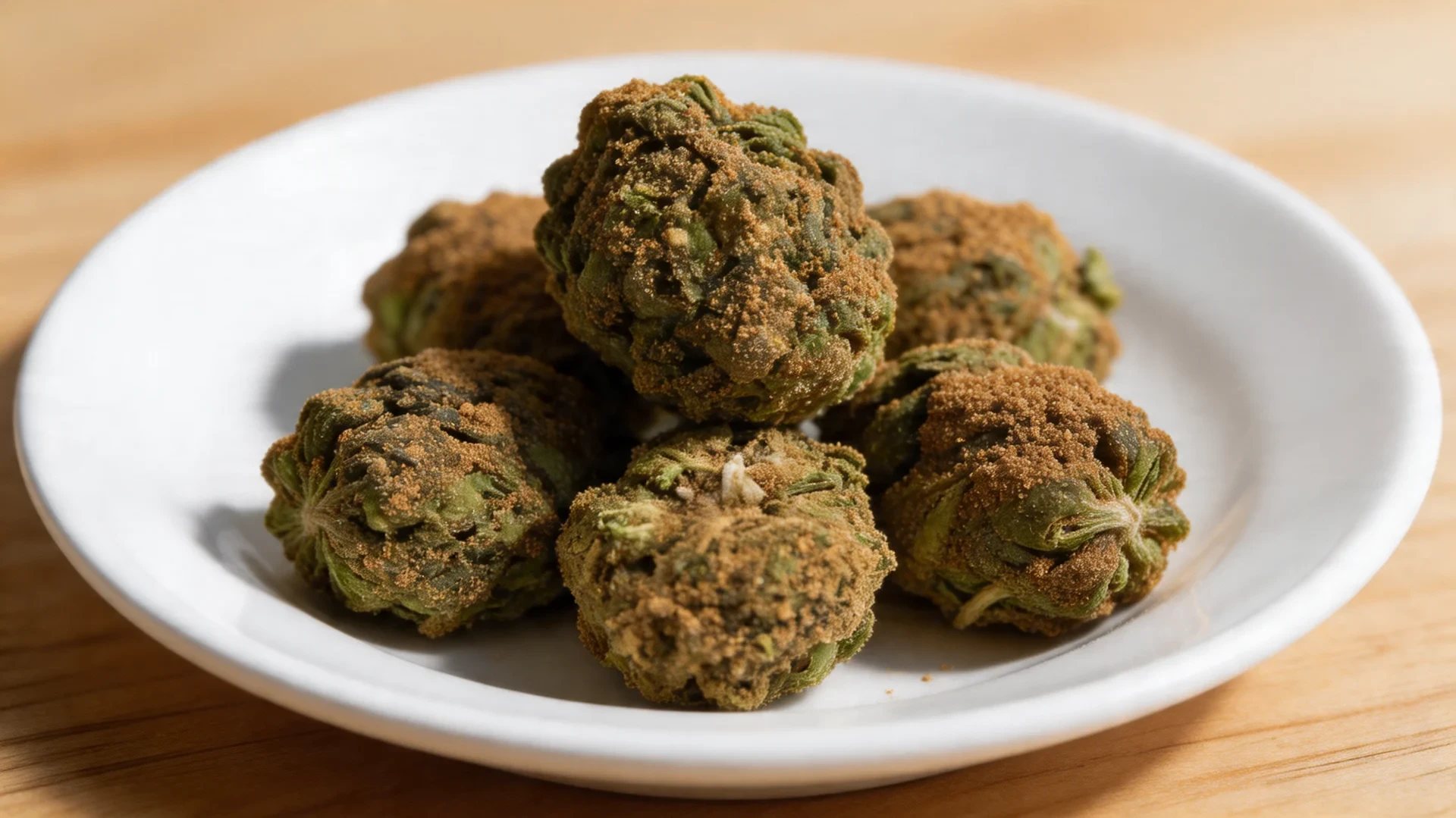
| THC Range | ~50% or higher (standard flower averages 20–25%) |
| Best Method | Glass pipe or bong with water filtration |
| Breaking Tool | Scissors or a dab tool, never a grinder |
| Layering Technique | Sandwich moon rock crumbles between regular ground flower |
| Heat Source | Hemp wick is recommended over a standard lighter |
| Onset Time | Effects typically build 20–30 minutes after the first hit |
| Session Tip | One hit, then pause; the potency builds in waves |
There’s a reason people lower their voice slightly when they bring up moon rocks at the dispensary counter. They’re not just strong flower. They’re a different category of experience entirely, and if you treat them like regular cannabis, they will absolutely remind you of that.
The good news is that smoking moon rocks correctly is not complicated; it just requires a small shift in technique and, more importantly, a reasonable amount of patience. Moon rocks, sometimes spelled moonrocks, are built from three layers: a base of cannabis flower coated in concentrated oil, then rolled in kief. That structure is what pushes THC levels to around 50% or higher.
They were traditionally made using Girl Scout Cookies as the base flower, chosen for its density and high resin output, and that tradition still holds at most dispensaries today. This guide covers every realistic method for smoking them, bongs, pipes, and joints, along with how to make them at home and what to actually expect when the effects arrive.
What Are Moon Rocks, Exactly?
Moon rocks, also called moon rock weed or moonrock weed on most dispensary menus, are cannabis flowers that have been coated in hash oil or distillate and then rolled in a layer of kief, the fine, powdery crystals that collect from dried flower. Each layer adds potency, and the result is a product that typically tests around 50% THC, compared to quality flower sitting somewhere in the 20–25% range.
The concept was popularized on the West Coast, with West Coast rapper Kurupt often credited with bringing them into mainstream cannabis culture. The name stuck, the product spread to dispensaries across legal markets, and now it shows up in a variety of base strains, depending on where you buy.
Healthline’s guide to moon rocks covers the full origin story and explains why the 50% THC benchmark is an average rather than a ceiling; batch potency varies depending on the quality of all three components involved. One thing worth knowing early: not all moon rocks are created equal. A batch made with high-quality flower, clean concentrate, and a generous kief coating will hit very differently from one assembled with lower-grade components. If you’re buying from a licensed dispensary, the label will usually give you a THC percentage; pay attention to it.
The concentrated oil coating is also the reason the heat application rules in this guide matter as much as they do. Because the oil has already been decarboxylated during processing, moon rocks deliver activated THC with every hit rather than requiring additional heat conversion the way raw flower does.
What You Need Before You Start
Gathering the right tools before you break anything open will save you from a sticky, frustrating situation halfway through the process. Moon rocks have a tacky, oily surface that makes improvising difficult. Here’s what you actually need.
- Glass pipe, bong, or bubbler: Glassware is the right call for moon rocks. Metal pipes retain heat in ways that can affect the flavor, and the oil in moon rocks needs controlled, patient combustion. If you have a water pipe, use it.
- Scissors or a stainless-steel dab tool: This is how you break moon rocks into workable pieces. Use scissors for a rough chop, or a dab tool to pry and crumble. Work over parchment paper so you catch any kief that falls off; that’s the most potent part of what you’re handling.
- Regular ground flower: You’ll need this for the sandwich method covered in the next section. Do not skip it. Trying to burn moon rocks alone in a bowl creates an uneven session that goes out repeatedly and wastes product.
- Hemp wick: A standard lighter works, but hemp wick holds a steadier flame and eliminates the butane taste that becomes noticeably unpleasant when you’re holding heat on a dense, oily product. It’s a small upgrade that makes a meaningful difference.
None of this requires a special setup or anything you wouldn’t find at a dispensary or local headshop. Having it ready before you start means the session goes the way you planned, not the way it improvised itself into.
| 📝 Note: Keep your hands away from the kief layer as much as possible while handling moon rocks. The oils on your skin will degrade the outer coating, making it difficult to place pieces without them sticking to everything nearby. |
How to Smoke Moon Rocks in a Bong or Pipe
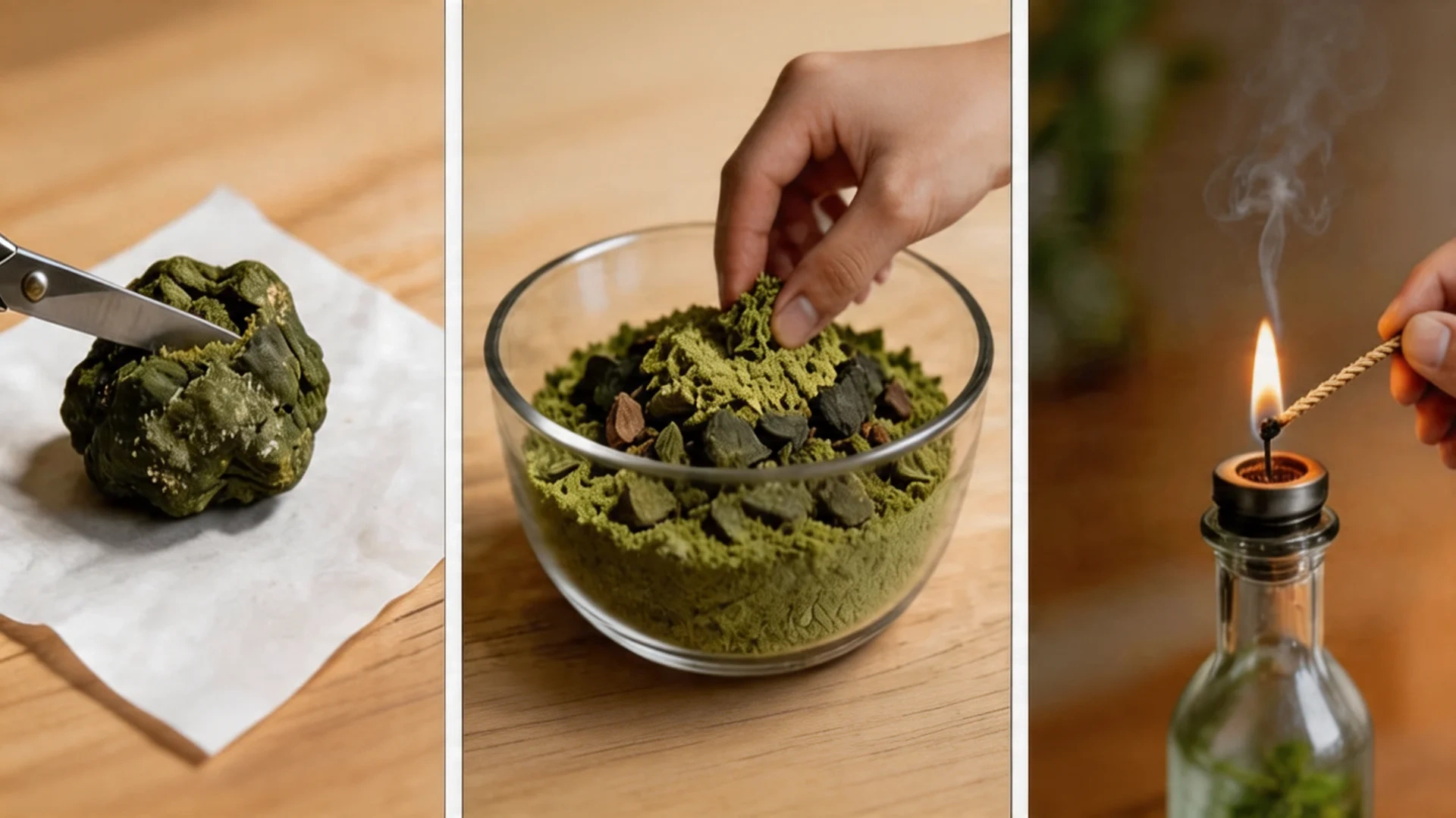
This is the method that works best for most people, and it’s the one to start with if this is your first time. A glass bong with water filtration is the top recommendation because the water cools the thick smoke produced by the concentrate, making hits noticeably smoother than with a dry pipe. A standard glass pipe works well too; the process is identical, just without the water buffer.
Step 1: Break the moon rock into small pieces
Aim for crumbles roughly the size of a pea or smaller. Use scissors or a dab tool, and keep handling to a minimum. Work over parchment paper. There is no graceful way to do this, but small pieces are critical for even burning; large chunks will not combust properly and will repeatedly go out.
Step 2: Layer with regular flower using the sandwich method
Pack the bowl approximately halfway with regular ground flower. Place the moon rock crumbles in the center. Add a thin layer of ground flower on top. This layering arrangement does two things: it protects airflow so the bowl doesn’t clog from the sticky concentrate, and it prevents the oil from scorching directly against the hot glass at the bottom of the bowl, which produces a harsh, unpleasant pull.
Step 3: Apply heat slowly and steadily
Moon rocks ignite more slowly than flower because of the concentrated coating. Keep the flame moving in a circular motion and give it time to catch. Do not hold a direct flame in one spot. Hemp wick is particularly useful here because the density of the material requires holding heat for longer than standard flower; with a lighter, you end up drawing in more butane than you’d want over an extended light.
Step 4: Inhale gently on the first pull
Take a slow, controlled draw rather than a full pull. The smoke produced by the concentrate layer is thicker and denser than that of regular flower. A Johns Hopkins crossover study on smoked cannabis found that higher THC doses produced significantly more pronounced effects and a greater incidence of adverse reactions, particularly in users without established tolerance, which is exactly the situation most people are in the first time they try moon rocks. Inhale gently, hold briefly, and exhale fully before assessing how you feel.
Step 5: Wait before taking a second hit
This is the step most people skip and later regret. The effects from moon rocks build gradually over 20 to 30 minutes rather than hitting immediately. Take one hit, set the pipe or bong down, and give it time. Stacking hits before the first one has fully arrived is a reliable way to overshoot your intended experience.
| 💡 Tip: If you’re using a bong, change your water before the session. Concentrate residue from previous sessions can make the smoke considerably harsher and will affect the flavor from the first hit. |
Can You Smoke Moon Rocks in a Joint or Blunt?
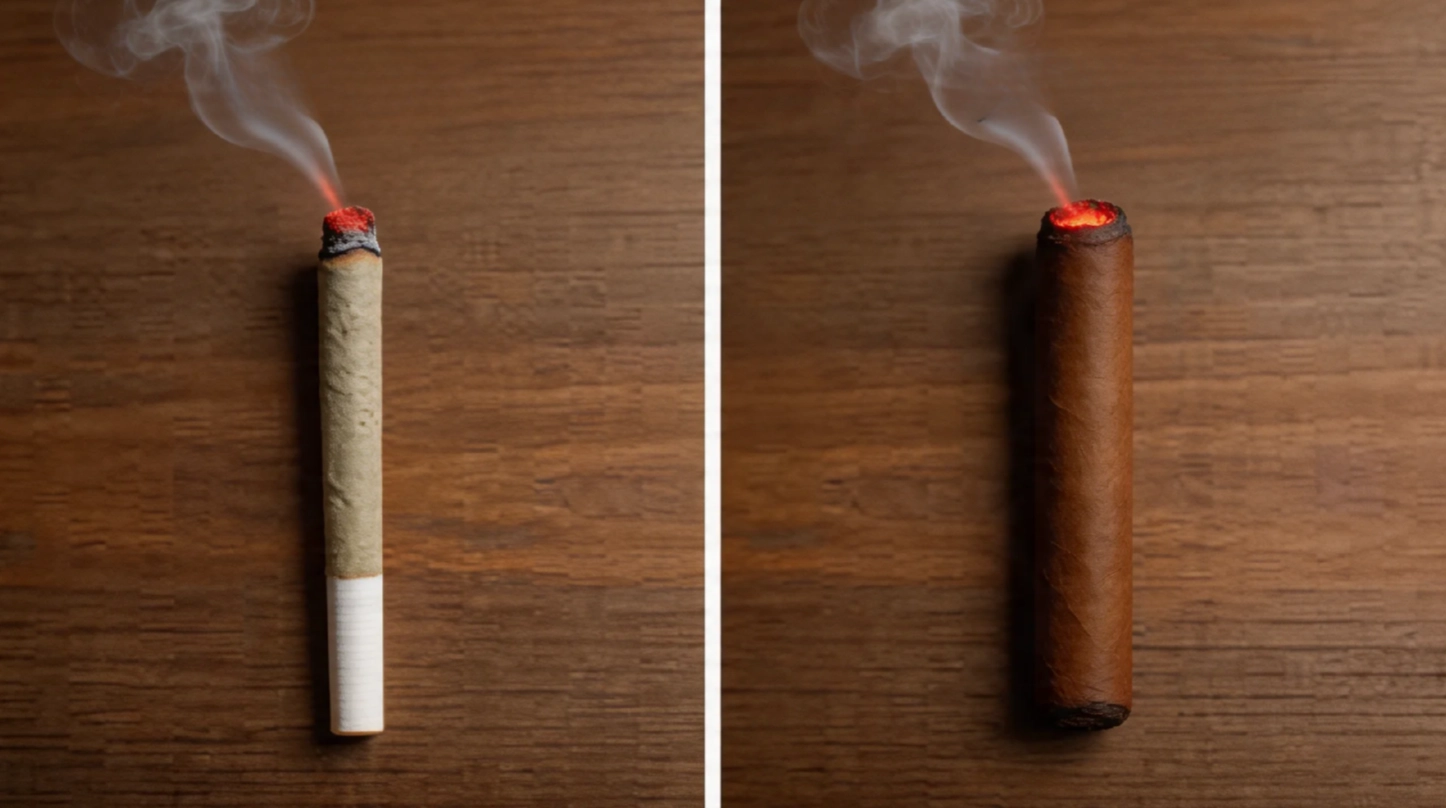
Yes, but only with the right approach. A pure moon rock joint does not work. The density of the product, combined with the oily coating, prevents proper airflow through the rolled paper. You will spend more time relighting it than actually smoking it, and the uneven combustion wastes a significant portion of what you paid for.
The method that does work is straightforward: break the moon rocks into very small pieces, smaller than you would for a pipe, and mix them thoroughly with regular ground flower throughout the entire roll. If you’re still deciding between the two formats, the key differences between a joint and a blunt are worth understanding before you commit to either.
A rough ratio of one part moon rocks to one part flower is the maximum before burn consistency becomes unreliable. Going heavier on the moon rocks does not improve the session; it just makes the joint harder to manage.
When it comes time to light, apply low, even heat to the tip rather than holding a direct flame on it. Give it a few seconds to catch rather than aggressively pulling on the first light. Expect the joint to burn slower than normal; that’s the concentrate at work, and it’s completely normal.
| 📝 Note: Distribute the moon rock crumbles evenly throughout the entire joint before rolling, not in a single clump at one end. Uneven distribution is the most common reason moon rock joints go out repeatedly and need constant relighting. |
How to Make Moon Rocks at Home
Making moonrocks yourself is straightforward, and doing it at home lets you control every component: the base strain, the concentrate quality, and the thickness of the kief coating. You need three things: a dense cannabis nug, a concentrate such as hash oil or distillate, and a generous supply of collected kief. Quality matters at every layer.
- Choose a dense, well-cured nug: Density matters because a loose or fluffy bud won’t hold the oil coating evenly. Girl Scout Cookies remains the classic choice for exactly this reason; the structure is compact and the resin output is high. Any dense, high-quality flower works. Avoid anything crumbly or under-dried.
- Warm the concentrate slightly: Hash oil or distillate at room temperature is often too thick to coat evenly. Warming the container briefly in your hands or in a warm water bath loosens the consistency enough to apply a smooth, even layer. You’re aiming for a honey-like consistency, not a liquid.
- Apply the concentrate with a dab tool: Work methodically around the nug, coating every surface. A silicone dab tool prevents the concentrate from sticking to the applicator. Apply a second coat if the first layer is thin; a more generous coating means more surface area for the kief to adhere to.
- Roll the coated nug in kief immediately: The concentrate needs to be slightly tacky when you roll it; if it sets before you add the kief, it won’t adhere properly. Roll gently but thoroughly, pressing the kief into the surface with light pressure. Work over a parchment sheet to catch any excess.
- Let it set before use: Give the finished moon rock at least 20 to 30 minutes to firm up at room temperature before you try to break it apart. Place it on a clean piece of parchment in a cool, dark spot. Don’t refrigerate it at this stage; the rapid temperature change can cause the kief layer to crack before it’s properly bonded.
One honest note on potency: homemade moon rocks vary widely depending on the strength of your base flower and concentrate. Dispensary-purchased kief will typically be more concentrated and consistent than home-collected material from a grinder. Using components from the same strain throughout, meaning the base flower, the concentrate, and the kief, is exactly how sun rocks are produced, and it’s what drives their significantly higher THC ceiling compared to standard moon rocks.
| 💡 Tip: If you collect kief through regular grinding, the bottom chamber fills slowly. A coin in the kief compartment, shaken for 30 seconds before each collection, helps break loose more trichomes from the mesh screen. Most regular grinders are underutilized on this step. |
What Does the Experience Feel Like?
Moon rocks follow a predictable timeline that catches most people off guard the first time. If you want context on how your personal baseline fits in, reviewing the factors that shape individual cannabis tolerance gives useful context before your first session. Here’s the experience breakdown:
| Phase | What Users Report | Typical Timing |
| Onset | Effects build gradually rather than arriving immediately. This delayed curve is the main reason people overconsume; the first hit feels mild, so they take another before the first has fully settled. | 20–30 minutes after the first hit |
| Head Phase | A pronounced cerebral shift with heightened sensory awareness. Sounds, light, and surroundings feel more vivid than usual. More intense than what high-THC flower typically produces. | Within the first hour |
| Body Phase | Effects spread from the head throughout the body in a slow wave. Users commonly describe the physical sensation as ranging from deeply relaxing to physically heavy, depending on the base strain and individual tolerance. | 1–2 hours in |
| Duration | Significantly longer than a standard flower session. Most users report effects lasting several hours. For those with lower tolerance or limited concentrate experience, it can carry into the following day. | Several hours; sometimes into the next day |
The delayed onset is where most sessions go off the rails. Take one hit, put the pipe down, and wait 30 minutes before deciding whether you need more. The experience will arrive; giving it time to do so is the most practical thing you can do for yourself here.
Session Safety: What to Know Before You Light Up
| ⚠️ Advisory: Moon rocks are not a beginner product. Users with low THC tolerance, a history of cannabis-related anxiety, or no prior experience with concentrates should approach with significant caution. A peer-reviewed case published in Cureus (Leczycki et al., 2023) documented psychosis and new-onset seizures in a 20-year-old following moon rock consumption, a stark illustration of how seriously high-potency products need to be treated. Cannabis affects everyone differently, and potency this high leaves very little margin for error. |
Beyond the advisory above, a few practical considerations make a real difference in how a session goes.
- Start with less than you think you need: A piece roughly the size of a pencil eraser is a reasonable starting point for experienced cannabis consumers. For someone newer to concentrates, even smaller is appropriate.
- Be in a safe, comfortable environment: The extended duration and intensity of the experience mean that setting matters more here than with most products. Being somewhere familiar and comfortable is not optional; it’s practical.
- Stay hydrated throughout: Dry mouth is standard with high-THC products, and it’s more pronounced with moon rocks. Have water available before you start and keep drinking during the session.
- Do not drive or operate machinery: Given how significantly the onset can be underestimated, it’s worth stating directly. The delayed kick is exactly what makes this easy to miscalculate.
- Have a plan if things feel too intense: Stay where you are, find a comfortable position, drink water, and remind yourself that it will pass. It always passes.
If you’re new to cannabis or returning after a long break, moon rocks are not the right starting point. Low-THC strains offer a much safer introduction to how your personal tolerance works before you consider something at this potency level. None of these precautions are overcautious; they’re just what a controlled, enjoyable session with a genuinely potent product actually requires.
Moon Rocks vs. Cannabis Caviar vs. Sun Rocks
These three products are regularly lumped together in conversation, but they are not the same thing. Weedmaps’ moon rocks entry covers the distinction in detail, but the short version is as follows. Here is a composition breakdown:
| Product | Composition | Typical THC Range |
|---|---|---|
| Moon Rocks | Flower + concentrate + kief | ~50% or higher |
| Cannabis Caviar | Flower + concentrate (no kief) | ~40–50% |
| Sun Rocks | Same-strain flower, oil, and kief throughout | 60–80% |
| THCA Moon Rocks | Hemp-derived THCA flower + THCA concentrate + kief | Comparable once combusted; varies by batch |
The practical difference between moon rocks and caviar is the third outer kief layer. Caviar is an oil-coated flower, full stop. Moon rocks take it further by rolling that oil-coated flower in kief, which adds another layer of THC-rich material and pushes the total potency higher.
Sun rocks use the same-strain components throughout, which is why they test significantly higher than either; every layer is sourced from the same plant, and the consistency drives the THC ceiling upward.
THCA moon rocks have become more visible on the market in states where hemp-derived products occupy a different regulatory category than cannabis. They’re built the same way, using THCA flower instead of standard cannabis flower, and once combusted the THCA converts to active THC. Potency and effects are comparable; the difference is the sourcing and how they’re classified on the label.
How to Store Moon Rocks
Storage matters more than most people realize when it comes to moon rocks. The concentrate coating is temperature-sensitive; leave it somewhere warm, and they become gummy, sticky, and nearly impossible to break apart cleanly. The kief layer also sheds easily when pieces are stored loosely or handled more than necessary.
Keep moon rocks in an airtight glass container in a cool, dark location. A cabinet or drawer away from any heat source works well for most people. Avoid leaving them in a warm car, near a windowsill, or anywhere with inconsistent temperatures throughout the day.
One thing worth noting: do not store moon rocks alongside other flower. The concentrated coating can transfer onto adjacent products and affect them in ways you didn’t plan for. A dedicated container keeps everything in its place.
| 💡 Tip: If your moon rocks have become sticky and difficult to work with due to heat exposure, placing them in the refrigerator for 10 to 15 minutes firms them up enough to break apart cleanly with scissors. Don’t freeze them; extreme cold makes the kief layer brittle and easier to knock off. |
Final Thoughts
Moon rocks deserve the reputation they carry. They’re genuinely potent, they behave differently from anything else in the cannabis category, and the specific way you handle them, from breaking them apart to choosing your method to managing the session timeline, makes a real difference in how the experience goes.
The bong with the sandwich method is the most forgiving setup for anyone starting out with them, and the patience to wait between hits is the single most useful thing you can bring to a moon rock session.
If there’s one thing to take away from this guide, it’s that the slow build isn’t a sign that nothing is happening; it’s the whole point. Give it time, stay hydrated, and be somewhere comfortable. Do that, and moon rocks are an experience worth having on your own terms. Drop a comment below and share your thoughts on moon rocks.
Frequently Asked Questions
Can you smoke moon rocks without a grinder?
Yes, and a grinder is the wrong tool for the job. The sticky concentrate coating clogs grinder teeth immediately and strips the kief layer off in the process. Use scissors or a dab tool instead, working over parchment paper to catch any material that falls.
What is the best way to smoke moon rocks?
A glass bong with water filtration is the most effective and forgiving method. The water cools the thick smoke from the concentrate, making hits smoother and easier to manage. Use the sandwich method: layer regular flower under and over the moon rock crumbles for an even, consistent burn.
How long does a moon rock session last?
Significantly longer than a standard flower session. Users report effects that build around 30 minutes after the first hit and last several hours. For those with lower THC tolerance or limited concentrate experience, the effects can persist into the following day. Plan your timing accordingly.
Can you put moon rocks in a joint?
You can, but not by themselves. Moon rocks must be broken into fine crumbles and mixed evenly with regular ground flower throughout the entire roll. A rough 50/50 ratio is the maximum before burn consistency suffers. Pure moon rock joints do not stay lit and produce waste.
What is the THC percentage of moon rocks?
Moon rocks typically test around 50% THC, though the figure depends on the quality of the flower, the potency of the concentrate used, and the thickness of the kief coating. Some batches reach 60% or higher. For comparison, top-shelf flower usually runs 25–30%.
Are moon rocks the same as cannabis caviar?
No. Caviar is a flower coated in concentrate. Moon rocks add an outer kief layer on top, which raises the total THC percentage above caviar in most comparisons. The kief layer also gives moon rocks their visually distinctive frosted, granular appearance.
What strain is typically used to make moon rocks?
Girl Scout Cookies became the traditional base strain because of its density, resin output, and strong base potency, all traits that hold up well under concentrate coating. Modern dispensary moon rocks use a wide range of base strains depending on availability and producer preference.
What are THCA moon rocks?
THCA moon rocks are built the same way as standard moon rocks but use hemp-derived THCA flower and concentrate rather than cannabis flower. Because THCA converts to active THC when combusted, the smoking experience and potency are comparable to standard moon rocks. They tend to appear more commonly in states where hemp-derived products sit in a different legal category than cannabis.
How do you make moon rocks at home?
You need a dense cannabis nug, hash oil or distillate warmed to a honey-like consistency, and a supply of collected kief. Coat the nug evenly in concentrate using a dab tool, roll it immediately in kief while the surface is still tacky, and let it set on parchment for 20 to 30 minutes before use. Quality at every layer determines the final potency.