I know the term “depressant” can sound confusing, maybe even a little scary. When you first hear it, you might think it’s about depression or sadness, but that’s not quite right.
So, what is a depressant, really? In this guide, we’ll break down exactly what depressants are and how they affect your brain and body.
You’ll learn about different types, from alcohol to prescription medications, and understand the difference between depressants, stimulants, and hallucinogens. My goal is to give you clear, practical information that helps you make informed decisions.
What is a Depressant?
A depressant is a type of drug that slows down activity in your central nervous system, reducing brain function and neural communication.
Think of it as hitting the brake pedal on your body’s natural pace, depressants lower your heart rate, breathing, and blood pressure.
It’s crucial to note that depressants don’t cause depression or sadness; the name refers to their “depressing” effect on bodily functions, not mood.
Many people confuse depressants with antidepressants, but they work in opposite ways. Antidepressants treat depression by balancing brain chemistry, while depressants reduce overall brain activity.
Common depressant drugs examples include alcohol, benzodiazepines, and barbiturates, substances often prescribed for anxiety, insomnia, or muscle tension.
How Depressants Work in the Brain?
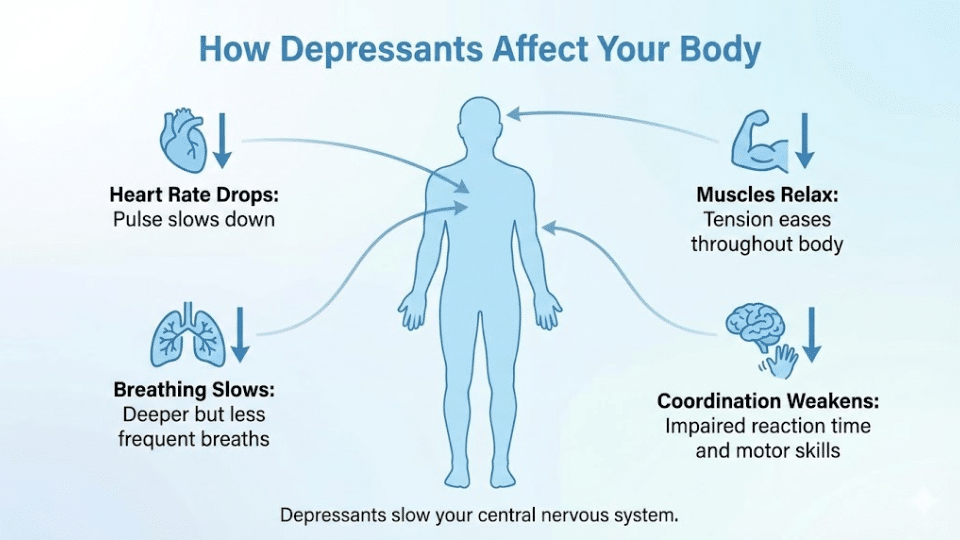
Depressants work by intensifying a neurotransmitter called GABA (gamma-aminobutyric acid), which acts like your brain’s natural calming agent.
When you take a depressant, GABA activity increases, slowing down neural communication across your central nervous system.
This affects your body in several ways:
- Heart rate drops: Your pulse slows down
- Breathing becomes slower: Each breath is deeper but less frequent
- Muscles relax: Tension eases throughout your body
- Coordination weakens: Reaction time and motor skills become impaired
The stronger the dose, the more pronounced these effects become, which is why medical supervision matters with prescription depressants.
Types of Depressants and Examples
Depressants range from legal substances like alcohol to prescription medications and illicit drugs. Below are common depressant drug examples, their uses, and risks.
1. Alcohol

Alcohol is the most widely used depressant, though many people don’t realize it falls into this category. When you drink, alcohol slows your central nervous system.
- Short-term effects – Relaxation and reduced inhibitions in small amounts, but leads to slurred speech, impaired coordination, and dangerous respiratory depression with heavy drinking
- Long-term risks – Chronic misuse causes liver disease, brain damage, and addiction
- Memory and judgment impairment – Alcohol disrupts your ability to form new memories (blackouts) and severely weakens decision-making, increasing risk of accidents and injuries
Despite its legal status, alcohol carries significant health dangers when misused.
2. Benzodiazepines
Benzodiazepines are prescription depressants commonly used to treat anxiety, panic disorders, and insomnia. They work by intensifying GABA activity in your brain, producing calming effects.
- Common examples – Xanax (alprazolam), Valium (diazepam), and Ativan (lorazepam) are frequently prescribed for short-term relief
- Medical use – Effective for acute anxiety or sleep issues when used as directed by a doctor
- Misuse risks – Taking higher doses than prescribed, using without a prescription, or long-term use leads to tolerance, dependence, and severe withdrawal symptoms
Benzodiazepines are highly effective but carry significant addiction potential, especially with prolonged use.
3. Barbiturates
Barbiturates were once widely prescribed as sedatives and sleep aids but have largely been replaced by safer alternatives. They depress your central nervous system more intensely than benzodiazepines, making them riskier.
- Common examples – Phenobarbital and pentobarbital are still used in limited medical settings, primarily for seizure control and anesthesia
- Decline in medical use – Doctors rarely prescribe barbiturates today due to their narrow safety margin and high potential for overdose
- Overdose danger – The difference between a therapeutic dose and a lethal dose is dangerously small, and combining barbiturates with alcohol or other depressants is often fatal
Barbiturates remain controlled substances with legitimate but highly restricted medical applications.
4. Opioids (Contested Classification)
Opioids are often grouped with depressants because they slow your central nervous system, but there’s ongoing debate about whether they belong in a separate drug class due to their unique mechanisms.
- Why the debate exists – Opioids work primarily on opioid receptors (not GABA like other depressants), targeting pain pathways differently, though they still produce sedation and respiratory depression
- Common examples – Morphine, oxycodone (OxyContin), hydrocodone (Vicodin), fentanyl, and heroin all suppress breathing and brain activity like depressants
- Depressant effects – Regardless of classification, opioids dangerously slow breathing and heart rate, especially when combined with alcohol, benzodiazepines, or other depressants
While pharmacologically distinct, opioids share the life-threatening risks of respiratory depression common to all depressants.
5. Other Depressants
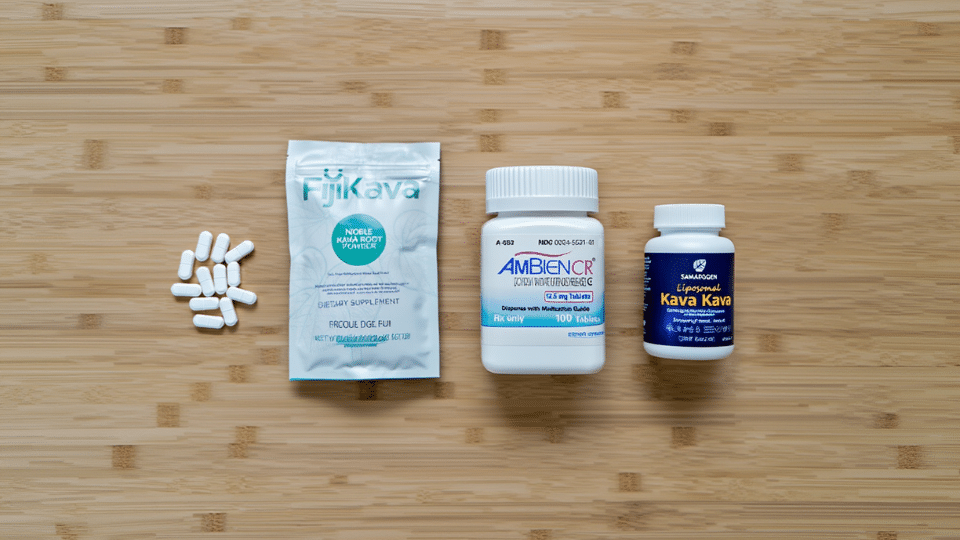
Beyond the major categories, several other substances function as depressants with varying legal status and medical applications.
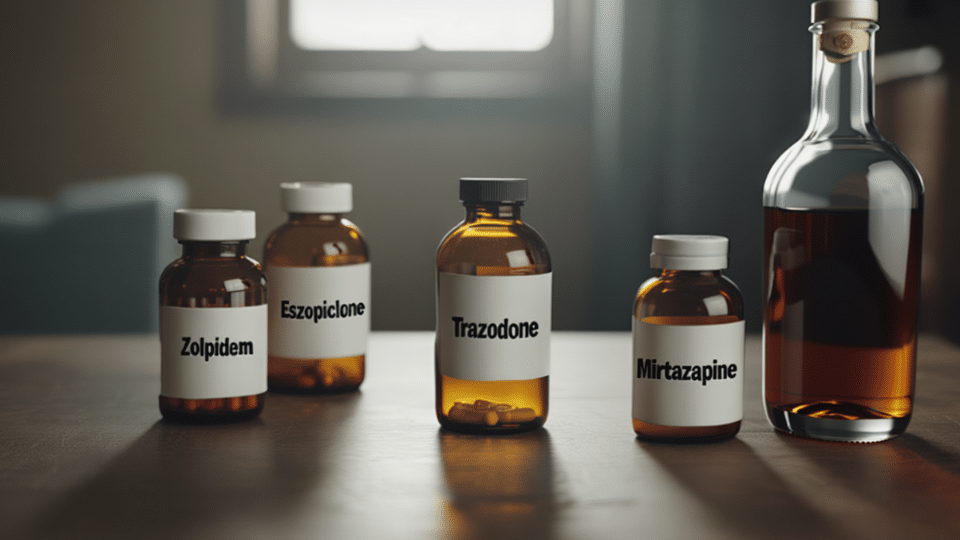
- Z-drugs – Sleep medications like Ambien (zolpidem) and Lunesta (eszopiclone) work similarly to benzodiazepines but are chemically different, prescribed specifically for insomnia
- GHB (gamma-hydroxybutyrate) – Originally used medically for narcolepsy but commonly misused as a party drug or date-rape substance due to its sedative effects
- Kava and other herbs – Natural depressants like kava root produce mild relaxation and are legal in many areas, though long-term use may cause liver damage
These substances vary widely in safety, legality, and potential for abuse, but all share the core property of slowing central nervous system activity.
Effects of Depressants
Depressants affect your body and mind in both immediate and lasting ways. Understanding these effects helps you recognize risks associated with use and misuse.
1. Short-Term Side Effects
When you take depressants, the immediate effects include deep relaxation, drowsiness, and reduced anxiety. Your reflexes slow down, coordination becomes impaired, and speech may slur.
While some people seek these calming effects, they also increase your risk of accidents, falls, and poor decision-making. Higher doses can cause confusion, memory lapses, and dangerous respiratory depression.
2. Long-Term Side Effects
Regular depressant use changes how your brain functions over time. You develop tolerance, meaning you need higher doses to feel the same effects.
Physical dependence follows, where your body relies on the drug to function normally. Stopping suddenly triggers withdrawal symptoms like anxiety, tremors, seizures, and insomnia.
Chronic use also damages cognitive function, memory, and emotional regulation.
3. Physical and Psychological Risks
Long-term depressant use harms multiple body systems. Physically, you face liver damage, heart problems, weakened immune function, and increased cancer risk.
Psychologically, depressants worsen depression, increase suicide risk, and trigger mood disorders. Addiction develops as your brain’s reward system becomes dependent on the substance.
Overdose remains a constant danger, especially when mixing depressants or increasing doses due to tolerance.
Depressants vs Stimulants vs Hallucinogens
Understanding how different drug types affect your central nervous system helps clarify what makes depressants unique.
| Drug Type | Effect on CNS | Common Examples | Primary Effects |
|---|---|---|---|
| Depressants | Slow down brain activity and neural communication | Alcohol, benzodiazepines (Xanax, Valium), barbiturates, opioids | Relaxation, drowsiness, slowed reflexes, reduced anxiety |
| Stimulants | Speed up brain activity and increase alertness | Cocaine, amphetamines (Adderall), methamphetamine, caffeine, nicotine | Increased energy, alertness, elevated heart rate, euphoria |
| Hallucinogens | Alter perception and sensory experiences | LSD, psilocybin (magic mushrooms), MDMA, PCP, ketamine | Visual/auditory distortions, altered sense of time and reality |
Each drug class impacts your body differently, but all carry serious risks when misused or combined.
The Bottom Line
Depressants slow your central nervous system, creating effects that range from helpful relaxation to life-threatening respiratory depression.
Alcohol at social events and prescription benzodiazepines for anxiety need respect and caution. They work by intensifying GABA and reducing neural activity, offering medical benefits but posing serious risks.
Tolerance develops rapidly, dependence can follow, and combining depressants greatly increases danger.
Unlike stimulants that speed things up or hallucinogens that alter perception, depressants put your body in slow motion. Use them only as prescribed, never combine them, and seek help if dependence develops.