Key Takeaways
- Ativan’s effects last 6–8 hours; residual impairment can persist 12–24 hours
- Half-life: 10–20 hours; clears in ~2–4 days after a single dose
- Urine detection: 3–6 days (up to 9 days for heavy use)
- Standard 5-panel drug tests do NOT screen for benzodiazepines
- Elderly patients clear Ativan ~22% more slowly than younger adults
Ever taken Ativan and wondered why it still affects you even after the calming feeling fades? When you look up how long Ativan lasts, the answers often feel mixed or incomplete.
The real issue is understanding the difference between how long it works, how long it stays in your body, and how long it shows up on tests. These are not the same. That’s where clarity matters.
Here, you’ll get a clear breakdown of Ativan’s timing for anxiety and sleep, how detection works, and what factors change how long it stays in your system.
What is Ativan and How Does It Work?
Ativan, also known as lorazepam, is a medicine called a benzodiazepine that doctors prescribe for anxiety, insomnia, and seizures.
It works by calming your brain and central nervous system, helping you feel more relaxed and less tense. Ativan boosts a natural chemical in your brain called GABA, which slows down brain activity and reduces worry.
Ativan is available as an oral tablet in 0.5 mg, 1 mg, and 2 mg strengths, and it can also be administered intravenously in clinical settings.
Typical daily doses for anxiety range from 2 mg to 6 mg, split into two or three doses, though some patients may receive up to 10 mg per day under close supervision.
Doctors usually recommend Ativan for short-term use because taking it for too long can lead to dependence, where your body becomes too used to the medicine.
The FDA-approved prescribing information for Ativan notes that its effectiveness beyond four months of continuous use has not been assessed in systematic clinical studies.
How Long Does Ativan Last for Therapeutic Effects?
Ativan’s effects vary based on why you’re taking it, your body, your dose, and your health. Everyone’s experience can be different.
| Dose | Approximate Duration of Effects | Notes |
|---|---|---|
| 0.25 mg | Up to 8 hours | Often used for mild anxiety or in older adults |
| 0.5 mg | Up to 12 hours | Common for moderate anxiety or pre-procedure use |
| 1 mg | Up to 24 hours | Effects and impairment can last longer than expected |
Understanding these timeframes helps you know when to expect relief and when the medicine will stop working.
What Factors Influence How Long Ativan Stays in Your System?

1. Metabolism
Metabolism plays a big role in how fast your body clears Ativan. People with faster metabolisms process and eliminate the drug more quickly, while slower metabolisms mean it lingers longer.
Ativan is metabolized primarily in the liver, where it is converted into its main metabolite, lorazepam glucuronide. This metabolite has a slightly longer half-life of roughly 18 hours, which is why drug tests can detect Ativan even after you have stopped feeling any effects.
Think of it like a car engine a more powerful engine gets you there faster. The same idea applies here. Your body’s natural processing speed directly determines how long Ativan stays in your system after your last dose.
2. Liver Health
Your liver acts like a cleaning factory, breaking down Ativan so your body can flush it out. When the liver is healthy, it processes the drug efficiently.
But if liver function is poor or damaged by disease, Ativan takes much longer to clear, sometimes twice as long or more. Anyone with existing liver conditions should be especially aware of how significantly this can extend the drug’s presence in their body.
3. Dosage
The more Ativan you take, the longer it takes your body to clear it out. A larger dose simply means more of the drug needs to be processed.
For people taking it daily, the drug can build up over time, much like pouring water into a bucket faster than it drains. Regular use prevents full clearance between doses, which means Ativan levels in your system keep climbing with continued use.
4. Age and Overall Health
As the body ages, it naturally slows down and that includes processing medications like Ativan. Adults over 65 often hold the drug in their system significantly longer than younger people.
On top of age, underlying health conditions like kidney problems or poor overall health can further slow clearance. The combination of age and existing health issues makes Ativan linger much longer than it would in a younger, healthier body.
A study by Greenblatt et al. published in Clinical Pharmacology & Therapeutics found that total lorazepam clearance in elderly subjects (ages 60–84) was 22% lower than in younger adults, with a half-life of 15.9 hours in the elderly group versus 14.1 hours in younger subjects.
This is corroborated by the official Ativan prescribing label, which notes a 20% reduction in total body clearance in elderly patients and recommends cautious, lower-dose prescribing as a result
5. Body Weight
Ativan is lipophilic, meaning it can be stored in fatty tissue. Contrary to what you might expect, research suggests that heavier individuals tend to eliminate lorazepam more quickly than lighter individuals, because a higher body mass allows for faster distribution and clearance.
However, people with higher body fat percentages relative to their weight may still show longer detection windows because the drug accumulates in those tissues.
6. Sex
Women tend to metabolize Ativan at a slower rate than men, which can lead to extended detection times. This is a factor that most general articles overlook, but it has real implications for anyone calculating a clearance window.
7. Other Medications and Substances
Combining Ativan with alcohol slows its clearance; one study found that alcohol reduces lorazepam clearance rates by approximately 18%.
Other CNS depressants, certain antidepressants, and opioids can similarly extend how long Ativan stays in your system by competing for the same liver enzymes responsible for breaking it down.
How Long Does Ativan Stay in Your System for Drug Testing
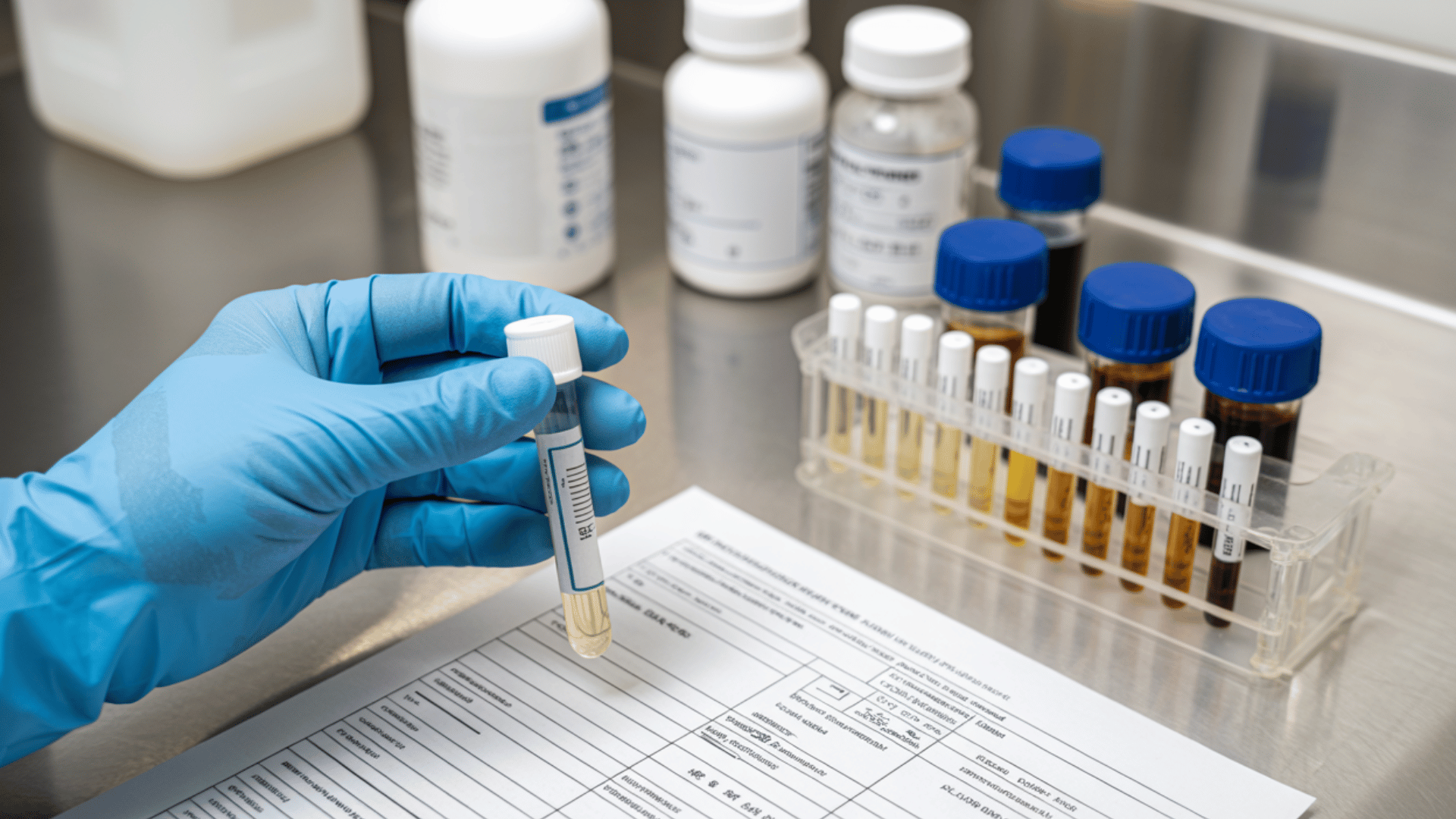
For drug testing purposes: Ativan is detectable in urine for 3–6 days (up to 9 for heavy use), in blood for 1–3 days, in saliva for up to 8 hours, and in hair for up to 90 days. The test type matters significantly because detection windows vary by a factor of 10 or more.
| Test Type | Detection Window | What You Should Know |
|---|---|---|
| Urine Test | 3–6 days after last dose (up to 9 days for heavy use) | Most common test. Heavy or frequent use can extend the detection window. |
| Saliva Test | Up to 8 hours after the last dose | Mainly used for roadside checks. Not reliable for longer-term detection. |
| Blood Test | 1–3 days after the last dose | Less common. Shows recent use and is used in clinical or emergency situations. |
| Hair Test | Up to 90 days or longer | Detects long-term use, but lorazepam may not always show clearly in hair samples. |
False Positive Note: Certain medications can trigger a false positive for benzodiazepines on standard urine screens, including the antidepressant sertraline and the anti-inflammatory oxaprozin. If you are taking either and face a positive result, inform the testing administrator immediately and request a confirmatory test.
Which Drug Panels Screen for Ativan?
This is a detail that surprises many people. Standard 5-panel drug screens (such as the SAMHSA-5) do not test for benzodiazepines at all. Ativan will only appear on expanded panels, such as the SAMHSA-10 or a dedicated benzodiazepine panel.
If you are prescribed Ativan and undergoing pre-employment testing, confirm with the medical review officer which panel is being used and provide your prescription documentation upfront.
How Long Does Ativan Take to Peak and Wear Off?
Understanding when Ativan works strongest can help you plan your day better. From my research, I’ve learned the exact timeline of how this medicine moves through your body.
| Timeline | Duration | What Happens |
|---|---|---|
| Onset | 15–30 minutes (up to 60 minutes oral) | Ativan begins working. Anxiety eases, and muscles start to relax. |
| Peak Effects | 1–2 hours | Reaches the highest concentration. This is when calming effects feel strongest. |
| Active Period | 6–8 hours | Effects continue but gradually reduce from peak intensity. |
| Residual Impairment | Up to 12–24 hours (dose-dependent) | You may feel alert, but sedation and slower reaction time can still persist. |
| Detectable in System | Days to weeks | The drug remains detectable long after the effects wear off, depending on the test type. |
Ativan Half-Life: What It Actually Means
Half-life is the time it takes for the amount of a drug in your body to drop by 50%. For Ativan, this is about 10 to 20 hours in most adults.
It takes around five half-lives for a drug to be nearly eliminated from your system. For Ativan, that means roughly 2 to 4 days after a single dose. Metabolites can stay longer, which is why urine tests may detect it for up to 6 to 9 days.
For comparison:
- Xanax (alprazolam): half-life of about 11 hours, clears faster
- Valium (diazepam): half-life of 20 to 100 hours, stays much longer
Ativan sits in between, which makes it a practical option for short-term anxiety without lasting as long as Valium
Potential Side Effects and Risks
While Ativan works well for managing anxiety and insomnia, it’s important to know about the side effects and risks that can happen when taking it.
Common Side Effects
- Drowsiness: Ativan can make you very sleepy, which helps with sleep problems but can make it hard to focus on tasks like driving.
- Dizziness: Some people feel dizzy, making it difficult to stand up or walk around, especially right after taking the medicine.
- Headache: A mild headache is common when taking Ativan, though it’s usually not too bad.
- Impaired Coordination: Ativan can affect your balance and motor skills, making you clumsy or unsteady.
These side effects are usually mild and go away as your body gets used to the medicine.
Serious Side Effects
Although rare, there are some serious side effects that require immediate attention. Here’s what you need to watch out for:
- Memory Problems: Ativan may make it hard to remember recent events or conversations, especially with long-term use or higher doses.
- Confusion: Some people feel disoriented or confused, particularly if they take higher doses or have mental health issues.
- Respiratory Depression: In rare cases, especially when mixed with other sedatives or alcohol, Ativan can slow or stop your breathing, which is very dangerous and life-threatening.
If you experience any of these serious side effects, contact your doctor or get emergency help immediately.
Ativan Withdrawal: What to Expect When Stopping
This is a topic that is consistently underserved in general guides on Ativan timing, but it is directly relevant to anyone thinking about how long the drug remains in their system.
Most people begin experiencing withdrawal symptoms within 24 to 48 hours after their last dose. Symptoms peak around 2 to 4 days. For people who have taken Ativan at higher doses or for extended periods, withdrawal can stretch for weeks — or in some cases, months.
According to the National Institute on Drug Abuse, benzodiazepine withdrawal symptoms can emerge after as little as 3 to 4 weeks of regular use. This is why doctors prescribe Ativan for the shortest duration possible.
Common withdrawal symptoms include:
- Rebound anxiety (often worse than the original anxiety being treated)
- Insomnia and sleep disturbances
- Irritability and mood changes
- Tremors or muscle stiffness
- In severe cases: seizures (which is why abrupt discontinuation can be dangerous)
Never stop Ativan suddenly after extended use. A supervised tapering protocol, gradually reducing the dose under medical guidance, is the standard safe approach.
Practical Tips: How to Manage Ativan Use and Minimize Risks
Based on FDA prescribing guidelines and clinical pharmacology literature:
- Never mix with alcohol: This is extremely dangerous. Both slow down your brain and breathing, which can be deadly. Research shows alcohol alone reduces Ativan clearance by approximately 18%, amplifying both sedation and toxicity risk.
- Avoid other sedatives: Sleeping pills, muscle relaxers, and pain medicines don’t mix well with Ativan. Tell your doctor about all medicines you take.
- Don’t drive when taking it: Ativan slows your reaction time even if you feel fine. Residual impairment can persist for 12 to 24 hours after a dose, well beyond when you feel sedated.
- Take it consistently: If you use it daily, stick to the same time each day for best results.
- Don’t stop suddenly: Your body gets used to it. Stopping cold can cause withdrawal. Talk to your doctor about slowly reducing your dose.
- Watch for tolerance: If Ativan stops working as well or you need more for the same effect, tell your doctor.
- Disclose your prescription before drug testing: If you are prescribed Ativan and have a workplace or legal drug screen coming up, inform the medical review officer beforehand and provide documentation.
Watch for warning signs such as extreme drowsiness, confusion, difficulty breathing, or mood changes. Contact your doctor right away if you notice these symptoms.
When to Contact a Healthcare Provider
Call your doctor if you experience extreme drowsiness that won’t go away, confusion, memory problems, trouble breathing, unusual mood changes, thoughts of hurting yourself, or withdrawal symptoms when you miss a dose.
Get emergency help (call 911) if you can’t wake someone who took Ativan, if someone has trouble breathing, or if you think someone took too much.
Your doctor is your partner in health and wants to hear your concerns – no question is too small when it comes to your safety.
Summing Up
Understanding Ativan comes down to knowing how it behaves in your body over time. I’ve seen how separating its effects, half-life, and detection windows helps you make better decisions and avoid confusion.
That difference matters in real situations like driving, work, or testing.
When you understand how long Ativan lasts, you can plan your use more safely and avoid unexpected effects. Pay attention to your dose, your body, and any changes you notice. If something feels off, check with your doctor.
If this helped, share it with someone who might need it or check out related guides to understand your medications better.