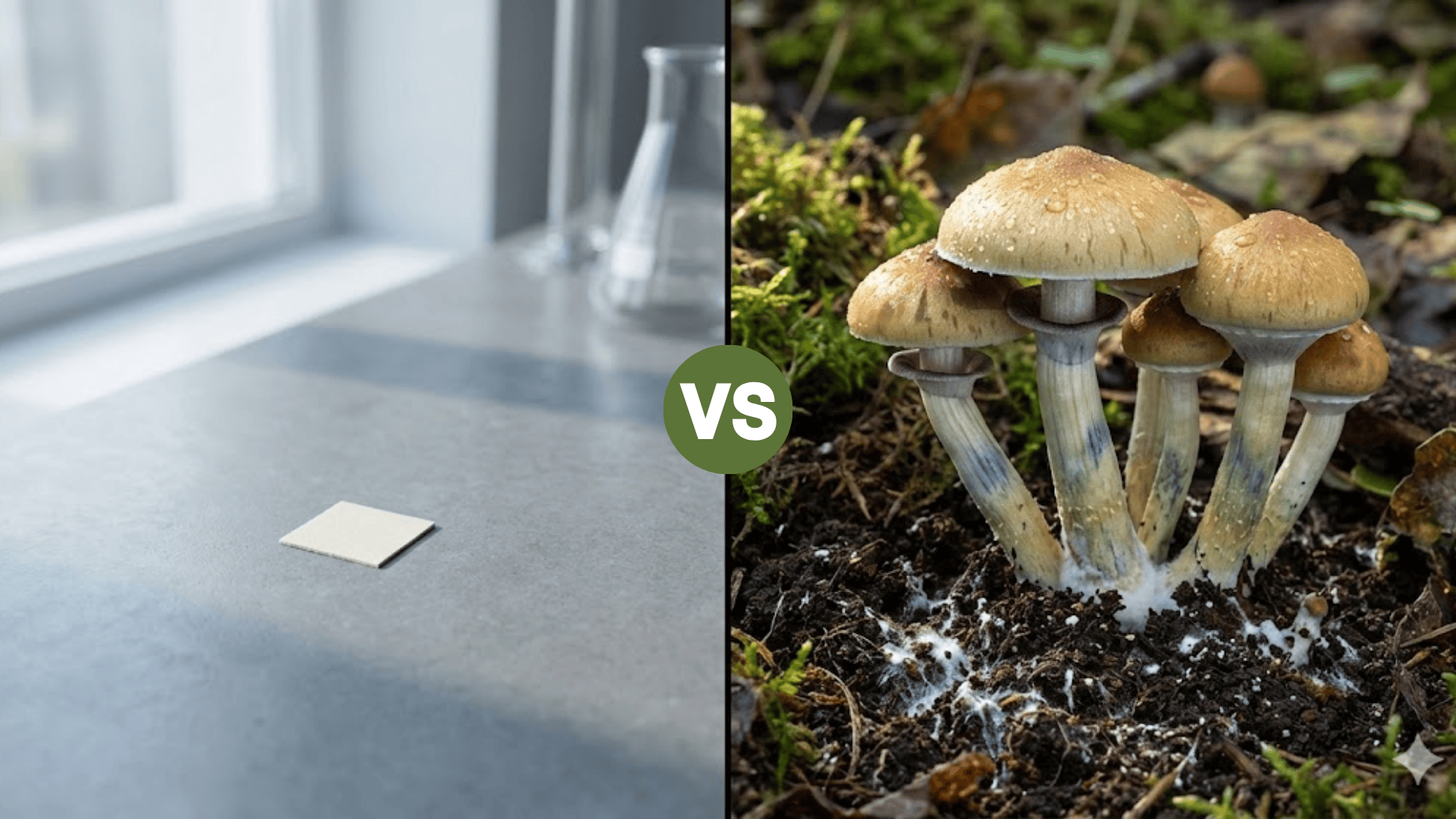
LSD and psilocybin mushrooms might seem similar at first glance, but they’re actually quite different experiences.
I’m going to break down what separates these two psychedelics in ways that actually matter: how they feel, how long they last, and what you need to know about safety. This comparison matters because having accurate information helps people make better decisions and stay safer.
I should mention upfront that both substances are illegal in most places, and this guide is purely educational.
My goal is to give you clear, honest information about what makes acid and mushrooms distinct, so you can understand these substances beyond the myths and misconceptions.
Disclaimer: This content is for educational and harm reduction purposes only. Both substances are illegal in most jurisdictions. Consult healthcare professionals regarding any health-related decisions.
LSD vs. Mushrooms at a Glance
LSD, or lysergic acid diethylamide, is a synthetic psychedelic first synthesized in 1938 by chemist Albert Hofmann.
Psilocybin mushrooms, on the other hand, are naturally occurring fungi that have been used for centuries in traditional ceremonies.
While both are psychedelics, their origins and characteristics differ significantly.
| Factor | LSD | Psilocybin Mushrooms |
|---|---|---|
| Type | Synthetic | Natural |
| Typical Dose | 50-200 micrograms | 1-3.5 grams dried |
| Duration | 8-12 hours | 4-6 hours |
| Onset | 30-90 minutes | 20-60 minutes |
| Intensity | Sharp, electric | Organic, flowing |
| Physical Effects | Stimulating | Variable, sometimes nauseating |
How LSD Works vs. How Mushrooms Work
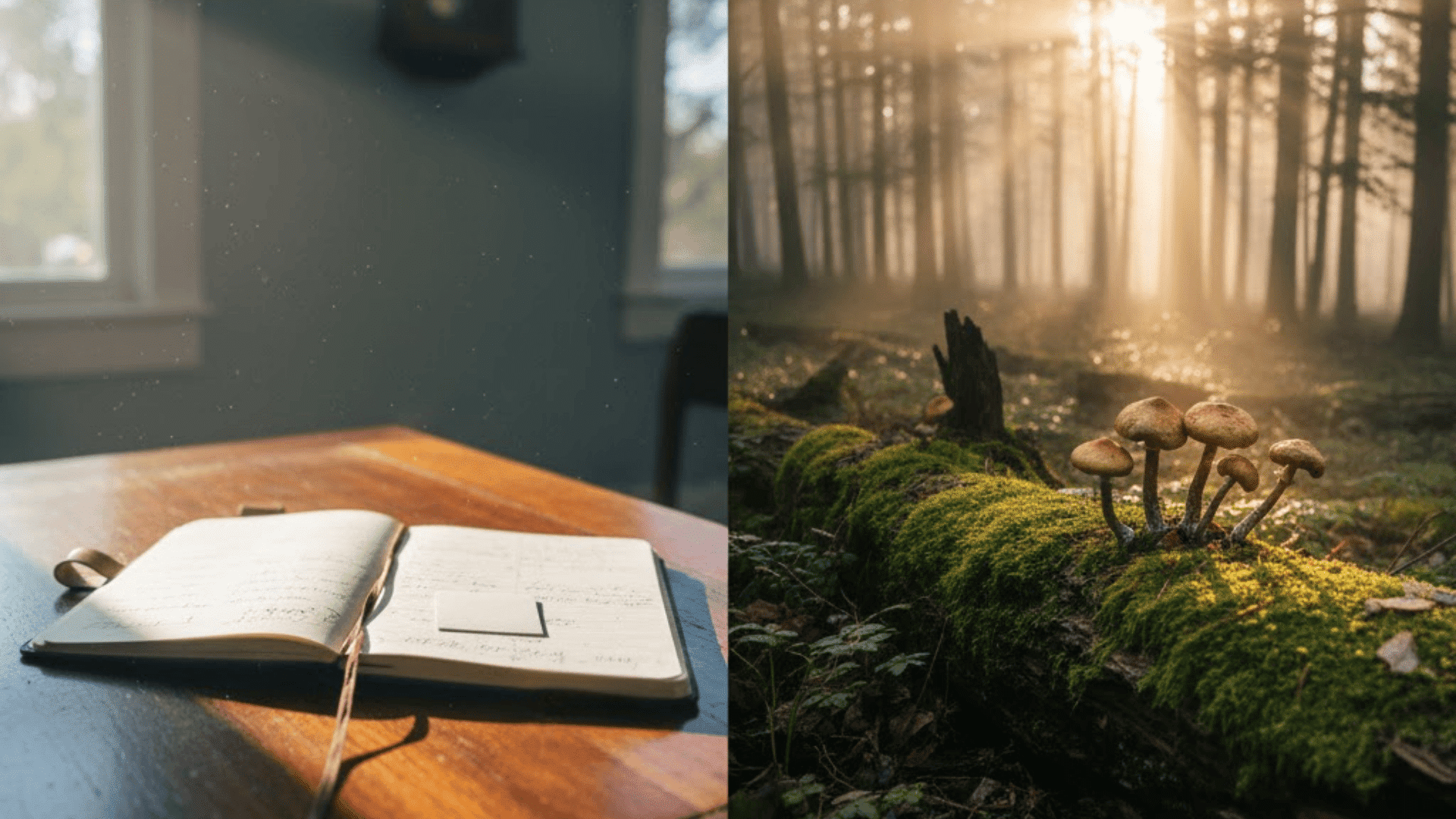
Both substances affect serotonin receptors to alter consciousness, but use different methods.
Understanding these mechanisms helps explain why the experiences feel distinct and why their timelines vary so dramatically.
Pharmacology & Mechanisms
LSD binds directly to serotonin receptors, particularly 5-HT2A, and stays attached for extended periods. T
his creates a prolonged activation that also influences dopamine pathways, contributing to its stimulating quality and longer duration. The molecule’s unique shape allows it to “lock” into receptors efficiently.
Psilocybin mushrooms work differently. Psilocybin itself is inactive; your body converts it into psilocin, which then activates the same serotonin receptors.
This conversion process and psilocin’s faster metabolism explain why mushroom trips are shorter and often feel more organic in their progression.
Onset & Timeline Differences
The timeline differences between these substances can significantly impact your experience and planning.
| Phase | LSD | Psilocybin Mushrooms |
|---|---|---|
| Onset | 30-90 minutes | 20-60 minutes |
| Peak | 3-5 hours in | 1-2 hours in |
| Total Duration | 8-12 hours | 4-6 hours |
| After-effects | Up to 24 hours | 6-8 hours |
LSD’s extended duration stems from how tightly it binds to serotonin receptors; the molecule literally gets “stuck” there for hours.
Mushrooms metabolize faster, making them a shorter commitment but no less intense during the peak.
LSD vs. Mushrooms: What the Experience Feels Like
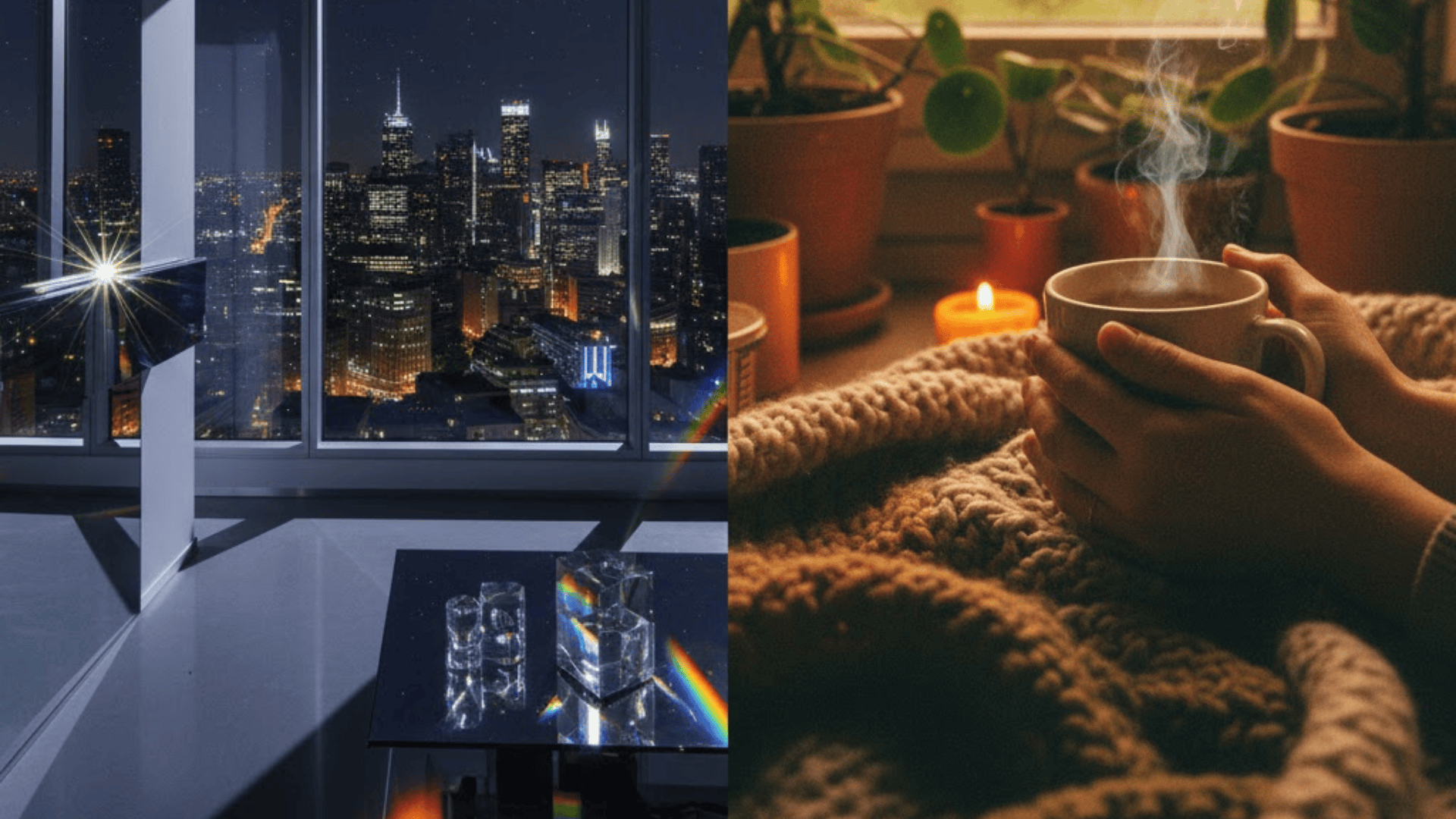
The subjective quality of these experiences differs notably.
While both can produce profound shifts in perception, LSD tends toward the electric and analytical, whereas mushrooms lean into the emotional and embodied.
LSD Experience Profile
LSD is often described as sharp, clear, and mentally stimulating, like your brain is running at a higher resolution.
- Geometric patterns and fractals that appear crisp and mathematically precise
- Enhanced colors and visual acuity, with everything appearing brighter and more defined
- Mental clarity with racing thoughts that can feel insightful or overwhelming
- Physical energy and restlessness make it hard to sit still or sleep
Mushrooms Experience Profile
Mushrooms create a softer, more organic experience that draws you inward and connects you to emotion and nature.
- Flowing, organic visuals like breathing walls and melting textures
- Deep emotional waves and heightened empathy or sentimentality
- Strong body sensations, including warmth, heaviness, or occasional nausea
- Introspective headspace that encourages reflection and spiritual feelings
The key difference? LSD feels like exploring the universe through a telescope, while mushrooms feel like turning that lens inward. Your preference might depend on seeking mental stimulation versus emotional processing.
Is LSD Stronger Than Mushrooms?
Strength isn’t straightforward with psychedelics. A high dose of mushrooms can be far more overwhelming than a moderate LSD dose, and vice versa.
Mushrooms are known for emotional unpredictability, waves of feelings that can shift rapidly and catch you off guard. LSD offers more consistent effects due to precise dosing, though its extended duration can feel mentally exhausting.
Beyond the substance itself, individual factors play a huge role. Sensitivity to serotonin modulation varies between people, and mental health status can amplify difficult emotions.
Prior psychedelic experience builds tolerance and familiarity, while substance purity and accurate dosing remain critical, especially with mushrooms, where potency differs dramatically between strains and batches.
LSD vs. Mushrooms: Duration, Dosage & Potency Differences
Dosing and duration are where LSD and mushrooms diverge most practically. These differences affect planning, commitment level, and how you manage the experience from start to finish.
| Aspect | LSD | Psilocybin Mushrooms |
|---|---|---|
| Measurement Unit | Micrograms (μg) | Grams (dried weight) |
| Threshold Dose | 20-25 μg | 0.5-1 gram |
| Moderate Dose | 75-150 μg | 2-3 grams |
| Strong Dose | 200+ μg | 3.5-5 grams |
| Heroic Dose | 400+ μg | 5+ grams |
| Total Duration | 8-14 hours | 4-6 hours |
| Peak Duration | 3-5 hours | 1.5-3 hours |
| Potency Consistency | Highly consistent | Varies by species/batch |
LSD’s microgram dosing demands precision; there’s little room for error. Mushrooms seem simpler to measure by weight, but potency varies dramatically between species like Psilocybe cubensis and Psilocybe azurescens.
The duration difference is significant: LSD requires clearing your entire day and night, while mushrooms fit into a shorter window but can still feel surprisingly long during the peak.
Side Effects & Risks of LSD and Mushrooms
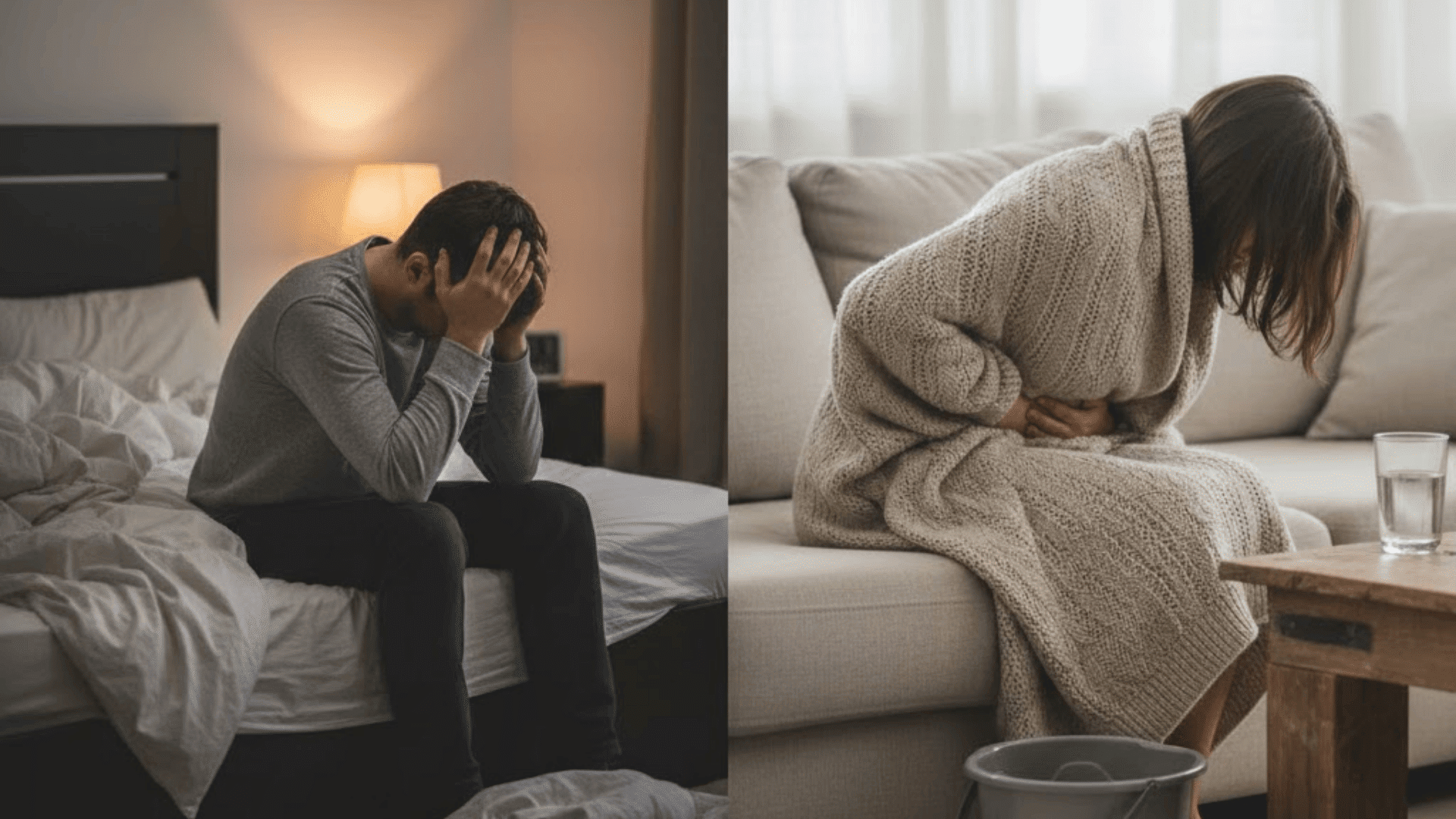
Both substances are physiologically safe at typical doses, but psychological risks and challenging experiences are real.
Understanding what can go wrong helps with preparation and harm reduction.
1. Short-Term Side Effects
Physical discomfort is common even during positive trips, though effects vary between substances.
- Nausea and stomach discomfort, especially with mushrooms, during the onset
- Anxiety, confusion, or paranoia as thoughts become unfamiliar
- Pupil dilation and visual distortions that can feel disorienting
- Increased heart rate and body temperature, causing restlessness
2. Potential Mental Health Effects
Psychedelics can surface difficult emotions or exacerbate existing mental health vulnerabilities. Anxiety and panic episodes occur when the experience feels uncontrollable, or thoughts turn dark.
More seriously, those with a personal or family history of psychotic disorders face heightened risk; psychedelics can trigger latent conditions like schizophrenia or bipolar disorder.
These risks don’t disappear with careful dosing, making pre-existing mental health conditions a critical consideration before use.
3. Physical Safety Considerations
Neither LSD nor mushrooms are toxic to the body in normal doses; the real danger comes from behavior during altered states.
- Impaired judgment and decision-making leading to dangerous choices
- Risk of accidents or injuries from disorientation and coordination issues
- Wandering into unsafe environments without awareness of danger
- Mixing with other substances that can create unpredictable interactions
4. Bad Trips
Negative experiences stem from multiple factors: high doses, uncomfortable settings, underlying anxiety, or lack of preparation.
Mushrooms tend to produce more emotionally turbulent trips with sudden mood shifts, while LSD’s longer duration means difficult periods can feel inescapable.
Bad trips aren’t just unpleasant; they can be traumatic and leave lasting psychological effects, making proper set, setting, and dosage crucial for both substances.
Safety Tips & Harm Reduction for Psychedelic Use
Reducing risk starts with preparation and respect for these powerful substances. Following basic harm reduction principles can prevent most negative outcomes and make experiences safer.
- Create a trusted, comfortable environment with familiar people and a sober trip sitter present.
- Test your substances with reagent kits to identify adulterants, especially with LSD blotters.
- Avoid mixing with alcohol or other drugs, as interactions are unpredictable and dangerous.
- Stay hydrated and maintain physical comfort with access to water, snacks, and temperature control.
- Start with low doses as a beginner and wait at least two weeks between experiences.
Psychedelics demand respect; rushing in without preparation or ignoring safety guidelines is how most problems occur. Treat these substances seriously, and they’re far more likely to be manageable experiences.
Legal Status in the U.S. & Globally
Both LSD and psilocybin are classified as Schedule I controlled substances under federal law in the United States, meaning they have no accepted medical use and a high potential for abuse.
Possession, distribution, and manufacture are federally illegal. However, several cities have decriminalized psilocybin since 2019, including Denver, Oakland, and Washington D.C., while Oregon and Colorado now allow supervised therapeutic use.
Globally, legal status varies; some countries permit medical use while others maintain strict prohibitions. This information is educational only and does not encourage illegal activity.
See the DEA’s drug scheduling page for official details.
Which One is “Better” for You?
There’s no universal answer; it depends entirely on your intent and individual response.
Mushrooms tend to suit those seeking emotional depth and introspection, often described as more grounding and spiritually oriented. LSD appeals to people interested in mental clarity, creativity, and vivid sensory experiences with a more energetic quality.
However, individual brain chemistry varies dramatically, and what works for one person may not work for another.
Both substances demand respect, proper preparation, and safe settings. The “better” choice is whichever aligns with your goals while prioritizing harm reduction and responsible use.
Resources & References
Want to dig deeper into the science behind LSD vs mushrooms?
Start with the National Institute on Drug Abuse (NIDA), which breaks down how these substances actually work in your brain.
The Johns Hopkins Center for Psychedelic & Consciousness Research is leading groundbreaking studies; their 2020 clinical trial, published in JAMA Psychiatry, showed psilocybin produced antidepressant effects four times greater than traditional medications.
A 2024 Nature study revealed how psilocybin desynchronizes brain networks, explaining its profound effects on consciousness.
Note: These aren’t random internet sources; they’re peer-reviewed research and official government information.
That’s a Wrap
Understanding the differences between LSD and mushrooms comes down to duration, intensity, and the quality of the experience itself.
I’ve covered how LSD delivers a longer, more cerebral trip while mushrooms offer shorter, emotionally deeper experiences.
Both carry risks and require serious preparation, but they’re fundamentally different tools for exploring consciousness. Your choice should align with what you’re seeking and your commitment to safety.
Remember, this information exists to keep you informed and safer, not to encourage use. Have questions or experiences to share? Drop a comment below. I’d love to hear your thoughts on LSD vs mushrooms.