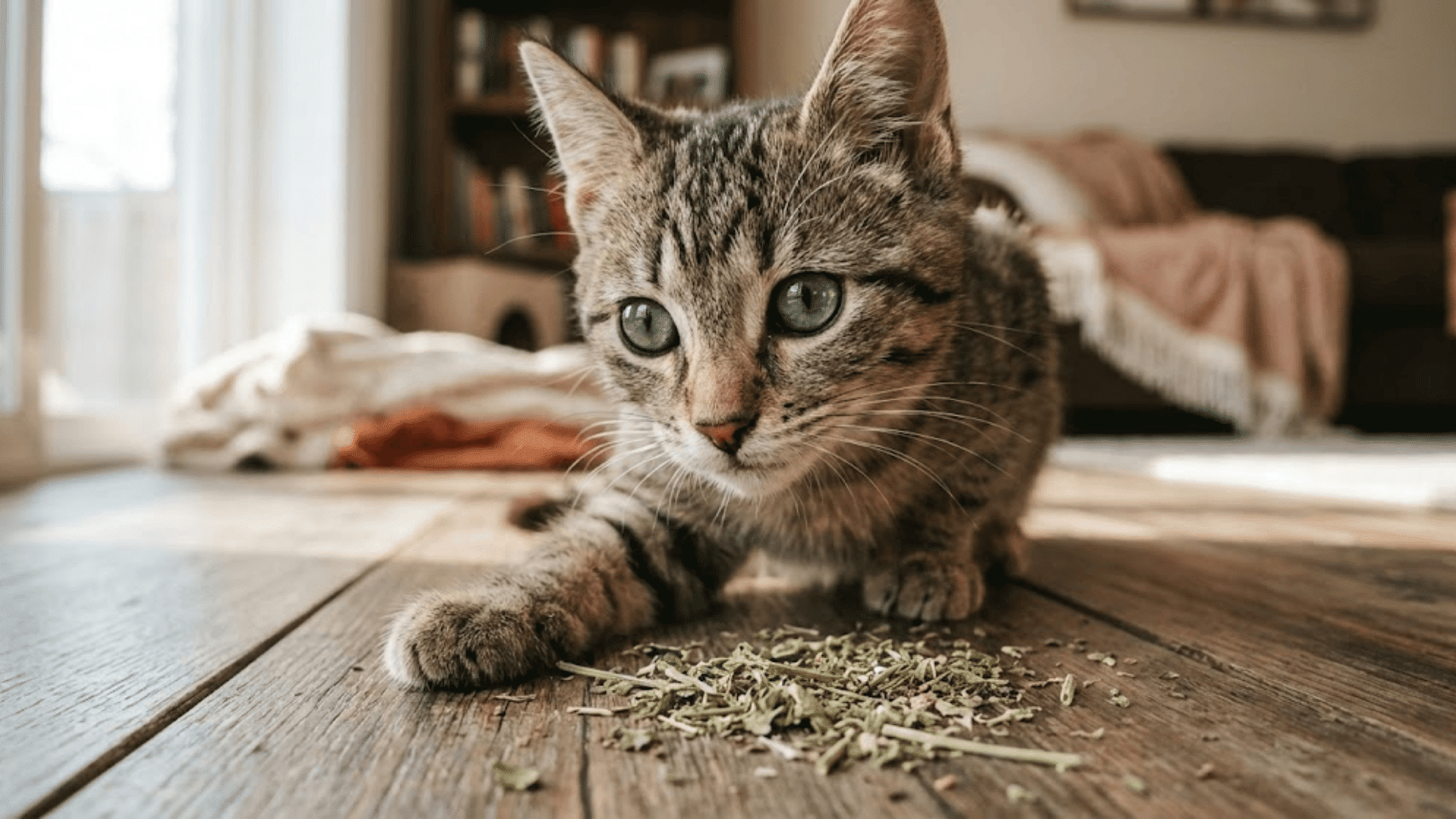
If you’re watching your tiny kitten tumble around and wondering whether they’d go crazy for catnip as adult cats do, I have some surprising news for you.
Most kittens couldn’t care less about catnip, even if you wave it right under their little noses. It’s not that they can’t have it; they absolutely can, but their brains just aren’t wired to respond yet.
That magical catnip reaction you’ve seen in viral videos? It takes time to develop.
Let me walk you through when your kitten will actually start enjoying catnip, how to introduce it safely, and what to do if your furry friend turns out to be one of those cats who never quite get the hype.
What is Catnip and Why Does it Affect Cats?
Catnip is a leafy green herb from the mint family that seems to have an almost magical effect on cats. You’ll find it sold as dried leaves, sprays, or stuffed inside toys at your local pet store.
The secret behind all the fuss is a natural oil called nepetalactone that’s released when the plant is crushed or rubbed.
When cats sniff it, this compound triggers a response in their brain that can make them roll around, zoom across the room, or just blissfully zone out for a bit. Here’s something interesting, though: not every cat reacts to catnip.
Whether your cat responds is actually written in their genes, and about thirty percent of cats simply don’t have the sensitivity to feel its effects at all.
When Can Kittens Have Catnip?
Most kittens start responding to catnip somewhere between three and six months old, once their nervous system has matured enough to process it.
Before that, you can offer it without any harm, but don’t expect much excitement. Even after six months, some kittens take longer to develop the sensitivity, and that’s completely normal.
Signs your kitten might be ready to try catnip:
- They’re at least three months old
- They’re actively playful and curious
- They’re fully weaned and eating solid food
- They show interest in sniffing new things
If your kitten is recovering from illness or you’re unsure about timing, there’s no rush; waiting until they’re older is always the safer choice.
How to Introduce Catnip to Kittens?
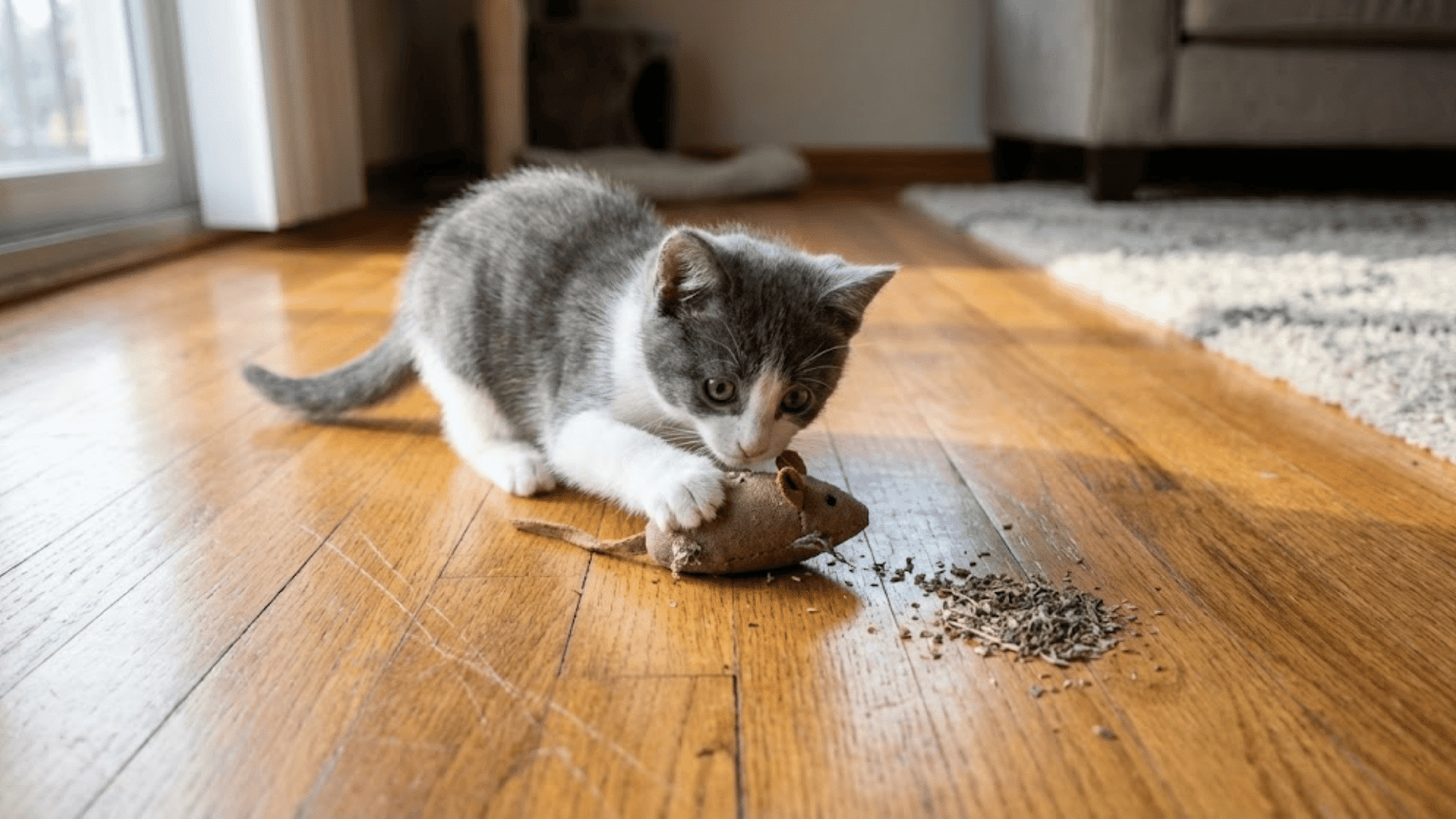
When you’re ready to let your kitten try catnip for the first time, take it slow and keep things simple. The goal is to see how they react without overwhelming their senses or creating a mess you’ll regret later.
Step 1: Offer a Small Amount in a Safe Form
Start with either a catnip-filled toy or sprinkle just a tiny pinch of dried catnip on the floor where your kitten plays. Keep it minimal; about half a teaspoon is plenty for a first try.
This contained approach lets your kitten find it naturally without creating chaos, and you can easily control how much they’re exposed to.
Step 2: Observe and Supervise the Session
Once you’ve offered the catnip, stay close and watch how your kitten reacts over the next fifteen to twenty minutes. Some will sniff it and walk away completely uninterested, while others might roll around, play energetically, or act unusually silly.
Make sure to supervise the entire session so your kitten doesn’t eat too much or become overstimulated.
Step 3: Wait Before the Next Session
After that first experience, put the catnip away and wait at least a few days before offering it again.
Cats can become temporarily immune to catnip’s effects with too much exposure, so spacing out sessions keeps it special. This break also lets you see if your kitten’s response changes as they continue growing and maturing.
This slow approach keeps your kitten safe while helping you figure out what kinds of toys and play they’ll enjoy most as they get older.
Forms of Catnip: Pros and Cons
Catnip comes in several different forms, and each has its own advantages depending on your kitten’s age and your lifestyle.
Here’s a quick breakdown to help you choose what works best:
| Form | Pros | Cons |
|---|---|---|
| Dried Loose Catnip | Affordable, versatile for sprinkling on toys or scratchers, strong scent | Can get messy, kittens might track it everywhere, needs proper storage |
| Catnip Spray | Clean and convenient, easy to control dosage, great for refreshing old toys | Weaker effect than dried catnip, scent fades quickly, more expensive |
| Catnip-Filled Toys | No mess, perfect for kittens, combines play with catnip exposure | Can’t control the amount inside, loses potency over time, limited reusability |
| Cat Grass | Safe to nibble, aids digestion, doesn’t cause hyperactivity | Not the same as catnip, won’t produce the typical catnip reaction |
Quick Tip: Store dried catnip in an airtight container away from light to keep it fresh, and replace it every six months for the best results.
Typical Behaviors and What They Mean
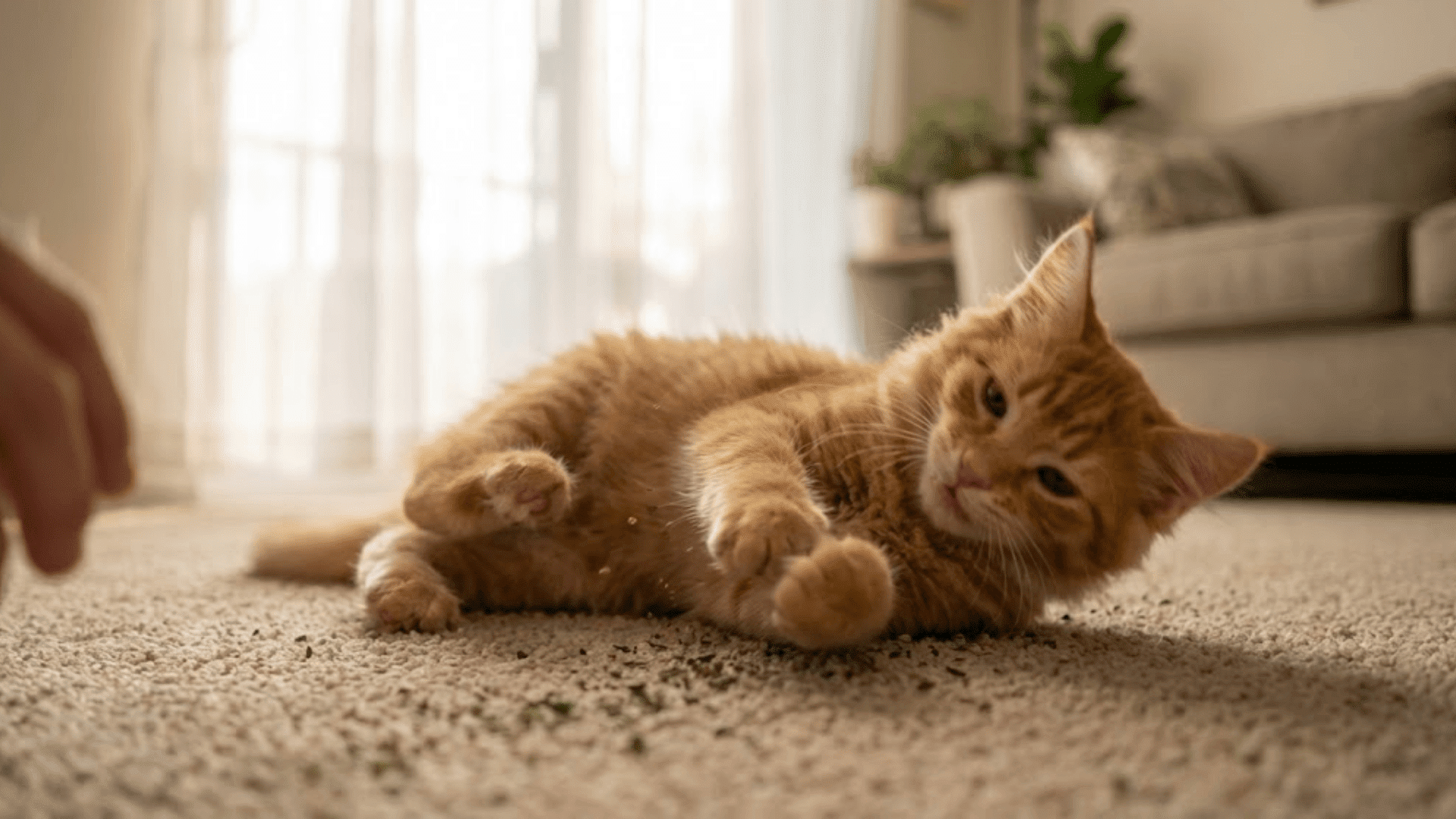
When your kitten finally does react to catnip, you might see some pretty entertaining behaviors. Here’s how to read what your kitten is telling you through their actions.
Behavioural Trait #1: Rubbing and Rolling Around
What it means: Your kitten is loving every second of this. They’re rubbing their face and body all over the catnip to mark it as theirs, and the rolling is pure joy in action.
Behavioural Trait #2: Zoomies and Playful Energy
What it means: Those sudden sprints across the room? The catnip has flipped on their hunting switch. This burst of wild energy usually only lasts a few minutes before they settle back down.
Behavioural Trait #3: Purring and Relaxed Posture
What it means: Not all kittens go crazy; some just melt into a puddle of contentment. If yours gets calm and dreamy instead of hyper, the catnip is still working its magic.
Behavioural Trait #4: Excessive Drooling
What it means: A bit of drool is fine, but if your kitten looks like they’ve sprung a leak, they might be a little overwhelmed. Pull the catnip away and give them a breather.
Behavioural Trait #5: Hissing or Swatting
What it means: If your normally sweet kitten suddenly gets snippy or starts swatting at you, they’ve hit their limit. Remove the catnip right away before playtime turns into a wrestling match nobody wanted.
When to check with your vet: Most catnip sessions are just silly fun, but reach out to your vet if your kitten can’t seem to calm down after half an hour or acts genuinely distressed with nonstop meowing or hiding.
Safety, Risks, and Contraindications
Catnip is generally safe for kittens, but like anything fun, moderation matters. Here are the key safety considerations to keep in mind so playtime stays enjoyable and stress-free.
- Overuse Leads to Tolerance: If your kitten gets catnip too often, they’ll stop responding to it altogether. Limit sessions to once or twice a week and rotate different toys to keep things interesting.
- Watch for Stomach Upset: Some kittens who eat too much catnip might vomit or have diarrhea. If this happens, take the catnip away and stick to toys they can’t tear open and ingest.
- Remove it if They Get Aggressive: Overstimulation can make some kittens cranky or snappy. The moment you see hissing, swatting, or rough behavior, end the session immediately.
- Check With Your Vet if Your Kitten Has Health Issues: If your kitten is on medication or has a history of seizures or neurological problems, talk to your vet before introducing catnip.
- Be Cautious With Pregnant or Nursing Cats: While there’s limited research, it’s safer to avoid giving catnip to pregnant or nursing cats unless your vet gives you the green light.
Most catnip problems come from giving it too often or letting kittens eat large amounts. Keep sessions short, stay nearby to supervise, and you’ll avoid nearly all the potential issues.
How Often is it Okay: Dosage and Frequency Recommendations
The sweet spot for catnip sessions is once or twice a week, keeping each session under fifteen minutes. This schedule prevents your kitten from building up tolerance while still giving them something fun to look forward to.
Think of catnip as a special treat rather than an everyday toy; the less frequently they get it, the stronger their reaction will be.
Between catnip sessions, rotate in other enrichment activities like feather wands, puzzle feeders, or plain old cardboard boxes. This variety keeps your kitten mentally stimulated without relying solely on catnip.
If you notice their response weakening even with spacing, take a break for a few weeks to reset their sensitivity.
Alternatives to Catnip (If Your Kitten Doesn’t Respond)
If your kitten isn’t interested in catnip or you just want to mix things up, there are plenty of other options that can provide the same kind of excitement and enrichment.
| Alternative | What It Is | Why Try It | Perfect For |
|---|---|---|---|
| Silvervine | Asian plant with catnip-like compounds | Up to 80% of cats respond, even catnip-immune ones | Non-responders, stronger reactions |
| Matatabi Sticks | Chewable silvervine twigs | Cleans teeth while creating euphoria | Kittens who love to gnaw |
| Cat Grass | Wheatgrass or oat grass | Safe to munch, settles tummies | Gentle enrichment without chaos |
| Wand Toys | Feathers/ribbons on sticks | Mimics real prey movement | Energetic hunters, bonding time |
| Treat Puzzles | Toys that release snacks | Makes them work for rewards | Smart kittens, mental workouts |
Quick Tip: Start with one option and give your kitten a few tries before moving on. Some kittens take time to warm up to new things, while others get hooked immediately.
DIY and Product Recommendations
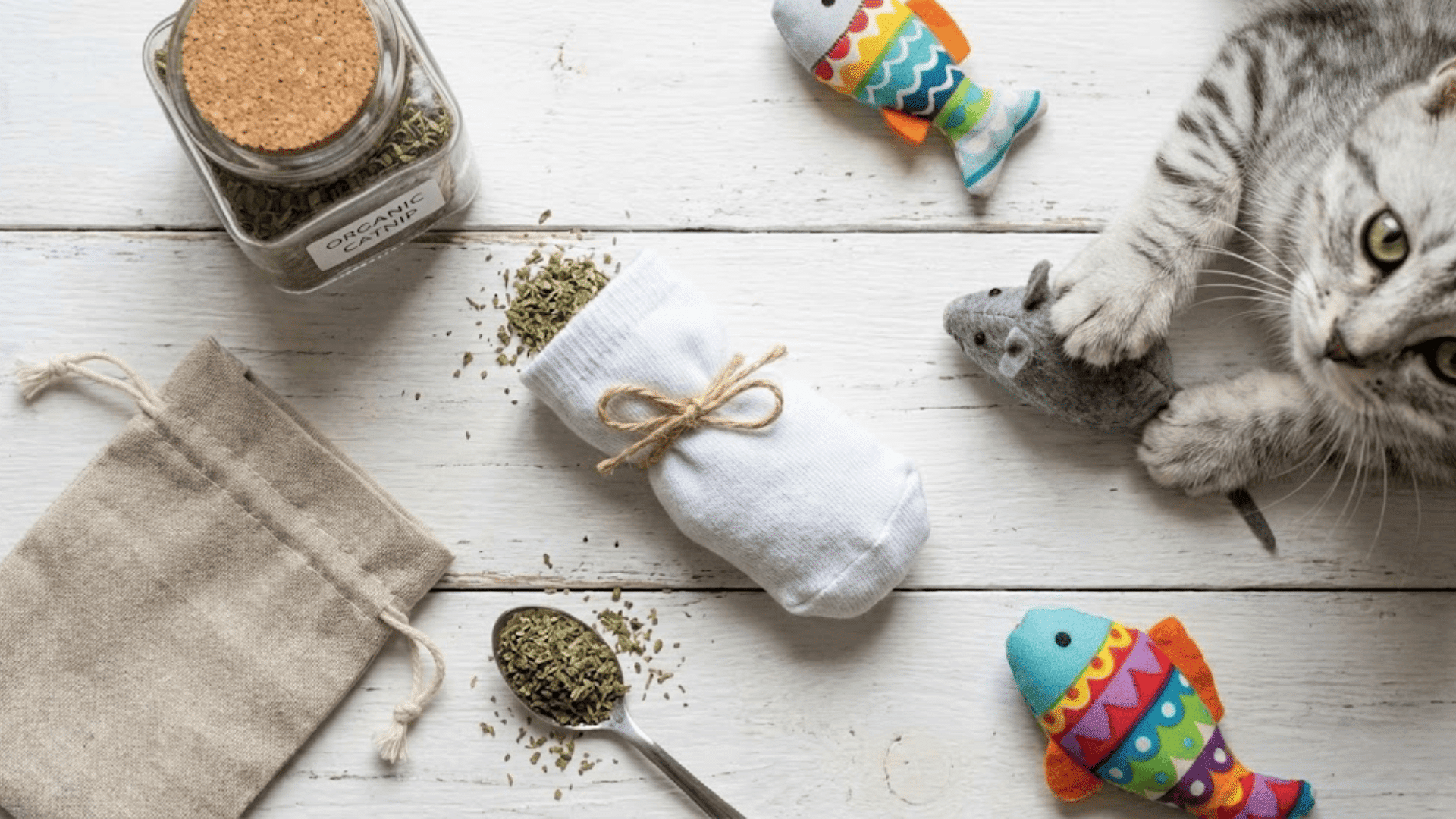
When it comes to buying or making catnip toys, quality matters. Here’s what you need to know to get the best results for your kitten.
- Making a DIY Catnip Toy: Take a clean sock or small fabric pouch, add a teaspoon of dried catnip, tie it securely, and you’re done. Make sure the fabric is sturdy enough that your kitten can’t rip it open and eat the contents.
- Look for Organic Catnip: Choose products labeled organic and pesticide-free to avoid exposing your kitten to harmful chemicals. Fresh, high-quality catnip will have a stronger scent and better response.
- Check the Packaging: Avoid catnip with added fillers, artificial scents, or mystery ingredients. The label should list just one thing: catnip (or its scientific name, Nepeta cataria).
- Choose Durable Toys: If buying pre-filled toys, pick ones with reinforced stitching that can handle some serious batting around without falling apart.
Homemade or store-bought, the key is keeping things simple and safe. Your kitten doesn’t need fancy packaging; they just want something that smells amazing and holds up to their play style.
References and Further Reading
To ensure accuracy, this guide draws on research and expert recommendations from trusted veterinary and scientific sources.
- Lichman et al. (2020) in Science Advances explore the evolutionary origins of nepetalactone and its effects on cats.
- Espín-Iturbe et al. (2017) examine how age and sex affect catnip responses in cats.
- Zhu et al. (2009) provide safety and toxicity data on catnip.
These peer-reviewed studies offer evidence-based insights into feline behavior, catnip genetics, and safe enrichment strategies for young cats.
The Closing Note
After all the research and testing, here’s what matters most: your kitten is unique, and their catnip experience will be too.
Some will go wild the first time, others might need a few months to catch on, and a few might never care at all, and that’s perfectly okay.
The real joy isn’t just in watching them tumble around with a catnip toy, but in discovering what makes your little one tick. So grab some catnip, give it a try, and enjoy those hilarious moments together.
Got a funny catnip story or questions about your kitten? I’d love to hear from you in the comments below!