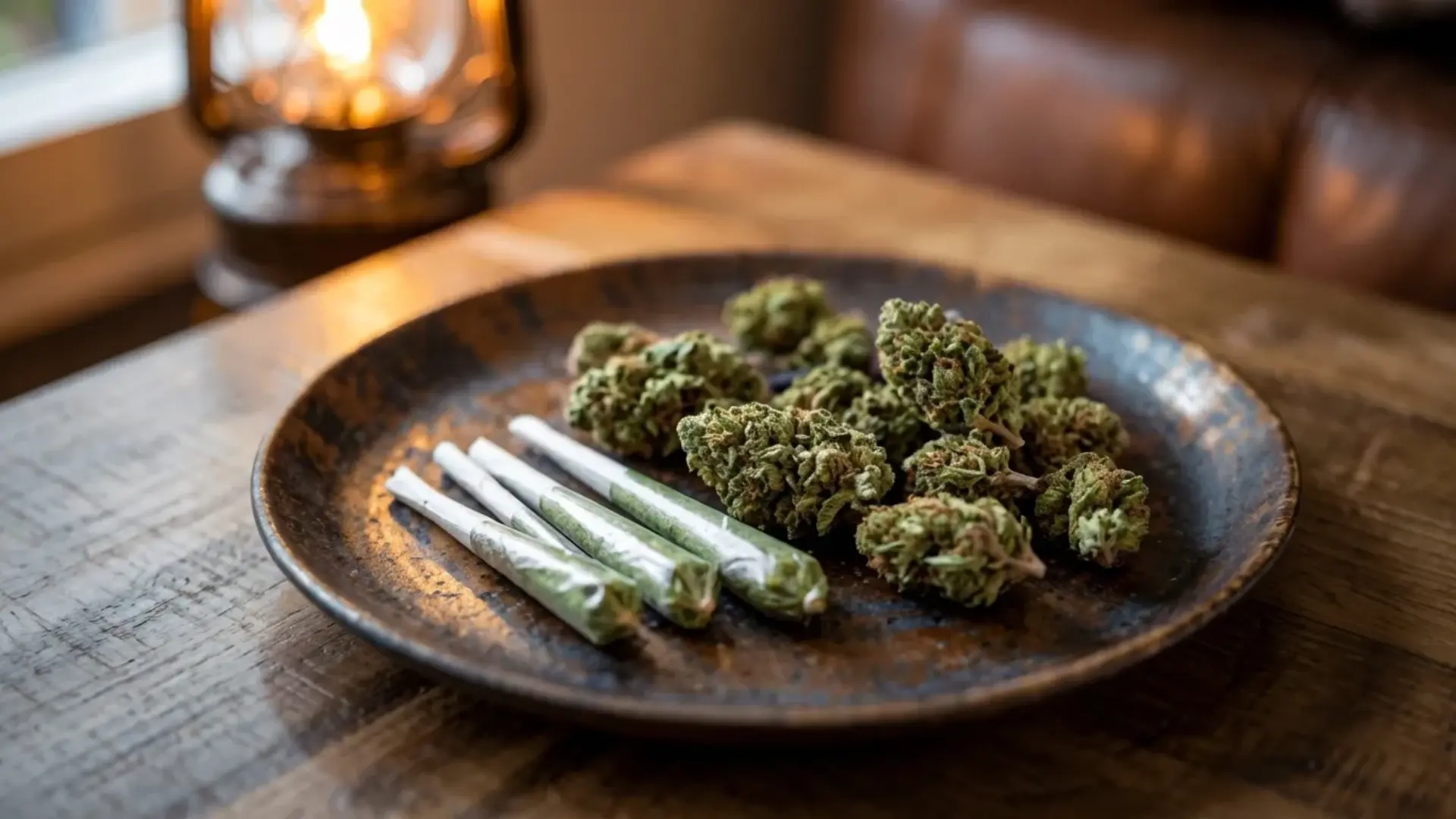
You’ve probably heard about the munchies and wondered does smoking weed make you gain weight. It’s a fair question, especially when cannabis is often linked with late-night snacking and strong food cravings.
Having spent years working with cannabis consumers and tracking how different strains and cannabinoids affect appetite, I can tell you the answer is genuinely more nuanced than the munchies stereotype suggests.
Some studies actually show that regular cannabis users tend to have lower body weight and BMI compared with non-users.
That sounds surprising, right? In this guide, I’ll help you understand what science says about cannabis, appetite, and metabolism.
You’ll learn why the munchies happen, how marijuana may influence calorie burning, and what research reveals about weight changes in cannabis users so you can better understand how it may affect you.
The information provided is for educational purposes only and is not a substitute for professional medical advice, diagnosis, or treatment. Always consult a qualified healthcare provider before starting, stopping, or changing any medication.
Does Smoking Weed Really Make You Gain Weight?
- Short answer: Not directly. Most research shows cannabis users tend to have lower BMI than non-users, despite consuming more calories.
- The munchies are real: THC genuinely stimulates appetite through CB1 receptor activation and ghrelin release. Calorie intake often increases during a high.
- Causation is unproven: A 2024 Mendelian randomization study found no evidence of a causal relationship between cannabis use and BMI changes. The lower BMI association may reflect confounding factors rather than a direct cannabis effect.
- It depends on: Dose, strain (THC vs. CBD vs. THCV ratio), frequency, diet, and individual metabolism.
- Cannabis is not a weight loss tool. Using it specifically to lose weight is not supported by current evidence.
Theoretical Explanation for Reduced Body Mass Index and Obesity Rates in Cannabis Users reports that cannabis users often have lower body weight and BMI than non-users, even though they may consume more calories.
One possible explanation is that cannabis may temporarily increase metabolic activity. This means your body may burn calories slightly faster for a short time after consumption.
However, the results vary between individuals. Factors such as diet, physical activity, genetics, and frequency of cannabis use play a major role in whether someone gains or loses weight.
However, the causal picture is more complicated than it first appears. A 2024 review published in PMC that applied Mendelian randomization, a method that uses genetic variants to test for causal relationships similarly to a randomized controlled trial, found no evidence to support a direct causal relationship between lifetime cannabis use and BMI, waist circumference, or waist-to-hip ratio. The authors concluded that the lower BMI association seen in observational studies likely reflects residual confounding rather than a true biological effect of cannabis on body weight.
In other words: cannabis users may tend to be lighter, but cannabis itself is probably not the reason why.
Cannabis and Its Impact on Appetite

Cannabis is well known for increasing hunger , and this reaction comes from specific biological processes inside the body.
The compounds in marijuana interact with the endocannabinoid system, which helps regulate appetite, taste, and energy balance. When THC enters the body, it activates cannabinoid receptors in parts of the brain that control hunger signals.
This interaction triggers the well-known “munchies” effect. Food can suddenly smell and taste more appealing, which encourages stronger cravings and frequent snacking.
THC also influences hormones linked to appetite, especially ghrelin , often called the hunger hormone. When ghrelin levels rise, the brain receives stronger signals that it is time to eat.
Because of this response, some people may feel hungry even after a recent meal and may consume more calories during a cannabis high.
Does the Dose Matter for Appetite?
Yes, significantly.
Research published in the journal Pharmacology, Biochemistry and Behavior found that low doses of cannabis (roughly equivalent to one cannabis cigarette) had little to no measurable effect on food intake in normal volunteers. Higher doses, equivalent to two or three cigarettes, increased daily calorie intake primarily through increased snacking between meals rather than larger meal portions.
This dose-response distinction matters practically: occasional light use may have minimal appetite impact, while heavier sessions are more likely to produce the munchies effect people associate with significant overeating.
How Marijuana Affects Your Metabolism
Marijuana doesn’t only influence appetite. It can also affect how your body processes energy and stores fat. Cannabinoids interact with the endocannabinoid system , which plays a role in metabolism, digestion, and fat storage. Because of this interaction, cannabis may change how the body burns calories and manages energy.
- Energy storage: Cannabis may interfere with the way fat cells store energy, which could reduce the buildup of excess body fat over time.
- Gut microbiome: Some research suggests cannabis may alter gut bacteria, which can influence metabolism and body weight regulation.
- THCV compound: THCV, a cannabinoid found in certain strains, may help suppress appetite and increase metabolic activity.
- Gender differences: Long-term cannabis use may affect metabolism differently in men and women due to hormonal variations.
These metabolic effects can occur regardless of whether cannabis is smoked, vaped, or consumed as edibles.
CB1 Receptor Downregulation: The Leading Biological Hypothesis
One of the more compelling explanations for why chronic cannabis users tend to have lower BMI despite the munchies involves CB1 receptor adaptation.
While THC acutely activates CB1 receptors to stimulate appetite, long-term regular use causes those receptors to downregulate, meaning the body produces fewer of them and becomes less sensitive to cannabinoid signals.
This reduced CB1 activity is associated with decreased energy storage and a modest increase in metabolic activity. The effect essentially counteracts the short-term appetite stimulation of individual sessions over time.
This also helps explain why the lower BMI association is observed in current users but does not appear to intensify with cumulative lifetime cannabis use, and why BMI does not tend to rise when people quit, which you would expect if cannabis were actively suppressing weight.
THCV and Strain Selection: A Practical Note
One question that came up frequently when I worked on the dispensary floor was whether specific strains affect appetite differently. The answer is yes, and THCV is the cannabinoid most relevant to this question.
Unlike THC, THCV appears to act as a CB1 receptor antagonist at lower doses, meaning it may block rather than stimulate appetite signals.
Strains with higher THCV content, typically certain African sativa landrace varieties such as Durban Poison and some selected hybrids, tend to produce a cleaner, more energetic effect with less pronounced munchies than high-THC indica-dominant strains.
If managing appetite is a priority for you, paying attention to the THCV content on a product’s certificate of analysis is a more targeted approach than simply choosing low-THC products.
THC vs. CBD and Appetite
Cannabis contains several active compounds, but THC and CBD are the most well-known. These cannabinoids affect appetite and metabolism differently, which explains why cannabis does not impact everyone the same way.
| Compound | Effect on Appetite | Other Impact |
|---|---|---|
| THC (Tetrahydrocannabinol) | Stimulates hunger and causes the “munchies” | Enhances taste, smell, and food enjoyment. Dose-dependent: minimal effect at low doses. |
| CBD (Cannabidiol) | May reduce appetite in some cases | May support metabolism and fat processing. May partially counteract THC appetite effects. |
| THCV (Tetrahydrocannabivarin) | May suppress appetite at lower doses | May increase metabolic activity. Found in higher concentrations in certain sativa strains. |
Because cannabis strains contain different THC-to-CBD ratios , appetite and weight effects can vary widely between users and consumption methods.
Factors That Influence Weight Changes With Cannabis
Your body’s response to cannabis depends on several personal and lifestyle factors. Two people using the same strain may experience completely different results.
Several elements influence whether cannabis leads to weight gain, weight stability, or weight loss.
- frequency of cannabis use
- overall diet and calorie intake
- physical activity levels
- genetics and metabolism
- sleep patterns and stress
Because these factors vary widely between individuals, cannabis affects body weight differently for everyone.
What Science Says About Cannabis and Weight
Researchers have examined the relationship between cannabis use and body weight in multiple epidemiological and clinical studies.
Multiple peer-reviewed studies confirm the surprising connection between marijuana use and lower body weight. Here’s what the research actually shows.
The Recreational Marijuana Laws and Junk Food Consumption paper found that regions with legal recreational weed saw higher retail sales of high-calorie foods like ice cream, cookies, and chips, suggesting that weed access may indirectly increase calorie purchases but not directly measure body weight.
In contrast, Theoretical Explanation for Reduced Body Mass Index and Obesity Rates in Cannabis Users (Clark et al.) reviewed many datasets and found that cannabis users tend to have a lower BMI and lower obesity rates, even though they may consume more calories, possibly due to metabolic changes.
A study on Cannabis use and obesity in young adults showed that young adults who used cannabis were less likely to be overweight or obese, with daily users having much lower odds of a BMI ≥ 25 compared to non-users.
These studies suggest an association between cannabis use and lower BMI, but observational research cannot establish causation. The 2024 Mendelian randomization analysis found no evidence that cannabis directly causes weight changes, meaning lifestyle, genetics, and confounding factors likely explain much of the pattern seen in epidemiological data.
Indirect Ways Cannabis May Affect Body Weight
Rather than directly causing weight loss, cannabis may influence body weight indirectly through several pathways that top-ranking research and reviews have identified:
- Sleep improvement: Poor sleep is a documented contributor to weight gain through its effects on hunger hormones and cortisol. Cannabis, particularly strains higher in CBN and certain terpenes, is commonly used for sleep support, and improved sleep quality may indirectly reduce weight-related hormonal disruption.
- Stress and pain management: Chronic pain and high stress are both associated with reduced physical activity and increased calorie intake. Cannabis used for pain or stress reduction may indirectly improve activity levels and reduce stress-driven eating for some users.
- Alcohol substitution: Some research suggests that cannabis users may reduce alcohol consumption, which is a calorie-dense substance. Substituting cannabis for alcohol could reduce total caloric intake in users who previously drank regularly.
None of these pathways are well enough established to recommend cannabis as a weight management strategy. They are offered as context for why the BMI association exists without a clear direct mechanism.
Does Smoking Weed Cause Weight Loss?
It’s important to clarify that cannabis is not a weight-loss treatment . Even though research shows a link between cannabis use and lower BMI, that does not mean marijuana directly causes weight loss.
Weight changes depend on many factors, including:
- diet and calorie intake
- exercise habits
- genetics and metabolism
- frequency and amount of cannabis use
In some medical situations, doctors actually prescribe cannabis to help patients increase appetite , such as those undergoing cancer treatment or experiencing severe weight loss.
This shows that cannabis can affect appetite differently depending on the individual and medical context.
What Happens When You Stop Smoking Weed?

When you stop smoking weed, your body gradually adjusts to functioning without THC. One of the first changes many people notice is a shift in appetite .
Since THC s timulates hunger signals in the brain, removing it can temporarily reduce appetite. During the first few days, you may feel less hungry while your body readjusts to normal hunger cues.
Weight changes can also occur during this transition period. Some people lose weight because the munchies disappear and snacking decreases. Others may gain weight if their metabolism slows slightly after stopping cannabis.
Most changes are temporary. Appetite usually returns to normal within two to four weeks , and metabolic activity gradually stabilizes. Over time, your body adapts, and weight typically settles at a healthy balance.
One notable finding from the research: unlike tobacco, where BMI tends to increase when smokers quit, cannabis cessation does not appear to cause a corresponding rise in BMI. This further supports the interpretation that cannabis is not directly responsible for the lower BMI association seen in current users.
Potential Health Risks of Cannabis
Although cannabis may influence metabolism and appetite, it also carries potential health risks. Research suggests that frequent cannabis use may be linked to:
- increased heart rate
- higher blood pressure
- lung irritation from smoking
- cannabis use disorder in some individuals
Studies have also examined long-term cardiovascular risks. A large observational study supported by the National Institutes of Health (NIH) found that frequent cannabis use was associated with a higher likelihood of heart attack and stroke compared with non-users.
On lung health specifically: cannabis smoke contains many of the same irritants, toxins, and carcinogens as tobacco smoke according to the American Lung Association.
Because cannabis users tend to inhale more deeply and hold smoke longer than cigarette smokers, tar exposure per breath can be higher.
Long-term smoking is associated with airway inflammation, chronic bronchitis, and reduced respiratory function. Vaporizing cannabis at controlled temperatures reduces but does not eliminate combustion byproducts, and edibles remove the lung risk entirely for users who prefer to avoid smoking.
Tips for Managing Weight When Using Cannabis
If you use cannabis and want to maintain a healthy weight, these practical strategies can help you control the munchies effectively.
- Stay Hydrated : Drink plenty of water throughout your hike. Sometimes thirst disguises itself as hunger, leading to unnecessary eating and extra calories.
- Practice Portion Control : Use small plates and bowls to limit serving sizes. This tricks your brain into feeling satisfied with less food overall.
- Choose Protein and Fiber : These nutrients keep you full longer than sugary or processed snacks, reducing the urge to keep eating continuously.
- Exercise Regularly : Working out improves the metabolism benefits of cannabis while burning off any extra calories you consume during munchies sessions.
- Consider Strain and Cannabinoid Profile: If appetite management is a concern, strains with higher THCV content or higher CBD-to-THC ratios tend to produce less pronounced munchies than high-THC indica-dominant products.
- Pre-plan Snacks: Prepare healthy options before a session. Having cut vegetables, fruit, or portioned nuts available makes it easier to satisfy cravings without reaching for high-calorie processed foods.
These simple strategies help you enjoy cannabis while staying healthy. Small changes in your habits make a big difference in weight management.
Final Thoughts
Now you have a clearer picture of how cannabis interacts with appetite, metabolism, and body weight. You’ll look at why the munchies happen, how THC influences hunger signals, and what research suggests about BMI among cannabis users.
The key takeaway is that cannabis doesn’t automatically cause weight gain, but your habits still matter. What you eat, how active you stay, and how often you use cannabis all play a role in your overall health.
If you choose to use cannabis, staying mindful of your lifestyle choices can help you maintain balance. I hope this guide helped you understand the science behind cannabis and weight.
If you’ve noticed changes in your appetite or weight with cannabis, share your experience in the comments!