Quick Glance: Can You Fly With CBD?
| Factors | Carry-On | Checked Bag | Key Rule |
| CBD oil/tincture | ✅ Yes | ✅ Yes | Under 3.4 oz in carry-on; under 0.3% THC |
| CBD gummies/capsules | ✅ Yes | ✅ Yes | No liquid rule applies; must be hemp-derived |
| CBD topicals/creams | ✅ Yes | ✅ Yes | Under 3.4 oz in carry-on |
| CBD vape pen | ✅ Carry-on only | ❌ No | Battery fire risk; carry-on only |
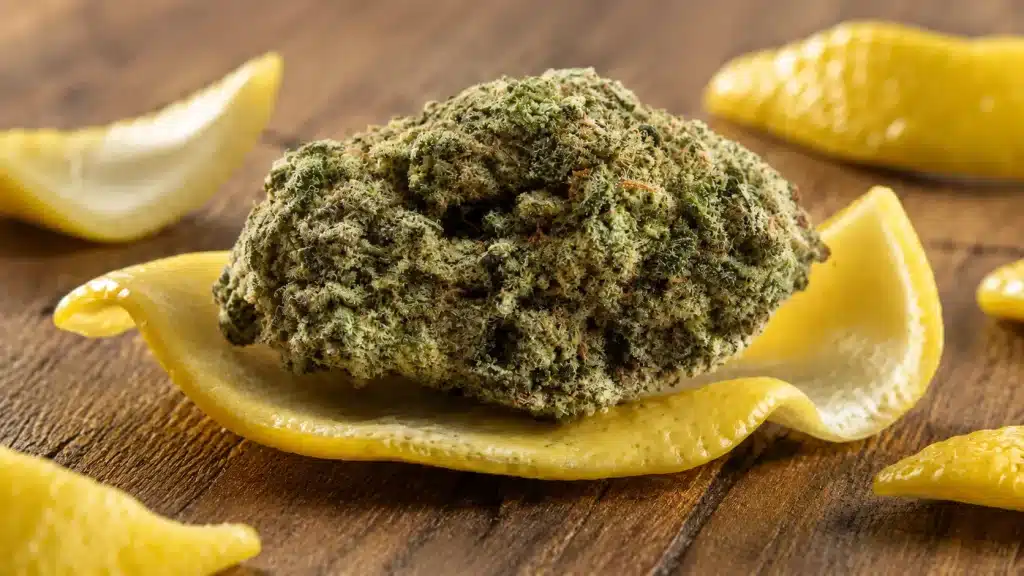
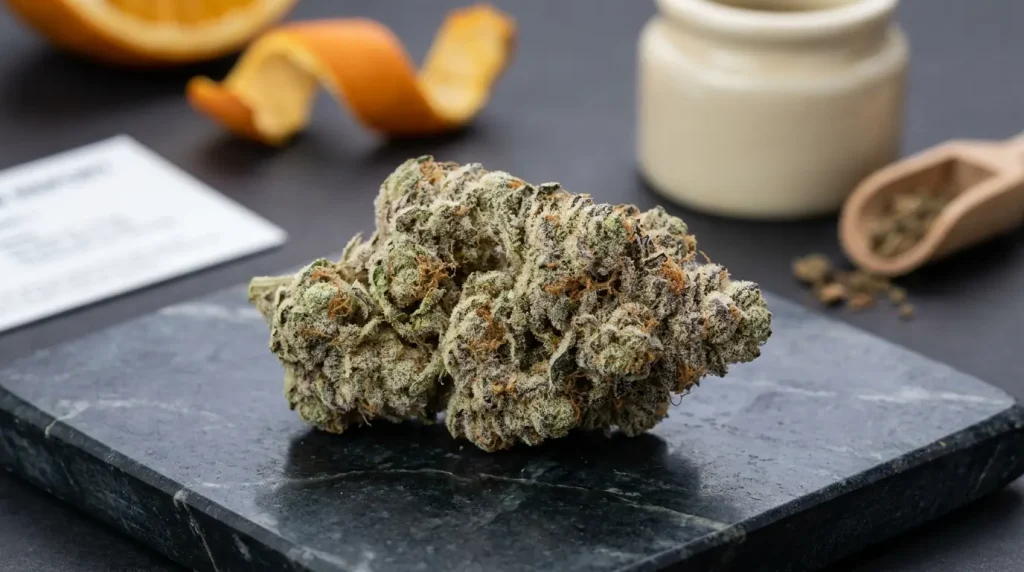
| CBD flower/buds | ❌ No | ❌ No | Visually identical to marijuana; high risk |
| Marijuana-derived CBD | ❌ No | ❌ No | Federally illegal regardless of state law |
If you’ve ever stood at the security line, CBD oil in hand, wondering whether you’re about to have a very awkward conversation with a TSA agent, this one’s for you.
Traveling with CBD has become one of the most Googled questions in the cannabis space, and honestly, the confusion makes sense. CBD is legal federally, illegal in some states, permitted in some countries, grounds for arrest in others, and surrounded by a packaging grey zone that even experienced travelers get wrong. It’s a lot.
After going through the official TSA guidelines, the 2018 Farm Bill, and the actual rules that apply across domestic and international travel, here’s the honest, complete answer, without the fluff.
What TSA Actually Says
The TSA’s official page on medical marijuana and CBD0 is clearer than most people expect:
“Marijuana and certain cannabis infused products, including some Cannabidiol (CBD) oil, remain illegal under federal law except for products that contain no more than 0.3 percent THC on a dry weight basis or that are approved by FDA.”
So the rule is: hemp-derived CBD with under 0.3% THC is permitted. Marijuana-derived CBD is not, regardless of the state you’re departing from or landing in.
Two things that matter here and often get misunderstood: TSA is not actively hunting for CBD. Their job is security, weapons, explosives, and prohibited items. If compliant CBD passes through a scanner, it gets through.
If a product is flagged and appears to violate federal law, the agent refers it to local law enforcement. That call is entirely the officer on duty’s responsibility.
There is zero on-site testing. A TSA agent cannot verify your CBD’s THC content at the checkpoint. This is why your packaging and documentation are the only tools you have to prove compliance on the spot.
| ⚠️ Caution: TSA officer discretion is real. Two agents at the same airport can handle the same product differently depending on their familiarity with CBD regulations. Documentation is your best protection. |
The Legal Foundation: Why This Rule Exists
The 2018 Agriculture Improvement Act, the Farm Bill1 known as the Farm Bill, legalized hemp and hemp-derived products at the federal level, as long as they contain no more than 0.3% Delta-9 THC by dry weight. This is the legal line that separates hemp CBD from federally illegal marijuana.
That 0.3% number is everything in this context. A product at 0.29% THC is federally legal. A product at 0.31% is not, even if it came from the same hemp plant, and you feel no difference. TSA operates under federal law, which is why that threshold defines what can and cannot go through security.
The Farm Bill also preserved each state’s right to set stricter rules. Which is where things get messier, and why flying with hemp-derived CBD doesn’t automatically mean you’re in the clear at your destination.
Understanding the difference between hemp and THC products, and exactly why the 0.3% threshold exists, is the clearest starting point before you pack anything. A hemp vs THC breakdown2 might help you walk through why these two things are treated so differently under the law, which is useful context before travel.
| 📝 Note: The Farm Bill covers hemp-derived CBD. Marijuana-derived CBD, even at low THC levels, is still federally prohibited for air travel. The source of the CBD matters as much as the THC percentage. |
How to Pack CBD for a Flight
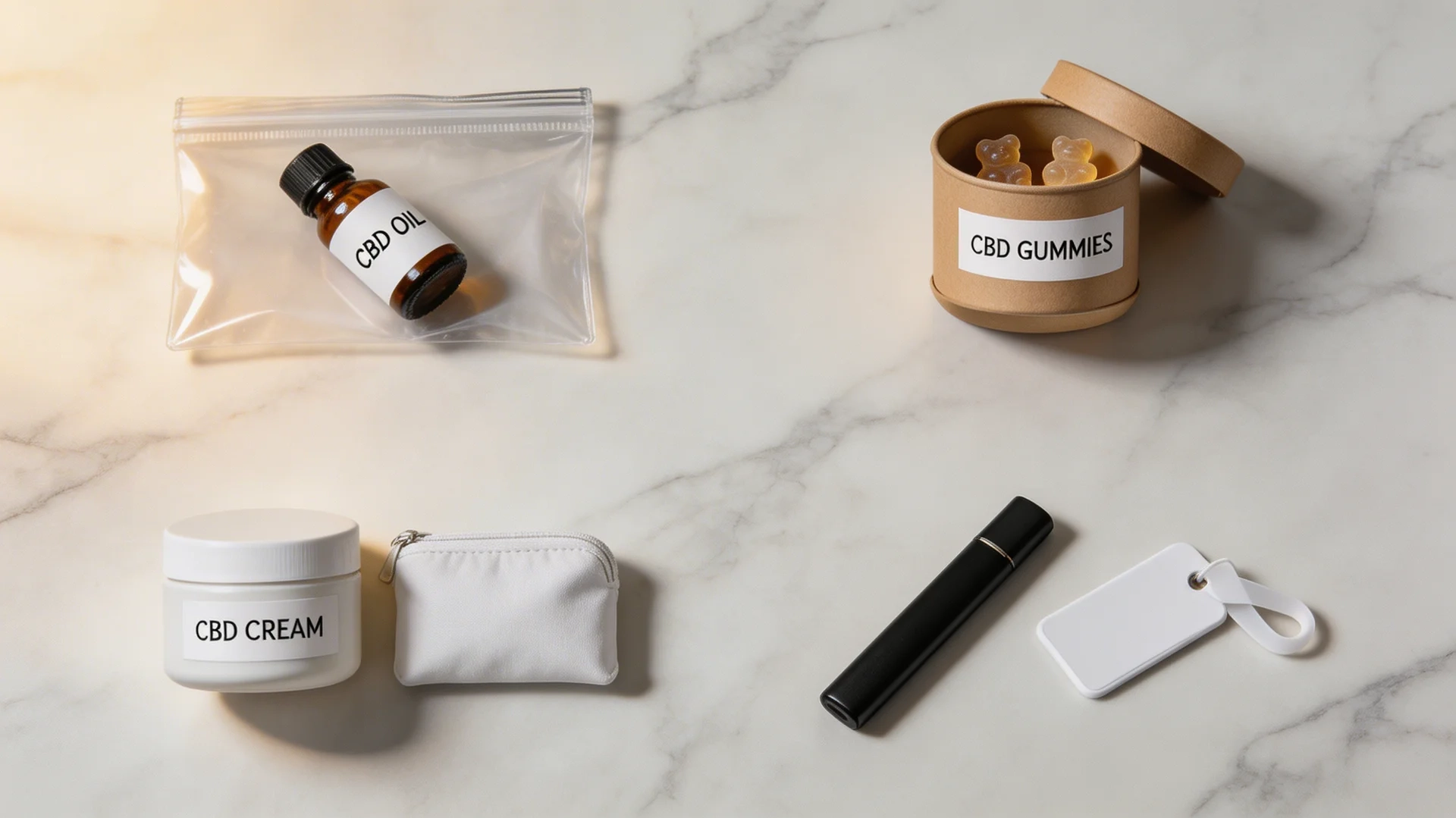
This is where most of the practical questions live, and the rules vary more by format than most people expect.
1. CBD Oils and Tinctures
CBD oils fall under TSA’s standard liquid rules, which apply to every carry-on regardless of what’s inside the bottle. Get this right, and you won’t slow down the line.
- Container must be 3.4 ounces (100ml) or less
- Must be stored in a single clear, quart-sized zip bag alongside other liquids
- Larger bottles go in checked luggage only
Most commercially sold CBD tinctures come in 1-oz bottles, which easily clear the limit. If yours is larger, pack the full bottle in checked luggage or decant a travel amount into a smaller container, keeping the original label intact. A guide for using CBD tinctures3 can help you understand how different tincture formats work and what to look for in a travel-appropriate product.
2. CBD Gummies and Capsules
Gummies and capsules skip the liquid rule entirely, which makes them the simplest CBD format to move through any airport security line without a second thought.
- No liquid rules apply; they go straight into your carry-on or checked bag
- Pack in original sealed packaging with THC content and “hemp-derived” clearly labeled
- No size or quantity limit specified by TSA, bring what you need
That said, “original sealed packaging” is doing real work here. A zip-lock bag of unlabelled gummies raises questions that the original packaging doesn’t. Keep them in the tin or pouch they came in, and you’re unlikely to hear a word about them at the checkpoint.
3. CBD Topicals and Creams
Topicals in cream or lotion form follow the same liquid logic as oils; a 3.4 oz carry-on limit applies. Genuinely solid balms may be exempt, but that assessment is the agent’s on the day.
- Cream or lotion-based topicals: 3.4 oz limit in carry-on, in the liquids bag
- Solid balms: may be exempt from the liquid rule depending on product consistency
- When in doubt, pack topicals in checked luggage to avoid any ambiguity
If you’re unsure whether your topical is a solid or a liquid, the safest call is always the checked bag. A CBD balm confiscated at security is an annoying and entirely avoidable loss.
4. CBD Vape Pens
Vape pens fall under TSA’s lithium battery rules, which apply uniformly to every battery-powered device; this isn’t specific to CBD. The rule is absolute and not open to interpretation.
- Vape pens and all lithium battery devices must travel in your carry-on only
- Vape liquid follows the 3.4 oz liquid rule in carry-on
- Vaping on the plane is not permitted under any circumstances, not in your seat, not in the bathroom
Keep the pen in your personal bag and make sure the battery is charged but switched off or locked before the screening. A vape pen that activates accidentally in a bag mid-screening is not how you want to start a trip.
What to Leave at HomeSome CBD formats create problems that no amount of documentation can easily resolve at a security checkpoint. Knowing these in advance saves the conversation. These aren’t edge cases; they’re the most common reasons compliant CBD users run into problems. The format and packaging matter as much as the product itself.
|
| ⚠️ Caution: Do not transfer CBD oil or gummies into unmarked containers before traveling. A clearly labeled original container is your first evidence of compliance. Unlabelled products are a red flag for agents. |
Documentation: What to Bring and Why
Two documents can make a huge difference if your CBD is flagged at security; neither is legally required, but both resolve questions faster than anything else you could say.
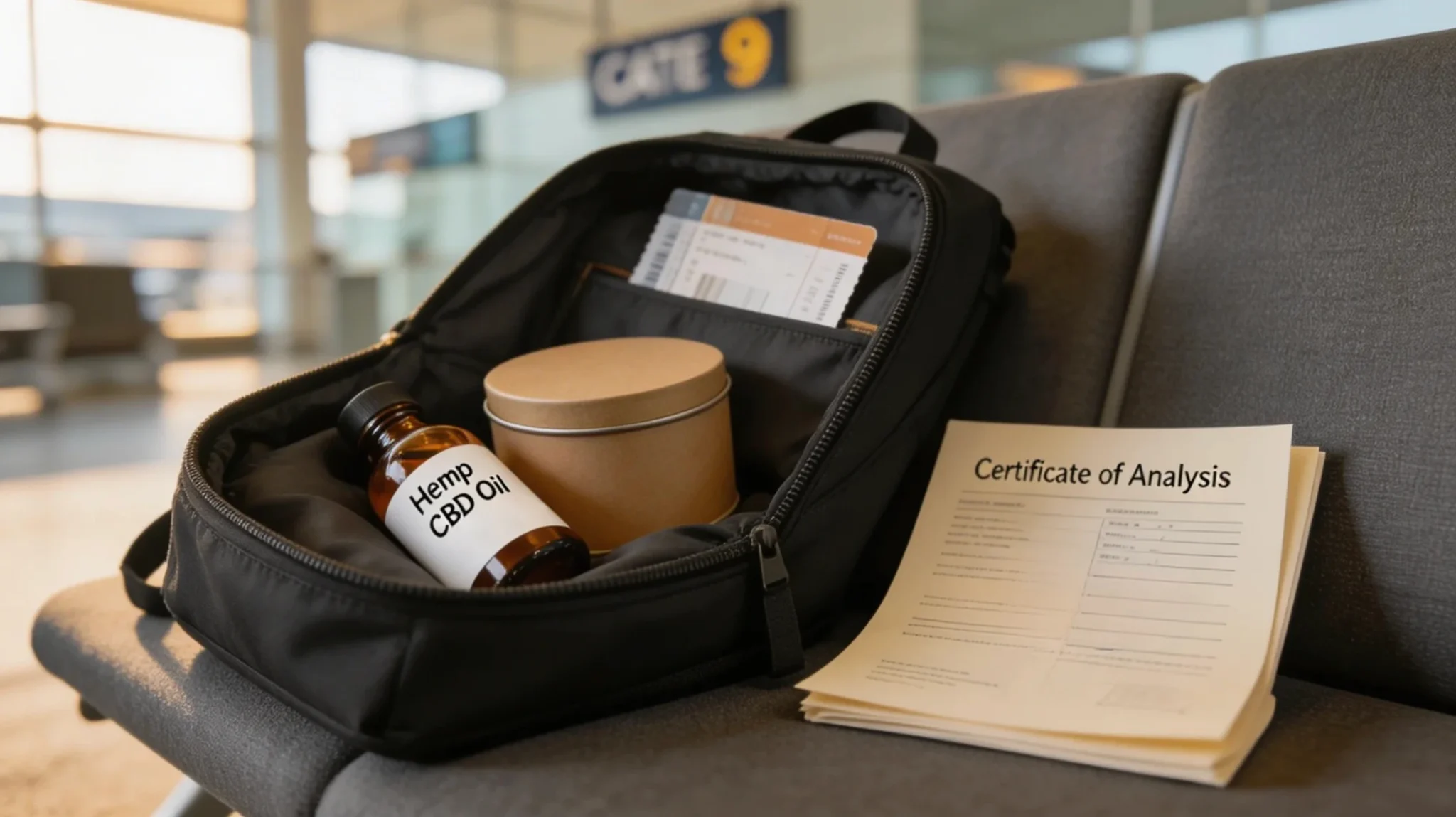
Certificate of Analysis (COA): This is a third-party lab report confirming your product’s exact cannabinoid profile, including that THC content is under 0.3% and the product is hemp-derived. Reputable CBD brands provide these on their websites for each product batch.
Download a PDF or take a screenshot before you leave. This is the clearest proof of federal compliance available to you at a checkpoint.
Original product labeling: Keep the product in its original container with all labeling visible, including the brand name, “hemp-derived” designation, and THC content (usually stated as “less than 0.3% THC” or “non-detectable”). This alone answers most questions an agent might have.
Sunmed CBD’s 2025 TSA travel breakdown4. If TSA spots a CBD product during screening, the officer may inspect the packaging and swab or verify the item if needed. If verified as hemp-derived and compliant, it passes.
If it doesn’t meet federal standards, it may be confiscated, and in rare cases, law enforcement can be involved if THC content is suspected above legal limits.
| 💡 Tip: Save your COA as a screenshot on your phone, not just a link. Airport Wi-Fi is unreliable, and the last thing you need is to be standing at a security desk waiting for a page to load. |
State-Level Complications
Federal legality does not override state law at your destination. Some states apply rules stricter than the federal 0.3% threshold:
Idaho requires that CBD products contain zero detectable THC, not just under 0.3%. Even products that are federally compliant may be unlawful to possess in Idaho.
Nebraska and South Dakota have historically taken stricter positions on CBD products. Laws in both states are subject to change; verify the current rules before traveling to either state.
The practical guidance: TSA operates under federal law, so compliant CBD clears federal security. But the moment you land in a state with restrictive CBD laws, local law governs. If your destination state has unclear or strict rules and you’re not sure of the current position, buying locally at your destination eliminates the risk entirely.
| 📝 Note: This is one of those situations where “it’s legal federally” genuinely does not cover you end-to-end. State-level rules at your destination are a separate check you need to do before packing. |
International Travel: An Entirely Different Conversation
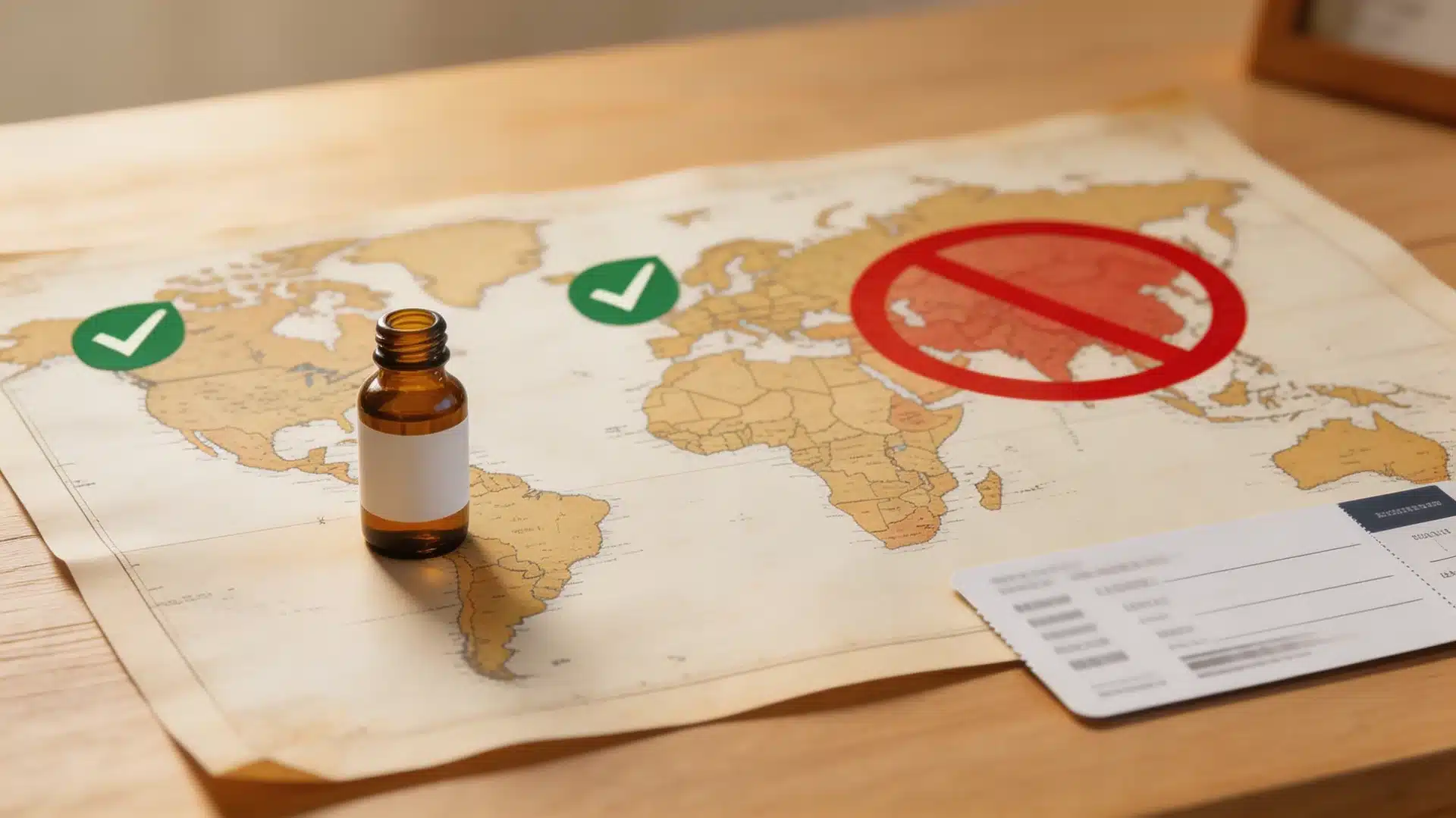
If domestic travel requires some homework, international travel with CBD requires considerably more. What is legally unremarkable in the US is a serious legal risk in much of the world.
Countries Where CBD Is Generally Permitted
Most of the confusion around international CBD travel comes from assuming the US rules translate. They don’t, but several major destinations do allow compliant hemp products with the right THC threshold.
- Canada: Hemp-derived CBD permitted under 0.3% THC, closest to US federal rules
- Most EU countries: Permitted under 0.2% THC, though rules vary meaningfully by country
- UK: Under 1mg THC per container, effectively zero, stricter than the US
- Germany: Up to 0.3% THC permitted as of 2024
- Japan: CBD is technically permitted, but with zero tolerance for any THC whatsoever
Even within the “permitted” category, the rules shift enough that checking your specific destination’s current laws before you pack is not optional. A product legal in Germany may not meet the UK’s threshold, and Japan’s zero-THC rule makes even trace amounts a problem.
Countries Where CBD Is Prohibited
A significant number of countries treat hemp CBD the same way they treat marijuana; there is no legal distinction at customs. Knowing these before you book is important.
- Singapore: Zero tolerance; severe penalties, including imprisonment, for cannabis possession
- UAE and Saudi Arabia: Zero tolerance; documented cases of lengthy detention for trace amounts
- China, Malaysia, Indonesia, Vietnam: All cannabis-derived products are prohibited without exception
- Philippines, South Korea, Russia: Zero tolerance enforced regardless of THC percentage
Hemnia’s 2025 international travel rules guide5, possession or transport of even trace amounts of THC in these destinations can result in criminal penalties, deportation, or lengthy detention. These are not hypothetical risks; they are documented outcomes for travelers who brought a product that was perfectly legal at home.
The Transit Problem
Many travelers overlook this entirely: a layover in a prohibited country exposes you to legal risks even if you never leave the terminal. Local law applies the moment the plane lands. Before any international trip, verify three things: the laws of your departure country, your destination country, and every country your flight lands in, even briefly. A two-hour layover in the wrong city is enough to create a situation that no COA will resolve. |
| ⚠️ Caution: In countries with zero tolerance for cannabis products, “I didn’t know” is not a legal defense. Confiscation, fines, arrest, and travel bans are all documented outcomes. When genuinely unsure, leave it at home. |
What Happens If TSA Flags Your CBD
If a TSA agent pulls your CBD for inspection, here is the practical sequence:
Stay calm and be straightforward. Defensiveness or vague answers slow the process down. Clearly state it’s hemp-derived CBD, under 0.3% THC, and offer the COA and original packaging immediately.
The agent assesses the product. In most cases with clearly labeled, compliant CBD, this ends at the checkpoint, the product passes through, and you move on.
If referred to law enforcement: The outcome depends on the jurisdiction, the officer’s assessment of the product, and local state law. With compliant documentation, most cases resolve without action. In restrictive states or airports with conservative policies, confiscation remains possible even for compliant products.
The reality is that the vast majority of encounters with well-labeled hemp CBD end without incident. The incidents that do occur almost always involve unlabelled products, missing COAs, or genuinely non-compliant products.
Quick Practical Tips for Smooth CBD Travel
- Pack gummies or capsules if you want the lowest-friction format through security
- Carry the COA as a screenshot on your phone, not as a web link that requires a signal
- Keep CBD in original sealed packaging with THC content clearly visible
- For oils in carry-ons, ensure the bottle is 3.4 oz or under and in your liquids bag
- Check your destination state’s specific CBD laws before traveling domestically
- For international travel, check destination laws independently, including every transit country
- Consider taking your CBD dose before the airport to avoid needing to carry the product through security at all
- If in genuine doubt about a destination’s laws, ship ahead to a legal jurisdiction or purchase locally on arrival
Final Thoughts
Traveling with CBD doesn’t have to be stressful; it just requires knowing which rules actually apply to your specific trip. Domestically, hemp-derived CBD under 0.3% THC is federally legal, TSA-permitted, and a routine part of a lot of people’s carry-on bags.
The job is just to make sure your product is clearly labeled, your COA is accessible, and you’ve checked your destination state’s rules if they’re known to be stricter than federal law. Internationally is a different story, and it deserves genuine research rather than assumptions.
The countries where CBD is fully prohibited are not edge cases; they include some of the world’s busiest transit hubs. One bottle of oil is not worth a night in a foreign detention facility. Pack smart, travel with documentation, know your destination’s rules, and if you’re ever genuinely uncertain, buy when you get there. Your CBD routine can wait. A travel complication caused by a hemp tincture absolutely cannot.
Disclaimer: This content is for informational purposes only and does not constitute legal advice. Laws regarding CBD change frequently. Always verify current regulations with official sources before traveling.
Frequently Asked Questions
Can I bring CBD oil through TSA?
Yes, if it is hemp-derived and contains under 0.3% THC. In your carry-on, liquids must follow the 3.4 oz or less rule: put them in a clear quart-sized bag. Original packaging and a COA are strongly recommended.
Can you take CBD gummies on a plane?
Yes. Gummies are the most travel-friendly CBD format; no liquid rule applies, and they draw minimal attention. Keep them in the original sealed packaging.
Can you fly with a CBD vape pen?
Yes, but carry-on only. All battery-powered vape devices are prohibited in checked luggage due to the risk of fire. The vape liquid follows the 3.4 oz liquid rule.
Does CBD oil count as a liquid for TSA?
Yes. Any liquid or semi-liquid CBD product, oil, tincture, or serum must follow the 3.4 oz per container rule in carry-ons, stored in a single clear quart-sized bag.
Can you fly internationally with CBD?
It depends entirely on your destination and on each transit country along your route. Many countries permit it with THC limits; others prohibit all cannabis-derived products with serious legal consequences. Research every stop on your itinerary before packing anything.
Is CBD from a licensed dispensary okay to fly with?
Not necessarily. Dispensary CBD derived from marijuana plants, rather than hemp, is federally illegal for air travel, regardless of how it was purchased or where. Only hemp-derived CBD under 0.3% THC is TSA-permitted.
Sources
- TSA — Medical Marijuana and CBD Official Policy: US government; official TSA stance on hemp-derived CBD and marijuana-derived products
- USDA — 2018 Agriculture Improvement Act (Farm Bill): Federal legislation legalizing hemp and hemp-derived products under 0.3% THC
- Sunmed CBD — Can You Take CBD on a Plane? TSA Guidelines (2025): 2025 TSA screening process and what happens when CBD is flagged
- Hemnia — Traveling with CBD: Rules for 100+ Countries (2025): International CBD travel rules by country, including prohibited destinations
- FunWithDizzies — Hemp vs THC: Similarities, Differences, and Factors: The legal distinction between hemp CBD and THC products
- FunWithDizzies — How to Use a CBD Tincture Safely and Correctly: CBD oil tincture formats and how to use them correctly