| ⚠️ Warning: If you or someone you know is struggling with methamphetamine use, free, confidential help is available 24 hours a day through SAMHSA’s National Helpline: 1-800-662-4357. If meth sores show signs of spreading infection, fever, or swelling with red streaks, call 911 or go to an emergency room. |
Quick Glance: Meth Skin Conditions
| Condition | What It Is | Primary Cause | Reversible? |
| Meth sores | Open wounds, scabs, and ulcers on the face, arms, and hands | Compulsive skin picking from formication | Mostly, with wound care and abstinence |
| Meth rash | Diffuse red, irritated skin; patchy inflammation | Toxic chemical sweat, hyperhidrosis, and poor hygiene | Yes, with time and skin care |
| Meth acne | Severe acne-like lesions, pus-filled breakouts | Increased oil production, toxins exiting through sweat | Partially, it may leave scarring |
| Meth face | Premature aging, sunken appearance, skin deterioration | Malnutrition, dehydration, and collagen breakdown | Partially, some reversal is possible with recovery |
| Meth mites/formication | Sensation of bugs crawling on or under the skin | Stimulant-induced psychosis and hallucination | Yes, resolves with abstinence over time |
| Burns | Blistering around the lips, fingers, and mouth | Contact with hot glass pipes or chemical exposure | Partially, may scar if severe |
If you are looking for clear, clinical information about what methamphetamine does to the skin, this guide covers exactly that.
Meth skin is one of the most visible consequences of prolonged methamphetamine use, encompassing a range of conditions including meth sores, meth rash, meth acne, and the broader facial deterioration known as meth face.
Underlying many of these is a neurological phenomenon called formication, commonly referred to as meth mites, that drives compulsive skin picking. These are not superficial cosmetic issues. They reflect systemic damage to immunity, nutrition, circulation, and wound healing.
If you are reading for yourself or someone you care about, what follows is an evidence-based overview of what is happening biologically, what each condition looks like, and what recovery realistically involves.
What is Meth Skin & Meth Rash?
Meth skin describes the full range of visible dermatological damage that accumulates with methamphetamine use: open sores, rashes, acne-like breakouts, and premature aging that reflect systemic damage rather than surface-level effects.
These changes develop through physiological impairment, behavioral effects, and nutritional depletion, which compound over time. The most commonly affected areas are the face, arms, hands, and chest, though meth sores can appear anywhere on the body.
According to Medical News Today’s clinically reviewed guide on meth face sores, visible signs of methamphetamine use on the skin include sores, infections, premature aging, and a hollow, sunken appearance. These changes progressively worsen with continued use and tend to improve meaningfully with abstinence and nutritional recovery.
Meth rash presents as patchy redness, persistent itching, and inflamed skin across broader areas of the body: the torso, back, arms, or face. It resembles contact dermatitis or eczema and is driven by toxic chemicals exiting through sweat, immune dysregulation, and hyperhidrosis.
Poor hygiene during active use means chemical-laden sweat remains on the skin, worsening the inflammatory response. It can appear before meth sores develop, making it sometimes the earliest visible sign of methamphetamine use.
| 📝 Note: Meth rash is frequently misidentified as standard eczema or allergic contact dermatitis. The distinguishing factors are its presence alongside other signs of stimulant use, its pattern of improvement with abstinence and hygiene, and its resistance to standard topical treatments during active use. |
Why Meth Causes Skin Problems: Five Mechanisms
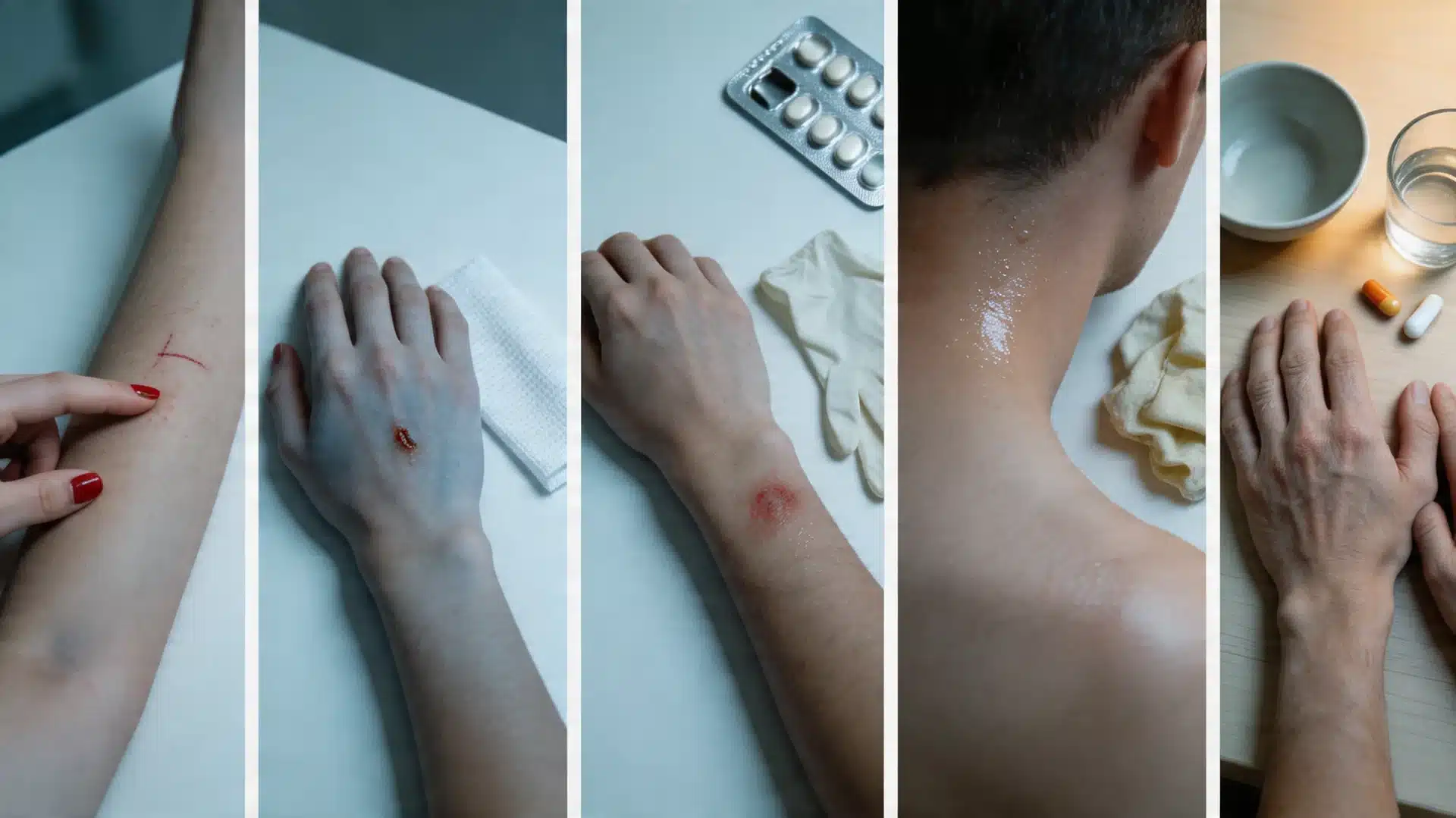
The skin damage associated with methamphetamine is not incidental. Five overlapping biological mechanisms drive it, and in most cases, several operate at the same time.
1. Formication and Meth Mites
Formication is the medical term for the tactile hallucination of insects crawling on or under the skin. It is a documented psychotic symptom of stimulant use and the primary driver of compulsive skin picking in people using methamphetamine.
The sensation is neurologically real to the person experiencing it. They are not damaging their skin out of habit or carelessness. They are responding to a signal their brain is genuinely generating, produced by methamphetamine’s dysregulation of dopamine and serotonin systems.
This distinction has real clinical implications. Treating meth sores without addressing the formication driving the picking is not effective long-term. The hallucination needs to be part of addiction treatment, not managed separately.
| 📝 Note: Meth-induced psychosis, including formication, can persist for weeks or months after stopping methamphetamine in heavy long-term users. Skin picking may continue into early recovery because the hallucinations do not resolve immediately with abstinence. |
2. Vasoconstriction and Impaired Wound Healing
Methamphetamine is a powerful vasoconstrictor that narrows blood vessels throughout the body, reducing blood flow to the skin and significantly impairing wound healing. Understanding how methamphetamine differs from prescription stimulants in potency and pharmacology explains why this vascular damage is so much more severe than what comparable substances produce.
A 2015 study published in PMC examining methamphetamine and MRSA skin infection confirmed that meth increases MMP-2 activity, degrading collagen, facilitates MRSA biofilm formation, and impairs immune cell function, making infected meth sores substantially harder to clear.
This is why meth sores that would typically heal in days can persist for weeks, and why minor lesions can escalate to infections requiring systemic antibiotic treatment.
3. Immune Suppression
Chronic methamphetamine use compromises immune function across multiple pathways. Bacteria that healthy skin normally contains and eliminates can colonize open wounds, turning minor irritations into infected lesions.
In a retrospective review of 768 methamphetamine-using patients seen at dermatology clinics over a decade, the Journal of the American Academy of Dermatology found significantly elevated rates of delusions of parasitosis and prurigo nodularis, two conditions directly linked to compulsive scratching and chronic skin damage, compared with the general population.
| ⚠️ Warning: Meth sores that show signs of spreading redness, warmth, swelling, pus, or red streaks extending from the wound require prompt medical evaluation. MRSA infections are documented at elevated rates in methamphetamine users and can become serious if self-treated or left unaddressed. |
4. Toxic Sweat and Chemical Exposure
Many of the chemicals involved in methamphetamine production exit the body through sweat. These residual toxins irritate the skin directly, clog pores, and contribute to meth acne, meth rash, and lesions.
Methamphetamine also significantly increases perspiration through its stimulant effects, meaning the skin is in prolonged contact with irritating compounds throughout periods of active use. People who smoke meth face an additional layer of chemical skin exposure; burns around the mouth and fingers are a direct result of contact with how the drug is administered.
5. Malnutrition, Dehydration, and Hygiene Neglect
Methamphetamine profoundly suppresses appetite and disrupts sleep. Chronic users frequently go extended periods without adequate nutrition or rest. The resulting depletion of vitamin C and zinc, two nutrients critical for wound healing and collagen synthesis, means the skin progressively loses its capacity to repair itself.
Hygiene is also frequently neglected during active use, allowing bacteria to proliferate on broken or compromised skin. Combined with dehydration-driven skin dryness and reduced elasticity, even minor abrasions become difficult-to-heal wounds.
What Meth Sores, Meth Acne, and Meth Face Look Like
Each condition has a distinct clinical presentation and differs meaningfully in appearance, location, and progression. Understanding what each one looks like is the first step toward recognizing them accurately and seeking appropriate care.
| Condition | Appearance | Common Locations | Distinguishing Feature |
| Meth sores | Small red spots progressing to open, oozing wounds; round or oval; multiple stages of healing visible simultaneously | Face (jaw, cheeks), arms, hands, neck | Scabs are repeatedly picked off, deepening the wound and restarting the healing cycle |
| Meth acne | Severe, widespread inflammatory breakouts; pus-filled lesions; slower to heal than standard acne | Face, back, chest | Resistant to standard acne treatments during active use; leaves hyperpigmentation or scarring |
| Meth face | Rapid apparent aging, sagging skin, dull grey or leathery texture, hollow or sunken facial appearance, active lesions at various stages | Entire face | A combination of collagen loss, fat pad depletion, dehydration, and active skin damage produces an appearance significantly older than chronological age |
A 2022 retrospective review published in the Journal of the American Academy of Dermatology, covering 768 methamphetamine-using patients over a decade, found significantly elevated rates of delusions of parasitosis and prurigo nodularis compared with the general dermatology patient base, confirming that meth-related skin conditions require a specific diagnostic approach.
Treatment and Wound Care for Meth Skin
The most important clinical step in treating meth skin is stopping methamphetamine use. Any dermatological treatment applied during active use is working against the drug’s continued physiological damage. That said, harm reduction wound care during active use is practically important because it reduces infection risk and long-term scarring.
1. Wound Care at Home
These four steps form the foundation of home wound care for meth sores. None of them require prescription products, and all meaningfully reduce infection risk and scarring when applied consistently.
- Clean the wound gently with clean water. Avoid harsh scrubbing, which widens the wound and increases tissue damage.
- Apply a neutral ointment, such as Vaseline or Aquaphor, to keep the wound moist and protected. Moist wounds heal from the inside out; dry wounds crust over and invite more picking.
- Cover wounds with bandages wherever possible. Bandages reduce the visibility of meth sores, protect against environmental bacteria, and support the moist healing environment the wound needs.
- Wash your hands before touching any wound. This single step significantly reduces bacterial contamination of open sores.
Consistent wound coverage is the most practical home intervention available. Keeping meth sores covered removes them from immediate view and physical reach, which directly reduces the urge to pick, particularly when formication is actively driving that behavior.
2. Medical Treatment
When home care is not sufficient, these clinical options address infected meth sores, abscesses, and wounds that have stopped responding to basic wound management. Each targets a specific aspect of the infection or inflammation driving the damage.
- Topical antibiotics such as over-the-counter bacitracin or prescription mupirocin for localized bacterial infections
- Oral antibiotics for spreading infections, cellulitis, or abscess formation
- Topical steroids such as 0.1% triamcinolone cream to reduce inflammation in non-infected sores
- Topical anesthetics such as lidocaine cream can reduce discomfort that drives picking in some cases
- Dermatological evaluation for persistent or significantly scarring meth sores, including MRSA testing where clinically indicated
Medical treatment for meth skin conditions is most effective when pursued alongside addiction support. Treating the wounds in isolation without addressing the underlying substance use and psychotic symptoms driving the picking behavior produces limited long-term results.
3. Skin Recovery After Stopping Meth
A December 2025 clinical overview published by Addiction Center notes that meth sores typically begin healing at a normal wound-healing rate once methamphetamine use stops, provided nutritional status begins to recover.
The important clinical caveat is that formication may persist for months in heavy long-term users, meaning compulsive picking can continue into early recovery even without active meth use. With abstinence, adequate nutrition, hydration, and consistent wound care, skin condition typically improves substantially within weeks to months.
Some scarring from deeply infected or repeatedly reopened sores is permanent. However, skin texture, tone, elasticity, and active lesion count generally show meaningful improvement over time.
| 📝 Note: Meth-induced psychosis, including the formication driving skin picking, should be evaluated and managed as part of addiction treatment rather than addressed separately. Dermatological treatment without psychiatric support for the underlying psychosis is not an effective long-term approach. |
When to Seek Emergency Care
Some signs indicate that a meth sore or skin condition has crossed into territory requiring immediate medical attention rather than home management. Do not wait to see whether these signs resolve on their own.
- Red streaks extending outward from a sore, which signal spreading infection moving into surrounding tissue or lymphatic channels
- Fever alongside skin sores, which may indicate systemic infection or early sepsis
- Significant swelling, extreme tenderness, or warmth around a wound that was previously stable
- Pus that continues despite basic wound care, particularly if accompanied by a foul odor
- Inability to use a limb near an infected sore, or rapidly expanding redness covering several inches around the wound
MRSA infections are documented at elevated rates in people who use methamphetamine. They can progress quickly and require prescription-level antibiotic treatment. If any of the above apply, go to an emergency room or call 911.
Getting Support for Meth Use
Addressing the skin meaningfully requires addressing the underlying substance use, because the dermatological damage is downstream of the pharmacological, nutritional, and psychological effects of chronic methamphetamine use. Treatment for methamphetamine use disorder typically includes:
- Behavioral therapy: cognitive behavioral therapy (CBT) and contingency management are the most evidence-supported approaches for stimulant use disorder
- Medical detox: supervised withdrawal management, particularly important for people with co-occurring psychiatric symptoms or high-dose use histories
- Residential or outpatient programs: depending on severity, support availability, and individual circumstances
- SAMHSA National Helpline: 1-800-662-4357, free, confidential, and available 24 hours a day, seven days a week
There are currently no FDA-approved medications specifically for methamphetamine use disorder. Research into combinations such as naltrexone with bupropion is ongoing and shows some early promise.
A broader understanding of what methamphetamine does to the body and nervous system helps explain why meth skin conditions are so difficult to treat without addressing the substance use itself. Crank and its side effects are worth understanding in that wider clinical context.
The signs of active methamphetamine use and what support options are available are practical things to know, regardless of where someone is in the process. Recognizing meth and its associated risks is a reasonable starting point for anyone trying to make sense of the situation.
Can Meth Skin Damage Be Reversed?
One of the most common questions from people in early recovery is whether the skin damage is permanent. The honest clinical answer is: partially. Active meth sores, meth rash, and meth acne typically resolve substantially once methamphetamine is no longer driving the physiological conditions causing them.
Skin texture, tone, and elasticity improve as hydration and nutrition recover. The grey, leathery quality associated with meth face tends to soften within weeks to months of abstinence. Scarring is where the picture becomes more complicated.
Sores repeatedly infected or deeply excavated by chronic picking often leave permanent marks. Treatments including dermabrasion, chemical peels, and laser resurfacing can produce meaningful cosmetic improvement, though complete elimination of deep scarring is rarely achievable.
The skin does respond to recovery. It is one of the more responsive systems in the body once the conditions driving the damage are removed.
Final Thoughts
Meth skin, meth sores, meth rash, and meth acne are among the most visible signs of methamphetamine use, but their significance goes well beyond appearance. They reflect immune suppression, nutritional depletion, impaired wound healing, and the neurological reality of formication, the hallucination known as meth mites that drives the compulsive skin picking causing much of the physical damage.
Meth face and meth mites are terms that appear frequently in public health discussions, but understanding the biology behind them changes how these conditions are approached and how the people experiencing them are understood.
The skin is often one of the first systems to visibly improve in recovery. With abstinence, proper wound care, nutritional support, and treatment for the underlying substance use, recovery is a realistic outcome. If you recognize what is described here, the resources in this guide are a practical starting point.
| Disclaimer: This content is for informational and harm reduction purposes only. It does not constitute medical advice and should not be used as a substitute for professional clinical evaluation or treatment. If you or someone you know is struggling with methamphetamine use, please contact SAMHSA’s National Helpline at 1-800-662-4357, available free of charge, confidentially, and 24 hours a day. |
Frequently Asked Questions
Do meth sores go away after stopping meth?
Most meth sores begin healing within days to weeks of stopping methamphetamine, as compulsive picking typically reduces when stimulant psychosis resolves. Complete healing depends on wound severity, infection status, and nutritional recovery. Some sores leave permanent scarring, particularly those that became deeply infected or were repeatedly reopened.
What does meth skin look like?
Meth skin ranges from meth rash and meth acne in earlier-stage use to open meth sores, chronic wounds, and scarring in heavier users. The broader meth face presentation includes rapid apparent aging, sunken features, grey or leathery skin texture, and active lesions at various stages of healing.
Can meth sores become infected?
Yes, and this is a significant clinical concern. MRSA infections are documented at elevated rates in methamphetamine users, driven by immune suppression and bacterial contamination of open wounds. Spreading redness, pus, warmth, or fever alongside a meth sore warrants prompt medical evaluation rather than home management.
What is formication, or meth mites?
Formication is the medical term for the tactile hallucination of insects crawling on or under the skin, common in methamphetamine psychosis. It is the primary neurological driver of compulsive skin picking. It is a real neurological event and can persist for months after stopping meth in heavy users.
What causes meth acne?
Meth acne is driven by increased oil production, pores clogged by toxins exiting through sweat, immune suppression that slows healing, and nutritional deficits that impair skin repair. It typically improves significantly with abstinence, improved nutrition, and consistent skincare, though it may leave hyperpigmentation or scarring behind.
Can meth skin damage be reversed?
Partially. Active meth sores, meth rash, and most meth acne resolve substantially with abstinence, wound care, hydration, and nutritional recovery. Deep scarring from repeatedly infected sores is often permanent. Dermabrasion, chemical peels, or laser resurfacing can improve but rarely fully eliminate significant scarring.
What is meth face?
Meth face describes the cluster of visible facial changes in chronic methamphetamine users: rapid apparent aging, sagging skin, hollow or sunken features, dull or grey skin texture, and active sores or scarring. It reflects collagen loss, malnutrition, dehydration, and the cumulative effects of ongoing skin damage.
How long does it take for meth skin to heal after quitting?
Most active sores begin closing within days to weeks of stopping, and general skin quality, including tone and elasticity, tends to improve noticeably within one to three months. Formication-driven picking may continue into early recovery if psychotic symptoms persist. Scarring from severe or repeatedly infected sores does not fully reverse, but cosmetic treatments can produce meaningful improvement over time.
Sources
- Medical News Today, “Meth and Face Sores: Causes, Treatment, and More.” Clinically reviewed guide to meth face sores; causes, formication, and treatment overview.
- PMC (2015), “Methamphetamine Alters Antimicrobial Efficacy During MRSA Skin Infection.” Peer-reviewed research on meth’s effect on wound healing, collagen degradation, and MRSA susceptibility.
- Journal of the American Academy of Dermatology (2022), “Prevalence of Skin Diseases in Methamphetamine Users.” Retrospective review of 768 meth-using dermatology patients; elevated rates of delusions of parasitosis and prurigo nodularis.
- Addiction Center, “Meth Sores and Meth Mites: How to Recognize Them.” Clinical overview of meth sores; appearance, healing timeline, and wound care guidance.
- FunWithDizzies, “What Is Crank (Methamphetamine) and Its Side Effects?” Comprehensive guide to methamphetamine’s physical and neurological effects; context for understanding meth skin conditions systemically.
- FunWithDizzies, “What Does Meth Look Like: Five Forms, Colors, and Safety.” Practical guide to recognizing meth use and navigating support options.